In the ever-evolving landscape of fleet management, the urgency to adapt to technological advancements has never been more pronounced. Companies are increasingly turning to sophisticated digital tools—ranging from AI-driven analytics to advanced automation—that promise to enhance operational efficiencies and reduce costs. However, amidst this rush for innovation, a critical element is emerging on the radar: the human factor. Organizations are recognizing that the success of digital integration hinges not solely on technology but equally on cultivating a positive employee culture.
By investing in the human side of their operations, businesses can foster a workplace that not only attracts but retains top talent. This growing trend underscores the need to harmonize investments in technology with a strong focus on employee engagement, training, and well-being. As industry executives advocate for a balanced approach, they highlight that companies must reward positive cultural practices while embracing technological advancements to achieve long-term success.
In this article, we will explore the intricate dance between investing in people and leveraging technology, shedding light on how this dual focus can drive a fleet’s performance to new heights.
The Importance of Investment in People
In fleet management, investing in people is crucial for success. Operational success depends on understanding and nurturing the human factors that drive performance. As the industry evolves with technology, fleet executives emphasize that technology alone is not enough. David Kelly points out a critical aspect: “You have to look after the entire customer base.” This statement highlights the need for a balanced approach that considers both employee well-being and customer satisfaction.
Generational shifts in the workforce bring new challenges and expectations. Millennials and Gen Z employees are heavily influencing workplace culture. They prioritize soft skills like communication, adaptability, and problem-solving. An executive from a major fleet management company shares that “The new generation values mentorship and growth opportunities over traditional perks.” This reflects a move towards a workplace culture that focuses on development.
Investing in human resources also improves safety and efficiency in fleet operations. A report from the American Transportation Research Institute indicates that companies prioritizing human factors such as mental health and inclusivity see lower turnover and higher productivity. Jason Belgrave reinforces this idea, stating, “The first instinct is to see automation as a way to cut costs, but it’s really about redeploying people into higher-value work.“
In this fast-paced digital world, Gary Vandenheuvel emphasizes, “We have to adapt.” This statement illustrates the need for a balanced integration of technology and human capability. By thoughtfully investing in people, fleet management organizations can enhance productivity and operational safety, setting the stage for long-term success.
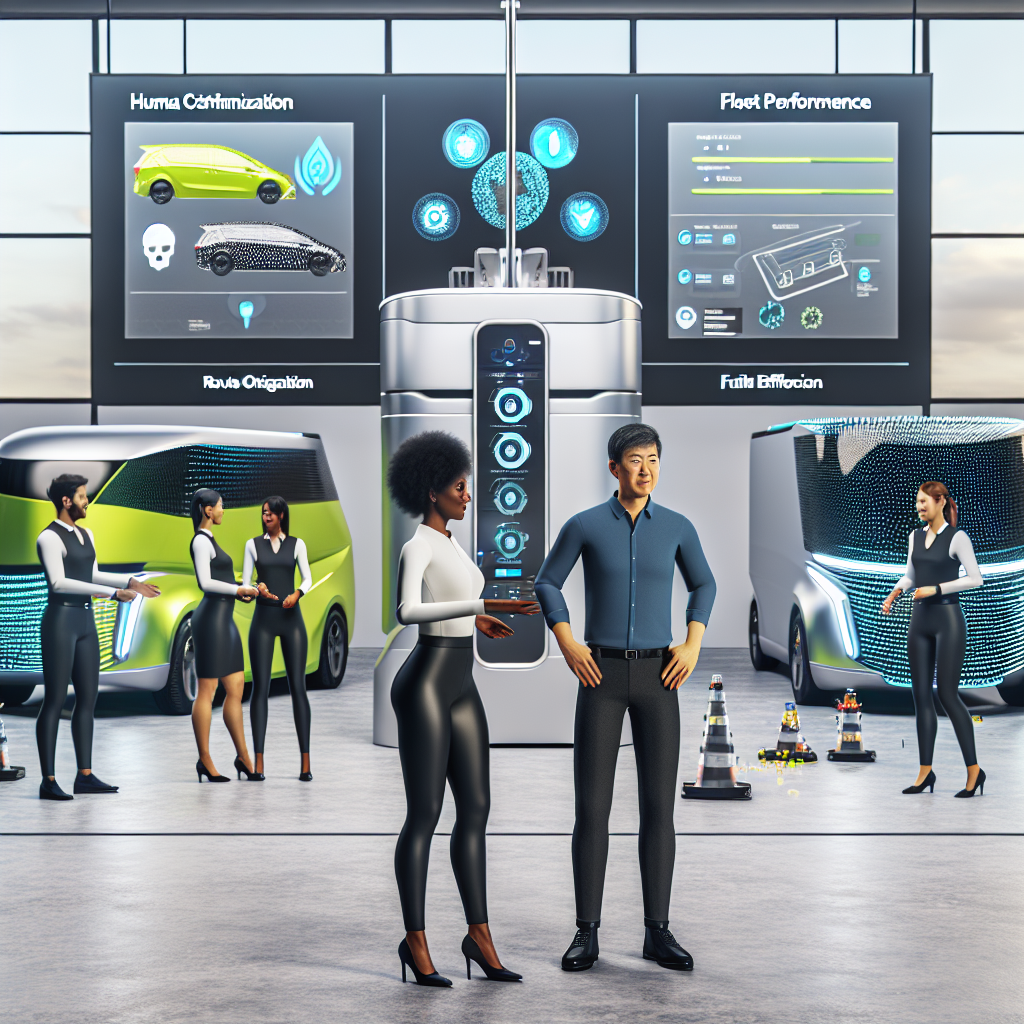
This image illustrates the concept of human-centered fleet management, emphasizing the collaboration between technology and human factors in fleet operations. It showcases the essential teamwork involved in ensuring efficiency and safety within the fleet management sector.
Explore the Role of Digital Tools and Technologies
Digital tools and technologies are significantly reshaping fleet management. Innovations such as AI-driven analytics, telematics, and cloud-based platforms are enhancing efficiency and enabling fleets to operate at optimal levels. For instance, AI-powered systems analyze vast amounts of data to predict maintenance needs, reducing downtime and cost. Advanced telematics provide real-time tracking of vehicles, helping managers optimize routes and improve fuel efficiency. Automation tools streamline scheduling and compliance processes, allowing businesses to focus on strategic initiatives rather than getting bogged down in day-to-day operations.
However, while these tools offer immense advantages, it is crucial not to lose sight of the human element in fleet operations. A balanced approach is necessary, as the success of these technologies relies heavily on human oversight and adaptability. For example, as David Kelly emphasized, “You have to look after the entire customer base,” highlighting the importance of maintaining strong customer relationships through personal interaction.
Moreover, investing in employee training is essential to ensure that staff can maximize the potential of these technologies. Companies should not only introduce digital tools but also integrate them with training programs to empower employees in effectively utilizing these resources.
According to recent insights from industry sources:
- Geotab reported that AI analytics enhance predictive maintenance. Read more
- Forbes discussed IoT sensors and cloud integration, offering significant operational benefits. Read more
- Gartner highlighted the adoption of integrated software suites, which lead to better decision-making and customer service improvements. Read more
By embracing both digital technologies and the human touch, fleet management companies can not only improve efficiency but also build a more engaged and skilled workforce, ultimately leading to long-term success.
| Investing in Technology | Investing in People |
|---|---|
Advantages:
|
Advantages:
|
Potential Drawbacks:
|
Potential Drawbacks:
|
Understanding Cross-Training in Fleets
Cross-training in fleets allows employees to acquire diverse skills, increasing operational flexibility and enhancing teamwork. It involves training employees in different roles or responsibilities within the fleet, leading to a more agile organization capable of adapting to changing circumstances. Companies like Innocon benefit significantly from this practice, which includes rotating employees through various positions every three months. This approach not only enhances the skills of employees but also fosters collaboration and understanding among team members, allowing for a more cohesive working environment.
Moreover, cross-training has been shown to reduce absenteeism and boost morale. By having employees who are well-rounded in their skills, fleets can better satisfy both staff and client needs in a customer-oriented environment. When team members understand each other’s roles, they can support one another more effectively during peak times or when absences occur. This enhances operational efficiency and promotes a culture of teamwork and shared responsibility.
Ultimately, the understanding of how cross-training impacts team dynamics and operational efficiency illuminates its integral role in modern fleet management, ensuring that businesses are not only prepared for immediate challenges but are also investing strategically in the future of their workforce.
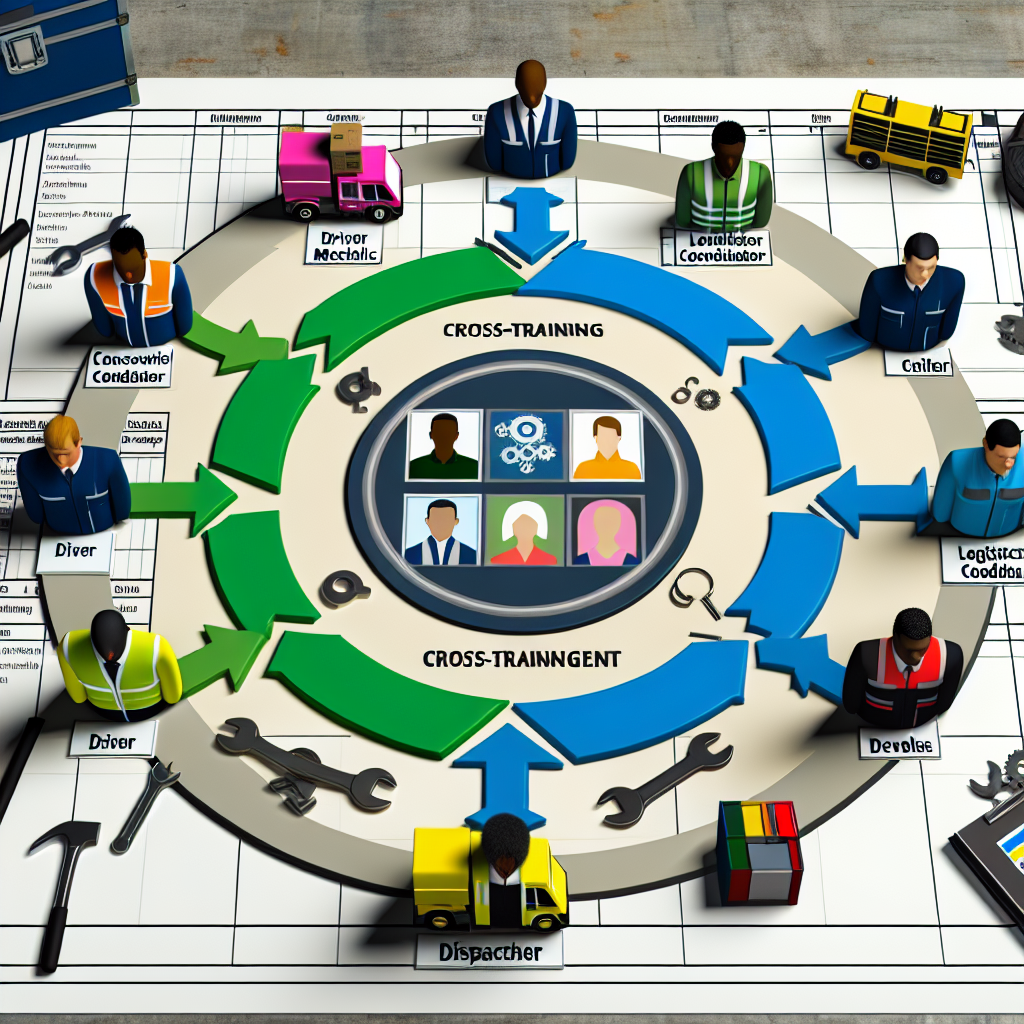
This image illustrates the cross-training process in fleet management, showing various roles, employee rotations, and skill transfers within the organization.
Case Studies: Examining Successful Companies in Fleet Management
In the realm of fleet management, several companies have exemplified how to balance investment in technology with a strong commitment to their workforce. Here are notable case studies of Innocon, TFI International, and Purolator that highlight their successful strategies:
As we delve into these case studies, it’s clear that the critical balance of investment in technology and people is not only beneficial but essential for operational success.
Innocon: Merging Technology with Human Engagement
Innocon implemented a dual strategy that combined AI-driven telematics with extensive driver training programs. The technology offered real-time insights into vehicle health and fuel consumption, leading to an 18% improvement in fuel efficiency. Their ‘Driver Excellence Program’ notably reduced accidents by 35% within a year, while skills workshops for logistics staff increased operational efficiency by 25%. This commitment to both technological advancement and employee development showcases a well-rounded approach to fleet management. Source: Innocon Official Blog, 2023
TFI International: Empowering Employees with Tech Training
Following Innocon’s successful example, TFI International has embraced an integrated IoT fleet management system paired with a comprehensive ‘Technology Adoption Training’ initiative. This resulted in a 20% reduction in idle time and a 15% decrease in delivery delays. Their investment in leadership development programs improved retention rates by 40%, demonstrating the effectiveness of blending technology training with professional growth opportunities. Like Innocon, TFI’s approach proves that investment in human capital can enhance operational capabilities. Source: Supply Chain Management Review, 2022
Purolator: Driving Operational Efficiency and Sustainability
In a similar vein, Purolator’s investment in electric vehicles and AI-based routing improved their environmental footprint by reducing carbon emissions by 30%. Their introduction of a ‘Green Driver Certification’ program not only engaged employees but also led to a 50% improvement in on-time deliveries. This comprehensive approach to technology and workforce engagement highlights Purolator’s commitment to operational excellence and sustainability, aligning perfectly with the strategies of its counterparts. Source: Canadian Transportation Logistics, 2023
These case studies underscore that successful fleet management is rooted in a balanced approach where technology and human capital development go hand in hand, defining the path toward sustainable growth and operational efficiency.
Conclusion
In conclusion, the discussions within this article highlight the crucial relationship between investing in technology and investing in people within the realm of fleet management. Technological advancements offer the promise of enhanced operational efficiencies, yet true success in fleet management lies in recognizing the indispensable role of human capital. The emerging generational shifts in the workforce call for an emphasis on soft skills and the development of a nurturing workplace culture that encourages growth and adaptability.
The importance of cross-training further illuminates how a well-rounded team not only enhances operational flexibility but also fosters a collaborative environment. Furthermore, as companies embrace automation and digital tools, they must not overlook the necessity of empowering employees through thorough training and engagement initiatives. A successful fleet management strategy is ultimately characterized by a balanced approach—one that harmonizes cutting-edge technology with a dedicated and skilled workforce, paving the way for long-term sustainability and excellence in operations.
User Adoption of Digital Tools in Fleet Management
Recent statistics highlight a significant trend toward the adoption of digital tools within fleet management, supporting the importance of investing in technology alongside human capital. Here are some key findings from various sources:
-
Geotab’s 2024 Fleet Technology Trends Report: According to this report, 89% of commercial fleets are now utilizing at least one digital management tool, a noticeable rise from 72% in 2020. The use of telematics and electronic logging devices is particularly notable, with adoption rates reaching 78% and 91% respectively. The report also reveals a 35% year-over-year increase in the adoption of AI and predictive analytics since 2022.
Read more here. -
American Transportation Research Institute (ATRI): ATRI’s research indicates that 82% of fleets have implemented some form of digital management technology. Larger fleets, in particular (those with over 100 vehicles), show an impressive 97% adoption rate. The report highlights fuel management systems as experiencing the highest growth, demonstrating a 42% increase from 2021 to 2023. Despite this growth, barriers to adoption remain, largely due to costs and complexities of implementation.
Read more here. -
MarketsandMarkets Analysis: This analysis projects the global fleet management market to expand from $25.5 billion in 2023 to $52.5 billion by 2028, driven largely by North America, where 86% of fleets are employing digital tools.
Read more here. -
CCJ Digital Survey: A survey from CCJ Digital found that 76% of fleets have hastened the adoption of digital tools since 2020, with significant motivations being operational efficiency and regulatory compliance.
Read more here. -
NTEA ROI Study: According to this study, fleets utilizing digital tools have seen an average reduction in fuel costs by 13.7% and a 28% decrease in compliance violations. Looking forward, 43% of fleets plan to increase their technology investments in the next 18 months.
Read more here.
These insights underscore the positive trajectory towards digital integration in fleet management, highlighting the essential role that technology plays in enhancing operational efficiency and competitiveness.
Employee Engagement in Fleet Management
Employee engagement is a critical factor driving fleet management success. According to Geotab’s 2024 Fleet Technology Trends Report, 78 percent of fleets are investing in technology to improve driver satisfaction and retention. Companies utilizing AI-powered route optimization and gamification of safety metrics have reduced driver turnover by an impressive 30 percent. Key to this engagement is that technology must serve the driver—not merely monitor their activities—as highlighted by an industry expert.
Telematics plays a pivotal role in enhancing employee engagement and well-being as well. Fleet Owner notes that 65 percent of drivers report higher job satisfaction when provided with clear data on their performance and workplace expectations. This engagement-oriented technology is becoming crucial amid concerns of driver fatigue and workload balance.
Furthermore, organizations like UPS and Waste Management Inc. demonstrate the benefits of integrated digital tools. UPS’s ORION system has saved millions in fuel while enhancing route efficiency, directly impacting driver satisfaction by minimizing stress and overtime. Similarly, Waste Management’s focus on real-time data for proactive maintenance has led to a 25 percent decrease in driver turnover, attributed to improved working conditions.
In summary, measuring employee engagement within fleet operations is vital not only for reducing turnover but also for ensuring that technological investments benefit the workforce. Supporting employee needs through technology and engagement fosters a healthier workplace that nurtures retention and productivity.
Infographics on Fleet Management Benefits
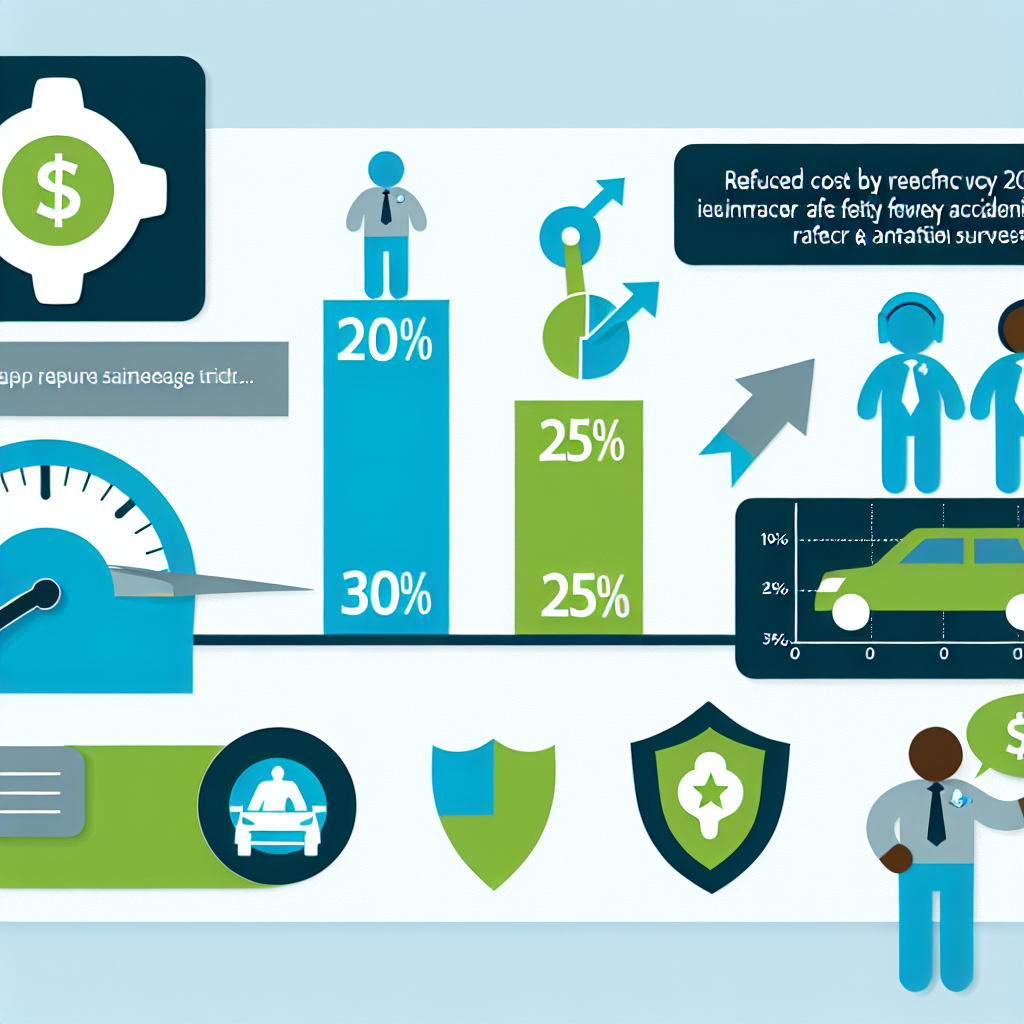
This infographic illustrates the key benefits of fleet management, highlighting statistics such as reduced costs, improved safety, and enhanced operational efficiency.
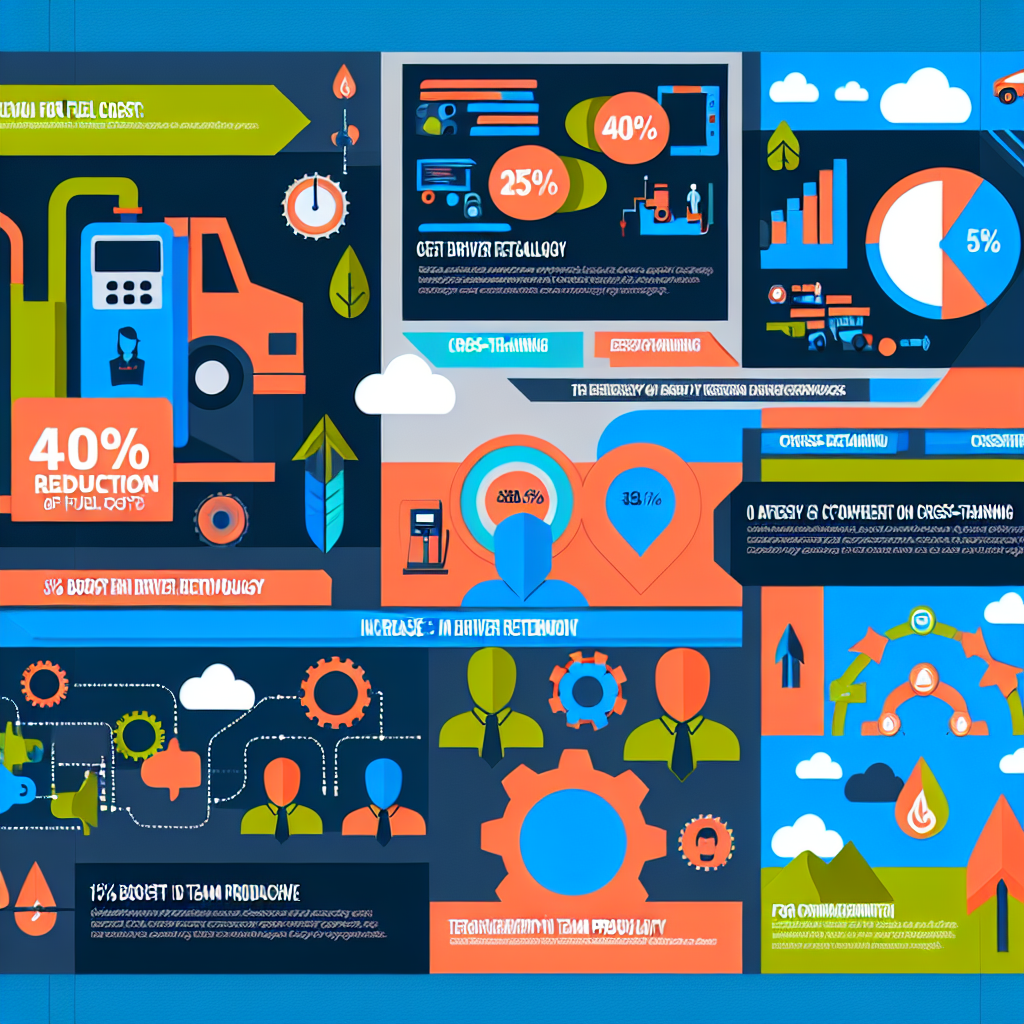
This infographic presents various statistics on fleet management, focusing on highlights like fuel cost reductions and improvements in driver retention.