
The integrity of truck rims is crucial for the safety and efficiency of fleet operations. A bent truck rim can disrupt performance and lead to further mechanical issues if not addressed properly. This article explores the essential aspects of assessing repair options, techniques used for repair, and safety considerations involved in either repairing or replacing bent truck rims. By understanding these elements, fleet managers, trucking company owners, and operators in construction, mining, and logistics can make informed choices that protect their assets and ensure vehicle reliability. Each chapter provides a deeper insight, beginning with evaluating the feasibility of repairs, then moving on to the specific methods utilized, and finally addressing the safety implications of both repair and replacement.
Bent Rim Dilemmas: Navigating Repair Options with Safety at the Forefront
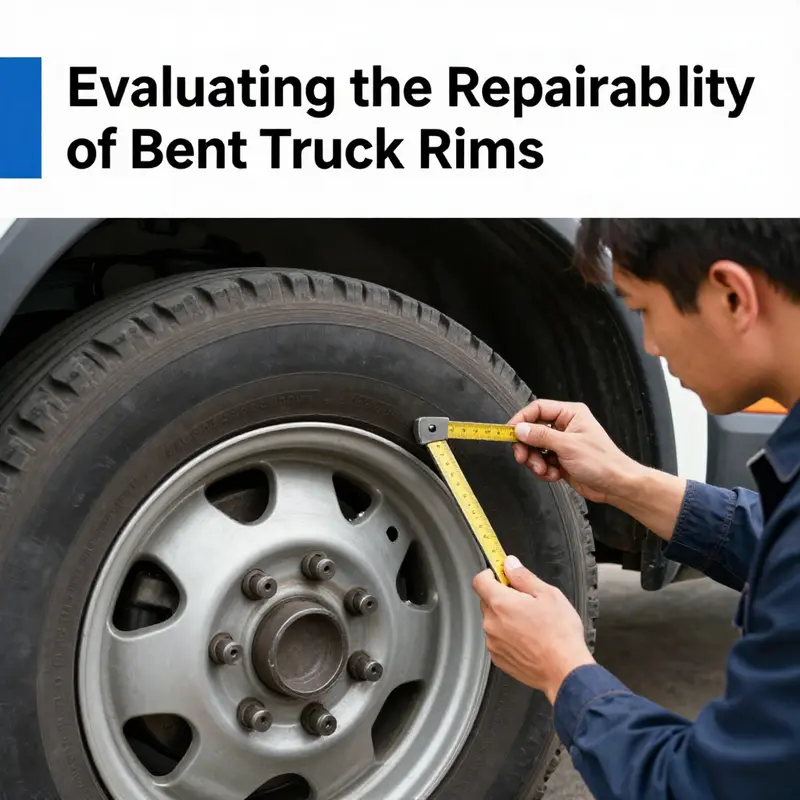
Bent truck rims represent more than a cosmetic blemish on a wheel. They signal a shift in the wheel’s geometry that can ripple through tire performance, braking response, and overall handling. For fleets and owner operators alike, understanding when a rim can be safely repaired and when replacement is the prudent path is not just a matter of maintaining tires; it is a matter of maintaining control on the road. The decision rests on a careful reading of the damage, the wheel design, and the demands placed on the truck in daily service. This is not a question of bravado or a quick fix, but a measured evaluation that borrows from the same care and precision that keeps a heavy vehicle on the road in the first place. In practice, determining repairability involves looking at how much the wheel is bent, where the bend sits, and whether the structural integrity around critical zones such as the bead seat and mounting surface has been compromised. Regulatory and safety authorities emphasize that a damaged rim should not be used unless it has passed a professional inspection and has been repaired under recognized standards. That guidance sits at the core of any meaningful assessment of repair options, and it frames the entire conversation about whether straightening, reconditioning, or replacement is warranted.
When a wheel is bent, the first obvious question is whether the bend is minor or extensive. Minor dents or slight warps often respond to professional wheel service that uses specialized equipment to realign the metal back toward its original shape. In a controlled environment, technicians apply measured force with rim straightening machines or hydraulic presses. The objective is to restore true circularity without introducing new microcracks or heat damage that could compromise the wheel’s long term durability. But even in cases that look only slightly deformed, the underlying material properties matter a great deal. Aluminum alloy rims, common on many trucks and heavy vehicles, can behave differently from steel rims under strain. Repeated bending, heat exposure from grinding or welding, or stress concentrations at the edges can alter the metal’s fatigue resistance. A straightened rim that has been through heat, bending, and reshaping may look true but can harbor microcracks that only reveal themselves during service under load. For that reason, professional straightening is typically followed by a disciplined post repair protocol, including balance checks and pressure tests to confirm that the rim can hold air reliably and distribute load evenly.
The other side of the coin is equally important. Severe bends, cracks, or damage that affects the bead seat — the critical zone where the tire seals to the rim — may render a wheel unsafe even if it appears straight after a preliminary realignment. Any breach in bead seat integrity can lead to tire bead slippage, loss of air, or uneven seating of the tire bead during inflation and run down. In many cases, once the bead seat or the structural region near the hub mounting surface is compromised, repair options become limited or nonexistent. The safety calculus then tilts toward replacement, even if the wheel can be visually coaxed into a straight line. Here the regulatory voice grows louder. National and industry standards, as highlighted by leading safety agencies, caution against driving on wheels that show structural damage unless a certified professional has fully evaluated and approved the repair. The aim is to prevent a future rupture or wheel failure that could precipitate a dangerous loss of control at highway speeds or during heavy braking.
This framework of assessment — balancing the extent and location of the bend with the wheel type and service history — informs the practical options available to maintenance teams. For minor bends, there exists a path to repair through rim straightening services. These services, offered by fleet maintenance providers and specialist wheel shops, rely on precise instrumentation to return the rim to proper geometry. They may involve hydraulic presses and rim straightening devices designed to apply controlled forces in specific directions. The reasoning behind this approach is straightforward: if the wheel can regain true roundness without producing new cracks or compromising the bead seat, the tire can continue to perform its sealing function, the wheel can maintain even load distribution, and the truck can stay in service with minimal downtime. Nevertheless, such repairs are not universal. The material condition of the rim, the extent of the bend, and the wheel’s previous service life all influence whether straightening will endure in service or whether it may set the stage for future issues. In many fleets, a policy emerges from experience: if the bend is within a modest threshold and there is no sign of cracks or bead seat compromise, straightening followed by a battery of checks is acceptable. If not, replacement is the safer route.
Post repair, a thorough inspection is essential. A balance test, for example, is not merely a formality. It verifies that the wheel will not impart uneven loads as it spins and that the tire will seat evenly against the rim, eliminating runout that can wear tires unevenly or affect steering feel. A pressure test, meanwhile, ensures that the rim maintains air pressure under the demands of real road conditions. These steps are critical to revealing latent defects that may not be visible to the naked eye. The logic is simple: a wheel that appears straight under static inspection may reveal subtle misalignments or strength reductions when loaded with a tire and subjected to road forces. In practice, that nuance can translate into out-of-balance vibrations, accelerated tire wear, or, ultimately, a risk of tire failure under heavy loads. The warning is not theoretical. Trucks and heavy vehicles encounter substantial loads, dynamic forces, and varied road conditions. What passes as a fix in a workshop must prove its mettle under real world stress, where a misstep can lead to an abrupt loss of control.
Yet even when minor bends are repairable, the path is not purely mechanical. The broader safety context matters. The FMCSA and related regulatory bodies place a premium on vehicle integrity and tire safety. They emphasize that damaged rims must undergo inspection and, if necessary, repair by certified professionals following established standards. The stance is not anti repair; it is pro safety. In practice, this translates into a decision framework that weighs not only the mechanical feasibility of straightening but also the long term reliability and the potential need for warranty adherence or regulatory compliance. The overall objective is to minimize risk to the driver, cargo, and other road users. A wheel that has seen a significant impact may harbor hidden damage that becomes a risk only after a few miles on the highway. The prudent course in such cases is often to replace the rim to restore full structural integrity rather than pursue a repair that might harbor a latent vulnerability.
A further layer of complexity is added by the realities of different wheel materials and wheel designs. Steel rims, with their different fatigue characteristics, respond differently to bending and straightening than aluminum alloys. Steel can sometimes tolerate straightening with fewer adverse effects on its structural integrity, but even steel rims can develop cracks that compromise safety. Aluminum wheels can suffer from heat damage during straightening, and the heat-affected zone may become a site of brittle failure if not properly managed. Welded or heat-treated rims demand particular caution; even if the visual geometry seems corrected, the microstructure could be altered in ways that reduce fatigue life. The repair decision should include a clear accounting of these material science realities, because the same bend that a technician might fix in one material could justify replacement in another. That nuance is why professional assessment is non negotiable. The wheel that carries a heavy truck has a lasting impact on the vehicle stability, steering geometry, and tire life. A misjudged repair can ripple into higher maintenance costs and, more importantly, safety risks on the road.
The discussion of repair options would be incomplete without recognizing the practical implications for the broader wheel and tire system. Even when a rim has been straightened, the alignment between the rim and the tire can be altered. A bent rim can cause tire bead seating inconsistencies that lead to slow air leaks, uneven bead seating, or unpredictable tire performance. Tire engineers focus on the bead seat as a critical interface that seals and supports the tire under all operating conditions. When the bead seat experiences deformation, the risk of bead leaks or tire slippage increases. The tire itself may exhibit changes in runout, leading to vibrations that degrade steering stability and passenger comfort. The balance of risk becomes particularly acute in heavy haul operations, where the vehicle routinely carries heavy loads, travels on uneven surfaces, and engages in frequent braking that generates significant heat and stress in the wheel assembly. In such settings, the margin for error narrows. The decision to repair or replace is not a matter of cosmetic alignment; it is about reestablishing a reliable, predictable interface between tire and rim under a spectrum of operating conditions.
To navigate these complexities, fleets and individual operators often adopt a conservative approach. If there is any doubt about the rim’s condition, replacement is preferred over repair. This cautious stance aligns with the overarching goal of safety and the obligation to protect life and property. Replacement, while seemingly more expensive in the short term, can prevent unplanned downtime, expensive tire damage, and the risk of catastrophic failure that could arise from a compromised wheel. In many cases, a professional assessment will provide the definitive answer: repair is feasible only if the damage is localized, the material remains sound, and the bead seat remains intact. If the assessment reveals any compromise in these areas, replacement is the logical next step. The regulatorily minded maintenance teams often document and archive these decisions to ensure compliance and traceability. After all, the choice between repair and replacement is not just an engineering judgment; it is a compliance issue as well as a safety one.
In the practical realm of fleet management, the decision to repair or replace can also be informed by broader maintenance planning. Some fleets integrate wheel care into their budgeting for routine truck maintenance, recognizing that wheel health is a key determinant of tire longevity and vehicle uptime. This approach emphasizes proactive maintenance, early inspection after incidents, and a clear policy for when a wheel should be replaced. It also acknowledges the realities of operating costs, warranties, and the importance of avoiding the kind of roadside failures that disrupt schedules and increase risk. For readers who want to explore how budgets translate into safer operation, a useful resource that discusses budgeting for routine truck maintenance offers practical guidance on prioritizing wheel care along with other essential services. Budgeting for Routine Truck Maintenance.
Ultimately, the story of repairing bent truck rims is not a simple tale of whether you can fix metal and call it a day. It is a narrative about discipline, inspection, and the willingness to replace when necessary. The wheel is a critical component of the truck’s safety system, working in concert with tires, brakes, suspension, and steering. A single bent rim, if left unchecked or repaired inappropriately, can cascade into tire failure, loss of vehicle control, uneven tire wear, compromised braking response, and even multi-vehicle accidents. That is why the guidance from authoritative bodies emphasizes inspection by certified professionals, adherence to industry standards, and a cautious approach that favors replacement when there is any reasonable question about structural integrity. The decision-making process becomes, in essence, a risk assessment that weighs immediate costs against the potential consequences of a failure in service. The responsible approach keeps safety front and center and avoids the easy path of a quick, inexpensive fix that could haunt the truck on the highway.
In seeing the repair options clearly, readers can better translate the laborious, sometimes technical, assessments into a practical course of action for their own fleets. The process begins with a visual check for obvious bends and a tactile feel for unusual wheel play. It continues with professional evaluation to detect cracks, bead seat damage, and hidden defects that only come to light under load. And it ends with a decision that reflects a balance between safety, reliability, cost, and regulatory compliance. Whether the answer is to straighten and re-seat the wheel after careful testing or to replace the rim outright, the guiding principle remains the same: never compromise on the wheel’s ability to hold a tire securely and support the truck safely through the demanding conditions of road transport.
External reference for further safety guidance and official standards can be found in resources provided by national safety authorities. For a comprehensive overview of rim and tire safety considerations, see the external resource on truck rims and tires. NHTSA’s Truck Rims and Tires.
Bent but Not Broken: The Professional Path to Repairing Truck Rims Safely and Effectively
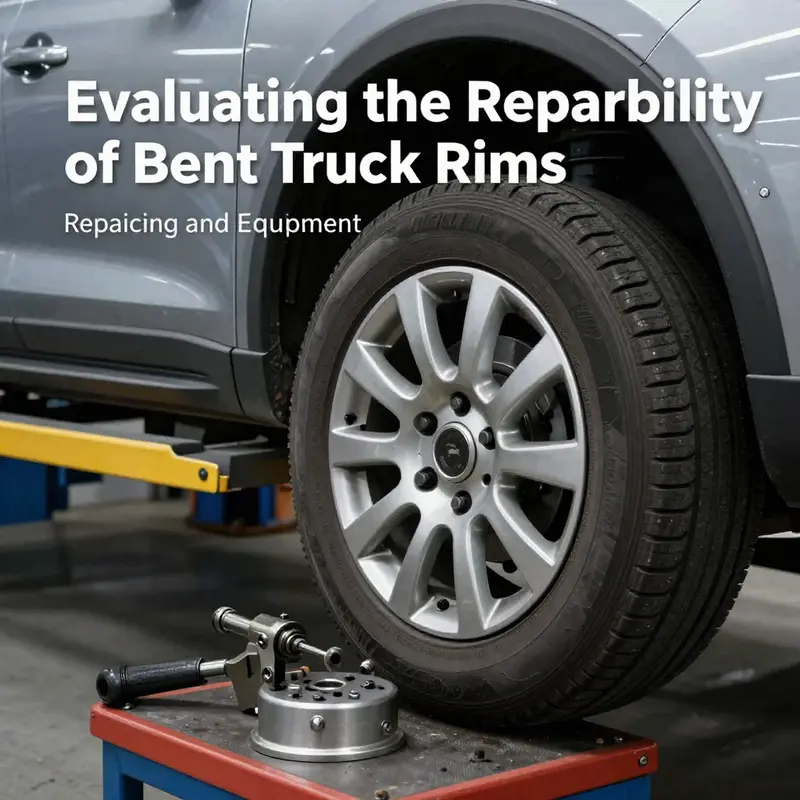
A bent truck rim is more than a cosmetic imperfection. It is a signal that the wheel system may be compromised in a way that affects tire seating, balance, and overall stability. In the long run, a bend can propagate under load, leading to uneven tire wear, vibration, and, in the worst case, tire failure. For fleets and drivers alike, the decision to repair a rim versus replace it hinges on a careful assessment of where the damage lies and how severe it is. The most trustworthy guidance comes from qualified technicians who can interpret runout measurements, inspect for latent cracks, and judge whether the structural integrity remains intact. When a bend is mild and remote from critical zones, a repair may restore true roundness and safe performance. But when the bend is deep, when cracks appear, or when the damage sits near the wheel’s mounting surface that couples to the hub, replacement is typically the safer, more economical choice in the long run. The premise is straightforward and rigorous: the repair must return the rim to a state that can bear the stresses of highway speeds, heavy loads, and long hours of service without introducing new failure modes. In this context, professional repair is a specialized craft that blends mechanical correction, controlled heating, and exacting quality assurance, all performed on equipment designed to handle the complex geometry and material behavior of modern truck rims.
The repair journey begins with a painstaking assessment. A technician examines the rim for visible deformations and also checks non‑visible indicators of weakness. Runout measurements are taken to quantify how far the rim is from true roundness. Precision tools, such as dial indicators and, increasingly, laser measurement systems, capture the rim’s deviations at various angles around the bead seat and mounting flange. The mounting surface—the area that matingly contacts the hub—receives particular scrutiny because a bend there can transmit uneven loading to the entire wheel assembly. The clinicianly precise eye of experience matters here: where a bend sits, how it propagates, and whether subtle hairline cracks have formed around welds, bead seats, or valve holes can decide whether repair is plausible or prudent. The assessment does not end with measurements; the technician also inspects the rim’s alloy condition, looking for material fatigue indicators that may have worsened since the event that caused the bend. If the rim passes this triage test—no cracks, no loss of wall thickness, no distortion invading the mounting surface—repair planning proceeds with a clear emphasis on restoring geometric accuracy and structural resilience.
Once the rim clears the initial evaluation, the repair unfolds through a sequence of coordinated steps that balance mechanical force, controlled temperature, and precise measurement. Mechanical correction, also known as straightening, represents the core technique for most moderate bends. In a wheel alignment or rim straightening setup, the rim is clamped in a fixture that accepts force from multiple angles. A large hydraulic press or a dedicated rim straightening machine applies calculated pressure to the deformed area, gradually guiding the metal back toward its original contour. The operator’s goal is not to obliterate the bend with brute force but to reestablish true roundness while preserving the rim’s cross‑sectional integrity. The process is guided by real‑time feedback: runout readings taken during the correction, adjustments to the pressure trajectory, and periodic checks to ensure the metal’s response remains within the elastic or mildly plastic range. The most effective machines are designed to apply pressure in a controlled, incremental fashion, reducing the risk of over‑correction or the introduction of new distortions elsewhere on the rim. This step alone embodies the fusion of art and science that defines professional rim repair: the operator must read the metal’s response and steer it with precision.
For more stubborn bends, heat becomes a powerful ally. Thermal shaping involves raising a targeted section of the rim to a temperature at which the metal becomes pliable enough to bend with less force and less risk of cracking. In practice, technicians use an induction heater or a carefully controlled propane source to reach temperatures typically in the 500–600°C range. The heat softens the alloy locally, allowing the technician to coax the bend back toward the nominal geometry with more manageable forces. Yet heat is a double‑edged sword. If temperature is poorly controlled, the metal can experience microstructural changes, weakening, or uneven cooling that leads to warping or residual stresses. The skill here is as much about temperature discipline as about force. The heating duration, the precise zone heated, and the cooling rate all influence the final strength of the rim. Because aluminum and other alloy rims can respond unpredictably to heat, the process must be executed by trained professionals who understand how their particular alloy behaves under thermal shaping. Properly used, heat treatment can salvage a rim that would otherwise be deemed uneconomical to repair, extending service life by reclaiming a geometry that meets stringent runout tolerances.
A complementary approach is cold pressing, deployed most effectively for minor dents or small distortions that do not threaten the rim’s core structure. Cold pressing concentrates significant mechanical force directly on the damaged spot without the introduction of heat. This method is valued for its speed and its minimal risk of heat‑related material changes. However, its applicability is limited. For major structural bends, cold pressing alone cannot restore the rim to spec without compromising material integrity, and attempting it in such cases risks creating microcracks that can propagate under load. The technician weighs whether cold pressing, perhaps in combination with subsequent fine mechanical corrections, can achieve the desired geometry without introducing new hazards. The balance between technique choice and rim condition is where the artisan’s judgment matters most, and where outcomes hinge on the technician’s experience and adherence to safety margins.
After any correction, the rim must be re‑evaluated in a path that mirrors the way it will be used. Dynamic balancing is not optional; it is essential. The repair process can alter the rim’s weight distribution without visibly altering its shape. Even when the rim looks perfectly straight, the internal stress patterns and the corrected mass distribution can create subtle imbalances. A dedicated balancing machine analyzes the rim as it spins, identifying any residual vibration risks or uneven weight distribution. Counterweights are attached with meticulous placement to restore even rotation, to minimize tire wear, and to ensure a smooth ride. This dynamic balancing step is more than a quality check; it is a guarantee that the repair has not just corrected the form but also reestablished functional harmony between wheel and tire. The tire itself is a crucial partner in this equation, and the entire assembly bears the responsibility of performance when subjected to highway speeds, heavy loads, and the fatigue of long service.
The practical reality of repairing bent rims rests on a carefully selected toolkit and the disciplined use of industrial‑grade equipment. A professional wheel straightening machine dominates the core process. It pairs a robust hydraulic press with a rotating, securely clamped fixture that holds the rim steady while corrective force is applied from multiple angles. When heat becomes necessary, an induction heater or a propane torch provides the localized energy required to soften metal precisely where it is needed, sparing adjacent areas from undue thermal exposure. Precision measuring tools—dial indicators, laser measurement systems, calipers—are employed at every stage to quantify runout before, during, and after the repair, ensuring that the geometry not only appears straight but also tests true under dynamic loading conditions. The dynamic balancing machine is the final arbiter, diagnosing and correcting any residual mass distribution imbalances. Safety is woven throughout the entire operation. Technicians wear protective gear and observe strict operating procedures to mitigate the risks associated with heavy machinery, heat, and high‑force contact between tools and metal.
From a broader perspective, the decision to repair a bent rim versus replacing it rests on a synthesis of structural assessment, performance goals, and total cost of ownership. A rim that shows cracks near the mounting surface or that exhibits thinning around critical regions usually signals a failure risk that repair alone cannot safely manage. In such cases, replacement becomes the rational choice, protecting tire integrity, hub connection, and vehicle handling. The emphasis remains unwavering: the repair must not mask a latent fault but must restore a geometry and strength profile that are compatible with the stresses of real road use. This is why the expertise of trained technicians matters so much. They bring experience with a variety of alloys, heat behaviors, and correction strategies, and they harmonize these with precise measurement data. Their judgment is not simply an opinion; it is a risk assessment grounded in material science, mechanical engineering, and a deep appreciation for the wheel’s role in vehicle safety.
To reinforce the seriousness of this work, consider the sequence as a single thread rather than a collection of discrete tasks. A typical repair does not begin with brute force and end with a visual result. It begins with a diagnostic that layers measurement data over a careful inspection of the rim’s microstructure. It continues with a designed correction plan—mechanical, thermal, or a combination—guided by quantifiable runout targets. It includes a verification phase in which runout is remeasured, the rim is rebalanced, and a final inspection confirms there are no hidden defects. Only after these steps are completed should the repaired rim be considered ready for service. This is the hallmark of professional practice: a measured, data‑driven approach that recognizes the complexity of modern rims and the consequences of a single misstep when millions of pounds of load are channeled through a wheel every mile. Inside shops that perform this work, the goal is not simply to “fix the bend” but to restore a wheel system whose performance, safety, and durability can withstand the demands of heavy transport.
For those seeking deeper context into the workflows and training behind this capability, a good starting point is the core source that describes how professionals approach bent rim restoration, the rationale behind different correction methods, and the safeguards that keep this practice aligned with safety standards. mastertruckrepairllc blog offers a window into how shops structure their approaches, the kinds of technician training that undergird technical competence, and the quality checks that accompany each repair. This resource helps connect the hands‑on techniques described here with broader industry practices and the continual emphasis on safety and reliability in heavy‑duty wheel repair.
The conversation around rim repair is not a challenge to higher standards but a call to adhere to them. A bend can be corrected, but only if the method preserves the material’s integrity and respects the wheel’s function in a high‑stress, high‑speed environment. The right choice—repair or replacement—depends on a precise balance of geometry, material behavior, and practical risk assessment. When performed by trained technicians with the proper equipment and confirmation measurements, repairing a bent rim can extend service life, reduce replacement costs, and maintain the safety margins that trucking operations rely on every day. The road to a safe, reliable wheel is paved with careful decisions, disciplined technique, and an unwavering commitment to verifying that the final geometry, balance, and strength meet the demanding standards of real‑world use.
External perspectives on how these repairs are executed reinforce the view that the work is intricate and specialized. For an external analysis of the methods, why they matter, and the safety considerations involved, see the discussion at Scranton Rail’s article on repairing bent truck rims and the considerations that accompany whether to repair or replace. External resource to further reading.
Bent Truck Rims: A Safety-First Path Through Repair or Replacement
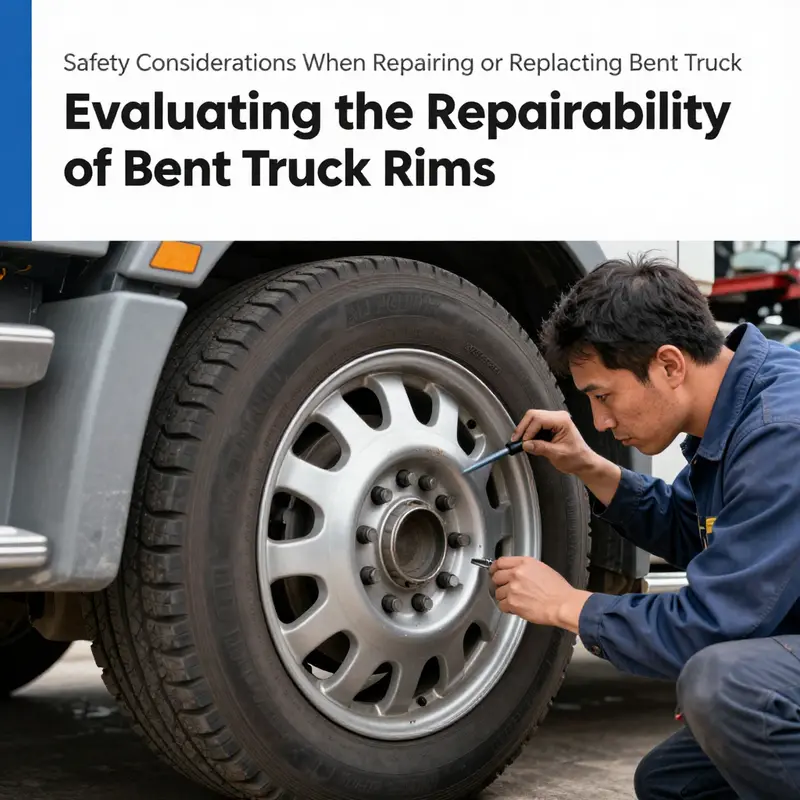
A bent truck rim is more than a cosmetic issue. It is a fault line in the wheel system that can ripple into handling, tire life, and, ultimately, road safety. The rim anchors the tire to the hub, sets the wheel’s geometry, and helps transfer forces between the road and the suspension. When a bend disrupts that geometry, even subtly, the consequences can escalate quickly at highway speeds or under heavy loads. This makes the question not just about whether a rim can be bent back into shape, but whether it should be repaired in the first place. The overarching principle is simple: safety before savings. If the damage compromises structural integrity or occurs in a critical area of the wheel, a replacement is not merely an option but a necessity. If the damage is limited to a small, superficial deformation on non-load-bearing portions of the rim, repair by qualified professionals can be a viable path. The nuance here matters because the line between repairable and non-repairable rims is not a matter of a single measurement, but of a combination of location, depth, cracking, corrosion, and the wheel’s ability to maintain true shape under load and speed. The careful reader will recognize that the same bend might be harmless in one scenario and hazardous in another. For that reason, a thorough, methodical evaluation is the essential first step. A professional technician begins with an assessment that attends not just to the visible bend but to the wheel’s hidden, structural realities. They employ wheel alignment and balance equipment to map distortion across the entire wheel. This offers a precise view of how the bend alters the wheel’s concentricity and its relationship to the hub plane and mounting surface. The assessment serves a dual purpose: it identifies whether the deformity is superficial and fixable, and it detects any secondary damage that might not be immediately obvious from a visual inspection. In some cases, the damage lives on the outer edge—perhaps a shallow dent that does not breach the rim’s inner cavity. In other cases, the bend threads into the inner barrel or proximity to the mounting surface, where a repair could weaken the wheel’s ability to bear high axle loads or to seal properly against the tire. Even if a technician can physically straighten the rim, the question remains whether the wheel will retain the required fatigue strength and structural integrity under the demands of everyday trucking. When a decision is made to pursue repair, the process relies on precision tools and controlled methods rather than brute force. A standard approach begins with a comprehensive inspection, often using wheel balancing machines that can reveal runout, lateral and radial distortions, and any asymmetries that betray a more severe issue than a casual bend. With the wheel properly supported and secured, technicians apply controlled heating to the deformed section. The metal’s response to heat is delicate; excessive heating can alter the alloy’s grain structure and reduce strength, while insufficient heating can leave the metal stiff and resistant to trueing. The heating is followed by measured force from hydraulic pullers or dedicated straightening machines. The technician’s touch matters because the aim is to coax the rim back toward true while preserving its original heat-treated properties and avoiding overcorrection that could introduce new stresses. After the rim is realigned, a meticulous finishing step ensues. Grinding smooths out any irregularities that could harbor corrosion or create seat issues for the tire bead. Then comes refinishing—whether repainting or applying a protective coating—to shield the rim from the elements and to restore its appearance. The visible finish matters not only for appearance but for corrosion resistance, which is essential given the harsh operating environments trucks routinely encounter. Yet a repaired rim is not automatically ready for service. The critical post-repair step is dynamic balancing. Unlike a factory-new wheel, a repaired rim has altered mass distribution that can produce high-speed vibrations if not corrected. Dynamic balancing ensures the tire and wheel assembly rotate with even weight distribution, preventing steering wheel shake, tire scuffing, accelerated suspension wear, and sudden handling quirks that could surprise a driver in demanding conditions. The balancing process is not cosmetic; it has a direct bearing on safety and longevity. The repair environment itself must meet strict handling and installation standards. The vehicle should be parked on a flat, stable surface with the parking brake engaged and wheel chocks deployed. The technician must avoid placing any weight-bearing jack under the rim or suspension components. Jacks should rest at manufacturer-specified points, not on the rim or any non-designated load-bearing area. When the rim is ready to be reinstalled, lug nuts must be torqued to the manufacturer’s specifications using a calibrated torque wrench. The crisscross pattern helps ensure even pressure, reducing the risk of flange warping or bead seating faults. This sequence of careful handling emphasizes a broader truth: recovery work on rims is a chain of interdependent steps, where a lapse in one stage can compromise the entire repair. The idea is not to chase a quick fix but to restore, with a high degree of confidence, the wheel’s structural integrity and its ability to function safely under the vehicle’s load and dynamic demands. Even with a successful repair, the road teaches new lessons. After a repair, a cautious initial drive is advisable, followed by a period of close monitoring. A subtle vibration, unusual pull to one side, or changes in ride quality can signal lingering issues that tests and experience may not immediately reveal. Regular inspections of tires and rims become a new baseline practice after repair. The temptation to return to service at the first sign of performance may be strong, but patience pays off here. A damaged wheel, even after repair, could be more vulnerable to future stress than a wheel that has been replaced. At this point, the decision to replace may feel like conceding defeat, yet it is often the wisest choice when there is any doubt about the wheel’s structural integrity. Damage near the mounting surface, or any crack or significant corrosion visible on the wheel, should push for replacement. The logic rests on risk management. A compromised wheel can fail under the same loads that a new, unblemished wheel would shrug off. That risk is not only to the wheel and tire. It is the risk to steering, braking performance, and vehicle stability. The consequences of tire failure or abrupt loss of control can be catastrophic, especially for heavy-duty trucks operating at highway speeds or carrying heavy payloads. Because of that, every repair decision should involve a professional assessment grounded in testing, measurement, and experience. A responsible shop will not merely offer to straighten a bend; it will explain what the repair will preserve and what it cannot. It will discuss the wheel’s fatigue life after straightening and the possibility of latent defects that could surface with time. It will also counsel on inspection cadence, emphasizing that even a repaired rim deserves more frequent post-repair checks than a brand-new wheel. The safety conversation should extend to the broader wheel assembly. Rim health does not exist in isolation; it interacts with the tire bead, the wheel hub, and the brake components. A dent or bend can distort the bead seating surface, leading to slow leaks or bead runaway under load. Cracks near the bead or around spoke areas can propagate under heat, vibration, and cyclical loading. Corrosion can hide under finishes or in cracks, quietly weakening the wheel until it fails without warning. A comprehensive approach recognizes these potential vulnerabilities and treats rim repair as part of a holistic wheel health program rather than a one-off fix. This is where a fleet or owner-operator perspective becomes important. For commercial operators, decisions about rim repair versus replacement tie directly to safety policies, maintenance budgets, and downtime considerations. A repair that extends wheel life by a meaningful margin may deliver value in the short term, but only if it does not compromise reliability or void warranty terms. Conversely, if the repair risks future failure, replacing the rim can prevent more expensive repairs later and reduce the probability of unscheduled downtime that translates into lost revenue. It is common for professional shops to offer a detailed diagnostic report that documents measured runout, material condition, and a rationale for either repair or replacement. Such documentation can help fleet managers and owner-operators justify the chosen path to maintenance records, safety audits, and regulatory compliance programs. The decision framework is not just technical but also ethical. Truck operators carry cargo and care for crew safety. The risk calculus demands honesty about what a repair can realistically achieve and what it cannot. It also recognizes that the best outcome is a rim that performs as well as new under the most demanding conditions, not merely a rim that looks right after a straighten. When uncertainty remains, the prudent choice is replacement. A new rim preserves the wheel’s original geometry and fatigue profile, minimizes the chance of hidden defects, and supports the integrity of the tire bead and the seal. For those who manage fleets, the cost equation matters, but it should be weighed against the price of a potential failure, which includes not only repair costs but the risk of tire damage, suspension wear, wheel misalignment, and the possibility of a dangerous incident. In this balance between repair and replacement, the guidance from professional standards bodies and regulatory authorities is valuable. The National Highway Traffic Safety Administration emphasizes proper wheel inspection, balancing, and adherence to manufacturer specifications to prevent wheel failure. This external standard is not a pedantic recital of rules; it is a pragmatic framework for ensuring that every decision about wheel health is anchored in safety priorities and traceable procedures. For a practical takeaway, readers should know that a minor bend may be safely repaired by a qualified professional using heat, controlled force, and precise finishing, provided there are no cracks and no corrosion in load-bearing areas. In contrast, any deformation in the wheel’s inner barrel, the mounting surface, or any crack or significant corrosion is an automatic signal to replace. A safe repair also requires post-repair balancing and careful scrutiny of wheel life projections under load. The broader message to drivers and fleet managers is clear: maintenance planning for rims should treat wheel integrity as a lifecycle concern rather than a one-time fix. Routine inspections, consistent tire pressure checks, and gentle driving over obstacles can extend wheel life and reduce the chance of damage. Still, accidents happen. When a bend is the result of a collision, a curb strike, or a heavy impact, the safest course often involves replacing the wheel rather than attempting to restore it. The cost of a robust, properly repaired wheel is not just the price of the repair; it includes the confidence that the wheel will meet the demands of long hauls, variable loads, and rough road conditions. In the end, the path an owner-operator chooses should be guided by a careful assessment, a commitment to safety, and an understanding of the wheel’s critical role in controlling a heavy vehicle. For further reading on official safety guidance, consult the National Highway Traffic Safety Administration’s wheel safety resources at https://www.nhtsa.gov/ and consider linking through your maintenance portal to trained professionals who can perform the necessary inspections and repairs with an emphasis on protecting life, cargo, and property. If you want to explore a practical, industry-facing perspective on wheel maintenance that aligns with your fleet’s strategies, you can also visit authoritative resources that discuss in-house maintenance programs and continuous improvement approaches, such as the Turnage Sons in-house truck maintenance resource available here: Turnage Sons in-house truck maintenance. By keeping the focus on safety, accuracy, and accountability, the question of repair versus replacement becomes not a gamble but a calculated decision that prioritizes stability on every mile of the road.
Final thoughts
In conclusion, addressing the issue of a bent truck rim requires careful assessment and knowledge of available repair techniques. Fleet managers and operators must prioritize safety and evaluate whether a rim can be safely repaired or if it requires replacement. Implementing proper checks not only preserves fleet integrity but also enhances operational efficiency. By being informed and proactive, transportation and logistics enterprises can mitigate risks and ensure their vehicles remain safe on the road.