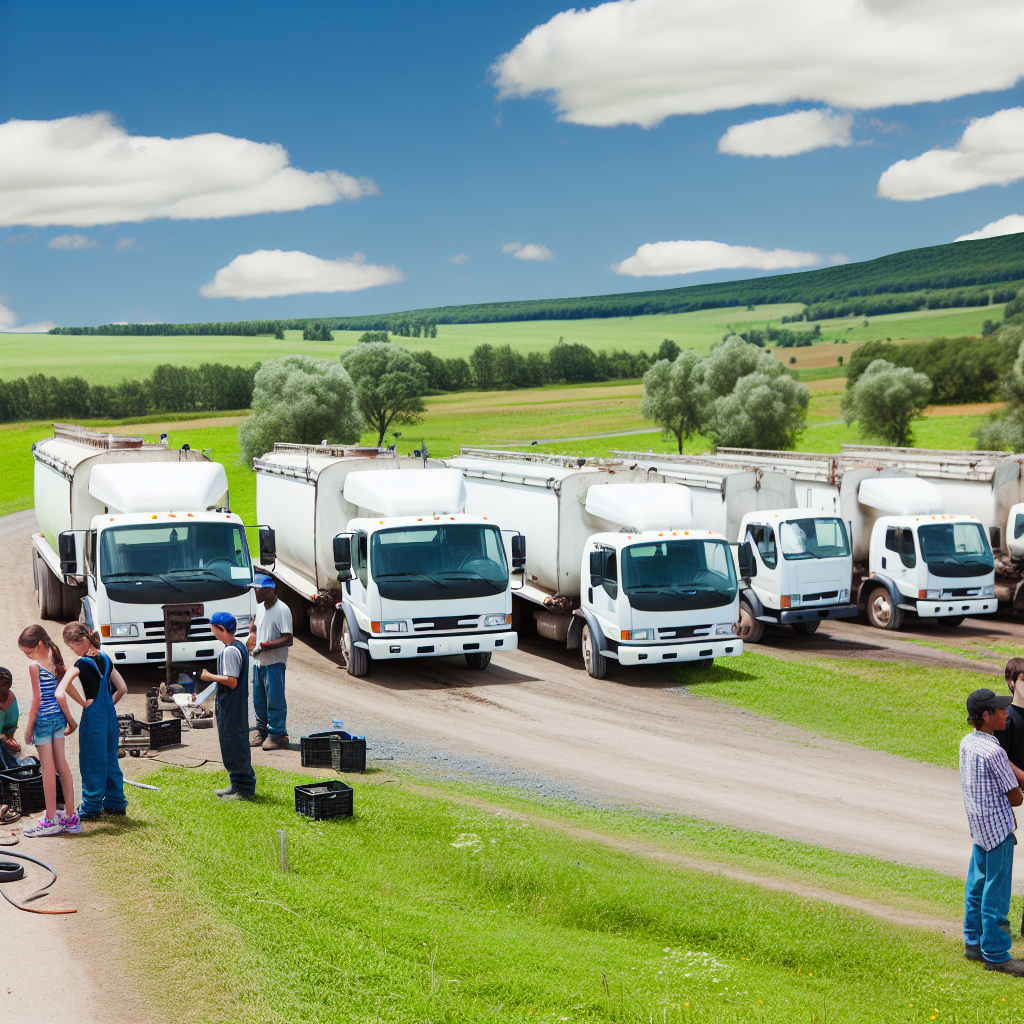
Repo trucks, or repossession tow trucks, play a pivotal role in the recovery of vehicles that have been contracted for repossession. Understanding the intricacies of how these specialized vehicles operate is essential, especially for fleet managers and logistics service providers who may encounter scenarios requiring vehicle recovery. This guide elucidates how repo trucks function, covering vital aspects including towing techniques, legal obligations, addressing challenging recovery situations, and the impact of technology in enhancing their operations. By the end of this exploration, readers will be equipped with a thorough understanding of the mechanics, legal frameworks, and innovative solutions that underpin repo truck operations.
Steering to Recovery: How a Repo Truck Safely Retrieves a Repossessed Vehicle
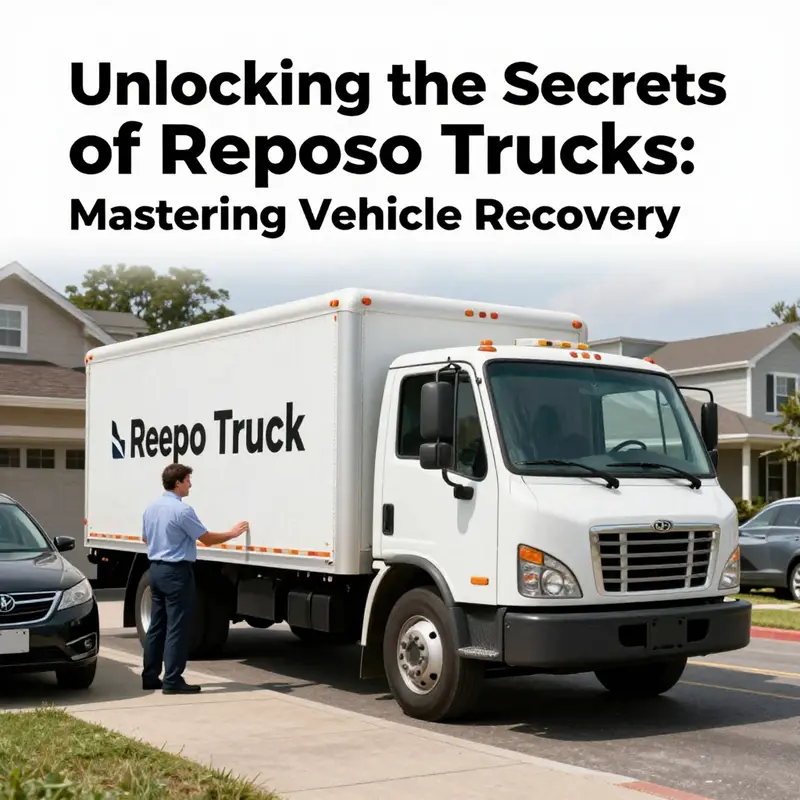
A repo truck is more than a mobile tow rig; it is a carefully orchestrated system designed to move a vehicle from one location to another under legal authorization and with minimal risk to people or property. The driver acts as a field agent who must balance mechanical know-how, safety protocols, and legal obligations in real time. The operation begins long before the truck arrives at the scene, with clear guidelines about authorization, documentation, and the chosen recovery method. Understanding how this vehicle works means tracing the sequence from lawful access to the final stop in a secure storage lot or auction site.
At its core, a repo truck is a specialized toolkit built to handle a range of scenarios. The most common path is traditional towing, which splits into two practical approaches: flatbed towing and wheel-lift towing. A flatbed tow truck is favored when the objective is to protect a vehicle from further harm, especially if the car is damaged, non-operational, or required to minimize contact with the ground. The process is straightforward but precise: the vehicle is secured to a rigid platform using straps or chains anchored to the frame or designated secure points. Once immobilized, the bed lowers or rises, and the entire vehicle moves on to a secure transport route. This method reduces contact points and limits the risk of additional damage, making it a staple in repossessions where vehicle condition or liability concerns are high.
Wheel-lift tow trucks offer a different balance of speed and simplicity. Hydraulic arms lift one end or a pair of wheels off the ground, allowing the towed vehicle to ride on ashort distance supported by the truck’s wheels. This method is efficient when access is straightforward and the owner is uncooperative or unaware of the repossession. It is crucial in these operations that the tow mechanics never compromise safety—each strap or hook must be secured to tested points, and the driver must confirm stability before moving. In practice, the choice between a flatbed and a wheel-lift hinges on vehicle condition, terrain, and the level of access at the recovery site.
Yet many repossessions unfold in more challenging spaces where traditional towing alone won’t suffice. Off-road recovery enters when a vehicle is stuck in mud, deep snow, a ditch, or on private property with limited ingress. In these cases, a high-clearance recovery vehicle equipped with winches, pulleys, and heavy-duty cables becomes the lifeline. The operator must carefully evaluate the terrain and potential hazards, using winches to create controlled traction rather than forcing a pull that could cause frame damage or injure bystanders. The process is a delicate dance: winches generate line tension, pulleys redirect force, and anchors or trees or toe points must be used responsibly to avoid collateral damage. Off-road recoveries demand more training, greater attention to weather and ground conditions, and the ability to communicate with other responders if the site presents multiple risk factors.
A more harmonious path emerges when the owner is cooperative. Cooperative repossession is a legal, low-conflict option in which the vehicle owner consents to the recovery. In this scenario, the tow attaches to the vehicle using secure frame or hitch points after clear authorization, often accompanied by a note or form acknowledging consent. This approach minimizes the risk of damage, dispute, or legal complication; it also streamlines the process by avoiding confrontations. In all cases, the driver must carry the appropriate paperwork—assignment of rights, a notice of repossession, and, where required, state or local licensing credentials. The goal is to establish a clean chain of custody from the first attachment to the final storage or disposition.
Laws and safety shape every step of the operation. Repossession professionals operate under a framework that varies by jurisdiction but tends to emphasize licensing, training, and adherence to procedures designed to prevent property damage and ensure public safety. The concept of a breach of peace remains central. Drivers must avoid trespass or threats and should coordinate with property owners or law enforcement when required by local law. The legal overlay is not a burden on the process; it is the backbone that legitimizes the recovery and protects all parties, including the vehicle owner. When a vehicle is wrongfully repossessed, the onus can shift toward the repossession agency, and individuals may pursue remedies through state consumer protection agencies or the attorney general’s office. For those who want deep, official guidance, the National Auto Theft Bureau outlines comprehensive standards for repo towing, safety practices, and legal compliance.
Beyond the mechanics and the law, the modern repo truck relies on a growing suite of technologies that boost accountability and transparency. Many fleets now equip their recovery vehicles with GPS tracking to document location history and route data. Digital documentation systems streamline the capture of key details at the scene—time stamps, vehicle condition notes, photos of securing points, and confirmation of attachments. Communication tools connect drivers with dispatch, property owners, and customers, reducing misunderstandings and speeding up the process of release or storage. The integration of technology supports better risk management, because agencies can demonstrate that procedures were followed and that every step—from hookup to transport—was performed to established standards.
The industry’s evolution also mirrors broader regional dynamics. In places with robust special-purpose vehicle manufacturing ecosystems, like certain hubs in East Asia, local firms design recovery vehicles that address a wide range of geographies and weather conditions. The result is fleets with more capable equipment, smarter ergonomics for operators, and improved reliability under demanding conditions. This sophistication, however, never replaces the core ethic of repossession work: lawful authority, careful maneuvering, and respect for property and people.
For professionals, the knowledge base extends beyond the mechanics of attachment and transport. It includes maintaining a disciplined approach to training, inspection, and documentation. Regular maintenance of a repo truck is not simply about keeping the engine healthy; it is about ensuring the integrity of every securing device, every winch line, and every hook. Modern fleet practices increasingly emphasize preventive maintenance and proactive budgeting, so operators can afford timely replacements and avoid preventable failures on a recovery scene. For readers curious about practical upkeep strategies, many industry voices emphasize budgeting for routine truck maintenance as a foundation for dependable recovery operations. Budgeting for Routine Truck Maintenance
The practical rhythm of a typical operation also includes an emphasis on situational awareness and risk assessment. A driver surveys the scene before approaching a vehicle, noting factors like traffic, bystander risk, nearby hazards, and potential interference from other parked vehicles. The approach itself is deliberate: drive slowly, assess anchor points, and verify that bystanders are at a safe distance. The workload is not simply mechanical; it is cognitive, calling for the ability to anticipate what could go wrong and to adapt quickly. The human element matters as much as the machine. The operator’s judgment must align with legal parameters and safety best practices, a balance that helps restore the vehicle to its rightful owner while protecting the broader community from harm.
At the end of the day, a repo truck embodies a disciplined convergence of tool, law, and procedure. Its value lies not only in the ability to attach a car and haul it away but in the reliability and accountability of every step along the way. The vehicle is a moving record of compliance: the right to recover, the consent of the owner when applicable, the attachment to a frame or a designated point, the secure lashing, the controlled lift, and the safe transport to a storage facility or auction site. This chain of custody helps to secure the legitimate interests of lenders and borrowers alike, even in the emotionally charged moments that can accompany repossession.
For those seeking authoritative guidelines on how repo towing should be performed, official references provide extensive details on safe practices and legal boundaries. https://www.natb.org/repo-towing-standards
Inside the Repo Truck: Techniques, Equipment, and Guardrails for Safe Repossessions
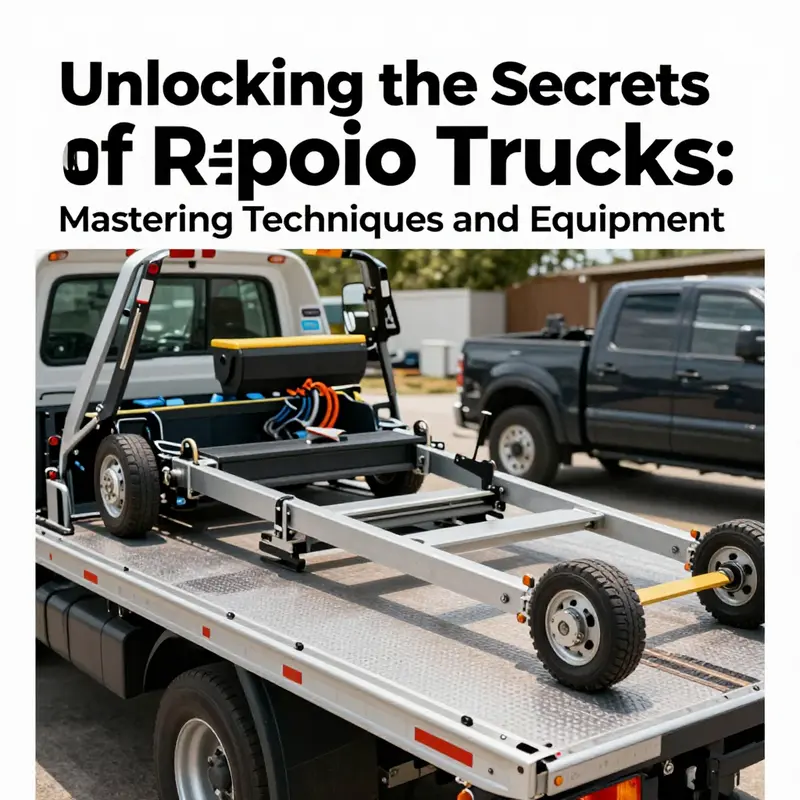
A repo truck is a system: a driver, a winch, a flatbed or wheel-lift, and a disciplined workflow that keeps risk and liability in check.\n\nThe operation begins with planning: site reconnaissance, access checks, and a clear plan that respects legal boundaries and avoids breach of peace. The driver communicates with property owners when possible, documents the setup, and remains prepared to adjust if conditions shift.\n\nThe core tools fall into two families. Traditional towing includes flatbed and wheel-lift configurations. A flatbed keeps the vehicle on a guarded platform, with straps and anchor points, reducing contact and showcasing controlled handling. Wheel-lift can be faster but demands careful weight distribution and cradle support to prevent damage, especially on uneven pavement or tight spaces.\n\nIn more challenging environments, winch-assisted recovery uses controlled pulling, pulleys, fairleads, and mechanical advantages to move the asset with precision while protecting surrounding property. Cooperative repossessions—when owners consent—offer a path with reduced risk, but still require formal documentation and a secure chain of custody. Legal guardrails require compliance with state and federal rules, avoidance of trespass, and accurate records of time, location, and responsibility.\n\nThe job does not end when the vehicle is loaded. Proper immobilization, padding where needed, and secure transport complete the transfer. Documentation and post-recovery storage ensure traceability and accountability, supporting lender rights and consumer protections.
Compliance at the Wheel: A Practical Guide to Repossession Ethics and Law
Repossession work sits at the intersection of contract, safety, and law. Repo operators operate under a layered framework that blends technical skill with legal discipline. The goal is to recover collateral while preserving safety, avoiding breach of peace, and complying with applicable statutes and the Uniform Commercial Code. The process begins with preparation, risk assessment, and documentation, not with dramatic confrontation. Traditional towing remains common: when accessible and cooperation is assured, the vehicle is secured with appropriate attachments and moved to a controlled storage site. In more challenging cases, winches, equipment, and careful planning are used to avoid damage and minimize risk. Cooperative repossessions rely on consent or lawful authorization, reducing tension while still achieving the objective. The legal landscape emphasizes breach of peace, consent, and due process, with federal standards and UCC provisions guiding permissible methods and duties to debtors. Notices of repossession and redemption windows provide a formal path for debtors to reclaim ownership. Procedural missteps can lead to civil challenges, damages, or injunctions, underscoring the need for due diligence, correct identification of ownership, and thorough record-keeping. The operational side requires trained personnel, proper equipment, and clear communication with lenders, clients, and, when appropriate, law enforcement or court authorities. State variations exist, but core principles—no breach of peace, lawful authority, and careful documentation—remain constant across jurisdictions. A professional repo operation is a well-coordinated logistics exercise that balances rights, safety, and efficiency, with a paper trail that supports enforcement and consumer protections.
Tow at the Edge: How Repo Trucks Conquer Difficult Repossession Scenarios
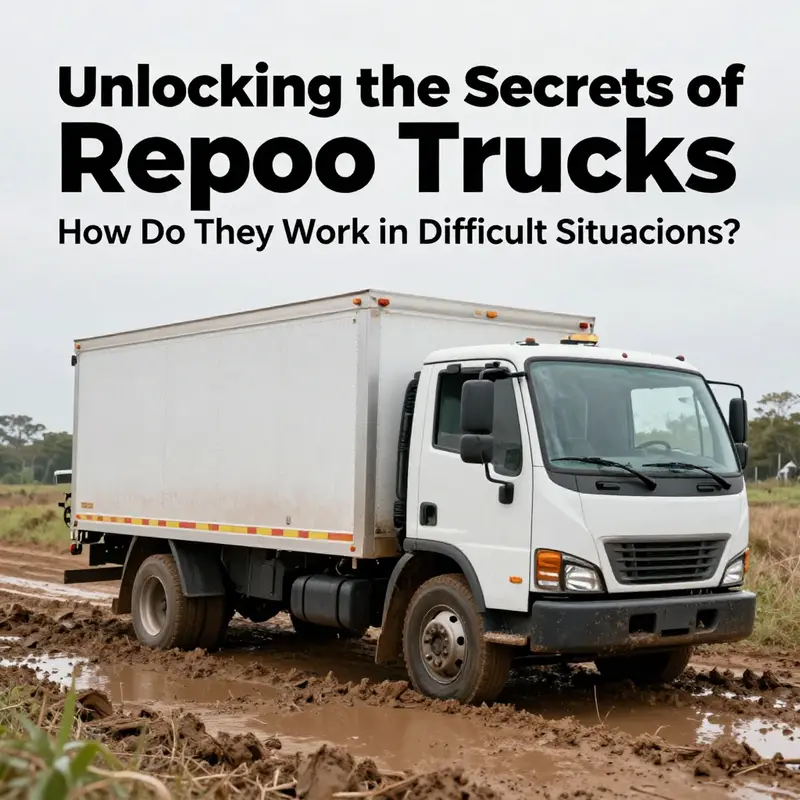
Repossession tow trucks sit at the intersection of legal frameworks, practical engineering, and disciplined judgment. The core mission is simple in theory: recover a vehicle under contract. The reality, however, is far more nuanced, especially when the recovery unfolds in locations that push space, ground conditions, and timing to the limit. This chapter follows that nuance, tracing how repo trucks operate when the path is constrained, the ground is unstable, or the clock is running. It is a narrative about technique meeting prudence, and about how a fleet of skilled operators turns a potentially confrontational moment into a precise, lawful recovery. The guiding thread is that effective repossession is as much about knowing the terrain and the rules as it is about tugging a car onto a tow bed. In such moments, speed without safety is not speed at all, and legality without efficiency can render the effort futile. A well-run operation balances both, translating procedure into outcomes that preserve the asset, respect the owner’s rights, and protect the public from unnecessary risk.
Accessing vehicles in tight or hazardous locations represents one of the most persistent hurdles. A car might be wedged into a narrow alley, perched on a steep incline, or partially submerged in water where wheels cannot gain traction. In these scenes, traditional towing—the straightforward flatbed or wheel-lift approach—often proves impractical. The alternative is on-hook towing, a method that attaches secure hooks directly to the vehicle’s frame or hitch. When the owner is cooperative and the position permits, on-hook towing provides a clean, non-invasive recovery path. It allows the operator to apply controlled force with a precise line of pull, minimizing collateral damage in surrounding spaces. But hooks do not erase risk; they demand exacting maneuvering, a careful assessment of angles, and a clear plan for the arc of the pull. The operator must chart a path that avoids striking nearby walls, fences, or parked cars, while anticipating ground shifts that could alter the vehicle’s alignment mid-recovery. Pre-recovery briefings with the owner or property manager, a quick survey of obstacles, and a mental rehearsal of the pull sequence transform potential chaos into a controlled operation. For those curious about how maintenance and safety underpin these decisions, the mastertruckrepairllc blog offers practical perspectives on keeping heavy equipment in top shape and ensuring crews operate with discipline.
Where space or surface conditions degrade, off-road and winch-based recoveries become essential. A high-clearance recovery vehicle, equipped with winches, pulleys, and heavy-duty cables, can extract a vehicle from mud, snow, a ditch, or uneven terrain without compromising the frame. These solutions are not add-ons; they are engineered responses to terrain that would thwart a conventional tow. The success of such operations hinges on more than horsepower. It rests on the driver’s judgment about anchor points that won’t tear into a bumper, about winch tension that avoids line slippage or rope fatigue, and about coordinating with spotters to keep bystanders at a safe distance. In rural environments or during emergencies, the winch approach can be the decisive factor between a recovered asset and a extended, damaged process. The equipment’s readiness—hydraulic systems, wire rope integrity, brake control, and tire traction—is ensured through routine checks, meticulous maintenance logs, and a culture of proactive care. The capability to switch from a straightforward hookup to a controlled winch pull reflects a repossession team’s versatility and readiness for the unknowns that terrain and timing can throw at them.
Time pressure adds another layer of complexity. Vehicles left unattended, or recoveries that must occur after hours, push teams to work with urgency while preserving safety and staying within legal boundaries. Speed becomes a logistical optimization rather than a reflex. Operators continually weigh factors such as accessibility, surface stability, and the likelihood of escalating tensions. Is the vehicle accessible without forcing entry? Is there enough room to maneuver without endangering pedestrians or property? Will the location permit safe attachment and line tension without movement that could injure bystanders or damage nearby structures? These questions guide a decision tree that rarely reads like a single best choice; rather, it resembles a sequence of tailored moves that respond to evolving conditions. When access is straightforward, on-hook towing might suffice and minimize disruption. When access is blocked, a staged approach—securing the site, coordinating with property owners, and selecting the recovery method that aligns with risk thresholds and legal requirements—protects the vehicle and everyone involved. The craft lies not only in choosing the method but in sequencing it with restraint and clarity under the watchful eyes of legal constraints and public scrutiny. A seasoned operator understands that haste can blur judgment and invite mistakes, while deliberate pacing in the right moments can transform a potentially tense episode into a smooth, documented recovery.
Behind the hands-on mechanics lies an unspoken philosophy: safety and compliance are inseparable from effectiveness. Repossession must proceed legally and without breach of peace. Often this means collaborating with law enforcement, property managers, or the vehicle owner to reduce tension and avoid confrontations. Trespassing is avoided, private property lines are respected, and threats or force are not part of the toolkit. Even when the scenario seems cooperative, operators carry crisis plans for unexpected developments—alarm systems that could complicate a hook, vehicles in reverse gear, or the arrival of the owner during a recovery. This contingency mindset is a hallmark of professional repossession work: it blends mechanical know-how with the soft skills of communication, timing, and de-escalation. Maintaining a fleet of capable tow rigs also requires attention to gear integrity and procedural safety. Chains, straps, mounting points, winch lines, and brake systems must be inspected and renewed on a schedule that reflects the wear from difficult recoveries. The operator’s hands are not just skilled at connecting a hook or winding a winch; they are trained to read scenes, anticipate failures before they happen, and communicate with calm confidence to all parties involved.
In many moments, these factors converge into a coherent practice that enables difficult recoveries to proceed with accountability. The work is rarely glamorous, but it is methodical, repeatable, and built on a foundation of respect for the law and for the property being recovered. For readers seeking broader context on the trucking world and how maintenance and safety weave into every demanding operation, the mastertruckrepairllc blog provides grounded, practical perspectives that illuminate the underpinnings of heavy-vehicle work. This resource complements the narrative by connecting the theory of safe, legal repossession with the everyday realities of keeping large vehicles ready for difficult scenes.
As operations continue to evolve with better equipment, clearer regulations, and increasingly diverse recovery environments, repo trucks remain adaptable by design. They are not a single tool but a suite of approaches—on-hook pulls for cooperative recoveries, robust wheel-lift and flatbed configurations for straightforward removals, and winch-driven methods for challenging terrain. The competence of the crew, their adherence to procedures, and the stability of their equipment create a dependable standard for a process that, at its core, depends on the ability to recover what is owed without compromising safety, legality, or the trust of the community. In the end, the edge at which repo trucks operate is not just a physical boundary but a mental one: the boundary where speed, safety, and law meet, and where disciplined practice turns difficult scenarios into orderly, documented recoveries. For those who want to explore more about the balance of maintenance, safety, and practical operation in this field, the linked internal resource offers a gateway into the broader world of heavy-truck upkeep and responsible handling of complex jobs.
External reading for deeper consumer-context understanding: For further information on consumer rights and repossession procedures, see the Consumer Financial Protection Bureau resource on vehicle repossession: https://www.consumerfinance.gov/owning-a-home/vehicle-repossession/
GPS, Garages, and Guardrails: How Technology Shapes the Modern Repo Truck
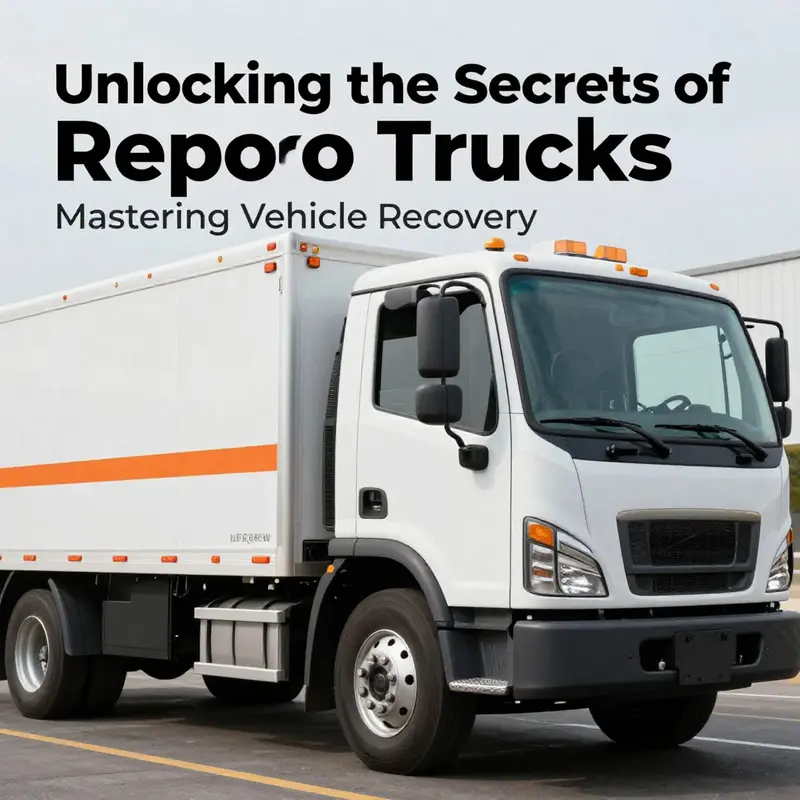
Across the spectrum of asset recovery, the repo truck has evolved from a blunt tool into a data-driven operation that blends legal compliance, real-time visibility, and field safety. The vehicle only looks like a simple tow rig until you consider the streams of information coursing through its systems. Modern repossession teams rely on technology not as a distraction, but as a disciplined layer of assurance that the recovery is efficient, defensible, and minimally disruptive to all parties involved. The core workflow—approach, secure, transport, and document—has become a tight, auditable loop where each step is supported by sensors, networks, and analytics that were unthinkable a decade ago. In practice, this means that a repo truck is less about brute force and more about coordinated, compliant execution under the watchful eye of regulators, lenders, and the courts. When you see a tow rig now, you’re looking at a mobile command center whose value arises from data as much as horsepower, from a digital trail as tangible as the steel beneath its chassis.
The most visible of these advancements is real-time telematics and GPS tracking. Fleet managers and repossession agents no longer guess where a vehicle might be or worry about the last-known location slipping into memory. Telematics systems pull data about location, speed, engine status, and the operational state of the recovery equipment, all in near real-time. That visibility has two practical effects. First, it allows planners to choreograph multiple pickups with precision, synchronizing rounds to minimize travel time and fuel use while maximizing safety. Second, it creates an auditable trail that can be critical if the repossession is contested in court or questioned by regulators. If a dispute arises about when a vehicle was secured or how it was transported, the telematics log becomes a central piece of evidence, reducing ambiguity and accelerating the resolution process.
Onboard cameras and sensor arrays add another layer of accountability. Dashcams, interior cameras, and exterior sensors capture the moment of service and the conditions around the vehicle during recovery. These records are not meant to vilify, but to document fact patterns—the owner’s requests, the agent’s actions, the absence of force or threats, and any interactions that might become relevant if something goes awry. Interior cameras can capture the negotiation context, while exterior cameras can document obstacles, terrain, or obstacles to safe towing. Sensors that monitor door and hood access, vibration, or hook/tinplate engagement alerts help detect tampering or accidental misalignment before it becomes a problem. In an environment where tensions can flare quickly, having reliable video and sensor data helps keep people focused on safe procedures and lawful conduct rather than uncertain interpretations of events.
The workflow is further streamlined by digital documentation and mobile applications. Field agents can complete repossession reports, capture digital signatures, and upload photos or short videos from the scene, all from a rugged tablet or a secure mobile device. Paper forms are increasingly replaced by structured digital templates that enforce required fields, reducing back-and-forth with clients or legal teams. The immediate capture of information reduces the lag time between recovery and notification to the lienholder, storage facilities, or auction channels. It also improves accountability for what is actually left inside a vehicle after it’s repossessed—an issue that sometimes triggers disputes about personal belongings. The digital trail supports faster, smoother handoffs to subsequent steps in the lifecycle of the asset, from storage to auction, and it helps ensure that every action is traceable and compliant with scope-of-work restrictions and state laws.
Predictive maintenance completes the trio of transformative technologies shaping the repo truck’s capabilities. AI and machine-learning models analyze historical and real-time vehicle performance data to anticipate mechanical issues before they become roadside failures. A subsystem showing rising ambient temps in a bearing assembly or an unusual pattern in hydraulic pump cycles can trigger preventative checks or preemptive maintenance. This proactive approach reduces downtime, saves costs, and keeps the truck available for planned operations rather than sidelined by avoidable breakdowns. It also contributes to safety, because a well-maintained vehicle is less likely to suffer a failure during critical recoveries, where timing and control matter as much as torque.
In practice, these technologies interlock to support a single objective: lawful, efficient, and safe asset recovery. The legal framework that governs repossessions emphasizes the avoidance of breach of peace, trespass, or coercive conduct. Tech does not erase this obligation, but it reframes legitimacy from a purely manual act into a demonstrable process. If a vehicle is parked in a public or private space, a repossession team can verify the vehicle’s location, confirm proper notice has been delivered, and ensure that the approach remains non-confrontational. It becomes easier to demonstrate that the carrier did not coerce the owner, did not force entry, and did not engage in any behavior that could be construed as unlawful pressure. The combination of real-time location, documented interactions, and tamper-proof transport logs helps courts and regulators understand exactly what transpired and when, which can significantly influence disputes about rightful ownership, financial liability, and chain-of-title.
The integration of technology also reshapes the relationship between the agent, the vehicle, and the lender. When a cooperative repossession is possible—where the owner agrees to allow the tow to proceed—digital workflow tools can facilitate a smoother handoff. Real-time status updates, electronic signatures, and transparent routing reduce friction, improve transparency, and streamline communication channels among all stakeholders. Even in more challenging recoveries—vehicles stuck in mud, snow, or on private property—the tech stack supports safer, more controlled operations. For example, winch-based recoveries rely on precise pull calculations and load monitoring; sensors can help ensure winch tension stays within safe limits while GPS confirms the vehicle’s path to a recovery point. This measured approach helps protect both property and personnel from injury or damage, while preserving the integrity of the asset during transport.
The role of data governance cannot be overstated. Chain-of-custody for the recovered asset begins long before the tow begins and extends through storage, inspection, and auction. The digital documentation and video records provide an auditable timeline that can be inspected by the lienholder or, if necessary, by consumer protection authorities. Privacy considerations must be balanced with evidentiary needs, and agencies often implement strict access controls to ensure only authorized personnel can view sensitive information. By fostering transparent, accountable processes, technology reduces the likelihood of miscommunication or misinterpretation and strengthens the legitimacy of the repossession action.
As the industry continues to digitalize, the repo truck becomes a node in a larger ecosystem of connected industrial operations. The same principles that drive industrial IoT in other sectors—visibility, reliability, predictive analytics, and secure data handling—are finding resonance in asset recovery. The resulting gains are not just about speed; they are about reducing risk, ensuring compliance, and preserving the value of the asset being recovered. This evolution mirrors broader shifts toward smarter fleets, where a single vehicle is part of a networked system that enhances performance through data-informed decision-making. For operators, the practical takeaway is simple: invest in robust telematics, reliable cameras, secure mobile documentation, and proactive maintenance, and you gain a more controllable, defensible, and efficient recovery operation. See how these concepts align with fleet optimization in the context of small fleets: optimizing fleet size and maintenance for small fleets.
Ultimately, the repo truck of today is a disciplined blend of mobility and measurement. Its identity is less about power alone and more about how well it integrates with a chain of information that supports legal compliance and operational excellence. The vehicle’s role in asset recovery—once driven by discretion and brute force—has become a carefully calibrated process where every mile driven, every camera recording, and every digital signature contributes to a smoother, safer, and more defensible outcome. The result is a fleet that delivers not only assets to auction but also trust to lenders and peace of mind to borrowers who may have found themselves facing difficult financial circumstances. This is the steady maturation of a field that must balance practical recovery with the rights and expectations of individuals, all while leveraging technology to bring clarity to what can otherwise be a contentious moment. External perspectives on the broader trajectory of industrial vehicle technology illuminate why such integration matters: https://www.reuters.com/technology/tech-2025-industrial-vehicles-2026-01-15/.
Final thoughts
Repo trucks are integral to the vehicle recovery industry, requiring an understanding of their operation mechanisms, legal compliance, challenges, and technological advancements. For fleet managers, trucking company owners, and logistics providers, having comprehensive knowledge about repo trucks not only helps in understanding recovery processes but also prepares them for situations where vehicle repossession may be necessary. By ensuring adherence to legal frameworks and deploying the right technology, businesses can effectively enhance their operational efficiency and reduce risks associated with vehicle recovery.