
Locating dependable semi truck repair services is crucial for fleet managers, logistics operators, and those in construction and mining. Addressing repair needs promptly not only minimizes downtime but also protects your operational efficiency. This article delves into effective strategies for sourcing repair services. We will explore how local providers like PAD Heavy Diesel & Commercial Tire play a vital role, the significance of mobile repair services, the benefits of utilizing review platforms for informed decision-making, and the need for comprehensive service perspectives to ensure the reliability and longevity of your fleet.
Roadside Reliability: How to Locate Semi Truck Repair That Keeps Your Fleet Moving
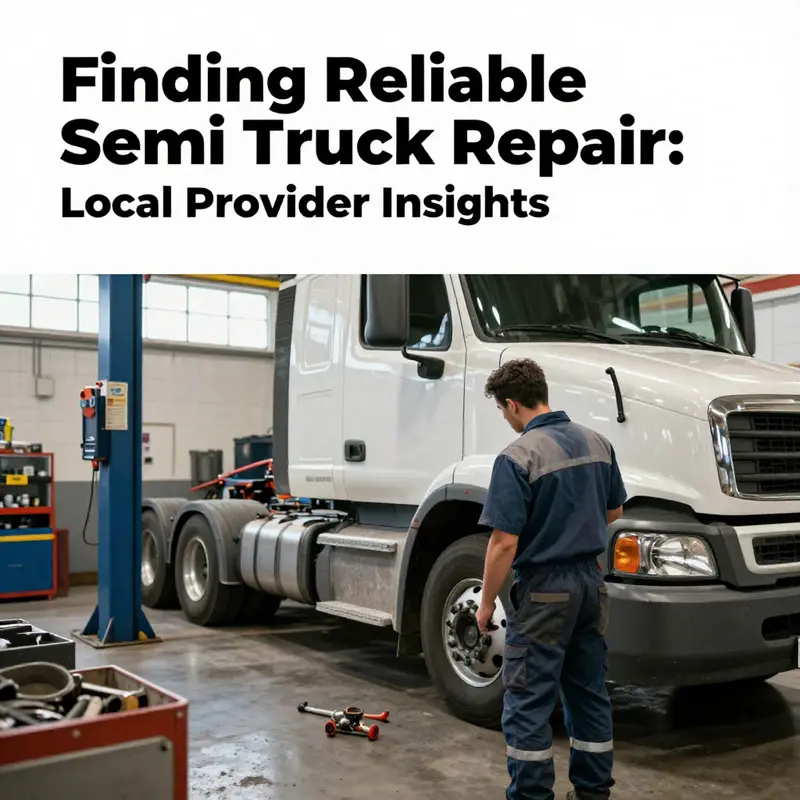
When a semi truck grinds to a halt, time becomes the most expensive cargo you carry. The question that follows isn’t just where to buy parts, but who can fix the vehicle quickly, safely, and with the least disruption to your schedule. In many regions, the most dependable answer is to look for a local provider that offers a full spectrum of heavy-truck services, with the added advantage of mobility. A strong local shop will not only perform repairs in a workshop but also come to the truck’s location when time is critical. This on-site capability matters because a breakdown can happen on a highway shoulder, in a remote yard, or in a congested industrial park, and every minute saved translates into a smoother overall operation for the fleet. The right local partner understands this balancing act and builds their service model around rapid response and practical outcomes rather than long downtimes and endless queues of trucks waiting for a window in a crowded schedule.
In practice, the local provider you choose should offer more than a single fix or a narrow specialty. The most valuable shops position themselves as one-stop shops for heavy trucks. They are equipped to handle routine maintenance, parts replacement, and tire services, in addition to emergency repairs. Maintenance is often the best prevention, because a well-tuned fleet reduces the frequency and severity of roadside failures. Tire health, in particular, is a crucial area that cannot be neglected. A professional shop understands the nuances of tire inspection, pressure management, and repair techniques, ensuring that every wheel is ready for the next leg of the journey. When a breakdown occurs, it is equally important that the shop can provide or arrange the right parts with minimal delay, whether that means swapping out a failed component on-site or coordinating a swift tow and subsequent repair at the shop. The goal is to keep the truck moving, or at least minimize the time out of service, rather than creating a cascade of delays that ripple through the entire route.
The mobile service model deserves special attention. A provider that can dispatch technicians to an immediate location reduces downtime dramatically. Mobile teams bring the workshop to the road—carrying diagnostic tools, diagnostic software, and essential repair parts—so the truck can resume its route with the least interruption. This capability is especially valuable for fleets that operate across large geographies or in regions where downtime costs are high. Roadside emergencies require not only technical know-how but also efficient logistics: the technician has to assess, order, and implement in a single field operation or, when necessary, arrange safe towing to a nearby facility with the least disruption to the rest of the fleet.
Beyond the quick fix, the most reliable local providers articulate a broader commitment to vehicle longevity. They offer preventive maintenance programs that align with the truck’s duty cycle and the fleet’s operating schedule. Regularly scheduled inspections catch wear and tear before it becomes a failure, preserving uptime and extending asset life. A trusted shop communicates clear maintenance plans, including recommended service intervals, inspections for critical systems, and a transparent estimate process. In markets where competition is intense, these practices become a differentiator. Shops that consistently deliver accurate diagnostics, fair pricing, and prompt service cultivate trust with fleet managers who rely on predictable maintenance to meet their delivery windows and fuel efficiency targets.
Choosing a local provider also means evaluating the practice environment. A reputable shop prioritizes vehicle security and convenience for waiting customers, when appropriate. Think of it as a repair partner that not only fixes the problem but also respects the driver’s time and comfort. Adequate parking during service is more than a convenience; it reflects a concern for safety and workflow efficiency. A well-run operation will have a streamline intake process, clear communications about the work being performed, and a reasonable timeline for both diagnostic assessment and completion. In the best cases, a waiting area or concierge-like setup makes the experience less stressful for drivers who must remain nearby while repairs proceed. This kind of attention to the human side of repair is often as important as the mechanical expertise involved.
An important aspect of locating a capable local provider lies in the tools and equipment they bring to the table. For tire-related work, the availability of a proper truck tire repair machine—whether manual or electric-powered—significantly influences repair efficiency and safety. In roadside settings, a manual unit can be a reliable companion for quick, field-side tire repairs, where power sources are unreliable or limited. In a workshop environment, electric-powered tire machines with auto-seal capabilities offer faster turnaround and higher throughput, enabling fleets to minimize downtime during busy periods. The right toolset dovetails with the technicians’ expertise to deliver repairs that are solid, repeatable, and safe. This combination of equipment and know-how is what ultimately separates a temporary patch from a durable fix that keeps a truck on the road.
Of course, no chapter on finding repair options would be complete without considering reputation. Local opinions, gathered through reviews and testimonials, function as a practical barometer of reliability. A single positive narrative about a shop’s competence, speed, or courtesy can carry weight, especially when a fleet is balancing multiple bids for an urgent repair. The broader point is to read between the lines in reviews: do customers emphasize the speed and accuracy of diagnostics, the transparency of pricing, the friendliness of the crew, and the practicality of on-site service? Do drivers describe a transparent communication flow from the moment a service request is logged to the moment the job is completed? These qualitative signals, when combined with a shop’s demonstrated capability to manage heavy-truck workloads, provide a more complete picture than credentials or certifications alone. In a tightly contested market, such feedback often correlates with repeat business and long-term reliability, two indicators fleet managers value as much as any technical measure.
To ground this discussion in a concrete, real-world frame, consider the larger market context. The truck maintenance and repair landscape remains highly competitive, with a mix of local operators and larger networks competing for regional and state-wide service contracts. That competition generally pushes quality upward. It also means drivers have more options to compare: service scope, technician specialization, response times, and the overall customer experience. The emphasis on competition helps ensure that local shops continually invest in training, diagnostic capabilities, and process improvements. For a fleet seeking a reliable partner, the takeaway is straightforward: investigate the local options, compare what they offer beyond emergency response, and prioritize those with a demonstrated track record in heavy-truck repair and maintenance across a broad range of needs.
For those who want a practical path to evaluating providers, start with a simple, core checklist. Confirm whether the shop covers maintenance, parts replacement, and tire services in addition to emergency repairs. Ask about their emergency response times and whether they offer mobile service. Inquire about the availability of specialized tire equipment and the capacity to handle the common tire issues that fleets encounter on the road. Request information on diagnostic capabilities, the kinds of parts they stock, and their warranty terms. A reputable operator will provide clear answers, transparent pricing structures, and a straightforward process for authorizations and estimates. Another important touchpoint is the intake and communication flow: will you receive proactive updates, ETA revisions, and direct access to the technician overseeing your job? The best providers integrate the human and technical sides of repair, delivering not just a fix but a reliable experience you can count on when a crisis hits.
As you navigate these considerations, a useful resource emerges for fleets that want to plan ahead. The concept of building an emergency repair fund can be invaluable when the clock is ticking and cash flow must stay within budget. For those looking to explore practical guidance in this area, see the dedicated guide on Building an Emergency Repair Fund for Truck Owners. This internal resource offers actionable steps to prepare for high-stakes repairs, including budgeting tactics, contingency planning, and best practices for engaging service partners under pressure. Building an Emergency Repair Fund for Truck Owners. The guide is designed to complement the work of a competent local repair shop by ensuring you have the financial buffers to manage unexpected downtime without compromising safety or service quality.
In broader terms, the way you approach finding semi-truck repair partners should feel deliberate rather than reactive. Begin with a regional scan for providers that advertise full-service heavy-truck capabilities and mobile repair options. From there, narrow the list by reading recent customer feedback and verifying practical details such as response times, service area coverage, and the ability to work with your maintenance schedule. In many cases, the most effective choice is a shop that demonstrates consistency across three pillars: rapid diagnostic and repair, robust on-site and in-shop capabilities, and a reputation for clear communication and fair pricing. A provider that can balance these factors is more likely to keep a fleet on the move rather than waiting in limbo for a schedule that fits only the shop’s calendar. The road to reliability starts with a careful choice of partner, not a single quick fix.
As you consider the options, remember to keep the human element in view. Drivers, fleet managers, and technicians operate within a dynamic ecosystem where communication, trust, and accountability matter nearly as much as the wrench and the diagnostic scanner. The best local providers recognize this and structure their operations around the needs of real-world trucking life: the need to reduce downtime, to maintain safety standards, and to keep the logistics chain intact. When you pair a capable, well-equipped shop with a responsive mobile service option, you create a flexible repair strategy that aligns with the unpredictable rhythms of freight operations. It’s this adaptability—paired with a proven track record—that ultimately determines whether a repair becomes a minor bump on the route or a costly, time-consuming setback.
External resource: industry database
On the Road to Repair: How Mobile Semi-Truck Service Keeps Fleets Moving
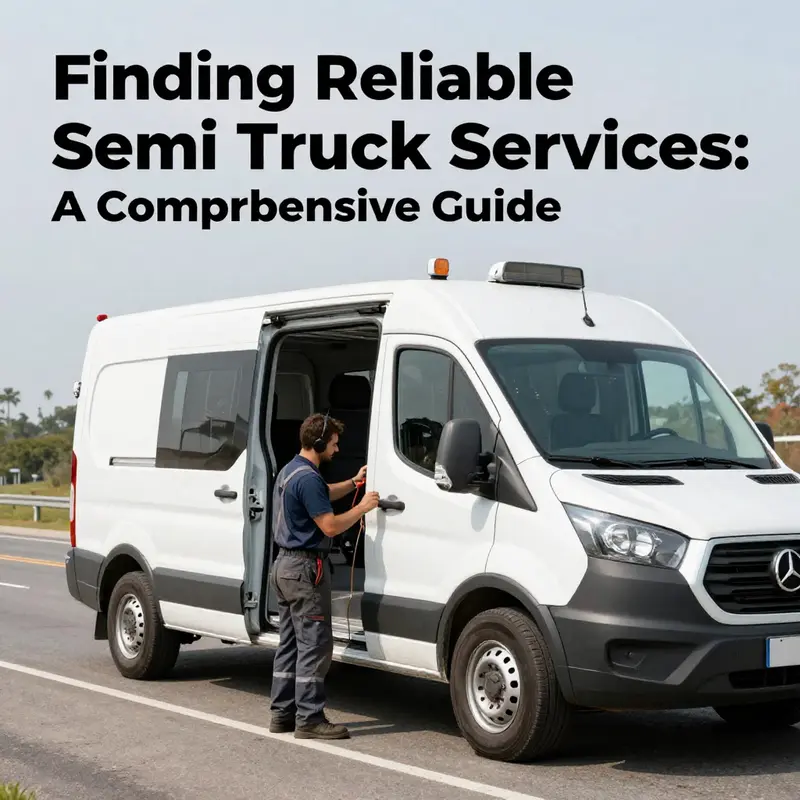
A semi-truck operates in a world of tight schedules, shifting loads, and high stakes. When a big rig breaks down, the clock starts ticking in ways that ripple through every link in the supply chain. In this landscape, the ability to access repair services where the truck sits is more than a convenience—it is a strategic necessity. Mobile repair units, crews that bring tools, technicians, and spare parts directly to a truck’s location, have emerged as a practical bridge between downtime and uptime. Rather than waiting for a tow to a shop and then enduring the queue of service bays, fleets can benefit from rapid diagnostics and repairs on the spot. This approach is especially valuable for regional routes, dockside deliveries, and remote worksites where traditional repair shops are hours away. The payoff is straightforward: faster return to service, lower towing costs, and less disruption to delivery commitments.
What mobile semi-truck repair really provides is a portable, self-contained solution. These units arrive with a toolkit of diagnostic equipment, a small but carefully chosen parts inventory, and technicians trained to handle heavy-duty systems. They’re not a substitute for every repair—some situations still require a full shop, a lift, or specialized facilities—but they excel at the most common and time-consuming issues that derail a fleet’s schedule. Brakes that feel spongy, electrical faults that trigger alarms and illuminate dashboard warnings, engine hiccups that degrade performance, or a flat tire in a critical stretch of highway—all can be addressed with on-site expertise and a measured plan. The ability to diagnose quickly and act on-site prevents minor problems from becoming major ones and turning into days-long delays.
For fleet operators and independent drivers alike, on-site repair is more than speed; it is predictability. A mobile unit can arrive, assess, and perform a repair in a fraction of the time it would take to arrange a tow, schedule a fixed-location appointment, and transport a vehicle to and from a shop. When a truck is carrying a full load, downtime is not a mere inconvenience but a loss in revenue. Mobile services address safety concerns as well. When brake components or electrical systems fail, the risk of an accident or a failed delivery increases dramatically. On-site intervention minimizes risk by restoring critical systems in proximity to the original operating environment. The service crew can also offer rapid advice on whether a vehicle should continue with a load, detour, or be taken out of service for a more thorough inspection.
The practical setup of these mobile operations is itself a story of logistics. A typical mobile repair unit is designed to function as a compact workshop. It carries diagnostic tools for engines, transmissions, brakes, and electrical systems, as well as portable power sources, a satellite or cellular connection for remote diagnostics, and a curated assortment of spare parts that cover a wide swath of common failures. The technicians bring a combination of mechanical expertise and diagnostic acuity, which allows them to rule out electrical gremlins, mechanical failures, and software errors in a single field visit. The result is a more reliable turn-around for emergency repairs and a tighter control over maintenance windows. In many cases, the presence of a mobile repair unit means that a fleet can keep rolling with minimal disruption, even when a breakdown happens far from the nearest fixed shop.
To a fleet manager, the value proposition of mobile repair is often expressed in three practical metrics: response time, repair duration, and cost containment. Rapid response minimizes the window of downtime; shorter repair sessions reduce the risk of subsequent issues that can arise from a rushed or multi-leg fix. The cost advantage is twofold: the avoidance of towing fees and the reduction of lost productivity while a truck is immobilized. When a mobile unit handles routine maintenance in the field—such as brake pad checks, tire replacements, or electrical system tests—it also helps extend the life of critical components. This proactive approach reduces the likelihood of cascading failures that would require a full shop visit. The cumulative effect is a fleet that stays closer to its planned schedule and maintains a steadier revenue stream, even in the face of weather, traffic, and load changes.
In the search for reliable mobility-focused repair, fleets often begin by identifying local providers who advertise on-site capabilities. The best operators make their service area clear, publish transparent response times, and emphasize their capacity to handle heavy-duty rigs. Reading through customer feedback becomes an essential part of the discovery process. Reviews on platforms that aggregate consumer experiences can reveal patterns in responsiveness, workmanship, and follow-up. A few drivers share stories of a mobile technician arriving within an hour to diagnose a brake issue at a rest stop, while others recount delays that turned a simple tire change into a tow and a tow-once repair scenario. These narratives matter because they illuminate a provider’s consistency, not just a single lucky rescue.
As you weigh options, it’s important to look beyond price alone. A fair rate matters, but the value of mobile repair hinges on how quickly and effectively the work is done. Certifications and training of technicians are worth verifying; a team that can diagnose electronically controlled braking systems, sensors, and telematics-based faults is particularly valuable in modern fleets. It’s also worth confirming what constitutes “on-site” service in practice. Some specialists can address most issues in the field, while others may advise a partial fix if a component requires a longer repair at a shop. Understanding the scope of work each mobile unit can perform helps prevent a mismatch between expectations and capabilities.
In this landscape, proximity and coverage area are not mere logistics; they shape the feasibility of relying on mobile repair as a core component of a fleet’s maintenance strategy. A service that can reach a truck within a reasonable travel time, say within an hour or two on typical roads, will be more useful than one that can only assist in a narrow radius. This is especially true for drivers in dispersed regions or for fleets with varied routes that traverse urban corridors and rural stretches. The best mobile repair providers build broad coverage into their operating model, maintaining the ability to service multiple locations in a day and to coordinate with drivers in ways that do not disrupt schedules.
For those who want to explore the broader ecosystem of on-site repair and maintenance, a practical path is to examine how mobile solutions are integrated with broader maintenance programs. When a fleet uses on-site service in tandem with scheduled preventive maintenance, the two approaches reinforce each other. Mobile technicians can perform diagnostic scans during routine checks, verify software updates, and top up consumables on the spot. A well-designed program will also have a clear escalation path for issues that require a longer fix, with a predefined plan for towing, parts procurement, and alternate transport if needed. The aim is to create a seamless continuity of operations, so a single breakdown does not cascade into a larger disruption across multiple routes or departments.
In addition to local options, there are broader pathways for fleets seeking portable repair capabilities. For institutions exploring scalable solutions, the market includes a range of mobile workshop configurations—self-contained service trucks designed to operate as miniature, fully equipped service bays. These platforms come with benches, tool storage, and power supplies, enabling a more comprehensive on-site job. They are especially appealing to larger fleets or to operators who want to standardize the on-site repair experience across multiple locations. Such options broaden the horizon of what “mobile repair” can mean, turning it from a reactive rescue into a proactive, scalable component of fleet maintenance.
To deepen practical understanding, it helps to connect with resources that discuss maintenance budgeting and the dynamics of fleet upkeep. For example, there are resources that focus on budgeting for routine maintenance, a discipline that supports the use of mobile repair by ensuring funds, parts, and labor are aligned with planned and unplanned needs. Integrating this planning with on-site service creates a resilient maintenance framework. When a driver or dispatcher knows there is a trusted mobile unit available within a predictable window, the decision to dispatch that unit becomes a straightforward, data-informed choice rather than a rushed last-minute call.
As drivers and fleets navigate this landscape, a balanced approach is wise. Build a short list of mobile repair providers based on proximity, availability, and demonstrated reliability. Reach out to confirm service hours, geographic reach, and what issues they can handle on-site. Use reviews to gauge consistency and customer satisfaction, but also factor in direct conversations with the technicians themselves. A good mobile service partner will explain the problem in clear terms, outline the fix, and provide a reasonable ETA that you can communicate to dispatch. It is also helpful to ask about warranty options on repairs performed in the field, since a strong on-site team will stand behind its work and offer follow-up support if needed.
The broader takeaway is that mobile repair is not just a convenience; it is a strategic element of modern trucking operations. It supports faster recoveries from breakdowns, contributes to safer operations by enabling timely fixes, and helps maintain the reliability that customers rely on when they schedule deliveries. It also aligns with best practices in preventive maintenance, because technicians in the field can verify system health during routine calls and flag issues before they become critical. When a fleet blends on-site repair with disciplined maintenance planning, the result is a more resilient network that can absorb the shocks of weather, road conditions, and the unpredictability inherent to long-haul work. In this sense, mobile repair serves as a crucial link between the road and the shop—the bridge that keeps the wheel turning and the schedule intact.
For readers seeking further practical context, consider exploring the broader ecosystem of maintenance resources and industry perspectives available through the dedicated fleet maintenance blog. It offers a range of insights on budgeting, plan design, and day-to-day operations that complement the on-site repair mindset. You can find more practical guidance and real-world experiences at the Master Truck Repair blog, which provides a repository of hands-on information tailored to truck owners and operators. Budgeting for Routine Truck Maintenance serves as a useful starting point for integrating financial planning with on-site service schedules, ensuring that a fleet can sustain emergency responses without compromising long-term care for vehicles.
As you pursue concrete options, remember that the landscape of mobile repair is dynamic. Regulations, regional labor markets, and logistics capabilities continually shape what is feasible. Yet the core value remains stable: getting the right mechanic, with the right tools, to the right truck, at the right time. When that alignment occurs, the question of “Where can I find semi-truck repair?” evolves into the confidence that you have a reliable, responsive, and scalable partner who can help your operation stay on course, even when the road throws a curveball. The goal is not merely to fix a defect but to preserve uptime, safety, and service integrity across the life cycle of a fleet.
External resource: https://www.alibaba.com/product-detail/Customized-Tool-Service-Truck-Maintenance-Truck_1600482957731.html
Finding Reliable Semi Truck Repair: Reading Reviews, Locating Mobile Help, and Planning for Downtime
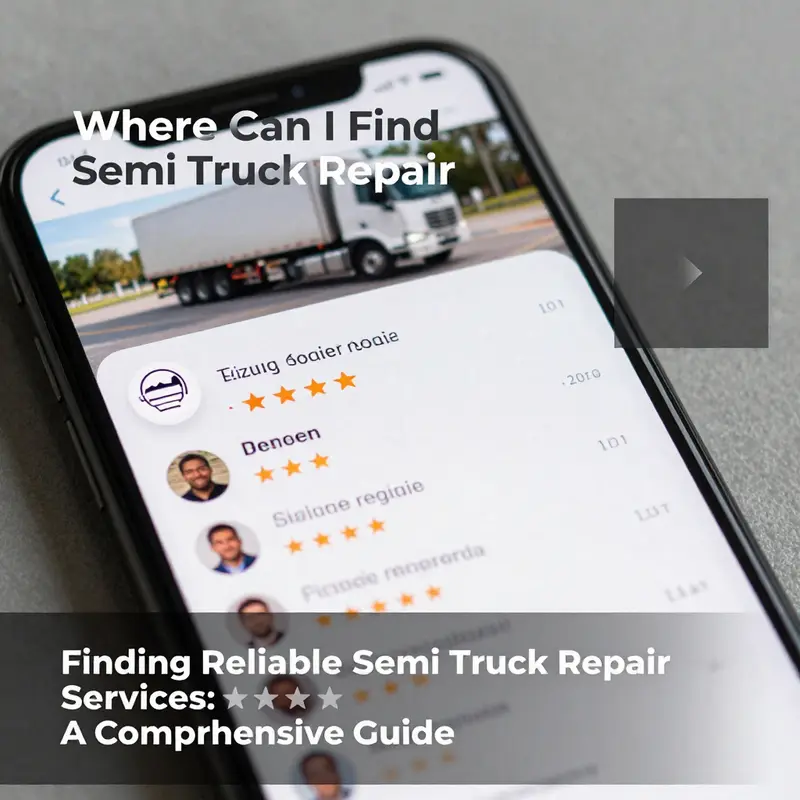
When a semi-truck breaks down, the question isn’t simply where to find a repair shop. It’s how you identify a partner who can minimize downtime, communicate clearly, and restore reliability quickly. In the world of heavy trucking, the clock is your most valuable metric, and the right repair relationship turns a day of frustration into a manageable schedule rather than a crisis. This is where review platforms become more than a convenience; they function as a map to trustworthy capabilities, real-world responsiveness, and practical outcomes that align with your operations.
Review platforms have evolved into more than rating boxes. They capture what happens before, during, and after a repair, including how fast a shop answers calls, how thorough a diagnosis is, and whether promised timelines hold under pressure. A single glowing paragraph can be informative, but it’s the pattern across several recent entries that reveals true reliability. When you skim through reviews, you’re looking for consistent signals: a shop that communicates early, explains what failed and why, and proposes a plan you can audit. You’ll notice whether drivers felt informed during the repair process, whether technicians listened to the truck’s behavioral clues, and whether follow‑up support was available if a problem recurred. These are not abstract niceties; they translate into fewer surprises when you’re miles from the nearest major city and dependent on a precise delivery window.
A practical approach starts with a broad search of local heavy-truck repair options. Use map-based searches and industry directories to assemble a short list. From there, drill down by reading recent reviews that describe the shop’s capacity to handle the specific issues you face. A key strength of this method is its emphasis on context. A repair that reads like a generic checklist may sound competent, but reviews that describe the truck’s symptoms, the technician’s diagnostic path, and the reasoning behind the proposed fix offer a more reliable signal. When you encounter a reviewer who mentions the exact make and model of your rig, the type of problem, and how long the repair took, you gain a clearer picture of what to expect in your own situation.
Mobile repair crews offer on-site service that saves valuable hours when a truck can’t wait at a shop. They can handle urgent diagnoses, tire service, and routine adjustments. But some complex problems still require a shop with heavy-duty diagnostic rigs, hoists, and a full parts inventory. The best framework for evaluating these options is to consider the nature of the job first, then match it to the service model. If the issue involves a routine maintenance need that can be diagnosed and completed in the field, a mobile technician with a well‑stocked van can be the optimal choice. For electrical gremlins, cooling system concerns, or intricate fuel and emissions-related work, you’ll likely want a shop with a more comprehensive toolkit and access to a broader parts network. In practice, the strongest repair programs combine both approaches: a trusted mobile option for urgent, roadside work and a reliable shop partner for deeper diagnostics and long-term maintenance planning.
To separate the signal from the noise, cross-reference reviews across multiple platforms. Pay attention to recurring themes: clear communication, accurate estimates, and a pragmatic plan to minimize downtime. A business with steady positive feedback and explicit, reasonable turnaround times tends to be more dependable. Look for reviewers who describe the timeline from first call to completion, noting any delays and how the team managed them. If several drivers report that the shop provided a transparent, itemized estimate and stuck to it, that is a strong indicator of integrity and professional management. Conversely, reviews that dwell on vague timelines, surprise charges, or evasive explanations are red flags you should not ignore. In heavy-duty work, the cost discipline matters just as much as the technical skill. A trustworthy provider will avoid jargon traps and offer plain-language explanations of the diagnosis, the fix, and the rationale behind any recommended preventive steps.
Beyond ratings, look for evidence of expertise in heavy-duty diesel systems. Check whether a shop describes its service scope with specificity—maintenance, parts replacement, tires, and on-site support—and whether technicians discuss fuel systems, air intake, cooling, and electrical work in plain terms. A narrative that reveals how the shop handles common heavy-truck fault trees can be more reassuring than a few lines about capability. It’s equally important to verify that the team understands the practical constraints of trucking operations: tight schedules, high-mileage wear patterns, and the need to align repairs with planned routes and cargo commitments. A service provider who can translate complex diagnostics into actionable, driver-friendly steps demonstrates the balance of technical mastery and operational sensibility that fleets rely on.
Hidden wear is a common trap in older trucks. A good mechanic will acknowledge the possibility of unseen issues and explain how they verify the condition of critical parts. They will talk about inspection intervals, potential for incidental wear, and how they plan to source quality parts without needless delays. Review notes that reference preemptive or preventive work—such as addressing transmission wear you might not notice until it becomes costly—signal proactive thinking. The best operators in the field aren’t chasing crisis repairs but partnering with you to prevent them. The conversation should cover diagnostic coverage, including how technicians verify subsystem integrity and how they prioritize fixes under the realities of a busy fleet schedule.
Model availability and parts supply matter, too. Some truck families share components, while others require specialized inventory. A repair partner with broad supplier relationships and a robust catalog can reduce backorders and keep your operation moving. When a shop describes its approach to parts sourcing, look for flexibility and transparency. Do they have preferred distributors, or do they rely on a broader network that can bridge gaps during peak demand? The quality of the parts workflow often determines whether a repair lasts beyond the first few hundred miles or a single weather cycle. A partner who can clearly articulate lead times for common parts and who provides interim solutions when parts are delayed demonstrates not just competence but reliability in supply chains that can otherwise bottleneck a fleet.
Another practical criterion is guarantees and warranties. Ask what coverage applies to repairs, how long the parts and labor are warranted, and whether the shop offers follow-up support if a problem recurs. Written estimates and agreed scopes of work help prevent disputes later on. In the field, warranties are more than a marketing promise; they are a safety net that anchors a repair to accountability. When reviewers describe their experience with follow-up calls, recall notices, or prompt accommodation of a warranty issue, you’re hearing valuable evidence that the shop stands behind its work. The simplest way to approach this is to request a formal written scope and confirm what the warranty will cover, including any labor carve-outs or exclusions tied to user-caused damage.
Communication quality often shows up in the first call. A competent shop will ask clear questions about symptoms, recent maintenance, and the most urgent goals. They will propose a plan, estimate timeframes, and set expectations for updates during the repair process. If a dispatcher or technician asks precise questions, you gain confidence that the interaction will translate into a smooth repair. When a shop explains the trade-offs between a quick roadside fix and a more thorough, longer-term repair, you see a maturity born from experience with real-world trucking demands. The best teams also provide realistic queuing strategies for busy periods and leave room for contingency planning in case a diagnostic step uncovers an additional issue.
Once you narrow your choices, reach out with a concise description of the truck, the symptoms, and the urgency. If a shop offers mobile service, confirm what it covers and whether it can come to your location at your preferred time. When you understand the options, compare the proposed approaches and costs side by side. This decision point often reveals differences in not just price but in the clarity of the plan. A provider that lays out what will be done, why, and how long it will take, and who will be on site, creates a confidence that goes beyond a quote. The ability to tailor the plan to your schedule and route plan—especially when you are balancing multiple loads and tight deadlines—marks a mature, customer-centric operation.
In the long run, building a reliable repair network pays off. Many fleets maintain preferred providers who understand their typical configurations and maintenance schedules. For solo operators, assembling a small, trusted group—combining mobile technicians with a nearby shop—can deliver balance between speed and depth of service. The advantage of a well-curated network is not only the speed of response but the consistency of outcomes across seasons and routes. If a driver has a prior positive encounter with a technician who knows their truck’s quirks, that continuity reduces the risk of misdiagnosis or miscommunication during stressful moments on the road. It also makes it easier to schedule preventive maintenance in a predictable window, which in turn reduces the chance of urgent repairs that disrupt critical delivery timelines.
For ongoing education, resources that discuss fleet maintenance planning can deepen the decision process. The Master Truck Repair Blog regularly covers topics such as budgeting for routine truck maintenance, building an emergency repair fund, and practical maintenance strategies that keep downtime predictable rather than alarming. This kind of content helps you frame repairs not as isolated incidents but as elements of a broader reliability strategy. By absorbing guidance on maintenance calendars, cost forecasting, and contingency planning, you can translate review-driven impressions into a repeatable process that strengthens your entire operation. For readers who want a concrete starting point, the blog offers practical steps, checklists, and cost considerations that empower you to make steadier decisions when the next breakdown occurs.
Ultimately, the goal is to translate online impressions into real-world outcomes: rapid recognition of a legitimate repair partner, truthful assessments, and a path back on the road with confidence. The right provider does more than fix a failed part; they become part of your logistics system, helping you plan maintenance cycles, forecast downtime, and align repair work with your cargo priorities. In a business where every mile matters, the credibility you gain from thorough review analysis translates into fewer blind moments and more predictable, reliable service. You don’t need a perfect network, just one that is reliable, transparent, and quick to adapt when a new challenge arises. That balance—speed when you need it, depth when you don’t—is the hallmark of a robust repair strategy.
Alongside this narrative, you can also consider reading fresh customer experiences on public review portals. Look for listings that describe the technician’s diagnostic approach, the transparency of the pricing, and the consistency of the service across different incidents. A well-documented track record that shows a pattern of reliable performance under pressure is worth more than a glamorous but incomplete claim. The best outcomes come from a process you can repeat: a clear initial assessment, a realistic repair plan, and a commitment to follow through with clear communication and dependable parts supply.
Finally, remember that a repair is not just about the moment of fix but about the reliability that follows. A trusted partner will help you schedule proactive maintenance, remind you of service windows, and keep a record of past repairs to inform future decisions. In other words, the value of review-driven research is not just about choosing today, but about shaping a resilient, predictable maintenance ecosystem for tomorrow. This mindset—coupled with a disciplined approach to selecting and nurturing repair partners—lets you turn downtime into a manageable cost rather than a recurrent business disruption. And when you pair that mindset with a practical plan for on-site and shop-based service, you gain the flexibility to respond to whatever the road throws your way.
For travelers who prefer to see examples, public review portals offer a window into how different repair providers operate under real conditions. Reading multiple perspectives helps you separate surface-level competence from sustained performance. When a few drivers mention similar outcomes—swift dispatch, thorough diagnostics, and a clear path to resolution—you gain confidence that the provider can handle the range of issues your fleet faces. The depth of understanding you cultivate through this process becomes your biggest asset in a landscape where uptime is the ultimate performance metric. External resources can supplement your internal assessment by offering broader industry perspectives, case studies, and guidelines on best practices for recovery operations across the country. External resource: https://www.yelp.com/biz/tacos-diesel-repair-ontario
From Roadside to Roadworthy: Navigating Semi Truck Repair Networks for Maximum Uptime
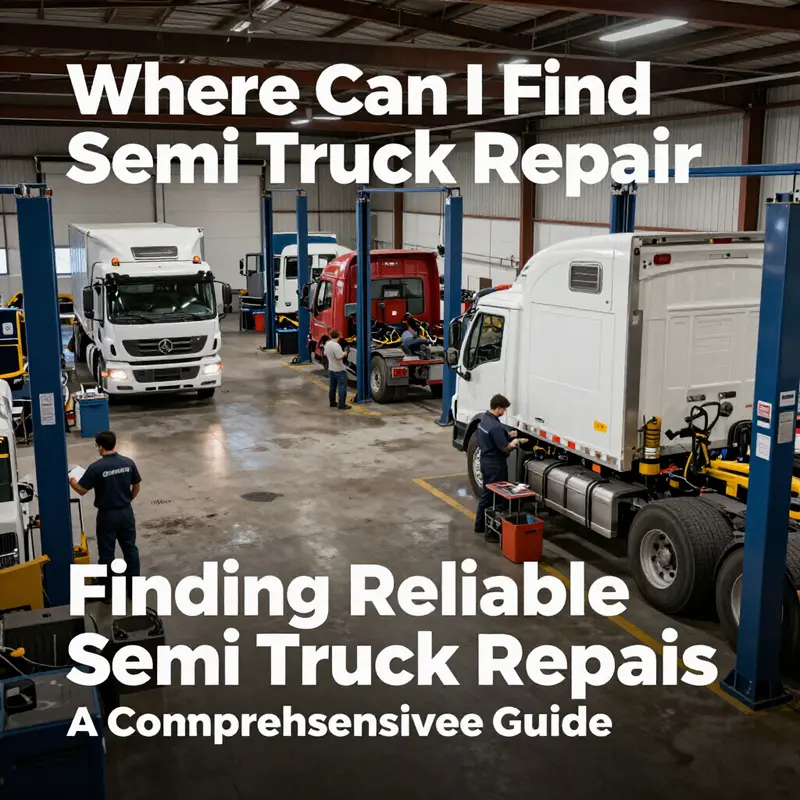
When a semi truck falters on a highway or pulls into a yard with a suspected drivetrain fault, the clock starts ticking. Every minute of downtime means fewer miles covered, missed deliveries, and the growing pressure to keep a fleet compliant, safe, and productive. The search for reliable repair services should therefore begin long before the next breakdown. A well-constructed repair network is not just a list of shops; it is a strategic ecosystem. It connects on-site capabilities, factory-trained technicians, access to genuine or high-quality parts, and a proactive maintenance philosophy that extends the life of equipment while reducing total operating costs. What emerges from careful consideration is a practical architecture: a blend of authorized, certified repair centers with a broader network of service partners who can diagnose, repair, and support vehicles across diverse routes, climates, and load profiles. The aim is uptime, predictability, and the confidence that your trucks will perform when needed and recover quickly when they don’t.
In the immediate term, the most dependable option is to work with authorized dealerships or certified repair centers that sit at the intersection of manufacturer standards and local accessibility. These facilities are equipped with diagnostic tools that belong to the original equipment manufacturers and are staffed by technicians who have undergone rigorous training. They understand the subtleties of each engine family, transmission family, and axle system, and they are the best bet when a fault involves software-driven controls, emission systems, or integrated powertrains. Relying on these centers minimizes the risk of misdiagnosis and ensures that parts and procedures align with the vehicle’s design intent. The emphasis here is not merely on fixing a symptom but on restoring all related subsystems to their intended performance envelope. In practice, this means technicians who can run factory-grade diagnostics, verify fault codes against service histories, and confirm that the repair does not create downstream issues elsewhere in the system.
Yet, the reality of fleet operations is that a truck may break down far from the nearest authorized facility. This is where a mobile or on-site repair capability becomes a decisive differentiator. Mobile teams—equipped to handle urgent repairs, light-to-medium battery or electrical work, and certain mechanical interventions—reduce downtime dramatically, especially when the truck is a strategic asset in a just-in-time delivery chain. Mobile service is not a cure-all; there are limits to what can be accomplished on the roadside or at a customer site. But when used as a first responder, it buys time while the vehicle is secured, towed if necessary, and matched to the most appropriate repair channel. The value of on-site response lies in speed and the elimination of unnecessary lane downtime while waiting for a tow or for a garage to open. It also helps maintain driver productivity by keeping the operations moving within the constraints of the fleet’s routing and schedule.
Beyond the immediacy of single repairs, there is a broader, more durable strategy: building a network that supports the vehicle’s lifecycle. A holistic approach treats maintenance as an ongoing partnership rather than a series of isolated fixes. In this model, the core advantage is a system of preventative maintenance programs that blend a schedule, predictive insights, and ready access to parts. The scheduling logic is not a simple calendar reminder; it is a data-informed rhythm that aligns maintenance windows with parts availability, technician expertise, and the operational calendar. This is where fleet-management solutions come in. When a provider can combine preventative maintenance with real-time telematics data, remote diagnostics, and proactive alerting, you gain an early view of potential failures. The fleet manager can anticipate issues before they escalate, plan repairs around downtime periods, and minimize the risk of unplanned breakdowns on the road. In practical terms, this means you receive notifications about lubricant condition, filter life, or sensor drift before a fault appears as a roadside event. The aim is not to chase problems after they occur but to nudge maintenance activities into windows of opportunity where they cause the least disruption and deliver the greatest reliability.
An expanded network is only as strong as the knowledge backing it. That means ongoing training for the technicians and staff who coordinate repairs. A robust program includes access to training resources that keep the team up-to-date with the latest technologies, diagnostic methodologies, and repair techniques. With a focus on continuous learning, technicians can handle unfamiliar fault codes, evolving systems, and new powertrain configurations more quickly and accurately. Training also has a practical dimension: it reduces cycle times, trims the cost of misdiagnoses, and improves safety outcomes by ensuring technicians are comfortable with the latest safety protocols and work practices. In the best-case scenario, training institutions or partner programs offer hands-on and simulated experiences that mirror real-world repair scenarios, so shop teams can translate classroom lessons into efficient field performance. A fleet that invests in this kind of knowledge currency tends to see faster turns in the workshop and a lower rate of repeat visits for the same issue.
There is also a sustainability dimension to repair networks that deserves attention. Remanufactured parts—restored to like-new condition through a rigorous process that leverages recycled components—can offer a compelling balance of reliability, cost, and environmental responsibility. For fleets seeking to reduce their climate footprint while preserving uptime, remanufacturing provides a path to keep critical systems in service with a smaller material impact than new parts. Adoption, however, should be guided by careful qualification: remanufactured components must meet OEM specifications for performance and durability, and the repair network must have clear standards for sourcing, testing, and validating these parts. When integrated into a well-designed maintenance program, remanufactured parts can help lower life-cycle costs and reduce waste without compromising performance.
To navigate this landscape effectively, a practical starting point is to map your current repair needs against the capabilities of an authorized repair ecosystem and the flexibility of a mobile service network. The goal is to establish a tiered approach: prioritize work to be handled by certified centers for critical diagnoses or complex repairs; reserve on-site teams for urgent, time-sensitive tasks that can be completed safely and efficiently in the field; and leverage preventative maintenance programs to reduce the frequency of emergency calls. Such a tiered strategy also supports risk management. If a high-severity fault arises in a remote location, you can rely on a prepared chain of escalation—from on-site triage to specialized shop repair—without scrambling for a last-minute solution. The governance of this network should include clear service-level expectations, transparent pricing, and a heartbeat of performance data that reveals turnaround times, parts availability, and technician utilization. When these elements come together, the repair network becomes more than a response mechanism. It becomes a strategic asset that drives uptime, preserves vehicle value, and stabilizes operating costs over time.
As you consider the structure of this network, you may find value in reviewing practical guidance on maintenance budgeting and long-range planning. A documented framework for routine maintenance helps ensure you allocate the right mix of capital and operating expenditure to keep the fleet in good shape. It also helps explain to stakeholders why certain investments—such as telematics subscriptions, remote diagnostics, or training programs—deliver tangible returns in uptime and reliability. For a practical starting point on budgeting for routine truck maintenance, see this resource: Budgeting for Routine Truck Maintenance. Integrating such guidance into your procurement and maintenance plans helps you convert a reactive repair culture into a proactive, cost-controlled service model.
To complement this internal perspective, consider how a broader external network can scale with your ambitions. The value of a large, qualified service network lies not only in the depth of its channels but in its ability to stay aligned with evolving standards. A partner network that offers preventative maintenance programs, real-time data, and remote diagnostics can significantly cut unplanned downtime. The combination of fleet-level data and on-site expertise also supports more accurate asset life-cycle planning, enabling you to optimize replacement cycles, depreciation schedules, and overall total cost of ownership. In practice, this means knowing when a truck should be retired from service or when a component should be remanufactured rather than replaced with a new part. The insight comes from a trusted partner who can translate telemetry and maintenance history into actionable maintenance windows and procurement decisions. When this level of integration is achieved, maintenance ceases to be a cost center and becomes a strategic driver of reliability and margin protection.
The journey to an integrated repair network is continuous. It requires ongoing evaluation of provider capabilities, responsiveness to emergencies, and alignment with your fleet’s unique operating profile. Small fleets may rely on an advisory group of trusted shops that cover a broad geography, while larger operators will benefit from a formalized service-level agreement that defines coverage zones, response times, preferred-part lists, and standardized repair processes. Regardless of size, the objective remains consistent: reduce downtime, maintain safety and compliance, and sustain predictable vehicle performance across diverse routes and weather conditions. When you achieve this balance, your fleet gains a resilient repair architecture that adapts to surprises on the road and preserves the long-term health of your equipment.
In this context, the role of information becomes central. A robust maintenance ecosystem relies on data—not guesses—to guide decisions. Every diagnostic session, every repair ticket, and every maintenance reminder feeds into a learning loop that improves future responses. With the right data, you can anticipate failures, schedule work during the most convenient windows, and negotiate terms with service partners that reflect actual usage and need. The result is not simply a repair history but a living blueprint for how your fleet can travel farther with fewer interruptions. And as repair networks mature, they enable more precise cost control, better driver satisfaction, and stronger resilience against the uncertainties of fuel costs, regulatory shifts, and supply-chain disruptions.
For fleets seeking additional practical pointers, the following approach often yields dividends: begin with a careful assessment of whether your current routine maintenance is anchored in OEM-certified procedures and whether your shop network has the capacity to handle the most critical fault modes in your operation. Ensure technicians have access to up-to-date diagnostic tools and that parts supply lines are reliable. Encourage the adoption of preventative maintenance plans that are tailored to your load profiles, operating environments, and duty cycles. Foster collaboration with a maintenance partner who can supply telematics-driven insights and remote diagnostics so that issues are flagged early. Consider the environmental and economic benefits of using remanufactured parts where appropriate, supported by a network that can validate performance and warranty terms. And maintain a culture of continuous improvement by periodically reviewing service performance against defined KPIs and adjusting the network accordingly.
If you are looking for a practical way to begin integrating these ideas into your operations, you can start by exploring the budgeting resource linked above. A deliberate, well-documented approach to maintenance budgeting creates a platform from which you can evaluate the costs and benefits of on-site repair capabilities, authorized repair channels, and proactive maintenance programs. It also clarifies where you should invest now to avoid larger expenditures later, ensuring that your fleet remains responsive and reliable across demanding routes and tight schedules. By treating repair networks as a critical part of fleet strategy, you empower your organization to convert uptime into reliable service, predictable performance, and sustained profitability.
For fleets seeking a broader view of how service networks operate at scale and how to align diagnostics and parts delivery with fleet performance, consider this external resource that outlines standards and practices for global parts and service networks: https://www.zf.com/en/aftermarket/ . This reference provides a window into how major players organize their service ecosystems, the emphasis placed on uptime, and the importance of harmonized diagnostics and parts standards in maintaining vehicle performance across geographies.
Final thoughts
Effectively locating semi truck repair services is a multifaceted approach that involves understanding local options, recognizing the significance of mobile services, and harnessing review platforms. As a fleet manager or a trucking company owner, utilizing these insights will empower you to make informed decisions that enhance your operational workflow. Embrace these strategies to ensure that your fleet remains reliable and efficient, allowing you to focus on what matters most: delivering exceptional service to your clients.