
Every minute of vehicle downtime costs money, especially for fleet managers and trucking company owners. An efficient mobile automobile repair truck outfitted with the right tools and equipment is essential in mitigating this loss. This comprehensive guide outlines the fundamental components each mobile repair operation should consider—diagnostic tools crucial for pinpointing issues, basic and power tools for efficient repairs, specialty equipment that addresses specific service needs, and mandatory safety gear to protect your team and property. Each chapter delves into these components, ensuring that your mobile repair truck is equipped to deliver timely and effective service directly to your vehicles.
The Mobile Workshop: Engineered Diagnostics for On-Site Vehicle Care
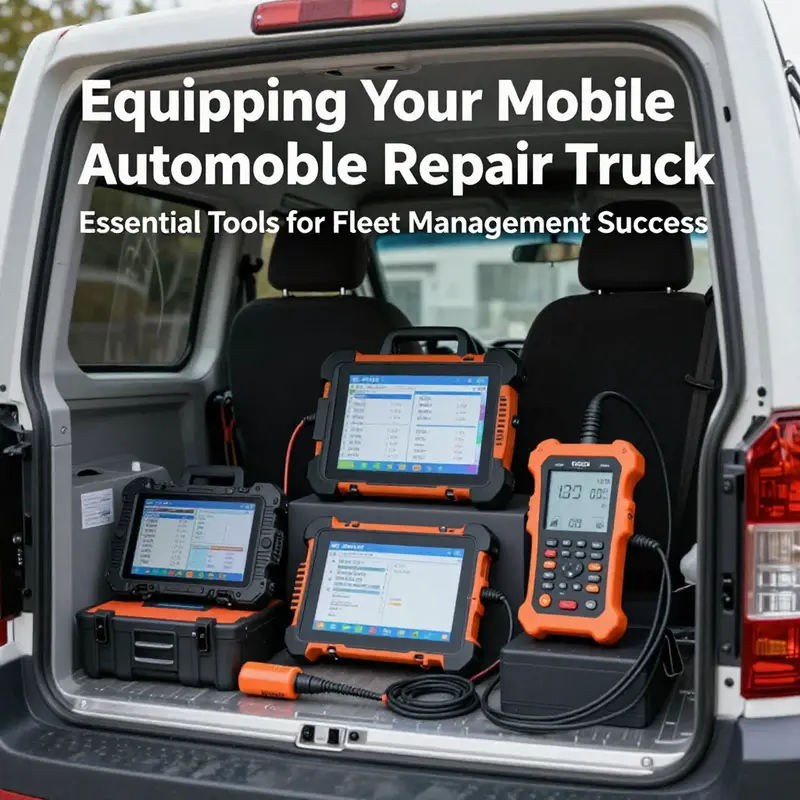
A mobile automobile repair truck is a small, highly capable workshop that travels to the customer and delivers the same level of technical precision you’d expect in a traditional shop — but with the added challenge of space, exposure to the elements, and the need for rapid triage. At the heart of any successful on-site service is a robust diagnostic suite. The diagnostic tools you bring do more than identify a problem; they define how quickly you can move from symptom to solution, how accurately you can verify a repair, and how confidently you can stand behind the work you perform in someone’s driveway, lot, or roadside. When you envision what to stock in a mobile repair truck, you start with the diagnostic core and then build outward, ensuring every accessory and tool reinforces the core capability: fast, accurate problem solving in the field.
The centerpiece is an advanced OBD-II diagnostic scanner that speaks the language of modern vehicles across brands and families. This is the core tool that unlocks access to trouble codes, real-time sensor data, and live system checks. A multi-brand compatible scanner is essential because the fleet you service may span different makes and models, some with advanced or proprietary modules. You want a device that not only reads codes but also presents live data streams in an organized, easy-to-interpret format. Engine speed, coolant temperature, fuel trim, and transmission data should be visible in real time, allowing you to observe symptoms as they occur and to correlate what the customer is describing with what the onboard computer is reporting. Bi-directional capabilities are a major plus. The ability to activate solenoids, perform actuator tests, or reset maintenance lights from the tool itself reduces the number of trips back to the shop and speeds repairs. Of course, software updates matter. Vehicle manufacturers push new protocols and new faults over time; a scanner that can update its software ensures you stay current with the latest diagnostic procedures and coverage for a growing library of models.
But the diagnostic tool is not a lone instrument. It sits in a connected ecosystem that includes a portable workstation, access to repair databases, and a tape measure of time and resources. A mobile technician needs to translate the code into a plan of action on the ground. That means pairing the OBD-II scanner with a professional-grade digital multimeter. In the field, your multimeter must measure voltage, current, resistance, and continuity with confidence. The focus is often on the electrical system: battery health, alternator output, ground integrity, and sensor signals. The vehicle’s electrical architecture can be complicated, and a good multimeter helps you verify battery voltage under load, measure charging performance, and pinpoint poor connections. It should be reliable, with auto-ranging and a clear display, because you cannot afford guesswork when you’re dealing with a customer’s livelihood or a fleet’s uptime.
For more intricate electrical diagnostics, an automotive-specific oscilloscope is worth the space it occupies. An oscilloscope provides a visual waveform of electrical signals over time. It can reveal intermittent faults that a multimeter might miss, such as irregular coil firing, noisy sensor outputs, or erratic valve timing signals. In practice, the oscilloscope becomes a diagnostic microscope for the energy and timing of signals: ignition patterns, crank and cam sensor relationships, and the health of wiring harnesses under dynamic conditions. The portable nature of many modern oscilloscopes makes them feasible in a mobile shop, but their true value is in the clarity and context they offer when the engine is running and symptoms are present.
Beyond the heart of electronics, there are core measurements that prove you’re looking at the right system and not chasing a phantom issue. A pressure test kit, including vacuum and fuel pressure gauges, is indispensable for diagnosing engine health and fuel delivery concerns. The vacuum gauge helps assess intake leaks, valve timing anomalies, and overall engine integrity by measuring manifold vacuum while the engine operates under various loads. A fuel pressure gauge, connected to the fuel rail, reveals the performance of the pump, regulator, and filtration system. When a customer reports hesitations, misfires, or rough starts, watching these pressures in real time can quickly point you to fuel delivery or air management faults rather than guesswork. The process becomes a disciplined, repeatable sequence: check codes, observe live data, verify electrical signals with a multimeter, test critical pressure points, and confirm results with a quick functional test.
In the field, the ability to act promptly depends on how well you can translate diagnostic insight into an actual repair. This is where portable air handling and power delivery tools come into play. An onboard air compressor and a compact impact wrench do not diagnose; they enable you to act. The air compressor provides the air supply for pneumatic tools, tire inflation, and certain tool consumables, while the impact wrench accelerates the removal of stubborn fasteners or heavy components that would slow you down if you had to break them loose with standard hand tools. The value lies not only in speed but in safety: the right torque, controlled removal of lug nuts, and the ability to secure components without damaging surrounding parts. The emphasis is on portable, reliable air power that remains available despite a rough ride or a tight scheduling window. In this sense, the diagnostic suite and the repair toolkit form a complete loop: identify, verify, and apply the proper corrective action with confidence and efficiency.
Even when you have a powerful diagnostic arsenal, some repairs require specialized tools that are compact enough for a truck’s interior and robust enough for field conditions. A small set of specialized gear — such as a spring compressor for suspension work, an oil filter wrench for stubborn filters, and a torque wrench to ensure correct fastener torque — complements the main diagnostic tools. These tools enable practitioners to address frequent issues without returning to a shop. The discipline here is not to overburden the truck with rarely used gear, but to curate a concise, targeted set that covers the bulk of day-to-day fixes customers expect you to handle on the spot. This thoughtful selection reduces follow-up visits, increases first-visit completion rates, and elevates the perceived professionalism of the service. The result is a mobile operation that leans into precision, rather than improvisation, when the engine is stressed or the road is unforgiving.
A well-planned stock of replacement parts and consumables completes the diagnostic-to-repair loop. The truck should carry a carefully chosen assortment of fuses, bulbs, belts, hoses, filters (oil, air, cabin), brake pads, and essential fluids — motor oil, coolant, brake fluid, and windshield washer fluid. While you cannot stock every possible part for every model, you can cover the most common replacements that buyers expect to be resolved on the spot. These consumables act as insurance against the downtime customers dread, and they reinforce the value proposition of the mobile model: immediate service and minimized disruption to the vehicle’s operation.
Beyond the mechanical and electrical instruments, the human and logistical aspects of diagnostic work are equally critical. A weatherproof, organized mobile workstation ensures tools, cables, and test leads are secure and accessible. Proper storage not only prevents damage during transit but also speeds execution in the field; a neatly laid out toolkit reduces decision fatigue when seconds count. The workspace should also include a reliable method for documenting work orders and invoices while on site. A tablet or compact laptop, synchronized with digital manuals and up-to-date service information, helps technicians verify procedures and keep customers informed about the work performed. In this context, access to OEM-level diagnostic and service information for Model Year 2010 onward has become increasingly important. The industry has moved toward shared access frameworks that enable technicians to obtain official data quickly, ensuring repairs meet regulatory and safety standards while preserving manufacturer specifications. This alignment between information access and on-site capability anchors the credibility of mobile technicians in a highly competitive service landscape.
As you assemble the diagnostic core and the supportive tools, it is wise to cultivate a workflow that keeps the vehicle’s data flowing from diagnostic screen to repair confirmation and to customer communication. A single-source documentation process reduces the risk of miscommunication and ensures the customer understands exactly what was found and what was done. With the right combination of tools, you can read the codes, validate the electrical signals with the multimeter, confirm sensor health with the oscilloscope, measure vacuum and fuel pressures, and then proceed to a measured mechanical action using the appropriate torque settings and torque-sensitive fasteners. The most successful mobile technicians view each job as a small, precise project: a defined diagnostic objective, a set of targeted tools, and a clear path to restoration of service. The result is not simply fix-and-go; it is a high standard of care delivered where the vehicle lives, with minimal disruption to the owner’s schedule.
To ensure your investment remains aligned with long-term needs, consider the broader picture of maintenance and readiness. Regularly reviewing the inventory, keeping a planner for software updates, and maintaining calibration of electrical test equipment keeps the mobile workshop ready for the next challenge. The value proposition is straightforward: when a customer calls and asks for a repair to be completed on site, you deliver a reliable, transparent, and efficient service that minimizes downtime and maximizes uptime. The diagnostic tools do more than identify faults; they shape the service narrative, guiding technicians from problem recognition to verifiable repair with measurable outcomes. In this way, the mobile repair truck becomes not merely a vehicle with tools, but a rolling, purpose-built service platform that makes on-site maintenance practical, trusted, and repeatable.
For operators weighing the economics of outfitting a mobile shop, the alignment between diagnostic capability and service quality is a compelling argument. The upfront investment in a robust diagnostic core—paired with the right supporting tools and stock—pays dividends through faster repairs, higher first-visit success rates, and improved customer satisfaction. If you are balancing budgets or planning for growth, a practical approach is to view the diagnostic suite as the central value driver of the business model. The more efficiently you can identify and verify issues on the road, the more you can scale your services to meet demand, while also maintaining a high standard of professionalism and reliability. As you look ahead, remember that the tools you choose to carry in the mobile workshop are more than equipment; they are the enablers of trust, speed, and consistency in a demanding service environment. And with a disciplined approach to information access and documentation, your on-site operations can deliver results that stand up to the rigor of modern automotive repair, wherever the road takes you.
Internal link note: For operators seeking practical guidance on budgeting for routine truck maintenance to optimize the financial side of equipping a mobile workshop, you can consult targeted resources such as the article on budgeting for routine truck maintenance. This content complements the diagnostic framework by aligning financial planning with the uptime benefits of a well-stocked, ready-to-respond mobile repair unit. Budgeting for Routine Truck Maintenance.
External resource: For industry context on information access and standards that underpin OEM-level diagnostic data for on-site repairs, see the industry update on information access and service data collaboration. https://www.eti.org/news/2026/02/04/etis-mou-with-cvsn-and-ema-enhances-access-to-heavy-duty-vehicle-service-information
Roadside Readiness: Essential Hand Tools for a Mobile Auto-Repair Truck
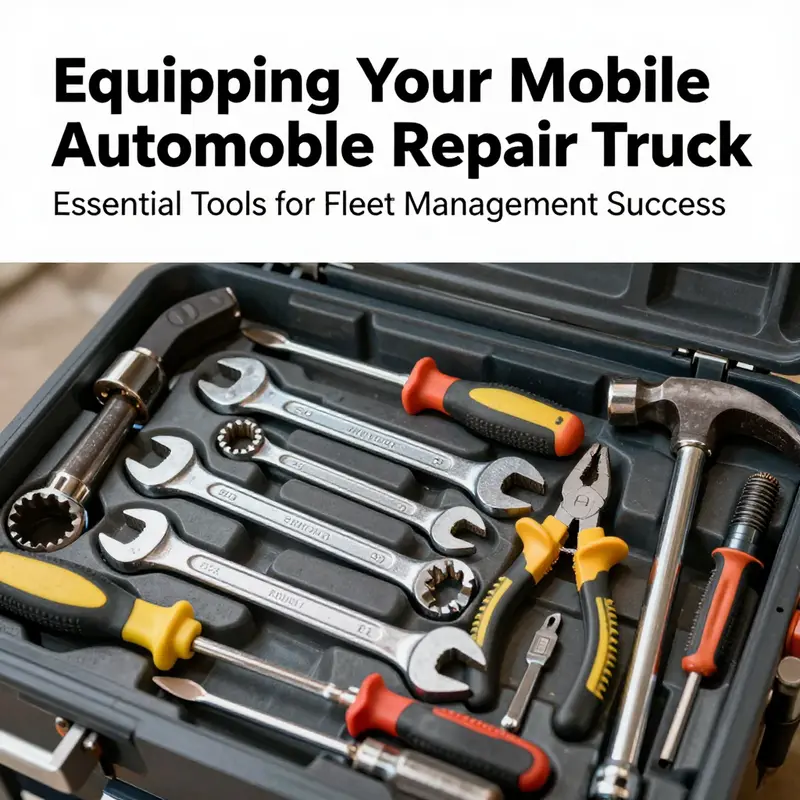
A mobile repair operation hinges on the right toolkit, not the largest toolbox. In a compact mobile workshop that must function at a curb, in a parking lot, or on the shoulder of a highway, the difference between a quick fix and a long wait is often the precision and accessibility of the hand tools you carry. The core idea is simple: you prepare for the most common, time‑sensitive tasks with a well‑chosen set of hand tools that cover the vast majority of roadside repairs. This is not a vanity collection of fancy gadgets; it is a lean, battle‑tested kit built for speed, reliability, and safety. When a vehicle rolls in with a squeal in the belt, a wheel that needs changing, or a cooling hose that’s sprung a leak, the tools you have at hand determine whether you can complete the job in one visit or whether you’ll need to arrange a tow or a follow‑up appointment. The modern roadside repair ethic values not only what you can fix but how efficiently you can fix it, and that, in turn, rests on a few core tool categories organized for rapid use in a constrained space.
Among the fundamental hand tools, combination wrenches in both open‑end and box‑end styles stand out as the most versatile. A compact set that spans common metric and SAE sizes—from roughly 8 mm up to 19 mm for metric, and 5/16 to 3/4 inch for SAE—allows you to tackle wheel lug nuts, brake calipers, hose clamps, and engine brackets without hunting for the right size in a cluttered toolbox. These wrenches shine precisely because they fit in tight pockets and won’t require torque extensions or adapters in routine fixes. Close behind them is a socket wrench set with a dependable ratchet. A full spectrum of sockets, matched to a 3/8‑inch drive, is the workhorse configuration for most on‑site tasks. The socket set, paired with a ratchet and a few deep sockets for clearance, makes fast work of stubborn fasteners in tight engine bays. An adjustable wrench—while not as precise as fixed sizes—serves as a crucial contingency. In a pinch, it can grip an unusual bolt head or a stubborn fastener you didn’t anticipate, saving a trip back to the warehouse for a missing size.
Screwdrivers, both Philips and flathead, are another indispensable family. The most useful sets include a range of tip sizes so you don’t strip screws on interior panels or electrical components. A small, sharp set keeps dashboards, trim pieces, and access panels from becoming a casualty of a badly chosen driver. Pliers fill a different niche: needle‑nose pliers for precise manipulation of wires, clips, and small components, and regular slip‑joint pliers for gripping, bending, and twisting with enough leverage to prevent hand fatigue during longer tasks. These tools are the ones you reach for when you need to pinch off a hose clamp, pull a stubborn corrugated hose free from a fitting, or reposition a bracket that’s preventing a proper seal.
Beyond the basics, some essential specialized tools prove their value again and again on the road. A torque wrench is non‑negotiable for critical assemblies where precise fastener torque matters—engine mounts, wheel hubs, and certain linkage connections—weighing the risk of over‑ or under‑torquing against premature wear or failure. A breaker bar is the perfect companion for those stubborn, rusted, or overtightened bolts. With the right socket, a breaker bar delivers the extra leverage needed to break free bolts that would otherwise require a tow to a shop. An impact driver or a pneumatic impact gun is one of the only practical ways to shed tightly engaged lug nuts without marring the wheel or damaging surrounding components. In small spaces, the impact’s rotational force can be the difference between a repair that looks easy and one that isn’t feasible at the roadside.
To support safe lifting and general under‑vehicle work, a hydraulic jack becomes a central piece of the toolkit. A professional mobile operation should carry a jack rated to handle full vehicle weight and a set of wheel chocks to secure the vehicle the moment it’s raised. While jacks do the lifting, workers must remember to use jack stands or other stable supports whenever the vehicle is off the ground, reinforcing the critical point that safety protocols are as essential as the tools themselves. Safety glasses and heavy‑duty gloves round out the core protective equipment. Debris, metal shavings, and splashes from fluids are common on a roadside site, and eye protection plus cut‑resistant gloves dramatically reduce the chance of injury. A compact fire extinguisher and a small first‑aid kit are prudent companions, especially when dealing with electrical fixes or fuel system concerns, where the environment can quickly become hazardous.
Organization, not merely inventory, elevates a basic hand‑tools kit into a dependable mobile workshop. The interior layout should be purposefully designed to keep high‑frequency tools within easy reach—think drawers or bins arranged by proximity to the typical workflow. A well‑litted, labeled storage system helps ensure tools don’t scatter during transit and that a technician can quickly locate the exact size or type needed without wasting precious minutes. Durable tool rolls or trays with reinforced bottoms can handle the bumps of road travel and keep tools from sliding into corners or rolling under the cabinet. It is equally important to maintain a balance between a compact footprint and adequate quantity: you want enough depth to avoid missing sizes while not overloading the truck with redundant items that drain space and slow down service.
The practical reach of any mobile shop also hinges on the integration of diagnostic information and service guidance with tool use. Access to OEM‑level service information for vehicles from Model Year 2010 onward is a game changer. With the right data, a technician can confirm torque specs, wiring diagrams, and component locations that guide the precise application of a wrench, screwdriver, or torque wrench. This alignment between information access and hands‑on tool use minimizes guesswork, reduces rework, and improves first‑visit success rates. It also supports compliance with technical standards and manufacturer requirements, which matters for both safety and reliability on the road. The industry’s ongoing collaborations to improve information access are a testament to how interdependent tools and data have become in modern roadside service. Readers wanting to explore this topic further can review the industry updates that describe how partnerships are enhancing access to repair information.
In the heat of a call, a technician doesn’t want to be rummaging through a maze of cases to find a single size or accessory. Therefore, a compact but complete listing of core hand tools should be documented and stored in a portable, weather‑proof pouch or a shallow roll‑type case that fits within arm’s reach of the work area. The goal is to reduce the friction between diagnosing a problem and acting on it. A mobile toolkit should also consider the typical weather and terrain—the gear you choose for a desert highway will differ from what you deploy in a coastal city with salty air. In both cases, however, reliability is non‑negotiable: tools must resist rust, retain edge, and function seamlessly after exposure to dirt, heat, and grease. For ongoing success, technicians should inspect their kit before every shift, replacing worn edges, inspecting ratchets for slippage, and re‑splinting or re‑threading sockets when needed. A few spare fasteners and small hardware items—fuses, bulbs, belts, hoses, filters, and fluids—should be kept on hand to complement the tool kit; these items enable an on‑the‑spot repair to move from emergency fix to a proper, road‑safe solution without a return trip.
The practical dimension of tool choice also links to the broader service ecosystem. A mobile repair unit often serves on sites where a full shop’s resources aren’t available, making every tool count. The combination of robust hand tools, appropriate safety gear, and a reliable access to repair information creates a capable, near‑shop quality service on wheels. It also supports the broader goal of keeping fleets operational with minimal downtime, a metric that translates into value for customers and operators alike. To those building or refining a mobile repair fleet, the principle holds: equip for the majority of tasks with dependable, well‑organized hand tools, maintain a clean and accessible workspace, and couple the physical kit with up‑to‑date diagnostic data. When you do this, your truck becomes less a vehicle and more a movable workshop that can deliver fast, professional, and compliant service where it is needed most.
For readers seeking a concise orientation to maintaining a practical toolkit that suits mobile work, the Master Truck Repair blog offers accessible guidance on staying organized and efficient in the field. Master Truck Repair blog
In practice, the rhythm of a successful mobile repair day follows a simple sequence: arrive, assess, choose the tools needed for the core fixes, execute with focus on safety, verify performance, and document the service. If a wheel is involved, you have the wheel lug socket, breaker bar, torque wrench, and jack system ready; if a belt or hose is the issue, you bring the wrenches, pliers, screwdrivers, and clamps that allow you to swap components cleanly. If an electrical hiccup arises, the screwdriver set, pliers, and a careful inspection of the wiring harness become essential, aided by the diagnostic data to confirm the fault code and step through the repair procedure. The single most important operating principle is to be prepared for the expected while staying adaptable for the unexpected. A well‑prepared hand tool kit is a neutral force that lets you respond decisively, minimize downtime, and project a professional image that earns customer trust.
External researchers and industry groups highlight that the path to effective on‑site repair is increasingly paved with access to official service data. This trend supports the practical use of hand tools by ensuring technicians have precise guidance on torque specifications, fastener types, and component layouts, which reduces guesswork and improves repair quality. As you plan to outfit or upgrade a mobile repair truck, consider how your tool choices align with your information resources. By combining the right hand tools with reliable data access, you create a powerful capability that translates into faster, safer, and more reliable roadside service. For a broader view on how the industry is strengthening access to repair information, see the external resource linked below.
External resource note: ETI and industry partners are advancing access to heavy‑duty vehicle service information, a development that reinforces the practical value of well‑equipped mobile shops. https://www.eti.org/news/2026/02/04/etis-mou-with-cvsn-and-ema-enhances-access-to-heavy-duty-vehicle-service-information
Power Tools as the Engine of On-Site Precision: Equipping a Mobile Auto-Repair Truck for Rapid, Reliable Service
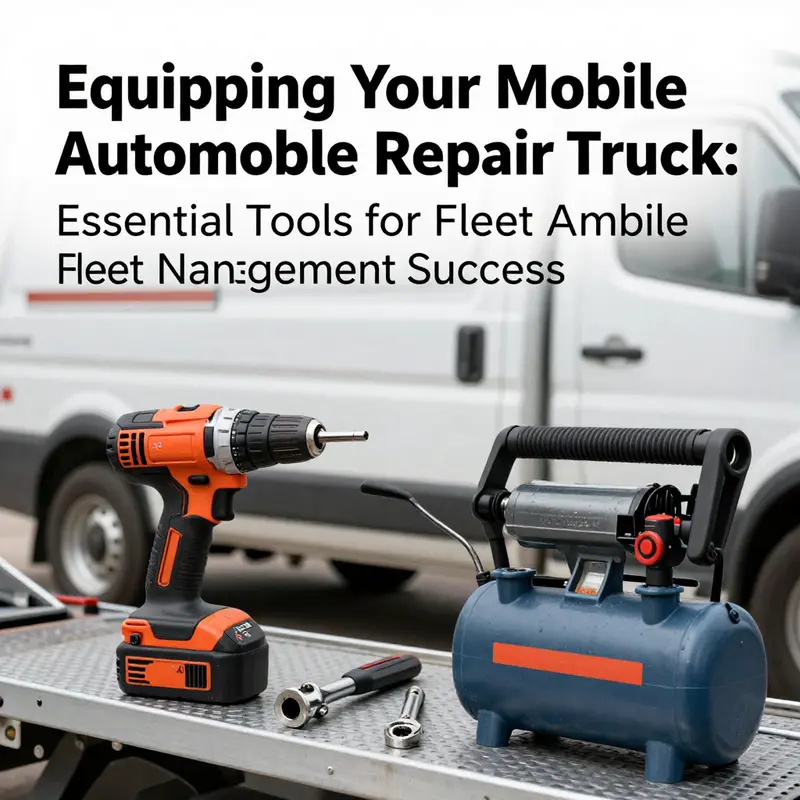
A mobile automobile repair operation lives and dies by its tools, and among them, power tools sit at the heart of speed, efficiency, and the ability to work in less-than-ideal conditions. In the tight confines of a truck bed turned workshop, electricians, mechanics, and technicians push their limits to get a vehicle back on the road without the delays of a shop visit. Power tools are not mere conveniences; they extend a technician’s leverage, reduce fatigue, and unlock options that would otherwise be impractical in the field. The right mix of electric, pneumatic, and hydraulic tools can transform a demanding repair into a straightforward sequence of precise steps, even when space, weather, and time constraints are pressing. Yet power tools are most effective when they are matched to the job, the truck, and the environment, with an eye toward portability, durability, and dependable power supply. The goal is not to stock every possible gadget but to curate a compact, resilient toolkit that covers the most frequent tasks with minimal setup and maximum reliability.
The balance between power, weight, and practicality governs every choice in a mobile shop. Pneumatic tools offer toughness and high torque without hogging battery life, provided there is a reliable air source. Electric tools, especially cordless varieties, trade ongoing air supply for battery power, which grants freedom to work away from generator noise and fumes. In remote job sites or during long stretches between stops, a portable power source—a compact generator or a robust inverter system—becomes a necessary partner, ensuring that the tools remain usable even when the grid is out of reach. Hydraulic tools, while heavier, unlock tasks that demand significant force with controlled precision, such as lifting a vehicle for tire changes or lifting suspension components for access. The decision about which power source predominates rests on typical job profiles, the geography of service areas, and the operator’s preference for quiet operation versus raw torque.
A well-considered array begins with cordless drill/driver combinations, the kind that can switch easily from drilling pilot holes to driving fasteners. They are invaluable for mounting brackets, aligning brackets for temporary or repair mounts, and preparing surfaces for components that must be secured quickly. When the job involves disassembly and reassembly of stubborn assemblies, a robust impact tool—designed to deliver high torque increments with controlled impact action—becomes indispensable for wheel assemblies, exhaust hardware, and light engine work. The advantage of a high-torque impact is evident in the field where time saved on a single lug nut or nut-and-bolt junction quickly adds up across a day’s schedule. The vehicle’s payload, however, must always be considered; a compact, well-balanced impact wrench can deliver the necessary torque without sacrificing vehicle capacity or kneecapping battery life.
Angle grinders occupy a crucial niche in mobile repair work, serving both metalwork and bodywork challenges. They enable on-site cutting, grinding, and finishing, which is particularly useful when a damaged bracket, bent trim, or corroded mounting point needs rapid, heat-tolerant treatment. The use of grinders demands respect for safety and control—guards, proper guard position, and a steady hand—because their power can chew through metal and debris with alarming speed. Likewise, hydraulic jacks are not optional accessories but essential workhorses for lifting and supporting vehicles to gain underneath access. In the field, the ability to safely raise a car for tire changes, brake service, or suspension work translates into shorter service windows and fewer call-backs.
The engine that powers the truck’s on-site capabilities is a carefully designed power ecosystem. Portable battery packs and inverters are not afterthoughts; they are the lifeblood that keeps cordless tools running during long days away from a power outlet. A dependable inverter can stabilize power delivery to chargers and tools, reducing voltage drops that degrade performance or shorten battery life. A lightweight, rugged generator might be necessary for days in locations without reliable electricity, but its noise and fuel consumption must be considered against the benefits of uninterrupted operation. The goal is to create a compact, modular power station inside the truck—one that can be relocated as work zones shift and that can be expanded with additional battery packs or a secondary inverter when demand spikes. This modularity also helps with maintenance; when one tool is out for service, others can still operate, preserving the technician’s momentum.
When selecting tools for a mobile unit, durability becomes a non-negotiable criterion. Field conditions are harsh: vibrations, temperature swings, dust, and occasional moisture can erode tool life quickly if components are fragile or poorly sealed. Tools chosen for mobile use should feature robust housings, sealed electronics, and simple, intuitive controls that minimize misoperation in a moving vehicle. Grinders and hammers, for example, should have dust defenses and secure clamps so that the tool remains functional even after a rough ride. The workshops inside the truck need to be organized in a way that reduces tool travel time and protects blades, bits, and attachments from damage during transit. A well-designed storage system—color-coded or size-based compartments—guarantees that every item has a home and can be located in seconds, not minutes, when a customer is waiting.
Another critical factor is the array of bits, blades, and fastener interfaces that accompany power tools. The right assortment of sockets, bit sets, and driver heads must cover a broad spectrum of fastener standards while staying compact. In the field, the last thing a technician needs is to hunt through a bag for the correct bit while a tire is cooling or axle components are exposed. A practical mobile toolkit clusters commonly used sizes in quick-access trays and uses smaller, labeled containers for specialty bits that only see occasional use. The torque range matters as well—tools should support both high-torque tasks and delicate fastening operations where overtightening could damage sensitive components. Given the variability in vehicle design, a torque-rated auxiliary tool, such as a compact torque wrench or torque-limiting bit, can prevent missteps that lead to rework or component failure.
Electrical safety is another pillar of mobile tool design. The requirement to work in environments with potential fuel vapors, dust, or moisture makes rigorous adherence to safety protocols essential. Tools should be grounded and double-insulated where appropriate, with secure cable management to prevent trip hazards. Battery packs deserve their own attention: cells should be protected from extreme temperatures, and charging routines should be integrated into the job flow to avoid delays. A practical approach is to pair every cordless tool with a dedicated, quick-docking charging station that keeps the battery at peak readiness while the technician completes a task. The station itself should be protected from exposure to weather and dust, and it should be simple to relocate as the work zone moves around the vehicle.
In addition to raw power and fast access to torque, the workflow inside the mobile workshop emphasizes integration with the vehicle’s service information and diagnostic capabilities. Power tools do not operate in a vacuum; they are the physical extension of a plan that begins with an accurate diagnosis and ends with a precise repair. When technicians can access OEM-level service information and torque specifications on a tablet or laptop, they can tailor each tool’s use to the job at hand. For example, a vehicle’s braking system might require a specific sequence of component removal and fastening—an order that a well-organized power-tool lineup makes executable without repeatedly stepping back to reference manuals. The result is not merely faster repairs; it is a higher standard of accuracy and compliance, particularly for complex systems where missteps can lead to safety concerns or warranty issues.
Costs and budgeting are not afterthoughts in this context. The mobile shop must balance the immediacy of service with the long-term health of the equipment. The initial investment in power tools should reflect anticipated workloads, with an eye toward exchangeability or upgrade paths as vehicle fleets evolve toward new technologies. It is not about chasing every new gadget, but about building a lean core of tools that can tackle the majority of on-site repairs with confidence. When considering tool investments, it helps to think in terms of a lifecycle model: purchase, maintenance, spare parts, and eventual replacement. A pragmatic approach to budgeting also recommends planning for consumables and accessories—drill bits, grinding discs, blades, and fasteners—that wear out quickly in field use. For a practical take on budgeting tool investments, see budgeting for routine truck maintenance. The linkage helps ensure the tool set remains aligned with broader fleet upkeep goals and cost controls while preserving the ability to deliver fast, reliable service.
The chapter’s focus on power tools naturally connects to the other essentials described in this series: diagnostic devices that can read real-time data, a complete set of hand tools for those tasks a drill cannot complete, and a mobile workstation that keeps everything organized and accessible. The interplay between information and action is where mobile repair truly shines. When a technician can diagnose efficiently, access precise repair data, and apply the right torque with a well-chosen set of power tools, the job transitions from a time-consuming challenge into a well-choreographed sequence. The metal sings, the fasteners find their places, and the vehicle emerges from the service call with minimal downtime and maximum safety.
To close the loop, consider the way the truck is staffed and how the team collaborates in a field setting. The most effective crews treat power tools as coordinated instruments within a larger symphony of equipment: diagnostic tools, replacement parts, fluids, and safety gear all harmonize to improve throughput and customer satisfaction. A well-planned layout prevents tool confusion, reduces the risk of swapped or lost components, and supports a fast, safe work tempo. In practice, this means dedicating zones within the truck—an area for diagnostics, a zone for fasteners and brackets, and a protected space for sharp blades and expendables. The ultimate aim is straightforward: empower technicians to complete high-quality repairs on the first visit, keep downtime to a minimum, and leave customers confident that their vehicle has received professional care in a mobile setting. For the broader context of fleet maintenance and cost-conscious planning, the linked resource on budgeting a routine truck maintenance program can provide a helpful framework. budgeting for routine truck maintenance.
For those seeking additional technical context beyond the mobile shop framework, external resources offer deeper dives into how power tools fit into the mobile repair ecosystem and what professionals expect when choosing tools for field service. An external reference provides broader guidance on the practical aspects of power tools in mobile auto repair, including durability, ergonomics, and user safety: https://www.toolscout.com/blog/power-tools-for-mobile-auto-repair
Moving Precision: Specialty Tools that Define a Professional Mobile Automobile Repair Truck
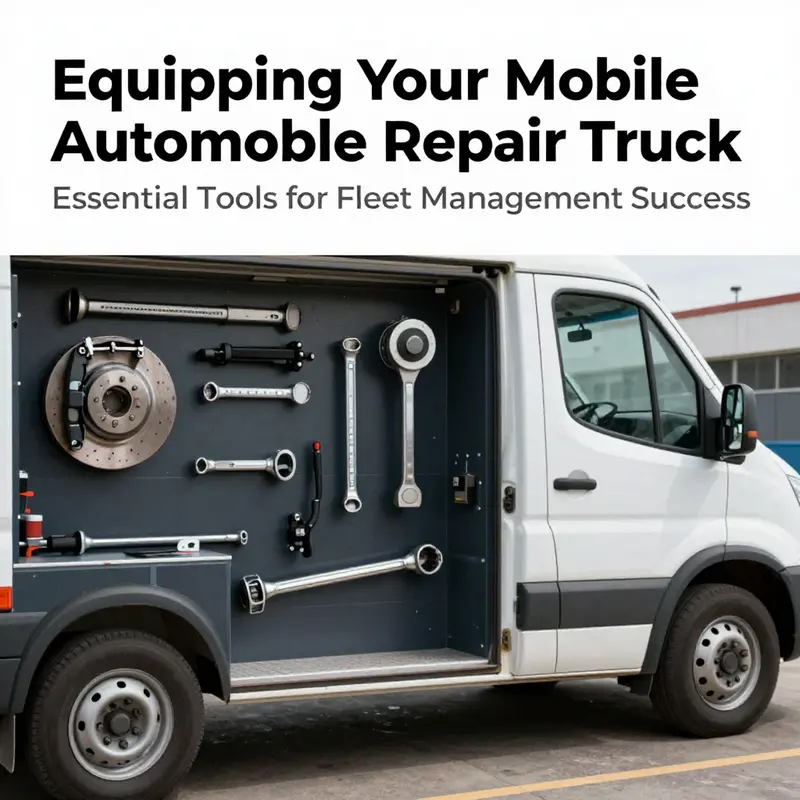
A mobile automobile repair truck operates at the intersection of mobility and mastery. It must function as a compact workshop that travels to the customer, not a job site that waits for a bay. That constraint elevates the role of specialty tools from optional luxuries to essential capabilities. The most successful on-site service teams approach the vehicle’s diagnostics, disassembly, and reassembly with a carefully choreographed toolkit that balances breadth and depth. The result is a vehicle that can handle a broad spectrum of issues without sacrificing speed, safety, or quality. In this sense, specialty tools are not simply add-ons; they are the defining features that transform a truck into a reliable, professional service platform.
At the heart of this capability is a portable tire repair station. Roadside and field service often begins with a flat or a damaged wheel, and the ability to remove, repair, and re-mount a tire on-site can save hours and reduce vehicle downtime. A portable tire changer and a companion wheel balancer deliver precise bead seating and accurate balancing, ensuring that repaired or replaced tires perform as well as they would in a fixed shop. The equipment needs to be robust, compact, and capable of handling the common tire sizes encountered across fleets. When balanced properly, a quick tire service not only restores mobility but preserves a customer’s trust in a responsive service provider. The tire station, however, does not operate in isolation. It shares the mobile bay with air pressure, lubrication, and fasteners that pilots rely on to complete repairs efficiently.
An onboard air compressor system is the next critical pillar. High-capacity, portable air supply powers the pneumatic tools that keep the job moving—impact wrenches loosen stubborn fasteners, spray guns apply coatings or lubricants, and air ratchets perform delicate, precise operations. The compressor must be reliable, with enough reserve air volume to sustain a sequence of tasks without frequent pauses for recharging. The ease of access to compressed air at the customer site reduces the need for refueling and reconfiguration, which translates into shorter appointment times and increased first-visit success rates. In practice, the compressor becomes the backbone of the shop-on-wheels, supporting not just the obvious tools but the entire workflow that flows through a typical service call.
A mobile vehicle lift or, more commonly, high-capacity hydraulic jacks, expands an technician’s reach beyond what a floor jack can achieve. Full-size lifts are impractical in a true mobile setup, but purpose-built mobile lifts and sturdy hydraulic jacks allow technicians to elevate a vehicle safely for undercarriage inspections, brake work, or suspension servicing. The portability of the lifting system matters as much as its lifting capacity. It must be stable on varied surfaces, quick to deploy, and easy to stow after use. With a secure mounting system and proper safety interlocks, the technician can examine components that would otherwise require a fixed workshop. This capability is particularly valuable for brake service and steering work, where access to calipers, rotors, bushings, and tie-rod assemblies often determines the difference between a completed repair and a prolonged job wait.
Beyond mechanical tasks, advanced diagnostic equipment raises the level of on-site repair to the factory standard. A professional-grade OBD2 scanner with live data streaming, freeze-frame capture, and, where possible, bi-directional control, enables technicians to read trouble codes, monitor sensor data, and perform targeted checks without returning to a shop. Live data visibility lets mechanics confirm the operating state of the engine, transmission, ABS, and emissions-related systems as the vehicle runs under real-world conditions. The ability to command certain modules or actuators directly from the diagnostic tool supports quicker verification of suspected faults. In a mobile context, where time is money and customer confidence hinges on rapid, precise explanations, this diagnostic depth translates into faster triage and more confident customer communication.
Equally important is a portable battery charger and tester. Batteries can fail at the least convenient moments, and a smart charger that reports state of health, voltage, and cranking readiness helps technicians decide whether to recharge, replace, or perform load testing. A tester with diagnostic readouts guides the technician to the correct course of action, minimizing the risk of incorrect voltage levels or overcharging. In the field, where improper care can degrade battery life or damage electrical systems, a responsible charging and testing routine protects both the vehicle and the technician.
For vehicles that demand alignment or steering precision, portable alignment tools broaden the service scope to include performance-enhancing repairs. A laser-based four-wheel alignment system, mounted on the repair truck, enables accurate measurements of camber, caster, and toe angles, turning alignment into a feasible on-site service rather than a follow-up visit to a shop. The key here is not merely measurement, but the ability to act on the data. When alignment adjustments are necessary, technicians must have access to the right fasteners, shims, and adjustment hardware, and the rigidity of the mounting system must preserve measurement accuracy even as the vehicle body shifts during road travel. In the end, mobile alignment capability supports safer handling and improved tire wear, a rare but highly valued service for fleet operators who depend on predictable performance.
Hydraulic pullers and small presses occupy a similar niche for stubborn components. Ball joints, hubs, bearings, and other press-fit parts can resist disassembly in the field, yet hydraulic pullers provide controlled, uniform force that minimizes the risk of collateral damage. Small hydraulic presses extend that capability to the reassembly phase, allowing technicians to seat components with precision. The emphasis is on reliability and safety; the right hydraulic tools reduce torque conflicts, preserve threads, and maintain alignment with existing hardware. The portability of these tools means technicians can address repair needs where they occur, whether roadside, a customer lot, or a temporary work zone on a campus or industrial site.
A dedicated mobile spray painting system completes the cycle by ensuring that cosmetic touch-ups or minor color-matching tasks can be performed at the customer site. A mobile paint booth or portable spray gun kit with filtration helps keep dust and contaminants away from fresh coatings, delivering a professional finish that preserves the vehicle’s appearance and protects nearby environmental conditions. While not every service call requires painting, the capability strengthens the mobile unit’s value proposition by enabling one-stop service for minor body work, scuffs, and touch-ups that otherwise would necessitate multiple trips or outsourcing.
Taken together, these specialty tools create a mobile repair ecosystem that respects space and weight constraints while delivering depth across mechanical, electrical, and cosmetic tasks. The design philosophy is simple: organize the truck like a small workshop, but pack it with tools that are rugged, compatible with a broad range of vehicles, and easy to deploy and retract. A well-thought-out interior layout—secure storage for every tool, clearly labeled bins, and climate-controlled compartments to protect sensitive equipment—ensures that performance does not degrade during transit. Independent power sources, such as inverter-based systems and dual power banks, keep tools and electronics running even when the vehicle is parked in remote locations or disconnected from a primary power grid.
These capabilities are supported by a growing framework of information access that underpins responsible, compliant repair. The move toward OEM-level service data for vehicles from model year 2010 onward has raised the bar for field technicians. Access to official data, manuals, and service notes reduces guesswork and accelerates decision-making when standards and procedures matter most. Industry partnerships that expand access to heavy-duty vehicle service information reinforce the on-site technician’s ability to perform accurate diagnostics and repairs without waiting for a shop visit. This shift toward data transparency aligns with the broader trend of professionalization in mobile repair, helping ensure that the on-site technician can operate with the same confidence as a shop technician, but with the added advantage of speed and mobility. For readers interested in the policy and collaboration that enable better repair information in the field, a detailed industry update discusses how MOUs and information-sharing agreements are expanding access to critical data for mobile professionals.
As you plan the stock of specialty tools for a mobile operation, remember that the goal is to extend the shop’s capabilities into the customer’s location while preserving safety and efficiency. The toolkit should align with the services you intend to offer, the typical vehicle mix you encounter, and the geographic realities of your service area. A balanced approach—combining tire and air systems, lifting and repair hardware, advanced diagnostics, alignment, and surface finishing—elevates the mobile unit from a basic roadside support vehicle to a fully capable repair shop on wheels. A practical planning step is to consider how these tools fit the broader lifecycle of a service truck: acquisition, storage, maintenance, and eventual replacement. The most durable advantage comes from tools that stay functional, accurate, and easy to deploy after years of vibration, exposure, and travel. And as the trade continues to evolve, keep an eye on access to official diagnostic data and repair information, which underpins precise, compliant work in the field. For operators who want to see how budgeting intersects with equipment decisions, a practical guide on budgeting for routine truck maintenance can provide a helpful framework for balancing investment in specialty tools with ongoing upkeep. Budgeting for Routine Truck Maintenance.
The on-site repair landscape is increasingly defined by the integration of advanced tools, reliable power, and access to official repair data. The result is a mobile service model capable of delivering high-quality, consistent outcomes across a wide range of vehicles and environments. In the pages that follow, we will explore how these tools come together with workflow design, safety protocols, and parts logistics to form a seamless, reliable mobile repair operation that fleets can depend on every day. For further context on professional mobile repair solutions and equipment providers, industry resources and professional associations offer pathways to enhanced capability and standardized training, ensuring that the on-site technician remains proficient as technology and vehicle design continue to advance. External resources from leading organizations provide additional perspectives on service data access and field reliability.
External resource: https://www.eti.org/news/2026/02/04/etis-mou-with-cvsn-and-ema-enhances-access-to-heavy-duty-vehicle-service-information
Safety as the Backbone: Essentials, Practices, and On‑Site Reliability for the Mobile Auto-Repair Truck
Rolling up to a customer site, the mobile auto-repair truck is more than a conveyance of tools. It is a compact, on‑demand workshop where safety and readiness determine not just whether a repair gets finished, but whether a team returns safely to the next appointment. The core question for anyone outfitting such a fleet is simple and exact: what must you have on board to protect technicians, protect customers, and keep the work moving without compromising quality? The answer centers on a deliberate balance of safety equipment, robust work practices, and a layout that minimizes risk while maximizing efficiency. In practice, this means fabricating a kit and a habit set that anticipates the most common on‑site contingencies while aligning with a disciplined workflow that keeps every action deliberate, measured, and documented.
First and foremost, personal protective equipment forms the first line of defense. A mobile shop operates in loose, often uneven terrain, with variable lighting and the potential for unexpected spills or project debris. A hard hat is essential when any lifting or vehicle components are moved, and safety glasses or a face shield should accompany any grinding, cutting, welding, or fluid handling. Gloves must match the task: cut‑resistant or abrasion‑resistant gloves for mechanical work, chemical‑resistant gloves for oils and cleaners, and insulated gloves for electrical tasks. Foot protection is non‑negotiable—steel‑toe, slip‑resistant footwear that protects toes and provides traction on slick surfaces. Hearing protection is frequently overlooked but crucial; air tools and running engines will reach decibels that risk long‑term damage without earplugs or muffs. Respiratory protection should be carried for dust, paint, or chemical fumes, with the option to use disposable masks for quick cleanups and respirators for spray work or solvent use. This PPE kit becomes the personal shield that turns a potentially hazardous environment into a controlled workspace.
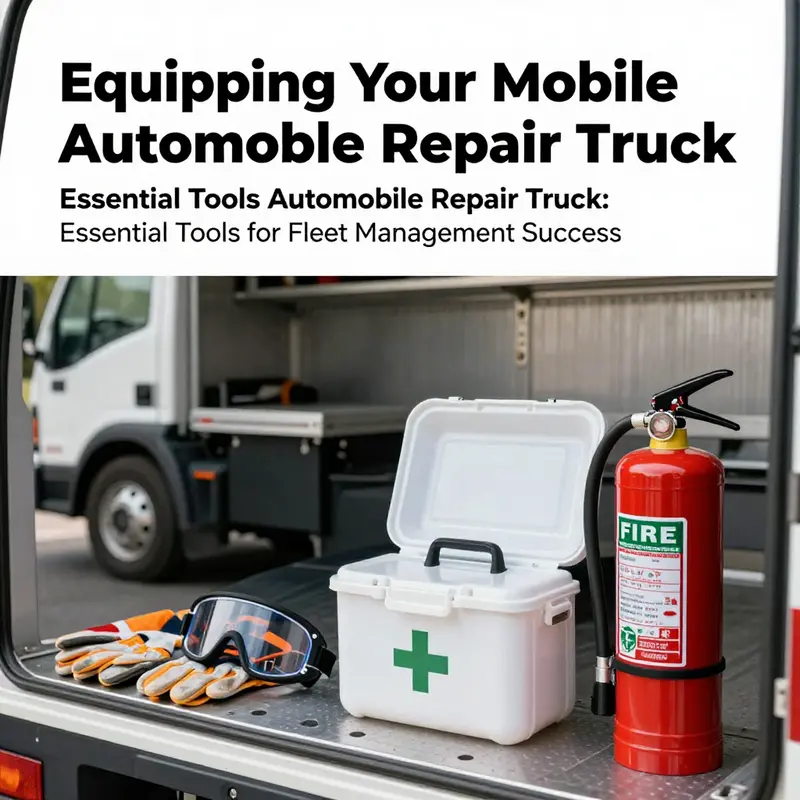
Beyond protective gear, safety equipment that stabilizes the worksite is non‑negotiable. A fully charged ABC‑rated fire extinguisher should be within easy reach, selected to handle electrical fires, flammable liquids, and ordinary combustibles that may arise from hot engines or heat‑soaked fluids. A well‑stocked first aid kit is equally critical, capable of handling minor cuts, burns, or more serious injuries until professionals arrive or the scene is secured. For electrical and metalwork tasks, insulated tools reduce the risk of shock or arc injuries, and good lighting is indispensable. Adequate illumination allows technicians to see fine details and reduces the chance of mistakes that could cause injuries or faulty repairs. Wheel chocks are a simple but powerful safety tool, used on every vehicle to prevent unintended movement. When a vehicle must be elevated, never rely on a hydraulic jack alone; safety stands must be placed under the vehicle to create a stable, robust support. The routine practice of securing the work area with proper signage helps customers and bystanders understand that a professional operation is in progress, reducing interruptions and improving safety compliance.
The truck itself must be a safety‑first platform. Parking on flat, stable ground is not merely prudent; it is foundational. When surfaces are uneven or soft, leveling jacks or other stabilizers should be employed to maintain a safe working plane. Regular inspection of the hydraulic lift and jacks is essential. Leaks, abnormal noises, or slow response can be early warnings of mechanical failure that could jeopardize a lift’s stability or the technician’s safety. Fluid levels and pressures should be checked on a routine basis, and any anomalies addressed before beginning a job. The hydraulic system, in particular, demands vigilance: spills must be cleaned immediately, as hydraulic fluid is both a slip hazard and a fire risk under certain conditions. A tidy, organized interior is not vanity; it reduces the likelihood that a dropped tool or a loose part becomes a tripping hazard during transit. Secure storage and clearly labeled compartments keep tools and parts from shifting when the truck moves, which protects both personnel and the integrity of the equipment.
Pre‑work preparation is a discipline as important as any wrench‑turning technique. A site assessment before opening the toolbox sets the tone for the job. Technicians evaluate space constraints, lighting, footing, and potential trip hazards. They confirm that the vehicle remains on a level surface, engage the parking brake, and place wheel chocks on the opposite side of the vehicle to prevent rolling. If a battery presents a risk of short circuits, the negative terminal is disconnected to mitigate accidental electrical contact. Equipment is inspected as part of a quick, but thorough, check of PPE, tools, and the repair truck’s overall systems. This routine is more than policy; it becomes a reflex that reduces delays caused by avoidable malfunctions, misapplied tools, or forgotten protective gear.
Safe work procedures in a mobile setting demand clear rules that are easy to follow under pressure. The most critical guideline is never to work under a vehicle that is supported only by a jack. This axiom reflects a long‑standing industry standard for undercar work and is reinforced by the use of safety stands or jack stands to secure the vehicle before any component is removed or inspected. Fluid handling is another area where discipline matters. Used oil and other waste fluids require designated containers and proper disposal channels rather than pour‑offs onto the ground. Open flames and smoking near the repair zone are strictly prohibited to curb the risk of vapors igniting. When lifting heavy parts, the correct technique—lifting with the legs, not the back—protects technicians from back injuries that can end careers. Keeping the work area clean is a daily obligation. Spills must be wiped immediately, and clutter must be cleared to prevent slips, trips, and falls. These practices are simple enough in a shop, yet in a mobile environment, they demand extra attention because space is at a premium and conditions can change hour by hour.
Emergency preparedness threads through every decision on a mobile service call. Technicians should know the location of emergency equipment, including the fire extinguisher and first aid kit, and have a plan for what to do if a fire, chemical spill, or injury occurs. Contact information for local emergency services should be readily available, and every technician should have a basic, unit‑level understanding of procedures for evacuations, spill containment, and incident reporting. Training and drills reinforce this knowledge, ensuring that safety procedures are not merely theoretical but executed under real‑world pressure. This is especially important when the truck operates in remote locations or high‑traffic areas where the window for a safe response is limited and the next appointment may be waiting.
To anchor these practices in credible standards, many shops reference the Automotive Repair Shop Operations Manual published by SAE International. This resource provides standardized guidance across the spectrum of automotive repair activities, including the unique demands of mobile operations. It acts as a benchmark against which field teams can measure their readiness, from tool organization and vehicle setup to incident response and waste management. In a sector where the line between a routine preventative service and a high‑risk repair can blur in a moment, aligning with established standards offers not only compliance, but peace of mind for technicians and customers alike.
The physical layout of the mobile shop supports these safety and workflow goals. A well‑designed mobile workstation with dedicated storage, toolboxes, and racks helps keep tools and parts secure and accessible. When everything has a designated home, the likelihood of searching for a lost bolt or fumbling through a bag of mismatched fasteners drops dramatically. A disciplined storage system also protects sensitive components from transit damage, which is especially important for delicate sensors or electrical modules that must arrive at the job site in pristine condition. Communication and documentation tools play a parallel role. A reliable mobile phone or two‑way radio keeps dispatch and technicians connected, while a tablet or laptop gives access to service information, repair manuals, and OEM updates. A portable printer—whether integrated or standalone—enables on‑site work orders and invoices, reducing the friction that can slow progress when the customer is paying per‑hour and the clock is ticking.
All of these elements—PPE, safety equipment, truck‑specific safeguards, pre‑work checks, safe procedures, emergency readiness, and a standardized reference framework—work together to make the mobile repair operation predictable, repeatable, and safe. The approach is not merely about having a checklist; it is about building a culture where safety is as integral to the job as the results of the repair itself. When a technician arrives with a clearly organized set of tools, a detailed safety plan, and a commitment to responsible waste handling, the customer gains confidence that the crew will protect their property and leave the site in a condition that reflects professional care.
In practice, this philosophy translates into a deliberate investment in both equipment and training. Stocking a comprehensive PPE kit and safety supplies is only the beginning. Regular drills, routine equipment inspections, and a culture of meticulous cleanup after each call reinforce the discipline needed for mobile work. The end result is a service that is not only efficient but defensible—technicians who can articulate what safety measures were taken, why they were necessary, and how they reduce risk on every job. This clarity translates to better customer trust, fewer incident delays, and a more sustainable, scalable service model for the fleet.
For practitioners building or upgrading a mobile repair capability, the takeaway is clear. Start with the essentials: PPE, a reliable fire extinguisher, a robust first aid kit, insulated tools, and high‑quality lighting. Add practical site safety features like wheel chocks and safety stands, and couple them with a disciplined pre‑work routine and safe work procedures. Layer in effective storage and a streamlined process for documentation and communication. Finally, anchor the program with external standards and industry guidance to ensure continuous alignment with best practices. The resulting system is a mobile workshop that honors safety as a core consideration, not an afterthought, and keeps the job moving with confidence and competence.
External reference: https://www.sae.org/standards/content/j2905_202407/
Internal reference: Turnage & Sons in-house truck maintenance.
Final thoughts
Equipping your mobile automobile repair truck with the right tools and safety gear ensures that you can provide effective, timely service directly to your fleet. By integrating essential diagnostic tools, reliable hand and power tools, specialty equipment, and adequate safety measures, your operations will not only enhance repair efficiency but also safeguard your team. The insights from this guide serve as a benchmark for optimizing your mobile repair services, ultimately leading to reduced downtime and increased profitability. Make informed decisions today to empower your fleet management strategy and ensure your repair services are carried out seamlessly.