
The recent closure of Don’s Auto & Truck Repair has resonated deeply within the Waterville community, particularly affecting fleet managers, trucking company owners, and operators in construction and logistics. The business was a cornerstone in automotive services, addressing the unique repair needs of commercial and personal vehicles alike. As we delve into the comprehensive impact of its closure on various sectors, we will explore the historical services offered, customer experiences, the economic ramifications, and the future landscape of automotive repairs in the area. Each chapter will illuminate a specific aspect of this consequential event, providing insights valuable to industry stakeholders navigating the changing landscape.
Don’s Auto and Truck Repair’s Quiet Exit: A Neighborhood Business Leaves a Mark on the Community
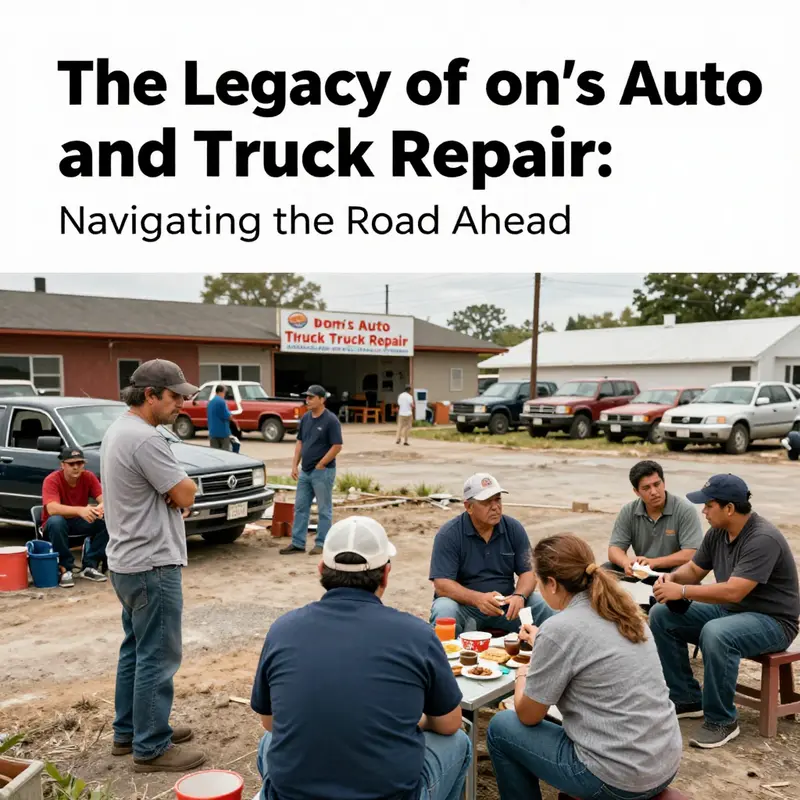
The closure of Don’s Auto and Truck Repair, once a fixture at 267 Sanger Ave in Waterville, NY, sent a quiet but undeniable tremor through a town built on everyday reliability. The shop had not merely repaired engines and replaced brakes; it had stood as a practical club for neighbors who needed to keep their vehicles roadworthy and their days on track. Its doors, once opened with the familiar clatter of a lift and a friendly greeting, are now closed. The absence of that local anchor reshapes more than the day-to-day errands of car owners; it alters the rhythm of the community itself, where a quick stop for a checkup or a chat with familiar faces created a sense of shared routine and mutual reliance.
In its heyday, Don’s served a dual mission. For individuals who depended on timely, trustworthy maintenance, the shop offered not just a service but a guarantee of readiness and safety on the road. For local businesses, especially those with fleets and delivery schedules, the shop was a reliable partner that could turn around essential work with minimal downtime. The mechanics were more than technicians; they were problem solvers who understood the local strains of winter weather, rural roads, and the pressure of keeping every mile up to standard. When a vehicle failed or a maintenance milestone approached, Don’s offered not just expertise but a continuity that small-business owners and residents often take for granted until it vanishes.
The decision to close did not arrive in a single moment. It followed a period of mounting operational costs and shifting demand—the kind of pressure that tests the endurance of a small, independent shop in an era of rapid change. Increased insurance and parts costs, tighter margins on labor, and a consumer landscape that increasingly favored more commoditized or national-chain services can compress a neighborhood shop’s ability to compete. Don’s had weathered similar storms before, but the accumulation of pressures finally outweighed the ability to sustain safe, quality service at a level that kept pace with customer expectations. When the owners announced the closure, a familiar sense of loss settled over the community, not as a sensational headline but as a quiet recognition that a key resource was no longer available when needed most.
The economic ripple was immediate and visible. Jobs that had provided steady income for mechanics, technicians, and support staff were no longer there, and the local payroll that once circulated through the downtown corridor slowed. Suppliers and part-time staff who depended on the shop’s steady demand found themselves facing an uncertain horizon. The absence of Don’s removed a predictable demand pattern for nearby businesses that rely on such service cycles—everything from the local tire and parts retailers to the small cafés that become informal meeting spots before or after a repair. The loss amplified a broader pattern: in towns of a certain size, a single independent shop can act as a linchpin, and when that linchpin is removed, the gears of the local economy must adjust.
For residents, the consequences extended beyond price or convenience. The local repair shop often serves as a practical hub for information exchange, safety reminders, and even a touchstone of civic life. Engines and exhausts aside, the conversations at the counter—about road conditions, school, weather, and shared experiences—create a social glue. In Don’s absence, neighbors apportion blame or concern in equal measure, but the deeper effect is a diminished sense of belonging. The shop was a place where a young driver could ask questions and a longtime resident could catch up on the latest community news while a technician diagnosed a stubborn electrical issue. Its closure removes a space that many people did not realize they relied upon until it disappeared.
Longer commutes to find comparable service have already begun to surface as an unintended consequence. The nearest alternatives, when they exist, are often at greater distance, with longer wait times for appointments and, not infrequently, higher labor rates to reflect the additional travel and risk. For customers with time-sensitive needs—like urgent brake work or a vehicle out of service for a delivery route—the decision to drive farther becomes a trade-off between convenience, cost, and reliability. This calculus is not a theoretical one; the real-world implications accumulate in days when a small business driver cannot reach a customer on time or a family depends on a single vehicle to shuttle a child to an essential appointment.
The human consequences are layered. Some workers who depended on consistent shifts at the shop have started exploring opportunities elsewhere, while the skillset represented by the Don’s staff persists in the community in other forms—perhaps in adjacent garages, mobile repair outfits, or automotive training programs that seek to fill the same basic need for skilled labor. The closure reaches beyond the balance sheet; it touches the aspirations of technicians who wanted to build lasting careers nearby and of customers who hoped to see a familiar face tackling a tricky diagnosis. In some sense, Don’s was an informal apprenticeship space as well, where budding technicians learned by watching and asking questions. Losing that space tightens the region’s trajectory toward a more fragmented service ecosystem, where expertise is dispersed and harder to access with the same immediacy and trust.
In response to the vacancy, a quiet, practical energy began to take shape. Community members, local leaders, and business owners felt a shared obligation to keep the door to reliable automotive care open, even if that door could no longer swing on Don’s own hinges. A grassroots impulse urged exploration of options to either buy out the facility or repurpose it for a new kind of community asset. The conversations touched on a spectrum of possibilities—from establishing a cooperative repair space owned and managed by local technicians to converting the storefront into a community automotive training center that could address a skills gap that many rural and semi-rural areas contend with. Conceptually, this would be more than a space for practice; it would be a venue for structured learning, mentorship, and hands-on experience for aspiring technicians, delivered with the neighborhood’s own lived realities in mind.
The notion of a training center resonates with broader economic strategies that communities have used to address labor shortages and to maintain a local gravity for skilled work. A dedicated training facility could offer pathways for high-school graduates, veterans, or midcareer workers seeking a career pivot, providing a bridge from classroom theory to shop-floor competence. It could also facilitate partnerships with local government, community colleges, and regional employers who rely on a steady flow of trained technicians for labor-intensive industries. Such a hub would not only train but also curate placement pathways that keep talent within the region, feel more connected to local businesses, and reduce the friction that currently makes hiring difficult for small employers who need reliable, immediately available expertise.
But making that transition requires thoughtful design and community buy-in. The first practical step is often an assessment of space, equipment, and capital—whether a buyout option could ensure that the facility remains a going concern for automotive care, albeit under new stewardship, or whether a fresh investment would be more appropriate to realize the training-centered vision. Crucially, any plan will need to address not just the physical space but the operational model: who runs it, how it sustains itself financially, what guarantees exist for students, and how it remains accessible to residents from different parts of town and from surrounding neighborhoods. In this respect, the story of Don’s becomes a case study in adaptability. It invites communities to reframe loss as a catalyst for reimagined local resources that preserve essential services while expanding opportunity.
Economists and urban planners looking at the health of small repair shops often point to several reinforcing factors that can help communities weather such shocks. Access to capital or municipal support can soften the blow when costs rise faster than customer demand. Reducing barriers for small garages to hire and train additional technicians can preserve local service networks even as consumer preferences shift toward newer vehicles or national chains. Encouraging alliances between repair shops and fleet operators can stabilize the demand for skilled labor, while incentivizing customers to provide stable maintenance planning can reduce downtime and extend vehicle life. In towns where independent shops are confronted with a crowded marketplace, the ability to differentiate through personalized service, rapid turnarounds, and flexible scheduling becomes a critical advantage. The lesson from Don’s is not simply that closures happen, but that communities can leverage the moment to reconstitute a more resilient service ecosystem.
To that end, stakeholders are increasingly looking for practical, grounded planning tools that can help translate aspiration into action. For instance, small fleet operators often find value in budgeting frameworks that clarify the true cost of maintenance and the financial impact of unexpected repairs. The idea is to move beyond ad hoc fixes and toward a disciplined approach that prioritizes preventive maintenance, aligns with spare-parts inventories, and minimizes unplanned downtime. A resource like Budgeting for Routine Truck Maintenance offers a framework that can help local businesses and aspiring repair-center ventures forecast needs, allocate capital for critical equipment, and measure the return on investment for training and facility upgrades. This kind of planning—coupled with a transparent, community-facing model—can create confidence that a repurposed space will serve as a dependable resource rather than a fragile enterprise that could collapse at the first sign of trouble. Integrating such a framework into the broader strategy ensures that the community builds on Don’s legacy rather than leaving a void that is difficult to fill.
The broader narrative at play is one of both challenge and possibility. Independent auto shops across the country confront competition from large networks, rising parts costs, and evolving customer expectations around speed and convenience. Yet the local ecosystem also presents a counterweight: loyalty to a neighborhood business, the trust built over years, and the intimate knowledge of a community’s specific needs. Don’s closure crystallizes these tensions, but it also creates an opportunity to reconstitute a more inclusive, workforce-centered, and service-oriented model—one that can adapt to a changing automotive landscape while preserving the access residents rely on for reliable transportation. In a community that values practical solutions and straightforward communication, the conversation about repurposing the facility into a training hub or a community automotive studio can reflect a collective commitment to continuity, even when ownership and branding evolve.
As this chapter transitions toward the next stage of the story, the key questions remain practical and concrete: How can neighbors organize a sustainable buyout that preserves essential services and protects workers’ livelihoods? What kind of governance and funding model will best balance access, quality, and financial viability? And how can the community ensure that any new initiative remains accountable to residents who previously depended on Don’s for routine maintenance, emergency repairs, and a sense of belonging? The answers will emerge through careful stakeholder engagement, strategic planning, and a shared willingness to invest in a resilient, locally rooted solution. The arc from loss to renewal may be gradual, but it holds the promise of turning a quiet closure into a recognizable turning point for the town’s long-term automotive health and workforce development.
For readers seeking a broader lens on how small business closures ripple through communities, the Brookings Institution outlines the economic and social dimensions of such events, offering context that helps frame Don’s story within a national pattern. This perspective underscores the idea that local outcomes are shaped not only by economics but by the social fabric that keeps people and trades interconnected. External resources can illuminate why these moments matter and how communities can respond with deliberate, inclusive strategies that preserve access to essential services while expanding opportunity for workers and youth alike. https://www.brookings.edu/research/the-impact-of-small-business-closures-on-local-communities/
In sum, Don’s Auto and Truck Repair may be closed, but the doorway it represented remains a touchstone for what a town can become when neighbors confront loss with collaboration, imagination, and practical planning. The road ahead is not predetermined, but the discussions already underway signal a commitment to keep the region’s automotive life alive—whether by nurturing a new training-centered facility, attracting a cooperative model of repair, or guiding municipal support toward the resilient integration of small, local mechanics into a healthy regional economy. The community’s response to this vacancy will, in many ways, define the future of dependable vehicle care in Waterville and the surrounding area, ensuring that the road remains always open for those who rely on it most.
From Diagnostics to Community: The Don’s Auto & Truck Repair Story
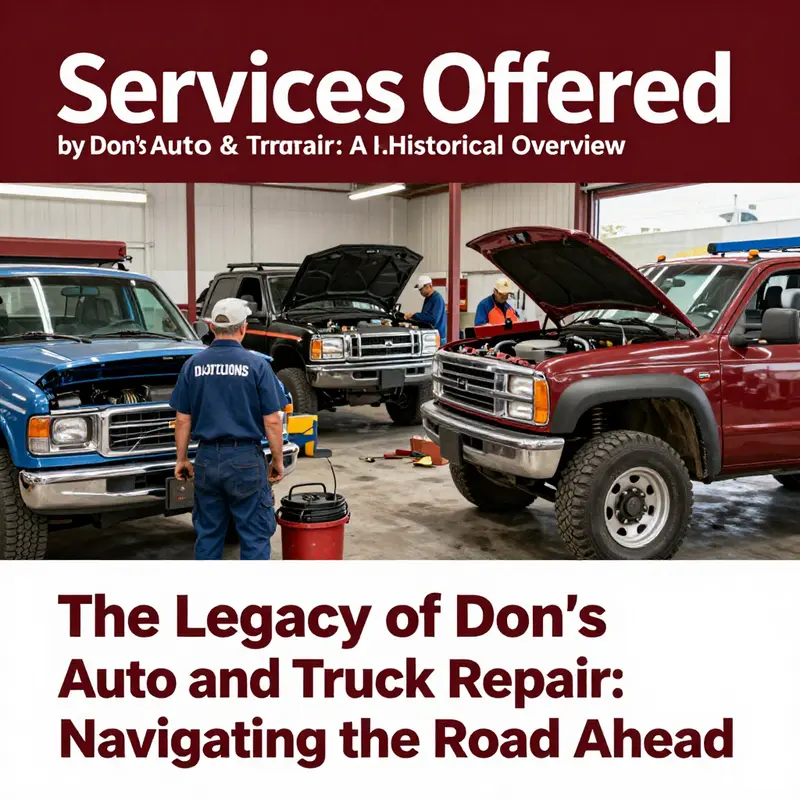
In a quiet town like Waterville, Don’s Auto & Truck Repair was more than a shop—it was a steady presence that kept people moving toward work, school, and family obligations. Its closure at 267 Sanger Ave marked the end of a familiar chapter, but also a reminder of what dependable vehicle care can mean in a community.
From the start, customers spoke not only of accurate diagnoses and timely repairs, but of a team that treated time and money with respect. Transparency was the operating standard: open estimates, clear timelines, and explanations in plain language that invited questions and informed decisions. That clarity built trust, a quiet form of reliability that proved almost as valuable as any tool in the bay.
Integrity completed the picture. When a repair lay beyond Don’s reach, staff steered customers toward trusted local specialists rather than selling them a quick fix. This practical stewardship protected customers from delays, suboptimal results, and unnecessary costs, and it helped define the shop’s reputation for honest dealing.
The service mix balanced individual needs with fleet requirements. Diagnostics, engine work, brake maintenance, and routine upkeep were performed with careful attention to tolerances and safety. Fleet servicing, in particular, demanded coordination and consistency, so routes stayed on time and downtime was minimized.
Ultimately, Don’s legacy lives in the memory of customers and the practices that successive shops can carry forward: clear communication, honest assessment, and a willingness to connect people with the right expertise when needed. The gap left by the shop’s closure invites new entrants, independent technicians, and repair networks to uphold the standard of dependable care that Don’s helped to establish.
Echoes of Trust: Customer Voices and the Quiet Legacy of Don’s Auto & Truck Repair
For many in Waterville and the surrounding towns, Don’s Auto & Truck Repair was more than a service shop. It was a place where a vehicle problem became a shared concern, where a repair plan was born out of plain talk and practical care. When the doors finally closed at 267 Sanger Ave, the local automotive repair landscape shifted in subtle and tangible ways. The chapter that follows looks beyond the mechanics and invoices to the people who kept their vehicles rolling with the help of a shop that once felt like part of the neighborhood. It is a story shaped by memory, reliability, and the fragile balance between cost, honesty, and the daily demands of owning or fleet-operating a vehicle in a small town. The core thread that threads through this history is not simply the service performed, but the way customers experienced it: with a human touch that, in a practical business world, can be the difference between a moment of frustration and a moment of trust being earned anew each day.\n\nWhat many customers remember about Don’s Auto & Truck Repair goes beyond the technical skill of diagnosing a stubborn problem or replacing worn components. They recall a demeanor that communicated respect for their time and their wallets. In a field where price and turnaround can feel opaque, the shop earned loyalty by being friendly, honest, and highly helpful. The staff listened more than they talked, offered straightforward explanations about what was needed and why, and kept the focus on making sure the vehicle would be safe and reliable after the work was finished. In the quiet exchanges between customer and technician—from the initial intake to the final test drive—there was a pattern that people valued: clear communication, transparent costs, and a willingness to fit the repair plan to the customer’s real-life constraints. Those are the intangibles that often determine whether a customer returns when another problem appears, or whether they speak up with a recommendation that carries more weight than any advertisement.\n\nThe data that confirms this impression is both small and telling. A recent update on a prominent review platform in February 2026 highlighted the shop’s patient and accommodating approach. One reviewer described the experience as extremely satisfying and expressed a strong willingness to recommend the shop to others. Another account praised the customer service as awesome and the staff as polite, underscoring a consistency in the values that once defined the shop. While a single review does not define an institution, the convergence of these testimonials over time paints a picture of a shop that could not only diagnose a problem but also ease the stress that often accompanies car trouble. In automotive repair, where uncertainty about cost and the risk of being overcharged can loom large, the perception of fairness and honesty is not a luxury. It is a crucial driver of trust. Even after the closure, those words remain in the community’s memory. They are the residue of a business that, for a period, treated customers as partners in keeping their work and personal lives moving forward.\n\nThis kind of trust does not exist in a vacuum. It is earned through everyday decisions that accumulate into a reputation that outlives a building or a nameplate. The shop’s approach likely encompassed several practical rhythms: timely updates when schedules shifted, transparent estimates before work began, and respect for a customer’s time when delays occurred. In a community setting, such rhythms create a sense of reliability that local owners and fleet managers depend on. The closure leaves a void, and with it a rebalancing of expectations for what a nearby repair option should look like. In the absence of that familiar, friendly face, residents and business operators must recalibrate how they evaluate the next repair provider. They review not only the technical credentials of a mechanic but also the trust signals that helped them choose a shop in the first place: the willingness to explain a problem plainly, the patience to answer questions, and the assurance that the work would not take them by surprise when the bill arrived.\n\nThe impact of losing a trusted local shop goes beyond a single service encounter. For many small businesses and independent drivers who rely on consistent maintenance, the absence of a dependable local partner means recalibrating schedules, adjusting budgets, and sometimes extending the lifespan of aging vehicles with less certainty about future repairs. Fleet operators weigh the cost of traveling farther for service or engaging more distant shops, which can introduce downtime that disrupts deliveries and daily operations. In a landscape where a single breakdown can ripple through a week of commitments, the value of a repair shop with a steady core of loyal customers becomes obvious. Don’s Auto & Truck Repair, during its years of operation, offered more than a place to fix parts. It offered a predictable pattern of care—the sense that a provider understood the local roadhouse rhythm, the late-night calls and early-morning check-ins, the way a technician would walk through a problem with a customer, not past them.\n\nWithin this larger context, readers can find practical takeaways that apply even as the local market evolves. For vehicle owners, a key lesson is the importance of cultivating a repair ally who communicates clearly and treats the budget as a shared priority rather than a barrier to essential service. The memory of Don’s approach invites an intentional approach to selecting future partners in maintenance. Prospective customers can look for repair shops that prioritize honesty over upselling, patience over quick fixes, and a willingness to discuss options that balance safety, performance, and cost. For fleet managers and business owners, the emphasis shifts toward building relationships with mechanics who will stand by preventive planning and transparent reporting. When a shop takes the time to explain why a preventive measure matters and how it protects the bottom line, it transforms maintenance from a recurring expense into a strategic asset.\n\nTo readers seeking a path forward while honoring the legacy of Don’s, a practical resource sits at hand. The idea of budgeting for routine maintenance is not a luxury, but a crucial discipline for any vehicle-dependent operation. A thoughtful approach to planning ahead can help bridge the gaps left by the absence of a familiar local partner. For instance, exploring a structured framework for routine maintenance costs can empower readers to anticipate wear and tear, allocate funds for unexpected repairs, and prioritize safety without sacrificing operational reliability. A resource that delves into these considerations offers actionable guidance and can be a companion as readers navigate new relationships with repair providers. The link to this practical framework appears here for readers who want a step-by-step approach to financial planning around maintenance: Budgeting for Routine Truck Maintenance. This resource provides a concrete starting point to codify the habit of setting aside funds for predictable service needs, while keeping contingencies in place for the unplanned issues that inevitably arise on the road.\n\nIn keeping with the broader theme of customer experiences and the evolving repair ecosystem, it is worth acknowledging how the online world shapes perceptions and memory. The reviews that survive after a shop closes become a kind of neighborhood folklore—short, sometimes imperfect, but deeply instructive about what customers valued most. The wellness of a repair culture depends not only on technical know-how but on the human elements that endure after the wrench is put down and the bill is paid. These elements—trust, clear communication, fairness, and a sense of partnership—are the underpinnings of any sustainable repair operation. They are what people remember when they recount a story about a shop that once served as a steady anchor in the community.\n\nAs this chapter moves toward its close, the conversation shifts from what happened to what remains meaningful. Don’s Auto & Truck Repair is still remembered for the warmth of its service, the honesty of its estimates, and the patience shown to every customer who walked through its doors. Those memories, along with the concrete experiences documented in the reviews, offer a template for what communities value in local repair providers. They remind readers that a car repair experience is more than the sum of mechanical fixes; it is about trust built across conversations, across receipts, and across the uneasy moments when a vehicle breaks down and a person reaches out for guidance. The closure, in that sense, becomes not just a loss but a benchmark for what future shops should strive to preserve: a human-centered approach that helps people get back on the road with confidence, rather than simply fixing a problem and moving on.\n\nThe chapter ends by returning to the idea that customers speak through what they trusted most: consistent, conscientious care. In a town where several repair shops may compete for attention, the memory of Don’s approach serves as a reminder that the best service is the one that treats a vehicle as more than machinery and treats a customer as more than a transaction. The local landscape continues to evolve, but the standard set by those early interactions remains a quiet, enduring influence. As readers move forward into examining how other businesses in the region respond to the gap left behind, they will find that the core values of honesty, patience, and service-orientation continue to shape the way communities choose whom to trust with their wheels. The story of Don’s Auto & Truck Repair thus becomes a lens through which the rest of the article can explore the complexities of service, trust, and the ongoing quest to keep people and their livelihoods on the move.\n\nExternal resource: https://www.yelp.com/biz/dons-auto-and-truck-repair-rosamond
Closing Doors, Open Roads: The Economic Aftermath of Don’s Auto and Truck Repair’s Exit
The sudden closure of Don’s Auto & Truck Repair leaves a quiet space in a busy neighborhood and a louder void in the local economy. When a shop that has long served as a practical touchstone for drivers—whether they own a single car, a family fleet, or a small business with dependably reliable transport—wanes, the ripples travel through the streets, into homes, and across the cash registers of nearby businesses. This is not merely the loss of a service; it is the loss of a node in a local economic network. For many residents, the repair shop is more than a place to fix a failing alternator or to replace a worn tire. It is a trusted point of contact, a source of quick reliability in a world where vehicle downtime translates to missed appointments, delayed deliveries, and hours spent behind the wheel chasing a solution. As the community absorbs the news, the dimensions of impact reveal themselves in the most tangible terms: jobs disappear, purchasing power narrows, and the ecosystem that supports daily mobility grows thinner. The chapter that follows does not shy away from the hard numbers or the slow, insidious ways in which a single business closure can alter a town’s economic rhythm. Instead, it threads those realities into a narrative of risk and resilience, showing how local repair infrastructure underwrites daily life and how its absence can tilt the balance toward greater costs and fewer options for households and small enterprises alike.
Foremost among the consequences is direct job loss. Small auto repair shops typically rely on a core team of skilled mechanics, technicians, and administrative staff who bring specialized knowledge to bear on a broad range of vehicle issues. When a shop closes, those employees—many of whom are deeply embedded in the fabric of the community—lose not just income but also a professional anchor. Their departure can erode families’ spending power, reducing household demand for goods and services in the surrounding area. The immediate effect is measurable: fewer dollars circulating locally, which can strain nearby retailers, coffee shops, service providers, and even essential amenities such as groceries and gas stations. The loss of good jobs may also influence the town’s long-term talent pipeline. Prospective workers and families looking at the area as a place to settle might recoil from a landscape that seems to be thinning its local middle-skill employment base. In turn, this can slow the community’s ability to attract new businesses or sustain existing ones that rely on a steady stream of local customers and steady maintenance work for fleets and individual vehicles.
Beyond the fate of individuals and households, the closure reshapes consumer behavior in ways that extend well past the shop’s former address. When a long-standing repair option vanishes, former customers often adjust by increasing deferred maintenance at their own pace, seeking out alternatives that may be farther away, or postponing necessary fixes until a breakdown becomes unavoidable. Each of these choices carries a cost: longer travel times, higher transportation expenses, and more time away from work to shuttle vehicles to distant facilities. The cumulative effect is a subtle shift in the local economy’s momentum. Consumers who once spent modestly on routine maintenance may tighten discretionary spending elsewhere, not because of diminished income alone but because the reliability of nearby services has been unsettled. Over time, this can erode the number of repeat visits to nearby shops, reduce the gravity that keeps neighborhoods vibrant, and dampen the overall turnover that sustains multiple small businesses.
The impact also extends to related industries and service networks that depend on a convenient, accessible repair infrastructure. For professional fleets—whether in trucking, construction, or service industries—the absence of a nearby shop translates into higher operating costs. Vehicles may require longer trips to reach distant repair centers, increasing fuel usage and downtime. Dispatch efficiency can suffer as maintenance windows expand, and the opportunity cost of vehicle downtime rises. Even for private car owners, the absence of a trusted, local partner for urgent repairs can mean choosing between a longer drive and paying for a premium service elsewhere, effectively transferring the burden of distance from the shop floor to the home or workplace. In aggregate, those shifts can affect productivity and labor supply across the community, as drivers allocate more time to vehicle-related errands and reducing time available for paid work.
Economic consequences rarely stay confined to the balance sheet of one business. A local repair shop sits at the intersection of consumer confidence and infrastructure. When a familiar, reliable service disappears, residents may question the area’s capacity to sustain essential services, and prospective entrepreneurs might view the town as a riskier location for new ventures. The erosion of confidence can influence decisions about property investment, housing demand, and the willingness of new firms to locate in the area. It is not merely sentiment; it translates into cautious planning by landlords, school administrators, and local government, who weigh the resilience of the local economy when considering new projects, renovations, or incentives. This cascade effect can then feed back into the tax base, potentially limiting municipal capacity to invest in roads, safety, and community programs that, in turn, contribute to the area’s overall livability and competitiveness.
In tracking these dynamics, it is useful to place local experience within the larger body of research on business closures. Data from national sources, including the U.S. Bureau of Labor Statistics and the Small Business Administration, illuminate how small business survivability and employment trends unfold, especially in sectors that underpin everyday mobility and local service ecosystems. The 2022 U.S. Bureau of Labor Statistics article on Business Employment Dynamics presents a comprehensive view of how business closures influence job markets, productivity, and regional resilience. While Don’s Auto & Truck Repair operated in a distinct local context, the patterns described in the national analysis offer a framework for understanding the microcosm of impact triggered by a single shop’s exit. The alignment between local experience and national observations underscores a fundamental point: the vitality of a community’s repair infrastructure matters to the daily lives of residents and to the broader health of the economy.
From a practical standpoint, the closure interrupts a stable routine for hundreds of drivers who relied on timely maintenance, emergency repairs, and the peace of mind that comes from knowing a trusted technician is nearby. When that certainty dissolves, households and businesses recalibrate risk in ways that ripple through budgets, cash flows, and scheduling. For a family juggling child care, a second car, and a mortgage, the sudden decrease in local options can tilt decisions in favor of more conservative spending, higher outlays for longer-distance service, or more frequent replacement of minor components when timely repair would have extended life and value. For a small business with a handful of leased vehicles or a handful more in service, the cost calculus becomes even more acute. Each extra mile driven to reach a distant shop, each hour of downtime, and each logistical hassle compounds into measurable differences in monthly operating expenses and the reliability of service delivery.
In the longer arc, the absence of a nearby repair hub plays a role in shaping the city’s economic climate. When a trusted local option closes, the market rewards those who can fill the gap—but it can also deter others from entering the market if the environment appears fragile. The prospect of future closures may influence insurance costs, supplier terms, and the willingness of small fleets to commit to maintenance schedules that keep equipment in optimal condition. The cumulative risk attached to a fragile repair ecosystem can manifest in slower adoption of new technologies, delayed maintenance for aging fleets, and a hesitancy to invest in capital improvements that depend on predictable, nearby support. The result is not a dramatic collapse, but a gradual, measurable deceleration in local economic momentum that policymakers and community stakeholders must actively monitor and address.
Yet there is room for resilience and adaptation. Communities facing the exit of a local repair hub can encourage neighboring shops to widen capacity, or they can develop partnerships with regional providers to maintain coverage for urgent needs while supporting preventive maintenance locally. Local government, industry associations, and chamber networks can play a role by facilitating shared service agreements, fleet maintenance programs for small businesses, and targeted incentives that reduce the friction of distance for critical repairs. The willingness of other local businesses and new entrants to step in—whether through expanding hours, offering mobile services, or creating quick-turnaround repair options—can help re-establish liquidity in the market and restore confidence that essential vehicle maintenance remains within reach.
For individuals reading this chapter, the lesson lies not only in recognizing the loss but also in planning for it. A practical approach involves proactive budgeting and risk management. Anticipating maintenance needs, building a reserve for urgent repairs, and diversifying where services can be obtained are all prudent steps. In particular, readers might consider adopting consistent preventive maintenance routines that extend vehicle life and reduce the risk of unexpected failures. A guideline echoed across the industry is to treat maintenance as a core operating expense, not an afterthought. To support that, many resources emphasize budgeting for routine truck maintenance and similar practices for personal vehicles. For those who want to translate that idea into action, a practical resource is available at budgeting for routine truck maintenance. By planning ahead, drivers and small fleets can cushion themselves against the disruption that comes with the loss of a local shop and preserve the reliability that daily life and work depend on.
The broader narrative remains clear: Don’s Auto & Truck Repair’s closure is more than a headline about a single business. It is a case study in how a local repair ecosystem supports mobility, sustains jobs, and underpins the daily routines of a community. Its absence invites reflection on how communities defend against similar shocks, not by clinging to the past, but by designing more resilient networks of service, coverage, and financial preparedness. It invites readers to consider how small-scale repair capacity can be safeguarded through collaboration, diversification, and forward-looking planning, so that the roads ahead remain open and efficient for every resident and business that depends on them. As this article progresses, the conversation shifts toward practical strategies for rebuilding and reinforcing local repair ecosystems, balancing immediate responses with long-term resilience, and ensuring that the next chapter in the town’s economic story starts from a position of stronger, more connected mobility. The next section will examine how coordinated action, investment in workforce skills, and smart maintenance practices can turn the disruption of a single shop into an opportunity to reimagine a more robust, locally anchored repair landscape.
External resource for broader context: https://www.bls.gov/opub/ted/2023/ted_20230419.htm
Beyond Don’s: Rebuilding Neighborhood Auto and Truck Care for a Resilient Future
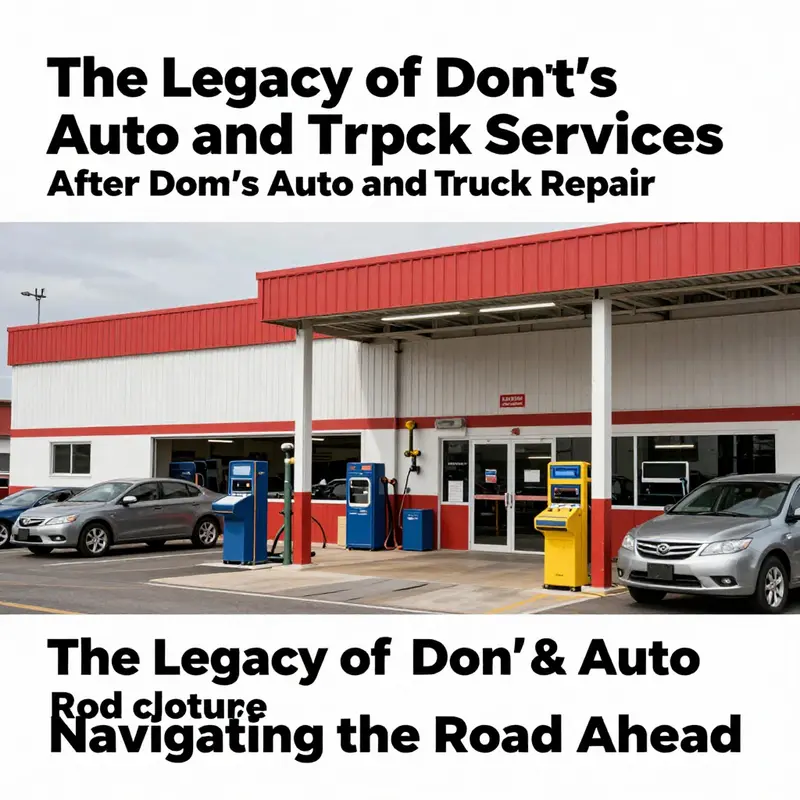
The closure of Don’s Auto and Truck Repair leaves a recognizable gap in a neighborhood that once depended on a trusted, nearby shop for everything from routine maintenance to emergency diagnostics. Yet gaps often seed a broader conversation about how a community can recalibrate its approach to auto care. The question now is not simply who will fill the physical storefront that Don’s occupied, but how local shops can evolve to meet a landscape where vehicles are increasingly complex, customers demand greater transparency, and technology steadily shifts the skill set of every technician. The prospects for auto repair services in this wake are robust, but they hinge on how well the trade adapts to new demands while preserving the core values that mattered to Don’s and its customers: reliability, clear communication, and on-time service. In that sense, the next generation of neighborhood repair shops has a substantial opportunity to redefine local trust, not by imitating the past but by aligning with the realities of modern mobility.
The most compelling driver behind this evolution is the rapid growth in vehicle electronics and software. Modern vehicles are essentially computing platforms with drivetrains attached. They require technicians who can interpret sensor data, navigate sophisticated diagnostic software, and reason about interactions between hardware and software that influence engine performance, braking, safety systems, and fuel efficiency. This trend does not merely add tasks to a technician’s day; it reframes the technician’s skill set. A shop that invests in ongoing training and maintains up-to-date diagnostic tools gains a competitive edge simply by increasing its diagnostic accuracy and reducing the time vehicles spend in the bay. That capability translates into fewer road calls for customers and more predictable repair timelines, which in turn strengthens the reputation of a local business as a dependable alternative to larger chains. Industry observers, including organizations focused on technician training and certification, underscore this shift and emphasize that continuous education is not optional but foundational to sustaining a capable service workforce in the coming years. The structural benefit for a shop like the one Don’s once represented is evident: a commitment to technical excellence can differentiate a local business in a marketplace where price competition is intense but where customers still value the human element of service—honesty, clarity, and a familiar face.
Beyond the electronics revolution, the industry is also moving toward a more diverse vehicle mix, including hybrids and electric vehicles, and, in many regions, wider adoption of electrified platforms. This transition introduces both challenges and opportunities. Hybrid and electric propulsion depress certain kinds of wear while creating new maintenance domains, such as battery health monitoring, thermal management, and software updates. A shop that proactively trains its technicians to handle these systems and equips them with the right tools will naturally attract drivers who want to future-proof their mobility. For small, locally anchored repair shops, the EV opportunity is not a distant horizon but a near-term reality that can be embraced with careful planning. The path forward does not demand a wholesale rewrite of the business; it requires a phased expansion of capabilities—starting with essential high-voltage safety training, moving toward battery-related diagnostics, and then advancing to tuning and software-level maintenance when appropriate. This measured approach offers a practical way to navigate a changing market while preserving the personal, family-like atmosphere that locals often seek in a neighborhood shop.
Customer expectations, too, are evolving. People increasingly favor independent shops that deliver transparency, easy communication, and a sense that their vehicle is in the hands of someone who treats them as a neighbor rather than another ticket in a corporate queue. The value proposition of a local shop rests on more than price; it rests on trust built through consistent scheduling, honest assessments, and clear explanations about what is needed and why. This trust is cultivated through visible commitments—accurate estimates, straightforward ordering of parts, plain-language diagnostics, and a willingness to stand behind work with clear warranties. In a post-Don’s landscape, the most enduring shops will be those that weave these values into every customer interaction, from the first phone call to the final test drive. And while larger chains can offer broad coverage, the neighborhood feel—where the owner knows the name of the driver who uses the van for a small business and remembers the last service history—becomes a significant differentiator. As consumer sentiment tilts toward local, many owners of small fleets and family-owned vehicles will seek out a shop with a long-standing tie to the community. That is the emotional anchor a neighborhood repair shop can leverage to sustain loyalty even as the technical bar continues to rise.
Small fleets represent a particularly meaningful segment for local shops contemplating growth. While a single-car owner may prioritize convenience and price, a small business operating three to ten delivery vans or work trucks looks for reliability, predictable maintenance schedules, and rapid turnaround. A shop that can offer fleet-friendly services—such as in-house maintenance programs, standardized inspection routines, and predictable budgeting for routine upkeep—lands as a strategic partner rather than a one-off repair vendor. The literature and practice surrounding fleet maintenance for smaller operators consistently highlight the value of dependable preventive care, especially when operations are time-sensitive or government or customer deadlines are involved. For a community based shop, cultivating relationships with a handful of reliable local businesses can generate steady demand and help stabilize cash flow through recurring service work. This is where a local repair shop can distinguish itself from distant competitors by emphasizing accessibility, transparent pricing, and a willingness to tailor services to the rhythms of a neighborhood economy.
The business model that emerges from these conditions may look different from the one Don’s previously operated, but it does not abandon its core strengths. A resilient shop will blend technical sophistication with the personal touch, leveraging scheduling platforms that keep customers informed about appointment times and diagnostic findings. It will maintain clear service lanes—seasonal maintenance, brake and suspension checks, electrical diagnostics, and, where appropriate, EV readiness—without sacrificing the pace of service that customers value when they have limited downtime. The balance between speed and thoroughness is where trust is earned. Yet speed can coexist with quality when the workflow is lean and the technicians are well-trained. A modern shop learns to triage effectively: diagnosing the most likely causes first, ordering the right parts, and prioritizing fixes that keep vehicles off the road for the shortest possible time. In that sense, Don’s legacy would not be a relic of a bygone era but a blueprint for a revitalized model in which neighborhood pride and professional mastery reinforce one another.
The conversation about future readiness would be incomplete without acknowledging the financial and educational supports that amplify a shop’s capacity to adapt. Ongoing training is not a luxury; it is a necessity. Certifications, hands-on workshops, and access to updated diagnostic databases are the scaffolding that supports a shop’s technical expansion. Industry groups and certification bodies provide the credentials and continuing education that give customers confidence when they trust their vehicles to a local facility. For communities to sustain a robust repair ecosystem after a high-profile closure, local leadership—municipal, business associations, and chambers of commerce—can play a facilitative role. They can help identify funding opportunities for equipment upgrades, coordinate shared training, and promote neighborhood shops as premier options for both individuals and small fleets. In this environment, the story of Don’s transforms from a closing chapter into a catalyst for collective improvement, a reminder that the currency of a repair shop is not only the hours it spends under a hood but the quality of the relationships it maintains with the people who rely on it.
Within this evolving framework, a practical, concrete step for readers who manage or own vehicles in a community like Waterville—or similar towns affected by the Don’s closure—is to anchor maintenance planning in disciplined budgeting and proactive care. A robust approach to finances is more than accounting; it is a strategy to minimize downtime and maximize vehicle uptime. Regularly allocating funds for routine maintenance, tire service, brake inspections, and battery health checks reduces the risk of unscheduled breakdowns and expensive emergency repairs. It also fosters trust, because customers observe that the shop is reliable not just when a vehicle breaks down but when routine service is due. To illustrate the principle in context, readers can explore practical guidance on budgeting for routine truck maintenance, which translates well from individual vehicle care to small-fleet planning and helps ensure that a neighborhood shop remains financially sustainable while expanding its service scope. Budgeting for Routine Truck Maintenance
In sum, the future for auto and truck repair services remains bright, but it is not a replica of the past. It is a reimagined ecosystem that celebrates technical mastery and people-centered service alike. The local shop that remains agile—embracing advanced diagnostics, expanding into hybrid and EV readiness, and deepening ties with the community—will not only weather the transition but flourish in it. The decline of Don’s marks a moment of reorganization rather than a final word; the neighborhood’s long-term repair needs will be met by shops that can combine the best of traditional values with modern capabilities. This is not merely a matter of surviving changes in technology; it is about shaping a resilient model of automotive care that serves the everyday realities of local drivers, small businesses, and fleet operators. The road ahead will demand investment, perseverance, and a commitment to continuous learning, but it also promises a steadier, more trusted form of neighborhood service—one that honors Don’s memory by building something enduring that the community can depend on for years to come. Industry perspectives from the broader professional community reinforce that this combination of technical excellence, transparent customer relationships, and adaptability to new propulsion systems will define the successful shops of the near future. For those seeking a wider lens on industry standards and workforce development, ongoing engagement with reputable industry resources and associations remains essential as the market continues to evolve: https://www.naato.org/.
Final thoughts
The closure of Don’s Auto & Truck Repair marks a significant shift in the Waterville community and the broader automotive service sector. As we have explored, the implications are far-reaching—affecting not just individual consumers but also fleet managers, business operators, and the local economy. The loss of reliable service options necessitates the emergence of new repair facilities capable of meeting the diverse needs of the community. Understanding this shift will be crucial for stakeholders as they navigate the evolving automotive service landscape. Embracing new technologies and practices will be key in maintaining operational effectiveness and meeting customer demands in the future.