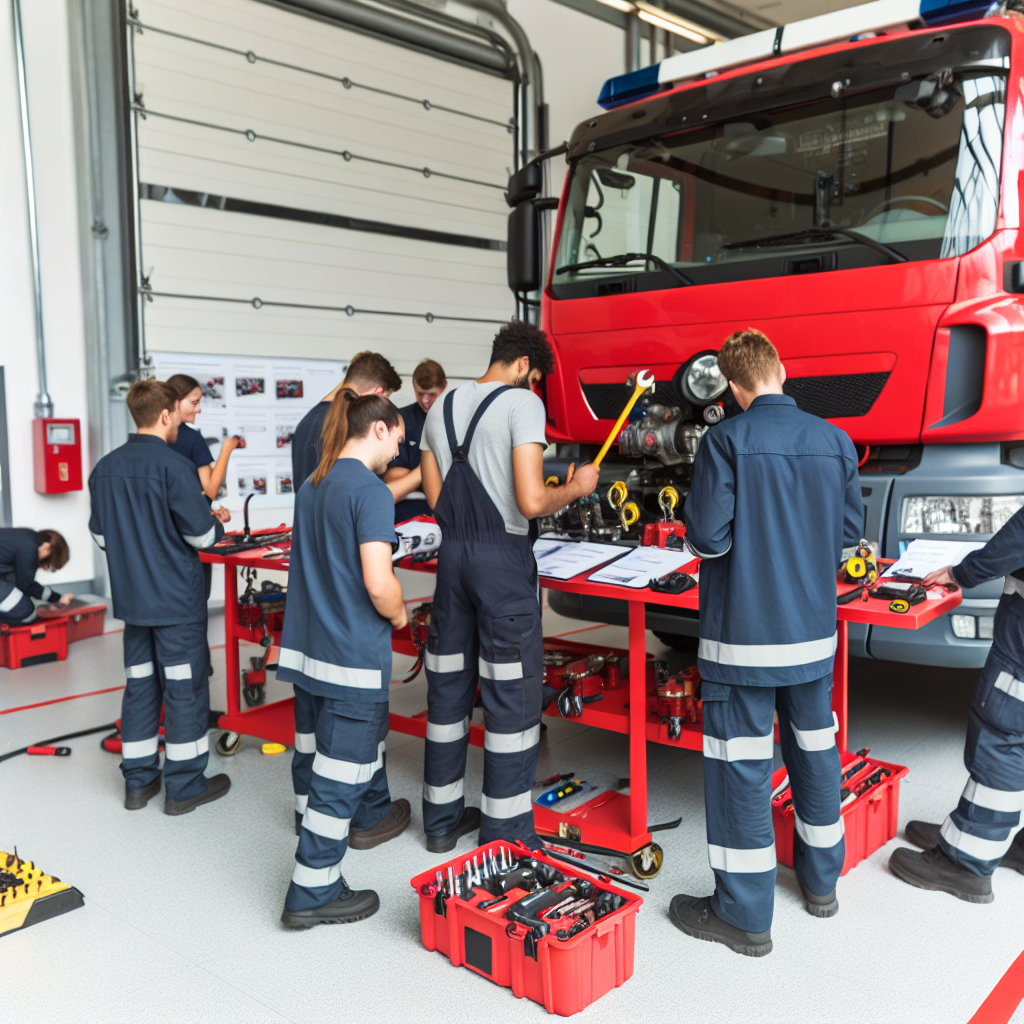
The integrity of a truck chassis is paramount to vehicle performance and safety—especially in demanding sectors like construction, logistics, and fleet operations. As chassis damage can result from chronic wear, accidents, or poor road conditions, understanding the proper repair processes is vital for fleet managers and industry operators. This guide delves into essential repair stages, including assessment, preparation, deformation correction, and component repair, providing structured insights that address both immediate repairs and long-term vehicle integrity. Adhering to practices outlined here can ensure that your fleet remains functional, compliant, and efficient.
null
null
null
null
Deformation at the Core: Mastering Chassis Straightening for Safe, Reliable Trucks
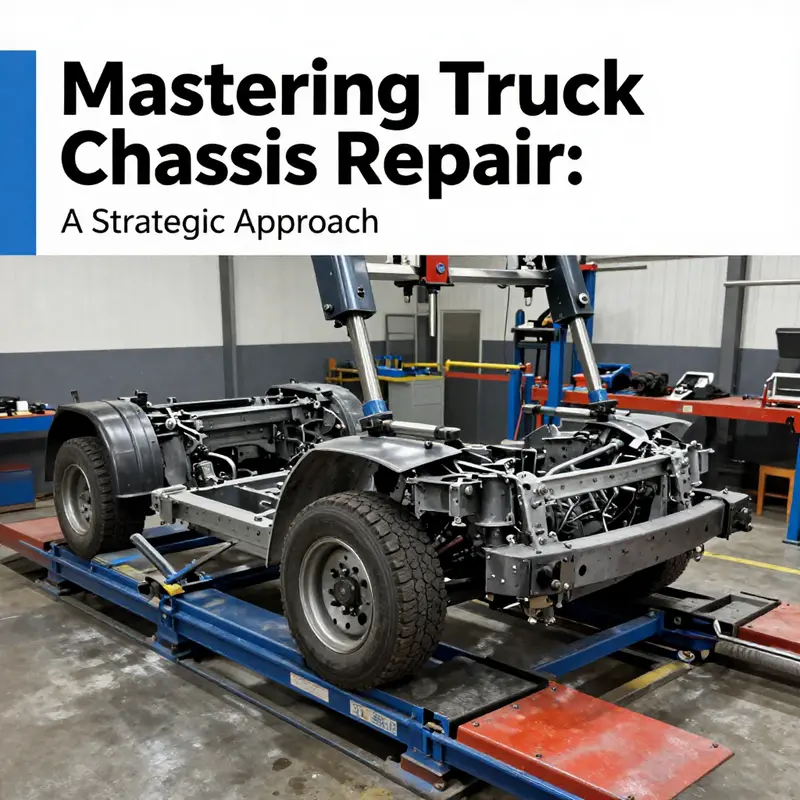
The chassis is the backbone that carries every mile of work, every load, and every bounce of the road. When deformation creeps into that backbone, the consequences ripple through steering, suspension, braking, and drivetrain alignment. The repair path then becomes a careful balance of engineering judgment and metalworking discipline. The goal is not simply to flatten a bent beam but to restore the frame to its original geometry so that all mounting points align, the load path remains intact, and the vehicle behaves as the manufacturer intended. This chapter follows the disciplined arc from diagnosis to final protection, showing how professionals translate precision tools and proven methods into a chassis that can safely bear the heavy responsibilities of daily use.
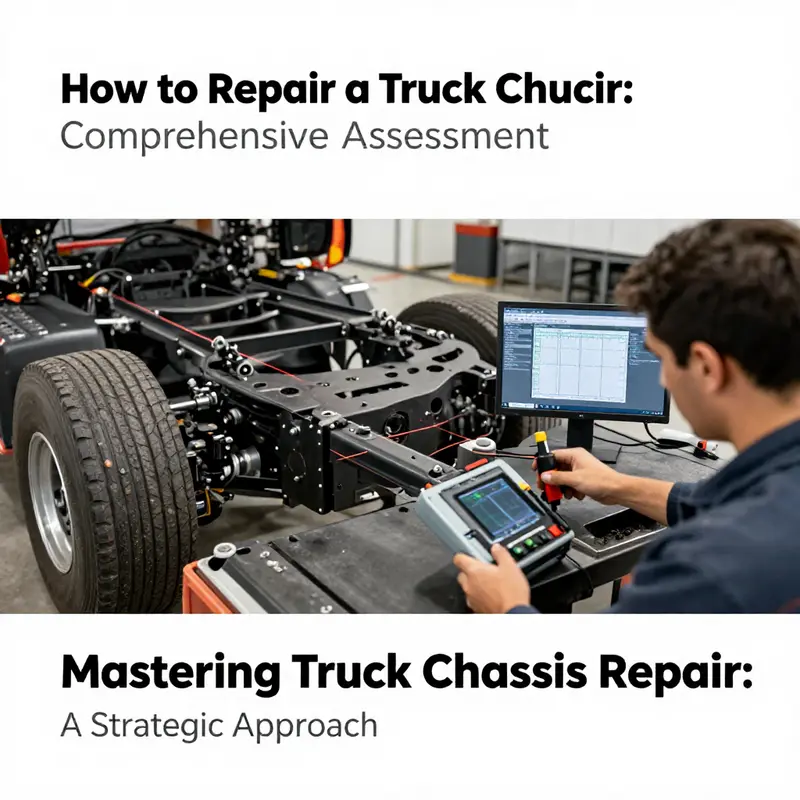
The journey begins with diagnosis that goes beyond a casual look under the vehicle. A deformed frame will not always reveal itself in a single glance, especially when the damage is subtle or localized. Technicians rely on four-wheel alignment testing and a laser or computerized geometry scan to map the chassis. Four-wheel alignment tests measure camber, caster, toe-in, and thrust angle across all corners, revealing if the wheels sit true relative to the frame and the road. A misalignment can be a telltale sign that the chassis has moved enough to disturb the geometric relationship between the axles and the mounting points. The chassis flatness or geometry scan creates a digital map of the frame, comparing real measurements to the original blueprint. This map highlights minute distortions that could escape the naked eye but matter greatly when you attempt to return the frame to spec. The result is not guesswork but a precise, quantitative picture of where and how the frame has shifted.
From that diagnostic map, technicians determine the extent and nature of deformation. Minor/Localized deformations affect specific components, such as control arms, cross-members, or small sections of frame rail near mounting points. For these, hydraulic pull-down machines and specialized jigs can apply controlled, uniform tension to coax the metal back toward its intended shape. The process requires careful control of force and a keen sense of the material’s response to heat and stress. When steel frames are involved, technicians may heat certain zones to increase malleability but do so with tight controls on temperature and subsequent cooling, ensuring the metal set remains stable once cooled under the right constraints. The aim is to restore geometry without overcorrecting or introducing new distortions elsewhere along the frame.
Major structural deformations present a different challenge. If the main rails or cross-members are twisted or cracked beyond what pulling can safely correct, replacement becomes the safer, more reliable option. This involves removing the damaged section and welding in a replacement piece that matches the original dimensions precisely. The work is performed with a clear focus on preserving load paths and mounting interfaces for suspension, engine, and drivetrain. The repair sequence matters here: cut and deburr the damaged portion, fit the replacement segment, and then weld with a method that minimizes heat input while maintaining joint integrity. Segmented and symmetrical welding helps distribute heat more evenly and reduces the risk of heat distortion that could shift the frame again after it has been straightened. After welding, the frame is remeasured to ensure it sits within factory tolerances.
In some cases, severe localized damage—such as a dented frame rail that compromised wall thickness or a crack that propagates under load—still requires welding, but with heightened care. Preparation is meticulous: remove rust and contaminants, ensure clean metal surfaces, and select filler metals compatible with the base material. The welding sequence is deliberate, often staged in passes to control heat input and minimize residual stress. After the welds have cooled, non-destructive testing methods such as dye penetrant inspections are applied to detect surface cracks that could compromise strength. The emphasis throughout is not just on making the repair look right, but on validating structural continuity and ensuring the repaired region can carry the intended load without hidden vulnerabilities.
These technical steps are not abstract theories; they translate into concrete, measurable outcomes. Once the deformation has been corrected or the damaged section replaced, the frame must be verified again with the same precision system used at the outset. A post-repair re-scan confirms that the geometry aligns with the original factory dimensions. Then comes the four-wheel alignment, a vital step that reestablishes proper wheel geometry and ensures that the vehicle will track straight under load, wear tires evenly, and maintain predictable steering behavior. Suspension calibration follows, aligning springs, dampers, and mounting points with the new frame geometry so that the vehicle responds consistently to road input. Finally, a road test checks for any residual vibrations, pulling, or unfamiliar noises that might indicate a hidden discrepancy in the drivetrain or a misalignment in the mounting of critical components. Only after these checks is the chassis considered ready for service.
Protection of the repaired structure completes the cycle of returning a chassis to serviceable condition. The repaired area receives a protective coating—typically an anti-corrosion primer and an undercoating that can withstand road salt, moisture, and debris. The coating must be applied evenly and cured properly to become an enduring part of the frame’s defense. Maintenance planning follows, emphasizing regular cleaning to remove corrosive residues and periodic inspection for signs of coating damage or new corrosion. Guidance from industry maintenance resources reinforces a practical rule: neutral cleaners are preferable to alkaline ones, because aggressive cleaners can erode protective layers on the chassis. Keeping the coating intact is as important as the repair work itself, because corrosion can gradually undermine the frame long after the fix has been completed.
The decision to undertake deformation correction carries weight beyond the metal itself. It demands the right tools, the right training, and a facility that prioritizes safety and procedure. The work is not suited to improvised setups or do-it-yourself methods. The chassis carries heavy loads and experiences dynamic stresses that require exacting control of temperatures, forces, and tolerances. The consequences of a misstep—misalignment, cracked joints, or weakened load paths—can compound during operation and haunt the vehicle in high-stress conditions such as steep descents or heavy braking. The best course is clear: engage certified professionals who operate frame racks and laser alignment systems, supported by technicians with real-world experience in heavy-duty frame repair. When that professional standard is met, the likelihood of returning a truck to reliable, factory-like performance increases substantially.
The broader value of deformation correction becomes even more evident when considering long-term maintenance and fleet readiness. A corrected chassis isn’t merely a remedy for a single incident; it is the foundation for predictable uptime, consistent safety margins, and cost-effective lifecycle management. Operators benefit from knowing the frame’s geometry has been restored to spec, which supports accurate drivetrain alignment, proper brake line routing, and consistent suspension performance under real-world loads. The maintenance plan that follows—regular inspections, rechecks after typical heavy-use cycles, and scheduled reapplications of protective coatings—helps ensure the repair remains effective for miles to come. In short, deformation correction is a strategic investment in stability, safety, and reliability, not a one-off fix.
As you read this, consider how the chassis repair workflow connects to your broader maintenance strategy. The diagnostic phase, the choice between straightening versus replacing, the methodical execution, post-repair verification, and the protective measures all form a continuous loop. This loop reinforces the principle that repairing a truck chassis is not solely about metalwork; it is about preserving the integrity of the entire vehicle. The chassis supports safety-critical systems. Its straightness ensures that suspensions remain within design envelopes and that steering responds as expected at highway speeds. It governs how the loads and stresses travel from the truck bed to the axles, through the driveshaft, and into the wheels. A frame that maintains its true geometry contributes to consistent handling, stable braking, and predictable tire wear. The path from diagnosis to protection is therefore not a sequence of tasks to be completed; it is a disciplined process that preserves the truck’s capability to perform under demanding conditions.
To integrate this chapter with practical planning, consider how deformation correction informs budgeting and maintenance decisions. A well-ordered frame repair plan helps fleet managers see beyond the immediate repair bill to the downstream costs and uptime benefits of a frame that remains within spec under load. For readers seeking a practical angle on ongoing expenses, a connected guide on budgeting for routine truck maintenance offers a structured approach to allocating funds for frame inspection, laser alignment checks, undercoating reapplication, and any necessary component replacements when needed. If you want to explore that broader planning, you can read more here: Budgeting for Routine Truck Maintenance.
The relevance of deformation correction to the overall topic of repairing a truck chassis becomes even clearer when you place it within the larger context of safety and lifecycle management. The roadway provides no reset button; it delivers cumulative stresses that can reveal or exacerbate weaknesses in a frame. A thorough, disciplined deformation correction plan acknowledges this reality and addresses it head-on. It emphasizes safeguards such as non-destructive testing after welding to identify hidden cracks, a rigorous re-check of critical connections after every repair phase, and a disciplined approach to heat input to avoid warping. It also respects the vehicle’s other subsystems—the suspension, the brakes, and the drivetrain—by ensuring their interfaces with the chassis remain precise and predictable. The result is a chassis that not only looks aligned on a lift but performs with confidence on the road, mile after mile.
This is where the chapter naturally transitions to the subsequent discussion about preventative strategies and ongoing maintenance. If deformation corrections establish a new baseline for the chassis, then the follow-up chapter can explore how to monitor tolerances over time, identify early signs of frame fatigue, and implement routine checks that catch drift before it becomes a problem. The road ahead includes not just repair but prevention, ensuring that the backbone remains strong through the miles and seasons of heavy-duty operation.
External resource: https://www.osha.gov/welding-cutting-brazing
When the Backbone Breaks: Navigating repair versus replacement for a truck chassis
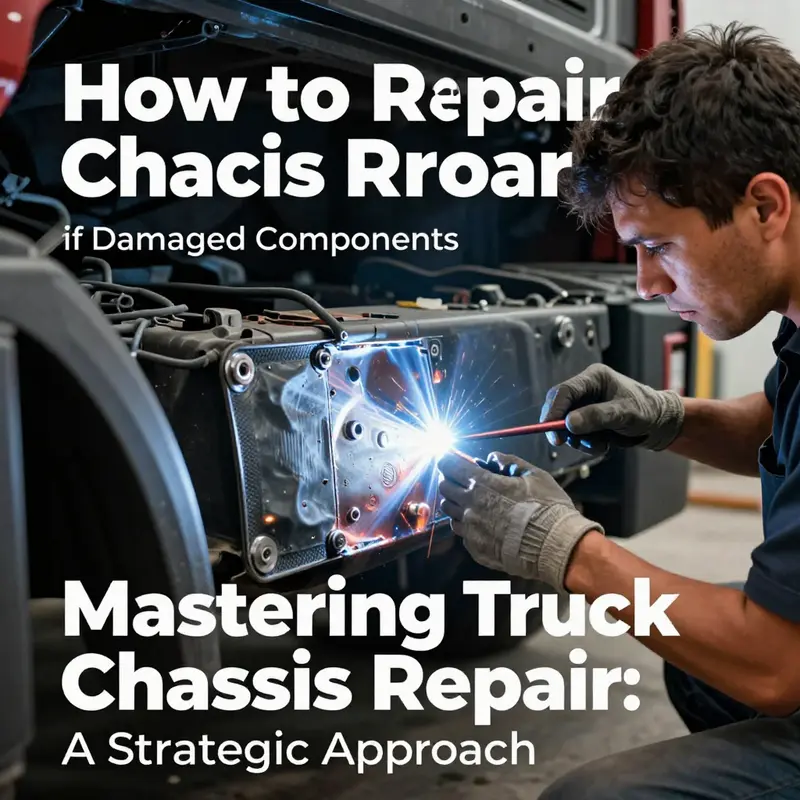
The chassis is the frame of a truck’s life. It carries the engine, the drivetrain, the body, and the cargo, and it absorbs the relentless stresses of road, load, and weather. When the backbone of a heavy-duty truck shows deformation, fracture, or serious fatigue, there is no quick cosmetic fix. The decision to repair or replace hinges on a careful synthesis of structural reality, safety, cost, and the vehicle’s remaining value. It is a moment that tests judgment as much as 기술, because the options chosen today determine road safety for miles to come. In practice, the line between repair and replacement is drawn not just by the visible damage but by the hidden truth of how load paths are carried through the frame rails and crossmembers under load, torque, and vibration. A small misalignment can ripple into steering pull, uneven tire wear, and compromised suspension geometry. A cracked main beam can propagate under heavy loads and high-speed operation, threatening catastrophic failure. The stakes are simply too high to treat chassis work as routine maintenance or as a DIY test of endurance. As professionals emphasize, the integrity of the chassis defines the vehicle’s performance, safety, and regulatory compliance. The decision, then, centers on whether the damage can be restored to factory geometry and strength or whether the risk of reintroducing a compromised structure is too great to bear.
The first step is a comprehensive assessment that goes beyond surface appearances. A thorough inspection uses precision tools to locate deformation, cracks, corrosion, and fatigue. Laser measuring systems and frame alignment devices reveal precisely where a rail or crossmember has deviated from the original geometry. Technicians evaluate mounting points for suspension, engine, and transmission because misalignment can cascade into driveline binding or brake-line stress. They also look for cracks that might not be visible to the naked eye, subtle porosity in welds, or corrosion that has eaten into the metal’s depth. In essence, the evaluation decodes whether the chassis still behaves as a rigid, continuous one-piece structure or whether a weakened segment has created a weak link in the chain. The nuance matters: a minor dent could be localized enough to patch and recoat, while a bending or cracking pattern across the frame rails may signal a need for more drastic intervention. There is a widely shared principle in the field: any repair must restore the frame to its original, or an approved, equivalent strength and geometry. The margin for error is small because the chassis exists to withstand load, not to tolerate compromise.
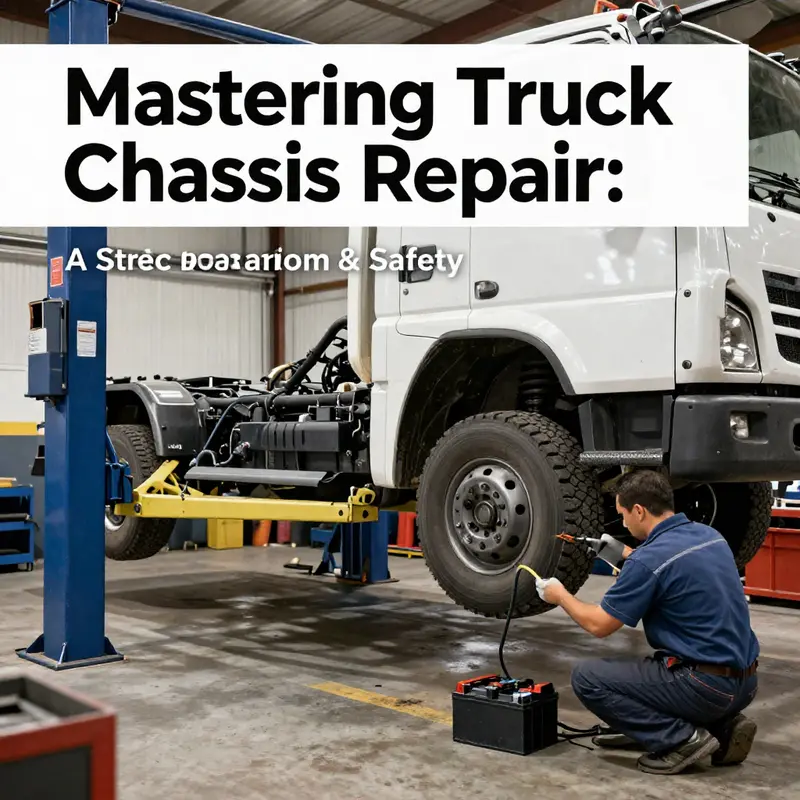
If the damage remains contained and the frame’s geometry can be restored, repair becomes a carefully choreographed sequence rather than a door-to-door makeover. The repair route starts with securing the vehicle and preparing the workspace. The truck is brought onto a frame rack or hydraulic lift, safety protocols are enacted, and the electrical system connected to the chassis is disconnected to prevent short circuits during welding or heating processes. The environment is kept well ventilated and fire-safe, especially when heat-based methods or welding are involved. These steps may seem procedural, yet they are essential to keep the repair from turning dangerous. The repair path emphasizes precision: dented or cracked components are approached with high-tensile welding equipment and patch panels designed to restore continuity. For cracked or broken frame rails, technicians often remove the damaged segment and weld in a new section—a patch panel that reestablishes the structural line and strength of the rail. Corrosion that has eaten into the metal is ground back to sound material, patches are welded in, and surfaces are treated to resist future decay. Any brackets that anchor suspension components, engine mounts, or transmission supports must be re-welded or replaced, because a weakened bracket can undermine the entire frame’s integrity. The caveat here is clear: welding is not a generic fix. It must be performed by certified welders using the appropriate filler metals and procedures that meet engineering standards. The difference between a durable repair and a brittle repair often comes down to the welder’s discipline, the quality of the base metal, and the control of heat-affected zones.
Where repair is feasible, the process also includes ice-cold attention to deformation correction. Frame straightening requires specialized machines that apply controlled force to return the chassis to factory specifications. Technicians take multiple measurements across the frame with precision gauges to verify true geometry across critical axes. In some cases, a steel frame may be heated in localized sections to make the metal more malleable before realigning, followed by cooling under tension to lock the frame in its corrected form. The aim is not merely to align rails but to reestablish proper crossmember spacing, rail height, and mounting point alignment under load. A real-world demonstration of these principles can be found in the field where a vintage or heavily damaged chassis was restored through a custom frame press and meticulous measurement. The example underscores a broader truth: even extreme deformation can be reversed when the team commits to the right tools, rigorous measurement, and disciplined process.
Yet not all damages invite the same remedy. The line between repair and replacement becomes clearer with the extent of the damage, the age and design of the vehicle, and the expected load and duty cycle. When cracks extend into major webs, when the main beams are bent beyond practical straightening, or when corrosion eats into critical load paths, replacement emerges as the safer and more economical choice. In such cases, attempting to rebuild a structurally compromised chassis can mask hidden vulnerabilities and defer a more catastrophic failure in service. A practical rule of thumb mirrors the cost-benefit calculus used in high-stakes engineering decisions: if the repairs would approach or exceed the cost of a replacement, or if the repaired chassis would require continual monitoring and frequent rework, replacement becomes the prudent option. The same assessment weighs the vehicle’s remaining useful life. A chassis that has accumulated fatigue from years of heavy-duty operation may be nearing the end of its safe service life, even if a repair can restore immediate strength. The result is a vehicle that, while technically operable, no longer meets the safety margins demanded by modern operating environments. In such cases, replacement offers more predictable performance, long-term reliability, and better return on investment, particularly in fleets that rely on consistency and uptime.
Beyond the structural decision, the repair path requires scrupulous attention to safety and compliance. Any repair must align with manufacturer specifications and follow industry standards. That means adhering to prescribed welding procedures, heat treatment practices, and post-repair testing. Certification is not a formality but a practical necessity. Post-repair inspection follows a rigorous plan: a thorough visual check is complemented by non-destructive testing, such as magnetic particle inspection, to surface-hidden cracks or flaws that could otherwise emerge under load. After the structural work, wheels are reinstalled and components rebalanced. A four-wheel alignment and suspension calibration ensure that steering geometry and ride dynamics reflect the corrected frame geometry. Finally, a road test validates the absence of vibrations, pulling, or unusual noises that could compromise safety. Together, these steps close the loop from assessment to verification, turning a repair into something that truly restores the chassis to its intended performance envelope.
Protective coatings then play a crucial role in prolonging the life of a repaired chassis. An undercoating or chassis armor—preferably a urethane-based spray—provides a barrier against moisture, road debris, and salt that accelerate corrosion. The maintenance plan does not end there; regular cleaning with neutral detergents helps preserve protective coatings and inspect the frame for early signs of wear or corrosion. The maintenance mindset is essential here. Regular cleaning and inspection become a shield against the creeping costs of corrosion and fatigue across years of service. A disciplined maintenance approach—backed by an informed budgeting discipline—can help fleets manage the unpredictable costs of chassis work, smoothing out spikes that come with unexpected damage. As a practical anchor for readers planning ahead, consider how routine maintenance budgeting can cushion major repair expenses and support longer useful life for valuable assets.
The path chosen—repair or replacement—must be grounded in professional judgment, not personal bravado. The consequences of an improperly repaired chassis extend beyond the vehicle: steering inaccuracies, braking compliance concerns, and even legal liabilities can follow if the structure fails under load. The literature and industry guidance consistently emphasize that chassis repair requires professional tools, trained technicians, and a commitment to safety that begins long before a weld is struck. As one may gather from authoritative summaries, the focus is on restoring structural integrity while preserving predictable behavior under stress. The principle holds across fleets and configurations: the chassis is not just a metal skeleton; it is the load-bearing path that translates every mile into safe, controlled performance. When in doubt, the safer choice is to consult a certified chassis repair shop equipped with frame racks, laser alignment systems, and experienced technicians. A reluctance to seek professional help is not a sign of resourcefulness but a risk to road safety and operational continuity.
For readers already planning or revising maintenance strategies, a practical direction emerges. Invest in sound inspection routines that identify deformation early and document it with precise measurements. Build a decision framework that weighs repair feasibility, replacement necessity, cost implications, and fleet uptime. Maintain a log of repairs that captures material used, weld procedures, heat treatments, and post-repair testing results. This documentation increases traceability, supports warranty claims where applicable, and provides a clear performance history for the chassis. It also frames a disciplined approach to budgeting by aligning maintenance spend with long-term reliability goals. In short, the question of repair versus replacement is less about a single fix and more about a holistic view of how the chassis supports the vehicle’s mission, the owner’s risk tolerance, and the fleet’s uptime targets. When a chassis is scrutinized with this level of care, the path to safer operation becomes clearer, even in the face of daunting damage.
To ground hands-on decisions in established practice, consult the broader technical literature that outlines chassis repair methodologies, structural integrity assessment, and criteria for determining when repair versus replacement is warranted. The literature emphasizes adherence to industry standards and compliance as integral to safety and performance. For readers who seek a deeper dive, an essential external resource provides a detailed framework for these methodologies and standards. [External resource: https://www.sae.org/publications/technical-papers/content/2023-01-1234/] For those who want to connect theory with practice within their own organizations, consider also exploring internal references on long-term maintenance planning and budgeting that help align day-to-day repairs with strategic fleet management goals. In the field, the best outcomes arise when teams stay focused on restoring structural integrity, ensuring that the restored chassis behaves as a true backbone of the vehicle rather than as a compromised system that invites risk. This is the bedrock of responsible, durable chassis repair.
If you are navigating this decision for a fleet, the practical takeaway is clear: assess, decide, repair or replace, verify, and protect. The assessment should map every critical load path, every mounting point, and every potential crack. The decision should balance safety, cost, and uptime. The repair, if chosen, must be performed with precision, using certified welders, patch panels, and frame straightening equipment. Verification is not optional but mandatory, including non-destructive testing, alignment, and road testing. Finally, protection and maintenance help ensure the repaired chassis remains robust through future service. Through this lens, repairing a truck chassis becomes less about repairing metal and more about preserving the roadworthiness and reliability that a fleet depends on day after day. A well-executed repair or a properly chosen replacement upholds not only the truck’s performance but the safety of every person who shares the road with it.
To further explore budgeting the maintenance lifecycle and more actionable fleet planning, you can read about budgeting for routine truck maintenance. Budgeting for Routine Truck Maintenance. The decision to repair or replace should be balanced with a forward-looking view of maintenance spend, spare parts availability, and the expectations of uptime. By anchoring actions to clear engineering criteria, a repair project becomes a testament to disciplined engineering practice rather than a gamble with safety. In the end, the spine of the vehicle—its chassis—deserves more than capable hands; it deserves a strategy that treats structural integrity as the non-negotiable foundation of safe, reliable operation.
Final thoughts
Committed attention to truck chassis repair not only ensures the safety and performance of your vehicles but also extends their service life and aids in compliance with industry standards. With the appropriate assessments, safety strategies, deformation correction techniques, and component repairs, fleet managers can significantly mitigate operational risks. Thorough preparation and adherence to these systematic repair steps will equip you to maintain your fleet’s structural integrity and reliability, fostering long-term success in your operations.