
For fleet managers, logistics providers, and construction operators, ensuring vehicles remain operational is paramount. AM PM Truck Repair Atlanta embodies reliability and efficacy in mobile truck repair services, operating 24/7 to minimize downtime. Explore our state-of-the-art solutions, strategic location, emergency services, customer trust, and the industry impact that makes AM PM a leader in the transportation and logistics sector.
On the Move in Atlanta: AM PM Truck Repair Atlanta as a 24/7 Lifeline for Fleets
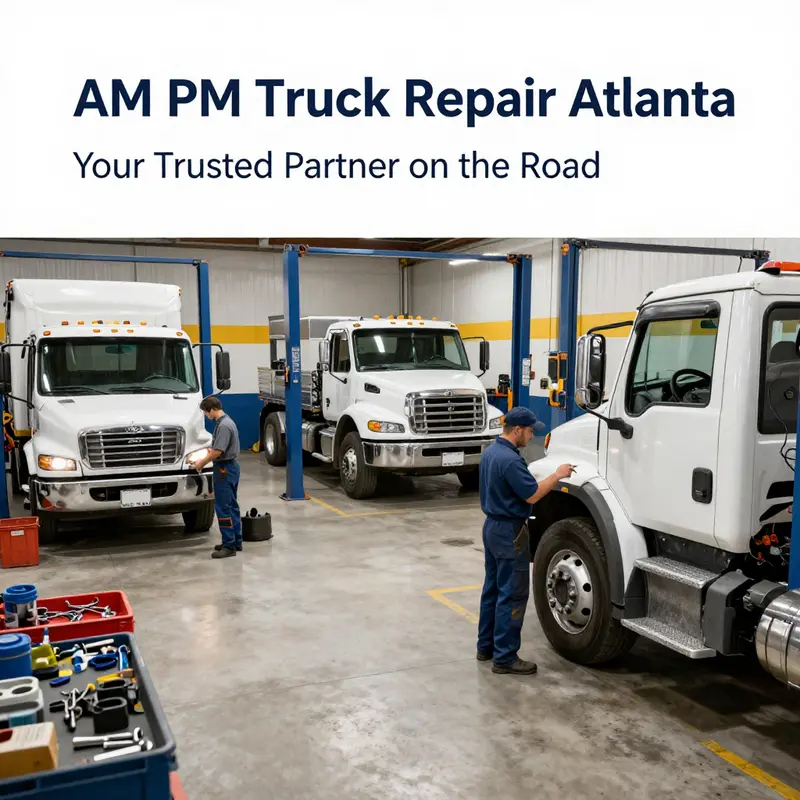
In a city where freight never stops and the highways pulse with delivery schedules, the road can turn treacherous for a fleet. Atlanta’s mix of dense urban routes and sprawling industrial corridors means trucks confront stop‑and‑go traffic, sudden weather shifts, and the kind of wear that only long hours on the road can produce. When a tractor‑trailer or a heavy‑duty trailer breaks down, downtime compounds costs, delays shipments, and rattles customer trust. In these moments, a mobile, around‑the‑clock partner becomes essential. AM PM Road Service, a 24/7 mobile truck and trailer repair operation rooted in Atlanta, fills that role not just as a convenience but as a strategic asset for fleets navigating a demanding market. Based at 3800 Oakcliff Rd and able to mobilize quickly across the metro area, the company translates the promise of on‑site service into real uptime for operators who depend on the road to move goods and keep schedules intact.
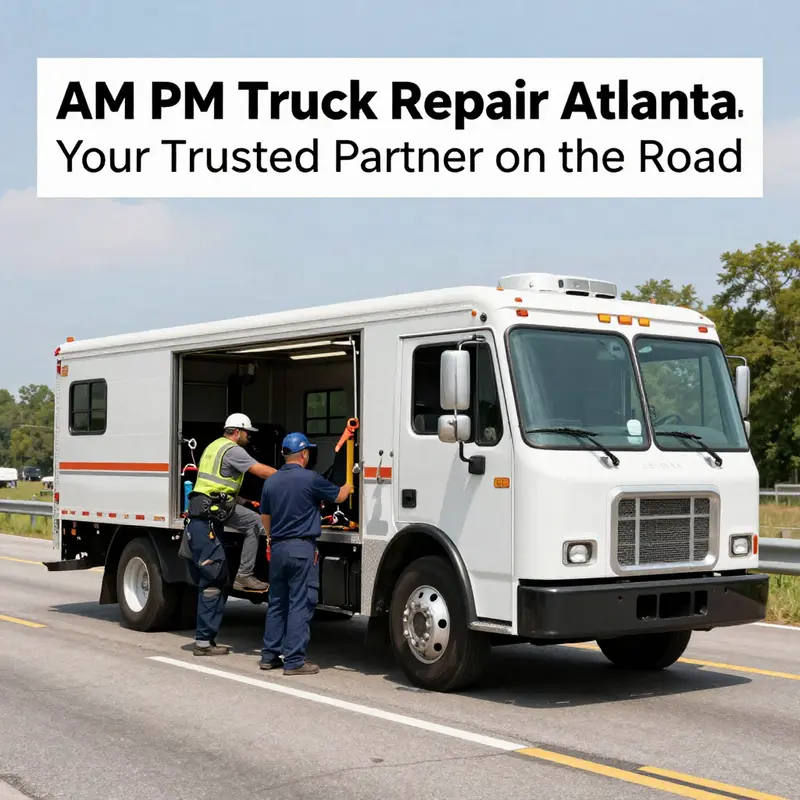
From the driver’s seat, the value of a mobile repair option is immediate. It means cargo is less likely to sit idle while a tow is arranged, and the hazards of congested ramps and busy interchanges are avoided when a skilled technician arrives with tools to diagnose and fix problems at the scene. For fleet managers, the payoff is consistency. A repair performed on the pavement minimizes the disruption to routes and helps maintain the calendar that keeps customers informed and confident. The core approach is straightforward yet powerful: emergency repairs delivered where the vehicle stands, with a focus on restoring operation quickly and safely. Time is money on every trip, and a mobile solution reframes the clock from downtime to productive repair time.
The scope of work reflects the realities of today’s trucking environment. Technicians from AM PM Road Service tackle a broad spectrum of challenges, from engine faults and electrical glitches to brake system malfunctions and transmission troubles. The emphasis is not on flashy fixes but on durable solutions that hold up under the road’s demands. Diagnostic capability sits at the heart of this model. The ability to perform field tests, read fault codes, and verify critical systems on site accelerates decision making and reduces the chance of a misdiagnosis that sends a truck back into service only to fail again. In many scenarios, a field diagnostic can determine whether a part is salvageable, whether a replacement is needed, or whether a temporary but safe workaround will keep the vehicle moving until a proper repair can be completed in a shop setting.
Speed and flexibility define the dispatch process. Atlanta’s traffic patterns can flip in minutes, so the most effective mobile repair outfits optimize routes, pre‑assemble the right tools, and maintain open lines of communication with fleet operators. The technicians are prepared to work with a wide range of makes and models, reflecting the diversity of the metro’s fleets. Rather than waiting for a service center appointment, drivers and managers gain a single, predictable touchpoint for outage management. The emphasis is on safety alongside speed; repairs are performed to high workmanship standards, and the team follows best practices to minimize the risk of recurrence, whether caused by wiring faults, sensor failures, or misalignments that can crop up after a long highway stint.
This Atlanta‑based operation illustrates a broader shift in how trucking companies approach maintenance and resilience. A mobile partner complements a fleet’s stationary maintenance, bridging the gap between roadside events and longer repair timelines. The result is a more resilient operation where uptime becomes a measurable capability rather than a hopeful outcome. Fleets relying on such a model experience fewer cascading delays, because a field technician can often stabilize the situation, advise on immediate safety concerns, and guide drivers toward the quickest path back to the road. The human element matters here as well: the technician’s conduct, clear communication, and willingness to explain the repair plan help preserve driver morale and confidence during a stressful breakdown.
Integrating mobile repair into a longer‑term maintenance strategy also makes sound economic sense. For fleets that run on tight margins, reducing unscheduled downtime translates into tangible savings. Predictable maintenance spend, better route planning, and data from field repairs all feed into smarter decisions about preventive tasks, inventory levels, and capital planning. The mobile model encourages a preventive mindset without sacrificing the agility that emergency repairs require. In practice, managers can pair scheduled inspections with on‑the‑spot diagnostics to identify creeping issues before they become roadside failures. This proactive cadence not only extends component life but also sharpens the organization’s performance culture—emphasizing safety, reliability, and continuous improvement.
For fleet leaders who want to plan for the long term, a balanced approach to maintenance matters even more. Establishing clear service level expectations with a mobile partner, maintaining a core inventory of commonly needed parts, and leveraging the insights from on‑site repairs to guide preventive priorities can transform how a fleet operates. The result is a more predictable balance sheet, fewer unplanned outages, and a driver workforce that experiences fewer high‑stress breakdown incidents. In this sense, a mobile repair partner is not merely a reactionary service; it becomes a collaborator in the fleet’s ongoing journey toward reliability and efficiency.
To readers pursuing practical guidance beyond the immediate repair scene, consider how budgeting for routine truck maintenance shapes outcomes. A steady funding plan ensures preventive tasks, thorough inspections, and minor component replacements occur on schedule, leaving emergency roadside work as a measured, planned expenditure rather than an unpredictable spike. The connection between routine care and on‑site emergency capability is not coincidental; it’s a feedback loop that strengthens uptime and reduces risk. For those seeking more detail on budgeting, the linked guide on routine maintenance offers deeper insight into allocating resources in ways that maximize uptime and reliability. budgeting for routine truck maintenance.
Across the broader Atlanta ecosystem, mobile repair services like AM PM Road Service complement traditional repair shops. They fill a crucial gap by delivering rapid, reliable care that prevents a roadside event from escalating into costly downtime. The combination of on‑site diagnostics, swift fixes, and careful guidance about next steps creates a practical, scalable model for fleets of all sizes. The emphasis on safety and compliance ensures that repairs meet the expectations of regulators and the realities of daily operation. For drivers, the experience is respectful and efficient: a competent technician arrives, explains what is happening, and returns the vehicle to service with confidence.
In sum, AM PM Road Service embodies a responsive, fleet‑friendly approach to maintenance in a city where every mile matters. The on‑site fix, the diagnostic clarity, and the commitment to safety cohere into a service that not only repairs vehicles but also reinforces a fleet’s broader goals: keeping cargo moving, protecting drivers, and sustaining reliable, predictable service for customers who depend on timely deliveries. As Atlanta continues to grow as a logistics hub, the value of a dependable mobile repair partner becomes more evident, turning potential breakdowns into manageable, recoverable events that preserve uptime and protect the bottom line. External reference: https://www.amprds.com
null
null
null
null
On Call and On Track: Building Trust and Reliability with AM PM Truck Repair Atlanta
When fleets operate in a city where congestion and deadlines collide, reliability is not a luxury—it is a lifeline. In Atlanta, a city carved by interstates and freight corridors, the ability to get a truck back on the road quickly is what keeps deliveries moving and customers satisfied. AM PM Truck Repair Atlanta has built its reputation by delivering on that demand around the clock. The company, rooted in the northeast reaches of Atlanta, situates its service not as a distant option but as a local ally, ready to roll at any hour. The premise is simple yet powerful: when a vehicle breaks down, the clock stops for no one, and an on-site, emergency repair capability can recover a fleet’s momentum before a day’s worth of schedules slips away. This practical approach—moving the operation to the customer rather than forcing the customer to move to a shop—has become the backbone of trust in this market.
What distinguishes AM PM Truck Repair Atlanta in a crowded field is not just speed, but consistency. A 24/7 mobile repair service sounds fair enough on paper, yet it requires a finely tuned chain of responsiveness, diagnosis, and execution that can withstand the pressure of high-stakes breakdowns. The company emphasizes on-site emergency repairs, a choice that reduces downtime for fleets that cannot afford long tethering to a shop. On site, technicians carry a portable toolkit of diagnostic devices and repair supplies calibrated to the most common road hazards and mechanical faults. The result is a repair that enables a vehicle to continue its route—an outcome that matters profoundly to dispatchers facing tight delivery windows and to drivers who rely on predictable hours to plan rest and fuel. In practical terms, this translates to shorter delays, fewer re-routes, and a lower total cost of ownership for a fleet operator who would otherwise bear the brunt of extended downtime.
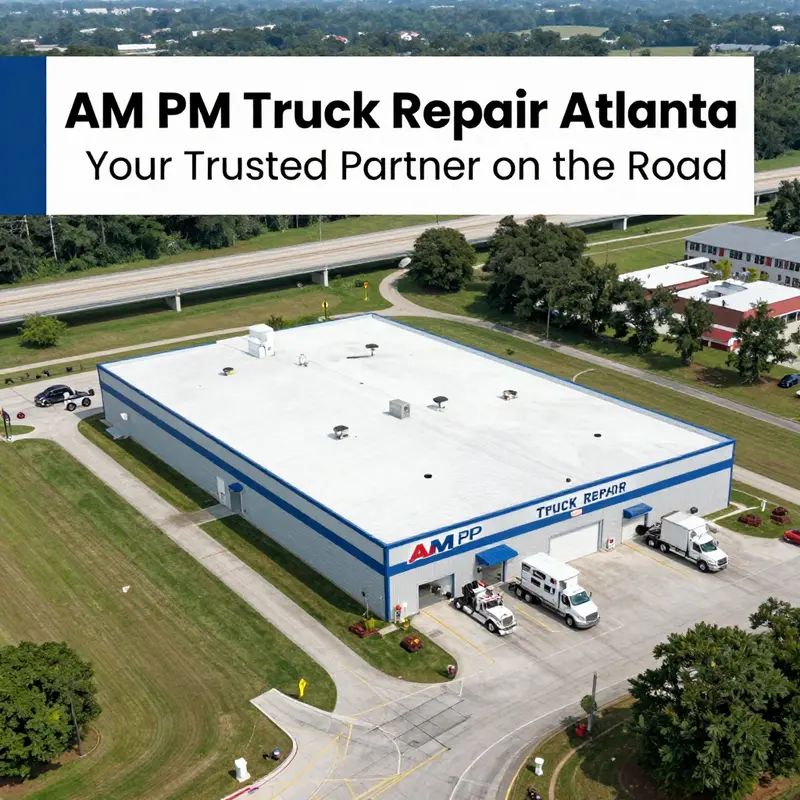
The geographic anchor matters here. The service address at 3800 Oakcliff Rd, Atlanta, GA 30340 is more than a pin on a map. It signals a physical footprint in a part of town that serves as a corridor for regional hauls and distribution networks. Having a repair team that can mobilize swiftly from a known hub reduces not just travel time but the uncertainty that often accompanies roadside breakdowns. When an owner-operator or a fleet manager calls for help, the expectation is clear: a dependable crew arrives, assesses the issue, and communicates the plan with honesty. The value of such candor cannot be overstated. It is one thing to fix a problem; it is another to do so while keeping the client informed, offering alternatives, and ensuring that the chosen route aligns with safety regulations and the driver’s schedule. Trust grows when the customer feels seen and informed at every step rather than surprised by hidden charges or opaque timelines.
Transparency is a thread that runs through every interaction AM PM Truck Repair Atlanta cultivates. In the trucking world, the stakes of a repair extend beyond the moment of ignition. A late-night call demands not only technical expertise but also clear explanations about what is being repaired, what next steps are necessary, and what the driver should expect during the remainder of the shift. This culture of openness helps transform a one-off service call into a recurring relationship. Fleet managers, who juggle multiple assets across a network, appreciate a partner who can translate complex mechanical concepts into practical decisions that align with safety standards and operational realities. The trust they place in an on-site mechanic is anchored in the promise that there will be no unwelcome pricing surprises, no vague timelines, and no overpromised outcomes that could jeopardize a driver’s next assignment. In a sense, reliability becomes a form of risk management, a non-financial value that translates into higher uptime, steadier schedules, and improved driver morale.
The reliability narrative is reinforced by a disciplined approach to diagnostics and repair. On the road, every minute matters, yet accuracy cannot be sacrificed at the altar of speed. The best mobile teams balance rapid response with careful problem-solving, using standardized checklists to ensure that the underlying causes of failures are identified rather than treated in isolation. This comprehensive approach prevents repeat breakdowns and reduces the accumulation of small, unresolved issues that can escalate into major disruptions. The emphasis on prevention—knowing what to look for, rather than merely addressing the symptom of a breakdown—helps create a sense of long-term partnership with customers. It is a confidence-building practice: fleets know that the provider is not just patching a hole but helping them steer toward a smoother, safer journey across Atlanta’s busy lanes.
There is also a human element to trust that cannot be overlooked. In the high-pressure environment of roadside emergencies, drivers often feel isolated and uncertain. A technician who communicates calmly, explains options in plain terms, and follows through with a well-documented repair plan helps restore a driver’s focus and sense of control. The reliability claim—consistently meeting expectations in stressful moments—becomes a social currency in a community of operators who share the same road networks, weather challenges, and time pressures. In this sense, AM PM Truck Repair Atlanta does more than fix engines or brakes; it reinforces a professional identity for drivers who depend on a trusted partner to keep them moving through the literal and metaphorical crossroads of their days.
For fleet operators, this is not merely about responding to emergencies; it is about the resilience that a dependable mobile service provides. The trust built in the moment of a breakdown extends into future engagements: predictable service windows, transparent invoicing, and the escape hatch of a reliable backup when other options fail to show up. The result is a durable relationship that withstands the pressures of seasonal peaks, high-volume periods, and the shifting demands of e-commerce logistics. A trusted partner becomes an operational asset, a resource that supports planning, risk management, and cost control. In Atlanta’s climate and traffic realities, such partnerships are invaluable. They allow fleets to reallocate attention from the immediacy of a repair to the broader task of meeting customer commitments, maintaining service levels, and preserving driver well-being.
Finally, the story of trust and reliability in this chapter is a bridge to broader learning. For readers seeking to understand how a mobile repair service can anchor its reputation in a competitive market, the lesson extends beyond the specifics of any single company. It is about aligning speed with accuracy, accessibility with professionalism, and transparency with accountability. It is about listening to customers’ operating rhythms and adjusting the service model to fit—the hallmark of a truly responsive, road-ready partner. Those who want to explore broader perspectives on building resilience through maintenance, budgeting for routine care, and learning from industry practices may find guidance in related conversations hosted in industry blogs that chronicle the lived experiences of fleets navigating the realities of road life. For readers who wish to connect these ideas with wider industry conversations, see the Master Truck Repair blog for a broader lens on how maintenance strategies evolve in real-world settings. https://mastertruckrepairllc.com/blog/.
In sum, AM PM Truck Repair Atlanta demonstrates how trust in a mobile repair service is earned through reliability that is both practical and principled. The combination of 24/7 availability, on-site diagnostics, transparent communication, and a local footprint creates a dependable option for fleets that cannot stop at the threshold of a garage. In the rhythm of Atlanta’s highways and byways, the right repair partner does more than fix problems; they help a business stay on course, protect drivers, and keep the wheels turning toward tomorrow. External resource: https://www.ampmtruckrepair.com
Mobilizing the Road: AM PM Truck Repair Atlanta’s 24/7 Lifeline for Southeast Freight
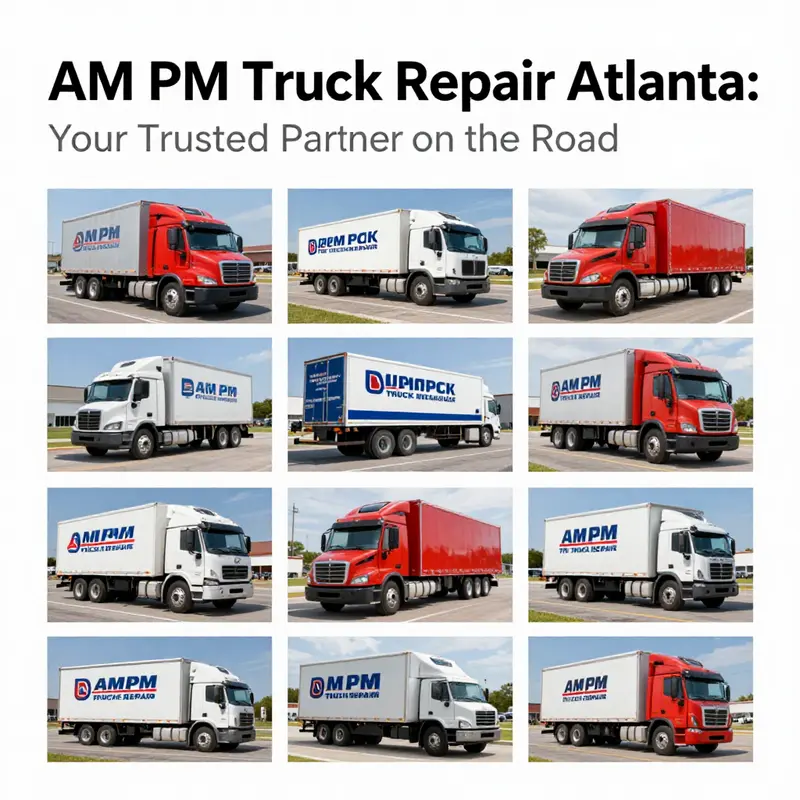
In the bustling logistics landscape of Atlanta, where highways braid into a spiderweb of regional trade routes and the pace of goods movement rarely slows, a mobile repair service specialized in trucks and trailers acts as a quiet, steadying force. AM PM Truck Repair Atlanta operates from 3800 Oakcliff Rd, but its reach extends far beyond a fixed shop wall. The company embodies a simple, high-stakes premise: keep commerce moving by meeting breakdowns wherever a truck happens to stall—on a shoulder, near a loading dock, or along a busy corridor at any hour of the day or night. The 24/7 capability is not a convenience so much as a strategic necessity in a region that serves as a major arterial route for freight into the Southeastern United States. For fleet managers and independent drivers alike, the value of mobility in repair is measured not in miles saved on a service call, but in minutes recovered on a schedule, a promise kept to shippers, and a reputation reinforced by consistent uptime.
What sets AM PM Truck Repair Atlanta apart is not merely the ability to respond quickly, but the breadth of its on-site expertise. The technicians who arrive on site are described as among the best diesel technicians around Atlanta, a designation earned through years of diagnosing equipment failures in diverse engines and configurations. This is not a one-size-fits-all toolkit approach; it is a disciplined craft that blends diagnostic acumen with field-ready ingenuity. On the highway or in a parking lot, these technicians mobilize a portable arsenal—diagnostic scanners, combustion analysis tools, hydraulic jacks, pressure gauges, and a stocked set of core parts that frequently convert a multi-hour towing ordeal into a swift on-site fix. The result is a repair that not only solves the immediate problem but preserves the safety and performance standards that are non-negotiable in heavy-duty trucking. In an industry where a single misfire or a faded seal can cascade into delays across supply chains, on-site reliability is a form of operational insurance.
The operational model behind this reliability is as telling as the service itself. AM PM Truck Repair Atlanta operates as a mobile unit with a strategic base in Atlanta, a city that acts as a logistics nexus for interstate commerce. The mobile paradigm reduces the friction of downtime by removing the need for a trip to a fixed repair facility. Instead, the closest technician arrives with the tools and know-how to diagnose, repair, and, when possible, certify the repair on the spot. This approach is especially valuable for fleets that depend on predictable routing and strict delivery windows. When shipments are tied to tight timetables or time-bound contracts, every minute recovered from a breakdown translates into more predictable dispatch schedules, fewer detention charges at shippers, and a higher level of service consistency. In practical terms, the mobile repair model supports a fleet’s flexibility—the ability to reassign capacity, adjust routes, or accommodate sudden demand without sacrificing reliability.
Beyond the machinery of repairs, the human dimension of the Atlanta service footprint anchors its industry impact. The company frames its work as a partnership with the broader transportation ecosystem rather than a transactional remedy. Local trucking companies, regional carriers, and independent drivers learn to rely on a consistent, responsive partner who shows up with empathy for the pressures of the road and a clear-eyed commitment to safety. This relational strength matters because the trucking industry is built on trust as much as on torque. When a fleet manager places a call for emergency repair, the expectation is not only a fix but the assurance that the crew on the other end of the line understands the operational rhythms of freight movement. The on-site repair crew delivers that assurance through a blend of speed, accuracy, and a professional courtesy that keeps drivers oriented and confident during irregular hours and stressful situations.
The industry impact of a mobile repair model can be understood most clearly by tracing how it intersects with the logistical engine of the Southeast. Freight haulers rely on a dense, interconnected network of ports, distribution centers, and manufacturing sites. Downtime at any point can ripple outward, affecting capacity, dwell times, and the reliability metrics that shape customer satisfaction. By minimizing downtime, AM PM Truck Repair Atlanta contributes to a more resilient transportation ecosystem. The company’s rapid response reduces the likelihood of costly detours and re-sequencing that can accompany breakdowns far from predictable repair schedules. In practical terms, this capability strengthens the fleet’s overall utilization rate, supports just-in-time delivery principles, and helps sustain a freight network that must contend with weather, traffic congestion, and maintenance fatigue across a demanding region.
Partnerships form the backbone of this impact. The repair service cultivates relationships with local trucking companies through a shared emphasis on responsiveness and reliability. Trust grows from repeated positive interactions—drivers who are kept moving, dispatchers who see fewer exceptions, and fleet managers who experience diminished need for costly contingency planning. Independent drivers, who often operate on thinner margins and tighter schedules, also gain from the predictable, on-demand support that a mobile repair outfit can provide. In both cases, the value proposition rests on more than technical skill; it rests on the ability to align repair workflows with the realities of day-to-day trucking operations. The result is a community of practice where the repair team becomes a trusted partner rather than a last-resort service, reinforcing the idea that maintenance is a shared responsibility among drivers, fleets, and repair professionals.
In this shared-care model, the mechanics’ on-site work embodies a philosophy of proactive maintenance as much as reactive repair. While emergency services demand speed, they also demand a diagnostic discipline that anticipates what is likely to fail next and what parts are essential for a durable, road-ready fix. This duality—speed without sacrificing quality—helps to stabilize fleets that otherwise face a volatile maintenance landscape. When a truck returns to the road confidently after a fix, the driver’s sense of control returns with it, and so does a measure of predictability in the day’s plans. Over time, this accumulates into a broader reinforcement of the trucking ecosystem: better uptime, fewer bottlenecks in the freight pipeline, and a culture that views maintenance as a strategic asset rather than a costly afterthought.
For readers seeking deeper insight into how fleets optimize maintenance and understand the dynamic of mobile repair within small-to-mid-sized operations, consider exploring resources that connect maintenance planning with operational outcomes. One particularly relevant perspective highlights how fleets can balance capacity, maintenance scheduling, and repair response to sustain productivity across varied routes and seasons. This is a reminder that the best on-site repair partners do more than fix engines; they help fleets navigate the balancing act of reliability, cost, and service quality. To connect with perspectives that address the maintenance dimension of fleet management, read about optimizing fleet size and maintenance for small fleets.
The narrative around AM PM Truck Repair Atlanta is not about one company’s prowess alone. It is about a model of service that aligns with the practical needs of a sprawling regional economy. It underscores how a 24/7 mobile capability, backed by skilled technicians and a networked understanding of local and regional logistics, can turn a breakdown into a manageable event rather than an existential disruption. In a city that serves as a gateway to the Southeast, where freight channels converge and diverge with remarkable frequency, such service becomes a stabilizing factor—an operational heartbeat that keeps schedules on track, preserves safety, and upholds the reliability that shippers and drivers rely on every day.
External resource: https://www.ampmtruckrepair.com
Final thoughts
In a dynamic industry where time is money, AM PM Truck Repair Atlanta stands out by delivering prompt and effective solutions tailored to the operational needs of fleet managers and transport operators. Their commitment to service excellence, strategic location, and emphasis on building trust positions them at the forefront of mobile truck and trailer repair services in Atlanta.