
The mobile truck repair industry is increasingly becoming a vital service for fleet managers, construction companies, and logistics providers. As the demand for mobile services grows, establishing a reliable and efficient mobile truck repair business has potential to capture a significant market share. This guide will cover essential areas including legal compliance, defining your service model, equipping your mobile unit, and effective customer acquisition strategies—all crucial components to ensure your business thrives in a competitive landscape. By following the insights provided in each chapter, operators will be empowered to make informed decisions and foster a sustainable and profitable mobile repair operation.
Build a Legally Sound Mobile Truck Repair Business: Navigating Licenses, Permits, and Compliance

Legal and regulatory compliance is the backbone of any mobile truck repair business. Getting paperwork, permits, and safety requirements right protects your customers, your team, and your reputation. It also prevents fines and interruptions that can kill early momentum. This chapter guides you through the practical steps you must take. Read it as a roadmap: follow the sequence, adapt to local rules, and document every decision.
Start by choosing a business structure that fits your risk tolerance and tax strategy. Many mobile repair operators begin as sole proprietors or single-member limited liability companies (LLCs). A sole proprietorship is simple, but it offers no liability protection. An LLC separates personal assets from business liabilities. Corporations are another option but add complexity and administrative overhead. Discuss options with an accountant or attorney before you file. Obtain an Employer Identification Number (EIN) from the federal tax authority. It is required for tax filings, business banking, and payroll if you hire help.
Next, register with local and state authorities. Most cities and counties require a general business license. These licenses establish your legal right to operate and often involve modest fees and renewal cycles. Visit your local licensing office or municipal website and ask about home-base regulations. Even if your work is mobile, parking a service vehicle overnight at a residential address may trigger zoning restrictions. If your intended operating area spans multiple municipalities, research each jurisdiction. Failure to register in the right places leads to fines and forced shutdowns.
Tax registration is straightforward but essential. You must register for federal income tax, and for state income tax where applicable. If you sell parts or taxable services, register for a sales tax permit and collect sales tax on invoices. For many mobile mechanics, travel charges and labor may be taxable too. Keep a clear record of the tax treatment you apply to each line item on invoices. If you operate as a sole proprietor, set aside money for self-employment tax. If you employ technicians, register for payroll withholding and unemployment insurance accounts.
Insurance is non-negotiable. A single accident can wipe out a small business. Obtain general liability insurance to cover property damage and bodily injury claims. Commercial auto insurance must cover your service vehicle and tools in transit. Consider garage liability or garagekeepers coverage if you store customer vehicles or parts. If you have employees, workers’ compensation is legally required in most states. Discuss limits and deductibles with an insurance broker who understands mobile service businesses.
Environmental rules matter for mobile repair work. Handling fluids like engine oil, antifreeze, brake fluid, and solvents triggers hazardous waste and pollution concerns. Local, state, and federal agencies regulate how you store, transport, and dispose of these substances. Equip every truck with spill kits, absorbent pads, and secondary containment for drums. Use sealed containers for used oil and antifreeze, and maintain a chain-of-custody log for waste disposal. Many areas require you to partner with a licensed waste transporter or recycling facility. Ask your local environmental agency about registration, reporting, and permitted disposal methods.
Certain permits are often necessary. If you transport or store hazardous materials, secure permits specific to those activities. You may need a mobile vehicle repair permit, a transportation service license, or a hazardous materials handling certificate. Permit requirements vary widely. For example, some counties require temporary vendor permits for roadside service inside rest areas or private commercial property. Others regulate signage, flashing lights, or towing hooks. Take time to compile a list of permits that apply to your exact services and service area.
Safety and workplace rules protect your team and your customers. Occupational safety regulations set minimum standards for protective equipment, training, and workplace practices. Provide personal protective equipment (PPE), train staff in safe lifting and chemical handling, and keep a written safety plan. Maintain records of training and incidents. When employees are present, build routine safety checks into operations. Proper lighting, fire suppression, and battery handling procedures reduce risk on roadside jobs and shop visits.
Documentation creates a paper trail that regulators and customers both respect. Use digital logs for every job. Record customer information, vehicle identification numbers, mileage, work performed, parts used, and waste materials produced. Maintain receipts from authorized recycling or disposal facilities. Keep insurance certificates, licenses, and permits in a central digital folder. When inspectors ask, you will be able to produce clear, dated records.
Operational constraints come from local zoning and public-rights-of-way rules. Parking a service vehicle or performing repairs on public streets often requires permits or consent. Work on private property usually depends on property owner permission. Build relationships with truck stops, freight yards, and logistics centers. Those partnerships can grant you designated service spots and reduce the risk of local enforcement actions. Also, make sure your vehicle signage complies with local ordinances; some jurisdictions limit the size or illumination of commercial signs.
Contracts and clear terms protect you in disputes. Use simple written service agreements for every job. Include scope of work, estimated cost, travel time charges, parts warranties, and dispute resolution steps. For fleet clients, a signed service contract with defined response times and billing terms is essential. Avoid ambiguous promises. If you provide roadside assistance, document the vehicle’s condition before starting work, and get written customer authorization for repairs beyond a set dollar threshold.
Inspections and compliance audits are possible. Roadside inspectors, environmental officers, and insurance adjusters may request to see records. Know which inspections apply to your services. Reports of fraudulent or improper inspections happen in many places, and your business should be proactive about accurate documentation. If you operate in regions where inspection fraud has been reported, educate customers on what legitimate inspection paperwork looks like. For further reading on inspection-related issues, see this article on Ontario truck inspection fraud: Ontario truck inspection fraud.
Hiring staff introduces new regulatory obligations. Payroll taxes, employment law, and mandatory benefits come into play. Classify workers correctly. Misclassifying employees as independent contractors can result in penalties and back taxes. Provide written job descriptions and a safe onboarding process. Carry employer insurance and maintain training records for on-road tasks. If you use subcontractors, require proof of their insurance and licensing before permitting them to work under your banner.
Technology aids compliance. Use a cloud-based system to store permits, insurance certificates, invoices, and waste manifests. Set automated reminders for license renewals and insurance expirations. A rugged tablet or mobile workstation is useful for creating and sharing digital work orders on-site. Make sure your recordkeeping meets legal retention timelines, especially for environmental or tax documents.
Budget for compliance costs. Licenses, permits, insurance premiums, and proper disposal services add recurring expenses. Factor them into your hourly rates and travel charges. Some compliance elements involve one-time setup costs, such as configuring secondary containment or buying spill kits. Anticipate inspection fees, permit renewals, and periodic training budgets. Pricing your services without these costs risks underestimating true operational expenses.
When in doubt, consult local authorities and qualified advisors. Local small-business development centers and industry associations can clarify requirements. A short consultation with an attorney or accountant often avoids costly missteps later. State and municipal regulatory offices can provide lists of required permits and the correct application forms. Keep contact details for environmental agencies and insurance brokers handy.
Finally, think of compliance as a trust-building tool. Clear licenses, visible insurance certificates, professionalism in waste handling, and tidy documentation set you apart from competitors. Fleet managers and individual drivers prefer vendors who make compliance easy for them. A well-documented approach signals reliability and helps you win contracts.
For a practical starting point, use a compliance checklist: choose a business structure, obtain an EIN, secure local business licenses, register for taxes, buy insurance, obtain hazardous material permits if needed, implement environmental controls, train staff in safety, and digitize records. Visit the U.S. Small Business Administration for detailed federal and state guidance. Their resources explain registration steps, tax responsibilities, and links to state agencies: https://www.sba.gov
Strategic Mobility: Defining Your Service Model and Niche in Mobile Truck Repair
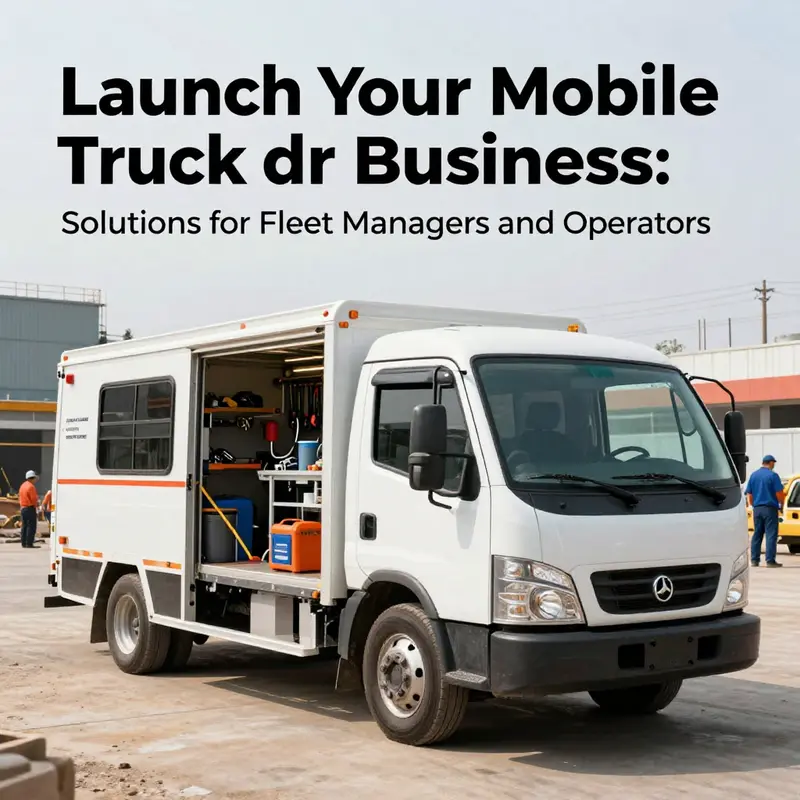
The foundation of a successful mobile truck repair business rests not only on skill and speed but on a clearly defined service model and a well-chosen niche. In a field that blends field service, logistics, and on-demand labor, your choices about how you operate and whom you serve shape every other decision—from the tools you stock to the routes you plan and the partners you cultivate. A deliberate service model helps you convert reliability into recurring revenue, while a focused niche allows you to price with confidence, tailor your training, and design workflows that minimize downtime for your clients. Think of your model as the blueprint that aligns your capabilities with real-world needs, turning a simple roadside fix into a trusted, long-term partnership with fleets and drivers alike.
Begin by imagining the primary customer you want to serve and the kinds of problems they face most often. Long-haul operators are perpetually balancing uptime against urgent repairs. Regional fleets juggle maintenance windows with predictable dispatch cycles. Construction and delivery fleets push for rapid responses in high-demand corridors. Each segment has its own rhythm and pain points. Your service model should match that rhythm. If your goal is to be the go-to fix-it-now solution for breakdowns along major corridors, you’ll prioritize rapid-response mechanics, a mobile diagnostic capability, and a well-curated spare-parts inventory. If you’re aiming for steady, preventative maintenance across a regional fleet, you’ll emphasize scheduled checkups, structured maintenance plans, and predictable dispatch patterns. The choice isn’t merely about speed; it’s about consistency, predictability, and the value you deliver when a fleet manager pins down a maintenance window that minimizes downtime.
A well-chosen niche clarifies what you excel at and why a client should choose you over a traditional shop or an ad-hoc roadside aide. Niche differentiation can come from several angles. You might specialize in emergency roadside repairs for long-haul operators, offering on-site diagnostics, tire changes, cable re-terminations, and basic engine adjustments that prevent a tow. Alternatively, you could center your business on preventative maintenance for regional fleets, delivering periodic inspections, fluid top-offs, brake adjustments, and battery health checks on a planned schedule. Another viable path is to become the on-site expert for a particular type of equipment or operation—airport shuttles, construction fleets, or regional delivery lines—where your mobile unit becomes a trusted extension of their maintenance department. By choosing a niche, you reduce the noise of generic competition and create a reputation for a specific capability. This reputation, in turn, informs every investment you make, from the tools you keep on the vehicle to the training you require for your team.
In practice, the most effective service model blends two complementary elements: on-demand responsiveness and proactive maintenance. You can frame your business around a core capability—say, comprehensive on-site diagnostics and quick mechanical fixes—paired with a recurring maintenance program for fleets that depend on steady uptime. The on-demand component satisfies the urgent needs that create immediate value, such as a breakdown in a critical route or a sudden electrical fault that would halt a truck’s schedule. The maintenance component builds long-term stability by preventing problems before they disrupt a fleet’s operations. The balance is guided by client feedback, dispatch patterns, and the economics of your service area. A fleet manager who sees clear, predictable maintenance intervals is more likely to commit to a standing agreement, while a driver who knows you’ll arrive within a narrow window on a roadside emergency will remember your reliability whenever a new issue arises.
Choosing the right platform for your mobile operation is part of defining the service model as well. A purpose-built mobile workshop vehicle is more than a transport unit; it is a compact workshop that travels to the client with a ready-to-work configuration. This isn’t a one-size-fits-all van. It’s a thoughtfully equipped platform designed to carry the core diagnostic tools, manual and power-driven equipment, and a small but essential stock of spare parts needed to handle a wide range of tasks on the road. The objective is to reach the site with the capacity to perform substantive repairs, not just a cursory diagnosis. When the vehicle itself embodies the capability you promise, your service becomes a tangible value proposition. The ability to operate effectively in varying weather, lighting, and terrain conditions is part of your brand promise, and it requires both rugged equipment and disciplined workflows.
Your finesse with equipment choices reinforces your niche. A high-capacity mobile unit should cover the essentials: a reliable power source, a robust tool set for mechanical and minor electrical work, diagnostic capabilities, and a flexible storage layout for parts and consumables. The goal is to minimize return trips by having the right parts on hand and the right diagnostic path pre-mapped. It’s tempting to overbuild, but the most effective fleet operators find the balance between breadth and efficiency. They invest in tools that yield the widest return on a single visit, such as multi-use diagnostic interfaces, adjustable torque wrenches, and compact welding and fabrication equipment for small repairs. A well-stocked mobile unit becomes a mobile workshop capable of handling a spectrum of tasks—from lubrication and alignment adjustments to simple chassis repairs—without requiring a shop visit.
In addition to physical equipment, your mobile platform should integrate a digital backbone that supports both the on-site work and the broader strategic aims of your niche. A rugged, field-ready tablet or portable workstation becomes the command center for diagnostics, customer records, invoicing, and dispatch updates. On the trail, your technician can pull up a client’s vehicle history, document a repair with photos, generate an immediate quote, and push it to the customer for approval. This level of transparency is a powerful trust-builder and a natural deterrent to dispute over charges. A cloud-based record system ensures that every service episode contributes to a longer, coherent history for each truck in a fleet. By weaving digital documentation into the fabric of the service, you create a data-rich profile for each client that makes future planning more accurate and more valuable to both sides.
The narrative of service capability also extends to how you position your pricing and warranties. A clearly defined niche enables you to justify premium pricing based on speed, reliability, and the convenience of on-site work. It’s common for clients to pay a premium when a technician arrives within a short window, performs a thorough diagnostic, and leaves the vehicle road-ready without a tow. Transparent pricing should accompany this premium value. Upfront quotes, clear labor rates, and itemized parts costs reduce the friction that often accompanies on-site repairs. This clarity, paired with consistent performance, helps customers experience the financial value of uptime—the currency that fleets understand best.
Your strategic choices resonate in the partnerships you cultivate. Aligning with fleets, drivers, and logistics hubs can amplify the reach of your model. A niche-focused service tends to attract repeat business because it speaks directly to the client’s operational pain points. If you build a reputation for rapid, professional roadside repairs, fleets will be more likely to incorporate your outreach into their contingency planning. Likewise, if you become the go-to for scheduled maintenance in a region, you’ll gain predictable demand that supports a stable daily workflow. Partnerships can take shape through formal maintenance agreements, preferred vendor programs with fleet managers, or referral arrangements with trucking stops and logistics hubs. Each alliance strengthens your credibility and expands your service footprint without requiring constant cold outreach.
One practical illustration of how service capability can shape opportunities is the use of a high-capacity mobile workshop platform. In theory, a fully equipped mobile unit that can perform a wide range of tasks—fluid service, brake and suspension work, basic welding, electrical troubleshooting, and diagnostic wrap-ups—transforms your business into a one-stop solution. This level of capability supports a variety of engagement models, including remote cross-country support for large-scale projects or disaster-response scenarios where speed and adaptability matter. The logistics of deploying such a unit become a strategic asset: it can be scheduled for regional maintenance drives, dispatched to emergency calls with a clear scope of work, or configured for a mobile diagnostic blitz in partner facilities. The result is a brand built not merely on repairs but on dependable uptime and operational resilience.
To refine your niche further and stay nimble as you scale, consider how you will handle training and staffing. A narrow service focus simplifies the skill set you need on the road and clarifies the certifications that prove your competence. It also clarifies the kind of onboarding new technicians require, the type of diagnostic software licenses you need, and the minimal stock you must carry to avoid delays. With a clearly defined niche, you can structure your hiring around core competencies, seasonal demand patterns, and the geographic reach you plan to sustain. A lean, well-trained crew that shares a common language around your service model will perform more consistently, accelerate repairs, and reduce the risk of human error. The result is a more reliable, scalable operation whose reputation travels faster than any single technician can.
As you grow, keep one eye on the bigger horizon while you stay rooted in daily execution. The niche you choose should not be a fixed label but a flexible framework that can adapt to new client segments, evolving equipment needs, and shifting market dynamics. You might discover new opportunities in adjacent industries or related maintenance disciplines, which would invite you to adjust service priorities or to broaden the range of tasks your mobile unit can handle. The most enduring mobile truck repair businesses are those that maintain crisp focus while remaining adaptable enough to embrace adjacent capabilities when the market signals a clear benefit. The balance between focus and flexibility becomes the engine for sustainable growth, enabling you to command premium value, foster strong client relationships, and expand your footprint in a measured, methodical way.
For readers who want a practical touchpoint on building financial resilience while pursuing a targeted service model, consider resources that address emergency repair planning and fleet financial health. Building emergency repair fund for truck owners. Building emergency repair fund for truck owners. This kind of guidance can help you translate uptime into a tangible financial strategy, ensuring you have the liquidity to respond quickly and continue delivering value even in lean periods. The aim is not to promise a flawless business overnight but to establish a repeatable, scalable approach that keeps downtime low and customer trust high.
The journey to a compelling service model and a sharp niche is ongoing work. It demands listening to clients, observing how fleets operate, and iterating on the equipment and processes you deploy. It requires discipline to maintain standardized inspections, transparent quotes, and thorough documentation across every visit. The more you embed these practices into daily operations, the more your mobile unit becomes not just a repair vehicle but a trusted partner in the uptime equation. And as you demonstrate reliability, your niche becomes a moat that protects margins and a magnet that attracts new customers who value the same outcomes you deliver: speed, precision, and professionalism on wheels.
For a deeper look at the hardware configurations that drive mobile workshops and the range of tasks they can support in field conditions, you can explore external resources that discuss high-capacity mobile platforms. https://www.fuya-truck.com/product/sinotruk-400hp-mobile-workshop-truck/
Outfit Your Mobile Workshop: Tools, Tech, and Truck Features That Keep Trucks Moving
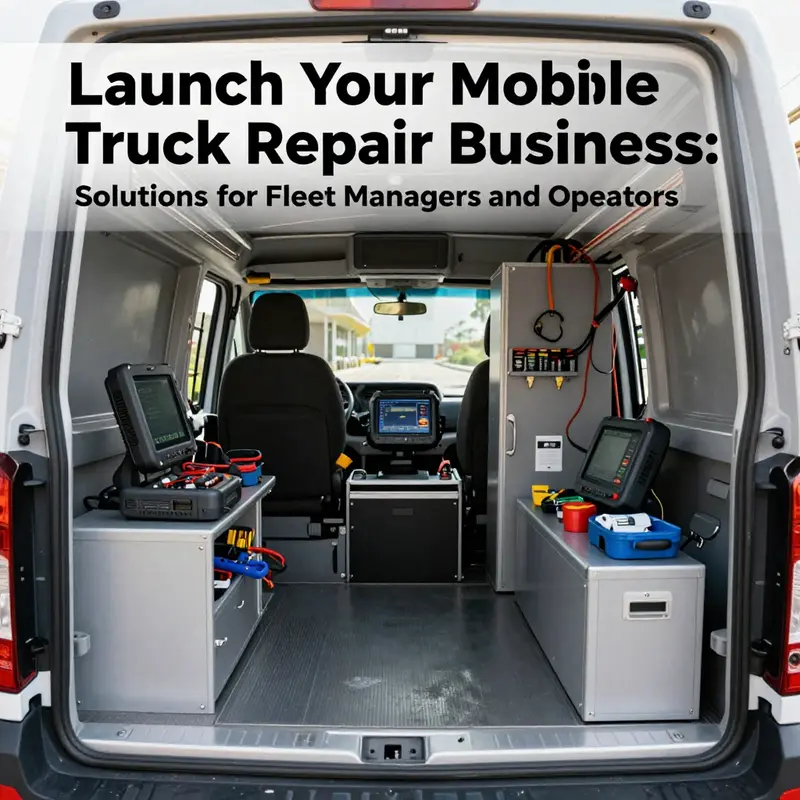
Outfitting your mobile workshop: the mobile unit as a fully functional service hub
Every decision about tools and equipment defines the range and quality of services you can deliver on the road. Choose items that let you handle common failures quickly, diagnose the complex ones accurately, and keep your crew safe. Start by thinking of your vehicle as a compact, self-contained garage. It must store tools securely, provide power and light, and support heavy lifting when needed. Good organization and the right gear reduce time on each job. They also build customer confidence and repeat business.
Begin with a foundation of hand tools. A comprehensive socket set that covers both standard and metric sizes is essential. Include impact sockets for heavy fasteners and deep well sockets for recessed bolts. Wrenches should span open-end, box-end, and adjustable sizes. Pliers of several types are useful for gripping, cutting, and bending. Keep a range of screwdrivers on hand for panel work and electronics access. Hammers and mallets, along with hand files, round out the set for shaping and light fabrication. These basics handle the majority of fastening and disassembly tasks.
Diagnostics are the backbone of modern repair work. Trucks rely on complex onboard systems. A multi-protocol scanner is indispensable for reading fault codes and running system tests. Electrical issues are common, so a high-quality multimeter is vital for testing batteries, alternators, and circuit integrity. For deeper analysis, portable oscilloscopes and battery load testers give fast answers in the field. Prioritize tools that update firmware and adapt to different makes and models. That capability shortens troubleshooting time and prevents unnecessary part swaps.
Specialty tools let you offer more services and increase ticket sizes. A mobile tire changer and a robust impact wrench speed tire swaps. A portable air compressor powers pneumatic tools and inflates tires quickly. Carry a brake bleeding kit and hydraulic tools for brake and clutch work. Welding equipment and a compact cutting torch are useful for on-the-spot repairs to frames and exhaust systems. Consider modular tool systems so equipment can be moved or expanded as your service list grows.
Safety equipment must be non-negotiable. High-visibility clothing keeps technicians visible at roadside jobs. Protective gloves, safety glasses, and hearing protection reduce injury risks. Keep spill kits for fluids, absorbents, and a proper waste containment system for oils and coolants. A well-stocked first aid kit is mandatory and should be checked regularly. Safety protocols and the right gear protect workers and limit liability.
The vehicle itself is more than transport. Choose a chassis that matches your service area and workload. If you serve off-road job sites, prioritize traction and suspension. Long-distance road service benefits from a comfortable cab and efficient fuel use. The cargo area should be weather-resistant and organized with secure storage for tools and parts. Integrated systems such as mounted air compressors, grease pumps, and built-in lubrication points save space. If you will move heavy components, include a hydraulic crane or lift rated for expected loads.
Power and lighting are often overlooked, yet they determine how long you stay on a job. Install an inverter and a dedicated auxiliary battery bank. A compact generator provides extended power for welders and air tools. LED task lighting and flood lights illuminate repair areas at night. Consider shore power capability for extended stops where external electricity is available. Redundancy reduces downtime and lets your team finish jobs regardless of site conditions.
Organization inside the cargo area decreases wasted time. Use modular drawers and labeled bins for fastener assortments. Shelving with retention straps keeps parts secure in transit. Hang commonly used tools on pegboards or slatwall panels so they are always visible. Keep a small inventory of high-turnover parts: filters, belts, hoses, clamps, fuses, and bulbs. Track parts with a simple barcode or numbering system to avoid misplacement and to simplify reordering.
Inventory management extends to consumables and fluids. Store oil, coolant, brake fluid, and lubricants in approved containers. Use spill trays and secondary containment. Implement a first-in, first-out system to prevent expired fluids from being used. Keep a small pharmacy of sealants, adhesives, and specialty chemicals for emergency fixes. Accurate records of fluid usage help you price jobs accurately and prevent cost leakage.
Documentation and customer communication are part of the toolkit. Use a rugged tablet or mobile workstation as your service hub. It should run diagnostic software, store vehicle histories, and generate invoices on the spot. Digital checklists standardize inspections and repairs. Capture before-and-after photos for customer records. Email or text receipts and job reports immediately to maintain transparency. These practices reduce disputes and create trust.
Standardize processes to deliver consistent quality. Use checklists for safety, diagnostics, and final inspections. Create templates for common repairs to streamline labor estimates and parts sourcing. Standardized procedures reduce errors and improve training. They also allow you to scale; when you add technicians, consistency preserves your brand promise.
Plan for parts procurement and logistics. Establish relationships with local suppliers, parts distributors, and salvage yards. Keep a prioritized list of parts that you stock versus those ordered per job. For larger items, have a rapid sourcing plan that includes same-day couriers or route partnerships. Good supplier relationships can yield faster turnaround times and sometimes better pricing.
Training and certification make your tools more effective. Invest in training for diagnostic systems, welding, and advanced electrical troubleshooting. Cross-train your team so multiple technicians can operate essential equipment. Training reduces single points of failure and enables better coverage during busy periods.
Budget carefully for equipment and maintenance. Prioritize purchases that increase job capacity or reduce repair time. Balance durable, higher-cost tools with consumables and replacements. Track return on investment for major purchases so you know when to expand or upgrade. For detailed help with planning your maintenance and operating budget, consult this guide on budgeting for routine truck maintenance: budgeting for routine truck maintenance.
Consider turnkey mobile workshop options if you prefer a ready-made solution. These units can arrive outfitted with air systems, welding gear, and tool layouts. They reduce the time needed to plan and fit out a truck. Evaluate chassis strength, equipment quality, and after-sales support before buying. See an example of a purpose-built mobile workshop truck here: example mobile workshop truck.
Plan for expansion from day one. Design storage and power systems with future growth in mind. Modular shelving and quick-connect power setups make it easier to add tools or another technician. Track which jobs you decline due to equipment limits. Those missed opportunities highlight where additional investment will increase revenue.
Finally, maintain your own equipment with the same rigor as customer trucks. Keep a maintenance schedule for compressors, lifts, welding gear, and power systems. Regular calibration of diagnostic tools preserves accuracy. Clean, well-maintained equipment improves safety and communicates professionalism to clients.
Equipping a mobile truck repair business requires clear priorities. Invest first in diagnostics, essential hand tools, safety gear, and reliable power. Organize storage and inventory to cut job times. Train your team and keep your equipment maintained. With the right foundation, your mobile workshop becomes a dependable service hub that keeps fleets moving and builds long-term customer trust.
On the Move to Trusted Clients: Marketing, Brand, and Speed in a Mobile Truck Repair Business

If you’re launching a mobile truck repair business, success rests not just on what you fix, but on how quickly and clearly you can connect with the people who need you. The open road is full of potential clients, but it is crowded with noise. To stand out, you must blend reliability with a magnetic, customer-first approach that travels as fast as your van. This chapter weaves together the science of customer acquisition with the art of service on wheels. It is written to feel seamless, not segmented, because in practice your marketing and your everyday work are one continuous process: you attract, you prove, you deliver, you delight, and you repeat. The core idea is simple—trust earns bookings, speed preserves them, and consistency turns one-off calls into durable partnerships. In a world where downtime costs money and delays ripple through supply chains, your marketing strategy must align with real-world operations to shorten the journey from inquiry to service and then to repeat business.
From the outset, the market you pursue will shape your narrative. You may target long-haul fleets, regional distribution centers, or regional logistics providers, but your message should speak to the same pain points: breakdowns that halt production, the clock-ticking pressure of downtime, and the anxiety around repair reliability when a driver is stranded on a highway shoulder. Your service proposition should emphasize three elements: speed, competence, and transparency. Speed earns the right to be trusted in the first place; competence makes trust durable; transparency keeps trust intact when the bill arrives. When this triad becomes your operating rhythm, marketing stops being a separate activity and becomes the outward expression of your day-to-day performance.
In practical terms, your marketing should begin where your work begins—with a frictionless experience for the customer. That means a digital storefront that is accurate, up-to-date, and easy to navigate. A professional website is not vanity; it is a shield against hesitation. Fleet managers scan credentials, response times, and service scope in a heartbeat. If your digital presence answers those questions in plain language and can be accessed from a driver’s phone in seconds, you’ve already moved ahead in the race. Local search is your immediate ally here. People in urgent situations will search near them, so ensure your business name, hours, and key service capabilities are discoverable with correct, consistent information across maps and review sites. The research behind modern buyer behavior shows that most customers spend less than ten minutes searching for a needed service; any extra friction can derail the inquiry before you even know it occurred. In your copy, make the value proposition crystal: we come to you, we diagnose on the spot where possible, and we provide transparent pricing with no surprises. That clarity resonates with drivers and fleet managers who must justify every minute of downtime.
A strong brand begins with a simple, memorable promise and a consistent experience. In the field, this translates into a few non-negotiables: arrive on time, communicate clearly, perform competently, and leave the site with clean documentation of what was done and why. These promises become your brand cues. When a technician is seen as punctual, well-equipped, and courteous, the word of mouth that powers growth becomes a powerful asset. The ability to show a history of reliable performance—through a cloud-based job log that records each service, a list of preventive maintenance milestones, and reminders for upcoming needs—forms a narrative customers can trust and share. The more visible your reliability, the more your name becomes synonymous with dependable service in fleets and trucking communities. Your online presence should mirror this reliability. Alongside service pages, publish content that demonstrates expertise in practical, non-jargony terms. Short, useful posts that help readers identify early signs of wear, understand when a diagnostic is worth it, or grasp what a preventive maintenance visit covers will attract attention. These pieces don’t just educate; they seed the belief that you are a steady partner, not a one-off fixer.
The channel mix matters as much as the message. Digital channels will dominate reach, particularly for new fleets and managers scanning multiple vendors. A robust, localized Google profile helps you appear in searches tied to your service area and reduces the friction of discovery. Localized pay-per-click campaigns can drive specific inquiries for urgent repairs in defined zones, especially when time is of the essence. Social platforms provide different kinds of value: LinkedIn reaches fleet managers and operations personnel with professional updates about your capabilities and warranties; Facebook and other consumer-focused channels offer visibility in driver communities and informal networks where word-of-mouth travels faster. The objective is not to flood all channels at once but to orchestrate a coherent narrative across them. Each touchpoint should reinforce the same core messages: speed, expertise, and transparent pricing.
But channels are only part of the story. The backbone of customer acquisition for a mobile operation rests on building relationships that endure beyond the first service. A referral program, thoughtfully designed, creates a cascade of word-of-mouth that is cheaper and more effective than broad advertising. Incentives can be modest but meaningful—such as a discount on a future service, a free diagnostic during the next maintenance window, or a credit toward a preventive maintenance package. The key is to ensure the referral is earned only after you have delivered value on the first call. Your team should be trained to ask for referrals in a respectful, non-intrusive way and to recognize that a delighted customer is your best marketer.
Partnerships can amplify your reach in tangible ways. Look for on-site collaborations with truck stops, fuel providers, and logistics hubs where drivers frequently need assistance. A well-placed referral arrangement can create a steady pipeline that supplements on-call demand. These partnerships do more than feed bookings; they enhance your credibility. A fleet manager who sees your service name paired with a trusted partner will feel more confident about inviting your team to work on their vehicles. The emphasis should be on mutually beneficial arrangements where the fleets win from faster turnaround and consistent outcomes, the partners gain from reliable service offerings available to their clients, and you scale without sacrificing quality. In time, these relationships can evolve into preferred vendor status, which translates into predictable demand—precisely the kind of stability that makes planning and reinvestment feasible.
To convert inquiry into action, speed and clarity are essential. A mobile repair business thrives on a smooth, paperless workflow that guides a prospect from first contact through scheduling, dispatch, and completion. A mobile-friendly booking system, accessible from a phone or tablet, should present a clean, upfront quotation framework. The quote should reflect labor time, parts, travel, and any special conditions, and the customer should be able to approve or adjust in a few taps. In the field, a rugged tablet or laptop is not a luxury; it is a work tool that consolidates diagnostics, customer history, invoicing, and GPS navigation. The ability to pull a truck’s maintenance history at the job site not only reduces diagnostic time but builds trust with the driver who sees you value past records as much as the current fix. A standardized on-site process, supported by checklists, ensures that every service steps through consistent diagnostics, approved work scope, and clear documentation of what was done and why.
Beyond the mechanics of the job, the customer experience is the strongest differentiator. Ask for feedback, then act on it. Post-repair surveys can reveal blind spots in your process and highlight opportunities to improve response times, communication, or follow-up care. A maintenance reminder program, tailored to each fleet’s schedule, is another tool of the trade. It positions you as a partner who helps fleets prevent downtime rather than merely reacting to it. Digital records that travel with the vehicle, accessible to fleet managers, give you a long tail of value that can be leveraged across multiple visits. When a vehicle’s service history is readily available, it becomes easier to plan future interventions, budget maintenance, and demonstrate a tangible reduction in unscheduled downtime. Your goal is not just to fix; it is to help the client manage a complex asset with minimal disruption to operations.
The content you publish should be practical and credible. Educational pieces—like signaling signs of brake wear or the importance of regular hydraulic checks—serve two purposes. They establish your expertise and create a library of resources drivers and fleet managers return to. This content should be accessible and free of heavy jargon; the aim is to empower readers to recognize issues and feel confident in seeking professional help when warranted. A well-crafted content footprint also improves search visibility and demonstrates thought leadership, which strengthens credibility when a vehicle manager is weighing multiple vendors. In parallel with outbound messaging, social proof matters. Collect and showcase testimonials and case studies that illustrate measurable outcomes: faster response times, reduced downtime, and transparent, predictable pricing. A narrative that couples numbers with real on-the-road scenarios resonates with fleets who live by dashboards and KPIs.
A practical note on pricing and commitments helps eliminate friction and distrust before a first job. Transparent pricing should be presented upfront in quotes, with clear explanations of what is included and what might cause price variation. Avoid surprises by communicating anticipated timelines and potential contingencies, including parts availability and travel costs. The less ambiguity there is at the outset, the more likely a fleet manager will feel comfortable granting you the go-ahead. When the first job is completed, providing a concise, accessible record of what was done, the part numbers if applicable, and the recommended next steps reinforces credibility. It also sets the stage for proactive maintenance conversations, where you offer scheduled visits or preventive packages that align with a client’s budget cycles and operational calendars.
From a systems perspective, you should view customer acquisition as an integrated loop rather than separate marketing campaigns and fieldwork. The loop runs like this: attract with a compelling, accurate online presence; convert through a frictionless, transparent booking flow; deliver with standardized processes and excellent field service; collect feedback; nurture the relationship with maintenance reminders and value-driven communications; and inspire referrals and partnerships to feed the next cycle. It is a continuous, reinforcing cycle, not a one-off sprint. In the end, you want each satisfied customer to become a strong advocate who carries your reputation into new markets through direct referrals and by sharing their positive experiences in their networks. The more you invest in speed and reliability, the more your customers will invest in your brand with their loyalty.
To tie these ideas to everyday practice, consider a simple, repeatable approach you can start applying today. Build a one-page Promise to Drivers that can be printed and included with every dispatch. It should summarize your guarantees: response time, diagnostic standards, pricing transparency, and the post-service follow-up. When drivers see this promise, they know what to expect—and the promise becomes a touchstone for all interactions with them and their fleet managers. Pair this with a concise, mobile-friendly booking widget and a lightweight CRM aligned with your dispatch workflow. Your CRM should capture the vehicle’s make and model, last service date, the issues reported, and the proposed schedule for preventive maintenance. The more you capture, the more you can tailor future communications and preempt downtime. While a large corporate fleet may eventually demand a formal vendor program with SLAs, a lean, disciplined start will impress owners and operators who appreciate reliability, predictability, and honest communication.
In closing, remember that the road you travel with your customers is a shared journey. The more you invest in your digital presence, the clarity of your pricing, the speed of your response, and the quality of your field work, the faster you move from strangers to trusted partners. If you want to see how practical guidance translates into action, a good starting point is to explore our broader resources and practical posts in our Master Truck Repair blog. These pieces reinforce the everyday routines that convert inquiries into durable relationships and help you see marketing as an extension of the high-quality service you deliver on every call.
This approach to customer acquisition is not theoretical. It aligns with the realities of the trucking world, where visibility, speed, and credibility are the currency of growth. It respects the time drivers have to make quick decisions and the pressure fleets face to minimize downtime and maximize uptime. It also complies with the fact that buyers today research first, decide quickly, and rely on transparent, accessible information to justify their choices. By building a brand that promises speed and reliability, by simplifying the booking and service experience, and by fostering partnerships and referrals, you create a sustainable engine that drives steady growth for your mobile truck repair business. The future is mobilized, and with careful preparation, you can become a trusted partner on the road—where every call is possible opportunity, and every repair strengthens your alliance with the fleets you serve.
External resource: For a broader framework on customer acquisition principles applicable to service-based businesses, see HubSpot’s Customer Acquisition guide: https://www.hubspot.com/customer-acquisition
Final thoughts
Establishing a mobile truck repair business presents unique opportunities and challenges, specifically relating to legal compliance, targeted service offerings, adequate equipment, and robust marketing strategies. By adhering to regulatory requirements and optimizing your operational processes, you can position your business as a trusted partner for fleet managers, construction operators, and logistics providers. Take the insights from this guide to build a solid foundation for your mobile truck repair venture, ensuring efficiency and reliability in your services.