In the world of vehicle financing and leasing, the threat of repossession is a reality that many borrowers face. Understanding the various methods towing companies employ to locate vehicles for this purpose is crucial for fleet managers and logistics providers. This knowledge not only aids in compliance and risk management but also equips operators to safeguard their assets. This article will explore the intricate techniques employed by tow trucks, including GPS technology, public and private records, surveillance, and advanced software alerts, providing insights that can help mitigate potential losses and enhance operational efficiency.
Tracing the Repossession Trail: The GPS-Driven Path Tow Trucks Follow to Locate Your Car
When a borrower misses a payment, the road from debt to recovery begins in the quiet glow of data rather than the thump of a tow truck engine. Lenders and repossession specialists treat a delinquency as a coordinate problem: where is the asset, and when is it safe to retrieve it? The answer is not a single button or a single search. It is a layered workflow that blends embedded vehicle technology, public records, field intelligence, and careful, legally bounded action. The result is a coordinated operation that aims to recover the asset efficiently, with minimal disruption to others and with accountability built into every step. The core engine of that operation is GPS and location data, but the true map is drawn from many sources working in concert.
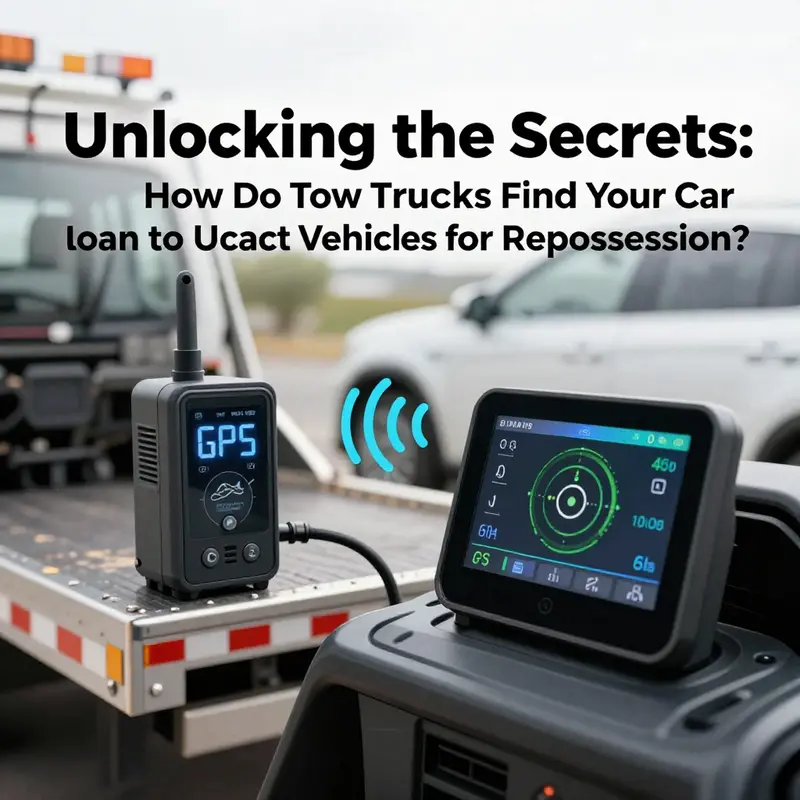
First comes the car’s own data stream, if it exists. Many financed or leased vehicles carry telematics or built‑in tracking services that share information about location, ignition status, or movement back to the lender or their service network. These systems were not created to catch late payers so much as to protect asset value, enable remote diagnostics, and support recall or maintenance notices. When default triggers a repossession, those signals can be repurposed as a precise beacon rather than a broad alarm. The data may indicate a recent stop, a route, or a period of idling—information that helps a recovery team decide when and where to move. Importantly, this is data about the asset, not a stalking file; it is used within the bounds of the law and with attention to privacy and consent that the contract and local regulations already require.
On the other side of the screen, the lender or repossession agency maintains a location-centric workflow. A repossession request opens a stream of data points: the vehicle’s registration details, the owner’s information tied to the loan, and the status of payments. A real-time or near real-time feed may be combined with last-known location data to produce a target map for a field agent. The system isn’t deciding to chase the car blind; it provides a confidence-weighted plan that guides the tow operator through an efficient sequence of steps. When the target is located in a public space, the plan might be as simple as moving toward a visible parking spot, aligning the tow equipment, and proceeding with the recovery in a controlled, non-confrontational manner. Route optimization becomes a safety and efficiency imperative: avoiding traffic snarls, accounting for weather, and predicting the fastest safe path to bring the asset back to the yard.
Yet GPS is not the sole compass. Public and private records provide another axis of the search. Public registries that track vehicle ownership and registration details help identify which car is tied to a delinquent account. Cross-referencing these records with loan servicers’ files and credit databases can narrow the field to a handful of candidates in a given area. This cross-checking is not an attempt to misidentify, but a diligence exercise to ensure the asset being pursued is the one in default and that the path to retrieval follows a defensible, auditable trail. In practice, this means plate numbers and VINs may be compared with the lender’s case notes, while the driver validates the match at the scene with the vehicle’s actual documents. The combination of telematics, public records, and administratively verified data creates a multi-layered approach that reduces the risk of errors and protects both parties’ interests.
Beyond the digital layer, a more traditional, ground-level form of intelligence also plays a role. Repossession teams conduct patrols in areas where delinquencies are most likely to intersect with the borrower’s daily life: near homes, at workplaces, or in familiar parking lots. This is not about surveillance in the invasive sense; it’s about pattern recognition. People tend to park in similar spots, at predictable times, and in the same neighborhoods, especially when life is busy or unstable. Regular patrols in these micro-geographies help the team anticipate where a car may be parked during a given window. When a vehicle becomes visible in a public space—an apartment complex lot, a shopping center, a workplace parking area—the data from the other channels converges with the ground truth: the vehicle is likely where the combined signals indicate it should be.
The information ecosystem also includes informal channels. Neighbors, coworkers, or even the borrower themselves might share a tip, especially if the car is parked in a visible location for a period. This is not a primary means of locating a vehicle, but it underscores how the digital and human worlds intersect in repossession. The goal, again, is accuracy and speed while staying inside the lines of the law. When a tip arrives, it is weighed against the known data points, and the field team adjusts the plan accordingly. The balance of caution and urgency is what keeps the operation disciplined rather than reckless.
In practice, the GPS toolkit used by tow operators is part of a broader fleet-management system. The tow truck becomes a node in a network: its GPS feeds into a central dashboard, the dispatcher adds context, and the entire operation is trackable in real time. This is where technology serves accountability. A live map shows the route, estimates arrival times, and records the driver’s actions as the recovery unfolds. If the vehicle moves unexpectedly, alerts can trigger re‑routing or a pause until the situation is assessed. The same system that helps the driver reach the target also records the process, so when questions arise, there is a clear, timestamped narrative of what happened, where, and when. Verification at the scene is as important as the pursuit itself. The driver cross-checks the GPS reference with the car’s plate and VIN, ensuring the asset being recovered is indeed the one identified in the record.
The actual act of recovery is chosen with care for safety and property rights. The method of towing—whether a flatbed or a wheel-lift setup—depends on the vehicle and the environment. In many cases, the priority is to minimize further risk to the vehicle and the public. For example, in a busy urban setting, a quick but careful approach is taken that avoids blocking traffic or creating hazardous conditions for bystanders. In a quieter area, the team might take a moment to set up the equipment with the right approach, ensuring the loading is smooth and the vehicle remains undamaged. The plan is not simply to seize the asset; it is to recover it with verifiable procedures, so that the vehicle can move from the street to the lot with minimal friction and maximum documentation.
Legal boundaries are always part of the equation. The question of entering private property without permission is central to repossession practice. In many places, the rules require that the vehicle be located in a public space or that the property owner’s authorization is obtained before any entry into a restricted area. This is why the timing and location of the recovery matter so much. A driver may wait for the car to be parked openly in public view or in a location where a lawful retrieval can occur without trespass. The GPS-led plan helps minimize risky moments by positioning the recovery at a time and place where access is permissible. It also provides an evidentiary trail—timestamps, route histories, driver confirmations—that can later be reviewed if disputes arise. The entire operation hinges on maintaining a robust chain of custody for the vehicle, from the moment the plan is set in motion to the moment the asset is secured on the tow truck.
The borrower’s perspective is an essential, practical part of the conversation. Understanding that the search is data-driven—built from combined signals rather than a single cue—can help borrowers appreciate why an asset can appear in a matter of hours or days after default. It also clarifies why the recovery is not about a dramatic chase but a carefully managed process with a focus on safety, legality, and accountability. If a borrower is trying to avoid escalation, the most constructive approach is to address the default and engage with the lender through the channels defined in the loan agreement. This reduces the likelihood of misidentification, minimizes the risk of a costly misstep, and preserves the option to resolve the matter through negotiation rather than through forceful recovery.
In the context of fleet operations and asset recovery more broadly, maintenance governance is an often underappreciated part of the equation. A well-maintained asset is less likely to fail when a recovery attempt is underway. The reliability of a vehicle’s telemetry and the proper functioning of its auxiliary systems can influence how smoothly a repossession proceeds. Fleet managers frequently emphasize budgeting for routine maintenance and preventive service to ensure that vehicles used in recovery operations remain dependable. The discipline of regular service, preventive checks, and contingency planning mirrors the responsibility lenders carry when managing defaulted accounts. If you want to ground these ideas in a practical context for fleet operators, a guide on budgeting for routine truck maintenance can offer actionable insights, such as how to forecast parts costs, schedule service windows, and build reserves for unexpected repairs.
As the modern landscape of automotive technology evolves, the choreography of repossession becomes more precise and more auditable. Embedded systems may proliferate, but their purpose remains constant: to support safe, lawful, and efficient recovery. The data trails—telemetry, registration records, field observations, and driver verifications—grow as a shared language that protects asset value while safeguarding the rights and safety of everyone involved. When a car is ultimately recovered, the moment of tow is the culmination of a chain of coordinated decisions. It is not the end of the story but a milestone in a process designed to be transparent, defensible, and repeatable across different cases and jurisdictions. Even as technology advances, the core lesson stays simple: locating a vehicle for repossession is less about a dramatic find and more about a disciplined, data-informed journey from default notice to secured asset.
For readers who want a broader view beyond the immediate mechanics, it helps to think about the process as a convergence of systems. Location services for the vehicle, records from public registries, and the on‑the‑ground routine of field agents all feed into a single objective: to recover the asset with care, accuracy, and accountability. The GPS signal is a guiding thread, but the full fabric is woven from many threads: data governance, legal compliance, and practical, day‑to‑day operations that keep everyone safe and informed. The result is a modern form of asset recovery that relies on clarity, coordination, and a steady adherence to the rules that govern the use of location data and the rights of property owners.
External resource: https://www.driverlocate.com
null
null
The Real Hunt: How Tow Trucks Locate Your Car for Repo—Beyond Patrolling and Cameras
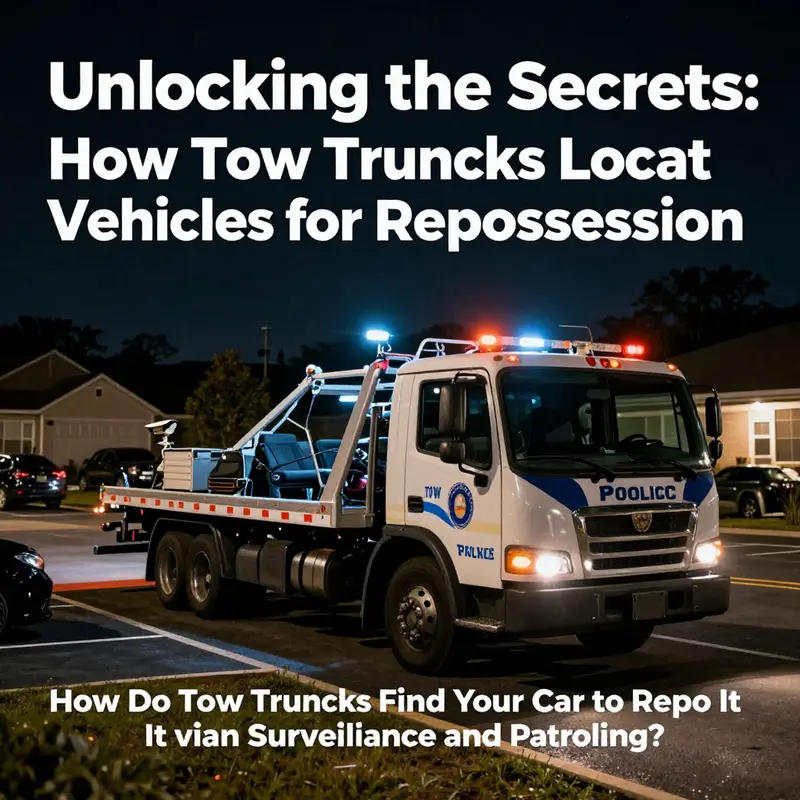
The question of how a tow truck shows up at a debtor’s door is not a scene from a science fiction storyboard, yet it often stirs the imagination with thoughts of drones, robots, and omniscient cameras. In reality, the process is a careful blend of data access, legal authority, and human observation. When a loan falls into default and a lender decides that a vehicle should be repossessed, the path from decision to tow begins well before an actual tow truck appears. It starts with authorization, followed by a disciplined, rule‑governed hunt for the vehicle that keeps the operation lawful and traceable. The mechanics behind locating a car are not about dramatic surveillance but about precise data, verified records, and strategic patrolling designed to minimize risk and protect all parties involved. This is not a chase built on cinematic fantasies; it is a procedural undertaking that relies on permission, documentation, and real‑world constraints. The chapter that follows unpacks how these elements come together, painting a picture of a location process built on transparency, accountability, and efficiency rather than myth and rumor.
First comes the GPS and onboard telematics reality. Many financed or leased vehicles carry some form of tracking capability, whether installed by the lender or a third‑party service that monitors location data in real time. When a borrower misses payments, the lender can access location signals that indicate where the vehicle is at that moment. This is not a secret beacon hidden under the chassis; it is a data stream fed into the lender’s systems, often integrated with the loan servicing platform. The authorized agent then receives a location cue that narrows the search field from a city to a handful of probable neighborhoods or parking zones. This targeting is not an instantaneous magic trick; it is a data point added to a case file, a piece of information that must be corroborated by records and, if necessary, by field verification.
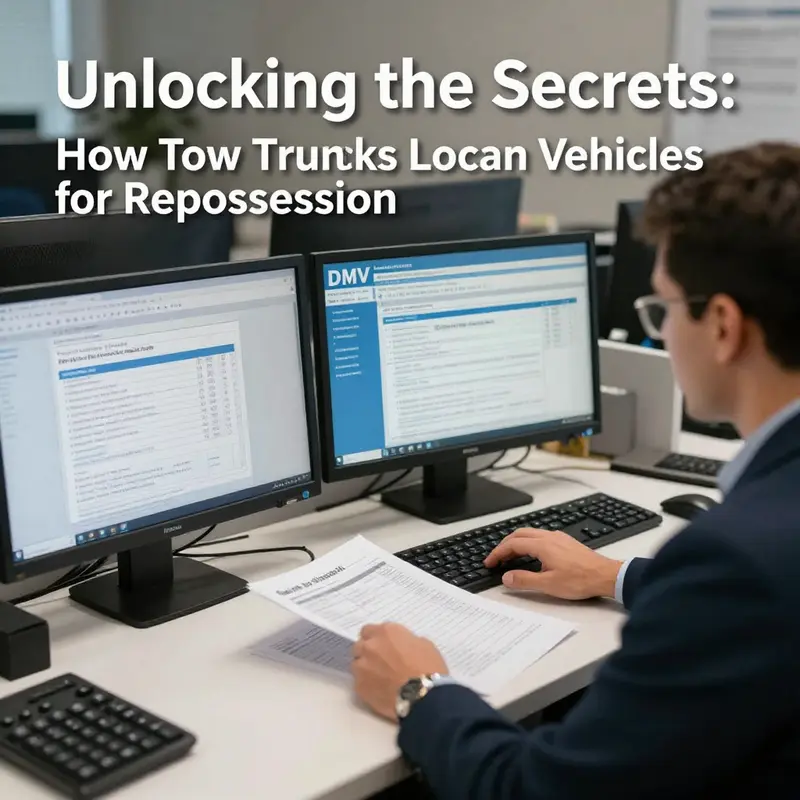
Yet location data alone rarely tells the whole story. Public records and vehicle databases play a crucial corroborative role. Repossession firms routinely cross‑check registration details to confirm ownership and lien status. DMV records, when accessible, can reveal a car that is tied to a delinquent loan or a vehicle flagged for legal action. These checks are part of a broader due‑diligence process that aims to verify that the person behind the wheel is the registered owner and that there is a valid basis for repossession. This stage is less about speed and more about accuracy. It ensures that the tow operation rests on verifiable data, reducing the likelihood of misidentification that could result in disputes or legal complications.
Of course, there is a practical, human element to the locate phase as well. Visual identification remains a staple method. Repossession teams patrol areas where debtors are likely to be found—near homes, workplaces, or habitual parking spots—while remaining mindful of privacy boundaries. The aim is not to harass but to observe, verify, and, when the moment is right, perform the repossession in a lawful setting. The lens here shifts from the high‑tech fantasy of global tracking to the more grounded tactic of pattern recognition. An agent who has studied a debtor’s routine—where they park, when they tend to be at certain places, and how the vehicle merges into daily life—will be more prepared when a location cue aligns with a scheduled time window for action.
The process also allows for information from more informal channels. Informants and tips can come into play. Neighbors, coworkers, or even the borrower themselves may inadvertently reveal the car’s location through routine posts, photos, or mentions in social settings. While this element introduces a human edge to the search, it is still governed by legal parameters and the evidence chain that accompanies a repossession action. There is value in these tips, but they must be weighed against records and corroborated observations. The human element here is not intimidation; it is a piece of the overall intelligence puzzle that helps ensure the car is found efficiently and lawfully.
Parking lots are another common focal point, particularly in urban and suburban settings. Repossession teams may scan parking areas—apartment complexes, office buildings, shopping centers—looking for a vehicle that matches the debtor’s plate, color, or other identifiable features. This practice relies on careful recording and disciplined operations, not on random wandering. It involves scanning with permission within the boundaries of property access rules and local laws. The modern repo landscape thus blends old‑fashioned note taking with contemporary technology, all while honoring the property rights of others. When a car is spotted, the team does not rush in with a cinematic flourish. They verify ownership through plate checks and insurance documentation, ensure that the area is safe for removal, and coordinate with towing personnel to execute the removal with minimum disruption and risk.
The notion that tow trucks populate a hidden fleet of surveillance robots or rely on constant 360° camera sweeps across the city is more fantasy than fact. In practice, the cameras on tow vehicles are primarily for safety, documentation, and evidence collection during the actual towing operation. A modern tow truck is often equipped with multi‑channel video systems that record the approach, pickup, and loading process around the vehicle in real time. Those cameras serve as a shield against false claims and as a record of what occurred during the tow. They capture clarity where disputes might arise and provide a transparent trail of events. But they do not function as locator tools. The real search for the car happens through a combination of data streams—GPS signals, registration data, and disciplined field observation—not through autonomous hunting by robot systems.
This distinction matters because it frames the legal and ethical boundaries of repossession. A repossession agent cannot simply “patrol” private property with impunity; they must operate within the law. The vehicle can be recovered if it is in a public space or in a location where access is permitted, but entry onto private property, removal from a locked garage, or breaking and entering is generally restricted and can invite legal consequences. The interplay between data‑driven targeting and lawful access is delicate. The lender’s team weighs when to act, where to strike, and how to coordinate with local authorities if required. The aim is a lawful, efficient recovery that minimizes risk for the debtor and avoids unnecessary damage or disputes. In this framework, the hunter becomes a careful operator who uses verified signals, not a shadowy figure moving through the night.
The timing and sequencing of a repossession are crucial as well. When a default occurs, a lender does not rush to a tow; there is a defined process that includes notifying the borrower, reviewing the account for cure options, and obtaining the necessary authorization to proceed. The actual pursuit then follows a sequence: confirm the vehicle’s location via GPS or telematics, corroborate ownership through public records and service data, identify a permissible moment and location for removal, and conduct the tow in a controlled setting with the appropriate paperwork and witnesses if required. This sequence underscores the professional discipline of repossession work; it is less about dramatic pursuit and more about coordinated logistics, legal compliance, and transparent recordkeeping. Even the most confident debtor may be surprised to learn how many checks and confirmations a repossession team completes before the tow begins.
For readers curious about how fleets stay aligned with these processes, a simple observation can bridge the gap between myth and practice. The everyday realities of fleet management—maintenance schedules, routine checkups, and careful documentation—reflect the same careful approach that governs repossession operations. A well‑managed fleet operates with real‑world data in mind, ensuring that tracking and compliance systems function smoothly under stress. If you want a broader view on how fleets maintain reliability in challenging conditions, see the Master Truck Repair blog. Master Truck Repair blog. This resource provides a broader context for how maintenance, safety, and data integrity interact in everyday trucking practice, which helps illuminate why repossession operations rely on robust data streams and careful verification rather than sensational tactics.
Even though many readers may imagine a future where AI patrols every street corner to locate delinquent vehicles, the current landscape remains more pragmatic. The trackers, databases, and human observers converge to form a reliable locate strategy that is as much about accountability as it is about speed. When a car is found, the actual transfer of possession is performed with attention to safety, legality, and proper documentation. The tow operator records the step‑by‑step process, notes any unusual conditions, and ensures that the vehicle is secured in a way that supports a legitimate claim to recovery. Any dispute can then be traced back through the records, the GPS logs, and the visual documentation that accompanies the tow.
In sum, the search for a repossessed vehicle is a disciplined orchestration of data and fieldwork. The GPS signals, the registration checks, and the careful watch of visual patterns all align to reduce risk and increase accuracy. The myths of robotic in‑the‑streets surveillance vanish under scrutiny, replaced by a more practical picture: authorized teams, real‑time data, and lawful action. The result is a process that, while not glamorous, is reliable, auditable, and designed to be fair to all involved. As with any complex operation, transparency and legality are the guiding principles, ensuring that the story of how a car is found stays tethered to facts rather than speculation. External resources on vehicle camera practices can offer additional insight into what those in‑operation cameras capture, reinforcing that the cameras serve the towing phase rather than the search phase. For more on camera systems used during towing, external readers can explore industry references such as the resources found at https://www.towtruckcameras.com.
null
null
Final thoughts
Understanding how tow trucks find vehicles for repossession equips fleet managers and logistics providers with essential insights into safeguarding their assets. From employing GPS technology and navigating public records to conducting surveillance and utilizing advanced software solutions, the methods of locating vehicles are multifaceted. By recognizing these techniques, operators can mitigate risks and enhance their asset management strategies effectively. Staying informed about repossession methods not only enhances compliance but also fosters a proactive approach towards asset protection.