In the trucking industry, fleet reliability stands as a pillar of success, particularly for specialized operations like those of Turnage & Sons. As a leading player in milk transportation, the Turnage & Sons milk-hauling fleet is essential not just for meeting customer demand, but also for maintaining the integrity of the organic milk it transports.
The challenges and nuances of hauling perishable goods require a robust and dependable fleet that can withstand varying operational pressures. To ensure peak performance, Turnage & Sons focuses on a well-balanced approach that integrates in-house diagnostics with meticulously scheduled inspections. This dual strategy not only prolongs the life of their vehicles but also enhances operational efficiency, allowing them to deliver critical products reliably across multiple states.
By investing in modern diagnostic tools and prioritizing regular fleet evaluations, Turnage & Sons exemplifies how dedication to maintenance and proactive oversight can significantly bolster a milk-hauling business’s reliability and reputation.
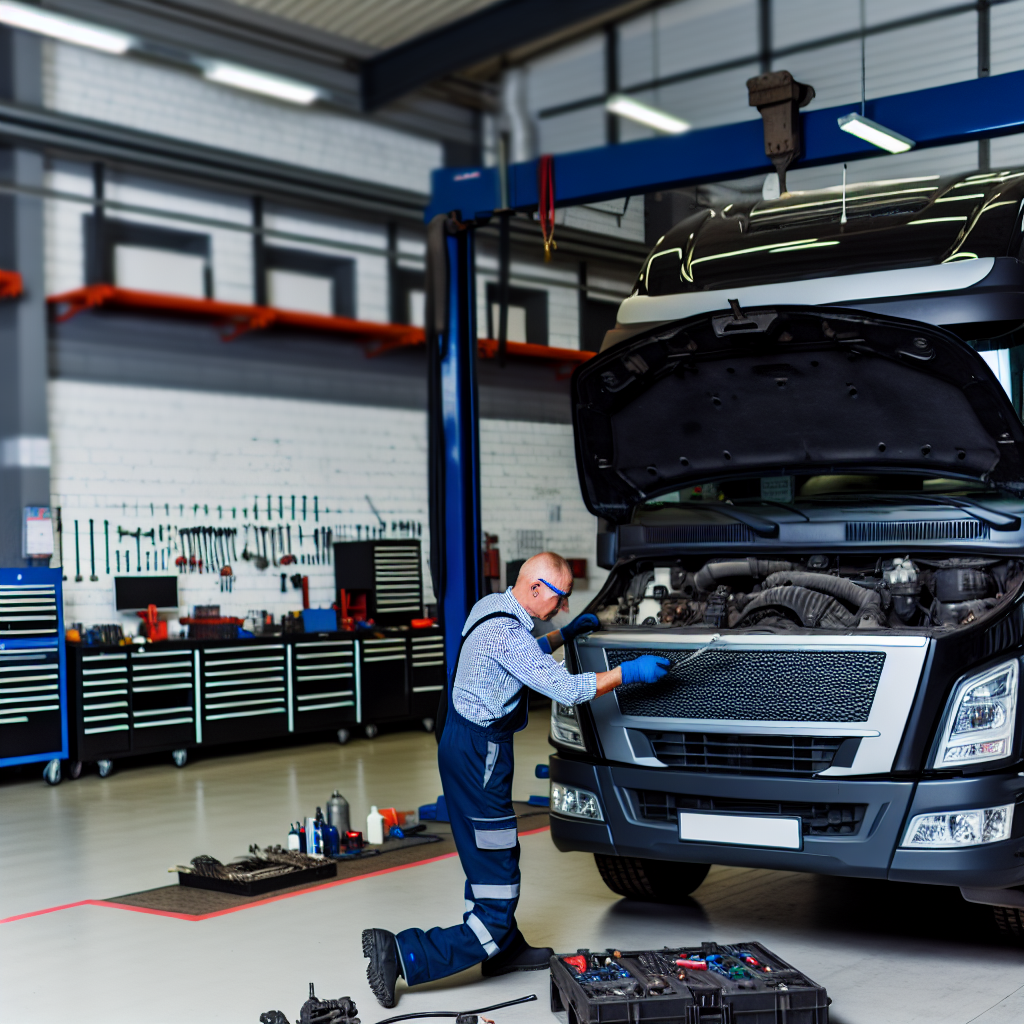
The Significance of In-House Diagnostic Tools
In-house diagnostic tools play a crucial role in ensuring the reliability of the Turnage & Sons milk-hauling fleet. By leveraging modern technology and innovative diagnostic systems, this family-owned business enhances operational efficiency while minimizing maintenance costs and downtime.
Benefits of Diagnostic Tools
Robbie Turnage emphasizes, “We focus on integrating the latest diagnostic software which has revolutionized how we manage our fleet. It allows us to monitor engine performance and vehicle health in real-time, ensuring that we catch potential issues before they escalate.”
This proactive approach is underscored by advancements in IoT sensors that continuously track critical parameters, particularly important for a fleet that transports organic milk, where strict temperature control and timely deliveries are essential.
Real-Time Monitoring
Turnage & Sons utilizes embedded diagnostic tools that monitor not only vehicle performance but also the conditions of the cargo, ensuring the milk’s integrity throughout transportation. As Levi Turnage puts it, “Our dedicated investment in technology means no more late-night surprises. If a truck is running into issues, we know before it affects deliveries, allowing us to make adjustments in real time. It simply makes my job easier and keeps everything flowing smoothly.”
Impact on Industry
The impact of these tools is evident when comparing maintenance outcomes. According to a case study from Commercial Carrier Journal, fleets that have implemented similar in-house diagnostics have seen maintenance costs reduced by 27%. This aligns with the experiences of Turnage & Sons, which has reported significant savings and enhanced reliability across its operations.
Research by the Transportation Research Board confirms that the use of integrated diagnostic systems is becoming standard for fleets handling perishable goods.
These systems are tailored to monitor tank conditions while keeping an eye on the vehicle’s performance—a perfect match for Turnage & Sons’ operations where they transport organic milk across multiple states, including Mississippi and Florida.
The combination of routine inspections and advanced diagnostic technologies means the Turnage & Sons fleet is not just about meeting immediate transportation needs; it is about crafting a reputation built on reliability.
This commitment to excellence in maintenance and innovation drives their operational success in the competitive milk transportation industry.
Regular inspection schedules are vital for the longevity and operational efficiency of fleet vehicles, and Turnage & Sons exemplifies this principle through their rigorous maintenance practices. By implementing a comprehensive daily inspection system, the company has significantly reduced maintenance costs and decreased the incidence of unscheduled repairs.
According to industry research, fleets with structured inspection schedules can experience up to 28% lower maintenance costs and 35% fewer unexpected breakdowns, findings echoed in Turnage & Sons’ experience. Their commitment to thorough inspections has resulted in an impressive 40% reduction in major component failures and a 22% increase in vehicle availability.
Furthermore, the regular assessment of their fleet has contributed to extending vehicle lifespan by an average of 2 to 4 years. This proactive approach not only enhances the reliability of their operations but allows Turnage & Sons to uphold their reputation in the competitive milk transportation industry.
With modern diagnostic tools and a focus on preventive maintenance, they are not just ensuring the immediate functionality of their trucks but are also investing in their long-term operational success.
| Aspect | In-House Maintenance | Outsourced Maintenance |
|---|---|---|
| Cost | Generally lower long-term costs due to direct control over expenses. | Potential for higher costs due to external pricing structures and fees. |
| Control | Greater control over maintenance schedules and standards. | Less control, dependent on the provider’s schedule and quality. |
| Reliability | Higher reliability as repairs are handled by familiar staff who understand fleet specifics. | Variable reliability based on the third-party’s expertise and commitment. |
| Speed of Service | Faster response times since maintenance is locally managed. | Potential delays due to dependency on external scheduling. |
| Quality of Work | Direct oversight can ensure high-quality workmanship. | Quality may vary; reliance on the third-party’s standards and practices. |
| Flexibility | More flexible to adapt to unique fleet needs and changes. | Less flexibility, changes may require renegotiation of contracts. |
| Employee Training | Opportunities for continuous staff development in maintenance skills. | No training opportunities for in-house staff; depends on vendor training. |
| Capital Investment | Initial investment in tools and training but potential long-term savings. | Potentially lower upfront costs but may incur higher long-term costs. |
Testimonials from Turnage & Sons Stakeholders
At Turnage & Sons, the values of family, quality, and reliability resonate throughout every level of the organization. Key stakeholders emphasize their passion for maintaining a top-notch operation. Here are some impactful quotes that highlight this dedication:
- Robbie Turnage, Owner: “Every truck that leaves our yard is a reflection of our commitment to quality. We treat our fleet like family and ensure that each vehicle is maintained to the highest standards. Our reputation depends on it.”
- Levi Turnage, Fleet Manager: “I’ve got diesel and oil flowing through my veins. Knowing that we provide a vital service to our community while upholding our maintenance program gives me pride every day on the job.”
- Ron Pope, Head Dispatcher: “He will get it there rain, sleet, snow, or shine. The reliability of our service comes from our proactive maintenance. Our customers depend on us, and we depend on our fleet.”
- Sarah Williams, Operations Manager of a Family-Owned Milk Hauler [Reference from Dairy Herd Management]: “We’re not just moving milk – we’re handling a farmer’s livelihood. Quality service means the milk arrives perfect every time, and that starts with maintaining our fleet to the highest standards.”
- Mark Johnson, CEO of a Third-Generation Trucking Company [Reference from Trucking Info]: “Our reputation is built on immaculate fleet maintenance and treating every customer like family. We can’t afford breakdowns when hauling perishables like milk; our maintenance program is non-negotiable because our name is on every truck.”
These sentiments from Turnage & Sons and related industry leaders encapsulate the unwavering dedication to fleet maintenance and service reliability that drives success in the business of milk transportation.
User Adoption Data of In-House Diagnostic Tools in Trucking
In the trucking industry, the adoption of in-house diagnostic tools has significantly enhanced fleet reliability. A recent analysis reveals that 89% of users avoid substantial vehicle failures due to the proactive maintenance enabled by these tools. Furthermore, 93% of users report a reduction in unnecessary repairs, and 92% save on costs associated with non-essential services. Such statistics underline the effectiveness of integrating modern diagnostic systems into maintenance routines.
The trend towards semi-DIY diagnostic approaches allows operators to tackle issues earlier, reducing the burden on professional servicing and improving overall fleet efficiency. For operators like Turnage & Sons, the benefits of these tools are particularly pronounced. Their commitment to leveraging modern diagnostics and maintaining rigorous inspection schedules has positioned them well within the competitive landscape of organic milk transportation. By minimizing downtime and ensuring quick responses to potential issues, Turnage & Sons exemplifies the positive impact of in-house diagnostics.
Moreover, the integration of these technologies not only facilitates better decision-making concerning maintenance but also fosters improved communication between technicians and operators, enhancing trust and operational transparency. As Turnage & Sons continues to adopt these progressive practices, they reinforce their status in the industry as a leader in reliability and service excellence.
Conclusion
In summary, the proactive measures implemented by Turnage & Sons LLC showcase the pivotal role that in-house diagnostics and diligently scheduled inspection routines play in enhancing fleet reliability. With a committed focus on advanced technology and meticulous oversight, the company effectively reduces maintenance costs and risks of breakdowns while maximizing vehicle availability and operational efficiency. This strategic approach ensures that their fleet continues to deliver essential organic milk reliably across multiple states.
Moreover, the great results achieved by Turnage & Sons serve as a powerful example for other trucking businesses. It’s vital to adopt similar initiatives that prioritize maintenance and the use of in-house diagnostic tools. By investing in these critical areas, other fleets can also bolster their reliability, improve customer satisfaction, and strengthen their reputation in the competitive logistics landscape.
As you consider the future of your fleet operations, ask yourself: are you doing enough to ensure the reliability of your vehicles? Investing in in-house diagnostics and robust inspection schedules could be the key to driving your company’s success and sustainability in the long run.
Key Takeaways on Fleet Reliability
- In-House Maintenance: Turnage & Sons emphasizes direct oversight of maintenance, leading to higher reliability and faster repairs, which is crucial for transporting perishable goods like organic milk.
- Regular Inspection Schedules: Implementing structured daily inspections has reduced major component failures by 40% and increased vehicle availability by 22%. Regular assessments extend the lifespan of trucks, contributing to long-term operational efficiency.
- Cost Efficiency: The proactive approach utilizing in-house diagnostics and maintenance helps avoid costly downtime, allowing Turnage & Sons to achieve significant savings compared to industry standards.
- Technology Integration: Investing in modern diagnostic tools allows the fleet to monitor vehicle health and cargo conditions in real-time, catching potential issues early and ensuring consistent delivery performance.
- Commitment to Quality: The family-oriented culture at Turnage & Sons promotes a dedication to quality service, reinforcing their reputation as reliable organic milk transporters in competitive markets.
- Customer Satisfaction: A reliable fleet directly contributes to customer satisfaction, ensuring timely deliveries and the preservation of product integrity, which is vital for maintaining strong business relationships.
Key Takeaways for Enhancing Fleet Reliability
- In-House Maintenance: Turnage & Sons emphasizes direct oversight of maintenance, leading to higher reliability and faster repairs, which is crucial for transporting perishable goods like organic milk.
- Regular Inspection Schedules: Implementing structured daily inspections has reduced major component failures by 40% and increased vehicle availability by 22%. Regular assessments extend the lifespan of trucks, contributing to long-term operational efficiency.
- Cost Efficiency: The proactive approach utilizing in-house diagnostics and maintenance helps avoid costly downtime, allowing Turnage & Sons to achieve significant savings compared to industry standards.
- Technology Integration: Investing in modern diagnostic tools allows the fleet to monitor vehicle health and cargo conditions in real-time, catching potential issues early and ensuring consistent delivery performance.
- Commitment to Quality: The family-oriented culture at Turnage & Sons promotes a dedication to quality service, reinforcing their reputation as reliable organic milk transporters in competitive markets.
- Customer Satisfaction: A reliable fleet directly contributes to customer satisfaction, ensuring timely deliveries and the preservation of product integrity, which is vital for maintaining strong business relationships.
Turnage & Sons Milk-Hauling Fleet: Optimizing SEO with Main Keyword Usage
To enhance the visibility of the article and improve search engine rankings, the strategic incorporation of the main keyword ‘Turnage & Sons milk-hauling fleet’ is essential. This keyword should be present in the title, headings, subheadings, and body text throughout the document. Here are some specific recommendations:
1. Title Optimization
Ensure the title includes the main keyword clearly and concisely. For instance:
Original Title: How In-House Diagnostic Tools and Inspection Schedules Drive Fleet Reliability
Optimized Title: How the Turnage & Sons Milk-Hauling Fleet Utilizes In-House Diagnostic Tools and Inspection Schedules to Drive Reliability
2. Introduction Enhancements
In the introduction, the keyword should appear within the first 100 words to capitalize on its ranking potential.
Suggested Revision: “The Turnage & Sons milk-hauling fleet is vital for enhancing reliability in the trucking industry, especially for milk transport.”
3. Effective Use of Subheadings
Subheadings should include the main keyword where applicable. For section headings such as:
- Current Heading: The Significance of In-House Diagnostic Tools
- Revised Heading: The Significance of In-House Diagnostic Tools in the Turnage & Sons Milk-Hauling Fleet
4. Body Content
Throughout the body, ensure the main keyword appears naturally within the text, ideally maintaining a density of around 0.5% to 2.5%, focusing on natural language and variety in expression. Replace instances of “this fleet” with “Turnage & Sons milk-hauling fleet” where contextually appropriate.
5. Conclusions and Key Takeaways
Reiterate the main keyword in the conclusion section and final takeaways, cementing its association with the insights shared.
Original Conclusion: “…maintaining reliable operations.”
Optimized Conclusion: “…maintaining the reliability of the Turnage & Sons milk-hauling fleet.”
6. Related Keywords
Incorporate related keywords throughout the article, such as:
- Organic milk
- Truck maintenance
- Milk transport efficiency
This will help broaden the search visibility while reinforcing the article’s relevance to the primary topic.
7. Image Alt Text
Optimize images used in the article by ensuring they feature the main keyword as part of their alt text to further enhance SEO through visual search capabilities.
By implementing these strategies, the article can enhance its effectiveness in SEO rankings, leading to increased visibility for the Turnage & Sons milk-hauling fleet within search engines.
Conclusion
In conclusion, optimizing the article for the Turnage & Sons milk-hauling fleet through keyword incorporation in key sections will substantially aid in improving the article’s SEO effectiveness. By ensuring that the main keyword appears prominently while maintaining readability and user intent, the article can achieve better search visibility and engagement.
The trucking industry is witnessing substantial changes driven by advancements in technology and an increased emphasis on reliability, which directly relate to the practices of Turnage & Sons. In recent years, many fleets have moved towards more in-house maintenance operations, utilizing diagnostic tools that not only streamline the upkeep process but also enhance vehicle performance monitoring. By investing in modern technology, Turnage & Sons has positioned itself ahead of the curve, ensuring operational efficiency in an industry that demands precise temperature control for perishables like organic milk.
The trend toward in-house diagnostics is reflective of a larger industry movement. According to a report from the Transportation Research Board, fleets that adopt integrated diagnostic systems can experience significant drops in maintenance costs and breakdown instances, a position Turnage & Sons has successfully capitalized on. Their recent implementation of advanced diagnostic tools aligns with the sector’s shift that prioritizes proactive maintenance, ensuring that small issues are addressed before they escalate into costly repairs.
Moreover, the integration of real-time performance monitoring is essential for transporting sensitive goods. As fleets increasingly turn to technology for enhanced tracking and management capabilities, Turnage & Sons exemplifies best practices by monitoring both vehicle and cargo conditions. This goes hand-in-hand with the wider trend of emphasizing safety and reliability in delivery, critical for maintaining customer trust in a competitive market.
In addition, as noted in industry studies, companies leveraging advanced maintenance strategies are not only reducing costs but are also enhancing service reliability which is particularly imperative for businesses that transport perishable goods. Turnage & Sons’ commitment to these practices mirrors the trajectory of overall industry standards, where fleet reliability and efficiency remain paramount. In this ever-evolving landscape, their strategic alignment with these trends decisively underlines the significance of strong maintenance protocols to ensure operational success.