
Accidents involving trucks can disrupt the operational flow of businesses in the logistics, construction, and transportation sectors. Understanding the repair process is critical for fleet managers and trucking company owners. This guide delves into essential aspects, including damage assessment, repair feasibility, navigating insurance claims, and selecting qualified repair shops. Each chapter provides practical insights to ensure your fleet remains efficient and safe post-accident, ultimately empowering you to make informed decisions.
Reading the Damage: A Practical Roadmap to Decide If an Accident-Damaged Truck Can Be Repaired
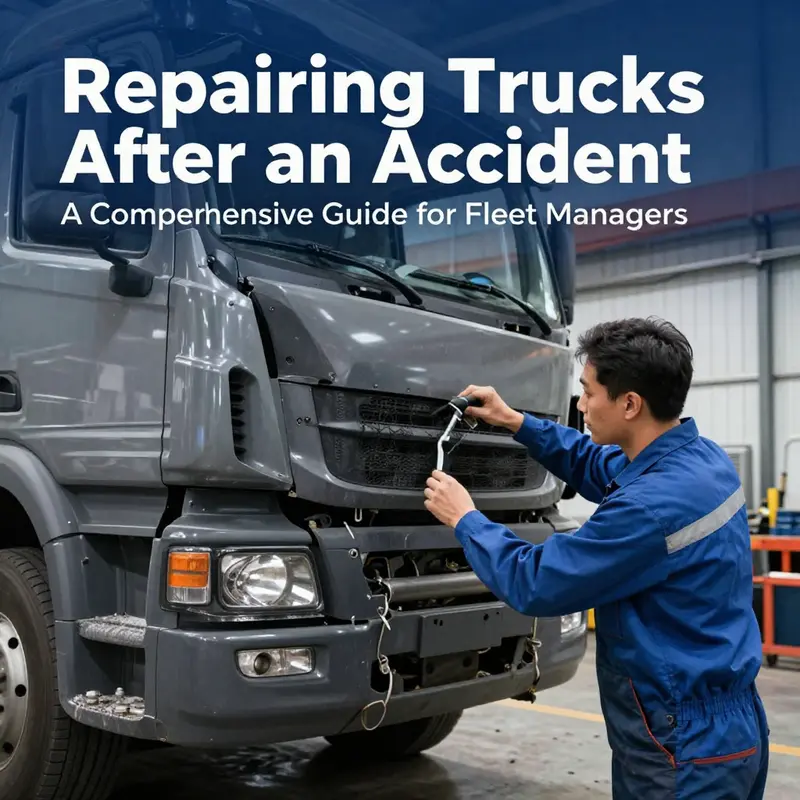
When a truck has been involved in a collision, the question of repair often sits at the edge of perception and reality. On the surface, many trucks appear to have just a dented bumper or a scratched chassis, but the real question is whether the damage compromises safety, reliability, and long-term value. The path from incident to restoration is not a single linear repair job; it is a careful, data-driven process that begins with a thorough assessment and ends with a decision that weighs safety, cost, and function. Understanding how this assessment works helps truck owners, fleets, and operators move from shock to clarity, avoiding expensive missteps and ensuring the vehicle can return to work safely if a repair is feasible.
The starting point is safety. A truck that has been in a crash may carry risks that aren’t immediately visible. Fuel leaks, damaged wiring, compromised braking lines, or a misaligned frame can create catastrophic failures later. The assessment, therefore, should never rely on first impressions or cosmetic fixes. A professional inspection is essential. A certified mechanic or collision repair specialist conducts a multi-layer evaluation that spans structure, systems, and the tricky middle ground where cosmetic damage hides structural weakness. The inspector’s role is not to confirm what the owner hopes to hear but to reveal what the vehicle can safely deliver after repair, or whether it should be retired from service.
The first layer of the examination is an initial visual assessment, which, while important, serves only as a guide to what more thorough testing must uncover. Dents and creases in the body panels can indicate impact zones, but they do not tell the full story. The A-, B-, and C-pillars—the vertical supports inside the cabin—along with the frame rails are critical focal points. If these components show bending, creasing, or any sign of distortion, they may signal structural compromise that cannot be fixed with standard bodywork. The color and depth of paint changes, cracks, or peeling in areas that suggest deeper metal fatigue can also hint at hidden damage. Glass and lighting deserve equal attention, because misaligned headlights or cracked windshields can mask alignment issues or sensor faults that affect safety features, visibility, and proper operation.
Beyond the exterior, the mechanical and system checks are where the assessment shifts from appearance to function. The engine, drivetrain, and transmission are evaluated for abnormal noises, rough starts, or performance inconsistencies. Leaks of oil, coolant, fuel, or transmission fluid under the vehicle raise red flags about sealing surfaces and cooling capacity—critical for long-haul reliability. A diagnostic scan is employed to read fault codes from the powertrain controller, which can reveal faults not obvious from a visual check. The suspension and steering system require careful attention. With the truck elevated, technicians inspect control arms, ball joints, tie rods, shocks, and struts for wear, damage, or looseness. A seemingly minor looseness can translate into excessive steering effort, unpredictable handling, or tire wear. Braking systems demand an equally careful appraisal: pad and rotor wear, rotor warp, and caliper condition all influence stopping distance and pedal feel. Even when brakes appear serviceable, the crash can have stressed hydraulic lines or sensor systems that affect brake performance in a future stop.
The most technically demanding part of the assessment concerns the frame and chassis—the backbone of the vehicle’s structural integrity. Even if the body panels look straight, a bent or twisted frame can undermine every subsequent repair and compromise safety. This is where specialized equipment comes into play. Frame alignment machines, laser measurement systems, and precise jigs are used to detect misalignment that cannot be detected by eye. The frame is the canvas on which every subsequent repair is painted; if the canvas is distorted, no amount of cosmetic work will render the truck safe. The technician will measure reference points and compare them to OEM specifications or industry standards to determine whether the frame can be restored within tolerance. If the structure cannot be brought back into spec, the repair may not be feasible in a way that guarantees long-term safety or resale value.
This is where the distinction between “looks damaged” and “is damaged” often becomes stark. Appearance can be deceiving. A wheel rim may appear intact, but hairline cracks and fatigue under heavy loads could render it unsafe. An airbag sensor or steering column might function in tests yet have sustained internal damage that could fail during a future collision. In some cases, the repair path that seems easiest may involve aftermarket or non-OEM parts that do not meet the exacting standards of safety-critical components. The risk is not merely a failure to perform but a potential loss of warranty, reduced resale value, or, in the worst case, a safety hazard. The assessment, therefore, is fundamentally about technical integrity rather than cosmetic restitution.
With the structural and mechanical checks complete, the conversation turns to practicality: can the repair be carried out in a way that restores the truck to its pre-accident capability at a reasonable cost? This is not a single figure, but a careful arithmetic that considers repair complexity, the availability of parts, and the truck’s pre-accident market value. Mechanical components that are damaged beyond practical repair—axles, driveshafts, suspension arms, or critical drivetrain elements—may push a repair into a realm where replacement is the more prudent option. Likewise, high-strength steel frames used in modern trucks demand exacting procedures and precise equipment. The cost calculus must account for the likelihood that repaired frame sections will hold up under heavy use, the potential need for realignment after repairs, and the cumulative effect of several sub-system repairs on reliability and durability.
Another key factor is the vehicle’s value and the economics of repair versus total loss. If the cumulative repair costs approach or exceed a significant portion of the truck’s pre-accident market value, insurers may deem the vehicle uneconomical to repair. That threshold varies by policy and jurisdiction, but the principle is consistent: the goal is to prevent sinking more into a vehicle than it would realistically return in service. This is not a mere question of current price; it includes future maintenance implications, residual value after the repair, and how long the repaired truck will remain viable in a fleet’s roster. In many fleets, the decision hinges on the model’s demand in the used-truck market. A common pattern emerges: older or less popular models that require scarce or expensive parts often tip the balance toward total loss sooner than newer, in-demand configurations with broad aftermarket support and more reliable parts supply.
The assessment is not merely about a single conclusion. It thrives on documentation and transparent communication with the insurance company and the repair facility. Engaging a certified damage appraiser or a technician who can articulate the scope of what must be repaired, what must be replaced, and what must be re-timed or recalibrated creates a credible, audit-friendly trail. This documentation should include a detailed report complete with photos, measurements, diagnostic results, and a comprehensive cost estimate. Sharing this with the insurer helps them understand why a repair is feasible or why a total loss is more appropriate. The process can also reveal opportunities for cost optimization, such as prioritizing critical structural rectifications before cosmetic work, or identifying where genuine OEM parts are necessary for safety-critical assemblies and where high-quality aftermarket components may suffice.
If the decision leans toward repair, the path forward requires selecting a repair facility that matches the truck’s needs. The ideal shop will have ASE-certified technicians with proven experience in commercial vehicles and a track record of handling high-stress structural repairs. It is essential that the shop can source OEM or equivalent high-quality parts and that they perform post-repair frame and alignment checks to confirm that the truck meets original specifications. The repair process itself will typically involve a careful sequence: restoring the frame first to correct geometry, followed by bodywork to realign panels and ensure a symmetric, vehicle-wide surface finish, and then mechanical work to address driveline, suspension, and braking components. Finally, the vehicle undergoes surface refinishing with color matching and protective coatings to prevent corrosion and to preserve paint integrity, followed by a thorough road test to validate performance, braking, steering, and handling under real-world conditions. Only after this comprehensive sequence can a truck be deemed safe for service and returned to the fleet.
In all these steps, the practical decision hinges on more than a professional’s opinion. It hinges on an honest appraisal of what it will take to bring the truck back to service, and whether that service will be dependable over the long term. This is why the insurance claim process remains integral to the decision. An adjuster’s assessment, the settlement offered, and the chosen repair path must align with safety standards, regulatory requirements, and the vehicle’s intended use. Post-repair, many jurisdictions require inspections to verify safety and emissions compliance before the vehicle can be re-registered and placed back into service. The documentation gathered during the assessment—photos, measurements, diagnostic results, and a complete repair bill—becomes the record that future owners, fleets, or insurers will consult. A well-documented repair story helps preserve resale value and provides a clear, defensible history should questions arise later about the vehicle’s safety and integrity.
The ultimate takeaway from this comprehensive assessment is that the feasibility of repairing an accident-damaged truck is scenario-dependent. For some trucks, repair can restore safe, reliable operation at a reasonable cost. For others, particularly where structural integrity is compromised beyond repair, or where the financial equation does not add up, a total loss becomes the prudent course. The driver of the decision is not a wish for salvage but a disciplined appraisal of safety, performance, and value. This approach protects drivers and fleets, preserves safety margins, and ensures that a repaired truck can continue to perform in demanding environments without compromising the people who depend on it daily. As you move from assessment to decision, remember that the most important criterion is the vehicle’s ability to perform its duties safely after repairs. Cosmetic improvements have their place, but only if structural and functional integrity is fully restored and verified by qualified professionals.
For readers who want more practical context about ongoing maintenance planning and how repairs fit into a long-term budgeting strategy, a broad resource pool is available that discusses routine maintenance, cost forecasting, and preventative measures. You can visit mastertruckrepairllc.com/blog/ for insights on maintenance planning and cost-conscious upkeep that complement the repair assessment process without focusing on a single make or model. This broader perspective helps fleet operators balance immediate repair decisions with long-term reliability and operating costs, ensuring that a repaired truck remains an asset rather than a financial strain. Taking this balanced view—combining structural assessment, meticulous documentation, and prudent budgeting—puts you in the best position to determine whether an accident-damaged truck can be repaired safely and economically, or whether retirement from service is the more responsible course of action.
In the end, assessing damage is less about a definitive yes or no and more about constructing a defensible, evidence-backed plan that safeguards safety, sustains capability, and aligns with financial reality. The chapter’s core message remains clear: never assume repair feasibility from a surface appearance. Dive into the structural truth, verify the integrity of critical systems, and weigh the cost against the truck’s value and mission. When in doubt, rely on professionals, seek transparent reporting, and let the data guide the decision-making process. This disciplined approach is what turns a collision scene into a well-informed, safety-first restoration path, or, when necessary, a responsible exit strategy that minimizes risk and preserves value for the long haul.
External reference: For safety standards and regulatory context, see https://www.nhtsa.gov/.
Reading the Repairability of a Truck After an Accident: Safety, Structure, and the Economics of Restoring a Workhorse
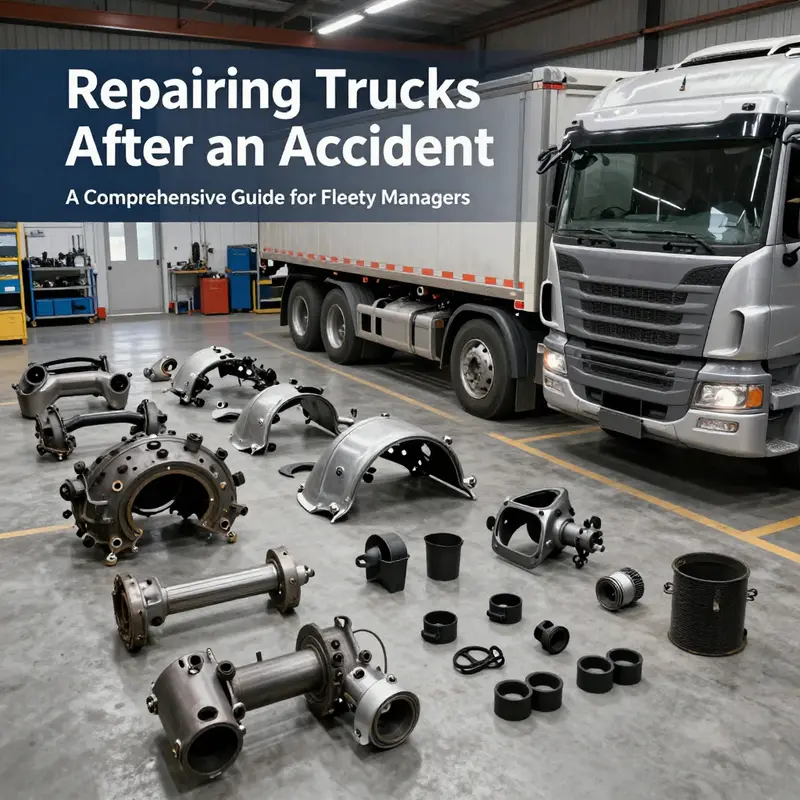
When a heavy vehicle has taken a hit, the question isn’t simply whether the dents can be popped out. It is whether the truck can be returned to safe, reliable service without creating new risks down the line. The repairability of a truck after an accident hinges on a few intertwined realities: the severity and location of the damage, the quality of the repairs, and the vehicle’s underlying structural integrity. These factors work together like a complex puzzle, and understanding them helps fleet owners, operators, and individual drivers decide whether repair or replacement makes the most sense. Across the industry, the most crucial determinant is not the aesthetics of a panel or the gloss on a bumper but what lies beneath the surface—the frame, the chassis, and the core systems that keep a heavy vehicle stable, controllable, and safe under load and at speed. A truck that preserves its frame alignment, resumes its original geometry, and restores the alignment of steering, brakes, and suspension stands a far better chance of being repairable in a meaningful, long-lasting way than one whose skeleton has been bent, cracked, or distorted. This is why a professional inspection is never optional after a serious impact. A certified mechanic or collision repair specialist, equipped with the right diagnostic tools, will assess structural integrity with the same seriousness given to a new build. They will measure straightness with laser alignment systems, check for any subtle shifts in the subframes, and verify that the drivetrain remains coupled to the road in a predictable and controllable manner. In practical terms, this means looking beyond visible damage. It means testing how the steering responds when counter-steering is applied, evaluating how the brakes perform under load, and ensuring that the wheels sit true and perpendicular to the road. It also means looking for concealed issues that do not announce themselves with a loud crash but instead whisper trouble through vibration, unusual tire wear, or intermittent electronic faults. The hidden risks are real, and they can persist long after the last bolt is torqued and the paint is dried. Recognizing these risks early is the cornerstone of a safe decision about repairability. The most decisive factor in repair viability is structural damage. If the frame or unibody has been bent, cracked, or otherwise compromised, the repair becomes a much more intricate proposition. Modern heavy trucks rely on high-strength steel and carefully engineered crumple zones to protect occupants and maintain control in a collision. When those are twisted out of spec, the entire architecture of the vehicle is thrown off. The repair requires specialized frame straightening equipment and meticulous adherence to the manufacturer’s specifications. Even when a frame is physically realigned, the question remains whether all connected components—suspension mounts, axle positions, and rail lines—align with the car’s geometry. A misaligned frame can subtly alter steering feel, brake balance, and tire wear, increasing the risk of a recurrence of instability. For this reason, repairability discussions often begin at the frame. If the frame is compromised beyond what precise straightening can restore, or if there are cracks in critical load paths, many professionals will advise against attempting a repair. They would point to the long-term vulnerability that can surface in wet road conditions, heavy braking, or at highway speeds. It is not merely a matter of making the truck look straight again; it is about ensuring that all the arranged stresses, loads, and trajectories behave as the manufacturer intended under real-world conditions. Non-structural damage, by contrast, tends to be more forgiving. Dents, scratches, broken lighting, and damaged bumpers may be repaired with less complexity and cost. They do not threaten the vehicle’s core safety systems in the same way as frame distortions do. However, even non-structural damage deserves careful consideration. The cost of cosmetic fixes can escalate if they require costly color matching, pristine panel alignment, or extensive reconditioning of a vehicle’s surface to restore a uniform appearance. In some cases, what seems cosmetic is a signal that underlying systems were affected. For example, a serious front-end impact can disturb the alignment of dynamic components inside the fender and wheel wells, which may in turn influence handling or ride quality. Hence, an assessment that accounts for both visible damage and potential hidden consequences is essential to determine repairability. Beyond structural realities, the question of repairability also involves the economics of the repair itself. Any repair plan must weigh the cost of parts, materials, and labor against the truck’s pre-accident value and its expected remaining life in service. Even a technically repairable truck can become economically imprudent to fix if the price tag climbs beyond its market value. This kind of cost-benefit calculus is not vanity economics; it is a practical safeguard against sunk costs that do not return proportional value. Insurers often drive this calculation, because they assess not just the damage but the risk and expected future maintenance. In many cases, insurers scrutinize whether the repair will restore the vehicle to a standard that qualifies for continued coverage and safe operation. A policy may include constraints about frame repairs, airbag replacements, or electronic system recalibration. Communicating openly with the insurer from the outset helps clarify what is permissible and whether a repair aligns with policy terms. The repairability conversation also bears on the choice of parts. OEM parts are designed to fit the exact specifications of the vehicle, including the precise tolerances that ensure proper alignment and system integration. Certified equivalents offer another route, often at lower cost, but they demand rigorous quality assurance. Reputable repair shops will verify that replacements meet or exceed original specifications and will document traceable adherence to industry standards. The quality of the repair work matters immensely. A repair that is rushed or performed without proper alignment checks can leave the truck vulnerable to problems that only become evident after miles of service. The best outcomes come from shops that combine experienced craftsmanship with modern measurement technology. Frame alignment, for instance, is no longer a purely manual task. Laser measurement systems enable technicians to confirm that all reference points return to exact factory coordinates. After frame work, a comprehensive inspection should cover every safety-critical system: brakes, steering, suspension, and steering geometry. Airbag systems and electronic stability controls deserve particular attention because they depend on precise sensor calibration and correct mechanical mounting. The final stage of repair is testing—an on-road evaluation that mirrors actual operating conditions. A road test checks the vehicle’s response to steering, braking, and throttle input under varying loads. It also validates trailer hitch performance and the behavior of any adaptive suspension or electronic control systems. Only after passing this thorough evaluation should a truck be deemed ready for return to service. The cost side of the equation cannot be ignored. Even if the structural integrity is restored, the repair may still be financially unsound if the total outlay approaches or exceeds the vehicle’s post-accident value. Industry observations suggest that accident-damaged vehicles often experience significant depreciation, and the most severe structural repairs tend to accelerate that decline. This depreciation is an important reality for anyone weighing repair against replacement. A repaired truck may continue to serve well, but its resale value will typically reflect its accident history and any residual structural concerns. That is why many operators choose to document and disclose the repair history fully when selling or resourcing the vehicle. Transparency safeguards buyers and upholds safety expectations. Insurance and legal considerations also shape the repair decision. Some regions require a post-repair inspection to confirm safety and emissions compliance. In addition, ownership records must reflect the repair history and any inspections that certify road-worthiness. Disclosure of a major repair in the used-truck market is not optional; it is a legal and ethical responsibility. The repair decision is not simply about getting back behind the wheel. It is about ensuring predictability and safety for drivers who rely on a truck to haul goods, to support a crew, or to service communities. That requires a careful blend of engineering judgment, financial prudence, and regulatory awareness. A chapter’s worth of caution and discipline should accompany any repair plan. The most robust path is a model of conservative assessment: confirm structural integrity, pursue high-quality parts, insist on proper frame and alignment work, and demand comprehensive safety testing before returning the vehicle to service. When all these elements align, many trucks can return to work with a performance profile that resembles, or in some cases nearly matches, their pre-accident state. Still, the reality remains that not every accident results in a repairable outcome. A severe impact may leave hidden structural damages that only become apparent after the vehicle has endured real-world loads. In such cases, the prudent choice is to retire the vehicle from service and redirect resources toward safer, more reliable transport solutions. The Takeaway is straightforward: repairability is not a yes-or-no verdict issued after a single inspection. It is a graduated assessment that weighs structural integrity, repair quality, safety certification, and the economics of restoring a workhorse to its former duties. For those who want to deepen their understanding and stay connected with practical guidance, the Master Truck Repair blog offers ongoing discussions about maintenance, safety, and best practices for heavy vehicles. This resource can provide a broader view of how repair decisions intersect with daily operations, budgeting, and long-term risk management. For readers seeking a broader industry perspective, Car and Driver outlines how repairability after an accident hinges on exacting standards, professional expertise, and disciplined project management, underscoring that safety must never be compromised for speed or cost savings. To explore further, see the external reference: https://www.caranddriver.com/features/a57689111/repairability-truck-accident/. When you consider all these elements together, the decision to repair a truck after an accident becomes not only a technical judgment but a practical one—an assessment of safety, reliability, and the long arc of return on investment for a vehicle that keeps a business moving. For those who want a concise starting point, you can consult the wide range of insights available in the industry blog space, including practical guidance on routine maintenance and the economics of repair versus replacement. Readers may find value in starting with accessible resources such as the Master Truck Repair blog. Master Truck Repair blog. In the end, the path you choose should align with the vehicle’s structural health, the certainty of safety, and the clear economics of the situation. A repaired truck, when done correctly, can indeed stand up to the demands of daily service. It is a testament to skilled workmanship, precise engineering, and disciplined risk assessment. But it is not a guarantee that every accident-affected vehicle will return to its prior life. The best outcomes arise when danger signs are identified early, repairs are executed with rigor, and the truck passes the necessary tests with robust margins of safety. The road from collision to confidence is built on transparent processes, high standards, and an unwavering focus on the safety of the people who rely on the vehicle every day. Such an approach is not only about repairing machines; it is about preserving the trust that makes heavy-transport operations possible in the first place.
Making the Claim Work: A Practical Guide to Repairing an Accident-Damaged Truck
Navigating the Claim Step by Step
When a truck has been in an accident, the insurance claim process becomes the central path to getting it repaired, back on the road, and earning back revenue. The first 48 hours after a crash set the tone for the entire claim. Prioritize safety, then document everything. If anyone is injured, call emergency services right away. If it is safe to move the vehicle, do so to prevent further collisions. If not, leave the truck where it rests and capture clear photographs from multiple angles. Include close-ups of damage, wide shots of the scene, and photos showing road signs, skid marks, and vehicle positions. Preserve any evidence that might speak to fault, such as surveillance footage or witness statements, and get contact details from anyone who saw the incident.
Reporting the accident to the authorities matters. A police report or official accident report becomes a core document for the claim. It records the facts as observed by law enforcement and often includes a preliminary determination of fault. Upload or keep a copy of that report to hand to your insurer. Time matters when you notify your carrier. Most policies require prompt reporting, often within 24 to 48 hours. Use the insurer’s claims hotline, mobile app, or online portal. Have your policy number, driver’s license, and vehicle registration ready. Provide the who, what, where, and when: date, time, location, names of other drivers, and a brief description of how the collision occurred. Attach your photos and any recorded statements to your initial report. Doing so speeds the loss assessment and reduces back-and-forth later.
An insurer will assign a claims adjuster or invite you to submit a digital inspection. The adjuster’s role is to assess damage, estimate repair costs, and determine coverage liability. Treat the adjuster as a partner who evaluates facts, not as an adversary. Be factual and thorough during the inspection. If the truck is heavily damaged, the adjuster will look for structural or frame issues and make notes about mechanical systems such as brakes, steering, suspension, and drivetrain components. If cargo or specialized equipment was damaged, document those items separately. For commercial operators, separate damage to hauling equipment from damage to the truck itself.
Repairability hinges on structural integrity and cost versus value. If frame rails are bent, the adjuster will evaluate whether certified frame-straightening and alignment tools can restore factory specifications. Modern frames use high-strength steel and engineered crumple zones. Repairs must return the vehicle to safe tolerances. Non-structural repairs—panels, lights, bumpers, and glass—are usually routine. The adjuster will compare repair estimates with market value. When repair costs approach or exceed the truck’s current value, the carrier may declare a total loss and offer a settlement for the vehicle’s pre-accident value. This is a common outcome when heavy structural damage meets older trucks with lower market values.
You have choices about repair shops. Insurers often maintain networks of approved collision centers. These shops streamline estimates and billing. Choosing an approved facility can reduce friction. But you may prefer an independent shop with experience in heavy trucks and certified technicians. If you operate commercially, look for shops that handle fleet repairs, perform frame alignment with laser systems, and source proper replacement parts. Request that shops use original-equipment manufacturer parts or high-quality equivalents, and insist on documented frame measurements and alignment reports after the work is done.
Documentation will determine how smoothly the claim closes. Gather and submit the police report, vehicle title or registration, driver’s license, your insurance policy information, and detailed repair estimates. If the truck carried cargo, include bills of lading and documentation of the load’s condition before the crash. For commercial policies, provide proof of ownership for specialized equipment. If anyone was injured, include medical reports and bills. Maintain a running folder—digital or physical—of photographs, correspondence, invoices, and receipts. Keep notes of every phone call, including dates, names, and what was discussed. These details can prove invaluable if you dispute an adjuster’s findings.
Once the adjuster approves the claim and authorizes repairs, coordination begins. If you’ve picked a shop in the insurer’s network, the shop will often work directly with the carrier to confirm scope and parts. If you selected your own facility, confirm whether the insurer requires pre-authorization or multiple estimates. A well-run repair shop will provide an itemized estimate, order parts promptly, and keep you updated on timelines. Ask the shop for a timeline and a projected completion date. For fleets, plan for downtime and route reassignment. If your policy includes business interruption coverage, submit proof of lost revenue or interrupted contracts to the claims team. This coverage can offset income lost while the truck remains out of service.
Payment methods vary. Insurers typically pay the repair facility directly after verifying that work matches the approved estimate. If you pay out of pocket, keep invoices and proof of payment to seek reimbursement. If another driver is at fault but uninsured or underinsured, your uninsured/underinsured motorist coverage can cover repairs depending on your policy. If you believe the settlement offer undervalues the damage or the truck’s market value, you can challenge the adjuster’s decision. Request a reinspection, obtain a second independent estimate, and provide supporting documentation such as comparable vehicle values or recent maintenance records that demonstrate higher pre-accident worth.
Final inspection matters. After repairs, confirm that every repaired system functions properly. A good repair shop will perform road testing, alignment checks, and a systems diagnostic. Check for correct panel gaps, paint match, and trim alignment. If rust-inhibiting treatments or corrosion protection were part of the repair, request documentation. For trucks with commercial registration or that operate across state lines, be aware that some jurisdictions require a post-repair safety inspection before reentering service. Update registration and insurance records to reflect completed repairs. Keep all invoices, parts lists, and final inspection reports in your permanent files. These documents protect resale value and show future buyers that repairs were professional.
There are additional factors that often come up with commercial trucks. Cargo damage claims run alongside vehicle claims. Separate the two streams of documentation, and make sure cargo loss is clearly itemized with values, bills of lading, and photographic proof. If the truck hauls specialized equipment such as refrigeration units, record damage to those components separately. Business interruption claims require evidence of lost contracts, missed deliveries, and receipts showing lost income. Some policies include rental or replacement vehicle reimbursement for the repair period. Check the terms and claim accordingly.
Managing the human side of the claim keeps operations steady. Communicate clearly with drivers, dispatchers, and customers. If the truck was on a route, notify customers of potential delays and explain the steps you are taking. If repairs will take weeks, consider temporary hires or subcontracted hauls to keep commitments. If the truck is declared a total loss, decide whether to accept the insurer’s offer or to negotiate. You may be able to keep salvage if you buy it back, but remember that retained salvage often reduces the payout amount.
Practical strategies help prevent surprises. Start an emergency repair fund to cover deductibles or initial expenses while a claim is processed. For guidance on setting up a reserve and managing repair-related cash flow, see this resource on building an emergency repair fund for truck owners: building an emergency repair fund for truck owners. Keep maintenance records current. A well-documented service history can improve perceived vehicle value and support negotiations if the insurer questions pre-accident condition. Use mobile claim tools if your insurer offers them. Apps that accept photos and track claim status reduce delays and keep communication centralized.
Finally, if you disagree with a claim decision, appeal. Ask for a written explanation of the denial or settlement amount. Submit additional evidence, such as third-party estimates or market valuations, and request a re-evaluation. If needed, consult a public adjuster or an attorney experienced in commercial vehicle claims. They can help you interpret policy language and present a stronger case. Throughout, prioritize safety and quality over speed. A cheaply repaired structural issue may return the truck to service faster but risk future failures. When repairs restore the truck to safe, documented factory-level performance, you preserve workers’ safety, protect your business’s reputation, and maintain the vehicle’s long-term value.
For a practical walkthrough of filing claims and the insurer’s expectations, review the carrier’s official claims resource online: https://www.progressive.com/claims/
Choosing a Qualified Repair Shop for Repairing a Truck That Was in an Accident: Safeguarding Safety, Value, and Road Readiness
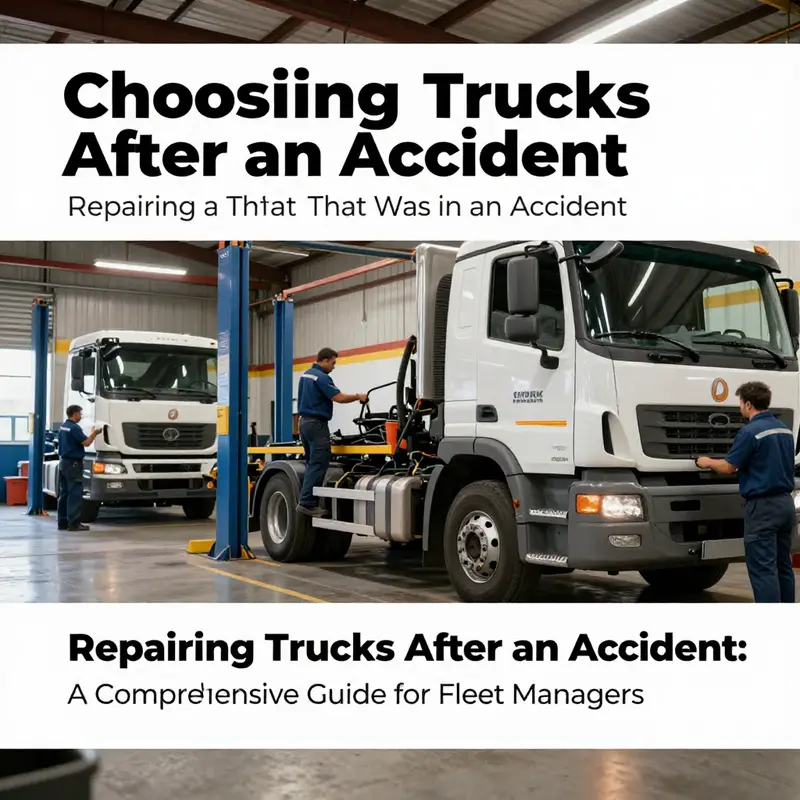
When a truck has been in an accident, the immediate questions are simple yet heavy: can it be repaired, and who should do the work? The answer hinges on more than a quick estimate. It rests on a careful blend of technical capability, real-world experience with heavy-duty systems, and a disciplined approach to safety that protects both the driver and the load. A repair is not just about making a dent disappear or swapping a broken light; it is about restoring a machine that carries people, cargo, and schedules. That responsibility makes the choice of a repair shop a decision that should be made with the same rigor as the initial accident assessment. The goal is to bring the truck back to a safe, reliable operating state while preserving its value and, when possible, its remaining service life. To move from doubt to a sound plan, a detailed understanding of what makes a shop qualified becomes essential, not as a marketing slogan but as a practical standard you can verify on the yard floor and in the bill of materials that accompany the repair work.
The road from inspection to road readiness begins with certification and expertise. The best repair facilities for heavy-duty trucks don’t rely on reputation alone; they prove their capability through recognized credentials and a track record with commercial fleets. The most important step is verifying the shop’s certification and expertise. Look for facilities with industry credentials that signal a mature, systematized approach to repair. One such marker is a status akin to “Class One Automotive Repair Enterprise,” which, in concept, signals that the shop meets elevated standards for equipment, technical capability, and personnel qualifications. In practice, for heavy trucks that feature complex chassis, high-strength steel frames, and advanced suspension systems, specialized knowledge is not a luxury—it’s a necessity. The technicians must understand frame alignment, welding techniques appropriate to heavy-gauge metals, and the peculiarities of commercial braking and steering systems. The claim of competency means little without proof of ongoing training, model-specific knowledge, and a culture that treats safety as non-negotiable. A shop worthy of your trust will welcome questions about technician certifications, the kinds of alignment equipment they use, and the procedures they follow to verify that a repaired frame matches the original specifications as closely as possible.
Equipment and technology are the next clear indicators of capability. A facility that can reliably repair a truck after a serious collision will invest in diagnostic and measurement tools that do not merely satisfy a technician’s curiosity but provide objective data about structural integrity. Modern heavy trucks rely on precise frame geometry, axle alignment, and synchronized suspension behavior to ensure predictable handling and braking performance. A capable shop should have advanced diagnostic tools, electronic measurement systems, and computerized four-wheel alignment machines that can quantify deformations that may not be immediately visible to the naked eye. The importance of precision here cannot be overstated: even small misalignments, if left uncorrected, can compromise steering feel, tire wear patterns, and the vehicle’s ability to stop in a controlled manner. In addition to measurement tools, the shop should employ technicians who are trained on specific truck models and who stay up to date with manufacturer specifications. This is more than a matter of pride or marketing; it is a practical safeguard against the hazard of a partial repair that leaves critical systems out of spec. The right equipment also extends to the repair process itself. Frame straightening machines, laser-guided alignment benches, and welding rigs designed for high-strength steel must be part of the shop’s core capabilities. The presence of such tools signals that the facility treats structural repair with the seriousness it deserves.
Beyond the frame and the laser booth, the shop’s approach to parts, systems, and reassembly matters profoundly. A high-quality repair job depends on using parts that meet or exceed original specifications. The shop should specify that it uses high-quality parts from reputable sources and provide a clear accounting of parts costs in the estimate. It is reasonable to request documentation that confirms parts are either original equipment manufacturer (OEM) or approved equivalents that meet or exceed OEM tolerances and performance characteristics. The goal is not merely cosmetically restoring the truck but ensuring that every mounted component—brakes, steering gear, axles, bearings, and suspension bushings—works in concert again. As with any mechanical assembly, compatibility matters: mismatched components can introduce subtle instabilities that only become evident under load or at highway speeds. A thorough repair plan will outline not only the components to be replaced but also the sequence in which repairs will occur, the checks after each major step, and the standards used to verify proper fit and function.
Reputation and customer feedback become the quiet but reliable barometer of a shop’s daily performance. The nature of heavy-truck work, particularly when fleets rely on punctual service, makes consistent reliability a vital trait. Seek out shops with a track record of serving fleet operators or independent owner-operators who run similar equipment. Positive reviews that emphasize transparency, clear communication, and honest timing are meaningful markers. Conversely, watch for patterns of concern—hidden costs that appear only in the final invoice, unexplained delays, or repeated callbacks for the same issues. A shop that openly discusses its schedule, parts sourcing, and anticipated timeline is typically more trustworthy than one that answers questions with vague assurances. It can be helpful to ask for references and to contact them about the shop’s workmanship, post-repair performance, and whether the shop kept its promises regarding timelines and warranties. The goal is a joint understanding: the shop can deliver a safe, road-ready vehicle, and you can count on support in the weeks and months after repairs if a warranty item surfaces.
Pricing transparency and after-service support form the practical bridge between estimate and reality on the lot and in the shop’s bay. It is perfectly reasonable to request a detailed quote that itemizes labor, parts, and any sublet work, as well as the anticipated cost of paint and finishing if the repair includes cosmetic work. The risk with low-cost, blurrier estimates is that buyers discover later that some items were not included or that quality parts were substituted for the sake of price. A responsible shop will offer a written warranty on workmanship and provide a clear policy on parts guarantees, stand-alone inspections, and post-repair rechecks after the first few miles of operation. Any reputable operation will also maintain open communication through the process, reiterating what is being done and why, and acknowledging uncertainties such as the potential need for additional work if a hidden structural issue emerges during disassembly. The best shops recognize that a repair is a collaborative process: the customer understands the risks and the shop commits to a plan that prioritizes safety and reliability over expediency or margin.
When you or your insurer have determined that a repair is feasible, the shop must demonstrate an ability to translate that decision into a practical, verifiable plan. The unfamiliar terrain of frame straightening can tempt hurry, yet the most trustworthy shops treat every step as a measured sequence rather than a single, dramatic lift. First, they conduct a comprehensive assessment that revisits structural integrity, frame alignment, and system functionality. Next, they prepare a repair plan that includes disassembly, replacement or repair of damaged components, and meticulous reassembly with an emphasis on alignment tolerances. The process includes mechanical restoration—axles, suspension components, drive train elements—paired with bodywork and paint as required. Finally, the shop performs a rigorous final testing phase, which includes a road test and a series of checks to confirm that handling, braking, steering responsiveness, and stability meet the manufacturer’s specifications as well as the operator’s safety expectations. This testing phase may also involve a post-repair inspection to verify compliance with state or provincial safety and emissions requirements.
The decision to repair versus total loss, and the choice of shop, must also consider the broader context of insurance and regulatory requirements. A well-qualified facility will work in concert with the insurer to align expectations and documentation. They should be capable of providing the necessary estimates, diagnostic reports, and proof of alignment checks that an adjuster will require to certify that the repair meets the needed standards. They may also coordinate with insurers to arrange for rental coverage or other support while the work is in progress, easing the disruption to a fleet’s operations. Importantly, you should ensure that any repair work aligns with local safety inspections and, if applicable, post-repair certification requirements. In some jurisdictions, it is necessary to obtain a formal inspection or certification after significant frame work to revalidate safety and compliance. A shop that understands these regulatory nuances can save time and reduce friction when getting the vehicle back on the road.
As you weigh options, bring your own questions into the conversation and observe how the shop responds. A good shop will welcome a careful review of the damage report, the proposed plan, and the estimated timeline. They should be willing to show you the equipment in use, demonstrate the measurement readings, and explain the rationale behind each major decision—why a particular component is replaced rather than repaired, or why a specific alignment tolerance is chosen for a heavy truck under heavy payload conditions. This level of transparency isn’t just about building trust; it’s about ensuring that the work will withstand the stresses of real-world operation, from long highway hauls to crowded docks and challenging winter routes. A well-informed owner or fleet manager who understands the basics of frame alignment, suspension geometry, and brake system integrity can participate meaningfully in the repair planning, help validate the insurer’s expectations, and push back against shortcuts that compromise long-term safety.
Choosing the right repair shop also means thinking ahead. The post-repair journey includes not only a clean bill of health at delivery but ongoing maintenance that supports the repaired structure. The shop should offer or coordinate post-repair follow-ups, including periodic inspections to catch any creeping misalignment arising from heavy use, potholes, or payload shifts. They should be able to provide or reference a maintenance plan that covers critical components, such as brakes, steering, and suspension, and that aligns with the manufacturer’s service intervals. A reliable facility will understand that safety and performance are not one-off checks but continuous commitments that extend beyond the repair itself. Keeping documentation organized—estimates, invoices, inspection reports, and warranty data—matters as well. In the event of a future incident, thorough records can clarify what was repaired, what parts were used, and how the vehicle was restored to its pre-accident state. This documentation becomes a practical asset for the operator, the insurer, and any regulatory reviews that may arise in the future.
The search for a qualified repair shop is, in essence, a search for a partner. It is not merely about fixing a truck after a mishap but about restoring a tool that the driver relies on to carry people, goods, and schedules across a demanding landscape. Your questions and standards are not extraneous; they are part of a disciplined approach to risk management. You want a shop that can demonstrate competence with heavy-duty frames, that can prove the accuracy of its work through data and careful alignment checks, and that can stand behind its work with a clear warranty and responsive after-service support. This is how repair becomes a return to safety, reliability, and the ability to meet the demands of everyday operations without sacrificing the truck’s value or the confidence of its operator.
For readers seeking a practical starting point, a good next step is to review a resource that consolidates knowledge on evaluating repair facilities and maintaining funds for unexpected repairs. A nearby hub of information that many operators consult is the Master Truck Repair LLC blog. There you can find perspectives from industry professionals on maintenance planning, emergency repairs, and the economics of keeping a fleet in service after an accident. It is not a substitute for independent due diligence, but it can offer a framework for organizing your questions and expectations when you visit potential shops. Keep in mind that every truck and every accident present unique circumstances. The aim is to equip yourself with the criteria that separate a indicative repair promise from a demonstrably capable repair solution.
In closing, the decision to repair a truck after an accident hinges on a mix of technical feasibility, the shop’s demonstrated capability, and the assurances that safety will not be compromised for the sake of speed or lower price. Certification and expertise set the baseline, while equipment and technology provide the means to execute a repair correctly. Reputation offers a practical confidence check, and pricing transparency paired with robust after-service support ensures that you are not left with unresolved questions or hidden costs. When these elements align, a repair is not merely a fix; it becomes a reliable restoration of value, performance, and the ability to meet the demands of the road. If a structural injury is too severe or the costs exceed the truck’s value, then the option of a total loss may be the responsible path. But with careful selection of a qualified shop, many accident-damaged trucks can return to service with safety, dependability, and the confidence that operators need to keep moving forward.
External reference: https://www.ase.com
Final thoughts
Understanding how to repair a truck that has been involved in an accident is vital for maintaining fleet operations and ensuring safety. By assessing damage accurately, evaluating repair feasibility, navigating insurance claims effectively, and choosing the right repair shop, fleet managers, and trucking company owners can minimize downtime and costs. This comprehensive guide equips professionals with the necessary insights to handle truck accidents with confidence and precision, ensuring a swift return to operational efficiency.