Flood damage presents a significant challenge for operators managing fleets of Dodge trucks. The recovery process involves a meticulous approach, beginning with immediate actions to prevent further damage and subsequently progressing through professional assessments and critical repairs. For fleet managers, construction companies, and logistics providers, understanding the nuances of flood repair is essential for maintaining operational integrity and minimizing losses. This comprehensive guide will offer insights into effective actions post-flooding, highlight the importance of expert assessments, identify crucial repair tasks, and discuss relevant insurance considerations, ensuring that decision-makers are well-equipped to navigate the complexities of flood-damaged vehicle repair.
Guarded Beginnings: Immediate Actions That Protect a Flood-Damaged Dodge Truck and Preserve Repair Possibilities
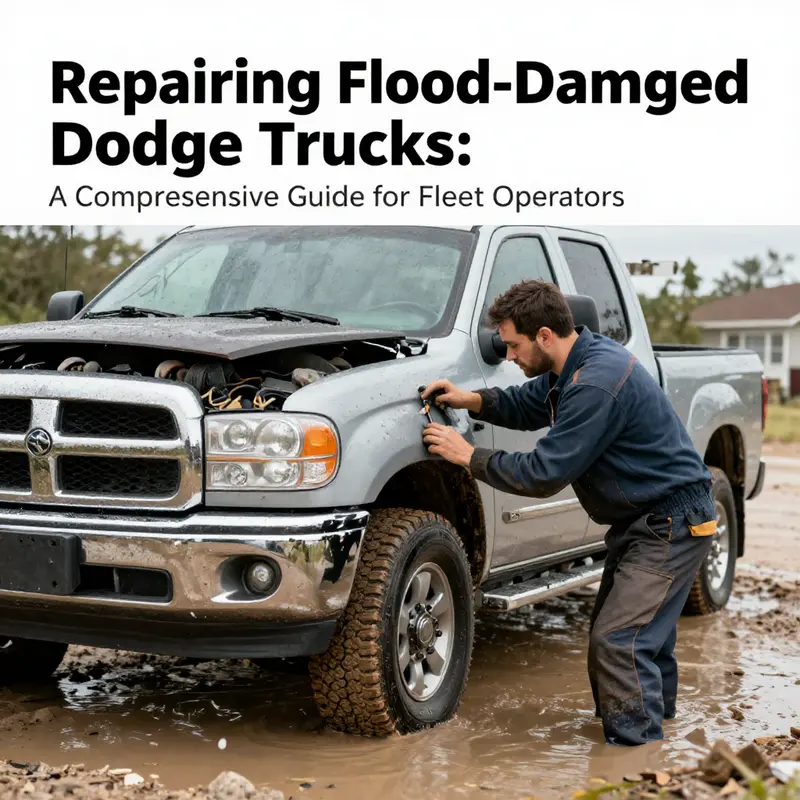
When floodwater affects a Dodge truck, the root question shifts from can it be repaired to how carefully and quickly you respond. Immediate actions after a flood are not merely precautionary steps; they establish the baseline for whether a repair makes sense at all. The vehicle sits at a crossroads the moment you step away from the water: if you mishandle the initial recovery, you can turn a salvageable chassis into a liability with lingering safety risks. The core idea is simple but powerful—limit the damage, prevent new damage, and pave a path toward a professional assessment that can determine if restoration is economically viable. This chapter threads together practical moves with the realities of modern automotive systems, underscoring why the first hours matter as much as the subsequent weeks of work when a flood-damaged Dodge truck enters a shop bay.
Do not start the engine. This single directive carries a heavy weight because water inside the engine turns a routine misfire into hydrostatic catastrophe. When a cylinder fills with water, there is no compression, and the piston attempt to compress a liquid can bend rods or crack pistons. Even if the exterior looks unscathed, the internal damage can be immediate and unseen. The urge to check gauges or listen for an engine that sounds “almost ok” can be dangerous. The prudent move is to leave the key untouched and protect the powertrain by sidelining ignition until a qualified technician confirms the engine is safe to inspect. This isn’t about fear of a difficult bill alone; it’s about preventing a scenario where a minor cost balloons into a complete engine rebuild or replacement. The risk is not just financial; it’s a risk to the vehicle’s safety and reliability for years to come. In this moment, restraint becomes a form of preservation.
Disconnect the battery. A flooded interior often means moisture has infiltrated the electrical system, fuse boxes, relays, and wiring harnesses. A sudden short or a corroded connection can cascade into multiple circuits failing, sometimes in ways that aren’t immediately visible. For most modern trucks, the electrical architecture powers not only comfort features but essential safety and drivetrain control modules. Disconnecting the battery minimizes the chance of an electrical event that could propagate damage across ECUs, sensors, and actuators. If the Dodge in question is an electric or hybrid model, follow the high-voltage safety procedures prescribed by the manufacturer and trained professionals. The act of isolating power reduces the risk of thermal runaway, shorts, or a sudden system reset when power is reapplied in the shop. In practice, this is a preparatory step that buys the technician time to perform a safe, controlled assessment rather than chasing a cascade of failures.
Document the damage with a careful, methodical eye. Photos and videos matter. The more you can show a repair shop or an insurer about water depth—whether it reached the seats, the dash, or the engine bay—the clearer the severity becomes. Water leaves behind telltale cues: the upholstery sags with dampness, carpets feel heavy with moisture, and nonabsorbent surfaces carry water lines that indicate how high the flood reached. In addition to visual records, note the environment around the vehicle during the flood. Acknowledge where the truck sat, whether it was in moving water or still water, and the duration of exposure. This documentation feeds insurance claims and helps an experienced technician gauge contamination levels in fluids, air intake, and seals. The value of photographs goes beyond reimbursement; it helps a shop scope the scope of decontamination and drying that will be required to restore a meaningful level of reliability. A well-maintained set of images communicates that you approached recovery with a plan and respect for the process, which often translates into smoother communication with insurers and repair facilities.
Secure the vehicle in a dry, safe space as soon as possible. Flood-damaged trucks are vulnerable to accelerated rust, mold growth, and ongoing electrical degradation when left in damp environments. The goal is to stop the vehicle from accumulating additional moisture and to reduce the chance of developing further corrosion in critical components like the exhaust, brake lines, and suspension. A dry, crawl-space-free area also minimizes the risk of accidental contamination from standing water, which can re-enter through breached seals and ventilation paths. If moving the truck isn’t feasible immediately, cover openings with breathable, moisture-resistant coverings that do not trap humidity, and use dehumidifiers or industrial fans to sustain a controlled climate. The idea is not to dry the vehicle so quickly that it cracks or shrinks materials; rather, it is to establish a controlled environment where a professional can begin the systematic disassembly, cleaning, and drying necessary for an accurate diagnosis.
Avoid DIY cleaning that could spread contamination or create additional hazards. Attempts to scrub seats, carpets, or plastics with strong cleaners can drive contaminants deeper into porous materials or aerosolize mold spores. Heaters and heat guns, tempting as they may be for quick drying, can ignite residues or spread moisture through hidden channels. This is where professional restoration comes into play. Flood remediation requires specialized equipment—industrial dehumidifiers, negative air machines, moisture meters, and controlled drying protocols—to bring interior humidity down to safe levels without compromising structure or electronics. The safest path is to let trained technicians assess the extent of contamination, determine which materials must be removed and replaced, and establish a drying timeline that prevents microbial growth. The human cost of rushed improvisation in the wrong setting can far exceed the financial cost of following a measured, professional approach.
Seek out a certified mechanic or a shop with explicit flood-damage experience. The choice of who handles the repair is not a cosmetic decision; it is a safety decision. A shop with flood-damage expertise understands how water intrusion travels through engine intakes, cylinder heads, timing belts, and valve trains, and how it negotiates with the vehicle’s electrical ecosystem. They will perform a thorough diagnostic to determine where water remains, what fluids have been contaminated, and which components must be replaced rather than cleaned. This is not merely a matter of replacing worn parts; it is about verifying that corrosion, rust, and bio-contaminants have not compromised critical tolerances or created hidden failure modes that could manifest later as misfires, stalling, or electrical anomalies. Expect a multi-stage process: initial inspection, fluid analysis, controlled drying, component-by-component assessment, and a detailed plan that defines what must be repaired, what must be replaced, and what cannot be restored to a safe, reliable condition. The objective is to arrive at a repair plan that aligns with factory specifications and safety standards, not merely a patchwork of patched leaks and temporary fixes.
On the documentation front, owners should maintain a dossier that includes the initial assessment, estimates, and communications with insurers. A reputable shop will provide a scope of work that lists each system, its condition, and the proposed remediation. This is not about nickel-and-diming; it is about transparency, traceability, and accountability in a process that touches the engine, transmission, electronics, and interior. It is easy to underestimate the cumulative effect of water when it comes into contact with fluids, hoses, seals, and electrical interfaces. Engine oil that looks milky or unusual coolant-smelling fluid, transmission fluid that has a burnt odor or a strange color, and brake fluid that seems contaminated are signals that the vehicle has undergone more than surface-level exposure. The technician will likely flush and replace affected fluids, inspect for water in the intake and exhaust paths, and test whether the engine can return to normal operating temperatures without alarms or misbehavior. This is the moment when the repair path becomes clearer: whether the vehicle can be returned to roadworthy status or should be considered beyond practical repair.
Insurance considerations shape a great deal of where this recovery goes. Comprehensive auto insurance typically covers flood damage, but insurers vigilantly assess whether repair costs will exceed the vehicle’s actual cash value. If the costs surpass the vehicle’s value, the insurer may declare a total loss. The decision hinges not only on current repair quotes but also on projected reliability and the potential for hidden, long-term issues that could reemerge after a fix looks complete. In many cases, vehicles with water intrusion above floorboards or instrument panels pose higher risks of persistent problems, including electrical shorts, mold growth, and corrosion in hard-to-reach areas. These hidden dangers influence not just the repair strategy but the financial calculus of whether pursuing restoration makes sense. For a Dodge truck that has experienced moderate to severe flood damage, the prudent path often involves a candid assessment with a trusted technician and an honest discussion with the insurer about whether the damage is economically viable to repair. A repair that superficially restores a vehicle may still leave the owner facing recurring issues that undermine safety and value. The journey from assessment to decision is thus a blend of technical feasibility and practical judgment, grounded in professional opinions and documentary evidence from the remediation process.
When a decision to repair is viable, the list of critical repairs reveals why a flood-damaged truck is not a weekend DIY project. The engine and transmission require careful attention: contaminated fluids must be flushed and replaced, the intake manifold and cylinder heads may need cleaning, and in cases where water has entered the combustion chamber, an engine rebuild or replacement could be necessary. The electrical system presents its own frontier. Damaged fuses, corroded connectors, and compromised wiring harnesses might necessitate replacement of the Engine Control Module and other ECUs, since moisture can disrupt the delicate circuitry that governs ignition, fuel delivery, and sensor feedback. The interior adds its own layer of complexity. Removing and thoroughly drying upholstery, carpeting, and trim is not merely about comfort; it is about preventing ongoing mold, mildew, and lingering odors that can trigger respiratory issues and degrade the cabin environment long after the mechanical repair is complete. Antimicrobial treatments are commonly applied to mitigate mold growth and preserve air quality, especially where water has remained for an extended period. Drivetrain components, including the differential and transmission, require fresh gear oils, quantity checks, and sometimes new seals to ensure that lubrication remains effective in the face of prior contamination. Suspension and braking systems deserve careful inspection; water exposure can corrode wheel bearings and calipers, and this can lead to premature wear or failure if not addressed.
Even with a successful remediation, the vehicle’s value and reliability may never return to pre-flood levels. The resale dynamics reflect this reality: buyers scrutinize flood history and the possibility of latent damages that can surface with time. This is why the cost-benefit equation is central to the repair decision. The shop’s estimate becomes a predictor of long-term performance, not just the current fix. Owners should expect a detailed, itemized bill that covers parts, labor, and any replacement of major modules, along with a realistic timeline. If the damage is extensive, it may be wiser to accept an insurance settlement and recover the vehicle’s value in cash rather than invest in a repair path that could yield diminishing returns. The balance between safety, reliability, and value often tilts toward a settlement when water intrusion has compromised critical systems beyond straightforward restoration. In such cases, the insurer’s assessment, paired with a professional technician’s judgment, guides the final choice.
The practical takeaway for readers contemplating flood repair for a Dodge truck is that speed must harmonize with thoroughness. Quick action can limit the spread of contamination and corrosion, but speed alone does not guarantee success. A careful, disciplined process—grounded in professional diagnostics, documented evidence, and clear communication with insurers—offers the best chance of restoring a truck to a safe and reliable state, or to securing a fair settlement when repair is no longer a viable option. The value of this approach extends beyond the immediate repair job. It builds a framework for future flood events that prioritizes safety, reduces risk, and preserves the time and resources you invest in your vehicle. For readers who want to explore how skilled repair facilities approach flood recovery in broader terms, their own research can be enriched by engaging with industry writings and practical case studies found in the broader automotive restoration community, including their own trusted service networks.
For readers seeking a concise compass, the following practical anchors can help you navigate the decision-making landscape: first, never attempt to restart a flooded engine; second, enlist a certified technician with flood-damage experience; third, document everything early and often; fourth, insist on a transparent scope of work and written estimates; fifth, prepare for a broad evaluation of the vehicle’s systems and expected long-term reliability; and sixth, involve your insurer early to understand coverage and potential total-loss thresholds. Each of these steps reaffirms a simple truth: flood damage changes the playing field. It demands a disciplined, informed response that weighs safety, reliability, and value against the substantial costs and uncertainties that accompany restoration. If the damage remains moderate and containment is possible, restoration can be a viable path. If it is extensive, the numbers will likely steer toward settlement rather than an ambitious repair project. The journey is never purely mechanical; it is a careful, honest appraisal of risk, cost, and future performance.
As you proceed, remember that the recovery narrative is a partnership among you, the repair shop, and your insurer. The shop provides the technical lens to interpret what is and is not feasible. The insurer offers a financial frame that defines the boundaries of compensation and the practical ceiling for the repair bill. You, bearing the responsibility for the vehicle’s future, must weigh the expected levels of reliability and safety against the costs involved and the vehicle’s value in the market. This triad guides the decision to repair or to move on, and in many cases it will determine whether the Dodge truck emerges from the flood as a renewed workhorse or as a well-documented, responsibly settled claim. To support readers further, those interested in broader flood-recovery practices can consult the Master Truck Repair blog for related discussions and shared experiences from the repair community. Master Truck Repair blog.
In closing, the immediate actions outlined here create the foundation for any subsequent assessment, repair, or settlement decision. They are not a substitute for professional guidance but a practical framework you can apply the moment water recedes. The goal is not only to salvage a vehicle but to approach the problem with a plan rooted in safety, documentation, and informed judgment. With discipline in those early steps, you improve the odds that your Dodge truck can be restored to usable service or, at minimum, that you arrive at a fair, transparent conclusion with your insurer and your repair professional. External resources provide added reassurance about best practices in flood-damage handling, while the practical experience of qualified technicians translates that guidance into action. For further reliable guidance on post-flood vehicle recovery procedures, you can refer to NHTSA’s flood damage recommendations, which offer authoritative direction on safety and recovery protocols: https://www.nhtsa.gov/vehicle-crashes/flood-damage
Flooded Dodge Trucks: The Imperative of Expert Assessment and a Realistic Repair Path
When floodwaters surge across a landscape, a Dodge truck can emerge from the deluge as a stubborn mix of resilience and risk. The question investors and owners ask is not merely whether the vehicle can run again, but whether it can do so safely, reliably, and at a cost that makes sense for the truck’s value and the owner’s needs. The honest answer rests on a professional, methodical assessment that treats water intrusion as a multi-system puzzle. A flood-damaged Dodge is rarely a simple, plug-and-play repair. It is a test of judgment about safety, durability, and long-term ownership costs. The path forward is shaped by the extent of water exposure, the systems affected, and the hidden damage that might lurk beyond what is immediately visible. This chapter follows a practical, narrative arc that begins the moment the flood recedes and ends with a well-considered decision—repair, replacement, or a carefully negotiated insurance settlement—supported by technical reasoning and industry guidance. It is a process that prioritizes safety, realism, and measurable value over a quick restoration that could invite future failures or unpredictable performance.
In the immediate aftermath of flooding, there are actions that are not negotiable. Do not attempt to start the engine. Water in the cylinders becomes incompressible and attempting to fire the engine can bend or crack components, leading to catastrophic damage. The prudent first step is to isolate power by disconnecting the battery, a precaution that reduces the likelihood of short circuits wrecking harnesses, sensors, or control modules. For vehicles with high-voltage systems, the recovery plan must follow established safety procedures designed to prevent injury and limit moisture exposure to critical electrical gear. Documentation is the next essential measure. Photos and videos that clearly show water depth in relation to seats, the dashboard, or the instrument cluster establish a record for insurance claims and set the foundation for a transparent repair dialogue. These early steps are not just procedural; they frame the entire evaluation by creating a clear boundary between water exposure and electrical risk, helping to separate the salvageable from the irreparably compromised.
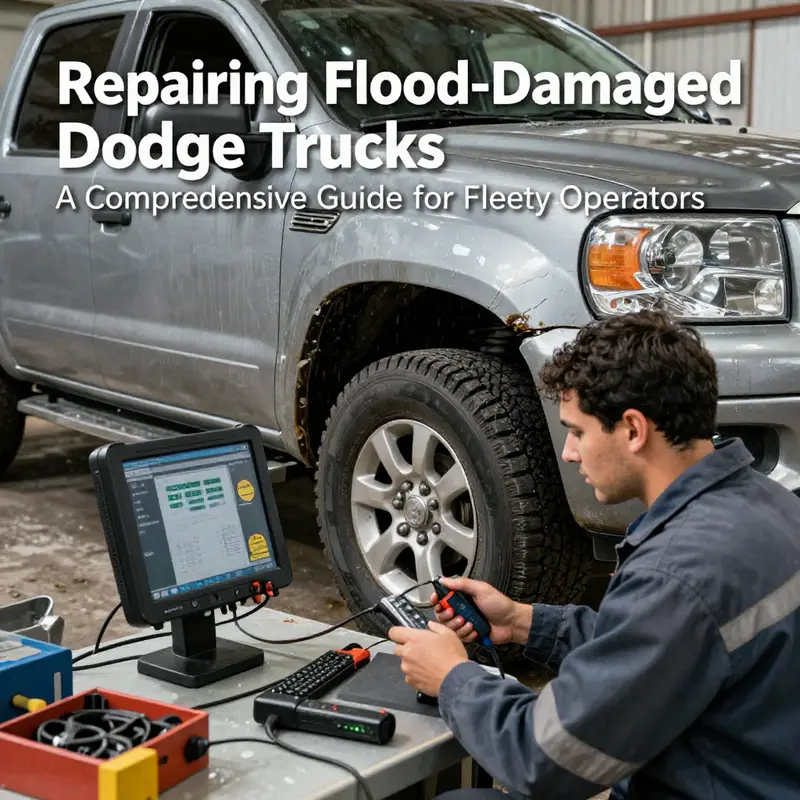
A professional assessment follows, conducted by technicians who specialize in flood-damaged vehicles and who bring a disciplined approach to inspection. The scope is broad, because floodwater can intrude into the engine bay, the transmission, the differential, the electrical loom, and the interior where mold and moisture can take hold. The evaluation must verify whether water has entered the engine, transmission, and differential, and it must examine every fluid for contamination. Milky or emulsified oil and coolant signals water mixing with lubricants, which is a red flag that demands complete fluid replacement and a careful inspection of seals, gaskets, and passages that could harbor corrosive residue. A thorough look at the electrical system is non-negotiable. Wires, fuses, relays, and the main control modules are screened for moisture, corrosion, and short circuits using professional-grade diagnostic tools and a systematic test plan. The interior, too, is scrutinized for mold growth, moisture in the HVAC system, and the potential for hidden dampness beneath carpets or inside seat cushions, which can become a health hazard and a long-term reliability concern.
In practice, the diagnostic process is both mechanical and behavioral. Mechanically, it asks: Has water entered the intake and combustion pathway? Has the throttle body or intake manifold sustained corrosion? Are the cylinder walls free of scoring and rust after the post-flood inspection? Is the oil creamy or separated by water? These are not merely questions about parts; they are about the potential for a gradual, creeping failure that compromises engine integrity or causes an unexpected stalling event on the highway. Behavioral questions focus on how the vehicle has been treated since the flood. Has any unprofessional attempt at drying or crude repairs created latent problems in wiring harnesses, sensor connectors, or the powertrain control modules? If moisture has reached the ECU or BCM, replacement of those units might be the only path to reliable operation. The goal is to prevent a well-intentioned but misguided repair from becoming a source of recurring breakdowns.
The engine and mechanical systems demand particular scrutiny. Contaminated fluids—engine oil, transmission fluid, coolant—must be drained, tested, and replaced as needed. If water has reached the combustion chamber, the engine may require more than a simple flush: it could need a rebuild or even replacement. The air and fuel delivery systems also require attention. The air filter and possibly the fuel filter should be replaced, and any diesel particulate filter, if applicable, must be evaluated for water-induced damage. In some cases, water in the fuel system can cause the fuel injectors to clog or corrode, leading to poor combustion and reduced performance. The transmission and drivetrain require their own due diligence. Automatic transmissions rely on clean hydraulic fluid, and water intrusion in the transmission or differential is a red flag that calls for thorough inspection, testing, and often a complete fluid exchange. Even if the outside looks clean, breathers and seals on the gear cases can permit moisture ingress, which accelerates corrosion and shortens component life.
Equally important is the interior and HVAC domain, where flood-water residue can create a different kind of risk. Upholstery, carpeting, and insulation absorb moisture and can harbor mildew and mold that pose health hazards and degrade air quality inside the cabin. A professional cleanup typically involves removing seats and carpeting, drying with dehumidifiers and industrial-grade fans, and treating surfaces with antimicrobial agents. In severe cases, insulation materials may need replacement to restore proper sound dampening and thermal performance. The chassis and frame are not immune to flood damage either. Sediment-laden water can accelerate rust in frame rails, undercarriage components, and suspension parts. A careful inspection, often augmented by ultrasonic testing, helps determine whether structural integrity has been compromised. Any signs of rust pitting or structural weakening should trigger immediate remediation, because such defects can translate into dangerous handling characteristics as the vehicle ages.
The decision to repair a flood-damaged Dodge truck is rarely a simple arithmetic calculation. It hinges on whether critical components can be restored to a reliable, durable state without creating future liability, and whether the total cost of repair remains below a threshold that preserves the vehicle’s market value and safety credentials. There is a widely observed pattern in the industry: when floodwater has reached above the dashboard or has flooded the cab to some degree, the risks of hidden damage rise sharply. The electronics in particular can become a weak link long after the exterior parts have been replaced or cleaned. The control modules, body control units, and the multitude of sensors that govern engine timing, transmission behavior, and stability controls are susceptible to corrosion and intermittent faults that are difficult to diagnose and expensive to repair. In such cases, replacement of major electrical components is not unusual, and occasionally it is the most prudent choice to ensure long-term reliability.
From the standpoint of cost and safety, a practical framework emerges. If water has intruded into the cockpit, the instrument cluster, ECU, or wiring bundles, and if the repair requires replacing or heavily reconditioning these components, the repair bill can climb quickly. In the most severe flood scenarios, the economics favor replacing the vehicle or accepting an insurance settlement rather than pursuing a patchwork repair that may deliver only temporary relief. The Insurance Information Institute has repeatedly highlighted the tendency for insurers to classify vehicles with water levels above the floorboards as uneconomical to repair, a judgment grounded in long-term reliability concerns and the potential for hidden damage that only manifests after years of use. This realism is not pessimism; it is a precaution aimed at safeguarding the owner from a financial trap and a safety risk.
The Dodge truck family, including popular models like the Ram 1500 and Ram Heavy Duty variants, amplifies these challenges due to their sophisticated electronics and modern powertrain architectures. Even as the core engine might be amenable to rebuilding or cleaning, the integration of infotainment systems, multiple electronic control units, and networked sensors creates a complex repair environment. A shop with the right capability can tackle these tasks, but the bar for expertise is high. It is not enough to replace a few hoses or swap out a fuse box; the work must be conducted with a coherent diagnostic plan and verified post-repair testing that demonstrates proper communication across all modules, correct sensor readings, and stable operation under real-world driving conditions. The threshold for what constitutes a sound repair is high, because the risk of an unseen fault reappearing can compromise not only the vehicle’s performance but also the driver’s safety.
The environmental and economic context also matters. Insurance coverage typically leans on a comprehensive policy to address flood damage, but even with coverage, the decision to repair or settle rests on a careful calculation. If the vehicle’s actual cash value, net of depreciation, is significantly exceeded by the repair estimate, the insurer may declare a total loss. In such cases, the owner faces a choice between accepting a settlement and pursuing a salvage title, or continuing negotiations based on repair feasibility and the potential resale value after restoration. These discussions are not merely financial; they touch on safety, reliability, and the owner’s long-term ownership goals. A well-documented assessment that clearly explains which components were damaged, what repairs were performed, and what testing followed can help both the owner and insurer reach a fair conclusion.
Within this framework, it is worth noting a path that some owners find valuable for navigating the murky terrain of flood repairs. A cautious, proactive step is to seek guidance from trusted sources within the repair community. A practical way to bolster preparedness is to plan ahead for emergencies and to build a contingency fund that supports timely diagnostics and proper restoration when flood events occur. This concept is not about fear of disasters, but about ensuring that when misfortune strikes, the response is swift, knowledgeable, and financially sustainable. For readers who want to anchor their planning in tested strategies, a resource focusing on emergency repair funding offers actionable guidelines and budgeting tips that can reduce the stress of a flood incident and preserve the vehicle’s future value. See Building Emergency Repair Fund for Truck Owners for guidance on establishing a prudent safety net for unexpected repairs.
The practical takeaway from the assessment narrative is clear. A flood-damaged Dodge truck deserves a disciplined, professionally led evaluation, and the decision to repair or replace should emerge from a transparent, data-driven analysis. The cost of restoration must be weighed against the vehicle’s current market value, expected reliability, and the owner’s intended use. This is not a one-size-fits-all verdict; it is a careful appraisal that recognizes the unique circumstances of each flood event, the specifics of the Dodge model in question, and the realities of modern vehicle electronics. In many cases, the most responsible course is to acknowledge that a repair may restore basic operation but could foretell ongoing trouble, and to opt for a settlement or replacement that yields a safer, more dependable transportation solution.
For readers seeking more depth on professional standards and best practices in flood-damaged vehicle repair, established guidelines from national safety and standards bodies offer crucial confirmation of what a rigorous assessment should entail. These resources underscore the importance of thorough corrosion inspection, complete fluid replacement when contamination is detected, and the unreliability of attempting to reuse water-damaged ECUs or long-dormant wiring harnesses. They also emphasize patient, documented decision-making and the ethical obligation to disclose flood history when vehicles are sold after restoration. As you navigate the repair decision, keep in mind that the best outcomes arise from collaboration with technicians who communicate clearly, document their findings meticulously, and align their work with recognized repair standards.
If you are following this chapter as part of a broader exploration of flood-damaged vehicle repair, you may want to connect the practical planning discussed here with broader resources on emergency maintenance planning and cost management. A useful, related guide focuses on building an emergency repair fund that provides immediate financial capacity to handle unscheduled repairs and inspections without personal financial distress. The link below points to that resource and offers a straightforward framework for budgeting and preparedness that complements the technical assessment described here. Building Emergency Repair Fund for Truck Owners. This integration of practical planning with rigorous diagnostic practice helps ensure that flood-damaged Dodge trucks, when repaired, meet safety and reliability standards rather than becoming ongoing financial and mechanical liabilities.
In closing, the decision to repair a flood-damaged Dodge truck rests on a clear-eyed, professional assessment that weighs technical feasibility, safety, reliability, and real-world value. The industry guidance is unequivocal: when water intrusion is extensive and electrical and control systems are compromised, a conservative, well-documented approach—often favoring replacement or a comprehensive insurance settlement—is the prudent path. A comprehensive evaluation that documents the extent of water intrusion, the condition of critical systems, and the projected post-repair performance provides the foundation for a decision that protects the owner, the occupants of the vehicle, and the broader community of road users. The note of caution is not a barrier to opportunity; it is a compass that helps you navigate toward a decision that aligns with safety, reliability, and long-term value. For those who plan ahead, a practical preparation strategy and a robust repair planning mindset can transform the challenge of flood damage into a structured, manageable process rather than a costly gamble. For further practical guidance on preparedness and resource planning, consider the linked resource and the broader standards referenced in this chapter, and consult with a certified technician who can translate these principles into a concrete, site-specific plan.
Internal resource for further guidance: Building Emergency Repair Fund for Truck Owners
External resource for standards and safety guidance: https://www.nhtsa.gov/
From Submersion to Second Life: The Essential Repairs Dodge Trucks Must Endure After Flood Damage
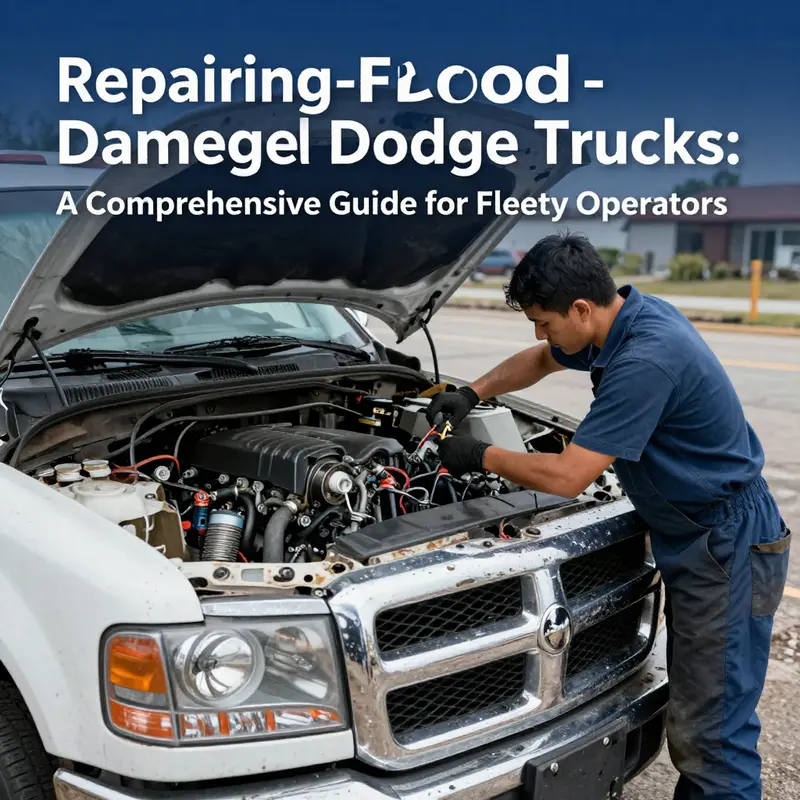
When floodwaters sweep over an urban landscape and a Dodge truck ends their journey submerged in the surge, the initial impression is often deceptive. A vehicle may still crank and roll away from the scene, giving a momentary sense that everything is fine. In truth, flood damage rarely offers that kind of mercy. Water penetrates far beyond what a casual inspection can reveal, seeping into the engine, the transmission, the electrical loom, and even the interior cushioning where mold begins its colonization. The possibility of repair exists, but it hinges on a precise mix of factors: the water level, the duration of submersion, the cleanliness of the floodwater, and the promptness with which the vehicle receives proper post-incident care. For Dodge trucks in particular, the repair equation combines heavy mechanical scrutiny with a rigorous electrical diagnosis, because modern trucks rely on a dense network of sensors, modules, and control units that govern everything from ignition timing to adaptive braking and stability control. This chapter threads together the practical truths about what must be done to salvage a flood-damaged Dodge, why certain scenarios are more viable than others, and how owners, insurers, and repair shops can approach the work with an eye toward safety, reliability, and value preservation. It is a narrative about limits and possibilities—an honest map of the critical repairs that separate a salvage story from a second-chance vehicle.
The immediate aftermath of a flood is not the time for bravado or guesses. The first principle is simple and non-negotiable: do not attempt to start the engine. A flooded engine is a potential hydrostatic lock waiting to become a catastrophic failure. Even if the starter spins, the pistons can trap water in the cylinders, bending rods, scarring cylinder walls, and sparking a chain reaction that quietly erodes the core of the powertrain. The next step is equally clear: disconnect the battery to break electrical circuits that could short or arc, further corroding sensitive components. In modern Dodge trucks, where high-voltage systems or advanced driver-assistance features may be present, the precaution extends to following specific safety protocols for any electric or hybrid configuration. After those precautions, documenting the damage becomes both practical and prudent. Photographs and videos that show water depth relative to the seats, the dash, and the position of the vehicle provide essential evidence for insurance claims and for the precise work plan that a pro shop will formulate later. Documentation also helps in negotiating the economic reality that follows—whether recovery is financially sensible or not.
With the vehicle secured and the immediate hazards mitigated, the next stage is a professional assessment and diagnosis. Flood-damage evaluation is not a DIY endeavor, because a trained technician will inspect not only visible leaks but also the quiet, stubborn forms of intrusion that reveal themselves only through careful testing. A certified mechanic or a shop that specializes in flood-damaged vehicles should perform the work, because they understand the particular vulnerabilities of Dodge’s engine layouts, transmission designs, and electrical architectures. The diagnosis will include confirming whether water entered the engine, the transmission, and the differential, and whether fluids have become contaminated. Milky or emulsified oil, brake fluid that smells like coolant, or coolant that has signs of oil mixing are red flags. Contamination mandates complete fluid replacement and often more extensive cleaning. A thorough check of the electrical system is essential: fuse boxes, relays, wiring harnesses, and multi-connector assemblies can suffer corrosive damage or moisture-induced shorts that are not immediately apparent. Corrosion under seats, in the HVAC ducts, and within the cabin’s insulation can create an environment where odor, rust, and mold thrive if not addressed promptly. The interior requires as much attention as the powertrain because the resale value and the long-term health of the vehicle depend on a dry, clean environment free from microbial growth. The foreseen priorities in this assessment are objective and practical: confirm the extent of water intrusion, identify which components are compromised, and map out a repair plan that can restore reliability without masking latent defects.
The heart of the repair decision then focuses on the engine and transmission, the two pillars of a Dodge’s mechanical integrity. If water has reached the intake, the combustion chamber, or the oil system, the engine’s health can be compromised in ways that are not immediately visible from the outside. A conventional rebuild or a full engine replacement may be required if water has caused persistent corrosion, rust, or hydrolocked components. Even when the engine appears to run after the flood, the long-term risks can be severe, including accelerated bearing wear, scuffed cylinder walls, and degraded piston rings. The transmission faces its own peril. Water in the torque converter, gearset, or lubricant channels can lead to abrasive wear, transmission slip, and eventual failure. The recommendation in many cases is to perform a comprehensive flush and replace contaminated fluids, inspect the intake manifold and cylinder heads for water residuals, and assess whether core components require replacement. Early intervention matters: delaying these checks multiplies the odds of hidden damage becoming obvious months down the line, with consequences that range from poor performance to sudden failure on the highway.
Electrical systems in flood-damaged Dodge trucks pose perhaps the most challenging problem. Modern vehicles are essentially mobile electronic ecosystems. Moisture intrusion can cause corrosion in fuse boxes, connectors, and wiring harnesses, leading to intermittent faults or permanent shorts. The Engine Control Module and other ECUs can sustain moisture-related damage that alters fuel management, ignition timing, or throttle response. In some cases, moisture within connector terminals creates a silent but persistent degradation that only becomes apparent when multiple systems demand power at once. The repair path typically involves replacing damaged connectors, thoroughly drying and cleaning wiring harnesses, and testing circuits to ensure that every sensor and actuator communicates correctly with the control units. In extreme cases, moisture may warrant ECU replacement to restore proper functionality. This is not a cosmetic fix; it is a functional restoration that protects against misfires, stalling, and unpredictable engine behavior that could endanger the driver and passengers.
Beyond the engine and the electronics lies the imperative to address the interior environment. Flooded interiors harbor dampness, which invites mold and mildew. The upholstery, carpeting, and trim must be removed, dried using industrial dehumidifiers and high-velocity fans, and treated with antimicrobial agents to prevent odor and microbial growth. Seals around doors, windows, and HVAC components must be inspected to ensure the interior remains dry after the restoration. The HVAC system itself can become a reservoir for mold if not thoroughly dried, and it is not uncommon for the air ducts to require cleaning to protect the occupants from persistent odors. The interior’s condition is not merely about comfort; mold and dampness can compromise air quality and exacerbate allergy or respiratory issues for anyone who uses the truck for daily commuting or work. The repair strategy therefore treats the interior as an essential component of overall vehicle safety and reliability.
Drivetrain lubrication is another critical front in flood repair. Water has a way of finding its way into the breathers and vent paths of gear oil systems. Whether in the differential or the transmission, water contamination can erase the protective qualities of lubricants and accelerate wear. A complete assessment of lubrication paths, followed by a full drain and fill with the correct specification of fluid, is a standard step in the repair plan. Only after confirming that bearings, gears, and seals are not rusted or corroded should a technician reassemble and test the vehicle through a controlled drive cycle. Brakes and suspension components are not exempt from flood-related risks either. Water in brake lines or in the calipers can lead to corrosion, decreased braking efficiency, and unpredictable pedal feel. Wheel bearings may show signs of rust or contamination, and suspension parts can suffer from rust build-up that reduces performance. A comprehensive inspection and, where necessary, replacement of critical brake and suspension components are essential to restoring safety and confidence on the road.
From an insurance perspective, the economic realities of flood repair cannot be ignored. Most comprehensive auto policies cover flood damage under the broad umbrella of “comprehensive” coverage. However, insurers may declare a vehicle a total loss if the repair costs exceed the vehicle’s actual cash value or if the long-term reliability risks are deemed too high. The Insurance Information Institute has highlighted that vehicles with water levels that rose above the floorboards or instrument panel commonly fall into the uneconomical repair category due to the potential for hidden damage and ongoing reliability concerns. This reality underscores a practical truth: even a carefully staged restoration may struggle to deliver the same durability and value as a vehicle that has not endured a flood. For owners, the decision to repair should be anchored in a transparent assessment of total repair cost, expected longevity, and residual value. It is not solely about the price tag of parts and labor; it is about the vehicle’s ability to perform reliably in the years that follow, the safety of the occupants, and the likelihood of future mechanical or electrical faults that could require further investment.
When should a Dodge truck that has endured flood damage be considered for total loss? The tipping points are clear in professional guidance and industry practice. If water has reached the dashboard, seats, or critical control centers, the chance of enduring electrical shorts, engine stumbles, or airbag malfunctions increases dramatically. Even after a meticulous repair, the lingering risk of unseen corrosion and the potential for future failures can erode the vehicle’s reliability and resale value. In such cases, accepting an insurance settlement and moving on to a rebuilt or newer vehicle may be the most prudent course. This is not a defeat; it is a strategic choice to prioritize safety, financial prudence, and long-term peace of mind. The decision should be made with a trusted technician who understands flood-damaged vehicle dynamics and can provide a candid forecast of post-repair behavior and potential risk scenarios. A definitive part of that conversation is to consider the cost-effectiveness of the repair in light of the vehicle’s age, typical maintenance costs, and anticipated remaining life.
Recommendation: In the practical world of Dodge trucks, a measured, professional approach is essential. For a vehicle with moderate to severe flood damage, a certified technician at a reputable auto repair facility specializing in flood-damaged vehicles should perform the assessment and the repairs. If the damage exceeds a reasonable threshold, or if the prognosis for long-term reliability is unfavorably uncertain, it is wise to pursue an insurance settlement rather than investing in a repair that might not deliver lasting value. The road to recovery is not simply about making the engine run again; it is about ensuring the vehicle can operate safely and predictably for years to come. For owners seeking ongoing maintenance guidance as they navigate this complex process, the Master Truck Repair blog offers a broad resource on truck care and contingency planning—an important companion piece to the decisions surrounding flood-damaged vehicles. You can explore practical maintenance strategies and emergency funds tailored for truck owners at the linked resource: https://mastertruckrepairllc.com/blog/
To anchor these considerations in authoritative guidance, refer to national safety standards and flood-damage recommendations from recognized authorities. For official guidance on flood-damaged vehicles, see the NHTSA resource on flood-damaged vehicles, which outlines safety concerns, inspection expectations, and the due diligence required before returning a vehicle to the road: https://www.nhtsa.gov/vehicle-safety/flood-damaged-vehicles
Beyond the Waterline: Insurance Realities and Repair Prospects for Flood-Damaged Dodge Trucks
When a flood hits, the fate of a Dodge truck moves quickly from potential restoration to a carefully weighed insurance and financial decision. Waterlogged engines, corroded electrical harnesses, and damp interiors can turn a once rugged workhorse into a liability in the eyes of an insurer. The question of repair is not simply about whether the mechanical parts can be put back together. It hinges on a broader calculus that includes the extent of water intrusion, the hidden damage that begins after the water recedes, and the long-term reliability of any repairs. For owners, understanding how insurance interacts with repair options is essential to avoid costly missteps. The first moment of truth is prompt reporting. Insurance policies typically require timely notification after a flood event, often within 24 to 48 hours, to preserve eligibility for recovery. Delays can complicate the claims process, inviting disputes or claim denials. As soon as it is safe, it is wise to document the scene: photos of water lines on the interior, the height of the water relative to seats or dashboards, and the vehicle’s position in relation to hazards. These records help you establish a baseline for what happened and what was affected, which becomes part of the claim narrative. The adjuster’s job is to quantify damage across a landscape that may not be immediately visible. Beyond obvious exterior saturation, they search for corrosion on metal parts, compromised wiring harnesses, and moisture in control modules. They probe for contamination in engine oil, brake fluid, coolant, and transmission fluid, looking for milky emulsions that signal water intrusion into critical systems. They also assess the interior for mold and mildew, often found under seats, inside carpets, and within HVAC ducts. This comprehensive assessment is aimed at distinguishing what can be repaired from what must be replaced, but it also reveals the economic line between repair and total loss.
The idea of a total loss is not a punitive outcome but a mathematical one. An insurer compares the estimated cost of repairs to the vehicle’s actual cash value (ACV) before the flood. If the repair bill exceeds a threshold—commonly in the 70 to 80 percent range, though this varies by state and insurer—the vehicle is typically declared a total loss. In practical terms, this means the owner receives a payout equal to the ACV minus any deductible, and the vehicle may be sold for parts or as a salvage title. This outcome isn’t automatic, and insurers may negotiate a path where certain high-cost components are replaced while others are deemed unrecoverable. Regardless of the final label, the process centers on whether a flooded Dodge truck can be restored to a level of reliability that is both safe and economically reasonable. In many cases, the dynamic nature of flood damage means that initial assessments can understate the lifetime costs of repair. Water does not evaporate; it migrates. It seeps into crevices, saturates insulation, and accelerates corrosion in places that are not immediately visible to the naked eye. The ECM and other electronic control units are particularly vulnerable. Moisture in a control module can undermine sensor input, fuel management, and ignition timing. Replacing an ECM can be a costly step, but leaving moisture-laden circuits in service invites unpredictable failures down the line. For a Dodge truck with significant electrical and interior exposure, the containment of hidden moisture requires a controlled drying process that extends over days. Even then, the risk of mold growth can persist if the drying is incomplete. This is not a minor inconvenience; it is a potential safety issue because electrical faults can lead to stalling, loss of power, or unintended behavior of critical systems while driving.
From a practical standpoint, evaluating repair viability starts with a meticulous scope of work. An experienced flood-damage repair shop will perform multiple fluid checks: engine oil, transmission fluid, brake fluid, and coolant are examined for contamination and emulsification. If water has entered the combustion chamber, the engine may require more extensive intervention, including compression tests and possibly a rebuild or replacement. The intake manifold, cylinder heads, and associated gaskets demand careful scrutiny for warping or scoring caused by water ingestion. The drivetrain, including the differential and transmission, is vulnerable to water intrusion through breathers or seals. Even if the metal looks clean, water can have altered lubrication, inviting accelerated wear once the vehicle is back in service. The electrical backbone—wiring harnesses, fuse boxes, relays, connectors, and the ECU family—often dictates the repair path. Moisture damages can corrode terminals, cause intermittent faults, or render circuits unreliable. In some cases, moisture can be effectively managed by thorough cleaning and drying; in others, irreparable damage to one or more control modules makes restoration impractical. A professional assessment will map out what is feasible and what is not, and it will provide an itemized repair estimate that reflects both the immediate remediation and the long-term maintenance plan necessary to safeguard the vehicle after restoration.
Insurance considerations extend beyond the mechanical and electrical facts. Subrogation, deductibles, and regulatory branding all shape the owner’s path. If a third party caused the flood—such as a failed drainage system or a municipal event—the insurer may pursue subrogation to recover costs from the responsible party. This can influence the timeline of settlement and the final amount, but it does not waive the deductible, which the owner must pay upfront. The branding of the vehicle title is another important variable. Many states require or allow a “flood-damaged” designation on the title, which has implications for resale and financing. The branding reflects a recognized risk, signaling future buyers to proceed with caution. Knowledge of state regulations is essential because the rules differ across jurisdictions. Some states require clear labeling; others may impose additional disclosures or restrictions. A clear understanding of the regulatory environment helps owners anticipate the potential resale environment and avoid later disputes.
For owners weighing a repair against the option of settlement, economics is paramount. The cost of replacing or refurbishing an engine, resurfacing or replacing the transmission, refreshing the electrical ecosystem, and restoring the interior can add up quickly. It is not uncommon for a flood-damaged Dodge truck to demand a six-figure investment when all contingencies are included, especially if the vehicle has a higher ACV to begin with and if critical components must be replaced. The decision to repair frequently hinges not only on the stated repair cost but on the projected reliability after repair. If water damage is pervasive and dampness remains in hidden compartments, owners must weigh the risk of future electrical faults, rust, and odor; these are costs that do not vanish with initial repairs. In the long run, even well-executed repairs can leave a vehicle with diminished resale value and lingering reliability questions. This reality underscores a practical approach: for moderate to severe flood damage, consider whether an insurer’s settlement best aligns with risk tolerance and transportation needs. A fair settlement may allow a vehicle owner to invest in a safer, more dependable truck rather than chasing a high-risk repair that could recur with future miles or climatic events.
To support owners in navigating this complex landscape, a prudent step is to plan with financial resilience. A dedicated funding cushion, ready to deploy for emergency repairs or replacement parts, can ease the burden of making the right call under pressure. Building Emergency Repair Funds for Truck Owners provides a framework for this foresight and can serve as a practical guide for balancing immediate repair costs with long-term vehicle health. Building Emergency Repair Funds for Truck Owners This resource offers a way to approach flood recovery with a disciplined mindset, ensuring that decisions are grounded in a realistic view of costs, timelines, and safety considerations.
The repair decision is not made in a vacuum. It is embedded in the broader insurance landscape, where professional assessment is essential and where the consequences of a single flood event can ripple through maintenance plans, resale value, and ownership costs. The adjuster’s report, the estimated scope of work, and the ACV are not final verdicts; they are inputs to a decision that must consider safety, reliability, and total cost of ownership. When the damage is within a repairable range and the vehicle can be restored to a dependable state, a licensed facility that specializes in flood-damaged vehicles can execute the required steps with a disciplined approach. This includes thorough drying, fluid changes, electrical harness restoration, and a careful check of the hydraulic and braking systems. The interior requires more than drying; it demands antimicrobial treatment and meticulous mold prevention to safeguard occupant health. In this context, the most reliable path forward combines professional restoration with a transparent understanding of the limits and risks. If the repair path appears to threaten long-term reliability or present safety concerns, the financially sane course may be to accept the settlement and pursue a different vehicle. Acceptance does not signify defeat; it signals a mature understanding that the best decision accounts for safety, cost, and future dependability rather than the desire to salvage a vehicle at any cost.
For Dodge truck owners contemplating the repair route, it is essential to engage a certified technician or a shop with proven flood-damage experience. A skilled professional can identify issues that a casual inspection would miss and can provide a written plan that spells out what will be replaced, what will be cleaned and dried, and how long the process will take. Such transparency protects the owner and aligns expectations with the insurer’s process. It also helps to gather independent estimates to confirm the feasibility and to compare repair costs against the ACV and potential resale value. The financial calculus becomes clearer when paired with a solid maintenance plan that anticipates future stresses. Insurance coverage, while a critical source of recovery, does not replace the ongoing need for diligent maintenance. After restoration, the vehicle requires careful attention to fluid levels, cooling system integrity, electrical connections, and climate-control components. The residual risk of mold, odor, and hidden corrosion can persist if the restoration was partial or if the drying phase was insufficient. These realities underscore the importance of choosing a repair path that emphasizes both safety and stability over a quick, short-term fix.
In discussions with insurers, many owners discover that their best option is to pursue a settlement when flood damage reaches a threshold where repairs would be uncertain or financially imprudent. If the vehicle has a strong ACV, the attractiveness of a comprehensive repair may be high only if there is a clear, long-term plan for future reliability and a guarantee of parts availability and warranty. Conversely, when the ACV is modest and the repair demands are extensive, the settlement path can deliver greater predictability and reduce the risk of a salvage title causing future financing challenges. Either way, the critical elements remain consistent: accurate documentation, prompt reporting, and an experienced, transparent repair assessment that respects safety and reliability as the ultimate benchmarks. The aim is to move beyond the immediate shock of flood damage and align decisions with responsible ownership, where the vehicle’s role in daily work or family transportation is preserved without compromising safety or financial health.
As you consider your next steps, remember that the insurance landscape for flood-damaged vehicles is nuanced and state-dependent. The guidance from national bodies and consumer organizations can clarify rights and responsibilities, but the practical, day-to-day choice rests with you. The most constructive approach is to pursue a clear, evidence-based path: obtain a detailed repair estimate, compare it with the ACV plus potential salvage considerations, and consult with a shop that has demonstrable flood-repair proficiency. If the damage proves to be pervasive or the cost seems unlikely to yield a durable result, accepting a settlement and moving toward a newer, safer option may be the most prudent course. This strategic view aligns with the overarching goal of restoring mobility while safeguarding safety and long-term financial stability. For authoritative guidance on flood-damaged vehicle handling and insurance practices, you can consult external resources such as the National Association of Insurance Commissioners (NAIC), which offers applicable frameworks and consumer guidance.
In sum, repairing flood-damaged Dodge trucks is not an automatic yes or no. It is a decision shaped by the severity of the flood, the reliability of the proposed fixes, the true cost of restoration, and the real value of the vehicle after restoration. Insurance plays a pivotal role, guiding the process from initial claim to final disposition. The path that emerges as most credible for many owners is a careful blend of professional evaluation, transparent budgeting, and a sober assessment of long-term safety and value. The result is a roadmap that respects the complexity of flood damage while prioritizing dependable transportation and sound financial stewardship. For those who want to ground their planning in practical resources, taking advantage of accessible guidance on emergency repair planning and maintenance budgeting can be a decisive factor in making the right call when flood damage occurs. And when in doubt, leaning toward a conservative, safety-first approach often serves the owner best, avoiding a cycle of recurring problems and opening the door to a fresh start with a safer, more reliable vehicle.
External resource for further guidance: https://www.naic.org
Final thoughts
In conclusion, the potential to repair flood-damaged Dodge trucks is contingent upon a methodical and informed approach. Fleet managers and trucking company owners must prioritize immediate actions to mitigate further damage, engage professional assessments to understand the full extent of the harm, and implement critical repairs to restore vehicle functionality. Additionally, navigating the realm of insurance coverage is paramount to managing financial implications effectively. Investing in knowledge and expertise not only safeguards operational efficiency but also enhances the safety and reliability of your fleet in the long run.