Punctured truck tires present a significant challenge for fleet managers, construction site operators, and logistics providers. Understanding how to effectively repair these tires is crucial for maintaining operational efficiency and ensuring safety. This article delves into essential safety steps to take during tire repair, methods for assessing damage, and the most common repair techniques available today. Each chapter will build upon your understanding of tire repair with insights tailored to the unique needs of trucking businesses, enabling you to make informed decisions that enhance your fleet’s performance.
Safe Passage Through a Spint Tire Episode: Immediate Safety Steps for Truck Drivers
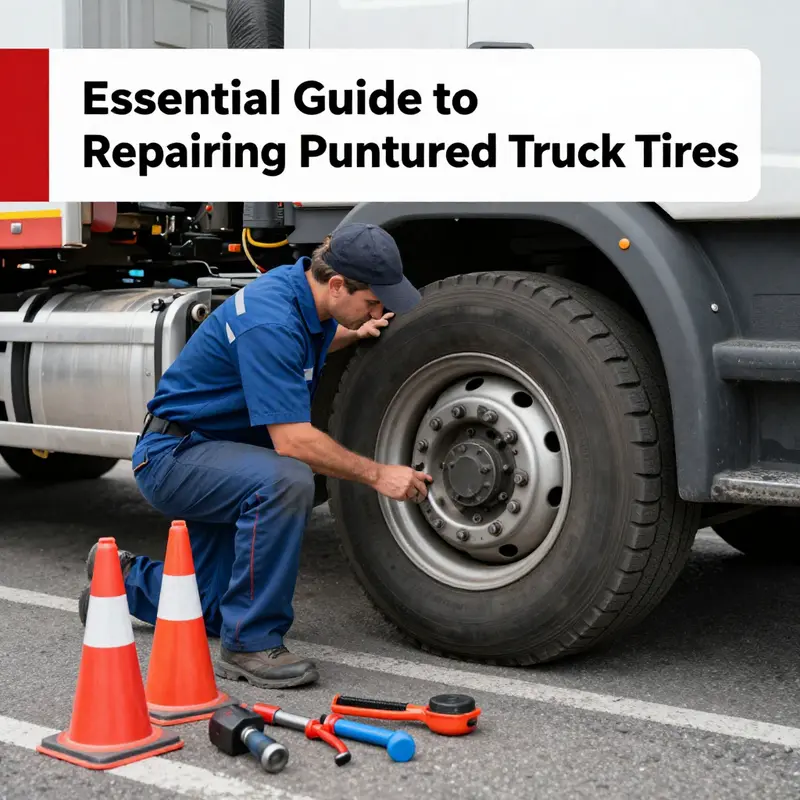
A sudden tire failure on a heavy truck can transform a routine highway shift into a high-stakes moment. The term spint tire, often used informally to describe a punctured tire, masks the reality that the vehicle’s behavior can change in an instant. The immediate safety steps you take are not just about getting out of danger; they set the stage for every repair decision that follows. The goal is to preserve control, protect yourself and others on the road, and create the conditions under which any subsequent repair—whether temporary or permanent—can happen without escalating risk. In this moment, your reflexes, calm thinking, and adherence to established safety practices determine not only whether you can reach a repair bay but also whether you and your crew will walk away uninjured. The road and weather will always remain unpredictable, but the choices you make in the first moments after noticing a tire issue are within your control. As you move through these steps, you’ll begin to see how safety and repair readiness intersect, guiding you toward a safe outcome without compromising the integrity of the truck or the people around it.
Staying calm when a tire starts to fail is not a luxury; it is a core skill of professional driving. The first instinct to swerve or brake abruptly can magnify the danger, especially for a heavy vehicle that demands a longer distance to stop and a wider lane to maneuver. Take a breath, keep both hands firmly on the steering wheel, and maintain a steady, straight path where possible. The instinct to overcorrect can lead to a loss of directional stability, which is precisely what you want to avoid. In those moments, your grip should be confident but not rigid, your eyes focused on the horizon ahead, and your mind aligned with the plan that has already been practiced in training. Smooth, deliberate actions help you preserve momentum, reduce the risk of a rollover, and give you a clearer view of the correct exit path. This approach is not about heroics; it is about disciplined technique that keeps a much heavier vehicle on a safe track.
As speed begins to fall, your priority shifts to controlling the vehicle with minimal disruption to traffic around you. Do not slam the brakes; the momentum of a loaded tractor-trailer is substantial, and an abrupt stop can cascade into multiple-vehicle collisions. Ease off the accelerator gradually, allowing the truck to decelerate in a controlled manner. If you must brake, apply pressure softly and progressively, scanning the mirrors to assess following distances. The goal is to create enough time and space for safe lane changes or for easing onto a shoulder without jolting nearby traffic. While you decelerate, switch on the hazard lights without hesitation. The flashing signals alert drivers behind you that something is amiss, reducing the chance of a rear-end collision and giving you a moment to work through your next decisions with visibility and warning to others. Hazard signaling is a universal language for safety, and in a tire emergency, it can be the difference between a routine arrival at a safe stopping place and a hazardous roadside incident.
Once you have achieved reduced speed and a controlled trajectory, the process of moving the vehicle to a safer location begins. If you are on a multi-lane highway or a busy road, aim for the shoulder or a wide, low-traffic area that offers space to stop but keeps you out of traffic’s immediate path. Your choice should consider road conditions, shoulder width, and the presence of oncoming traffic. Avoid stopping on narrow medians or on curves where visibility is limited. If the vehicle cannot reach a safe site due to the severity of the problem or the terrain, consider calling for professional assistance rather than attempting to reposition the truck yourself in a risky area. When you finally settle into a safer zone, set the vehicle in neutral if possible, engage the parking brake, and, if you have the resources, place reflective triangles or flares at a safe distance behind the truck. The distance will vary with road conditions, but a good rule of thumb is to extend 100 to 300 feet behind the truck on arterial roads and longer on high-speed highways. This creates a buffer zone that gives approaching drivers a visual cue to slow down well in advance, reducing the likelihood of a secondary incident.
With the immediate risk mitigated, you enter the phase where the scene must be secured and the severity of the tire issue assessed. This assessment is purposefully conservative on the roadside because many tire problems can escalate once the wheel is disturbed or the tire is flexed under load. In particular, damage to the sidewall is often non-repairable due to structural weakness. If you notice any bulges, deep cuts, or visible cords in the sidewall, do not attempt repair. In such cases, the safest course is to arrange for professional removal and replacement of the tire at a proper repair facility. Even a puncture in the tread area can present complexities: the damage may be near the belt or involve multiple punctures that render a quick fix unreliable. The decision to repair or replace should be grounded in a clear, honest assessment of the tire’s condition, the extent of the puncture, and the tire’s age and remaining tread depth. Your roadside assessment should be honest and conservative, acknowledging that you are acting in the interests of safety rather than convenience.
It is also essential to recognize the limits of on-site repairs. The literature around tire repair emphasizes that the safest and most reliable outcomes come from professional service that uses proper equipment and procedures. A roadside patch or temporary fix, while sometimes necessary to reach a repair shop, is not a substitute for a full repair or replacement performed in a controlled environment. This is particularly true for heavy trucks where the tires endure significant loads, heat, and wear. The risk of a patch failing under high speed or heavy load is unacceptable for most fleet operators, and many carriers adopt policies that require the tire to be removed from the wheel for a complete evaluation in a shop setting. Safety means avoiding the temptation to improvise with the tire while the vehicle is still in operation. If you can reach a safe location and call for assistance, you should do so. If you cannot do so safely, the decision to wait for professional help becomes even more compelling because the consequences of improper roadside work can be severe.
As you prepare to call for help, gather essential information that will speed the process and reduce delays. Note your exact location, highway name, exit numbers, mile markers, and the direction of travel. Provide a brief description of the tire damage and the vehicle’s current state, including whether there is any smoke, the presence of a fire risk, or noticeable heat in the wheel area. If you have access to a dash-mounted camera or a flashlight, take a quick look at the wheel and tire area to confirm whether the tire can be safely attempted to be changed by trained crew members only. When you speak with a roadside assistance provider, sharing this information upfront helps them bring the right tools and personnel. It is also wise to remove passengers from the immediate vicinity and establish a safe perimeter around the truck, ensuring that everyone remains clear of potential hazards while the response is in progress. The aim is to minimize risk to people and equipment, while also providing a clear path for the repair crew when they arrive.
Within the hierarchy of safety, the decision to attempt any form of on-site repair should be bounded by a clear assessment of risk and capability. On many fleets, a roadside change of a trailer tire or a drive tire is a last resort, undertaken only by trained personnel who have the correct equipment, torque wrenches, and wheel handling gear. Even then, the operation is methodical: secure the vehicle, relieve load to the wheel if feasible, loosen lug nuts in the correct sequence, and ensure the wheel is properly aligned before attempting reinstallation. The procedure for changing or replacing a tire is not a casual DIY task for truck drivers on the roadside; it is a specialized operation that requires attention to wheel mounting, bead seating, and weight distribution, all of which influence ride stability and braking performance after the repair. When a roadside event is unavoidable, your plan should factor in the presence of traffic, weather conditions, and the potential for further damage to the rim or structural components. A cautious, deliberate approach reduces risk and increases the likelihood of a successful repair or replacement under less-than-ideal conditions.
Outside of the mechanical considerations, there is a broader safety framework that governs tire emergencies. National and regulatory guidance emphasizes that commercial drivers must refrain from operating a vehicle with compromised tires, especially when there are signs of bulging, sidewall damage, or tread separation. This regulatory framework is designed to protect not only the driver but also other road users. It also shapes the way fleets train their drivers to respond to incidents. The professional standard is grounded in a disciplined sequence of actions: control the vehicle, create a safe work space, call for assistance, and only engage in repair activities when conditions are controlled and appropriate tools are available. Following these protocols reduces liability and helps ensure that repairs meet the safety and performance criteria necessary for the next leg of the journey. In practice, that means recognizing when a roadside fix is insufficient and when a tow or professional tire service is the safer option. It also means documenting the incident and preserving evidence of the tire’s condition to inform the repair shop about the exact nature of the damage, which can influence the repair method and warranty considerations.
Finally, the narrative of immediate safety steps connects with broader resources and ongoing learning. It is not enough to memorize a checklist; one must internalize the principles behind the actions. A responsible driver keeps a current map of emergency contacts, maintains a well-equipped roadside kit, and stays informed about evolving standards in tire construction and repair practices. The path from a roadside incident to a safe, compliant repair can be shorter when you rely on established guidelines and practical experience. To further explore the safety framework and regulatory expectations that shape tire maintenance and response, consult authoritative guidance from national transportation authorities. The emphasis remains steadfast: prioritize safety, control, and professional repair to protect lives and assets on every voyage.
For readers looking to explore related topics or gain context on ongoing engine and maintenance considerations, the broader knowledge base is just a click away. You can visit the Master Truck Repair blog for insights that connect with the concepts discussed here and help you build a more resilient, safety-driven routine on the road. Master Truck Repair blog. For official safety guidelines and regulatory details that frame tire maintenance practices, refer to the National FMCSA resources: https://www.fmcsa.dot.gov
Reading Damage in Spin Tires: A Practical Guide to Assessing Tire Health Before You Repair
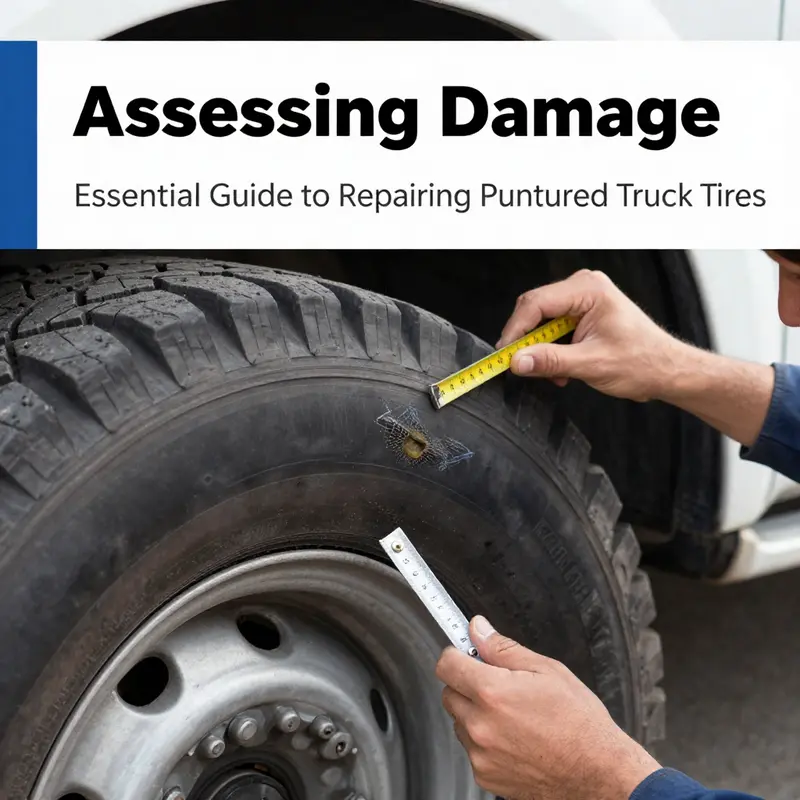
When you roll off the asphalt and into the muddy lanes, the tires become more than simply round objects that hold air. In Spin Tires they are your lifelines, the only interface between your heavy truck and the terrain that can swallow you whole if a tire fails at the wrong moment. A puncture can look like a tiny, manageable flaw, yet it carries a spectrum of consequences that only a careful assessment can reveal. The first instinct in the heat of the moment is to patch and press on, but real world tire science reminds you to read the damage, not just the hole. A realistic approach to assessing tire health starts with location, then depth, then the tire’s history. The same logic applies whether you are dealing with a simulation or a real truck on a remote backroad. In Spin Tires, as in life, a small puncture in the tread can be repaired with the right technique, but a pain point in the sidewall or a deep cut near the shoulder makes repair unreliable at best and dangerous at worst.
The most important rule in both worlds remains unchanging: do not gamble with sidewall damage. If the tire shows a bulge, a blister, a cut that reaches the internal structure, or any sign of internal separation, the tire has sustained structural injury. In real life, a bulge often means a failure in the belt or fabric layers beneath the tread, and continuing to drive can lead to a catastrophic blowout. Spin Tires mirrors this reality with its own cues—visible deformities or suspicious bulges in the tiremesh signal that the wheel has lost structural integrity. In the game, if you notice a bulge or an obvious irregularity on the sidewall, the safe move is to replace it. There is no patch that can fix a compromised sidewall, and attempting one would be tantamount to inviting a sudden tire failure at the worst possible moment. The message is simple and relentless: never patch a compromised sidewall. The in-game physics reward caution here, and so should your instinct when you face the same issue in real life.
When damage is confined to the tread area, however, repair becomes a more nuanced decision. Punctures and small holes that sit in the center of the tread are the primary candidates for repair, both in real life and in Spin Tires. The central tread is the zone where the rubber has the best chance of maintaining a seal, resisting heat buildup, and preserving the tire’s structural integrity after a patch. If the puncture remains small—generally under 6 millimeters in diameter—and does not extend into the shoulder or near the sidewall, a repair is often feasible. In the game, this translates to using a patching kit or a similar repair tool to seal the hole from the inside and then re-inflating to the recommended pressure. The idea is to restore a uniform contact patch with the wheel, so the tire can regain its performance without risking a blowout. Real-world guidelines call this a cold patch repair in the tread area, a method that is quick, practical, and suitable for a wide range of punctures that are not too deep and do not extend into the bead area. Spin Tires reflects this logic by offering a straightforward path for fixed punctures while reminding you that speed and load limits still matter.
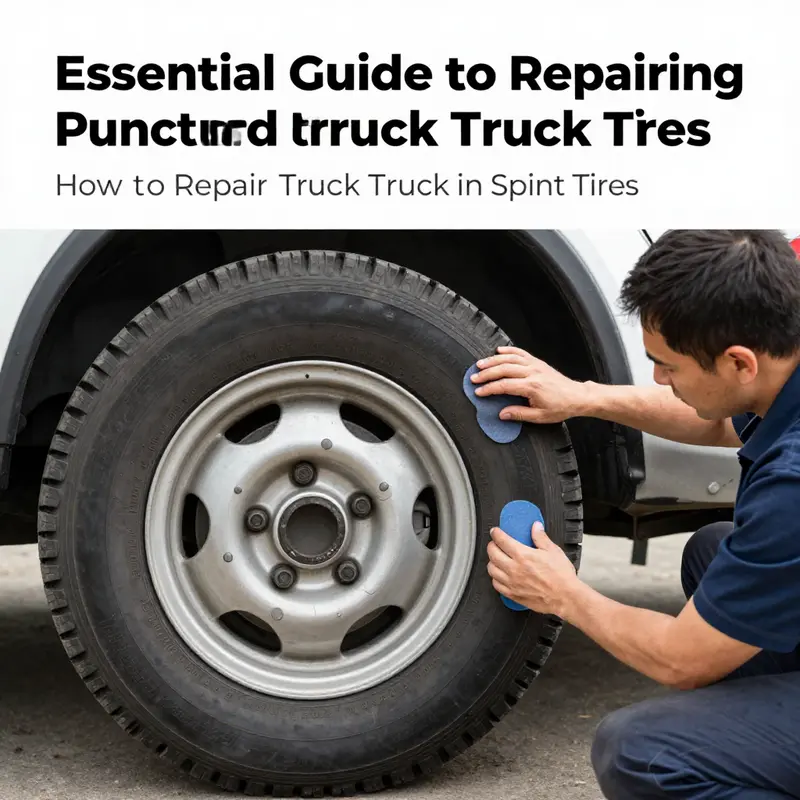
The cold patch approach in a real-world sense is grounded in preparation and adhesion. You remove the tire from the rim, clean the inside surface, roughen the patch area, and apply an adhesive designed for rubber repair. A pre-cut patch then bonds to the inner liner, creating a seal that withstands normal operating pressures for a time. In Spin Tires, the virtual counterpart follows the same sequence in spirit: you detach the tire, clear away debris from the affected zone, apply a patch or sealant, and wait for the cure or for the patch to set before reinstalling. The advantage of the cold patch is its simplicity and speed, which makes it ideal for emergency repairs that let you limp toward a workshop or a safer staging area. The obvious drawback is durability under sustained high speeds or heavy loads. The tire may hold a patch for a stretch, but it is not a guarantee of long-term reliability. For highway travel and heavy-duty work, the cold patch is a stopgap, a bridge to a proper fix that preserves safety while you seek professional service. In Spin Tires, this translates to a temporary fix that buys you time but does not replace professional evaluation.
If the damage is deeper or the puncture is larger than the typical 6 millimeters, or if the hole lies near the edge of the tread or adjacent to the shoulder, the cold patch may no longer be adequate. A hot patch, or thermal vulcanization, is the next step for a more durable repair in the real world. This technique uses heat and pressure to fuse the patch to the tire’s inner liner, creating a robust bond that resists heat, flex, and fatigue much more effectively than a cold patch. In Spin Tires, the hot repair is represented as a more sophisticated option that requires better equipment or a longer repair window, reflecting the time and care a professional technician would invest. The hot patch is highly regarded in fleet operations because it reduces the risk of patch failure at highway speeds or under heavy loads. It is not a DIY fix for casual players or casual drivers; it is a professional remedy that acknowledges the tire’s latent vulnerabilities. The encounter with a larger puncture or a deeper cut near the tread necessitates this more durable approach, and the game rewards patience and precision here, because rushing a hot patch can damage the tire’s inner layers or undermine the patch’s bond.
Another repair path that often comes up in both real life and game contexts is the mushroom plug. This technique is particularly useful for deep or irregularly shaped holes that would otherwise defy a straightforward patch. A mushroom plug is designed to anchor into the hole and seal it by expanding inside the tire. In Spin Tires, the mushroom plug tool becomes a reliable option for large holes that do not reach the sidewall; it fills the void from the inside and reduces the chance of air leakage without requiring an immediate tire replacement. It is not a universal cure-all—holes that are too large, or those near a compromised sidewall, or holes accompanied by internal damage, still demand tire replacement—but for certain damage profiles it provides a viable, efficient alternative to a more invasive patch repair.
The discussion of these repair methods would be incomplete without addressing the emergency and temporary fixes that some players lean on in the heat of a mission. A tire sealant can be a lifesaver when you need to reach a repair facility or simply to keep the air from escaping while you reassess the situation. However, sealants are not meant as permanent solutions. They can interfere with future tire repairs by distorting the inside of the tire or weakening the liner, and they can mask more serious structural problems that need professional evaluation. In Spin Tires, the sealant is a tempting stopgap—an option that can color your strategy for a particular run—but the game still enforces the rule that a sealant does not substitute for a proper patch or tire replacement when the damage is beyond a simple puncture. A portable air compressor or a basic inflator also provides a practical, immediate action: reinflating a tire just enough to reach safety or a workshop without overinflating, which could worsen the leak or overheat the tire. In the virtual environment, this translates to stabilizing air pressure long enough to reach a repair point, while recognizing that long-term reliability hinges on the next proper intervention.
The decision to repair or replace is never purely technical. It is framed by a driver’s risk tolerance, the nature of the mission, the terrain ahead, and the availability of tools and spare tires. In real life, the threshold for replacement is clear: punctures in the sidewall, holes larger than a certain size, visible internal damage, or signs of severe wear and tear require replacement rather than repair. The same logic applies in Spin Tires, where the player must weigh the risk of continuing with a compromised tire against the cost and downtime of a tire change. If a sidewall is involved or if the hole threatens to balloon into a blowout under load, the safe course is replacement. The game echoes this rule with a straightforward implication: if the damage compromises the tire’s integrity, replace it rather than patch it. The underlying principle is that tire health under load is not negotiable; safety and performance come first, even if it costs time and resources.
Maintenance discipline is another thread that runs through both real life and Spin Tires. A tire does not exist as an isolated entity; its behavior is influenced by inflation, wear patterns, and alignment. In the real world, underinflation raises heat and amplifies wear, increasing the likelihood of punctures and sidewall damage. The same truth shows up in the game: underinflated tires heat up quickly, degrade more rapidly, and make a bad puncture worse. A well-inflated tire holds air more reliably, reduces the risk of catastrophic failure, and provides a more predictable performance profile when you confront a repair decision. Spin Tires players who monitor air pressure, watch wear patterns, and adjust loads to avoid excessive stress in any one tire will experience fewer crippling failures and more efficient missions. A strategic mindset toward tire maintenance thus translates directly into better outcomes in the field and on the screen, where a calm approach to damage assessment can be the difference between a smooth haul and a roadside emergency.
As you navigate these repair choices in Spin Tires, keep an eye on the bigger picture: the tire is part of a system. Wheel alignment, suspension health, and cargo weight all contribute to how a tire performs after damage. If you notice uneven wear or a history of hurried patches, the prudent move is to step back, re-evaluate your route, and take the tire out of service for a thorough repair or replacement. The game rewards players who think ahead, who stock spare tires, and who avoid pushing damaged tires to the limit. The underlying aim is not merely to fix a hole but to preserve vehicle control, braking performance, and the ability to navigate the terrain safely. The lesson here is practical, whether you are playing in a simulated environment or managing a real fleet: you cannot outrun risk by patching your way through every problem; you need to recognize when a tire has outlived its usefulness and replace it accordingly.
In the spirit of practical planning, maintenance should be viewed as part of a broader strategy. Tools and supplies — from patch kits and mushroom plugs to spare tires and inflators — should be standard inventory in any serious spin. The ability to perform a quick patch in the field can prevent a mission-ending delay, while a well-timed replacement can preserve the remaining tires and ensure you reach your destination without jeopardizing safety. The balance between repair and replacement is a judgment formed through experience, and Spin Tires offers that experience in spades. It is not enough to know the rules; you must apply them in real time under pressure, just as a real driver would when faced with a degraded tire on a challenging route. The game thus becomes a training ground for prudent decision making that translates into safer driving practices should you give this knowledge real-world application.
To reinforce the idea that tire damage assessment is both science and art, consider the following practical steps, which you can carry into Spin Tires as well as into any real-world maintenance routine. Start by visually inspecting the tire for obvious signs: bulges, cracks, or irregular wear. Then check the location of any damage. If the damage lies in the tread and is under the 6 millimeters threshold, evaluate whether a patch or plug will sustain the tire through the next leg of your journey. In Spin Tires you can simulate the patching process, but always consider whether the terrain ahead and the load on the tire justify a stronger, more durable repair or an immediate tire replacement. If the damage involves the sidewall, do not attempt a repair. In the game, as in life, you can push past a patch, but the risk you take increases with each mile you drive on a compromised tire. The final checks include re-seating the tire after repair, balancing, and a leak test. In Spin Tires you can simulate a balance check and an air leak test—these steps help you confirm that the repair has held and that the tire will behave predictably when you resume the journey. A leaky patch or an unbalanced wheel is a red flag that the repair hasn’t cured the underlying problem. The tire may still fail under load, which can be more dangerous than a patch that holds.
In the end, the most important takeaway for Spin Tires players is a simple rule of thumb that echoes real-world tire safety: if it looks bad, it probably is. Sidewall damage or large holes demand tire replacement, not patching, and even a successfully patched puncture should prompt a plan to monitor tire temperature and performance. The simulation rewards careful, disciplined decisions because those decisions translate into fewer dangerous moments and more reliable progress. This is the kind of gameplay that rewards knowledge and judgment just as much as luck and speed. It is a reminder that tire health is not an optional concern. It is a central factor in your ability to steer, brake, and accelerate with confidence across rough terrain. A puncture may be a minor setback, but a tire that has outlived its usefulness can turn a routine haul into a hazardous ordeal. The game and the real world converge on the same principle: protect your tires, assess damage with calm clarity, and choose the safer path, even if it costs more time or effort.
For readers looking to anchor these insights in broader maintenance practices, consider how routine maintenance budgeting can support timely tire care and replacements. A budget for routine maintenance helps ensure you can replace a tire when needed rather than patching your way through a deteriorating set. This approach aligns with real-world best practices and supports more reliable performance in the game. Budgeting for Routine Truck Maintenance
As you move forward in Spin Tires, carry these lessons with you: read the damage, choose the repair path that fits the injury, and never gamble on sidewall integrity. If the tire shows a clear bulge, a crack that reveals a hint of the belt, or a hole that exceeds the safe repair size, stop. Replace the tire, adjust your plan, and keep moving only when you are confident in your wheels. The combination of conservative judgment and practical repair knowledge will keep you in control and on course, no matter how challenging the terrain becomes. In that spirit, the guidance shared here aims to bridge real-world tire safety with the strategic demands of a demanding simulation, producing a wiser approach to repairing truck tires in Spin Tires. External reference: https://www.autohome.com.cn/tech/3456789.html
null
null
Final thoughts
Repairing punctured truck tires is a critical skill for fleet managers and trucking companies aimed at minimizing downtime and ensuring safety on the road. By following the outlined safety measures, accurately assessing tire damage, and employing the most suitable repair techniques, you can enhance the reliability and performance of your fleet. Remember, effective repair not only prolongs the life of your tires but also supports the overall efficiency of your operations.