
The intricate world of vehicle repossession blends legal frameworks, operational practices, and ethical considerations. For fleet managers, trucking company owners, and logistics service providers, understanding the context of repo trucks operating on private property is crucial. Legalities surrounding repossession dictate compliance with state laws, emphasizing the need for adherence to ‘breach of the peace’ principles. This article delineates a comprehensive framework exploring essential topics, such as the legal basis for repo trucks’ presence on private property, operational procedures they follow, the limitations imposed by law, and potential consequences of illegal repossession. Each chapter builds upon the last, equipping industry professionals with the insights needed for informed decision-making.
Inside the Legal Framework: Are Repo Trucks Allowed on Private Property—and What It Means for Homeowners and Lenders
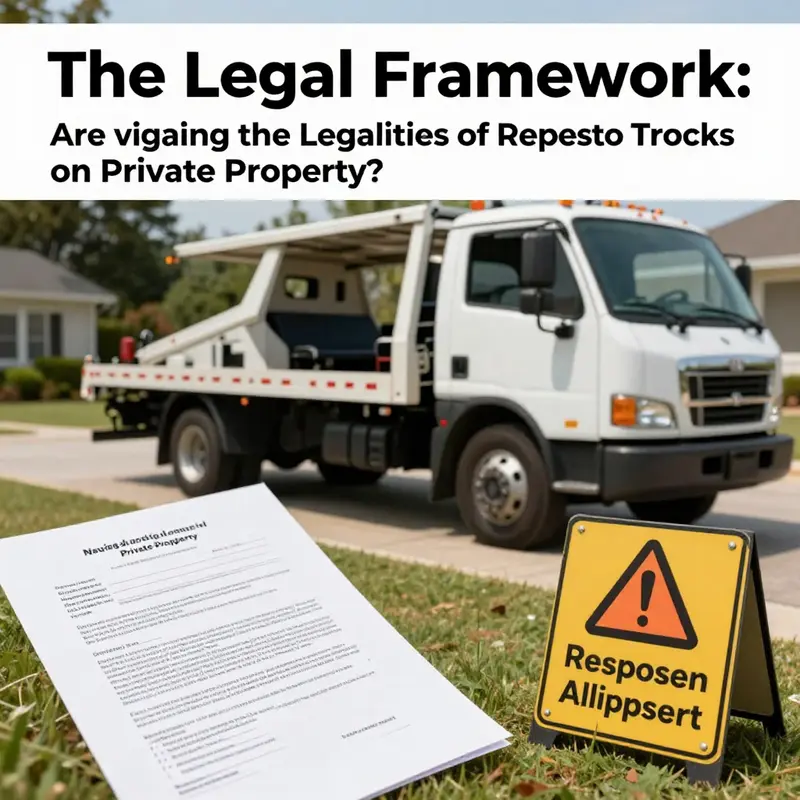
When a loan or lease goes unpaid, the topic of repossession is rarely far from the surface of a loan portfolio or a household budget. The legal framework surrounding repossession on private property is a careful balance between a lender’s right to reclaim collateral and a property owner’s right to privacy and safety. The general principle is simple in concept: a repossession is permissible in many places, but only when it occurs without breach of the peace and within the boundaries set by state and local laws. This is not a universal green light to yank a car off a driveway or out of a garage; it is a conditional permission that depends on jurisdiction, the specifics of the agreement, and how the action is carried out. The result is a scenario that can feel both transactional and intensely human, because a car is often more than a possession. It is a means of commuting, a symbol of financial obligation, and in many households, a practical anchor to daily life. The law recognizes that tension and seeks to manage it with a framework that emphasizes lawful process over spontaneous action.
At the core is the notion of without breach of the peace. This phrase is not a throwaway line; it is a legal standard designed to prevent confrontations that could escalate into violence or property damage. A repossession agent can generally proceed on private property if they do so in a manner that avoids threats, force, or unlawful entry. Getting a vehicle out of a closed garage, for instance, is typically not allowed if it would require breaking and entering or destroying property. If the vehicle is stored behind locked gates or behind a barrier that requires removal of doors or other obstacles, the agent may be obligated to pursue alternate avenues such as obtaining a court order or coordinating a lawful sale through the appropriate channels. The precise boundaries of what constitutes breach of the peace can vary by state, and what qualifies as a peaceful recovery in one jurisdiction might be more restricted in another. The practical effect is that property owners should not assume that a repossession can occur simply because a car sits on private property; the action still must meet legal standards and respect the homeowner’s rights.
The legal rules illuminate a broader question about the relationship between private property and financial enforcement. In many states, lenders or their agents may reclaim a vehicle from private property after default, yet they must adhere to procedural requirements and refrain from coercive tactics. The presence of the vehicle on a driveway, a garage, or even in a fenced yard does not automatically authorize a tow. Instead, the repossession process is shaped by a combination of the loan agreement terms, applicable state statutes, and the practices of licensed towing professionals. The result is a legal landscape that rewards clarity and documentation. For homeowners, the most important steps are often preemptive: securing the car in a manner that deters unauthorized access, understanding the terms of the loan or lease, and recognizing the limits of what a repossession agent can and cannot do on private property. For lenders, the emphasis is on conduct that minimizes risk, preserves the possibility of recovery, and avoids litigation that could delay the return of the vehicle or create additional costs. As with many areas of private law, the rules are designed to reduce conflict, while still allowing legitimate recoveries when a debtor fails to meet obligations.
In practical terms, the law recognizes several pathways for reclaiming a vehicle on private property. On-hook towing, when the owner is aware and has consented to the tow, is often presented as the safest and most transparent option. It minimizes the chance of a confrontation and helps ensure that the recovery occurs in a manner that is clear to both parties. However, not all situations permit on-hook towing. If access to the vehicle is constrained by the property layout—such as a narrow driveway, a gated entry, or a vehicle parked at the rear of a lot—the recovery may require alternative techniques. Winching, controlled tipping, or the use of high-clearance equipment are examples of specialized recovery methods that can be employed when they do not damage property or involve illegal entry. These methods underscore the role of skilled operators who are trained to balance effective recovery with respect for the property boundaries and safety concerns of everyone on the premises.
The moral of the legal framework, for homeowners and lenders alike, is that consent, access, and method matter. If a vehicle is on private property, the operator must be mindful of the boundaries that restrict entry and the steps that would constitute a breach of the peace. The owner’s presence is a key factor. A tense encounter can quickly morph into a dispute if the repossession agent attempts to bypass the owner’s rights or uses force to compel compliance. In such cases, the proper course is often to pause, seek a more opportune moment, or pursue civil remedies through the courts. The emphasis on lawful procedure should not be mistaken for a lack of remedy. Courts can provide a framework for enforcement that preserves the owner’s rights while enabling the lender to recover the collateral. This is an essential reminder that repossession, while permitted in many places, remains a regulated activity that hinges on legal standards, not mere convenience.
For readers navigating this topic, the takeaway is that understanding the specifics of state law matters just as much as understanding the loan terms. A homeowner who comprehends the exact rights and limits in their jurisdiction is better positioned to respond to a repossession attempt, to document what occurs, and to seek legal assistance if the process deviates from permissible conduct. Likewise, a lender who acknowledges the boundary conditions set by law is more likely to structure recoveries in a way that reduces risk and protects the rights of all parties involved. In this sense, the private property repossession issue becomes less a drama about force and more a matter of precise legal conduct, procedural integrity, and measured, timely action that minimizes disruption to day-to-day life.
The complexity of the legal framework also underscores the value of preemptive planning. Borrowers can reduce the risk of escalation by staying informed about the specifics of their loan agreements, including any clauses that touch on enforcement and recovery. Landlords and property managers hosting vehicles on their property can also benefit from clarity, such as having documented permission, secure storage practices, and a plan for how to handle any potential recovery without triggering breach of the peace. In turn, lenders can explain any potential recovery process in advance, clarifying what steps will be taken, what access will be required, and how the recovery will proceed to avoid misunderstandings. The ultimate aim is a balanced approach that allows for lawful recovery while maintaining respect for private property and individual rights. To explore broader maintenance and fleet management implications that often intersect with repossession scenarios, you can consult resources that discuss strategic planning for small fleets and maintenance practices, for example through one of the site’s guidance pieces on optimizing fleet size and maintenance for small fleets.
optimizing fleet size maintenance for small fleets
In addition to planning and procedure, it is useful to consider the broader implications for owners and managers who must operate within this legal space. The process remains anchored in the law, but it is increasingly shaped by the daily realities of vehicle ownership, debt restructuring, and the practicalities of property access. The law does not stand still in this area, and it is crucial to stay updated with any changes in state or local norms that could alter what is permissible on private property. For those who seek a concise external reference that distills the core standards and common practices, an overview is available from a reputable industry-oriented source. This resource emphasizes the central idea that repossession on private property is permissible under specific conditions and that the method and manner of recovery matter greatly. To review the current understanding in a practical context, see the external resource linked at the end.
For a concise overview of the legal standards and practice, see the external reference here: Can a Tow Truck Repo Your Car on Private Property?
Can a Tow Truck Repo Your Car on Private Property? – CarInterior
Grounded on Private Ground: The Legal and Practical Reality of Repo Trucks Reclaiming Cars from Private Property
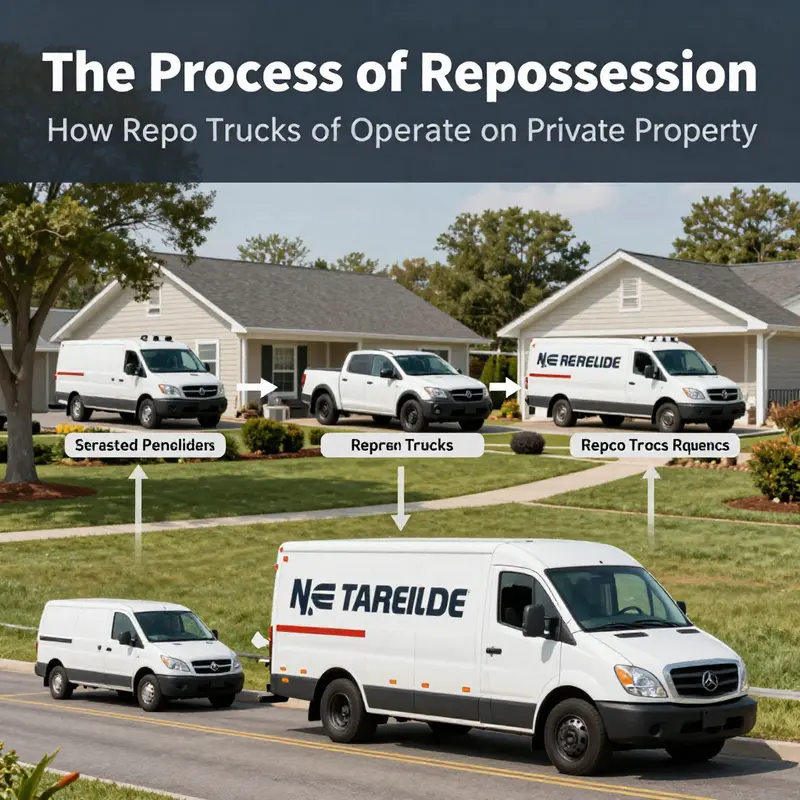
When a loan goes unpaid and the lender seeks to recover the collateral, the sight of a repo truck moving toward a driveway or a garage can feel like a turning point in a borrower’s financial story. The private space of a home that domain of personal security and autonomy enters into a process that is both lawful and bounded by rules designed to balance creditor rights with property protections. Repossession on private property is not a free-for-all; it rests on a framework that requires lawfulness, restraint, and careful adherence to standards that prevent the act from becoming a breach of the peace. The core idea is straightforward in its aim: if a borrower defaults, the lien holder or a licensed repossession company has the right to recover the vehicle, but this right operates within the constraints of state law and the practical realities of an occupied residence. In practice, that means the cook’s list of steps, the demeanor of the operator, and the exact method chosen are as important as the underlying legal entitlement itself. The process, when executed properly, seeks to minimize disruption, protect the vehicle from harm, and reduce the chance of escalation between the parties involved. It is this tension between entitlement and limitation that defines the day-to-day reality of repossessing from private ground.
The legal framework is not a single rule etched in stone but a pattern of principles that varies by jurisdiction while converging on a shared constraint: avoid actions that amount to unlawful entry, intimidation, or destruction of property. The right to repossess a vehicle exists because a borrower’s default triggers a contractual remedy, and the lender’s security interest in the vehicle becomes enforceable. Yet the scope of that right is filtered through state-specific laws, which may require different kinds of notices, timelines, or procedural steps before, during, or after a repossession. Some states permit more immediate action upon default, while others mandate notice or permit redemption periods, all with the aim of preventing careless or capricious removals from a borrower’s property. The common thread across these rules is that repossession must be conducted in a way that preserves safety and avoids a breach of the peace an old but enduring standard that looks to whether force, intimidation, or unlawful entry is used. When an owner is present and objecting, the repossession agent must navigate the moment with restraint, seeking lawful avenues to proceed rather than inviting confrontation.
On private property, the mechanics of how a vehicle is retrieved become visible. Tow trucks, the workhorses of the operation, come in several forms designed to protect both the asset and the surrounding property. Flatbed tow trucks, for instance, offer a platform that can load a vehicle completely, reducing the risk of damage during transport. Wheel-lift variants use a different approach, lifting one end of the vehicle to move it without dragging it along the ground. The choice of method is not merely a matter of speed; it is a balance between minimizing risk to the vehicle, avoiding damage to driveways or landscaping, and maintaining control of the situation in a potentially tense environment. When the property is accessible, on-hook towing a where the vehicle is towed with the owner’s knowledge or consent remains a preferred and safer option because it typically involves less force and less chance of property disturbance. But the private nature of the setting can complicate access. If a car sits in a driveway, garage, or a secluded backyard, the recovery team may employ specialized techniques that allow for safe extraction without breaking into a locked space, without fracturing the owner’s privacy, and without violating the property boundaries. This is where the line between legal entitlement and practical execution becomes most visible.
The progression from cooperative to non-cooperative scenarios marks a crucial distinction in how repo operators proceed. In a cooperative repossession, the vehicle can be retrieved with the owner’s awareness, often with minimal disruption. The procedure can be straightforward: the vehicle is prepared for tow, proper documentation accompanies the pickup, and the process unfolds with as little noise as possible. Non-cooperative repossessions, by contrast, demand a careful choreography that emphasizes security and compliance. Operators may attach secure harvesting devices, ensuring the vehicle is immobilized and secured in a way that prevents wandering or damage while the tow is completed. In both cases, the objective remains the same: recover the asset while respecting the property and minimizing risk of altercation. The emphasis on careful technique reflects the industry’s awareness that a high-stakes, emotionally charged moment can arise when a car is taken from a borrower who may feel wronged or desperate. There is no room for careless briskness here; every move is measured against the potential for conflict, property damage, or legal challenge.
Best practices in repo operations on private property center on safety and accountability. The fleet of considerations includes protecting the vehicle from further harm, protecting the surrounding property from incidental damage, and preserving a clear record of what occurred. Documentation is a quiet but essential companion to the physical act of pulling a car away from a home. The operator notes the condition of the vehicle, the surrounding area, and any notable features of the property that could become disputed later. Photographs and written records can shield all parties from later disagreements by showing the state of the scene at the moment of recovery. Another layer of prudence involves communication: notifying the lender, coordinating with property owners when possible, and ensuring that the method chosen complies with both contract terms and legal constraints. The result is a process that, while abrupt in its effect, seeks to minimize harm and avoid unnecessary escalation. The careful handling of both vehicle and yard, the non-destructive intent, and the emphasis on lawful conduct all contribute to a professional standard that the industry strives to meet.
For borrowers facing the prospect of repossession, knowledge is a form of leverage. Understanding that the right to reclaim a vehicle exists within a framework that restricts how and when it can be exercised offers a path to protect one’s interests. When possible, borrowers can engage with lenders to discuss alternatives renegotiating payment schedules, arranging temporary forbearance, or exploring other remedies that might avert the immediate loss of a vehicle. Even when negotiations fail, awareness of the rules governing private property repossessions can guide the borrower’s responses to minimize risk or confusion. If a repossession occurs, learning how the process unfolds what to expect, what documentation might be requested, and how to respond in the moment can ease tension and make the outcome more predictable. A calm, informed approach can also help homeowners navigate the aftermath, including options for reestablishing a loan or addressing any disputes that arise about the necessity or conduct of the repossession itself.
The discussion of private-property repossession is not finished without acknowledging how readers can deepen their understanding. For a practical overview of how such repossessions are discussed in the trade press and real-world guides, consider visiting the Master Truck Repair Blog. This resource offers a broader look at the dynamics of vehicle recovery, the types of tow equipment most commonly employed, and the standards that shape professional practice in the field. Such a reference can complement the core legal summaries and help bridge the gap between theory and on-the-ground realities. While the precise rules will always hinge on state law and jurisdiction, the overarching principles—respect for property, avoidance of breach of the peace, and a commitment to safe, professional recovery—provide a stable compass for both lenders and borrowers navigating the complexities of private-property repossession. As this chapter unfolds within the larger narrative of the article, it becomes clear that the question of whether repo trucks are allowed on private property is not answered by a single rule but by a spectrum of conditions that together define what is permissible. The law grants a remedy, but it also bounds it. The methods chosen aim to protect the vehicle and the property, avoid unnecessary confrontation, and comply with the civil and criminal implications tied to trespass, force, or damage. In this light, a repo operation on private property emerges not as a breach of property rights or a dramatic home invasion, but as a regulated act conducted under careful supervision, with an eye toward safety, legality, and fairness. The outcome, ultimately, reflects the balance that modern lending seeks to achieve a contract enforced with restraint, a borrower assisted by avenues for resolution when possible, and a repossession carried out with the minimum necessary disruption to private life. External frameworks, state-specific rules, and professional standards converge to shape each unique instance, ensuring that the repossession process remains anchored in legality while remaining mindful of the personal stakes involved on the property front lines. For readers who want to explore the legal nuances in depth, the external reference provides a thorough exploration of the standards and practices that govern these sensitive operations: https://www.carinterior.com/can-a-tow-truck-repo-your-car-on-private-property/.
Breaching the Quiet: Legal Boundaries for Repo Trucks on Private Property
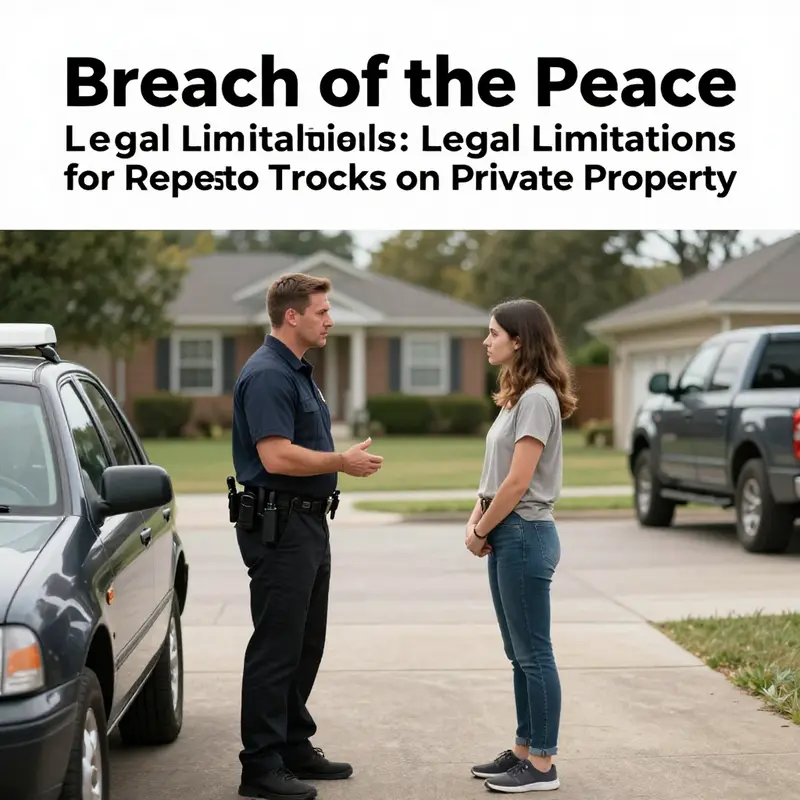
When a lender hires a repossession company to reclaim a vehicle, the scene is rarely a dramatic showdown. More often it unfolds as a carefully measured procedure that relies on legal boundaries as much as on rolling equipment. The core idea behind repossessing on private property is simple in theory: a creditor may recover collateral when the borrower has not kept up with obligations. The complication lies in how, where, and when this recovery takes place. The phrase breach of the peace has long anchored debates about what is permissible and what crosses into unlawful conduct. In the private property context, its meaning sharpens. It is not a broad charge aimed at general debt collection or routine calls. It is a narrowly defined standard about conduct that disturbs public order, frightens bystanders, or involves intimidation or force that could be deemed unlawful entry or harassment.
Within private property settings, breach of the peace becomes a test of restraint. A repossession agent who remains quiet, avoids confrontation, and proceeds with minimal disruption is far less likely to be called out for disturbing the neighborhood. By contrast, actions that threaten or threaten to escalate, such as breaking into a locked garage, using aggressive language in full view of neighbors, or forcing entry, quickly move beyond permissible recovery into a breach of the peace scenario. Courts and statutes in many states have drawn a line around what constitutes acceptable behavior in these moments, and the line is not uniform across jurisdictions. What remains consistent is a practical moral: the recovery must be conducted in a manner that does not provoke fear, panic, or violence in the surrounding community.
A large portion of the legal question centers on entry onto private property. When a vehicle sits in a driveway, garage, or fenced area, the property owner’s rights can complicate a straightforward tow. In many states, entering a secured area without consent or a court order is illegal. If a repo team breaches a locked gate, breaks into a locked garage, or otherwise forces entry, the action can be deemed a breach of the peace because it signals an intention to intimidate or coerce. The law does not offer a free pass for any attempt to seize a vehicle simply because it sits on private land. Rather, it requires the operator to respect boundaries. If access is restricted, the preferred path often involves obtaining consent from the owner or obtaining the necessary court authorization before proceeding. This is not merely a formality. It is a safeguard that protects property rights and public order, ensuring the repossession occurs within a framework that courts can review.
The practical realities of repossession play a crucial role here. On hook towing, where the vehicle can be removed with the owner’s knowledge or consent, remains a common and favored method. It minimizes the chances of conflict, reduces the likelihood of property damage, and presents a straightforward, documentable chain of custody. But not every scenario offers easy access. When a vehicle is tucked away in a backyard or behind a locked fence, specialized recovery techniques may be deployed. Winching or using high clearance equipment can enable access without tearing down barriers, so long as these methods do not damage property or involve unlawful entry. Even these techniques must be executed with care, with attention paid to the potential for creating disturbances that could be construed as breach of the peace. The overarching rule remains steady: the recovery must be peaceful, professional, and legally justified.
A large part of the analytical burden falls on the applicable legal framework. The Restatement of Property, particularly the Restatement Third of Property: Landlord and Tenant, and the Uniform Commercial Code Article 9, provide the schemas that guide repossession practices. These sources do not grant carte blanche to override private property rights. Rather, they sketch a boundary where lawful recovery can occur without violating the peace. The law recognizes that a creditor and its agents hold substantial leverage in reclaiming collateral, but that leverage is tempered by duties to respect property, avoid unnecessary force, and refrain from intimidation. States differ on particular rules, and the precise interpretation often hinges on the surrounding facts, including the presence of the borrower, the time of day, any prior communications, and the manner in which the agents conduct themselves during the recovery. A robust resource that aggregates state by state variations on repossession rights and the peace standard offers a helpful compass for readers seeking jurisdiction-specific guidance. It can be found at a reputable compilation that maps how breaches of the peace are viewed in relation to private property repossessions across states. In practice, this means that while the general principle holds, the exact boundaries shift depending on location and circumstance.
For those who want a consolidated view of the law as it applies in different states, the landscape is still evolving. Restatements and statutory provisions provide a baseline, but many states have adopted nuanced rules that address particular contexts such as access to secured areas, timing during the day, and the use of entry methods that minimize disruption. The approach is rarely as simple as a single rule that applies everywhere. Instead, it is a continuum where the balance between creditor rights and property rights is negotiated through statutory text, case law, and the practical realities of a recovery operation. The standards emphasize restraint, proportionality, and the avoidance of force, reflecting a broader legal philosophy that private property rights deserve strong protection even as lenders pursue remedies for default.
When a dispute arises—whether a repossession is challenged as a breach of the peace or deemed lawful under the circumstances—the guidance from authoritative bodies and professional associations becomes crucial. The Restatement provides a philosophical frame for understanding why breach of the peace matters, while state statutes supply the concrete boundaries. The governance of repossession procedures also includes professional norms within the repossession industry, which emphasize orderly conduct, minimal disruption, and careful adherence to both the letter and spirit of the law. In many respects, the law seeks to harmonize two legitimate interests: the lender’s right to recover collateral and the borrower’s right to live in a safe and undisturbed home or business environment. The aim is to allow repossession to occur without converting a contractual dispute into a public disturbance.
The practical upshot for property owners is clarity about what to expect and what to challenge. If a repossession occurs peacefully on private property, and the agent adheres to legal limits, most observers will view the action as lawful. If, however, the action involves breaking into a secured area, using intimidation, or creating loud disturbances that alarm neighbors, the action can be subject to challenge and may be deemed breach of the peace in court. The property owner is not left without recourse. Owners can seek legal recourse through the courts to stop an unlawful entry or to challenge improper procedures, and lenders typically rely on court orders when a property is secured or the terms of the loan require extraordinary steps. This legal choreography supports a predictable process rather than an arbitrary power dynamic between creditor and borrower.
For readers seeking practical context that intersects with the day to day operational realities of fleets and recovery professionals, there is value in linking broader fleet maintenance and operations insights to this legal landscape. The MasterTruckRepair blog, which covers a range of truck maintenance and recovery topics, offers a grounded perspective on how fleets manage towing and related tasks in ways that minimize risk and preserve property. See the MasterTruckRepair blog for more on how routine maintenance and careful planning feed into safer, more compliant recovery practices. MasterTruckRepair blog
From a broader perspective, the key takeaway is that repo trucks can operate on private property under lawful conditions, but their actions are bounded by the peace standard and by state specific rules. The absence of a breach of the peace does not guarantee that every recovery is perfect in the eyes of the law. It simply means that the operation adhered to the fundamental requirements of restraint, legality, and proportionality. A quiet, nonconfrontational approach is not merely a preference but a legal safeguard designed to preserve civil order while enabling lenders to exercise their remedies. Conversely, aggressive entry, threats, or damage to property can quickly transform a routine repossession into a contested, potentially unlawful act. The lesson for lenders, repossession agents, and borrowers alike is that the path to lawful recovery on private property is paved with careful planning, respect for property rights, and a firm commitment to avoiding actions that could be deemed disturbing the peace.
For those seeking authoritative, state by state guidance on how these principles are applied in practice, the landscape is documented in a comprehensive resource that consolidates current repossession laws by jurisdiction. This external reference offers a practical map for understanding how breach of the peace is interpreted across states, including nuanced rules about entry into secured areas and the use of force or intimidation during recovery. Access to this resource can help readers ground their expectations in actual statutory and case law in their own locale: https://www.nara.org/repossession-laws-by-state/.
From Gate to Getaway: The Practical Realities of Repo Trucks on Private Property
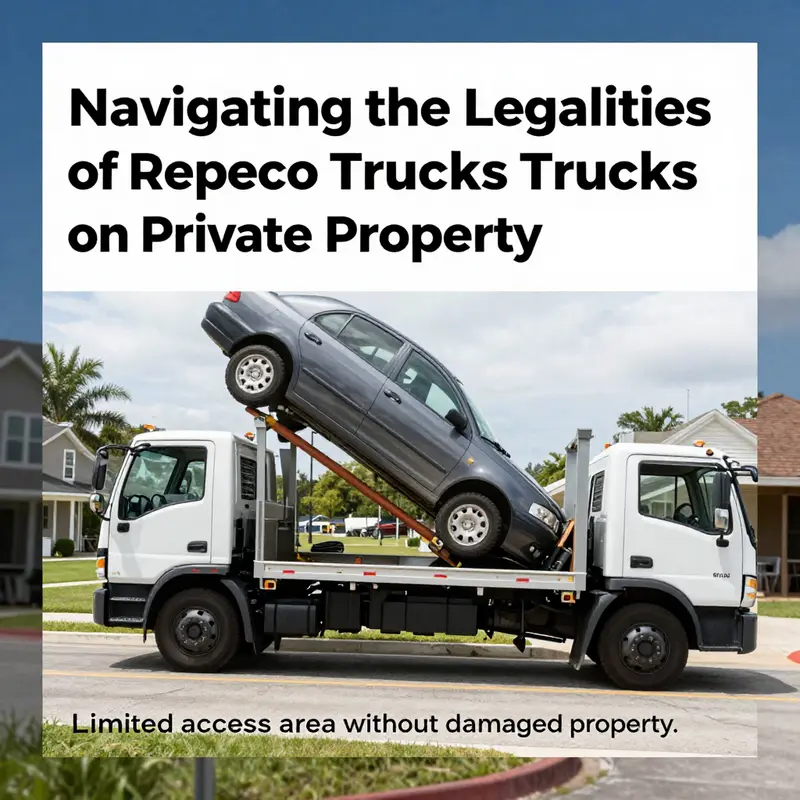
When private property becomes the backdrop for a repossession, the scene shifts from a curbside encounter to a carefully choreographed procedure governed by law, risk assessment, and the limits of force. The question of whether repo trucks can operate on private property does not rest on a single universal answer. Rather, it rests on a constellation of rules designed to preserve the property owner’s rights while ensuring the lender can recover collateral that secures a loan. This balance is not merely a matter of common sense; it is a matter of statute, local ordinances, and the enduring principle that a repossession must occur without a breach of the peace. The property owner’s driveway, the locked garage, the open lot behind a fence, even a trespassing concern on a back alley behind a shop—these are variables that shape what is permissible and what is not. Across jurisdictions, the core idea remains consistent: the repossession must be lawful, non disruptive, and focused on accessing the vehicle without triggering unlawful entry or violence. The practical implication for a repossession professional is that private-property recoveries demand a disciplined approach that prioritizes safety, legality, and minimal disturbance to surrounding property and residents. The duty is not simply to attach a tow and haul away goods; it is to navigate property lines, consent, and the subtle boundary between legitimate recovery and unlawful intrusiveness.
The legal framework guiding repossessions on private property rests on a few foundational concepts that recur across states and provinces. The notion of breach of the peace serves as a guardrail, a standard that prevents a confrontation or the use of force as a precondition to recovery. What counts as a breach of the peace can vary, but most authorities define it as actions that would provoke a violent response, create a public disturbance, or involve coercion of the vehicle owner or bystanders. In practice, this means a repossession agent will avoid shouting matches, threats, or any form of intimidation within view of others. The tenant, the homeowner, the neighbor who happens to be watching—these observers become witnesses to whether the process stayed within the legal boundaries. When owners resist, many lenders prefer to pause, secure a court order, or schedule a time when the presence of a law officer can help assure a peaceful operation. This approach reflects a broader ethic in the industry: force is not a tool of default recovery, and legality is the safest path to recovering a vehicle with minimal risk to people and property.
On private property the types of access that a recovery team can reasonably rely on are influenced by the location and the owner’s control of the premises. If the vehicle is parked in an open driveway where access is straightforward, an on-hook tow with the owner’s knowledge or documented consent often remains the simplest and safest method. This is sometimes described as cooperative repossession, a term that underscores the smoother path when the owner agrees to release the vehicle. Cooperative repossession reduces the risk of damage to the car and to the surrounding property, and it lowers the potential for disputes that could escalate into breaches of the peace. In other situations, however, the vehicle may be tucked away in a garage, behind a gate, or in a backyard area that complicates access. When this happens, specialized recovery methods become a necessity rather than a choice. A trained operator might employ winching, high-clearance recovery vehicles, or carefully placed ramps and dollies to extract a vehicle without causing collateral harm. The crucial constraint remains: any maneuver must avoid unlawful entry and must respect the boundaries of secure enclosures, locked spaces, and any property protection measures in place. The operator must also consider the impact on the property itself—how a winch line or a tow strap might interact with grass, pavement edges, or fencing—and adjust methods to prevent collateral damage.
The spectrum of techniques, from traditional towing to cooperative recovery and advanced extraction, illustrates how the practical realities of private-property repossessions differ from curbside recoveries. Traditional towing technologies include flatbed or wheel-lift systems, which are versatile enough to reach vehicles that sit in awkward angles or soft ground. When a vehicle sits in a ditch, sunk in mud, or perched on uneven terrain, the recovery crew brings a toolkit of winches, pulleys, and, if needed, a high-clearance approach vehicle to adapt to the terrain. The emphasis remains on minimizing property damage while preserving the integrity of the vehicle itself. The choice of method is guided by a combination of the vehicle’s condition, the location on the property, and the risk profile associated with the surrounding geography. Each scenario requires a careful assessment before any physical action is taken. The operator weighs the likelihood of success against the possibility of causing damage to a garage door, a fence, or the surface of a driveway. In some cases, if access proves too obstructed or dangerous, the lender might pursue legal channels to obtain entry or reframe the recovery plan altogether. This careful calculus is a hallmark of professional repossession work: it respects the property owner’s rights while ensuring the lender’s rights to recovery are protected within the law’s boundaries.
A complementary path, sometimes chosen when the owner is cooperative or when the circumstances do not threaten damage, is a cooperative repossession that hinges on clear communication and secure attachment methods. In this approach, the tow operator attaches using hitch points or the vehicle’s secure frame in a manner designed to minimize the risk of damage during transport. The emphasis on secure connections is more than a maintenance concern; it is a liability management strategy. A properly executed connection reduces the chance of a breakaway during transit and reduces wear on the vehicle’s body and undercarriage. The cooperative path also reflects a broader ethical standard: when the owner agrees to release the vehicle, the process becomes predictable and controlled. The operator can proceed with the confidence that the vehicle will be removed with integrity. For owners who want to understand what to expect, the language of consent is often the clearest signal. A simple, documented acknowledgment of the consent to repossess, the specification of the time and place of the pick-up, and the notification that the tow will proceed with a non-disruptive approach can make the difference between a smooth extraction and a confrontation that could escalate quickly.
The practical realities of private-property repossessions are not simply about technique; they are about compliance with varying state laws, professional standards, and ethical considerations that define the industry. Some jurisdictions require that the repossession company file the appropriate notice with the creditor, the court, or the local authority before entering private property to recover a vehicle. Others leave more discretion to the lender and the on-site circumstances. For a property owner, this means not only understanding what is legally permissible but also recognizing that the timing and manner of a recovery can be influenced by local policies about trespassing, noise, and the use of heavy equipment near dwellings or businesses. The net effect is a process that, when done correctly, minimizes harm and disruption while achieving the legitimate aim of recovering collateral. In practice this translates to a disciplined sequence: verify ownership and debt, assess the property layout and potential obstacles, confirm consent or secure a lawful entry mechanism, select an appropriate recovery method, implement the operation with a focus on safety and non-damage, and complete the transport with proper documentation that can stand up to scrutiny if questioned later.
From the owner’s perspective, anticipation and preparation are essential. If a lender signals an impending repossession, the owner can seek to renegotiate the loan terms, arrange a formal payment plan, or arrange a lawful release that preserves some property rights while enabling a structured recovery. Where possible, owners should avoid confrontations that bring attention to property and create risk for themselves, neighbors, or bystanders. Being aware of local trespass rules, the potential for a court order, and the possibility of delaying tactics that keep the vehicle in place while legal steps unfold can all influence the ultimate outcome. A well-informed owner can also work with the lender to specify a time window that reduces disruption, such as least intrusive hours for a recovery or a plan that minimizes the chance of damage to landscaping, gates, or driveways. At the same time, property owners must understand that repossession is a legal remedy tied to a debtor’s obligations. The goal, for the professionals involved, remains to recover the vehicle in a manner that respects the property’s boundaries while complying with the law. The balance between access and restraint, speed and safety, is what distinguishes a lawful private-property recovery from a misstep that could lead to liability for trespass or breach of the peace.
For readers seeking a broader understanding of how recovery practices fit into the industry as a whole, a broader perspective on standards, types, and performance can be informative. Our exploration of the mechanics and ethics of private-property repossessions can be complemented by further reading that situates these practices within established recovery standards and industry performance benchmarks. To dive deeper into the standards and kinds of recoveries that practitioners navigate, see a comprehensive industry analysis that surveys these themes in depth. This external resource helps illuminate how individual recoveries on private property reflect broader professional norms and regulatory expectations across the sector. Within this context, the private-property scenario becomes a legible part of a larger system, where professional standards, legal compliance, and careful risk management shape every turn of the recovery wheel, from the first knock on the door to the final tow away.
For readers interested in related topics on maintenance, equipment readiness, and fleet considerations that often accompany recovery work, the Master Truck Repair blog offers practical insights. You can explore foundational discussions on vehicle upkeep and tool readiness that support the demanding days of roadside and on-property recoveries. Master Truck Repair blog.
External reference for broader industry context: https://www.repotowing.com/complete-analysis-of-standards-types-and-industry-performance/
Private Property and Repossession: Navigating Legal Boundaries
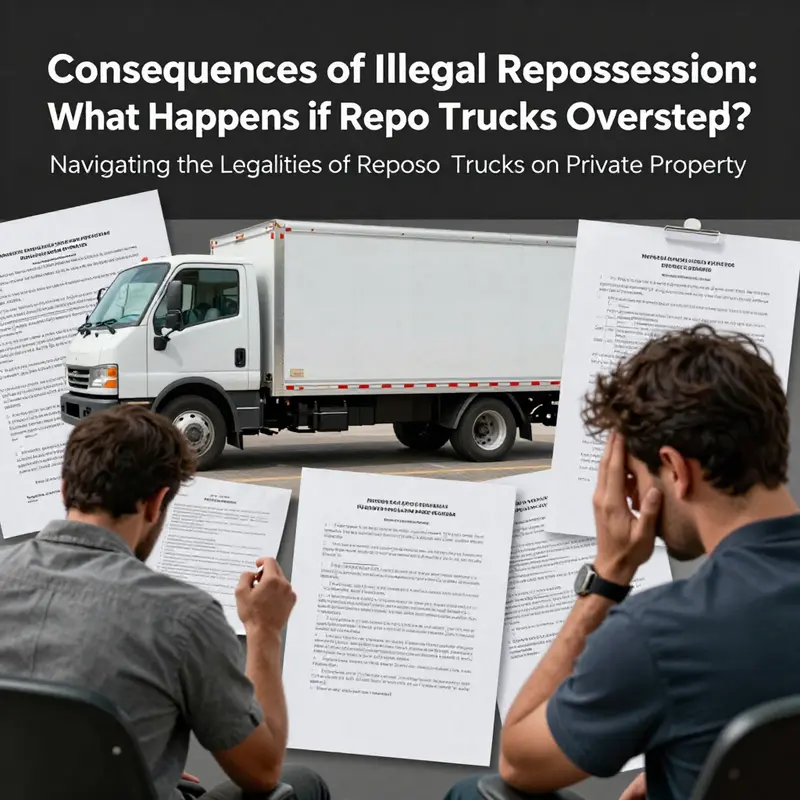
Repossession on private property must respect the law and avoid breach of the peace. Tow operators should pursue lawful, consent-based recoveries and defer to court remedies when access is blocked. The standard discourages force, entry into homes, or damage, and emphasizes restraint, documentation, and clear communication. Notable outcomes in various jurisdictions reinforce that entry without authorization can trigger civil liability, fines, and reputational harm. For creditors, the path is to document every step, obtain orders when necessary, and coordinate with property managers to minimize disruption while preserving the collateral.
Final thoughts
Understanding the complex landscape of repo trucks on private property ensures compliance and protects your operations from legal repercussions. The insights gained from the chapters will empower fleet managers and business owners in the trucking industry to navigate repossession with a keen awareness of legal standards. Emphasizing the importance of lawful practices not only fosters ethical business but also mitigates risks associated with breaching peace or misinterpreting the law. By adhering to these guidelines, operators can maintain their credibility and operation’s integrity in the industry.