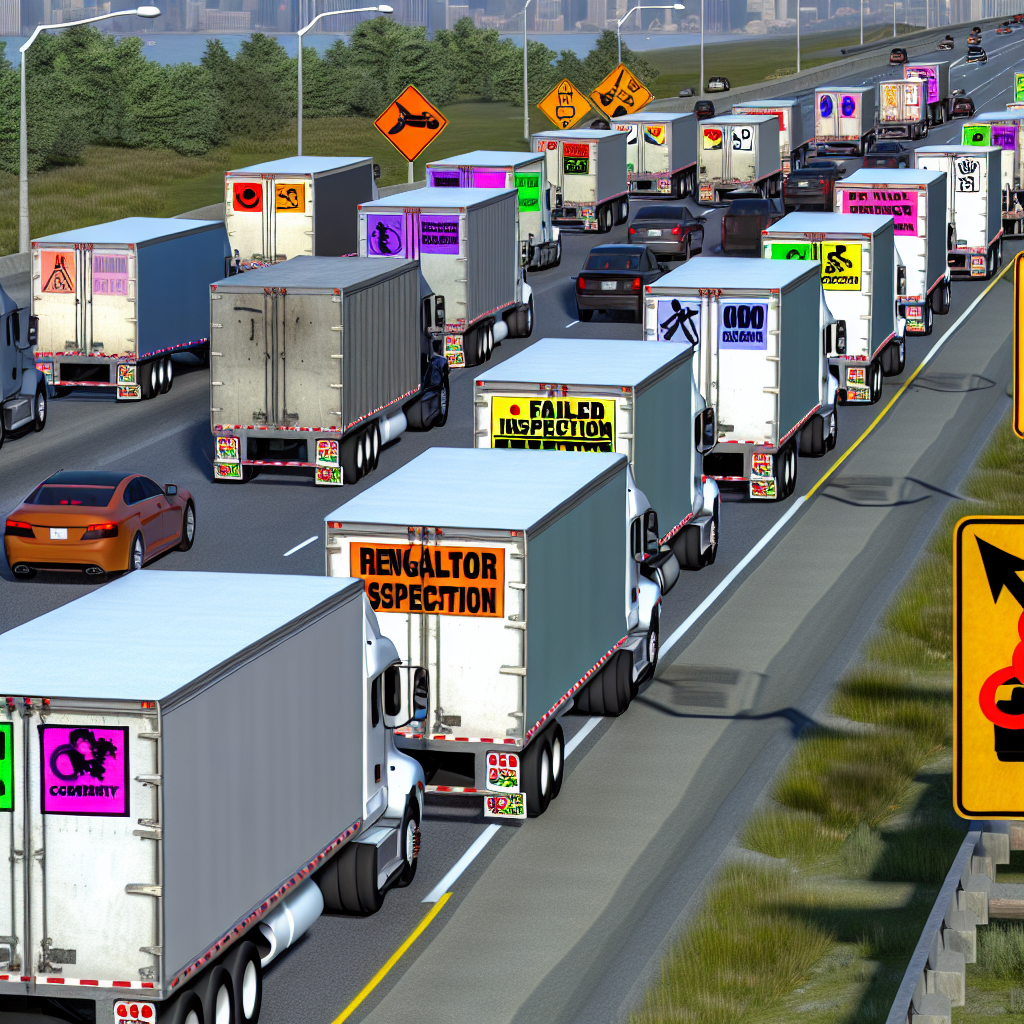
The trucking industry in the US and Canada is significantly influenced by regulations imposed by government agencies aimed at ensuring safety and compliance. With recent policy shifts, especially in the context of government shutdowns, trucking companies must navigate an increasingly complex regulatory landscape.
One key aspect of these changes is the Government Shutdown Impact on Trucking Oversight, which calls attention to how interruptions in government operations can affect the regulatory framework that governs trucking. Understanding these dynamics is vital for trucking companies striving to maintain compliance and efficiency amidst uncertain policy shifts.
Recent developments in emissions regulations for the trucking industry in the United States and Canada have introduced significant changes, leading to concerns among Original Equipment Manufacturers (OEMs) about regulatory uncertainty and transport compliance.
United States
-
EPA’s Repeal of Emissions Regulations: In July 2025, the U.S. Environmental Protection Agency (EPA) announced plans to revoke the 2009 Greenhouse Gas Endangerment Finding, effectively nullifying greenhouse gas regulations established during the Obama and Biden administrations. This includes the Greenhouse Gas Phase 3 rule set to take effect for the 2027 model year heavy trucks. Critics argue that this repeal could disrupt long-term planning for businesses, hinder their ability to achieve transport compliance, and penalize fleets that have already invested in electric trucks.
Source -
Impact on European Truck Manufacturers: Following the EPA’s announcement, shares in European truck manufacturers declined. Analysts had anticipated a surge in pre-purchases of trucks before the new regulations took effect, but this expectation diminished with the potential reversal of the rules. Daimler Truck’s shares fell by 7%, while Volvo and Traton each saw declines of approximately 3%.
Source
Canada
-
OEMs’ Concerns Over Vocational Vehicles: In April 2025, the Canadian Trucking Alliance (CTA) highlighted concerns from OEMs and truck dealers regarding the federal Heavy-Duty Vehicle and Engine Greenhouse Gas Emission Regulations. These regulations were deemed incompatible with the operational requirements of vocational vehicles serving critical sectors such as agriculture, mining, forestry, and oil & gas. OEMs reported being compelled to sell equipment unsuitable for certain operating conditions, potentially compromising driver safety.
Source -
Suspension of Trailer Standards: Since 2019, Canada has issued multiple interim orders suspending the application of trailer standards under the Heavy-Duty Vehicle and Engine Greenhouse Gas Emission Regulations. These suspensions were in response to concerns from trailer manufacturers and the need to assess the economic implications of implementing these standards in Canada while they were not in effect in the United States. The most recent interim order, issued in February 2024, is set to expire in February 2025.
Source
OEMs’ Concerns
OEMs are expressing significant apprehension regarding the uncertainty and inconsistency of emissions regulations across North America. In the U.S., the potential repeal of established regulations disrupts long-term planning and investments in emission-reduction technologies. In Canada, OEMs are concerned that current regulations do not adequately consider the operational needs of vocational vehicles, leading to potential safety issues and equipment shortages in critical sectors. The lack of regulatory clarity and alignment between the U.S. and Canada complicates compliance efforts and strategic planning for manufacturers operating in both markets.
Impact of Government Shutdown on Trucking Oversight
The impact of the government shutdown on trucking oversight mainly focuses on the role of the Federal Motor Carrier Safety Administration (FMCSA). The FMCSA has continued its operations during recent shutdowns because its funding structure does not solely rely on annual appropriations, which allows for ongoing employee engagement and oversight activities. However, the shutdowns affect other transportation sectors differently, raising concerns about the overall regulatory environment.
Impact on FMCSA Operations
During the current government shutdown, the FMCSA had no major operational disruptions. This is essential for the trucking industry, which depends on the FMCSA for compliance with regulations and enforcement of safety standards. With 1,084 FMCSA employees not furloughed, trucking businesses can keep operating with assurance in regulatory oversight, vital for maintaining safety protocols in the industry. The Department of Transportation (DOT) stated that all operations continue as normal, providing reassurance to the trucking industry amidst the shutdown’s uncertainty.
Broader Transportation Sector
In contrast, the larger transportation sector has not performed as well. Other agencies, such as the Federal Aviation Administration (FAA) and the Environmental Protection Agency (EPA), face significant operational challenges. The FAA has reduced staffing levels among air traffic controllers due to furloughs, causing increased delays and safety risks in the aviation sector. At the same time, the EPA has halted many regulatory functions, alarming manufacturers and the automotive industry. These sectors are worried about vehicle certifications and the long-term effects on emissions standards.
Conclusion
While the FMCSA’s ability to maintain oversight supports stability for the trucking industry during government uncertainties, the broader impact of shutdowns complicates the regulatory landscape. Businesses must stay alert and flexible, ensuring compliance with current regulations while navigating uncertainties arising from a stalled legislative framework.

| Regulation Type | US Regulations | Canadian Regulations |
|---|---|---|
| Enforcement Body | Federal Motor Carrier Safety Administration (FMCSA) | Transport Canada |
| Key Compliance Requirements |
|
|
| Weight Limits | 80,000 pounds (max gross weight) | 110,000 pounds (in some provinces) |
| Driver Age Requirements | 21 years for interstate trucking | 18 years in some provinces |
| Insurance Requirements | Minimum of $750,000 for commercial vehicles | Minimum varies by province (often around $1,000,000) |
| Hazardous Materials | Compliance with 49 CFR (Code of Federal Regulations) | Compliance with Transportation of Dangerous Goods (TDG) Act |
Unethical Safety Practices in Ontario Inspections
Recent investigations in Ontario have spotlighted troubling practices within the trucking industry, particularly regarding safety inspections that question the integrity of compliance measures. The core of the issue revolves around fraudulent safety inspection decals that allow unroadworthy vehicles to operate under the guise of being safe. According to a report by Truck News, some trucking companies in Ontario are acquiring U.S.-issued safety inspection decals without undergoing the necessary vehicle inspections. This loophole imperils public safety as it enables unsafe trucks to navigate Ontario’s roadways.
Alarming Compliance Rates
The Ontario Trucking Association reported that nearly half of inspected vehicles during Operation Deterrence exhibited non-compliance issues. Of the 48,400 inspections conducted, approximately 22,500 violations were identified—this translates to about 46 non-compliance issues for every 100 inspections targeting Ontario-registered carriers. Serious defects have resulted in vehicles being issued out-of-service orders and impoundments, highlighting a systemic failure to uphold stringent safety protocols.
Deteriorating Standards and Inadequate Accountability
Further compounding these problems are concerns regarding insufficient enforcement and training within the industry. A CBC Marketplace investigation unveiled serious lapses in training and oversight, pointing to bribery and fraud in driver training and licensing processes. In a recent response, the Ministry suspended 185 drivers who had obtained their licenses improperly, but such actions only scratch the surface of pervasive issues within the system.
Implications for Compliance and Safety Standards
The ramifications of these unethical practices extend far beyond individual trucking companies. Non-compliance leads to severe financial penalties, which can range from thousands to tens of thousands of dollars, and may even result in the suspension or revocation of operating licenses. Repeated violations, such as those related to Hours of Service or vehicle maintenance, besiege a company’s reputation and safety rating, making it increasingly arduous to retain contracts or secure favorable insurance premiums.
These unsettling findings accentuate an urgent need for system-wide reforms to improve oversight, bolster enforcement, and uphold safety standards in Ontario’s trucking industry. Without comprehensive changes, the risks posed by unchecked trucking operations will continue to jeopardize public safety and the integrity of the industry as a whole.
Conclusion
In conclusion, navigating the regulatory landscape of trucking in both the United States and Canada is a complex task that requires constant vigilance and adaptability. Key insights reveal the ongoing challenges posed by shifts in emissions regulations and the ramifications of government shutdowns, which significantly impact compliance and oversight. The persistence of unethical practices underscores the necessity of strict adherence to safety protocols and ethical standards to safeguard public safety.
To all industry stakeholders—fleet managers, drivers, regulators, and policymakers—now is the time to take action. Your commitment to compliance not only enhances business operations but also protects public safety and reinforces the integrity of the trucking industry. By prioritizing these efforts, we can shape a future where safety and accountability are at the forefront of our operations. Therefore, stay informed about policy changes, engage in industry dialogues, and actively participate in compliance initiatives. Together, we can build a stronger, safer trucking sector for all.
Quotes from Industry Stakeholders Regarding Compliance Issues
In light of ongoing discussions surrounding regulatory compliance in the trucking industry, stakeholders have shared valuable insights and perspectives. These quotes highlight the industry’s commitment to safety and the challenges faced in navigating regulations:
-
Lewie Pugh, Executive Vice President of the Owner-Operator Independent Drivers Association (OOIDA):
“And I sure as hell don’t want to be having this same conversation 25 years from now.” (truckinginfo.com) -
Chris Spear, President and CEO of the American Trucking Associations (ATA):
“The U.S. trucking industry spends more than $10 billion each year on safety, which includes technology, training, and compliance measures.” (fleetowner.com) -
Anne S. Ferro, former FMCSA Administrator:
“CSA is a safety-critical program that helps to reduce commercial motor vehicle-related crashes and save lives.” (fmcsa.dot.gov) -
Bill Graves, former ATA President:
“Given the results of this research, we urge you to direct FMCSA to remove motor property and passenger carriers’ CSA Safety Measurement System scores from public view.” (fleetowner.com) -
Chris Spear again expressed the need for incentivizing safe practices:
“This program would help alter a challenging paradigm by changing FMCSA from an agency that takes an enforcement-centric approach to one that recognizes the safety benefits of incenting and rewarding safe behavior.” (ttnews.com)
Canadian Trucking Alliance (CTA) Quotes
The CTA has also provided critical insights concerning regulatory compliance and the ongoing efforts to combat non-compliance in the industry:
-
Marco Beghetto, Vice President of Communications at CTA:
“Essentially, we know that companies that routinely cut corners when it comes to tax and labour compliance, will most definitely do the same in all areas of their operation, including disregarding public safety by carelessly putting unfit equipment and untrained or poorly qualified drivers on the road.” (newswire.ca) -
Stephen Laskowski, President and CEO of CTA:
“Today is a substantial day for our industry. We thank Minister Champagne for his leadership, and we look forward to working with government as it follows through on its commitments.” (newswire.ca) -
Geoff Wood, CTA’s Senior Vice President of Policy:
“We appreciate all the work being done to date to restore control and enforcement; however, it is falling short and taking way too long. We need more action, and we need it now and we can’t wait until 2027 for solutions to be signed off on.” (sasktrucking.com)
These compelling statements from industry representatives highlight the continued determination to enhance safety and compliance standards in the trucking sector, addressing both regulatory challenges and the need for effective enforcement measures.
In summary, the trucking industry is keenly aware of the pressures arising from shifting regulations concerning emissions standards, which are poised to impact their operations significantly. Stakeholders emphasize the necessity for a balanced approach that prioritizes both environmental sustainability and economic viability, reflecting a collective commitment to upholding safety standards across the industry.