Understanding the mechanics and operations of repo trucks is vital for fleet managers, trucking company owners, and logistics providers. These specialized vehicles play a crucial role in the repossession process, enabling the recovery of vehicles that have defaulted on payments. In this guide, we delve into the types of repo trucks, their mechanics, legal implications, economic significance, and safety standards. Each chapter provides insights tailored to help industry professionals appreciate the value and function of repo trucks in their operations.
On the Road to Recovery: Decoding the Repo Truck and Its Role in Reclaiming Collateral
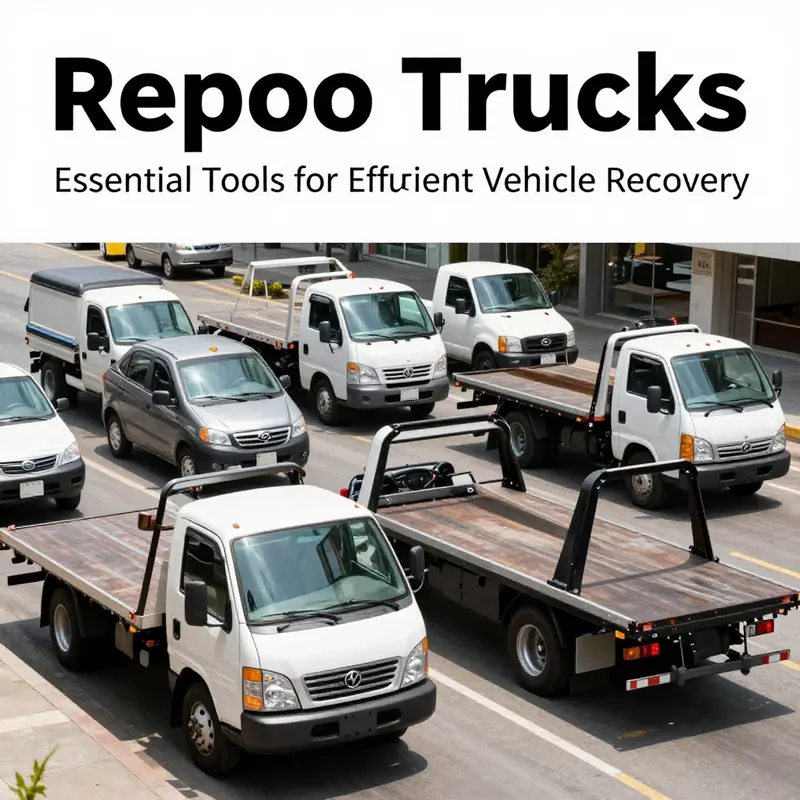
A repo truck is more than a vehicle with a tow apparatus; it is a carefully engineered tool designed to recover a lender’s collateral with precision, speed, and minimal disruption to surrounding property. In the broader landscape of consumer credit, repossession serves as a last-resort mechanism for reclaiming vehicles when borrowers default on loans or leases. The truck, its crew, and the procedures that guide a recovery all work in concert to ensure that the process is legally compliant, as discreet as possible under the circumstances, and safe for everyone involved. To understand what a repo truck is, it helps to imagine it as a moving extension of the financial system’s security interest in a vehicle. When a borrower falls behind, the lender relies on written contracts, legal authority, and a recovery plan that uses the truck as a tool to take back what was pledged as collateral. The result is a controlled removal that protects the lender’s investment and preserves the integrity of the vehicle for resale at an auction or through other disposition channels. The truck’s design reflects this dual purpose: to exert enough force and control to secure the vehicle, while minimizing damage to it and preventing collateral from disappearing into the wrong hands. In practice, the equipment carried on a repo truck is deliberately selected to expand the operator’s ability to handle a wide range of scenarios, from urban driveways to rural backroads and, occasionally, delicate placements on crowded streets. The work is built on a sequence of decisions about accessibility, vehicle condition, and legal authorization, all of which shape the choice of the right recovery method for a given situation. The most common modes of recovery fall into a few broad categories, each with its own operational logic and safety considerations. The flatbed method, for instance, is the workhorse of the industry for many mid- to high-value vehicles. A flatbed tow truck features a flat, horizontal platform that can be leveled to ground level and act as a bridge from the roadway to the vehicle to be recovered. This approach minimizes contact with the tires, suspension, and undercarriage, reducing the risk of additional damage during transport. The flatbed is particularly advantageous when the vehicle’s value justifies the need to preserve its condition: luxury cars, performance models, or vehicles with fragile components benefit from being loaded and secured on a level surface rather than being hauled on wheels. In dense urban settings, though, the flatbed can be constrained by space and clearance, making it less practical where tight alleys, low-hanging signs, or overhead obstacles limit access. In such cases, wheel-lift tow trucks enter the scene. These vehicles raise one end of the vehicle—usually the front or rear wheels—off the ground and pull the rest of the car onto a set of guided rollers or a sling. The wheel-lift approach is more compact, capable of navigating tighter spaces, and quicker to deploy in certain limited-access environments. Yet it carries a higher risk if not executed with precision; the tires and suspension can suffer from improper alignment, and the load distribution must be carefully controlled to avoid unintended damage in transit. A third category, recovery vehicles, comes into play when a vehicle is stranded in challenging terrain or otherwise difficult to reach, such as ditches, snow, mud, or rural properties with uneven access. Recovery units are specialized and rely on winches, pulleys, high-strength cables, and off-road chassis to extract the vehicle before it is loaded onto a carrier for transport. These machines require skilled operators who can assess the terrain, anchor points, and potential hazards, ensuring both the vehicle and the recovery crew remain safe. Finally, cooperative repossession represents an approach that relies on the vehicle owner’s consent. In these cases, the tow operation can be conducted with minimal intrusion, connecting the tow equipment to the vehicle’s frame or hitch using secure hooks and a controlled, non-invasive process. The cooperative model underscores the principle that repossession, when possible, should aim to minimize distress and property damage while still achieving the lender’s objective. Across these variations, the repo truck is equipped with heavy-duty winches, robust anchors, and secure tie-down systems designed to control the vehicle during loading and transport. Chains, straps, and wheel restraints are selected to match the vehicle’s weight, dimensions, and points of attachment. Modern recovery work also emphasizes situational awareness: the operator must interpret surroundings, consider pedestrians and bystanders, and adjust approach angles to maximize safety and efficiency. Beyond the speed and precision of the operation lies a broader framework that connects the mechanics of towing with the ethics and regulation surrounding repossession. In practice, a repossession is not simply about physically removing a vehicle; it is about enforcing a right established by contract in a way that is legally permissible and procedurally transparent. Lawful repossession typically requires proper notice and, in many jurisdictions, a court order or at least adherence to statutory requirements that govern when and how a vehicle can be seized. Operators must confirm the vehicle’s location, ownership, and outstanding debt, all while avoiding actions that could be interpreted as harassment or harassment-like conduct. The choreography of a typical repossession balances efficiency with care. The truck approaches the scene, the driver outlines the plan, and the vehicle is prepared for loading. If the owner is cooperative, the process can proceed smoothly, with the vehicle responsibly rolled onto the flatbed or secured with wheel restraints and then transported to a storage facility or auction site. If resistance occurs, operators rely on their training and legal authority to de-escalate the situation and, when necessary, document the encounter as part of the repossession record. The chain of custody becomes a record that can be referenced later in the disposition process, including auction or resale, and can also play a crucial role if disputes arise over what items were or were not inside the vehicle at the time of recovery. The practical realities of running a repo operation also touch on the maintenance and readiness of the fleet. Repo trucks spend long hours in variable weather, face tight spaces, and must be able to respond quickly to calls across a region. This reality makes routine maintenance not just a prudent practice but a foundational requirement. A well-maintained fleet reduces downtime, preserves the condition of the collateral, and protects drivers from preventable mechanical failures during critical operations. For readers who want a sense of practical, day-to-day considerations tied to the broader topic, the industry’s maintenance philosophy often parallels broader fleet-management principles. Keeping up with fluid changes, inspecting winches for wear, testing braking systems, and ensuring that hydraulics deploy smoothly are all part of sustaining an effective repossession operation. To those studying the field or considering the ethics and operational realities of repossession, a look at related maintenance and logistics content can provide complementary perspectives. For more contextual industry discussions, the Master Truck Repair blog offers accessible insights and practical guidance on truck care and recovery-related topics, which can be a helpful companion read during a broader exploration of repo trucks. (https://mastertruckrepairllc.com/blog/) As a final frame, understanding repo trucks invites a broader reflection on the balance between finance, property rights, and the practicalities of automotive recovery. The equipment exists to support the lender’s security position, but the process must be carried out within a framework that respects consumer rights, safety standards, and the rule of law. Consumers who believe their personal belongings were taken in a repossession can face difficult questions about what was inside the vehicle at the time of recovery. Documentation ahead of time—inventory lists, photos, and notes—can be crucial in any dispute. If items are missing, the burden often falls on the repossession company to demonstrate that proper procedure was followed and that the inventory reflects what existed at the time of recovery. When disputes arise, contacting state regulatory offices or seeking legal counsel can help evaluate potential claims related to the repossession process. The interplay of legal permissions, operator skill, and the vehicle’s physical state underscores why the repo truck is not simply a tool for pulling a car away. It is a carefully adapted instrument in the financial ecosystem, designed to recover collateral while preserving safety, minimizing unnecessary damage, and supporting the orderly disposition of the asset. That alignment of objectives—lawful authority, professional execution, and respect for the property involved—offers a clearer lens on what a repo truck truly represents: a mobile, purpose-built solution for reclaiming value in a complex credit landscape. For readers seeking additional, outside perspectives on consumer rights and repossession, the Federal Trade Commission provides guidance and safeguards that frame responsible practices in this field: https://www.consumer.ftc.gov/articles/0175-repossession.
The Quiet Mechanics Behind Repo Trucks: How Repossession Tow Vehicles Safely Reclaim Collateral
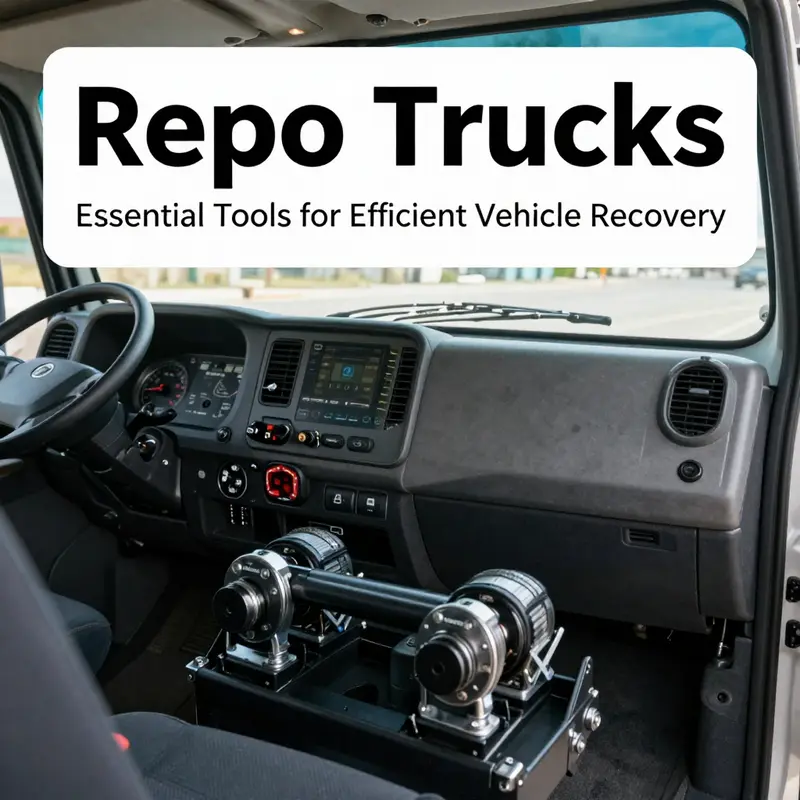
A repo truck is more than a specialized tow vehicle; it is a carefully engineered tool designed to recover a loan’s collateral with precision, speed, and restraint. In the world of auto finance, where a borrower’s default can ripple through a lender’s balance sheet, the repossession tow truck stands at the intersection of legality, technology, and field craft. Its purpose is to remove a vehicle in a way that preserves its value, protects its structural integrity, and minimizes risk to bystanders and property. This is not just about moving metal from point A to point B; it is about restoring control to financial agreements while maintaining safety and due process. The core idea that ties all repo trucks together is that they are built to execute complex recoveries under diverse conditions, from urban streets to muddy rural lanes, and to do so without compromising the legal footing of the repossession itself.
The most recognizable distinction within the repo-truck family is the choice between flatbed tow trucks and wheel-lift tow trucks. A flatbed uses a hydraulic platform that lowers to ground level, allowing the entire vehicle to be driven or winched onto the bed. This approach is ideal for vehicles that deserve protective handling or that arrive at the recovery site with minimal damage. It also simplifies securing the vehicle for transport, since it sits flat and steady, reducing the risk of tire or undercarriage harm during motion. By contrast, a wheel-lift system relies on a hydraulic arm that grasps a vehicle by one or more wheels, hoisting it off the ground for immediate removal. Wheel-lift is faster and more versatile for rapid responses, especially when time is of the essence. Yet it requires careful operation to avoid contact with bumpers, fenders, or wheel components that could suffer scuffs or dents. Each system embodies a different balance of speed, protection, and risk, and the choice often comes down to the vehicle’s condition, the environment, and the lender’s policy on collateral handling.
Beyond these primary configurations, repo trucks deploy a suite of specialized recovery methods designed to handle the unexpected. When a vehicle sits in mud, snow, a ditch, or a tight private-property alley, a standard tow might not suffice. In those cases, operators bring in winches, pulleys, and high-clearance recovery equipment that can anchor to a sturdy point and gently but firmly pull the target vehicle free. The winch is the core force multiplier here, converting the truck’s horsepower into controlled, line-tensioned motion. Pulleys and attachment points help distribute load to reduce strain on frames and suspensions. The result is a coordinated extraction that preserves the vehicle’s mechanical integrity while eliminating the risk of the vehicle becoming a roadside hazard. It is a careful choreography that blends mechanical leverage with situational awareness.
A critical thread running through any discussion of repo trucks is the division between cooperative and non-cooperative repossession. In cooperative repossessions, the owner agrees to the tow, and the recovery is typically straightforward. The operator attaches to the vehicle’s frame or hitch with secure hooks and straps, verifies identification and authorization, and proceeds with a clean, non-invasive removal. In non-cooperative cases, speed and discretion become paramount, and the operator must balance swift action with the safety of the scene and the legality of the operation. In both scenarios, the attention to detail is not cosmetic but essential. A misrouted strap, a loose hook, or an inattentive chain can cause damage to the asset or injury to people nearby, and that is precisely what repossession work aims to avoid. The modern repo-truck operator is, in many ways, a safety technician as much as a recovery specialist, trained to read a site as quickly as a mechanic reads a fault code.
The science behind these vehicles sits atop a foundation of robust mechanical systems. Hydraulic lifts power the bed’s movement, enabling the platform to rise, tilt, and slide with precision. Hoists and winches translate motor torque into controlled force, with built-in redundancy and load-rated hardware that keeps lines and chains secure during transport. The attachment points—frames, hooks, and recovery straps—are selected and inspected to ensure compatibility with the vehicle’s weight, center of gravity, and mounting points. Good practice demands continuous maintenance checks: hydraulic fluid levels, winch cable wear, and the integrity of tethers and anchor points. In a field where delays can compound risk, the reliability of these systems is non-negotiable; it translates directly into fewer failed recoveries and fewer collateral losses.
Yet the hardware is only part of the equation. The people who operate repo trucks bring a blend of technical know-how and situational judgment that can only come from hands-on experience. They must understand how different vehicles respond to pulling forces, how to adjust wheel contact pressures, and how to assess a scene for hidden hazards—low-hanging branches, oncoming traffic, or the possibility of hidden damage that could worsen if the vehicle is moved too aggressively. This blend of mechanical literacy and field instinct is what turns a powerful machine into a dependable tool for reclaiming collateral in a lawful and efficient manner. Training programs emphasize not just how to attach and tow, but how to read a property line, how to coordinate with property owners when on private land, and how to document each step of a recovery for accountability and verification.
The operation of a repo truck does not happen in a vacuum. It sits within a broader industrial ecosystem that shapes what the vehicle can do and how quickly it can be adapted to local requirements. In some manufacturing corridors, clusters of special-purpose truck producers cooperate with suppliers, component manufacturers, and research facilities to shorten lead times and deliver customized solutions. The example of a concrete industrial landscape in East Asia shows how a dense network of chassis suppliers, engine makers, and modular components supports rapid adaptation to different repossession needs. In such ecosystems, operators can request features like reinforced frames, specialized winches, or enhanced lighting packages, knowing suppliers can respond quickly because the entire supply chain is geographically and technologically integrated. This proximity—of makers, maintainers, and end users—helps ensure that a repo truck can be configured for a given job without sacrificing reliability or safety. It also underscores the reality that these vehicles are not one-off tools but part of a larger, evolving fleet that must stay compliant with evolving standards and regulations.
Maintenance and cost considerations are inseparable from capability. Fleet managers often face a balancing act: how to keep the fleet ready for demanding calls while managing downtime and depreciation. A practical approach starts with routine, preventive maintenance and expands to consideration of lifecycle costs, including insurance, storage, and periodic system overhauls. The relationship between maintenance and readiness is direct: a well-maintained hydraulic system provides smoother operation and reduces the likelihood of on-scene failures. That is why a growing number of operators emphasize preventive programs and clear budgeting for routine upkeep. For practitioners who want to anchor their plans in solid financial practice, a disciplined maintenance budget helps ensure the asset’s value is preserved and that the repossession team can respond promptly when a recovery window opens.
In this broader context, the repo truck becomes a tangible intersection of engineering, law, and business discipline. It embodies the shift from ad hoc tow services to specialized, compliant asset recovery. Its design decisions—flatbed versus wheel-lift, integrated winching, and payload capacities—are not arbitrary; they reflect a sustained effort to optimize for the realities of collateral reclamation. The operator’s decisions—when to pull, how to secure the vehicle, how to stage equipment to limit collateral exposure—are equally driven by risk management principles and a commitment to ethical practice. Even the choice of recovery method—cooperative versus non-cooperative—signals a legal and procedural mindset that recognizes the right of lenders to reclaim their property while respecting the rights of vehicle owners and bystanders.
For readers seeking a practical touchstone, consider how a single tool can adapt to a spectrum of scenarios, much like a well-tuned fleet can adapt to a changing financing landscape. The repo truck is, at its best, a disciplined instrument of efficiency and safety. It translates monetary value into a recoverable asset while keeping people and property out of harm’s way. As the industry continues to evolve, driven by advances in hydraulics, materials science, and digital monitoring, these trucks will likely become even more capable, with smarter load management, enhanced diagnostics, and tighter integration with warehouse and auction operations. The underlying principle remains constant: the safe, lawful reclaim of collateral is the core mission, and every technical choice—from the type of bed to the strength of a winch—exists to serve that mission more reliably.
In the broader arc of the article, understanding what a repo truck is also means recognizing how these vehicles fit into a practical workflow. A lender initiates a repossession under a lawful framework, often with court orders or authorized notices, and the recovery is coordinated through a repossession service that relies on the truck as its primary instrument. The vehicle arrives, is assessed, attached, and transported to a secure storage facility or to an auction site. Each step depends on a careful balance of speed, safety, and respect for property, a balance that the repo truck is uniquely designed to maintain. That balance—between mechanical power and procedural caution—defines the essence of a repo truck and anchors its role within the financial system it serves.
External reference for industry context: https://www.repotowingsolutions.com/complete-analysis-of-repo-towing-standards-types-and-industry-performance/
Repo Trucks and the Law: Rights, Limits, and What Repossession Really Entails
A repo truck is less a legal term and more a practical tool. In legal contexts, the phrase simply describes a tow truck used by a licensed repossession agent to recover collateral after a borrower defaults. That distinction matters. Calling the vehicle a “repo truck” does not confer special rights on the driver, nor does it change the legal limits that govern how and when a lender may reclaim property. The vehicle is an instrument of collection, and the law treats the act of repossession itself as the regulated event.
How the law frames repossession determines what a repo truck operator can and cannot do. The creditor’s right to recover a pledged asset springs from the loan or lease contract the borrower signed. That contract typically contains a clause granting the lender the power to repossess the collateral upon default. When a borrower stops paying, the lender may employ a repossession company and a repo truck to retrieve the vehicle without prior judicial process. This self-help remedy exists in most states because the collateral secures the loan and the creditor has an interest in minimizing losses.
But that contractual right is not absolute. The core legal limitation is the prohibition against a breach of the peace. Courts and statutes require that repossession be conducted peacefully. In practice, that rule means the repossession agent may not use force, threats, or confrontational tactics. They may not engage in behavior that could provoke a disturbance. If a repo truck operator breaks into a locked garage to seize a car, the act could be deemed a breach of the peace. Similarly, confronting a borrower aggressively, physically blocking their movement, or removing keys by force will cross the line. When a breach of the peace occurs, the repossession can become illegal, and the creditor and agent may face civil liability.
State laws add another layer of control. Each state sets its own rules for repossession. Some states require notice before repossession; others allow immediate action once a default occurs. Certain jurisdictions protect a borrower’s residence more strictly. For example, some states treat repossession from a borrower’s driveway differently than from a public street. A repo truck can usually recover a vehicle parked on public property without prior notice. But taking a vehicle from inside a private garage or from behind a locked gate can trigger trespass claims. Because rules vary, repo truck operators and lenders must know local law to avoid costly mistakes.
Documentation and proper procedure are crucial. Repossession companies using repo trucks must keep detailed records. Logs commonly include the date, time, and precise location of recovery, along with the method used to secure the vehicle. Photographs or video often document the vehicle’s condition and surroundings at the time of repossession. These records matter when disputes arise. If a borrower alleges wrongful repossession, a clear paper trail can demonstrate compliance with contract terms and state law. Conversely, missing or inconsistent documentation can weaken a lender’s position in court.
The methods repo trucks use are familiar. Flatbed towing places the vehicle on a platform. Wheel-lift towing lifts the front or rear wheels. Either method can be non-invasive when performed properly. But technique affects legal exposure. Removing a vehicle with on-hook towing while the owner is cooperative avoids many issues. A cooperative handover reduces the risk of claims about force or theft. Non-cooperative repossessions, by contrast, often require speed and discretion. In those cases, repo truck operators may act quickly to avoid confrontation, but they must still respect the line against breaching the peace.
Consumer protections have grown in recent years. Federal and state agencies monitor repossession practices and accept complaints about abuses. The Consumer Financial Protection Bureau has highlighted unfair or deceptive repossession practices in enforcement actions. Common violations include repossessing from private property without permission, imposing unreasonable fees for storage or repossession, and failing to provide required notices. When a borrower’s rights are violated, remedies may include return of the vehicle, damages, and sometimes statutory penalties for the lender or repossession company.
Practical consequences follow for both sides when a repo truck is misused. For lenders, a botched repossession can derail a repossession campaign and expose them to litigation, reputational harm, and regulatory action. For the repossession company, using a repo truck improperly can mean revoked licenses, fines, and criminal charges in extreme cases. For borrowers, an unlawful repossession can create immediate hardship. It can also become the basis for claims that may lead to the vehicle being returned, damages awarded, or the lender being barred from certain collection activities.
Borrowers do have specific rights after repossession. The lender must typically provide information about how to reclaim the vehicle or redeem the loan. This communication includes any payoff amount and the timeframe for reclaiming the car before it is sold at auction. The lender also must follow statutory notice requirements before disposing of the collateral. Failing to follow notice or sale procedures can render a post-repossession sale voidable and create liability for the creditor.
Repossession companies also face licensing and bonding requirements in many states. Licensing helps ensure that agents meet training standards and carry insurance. Bonding provides a fund borrowers can tap if the repo truck operator acts unlawfully. These regulatory controls help raise industry standards and provide practical recourse when problems occur. When assessing a repossession claim, courts often look at whether the agent was properly licensed and insured at the time of recovery.
The interplay between private contract rights and public legal limits makes repossession a balance of competing interests. Creditors need a reliable method to recover collateral, especially to protect lenders and other borrowers by limiting losses. At the same time, borrowers retain protections against abusive collection tactics. A repo truck is merely the vehicle that navigates this tension.
For vehicle owners and managers, understanding these boundaries is useful. If you face repossession, document everything. Note locations, times, and the identity of the persons who took the vehicle. Photograph the scene if safe. Ask for written notices about how to recover the vehicle and the exact charges you must pay. If you believe a repo truck was used unlawfully, file a complaint with your state attorney general or the federal agency that supervises unfair practices.
If you manage fleets or own multiple vehicles, consider where you park and how contractual terms might affect repossession risk. Information and resources for vehicle owners can help you prepare. For practical articles and guides related to truck ownership and maintenance, see truck owner resources on our blog.
A repo truck is not a mystical legal actor. It is a piece of equipment used within a regulated process. The law grants lenders rights to repossess, but it also draws clear lines. Respecting the prohibition on breaching the peace, adhering to state-specific rules, and maintaining proper documentation are the key legal guardrails. When all those elements are in place, repo trucks perform a lawful, necessary role in the credit system. When they are not, the consequences can be swift and severe for the parties that step over the legal line.
For authoritative guidance on repossession rules and consumer protections, refer to the Consumer Financial Protection Bureau: https://www.consumerfinance.gov/ask-cfpb/what-is-repossession-en-2786/.
null
null
Tow Line at the Edge: Safety Standards that Make the Repo Truck Reliable
A repo truck sits at the crossroads of finance, law, and road risk. In the quiet hours after a default, this specialized tow vehicle becomes a moving line of authority, a mechanical guarantor that a lender’s collateral will leave the scene with as little drama as possible. The scene on a northern street in winter or a dimly lit parking garage after hours is rarely picturesque, but it is precisely where the design and restraint of a recovery truck matter most. A repossession is not simply a matter of hooking a car and driving away. It is a controlled operation that must withstand the unpredictable friction of real-world conditions: tight spaces, onlookers, weather that skews traction, and, sometimes, terse property owners. In that context, safety standards do more than prevent accidents; they stabilize the entire workflow, increase reliability, and protect every person involved—from the operator to bystanders and the vehicle owner who awaits the outcome of a legal process.
The most compelling way to understand why safety standards have sharpened the repo truck’s role is to recognize the nature of the work itself. These trucks are designed to recover vehicles that have become collateral in a finance agreement. They must perform under pressure, often on uneven surfaces, slopey grades, or snow-frozen lots. They must manage heavy loads with a deft combination of speed and caution. And they must do so in a manner that minimizes damage to the recovered vehicle, the surroundings, and the people nearby. This is not a matter of brute force but of controlled application of force, precise attachment, and careful orchestration of winches, pulleys, and hydraulics. The modern repo truck relies on robust engineering that anticipates both typical grade scenarios and the outlier moments that can occur when a vehicle is left on a private driveway or in a tight garage stall.
At the core of contemporary safety discourse is a delimited but influential standard: DIN EN 16307-3:2023. Published in late 2023, it acts as a practical blueprint for the design and operation of industrial trucks that carry elevated operator positions or travel with elevated loads. Though the standard covers a broad class of industrial vehicles, its implications for recovery work are direct and meaningful. The document does not simply prescribe what a truck should be capable of; it prescribes how that capability must be realized in a way that protects people and maintains structural integrity under real-world use. The scope touches vehicles that rely on height, reach, and the need to secure loads securely while navigating dynamic environments. When provider and operator communities adopt this standard, they signal a shared commitment to reliability under highly varied conditions, including off-road recoveries, snow-covered terrain, steep access points, and crowded urban settings.
Design and construction provisions in the standard emphasize the need for structural integrity and stability. For repo tasks, this means frames that can absorb the sudden jolts of pulled vehicles without yielding, chassis systems that keep the center of gravity predictable, and attachment points engineered to resist fatigue. A crucial implication is that the balance between weight, reach, and load-bearing capacity must be engineered into the truck from the outset, not retrofitted after a scare or a near-miss. This forward-thinking approach reduces the probability of equipment failure mid-recovery, which translates into fewer interruptions, less vehicle damage, and safer operations for personnel who must approach a vehicle in tight spaces to hook, strap, and guide a tow.
Operator protection systems receive particular emphasis in the standard. ROPS, or rollover protective structures, and FOPS, falling object protective structures, are not decorative add-ons in this context. They are non-negotiable safety features that acknowledge the real hazards of elevated working positions. In the repossession sector, operators often work on uneven ground, near traffic, or in cluttered environments where debris, ice, or swaying loads could endanger anyone nearby. The standard’s insistence on protective structures is a reminder that risk management is not an abstract ideal but a practical requirement. A repo crew that can rely on ROPS or FOPS is less likely to suffer injuries from a tip or a falling load, and therefore can operate with greater confidence and speed when a vehicle must be retrieved and secured.
Emergency stop functions form another pillar of the approach. When a line, winch, or hydraulic system behaves unpredictably, the ability to halt operations instantly is a lifeline. In repossession work, where a vehicle can lurch or shift during attachment, the availability of a precise, accessible emergency stop becomes a core element of safe practice. It provides a failsafe against overextension, over-tensioning, or unexpected load movement that could jeopardize both the operator and bystanders. The directive to embed reliable emergency stop mechanisms reinforces a culture of caution where speed does not override safety.
Safe operation procedures, as outlined by the standard, extend beyond the mechanical. They address the cognitive and procedural dimensions of recovery work: step-by-step checklists, risk assessments before entering a site, communication protocols with property owners or onlookers, and explicit guidance for operating in off-road or poor-weather environments. The chapter on procedure within DIN EN 16307-3:2023 translates into a practical playbook for the field. It helps crews visualize how to sequence movements, verify anchor points, and prepare for contingencies—whether a parking lot is crowded or a rural driveway has a hidden ditch. In doing so, it reduces the likelihood of improvisation in dangerous circumstances and instead elevates the operation to a disciplined, repeatable process.
The implications for the types of repossession recoveries are notable. Flatbed tow configurations, which transport vehicles on a level platform, and wheel-lift systems, which lift a vehicle by its wheels, each demand careful adherence to the standard to ensure stability and frame protection during transport. Off-road recoveries—common in rural regions or locations with snow, mud, or uneven terrain—pose additional challenges, and the standard’s safe operation guidelines are designed to support these scenarios. The practical applications include the safe use of winches, pulleys, and high-clearance recovery vehicles. Each component must be integrated in a way that preserves the vehicle’s integrity while maintaining the integrity of the recovery crew’s movements. The on-hook towing method—where the tow vehicle connects to the other vehicle’s frame or hitch—also receives emphasis for its potential to minimize damage and improve control, provided all safety prerequisites are fulfilled.
Beyond the hardware and procedures, the standard implicitly elevates the human element. Operators must receive training that aligns with these safety requirements and with local laws governing repossession, property access, and traffic behavior. That alignment reduces the tension often found in repossession scenarios and helps minimize conflict by demonstrating a clear, professional, standards-driven approach to withdrawal and transport. In turn, lenders, repossession agencies, and law enforcement can work with greater clarity, knowing that the equipment in use meets a consistent, high bar for safety and reliability. This is not merely about avoiding fines or penalties; it is about creating a predictable environment in which delicate moments—such as securing a vehicle on a private property or at the edge of a street—are managed with measured precision rather than improvisation.
For practitioners, the value of such standards is practical and immediate. They encourage proactive maintenance and inspection regimes that protect against unexpected failures. They justify investment in operator training and in equipment features that reduce the risk of damage during recovery operations. They also support a transparent and auditable process that can be shared with stakeholders, from lenders to property managers. In this light, the repo truck emerges not as a solo instrument but as part of a safety-compliant system that coordinates vehicle design, operator capability, and environmental conditions into a reliable whole. A well-maintained, standards-driven recovery fleet has fewer downtime incidents, more predictable turnaround times, and a reduced likelihood of costly repairs or legal complications that can accompany a mishandled repossession.
Achieving this reliability does not happen by renaming old practices or adding a few gadgets after the fact. It requires a comprehensive approach that begins with the design phase and travels through the end of the vehicle’s life cycle. In practice, that means selecting chassis configurations with appropriate load paths, ensuring that attachment hardware remains within fatigue limits, auditing operator training against the latest safety guidance, and instituting a culture of hazard recognition that treats every new site as potentially dangerous until proven otherwise. It also means maintaining an openness to updates in safety standards and to the adoption of best practices that emerge from the field. When operators, maintenance teams, and lenders collaborate around a shared framework, the repo truck becomes a dependable tool rather than a liability—capable of performing its essential function while keeping people and property out of harm’s way.
For readers seeking a practical touchstone on the maintenance and financial planning that support such safety outcomes, consider exploring budgeting for routine truck maintenance. This resource offers actionable guidance on allocating resources for inspections, replacements, and ancillary safety features that directly influence reliability on the job. Budgeting for Routine Truck Maintenance.
In sum, the DIN EN 16307-3:2023 standard represents more than a regulatory checkbox; it is a blueprint for a disciplined, safety-first approach to repossession tow work. It ties together design discipline, protective systems, emergency responsiveness, and procedural rigor into a coherent framework that supports reliable operations across a spectrum of challenging environments. The repo truck, when conceived and operated within this framework, is more than a vehicle; it is a responsible instrument in the complex choreography of financing, law, and road safety. To those who rely on these machines to fulfill legal and financial commitments, the assurance that a recovery operation can proceed with predictable safety and control is as crucial as the recovery itself.
External resource: For a formal reference to the standard and its broader implications, visit the ISO page dedicated to DIN EN 16307-3:2023: https://www.iso.org/standard/94587.html.
Final thoughts
Repo trucks are not merely vehicles for recovery but essential tools that support the financial and operational frameworks of various industries. By understanding their types, mechanics, legal implications, economic impact, and safety standards, fleet managers and logistics providers can leverage repo trucks effectively in their operations. The importance of these trucks extends beyond mere repossession; they are key players in ensuring financial stability for lenders and securing collateral in the automotive finance sector.