
Starting a truck repair shop presents a lucrative opportunity for fleet managers, trucking company owners, and logistics providers. In an industry where downtime can equate to profit loss, establishing a reliable repair shop is crucial for maintaining operational efficiency. This guide offers a structured approach to navigate the legalities, strategic planning, and logistical considerations involved in opening your truck repair facility. Each chapter delves into critical components, including legal requirements, comprehensive business planning, and the optimal setup of your repair space. By understanding these foundational elements, you will equip yourself with the knowledge necessary to launch a successful operation tailored to the specific needs of your industry.
Laying the Legal Groundwork: Navigating Licensing, Permits, and Compliance to Launch a Truck Repair Shop
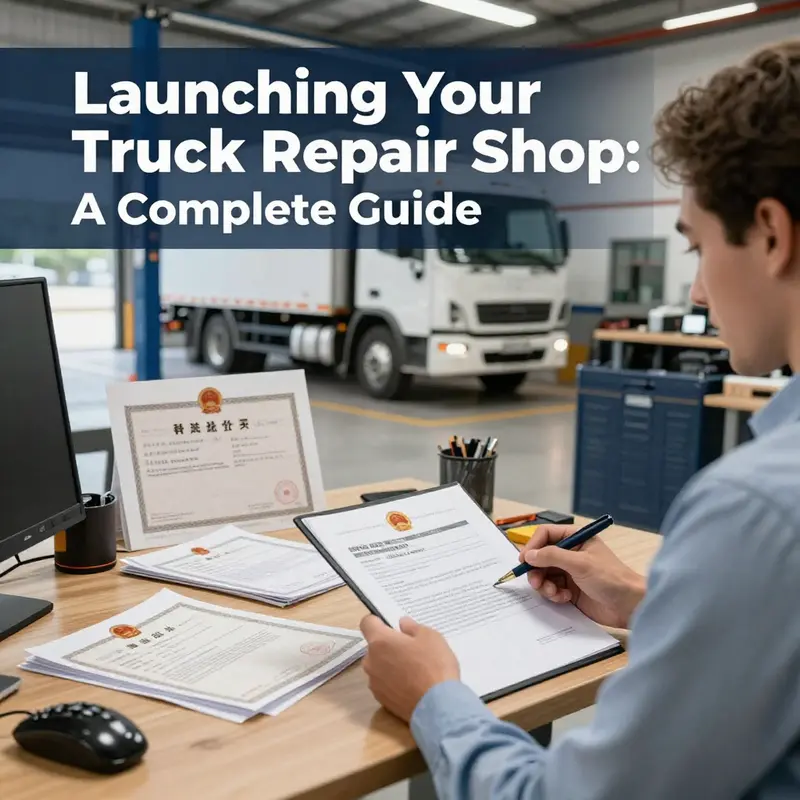
Starting a truck repair shop is as much a legal and regulatory undertaking as it is a technical one. The trucking industry moves on a timetable of schedules, wheels, and permits, and the business that services those wheels must fit into a framework designed to protect drivers, workers, communities, and the environment. The path from idea to a fully compliant shop is not a single milestone but a series of interlocking steps that shape your facility, your team, and the way you operate each day. When this foundation is solid, it creates a runway for service quality, reliability, and growth. When it is weak, the consequences ripple through safety, finances, and reputation. With the landscape varying by state and even by county or municipality, the core principle remains the same: compliance is a competitive advantage, not a box to check after you’ve opened the doors. In practice, this means aligning your business structure, licensing, facility design, environmental stewardship, safety culture, and recordkeeping with the expectations of regulators, insurers, and customers, so that every repair, every inspection, and every diagnostic is grounded in documented authority and responsible practice.
From the moment the idea of a truck repair shop takes shape, you will likely begin with the fundamental act of registration and licensing. This starts with choosing a business structure—sole proprietorship, limited liability company, or corporation—and then registering the name with the appropriate state agency. An Employer Identification Number, or EIN, is typically obtained from the federal internal revenue service and serves as the business’s identity for payroll, tax reporting, and banking. Even at this early stage, the regulatory architecture begins to take form: you are not just creating a brand; you are establishing the legal fabric that will enable you to engage customers, hire technicians, and manage financial risk. The best sequence is to align structure and registrations with your long-term objectives, because the shape of your legal entity affects licensing requirements, liability exposure, and eligibility for certain permits.
In most states, operating a motor vehicle repair business requires a specialized license or certification that acknowledges your capacity to diagnose and repair vehicles for compensation. The requirement is more than a formal hurdle; it signals that your shop is equipped to handle the technical complexity of modern trucks. While the exact licensing framework varies, the prevailing logic is consistent: you must demonstrate competence in the systems you service and comply with industry standards to protect public safety and consumer interests. An example from one prominent regulatory framework highlights that licensing may involve a technical examination focused on knowledge of vehicle systems and repair procedures. Even if your jurisdiction follows a different path, the underlying expectation remains: professionals in the repair sector must be verifiably capable of delivering safe, reliable work before they are authorized to operate commercially. For prospective shop owners, this means budgeting time and resources for study, testing, and the potential ongoing education required to maintain credential validity as technology evolves. A practical path is to connect early with your state’s motor vehicle or transportation department, request the exact licensing requirements for your intended scope of work, and map those requirements onto your hiring and training plan so that no technician is asked to perform unsanctioned work.
Beyond licensing, the physical footprint of your shop brings additional regulatory considerations. Regulators expect that the facility is suitable for its stated use, accessible for customers and suppliers, and designed to minimize risk. This translates into adequate space for service bays, diagnostic areas, parts storage, and customer reception, with attention to layout that supports safe workflow and efficient downtime reduction. Zoning compliance matters as well; a site that sits in a residential district or a zone with restrictions on industrial activity can stall or derail a project before paint ever dries or a lift is installed. A well-chosen site—near major routes and with good visibility—can facilitate quick access for fleets and reduce the overall time trucks spend in the shop. Yet convenience cannot trump compliance. The property must meet local building codes, fire safety requirements, and, in some cases, environmental rules tied to emissions, wastewater, and hazardous material handling. If your operations will include a spray booth, welding area, or any process with fumes or particulates, you will face additional permitting tied to ventilation, filtration, and air quality management. A thoughtful approach to facility planning, guided by local authorities and a qualified contractor, can avert costly retrofits and compliance gaps after you’ve already started taking appointments.
Environmental compliance is a central pillar of legal readiness for a truck repair shop. The realities of the trade include the daily handling of used oil, antifreeze, batteries, solvents, and sometimes paints and coatings. Regulations at the federal and state levels require you to manage these materials safely, store them properly, label containers clearly, and arrange for lawful disposal through licensed recyclers or hazardous waste processors. An environmental permit is often necessary to authorize activities such as bulk storage of hazardous waste, wastewater management, and the operation of systems needed to prevent spills and protect soil and groundwater. Depending on the scale of your shop, you may be asked to prepare a spill prevention plan, install oil-water separators in drainage systems, or ensure that ventilation and filtration meet air quality standards for paint and solvent use. Compliance is not simply about avoiding fines; it is about setting a disciplined routine that minimizes environmental impact, preserves community trust, and reduces the operational risk associated with waste handling. The investment in proper containment, secondary containment for containers, leak detection, and employee training on hazardous materials handling pays dividends through lower incident rates, smoother regulatory inspections, and clearer documentation trails.
The regulatory conversation also extends to safety and labor standards. The Occupational Safety and Health Administration, or OSHA, sets expectations for safe working conditions, training, and injury reporting. A truck repair shop operates in a dynamic, potentially hazardous environment where lifting equipment, high-pressure air lines, and energized electrical systems converge with hot metal and heavy vehicles. Establishing safety protocols—covering lockout/tagout procedures, personal protective equipment, machine guarding, and fire prevention—creates a culture that protects workers and reduces downtime caused by accidents. Training is not a one-time event; it is an ongoing obligation that evolves with new technologies, such as diesel fuel systems, hybrid and electric propulsion, and increasingly sophisticated diagnostic tools. The safety framework you construct will ripple into every facet of the business—from daily work practices to insurance premiums and regulatory audits—and it should be designed to withstand both routine checks and the occasional surprise inspection.
Insurance is the practical counterpart to regulatory readiness. A comprehensive package typically includes general liability, workers’ compensation, and property insurance to cover the shop’s physical assets and the liabilities that come with day-to-day operations. The right coverage is a proactive line of defense against the unpredictable nature of heavy-duty repair work. It also intersects with licensing and contract requirements, as some licenses are contingent on maintaining certain insurance thresholds or carrying specific endorsements. The process of securing insurance often requires details about your facility layout, estimated annual repair volumes, the training records of your technicians, and your environmental and safety programs. In conversations with insurers, clarity about your internal processes—how you document work, how you track parts and labor, and how you manage customer communications—can translate into better terms, lower premiums, and more confidence from customers who depend on your shop for reliable, accountable service.
Recordkeeping and quality assurance are the connective tissue that binds licensing, environmental compliance, safety, and customer trust. Regulators and auditors typically expect detailed documentation of all work performed, including parts used, labor times, and customer consent. The ability to produce a transparent, auditable trail supports the integrity of your repair work and helps protect both you and your customers in disputes or warranty considerations. A robust recordkeeping system should integrate with your work order process, inventory management, and customer communications. It should also support your reporting requirements to regulatory bodies and make it easier to demonstrate adherence to quality standards. In practice, this means establishing standardized procedures for documenting inspections, calibrations, and diagnostic procedures, and ensuring that technicians sign off on each step of a repair. It also means building a culture where customers are informed about the scope of work, the expected timelines, and the estimated costs before any service is performed, so there is a shared understanding of the transaction from the outset. The best shops treat documentation not as a bureaucratic burden but as a service promise: a clear, verifiable record that a truck has been repaired correctly and safely, with traceable parts and transparent labor charges.
As you navigate licensing, site selection, environmental compliance, safety, and insurance, you will inevitably discover how these threads weave together into a cohesive operating model. Every document you file, every permit you secure, and every procedural policy you adopt contributes to a system that reduces risk, speeds throughput, and builds trust with customers who rely on your shop to keep their fleets moving. The practical effect is a business that can withstand audits and inspections while delivering consistent, predictable quality. This is the essence of professional preparedness in the truck repair sector: a disciplined approach that treats compliance not as a barrier to entry but as the foundation for dependable service, long-term relationships, and sustainable growth. For any owner who wants to avoid the common pitfalls of starting a repair business, the lesson is straightforward. Start by mapping the regulatory landscape early. Build your team with credentialed technicians and a culture of safety and accountability. Design your facility and operations with compliance in mind, and then document everything with rigor. When you do, you create a business that is not only capable of repairing trucks but also capable of standing up to the scrutiny that comes with serving the critical logistics networks that keep goods moving.
To deepen your understanding of licensing landscapes and how they can apply in your specific state, consider exploring practical perspectives from experienced shop owners. The Master Truck Repair Blog offers real-world insights into regulatory navigation, licensing experiences, and what it takes to operate within broader compliance expectations while scaling service capacity. This resource can complement official guidance by providing context, examples, and questions that a new shop owner might not yet consider. If you find the topic touches on areas where your jurisdiction diverges from the examples described here, you can use that blog to frame discussions with regulators, insurers, and legal counsel as you finalize your compliance roadmap. Master Truck Repair Blog
As you prepare to move from planning into operation, remember that your licensing and regulatory posture is not a one-time checklist but a living framework. It should adapt as your service scope expands—from basic preventive maintenance to heavy-duty diagnostics, component remanufacturing, or specialized bodywork. It should also accommodate shifts in environmental and safety expectations as technology advances and as community standards evolve. By integrating licensing, facility design, environmental stewardship, safety culture, and rigorous recordkeeping into a single, coherent operating philosophy, you set your truck repair shop on a path toward reliability, accountability, and sustainable success. For a broader view of steps and resources that can support you as you embark on this journey, and to connect with federal guidance that can shape your approach to starting a service business, consider the Small Business Administration’s starting guide, which consolidates federal and state resources into a practical, structured path toward launch. External resources can help fill gaps, but the core work remains local, tangible, and deeply tied to the community you will serve. See dedicated licensing and regulatory guidance relevant to your state or region for a precise, jurisdiction-specific map of requirements and timelines.
External resource: https://dmv.ny.gov/vehicle-and-traffic-law/repair-and-diagnostic-services
Blueprint for Uptime: Planning and Market Insight as the Engine of a Successful Truck Repair Shop
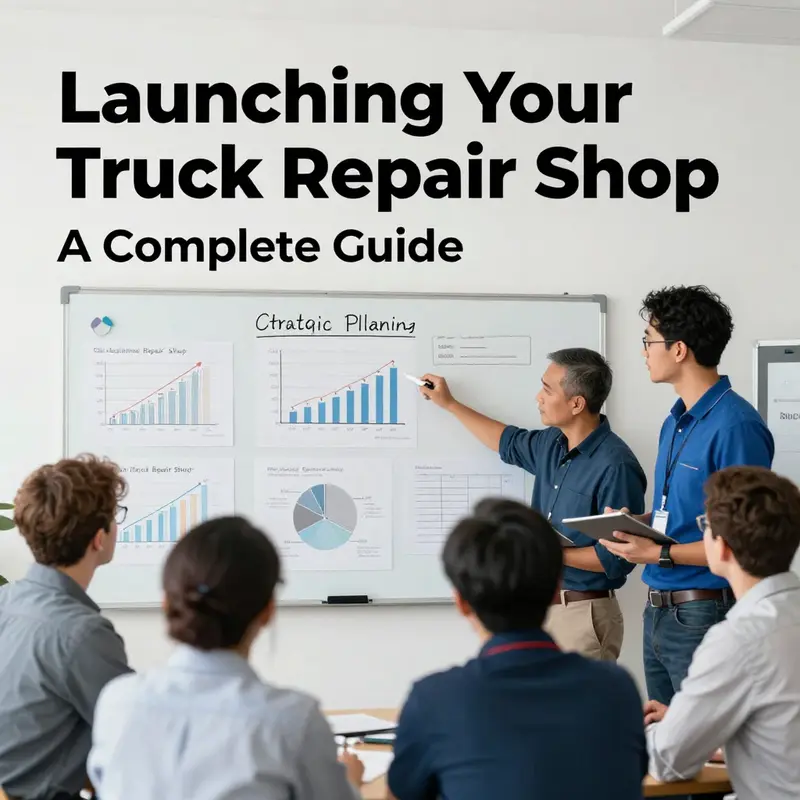
A truck repair shop does not emerge from ambition alone. It grows from a deliberate alignment of market realities, financial discipline, and a clear promise to keep fleets on the road. In the current landscape, opportunity sits in high-value diagnostics, preventive maintenance programs, and fleet partnerships that prioritize uptime over price competition. A practical plan translates market signals into a defendable path to profitability. It starts with a reality-grounded assessment of what fleets need, where gaps exist, and how a new shop can prove its worth within the local logistics network. The plan should be data-driven, test assumptions, and present an operational model that ties pricing, capacity, and people to measurable uptime for customers and predictable cash flow for the business. The planning document should be a living guide, not a brochure, describing why customers will choose this shop, which services will be offered, how pricing will reflect value, and how digital tools will improve visibility, speed, and trust.
Market insight should connect macro trends with on-the-ground service lanes. Many regions rely on box trucks and light-to-medium duty fleets for last-mile work, making uptime a priority rather than a luxury. A new shop can win by offering rapid diagnostics, transparent pricing, proactive maintenance, and a clear path to fleet management support. The market study should map the local fleet landscape, assess competitors, and identify niches where a focused service mix can outperform generalists or dealerships on uptime and reliability. Regulatory and environmental considerations—from waste handling to permitting—should influence site choice and operating plans.
The service blueprint translates insight into a tangible offering. Core lines might include routine maintenance, diagnostics, electrical repairs, and preventative maintenance programs tied to fixed or tiered pricing. Advanced capabilities such as fleet dashboards, maintenance scheduling, and telematics-enabled insights can be phased in as the business scales and technicians gain new skills. A disciplined pricing approach should emphasize value and predictability, helping fleet managers justify maintenance spend in quarterly reviews while protecting margins from ad-hoc discounts.
Operational discipline follows planning. Standard operating procedures for work orders, time tracking, quality control, and customer communication turn skilled labor into consistent outcomes. A phased training plan ensures that front-line staff speak a common language about uptime, service levels, and customer expectations. A customer experience that shows progress, provides clear estimates, and offers timely updates reduces downtime friction and builds trust. Finally, the plan should include a straightforward financial model with revenue forecasts, cost structures, capital needs, and sensitivity analyses to illustrate a credible route to positive cash flow within a defined horizon.
This chapter closes with a practical roadmap: start with a minimal but complete service mix, validate demand in the market, adjust offerings and prices as data comes in, and reinvest in higher-value capabilities and scalable processes. Engage potential customers early, seek feedback from regional logistics groups, and measure what matters—uptime, utilization, pricing realization, and customer satisfaction—to steer the business toward sustainable growth.
Positioning for Profit: Mastering Location and Facility Design for a Truck Repair Shop
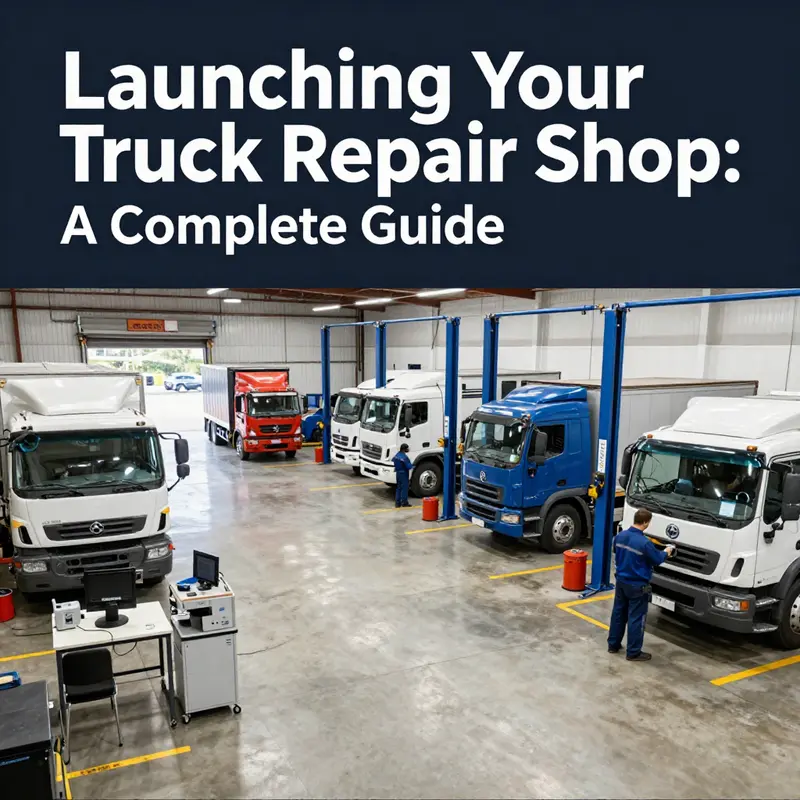
Choosing where to locate a truck repair shop and how to lay out the facility are decisions that ripple through every later success metric—downtime for customers, technician efficiency, safety, and long-term profitability. This chapter treats location and facility design not as background concerns but as strategic levers that shape service capability, regulatory compliance, and the everyday rhythm of daily work. The aim is to translate a dense matrix of requirements into a coherent, practical path that links the street to the shop floor, the city’s traffic patterns to the flow of ongoing repairs, and a formal permit checklist to a productive, well-ordered operation.
Begin with the river of trucks that moves through a region. The location must sit in a corridor where heavy vehicles already travel, park, or idle—a place where long-haul fleets and regional carriers create predictable demand. Proximity to major highways and freight corridors does more than bring customers; it reduces the friction of getting a service vehicle into the bays during peak hours and makes it easier for customers to drop off or pick up without disrupting their own schedules. The ideal site isn’t a perfect, isolated ideal but a pragmatic nexus where accessibility and visibility meet regulatory comfort. It’s a balance between convenience for drivers and compliance with local zoning and environmental rules. You will often find that the most productive sites are in industrial or commercial zones where noise, emissions, and truck traffic are anticipated and regulated rather than treated as incidental conflicts.
Beyond the highway tapestry, the shop needs space that matches the scale of the work and the realities of a heavy-vehicle repair workflow. A practical minimum is a footprint large enough to house multiple service bays, an area for heavy lifting, a separate space for battery and electrical work, and a dedicated section for parts storage and a modest customer-facing area. In many markets, 5,000–10,000 square feet is a reasonable starting point for a shop aiming to handle several service bays with a productive mix of diagnostics, repairs, and preventive maintenance. However, the right size depends on anticipated volume, the breadth of services offered, and the expected number of technicians. It’s easy to underestimate the time a heavy truck spends in a bay during complex repairs; overestimating space provides a cushion that prevents work-from-stalling bottlenecks during peak periods.
Zoning is a gatekeeper. Local authorities want to see alignment with land-use rules, noise ordinances, traffic impact, and environmental safeguards. A site that would otherwise be ideal can be rendered unusable by a zoning mismatch. A proactive approach is to engage early with the planning department or a local small business development center to confirm that your intended use is permitted in the selected district and to understand any special-use permits or conditional approvals that may apply. This proactive step saves time and avoids late-stage surprises that could interrupt construction, delay openings, or force expensive redesigns.
A more granular layer of site planning lies in the way the facility will manage environmental and community considerations. Heavy-duty repair work involves oils, solvents, antifreeze, and, in some cases, welding fumes or paint. Even if you plan to operate under best-practice waste handling, you must account for the possibility of spills, the need for proper containment, and the safe storage of hazardous materials. Downwind positioning from residential neighborhoods, careful dust and fume management, and a thoughtful approach to traffic flow are not merely good practice; they are often conditions of permit approvals and ongoing community relations. The market is forgiving, but it preserves its license to operate with ongoing attention to environmental responsibilities. Your plan should reflect this reality through containment systems, waste segregation, and a clean, well-labeled storage scheme.
Within the site, the physical layout is the spine of efficient work. It is worth drawing a mental map of the flow from receiving trucks to bays, to testing and inspection areas, to storage, and finally to the customer exit. The site should be organized into clearly defined zones that enable workers to move with purpose and safety. A service-bay zone should be physically separated from a battery and electrical workshop, given the high risk associated with high-voltage systems and the need for specialized PPE and insulated tooling in that area. A chassis and frame repair space, outfitted with heavy-duty lifts and alignment tools, should be placed where there is ample room to maneuver large components without impinging on other operations. Storage areas for fluids, filters, and spare parts should be organized by category and sized to prevent bottlenecks in the supply chain to the bays. A customer waiting area helps to reduce the perception of clutter while a separate tool and equipment storage area limits the risk of tools wandering into the customer space or the bays themselves.
The floor itself becomes a critical instrument in safety and efficiency. A durable, non-slip surface is essential in a facility designed for heavy trucks, lubricants, and coolant. Floors must support the weight of the largest equipment, endure the abrasion of moving machines, and withstand the presence of oil and hydraulic fluids without swelling or delaminating. Drainage must be integrated into the floor design, with floor drains connected to an oily-water separator where feasible to prevent contamination of municipal sewers. A closed-loop system for collecting used oil and solvents is a standard expectation in modern facilities. These features reduce environmental risk and maintain compliance with environmental regulations while also improving the shop’s housekeeping, which in turn supports a safer and more efficient workspace.
Ventilation stands as another non-negotiable. Exhaust from diesel engines, welding fumes, and solvent vapors must be captured and exhausted in a way that keeps the rest of the facility comfortable and safe. Mechanical ventilation, properly designed, protects technician health, preserves air quality for customers and staff, and reduces the risk of heat buildup in hot climates. Lighting is equally important; a well-lit shop reduces errors and improves safety, with bright, evenly distributed illumination that helps technicians see small leaks or subtle wear patterns that would otherwise slip by.
Electrical safety and grounding are more than code compliance; they are a daily reliability practice. Any high-voltage area, such as an electric-truck battery room or an area where high-voltage systems are tested, requires insulated tools, PPE, and a clearly marked workflow that enforces lockout/tagout procedures. Grounded outlets, GFCI protection, and segregated electrical spaces help minimize the chance of shocks or arcing, particularly in a shop that handles a mix of diesel, hybrid, and all-electric trucks as the technology landscape evolves. PPE should be a living part of the shop culture, not a checklist. Insulated gloves and boots, safety glasses or face shields, hard hats when required, hearing protection, and flame-resistant clothing in welding or fuel-related work are standard expectations that reduce the probability of injuries and claims.
A well-considered facility plan also becomes a powerful marketing signal. Customers evaluate a shop not only by the quality of its repairs but by the professionalism of its environment, the clarity of its workflow, and the perceived safety of the operation. The experience of driving into a clean, well-organized yard and walking into a reception area that feels like a business built to handle heavy work can shape trust. A facility that communicates order, safety, and efficiency tends to attract fleets and owner-operators who want their trucks serviced quickly and correctly, and it makes it easier to project a reliable image in the local market.
Permits and compliance are the bookends that keep a shop’s front door open. Before any work begins, you must obtain a business license, tax registrations, and environmental permits. The environmental permit is particularly important for the handling and storage of waste oil, solvents, and other hazardous materials. Building permits may be required if you add a spray booth or any welded area, while fire-safety inspections ensure that the layout and equipment meet local standards. OSHA-compliant workplace safety certification helps crystallize your commitment to a safe workplace and provides a framework for ongoing training and audits. It is a rare case where the science of shop design, the calculations of utility loads, and the ethics of environmental stewardship are not linked to the practical bottom line of uptime and customer satisfaction. A strong compliance posture reduces disruption and protects your investment as you grow.
In shaping the facility, many owners find it helpful to think in terms of a single, guiding principle: design for the workflow you want to see in five years, not just the work you expect today. That means anticipating growth in the number of bays, expanding into new service lines, and accommodating shifts in technology. It also means investing in infrastructure that minimizes downtime—robust electrical service, reliable air supply for pneumatic tools, and scalable waste-management systems that can expand as you add capacity. The classic misstep is to fit a shop into a plan that is too small, too tight, or too fragile to absorb the next round of growth. When you design for growth, you reduce the risk of expensive retrofits, service interruptions, and the unplanned capital expenditures that erode margins.
If you’re unsure where to start, a practical step is to map a walk-through of the site with your lead technicians and a facilities consultant. Let them point out pinch points, potential hazards, and areas where equipment or people could conflict. The goal is a graceful, predictable rhythm: trucks arrive, are assigned to bays, go through the diagnostic or repair process, return to the yard, and depart with minimal unnecessary movement. It is this rhythm—the cadence of the shop—that translates into faster turnarounds, more predictable labor utilization, and improved customer satisfaction. In addition to the physical layout, consider the sensory cues that reinforce safety and professionalism: clear flooring color codes, well-placed signs, spill kits, and visible emergency exits. The human brain responds to order, and a well-designed space makes it easier for technicians to do their best work with less cognitive load.
As you implement the site plan, you will also need to consider internal systems that tie location to operating performance. A standardized work-order process supports accurate job costing and traceability, while an efficient parts storage area reduces time spent hunting for components. Inventory control should be aligned with the layout so that commonly used parts sit in easy-to-reach cabinets near the bays, while slower-moving items are kept farther away but still accessible. The flow from receiving to bays, to testing, to delivery should be a closed loop, with minimal backtracking and a clearly defined path that avoids cross-traffic between customers and service spaces. A small but crucial detail is the customer interface: a clean reception, a visible estimate and work status board, and a well-organized space for customers to review service details and pick up their trucks.
One practical way to bring together location strategy and facility design is to treat the project as a phased program rather than a single renovation. Phase one focuses on establishing the core bays, a robust electrical and ventilation backbone, and a compliant waste-handling system. Phase two adds specialized spaces such as a battery workshop or a dedicated welding area, along with an expanded parts storage and a larger customer area. Phase three can address future expansion into additional service lines or larger vehicle classes. This phased approach minimizes capital risk, allows you to learn from early operations, and helps attract financing by showing a clear, scalable plan. During each phase, you’ll refine processes, bench test your layouts in real life, and adjust based on actual workflow data rather than assumptions.
In short, the location you choose and the facility you design are not merely backdrops for your business; they are engines that drive throughput, safety, and customer confidence. The best sites are those that align with the trucking ecosystem, comply with environmental and safety standards, and offer a floor plan that can stretch with your ambitions. The more you invest in planning, the more resilient your business will be when demand shifts, fleets consolidate, or new regulations require fresh improvements. For readers who want a practical starting point, a straightforward resource exists to help align the shop’s planning with current industry guidance and regulatory expectations. You can explore more on the blog, where practical checklists, insights, and case studies illuminate the path from site hunting to open doors. mastertruckrepairllc.com/blog/
As you review the regulatory landscape, you’ll also plan for safe, compliant operation on day one. The FMCSA guidance for commercial vehicle repair facilities emphasizes accessibility, safety, and environmental responsibility as cornerstones of an operation that can serve fleets efficiently without compromising compliance. This guidance helps you translate site decisions into a legitimate business that earns the trust of customers, regulators, and the broader transportation ecosystem. The path from a great idea to an effective shop begins with a well-chosen site and a facility that makes it possible to deliver reliable service at scale, with consistent quality and safety embedded in every repair, inspection, and diagnostic call.
External resource: FMCSA – Commercial Vehicle Repair Facility Guidance. https://www.fmcsa.dot.gov/regulations/commercial-vehicle-repair-facility-guidance
Final thoughts
Launching a truck repair shop requires meticulous attention to legalities, strategic business planning, and facility management. These components work in tandem to create a highly effective operation capable of supporting the diverse needs of fleets and logistics providers. By ensuring compliance with regulations, leveraging detailed market analysis, and optimizing your facility layout, you are well-equipped to succeed in a competitive environment. As demand for quality truck maintenance continues to grow, your well-structured business can become a trusted partner in ensuring the reliability and efficiency of vital transportation services.