
For Fleet Managers, Trucking Company Owners, and operators in construction and logistics, partnering with a trusted truck repair provider is paramount to ensuring operational efficiency. A&T Truck Repair, located in Broadview, IL, specializes in delivering high-quality repair and maintenance solutions designed to meet the rigorous demands of commercial vehicles. This comprehensive article will delve into A&T Truck Repair’s industry leadership, extensive service offerings, commitment to technology and innovation, as well as customer testimonials that underscore their reliability. Additionally, we will highlight the awards and accolades received by this esteemed company, demonstrating their dedication to excellence in the truck repair sector.
Chapter 1: A&T Truck Repair — Keeping Fleets Safe, Uptime, and Roads Reliable
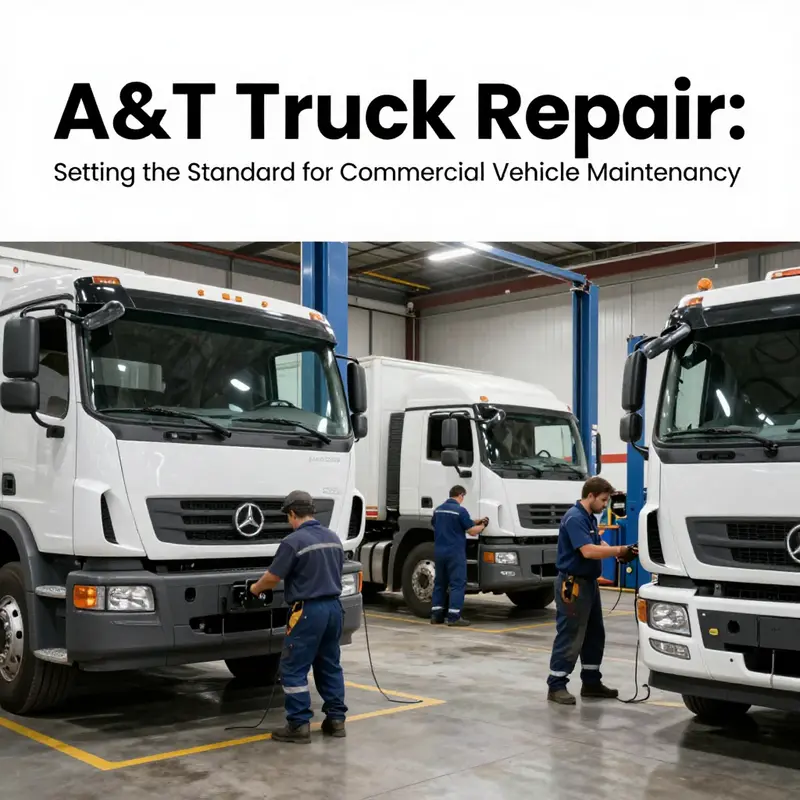
A&T Truck Repair sits at 2920 S 19th Ave in Broadview, Illinois, a hub where fleets come for more than quick fixes. The shop builds lasting uptime into the rhythm of operation by focusing on diagnostics, durable repairs, and preventative maintenance tailored to commercial trucking. Technicians translate sensor signals into clear repair plans, map sequences of parts and tests, and return vehicles to service with predictable schedules. The Broadview facility is recognized for quality work and steady partnerships with fleets, enabling better maintenance planning, fewer breakdowns on critical routes, and improved cost control. Fleet managers benefit from proactive maintenance cadences aligned with routes and cargo, with data-driven decisions and clear follow-ups. For readers seeking practical guidance, Master Truck Repair offers blogs and case studies that complement real-world experience. External references from business profiles provide additional context on A&T’s industry standing.
Chapter 2: Keeping a Fleet Rolling—A&T Truck Repair’s Service Promise and Maintenance Rhythm
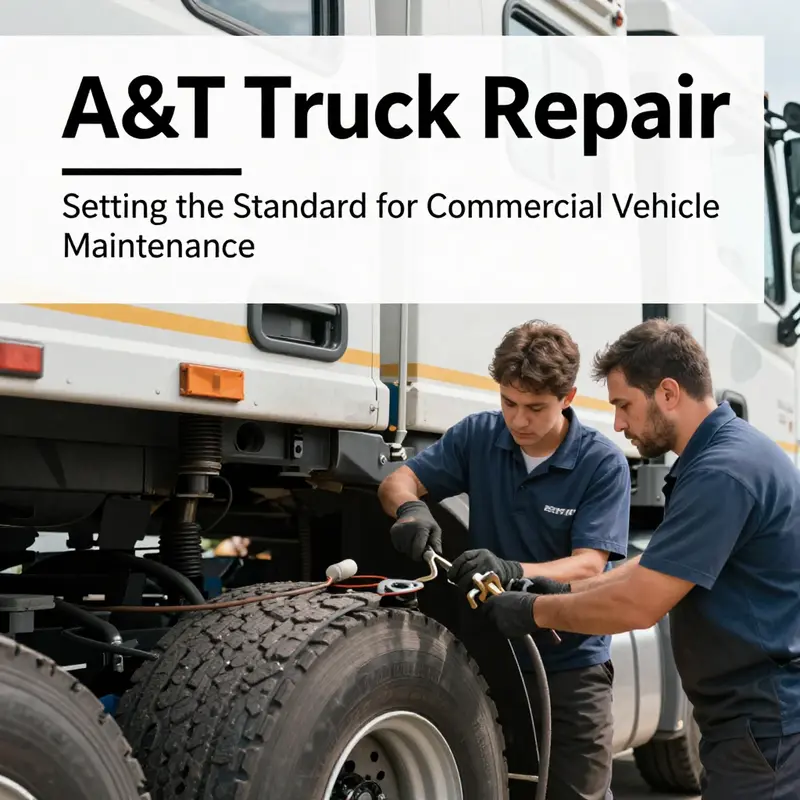
From the moment a truck rolls into the yard at 2920 S 19th Ave in Broadview, IL, the work begins long before any wrench meets metal. The team at A&T Truck Repair approaches every vehicle as a part of a larger operation, a moving piece of a larger supply chain that keeps customers on schedule and on the road. This chapter follows more than a list of services; it traces the quiet discipline that makes a repair shop into a trusted partner for fleets that depend on reliability, safety, and predictable costs. In practical terms, the shop operates as a turnkey maintenance partner, translating complex mechanical needs into a coherent plan that minimizes downtime and maximizes uptime. The result is not merely a fixed service but a maintenance rhythm that aligns with how fleets operate, how drivers log miles, and how managers forecast expenses across a busy quarter and a shifting year.
Diagnostics sit at the heart of this rhythm. In contemporary trucking, a roadworthiness assessment is only as good as the speed and accuracy with which it identifies the root cause of a problem. A&T Truck Repair leverages advanced diagnostic tools and the experience of skilled technicians to read engine control signals, sensor data, and fuel system behavior, then translate those signals into actionable repair plans. This is crucial for fleets that cannot tolerate long idle periods or guesswork about what is wrong. Rather than pursuing a sequence of trial-and-error fixes, the shop emphasizes disciplined diagnosis that pinpoints issues quickly. When the diagnostic phase is efficient, it frees up the rest of the repair process to focus on restoring performance while keeping the vehicle aligned with the fleet’s schedule and budget.
Engine performance is a primary barometer of a truck’s reliability. Engine repairs at A&T Truck Repair are conceived as complete, not cosmetic, undertakings. Technicians assess wear patterns, combustion efficiency, and cooling system integrity to determine whether a minor adjustment will suffice or a more thorough overhaul is warranted. The goal is to restore power and efficiency while controlling downtime and cost. In practice, that means balancing a precise repair with the fleet’s duty cycle. A truck that runs route-heavy on urban corridors has different demands than one that spends more time on long-haul corridors. The shop’s approach accommodates these differences by tailoring repair strategies to the vehicle’s actual usage, the OEM recommendations, and the fleet’s operating plan. This is not only about getting a truck back on the road; it is about ensuring the machine will perform consistently over the next miles, across varying weather, road conditions, and load profiles.
Brakes and the brake system deserve particular attention in the maintenance cycle. A&T Truck Repair treats brake work as a safety-critical, regulatory-compliant activity that warrants thorough inspection, precise overhaul, and careful reassembly. Complete servicing of the brake system means checking all hydraulic lines, pads, rotors, and actuating mechanisms, then verifying performance under load and during gradual stops. Safety is a non-negotiable standard, and the work is conducted with attention to the evolving compliance landscape that governs commercial trucking. The aim is to provide a repair that not only restores braking confidence but also contributes to steady, predictable stopping distances in every driving condition. In a fleet context, this translates to fewer emergency interventions, smoother scheduling, and a more reliable driver experience, all of which support broader business objectives.
Preventative maintenance programs form the backbone of the shop’s long-term value proposition. These programs are not one-size-fits-all checklists; they are customized, data-informed plans designed to minimize downtime and extend the lifespan of each asset in a fleet. The process begins with a clear understanding of the vehicle’s role, mileage, and duty cycle, then moves to a tailored calendar of inspections, fluid changes, and component checks. By coupling maintenance with usage patterns, the program helps fleet managers anticipate when service is truly needed and allocate resources accordingly. The result is a predictable maintenance cadence that reduces the risk of unforeseen failures, protects driver schedules, and safeguards the integrity of the fleet’s total cost of ownership. In practice, a well-designed preventive program translates into fewer breakdown emergencies, more reliable delivery schedules, and improved resale value as trucks reach the end of their useful life.
To the fleet manager, the value of A&T Truck Repair reveals itself not only in the quality of the repair but in the way the shop integrates with ongoing operations. The team understands that a truck never stops being a tool of the business, and a diagnosis, a repair, or a maintenance event must fit within a larger operational timeline. Intake is respectful of the fleet’s planning constraints; technicians communicate clearly about what is needed, what can wait, and what must take priority to keep a schedule intact. The shop’s internal workflow emphasizes transparency; managers receive updates on progress, expected completion times, and any additional maintenance that may be prudent given the vehicle’s age or service history. This seamless coordination reduces back-and-forth, minimizes the risk of misaligned schedules, and gives fleet operators a reliable platform for budgeting and planning.
The reputation A&T Truck Repair has cultivated—through steady performance, sustainable repair practices, and a consistent commitment to quality workmanship—extends beyond the shop floor. In an industry characterized by tight margins and high expectations, the ability to act as an essential extension of a client’s operations is a competitive advantage. This is the kind of partnership that has earned recognition in the past and continues to define how the shop works with large and medium-sized fleets alike. The emphasis on reliability, safety, and efficient maintenance aligns with the needs of fleet managers who must balance uptime with cost control while meeting regulatory requirements and ensuring driver safety. When a fleet depends on predictable service intervals, rapid issue resolution, and a trusted point of contact for all maintenance concerns, the value of a capable maintenance partner becomes a strategic asset.
The practical experience of day-to-day maintenance—diagnostic clarity, thoughtful engine and brake work, and adaptive preventative programs—cultivates a broader understanding of what keeps a fleet moving. It is not enough to fix what breaks; it is essential to anticipate what might fail next and plan for it. This anticipatory approach helps prevent cascading issues that could disrupt routes, delay deliveries, or erode customer confidence. The combination of technical skill and operational insight at A&T Truck Repair forms a cohesive service philosophy: make the vehicle perform at its best today, while extending its life for the road ahead. For fleets of varying sizes and duty cycles, this philosophy translates into a consistent, measurable impact on availability and reliability—from the first diagnostic to the final test drive following a brake overhaul or engine repair.
For readers seeking additional context on how preventative budgeting can align with a maintenance-heavy operation, see Budgeting for routine truck maintenance. This resource complements the hands-on experience described here by offering a practical framework for aligning maintenance work with financial planning, ensuring that a fleet can sustain its service levels without interruptions caused by unexpected failures. And for those looking to understand the broader credentials behind A&T Truck Repair’s approach, their official site provides further detail on their service philosophy and commitments, underscoring the claim that they are a trusted partner in keeping commercial vehicles safe and dependable on the road. External insights reinforce the message that a disciplined maintenance culture, supported by skilled technicians and data-driven planning, yields tangible improvements in uptime and reliability across diverse trucking operations. External resource: https://www.attruckrepair.com
Harnessing Diagnostics and Digital Workflows: A&T Truck Repair’s Tech-Driven Fleet Maintenance
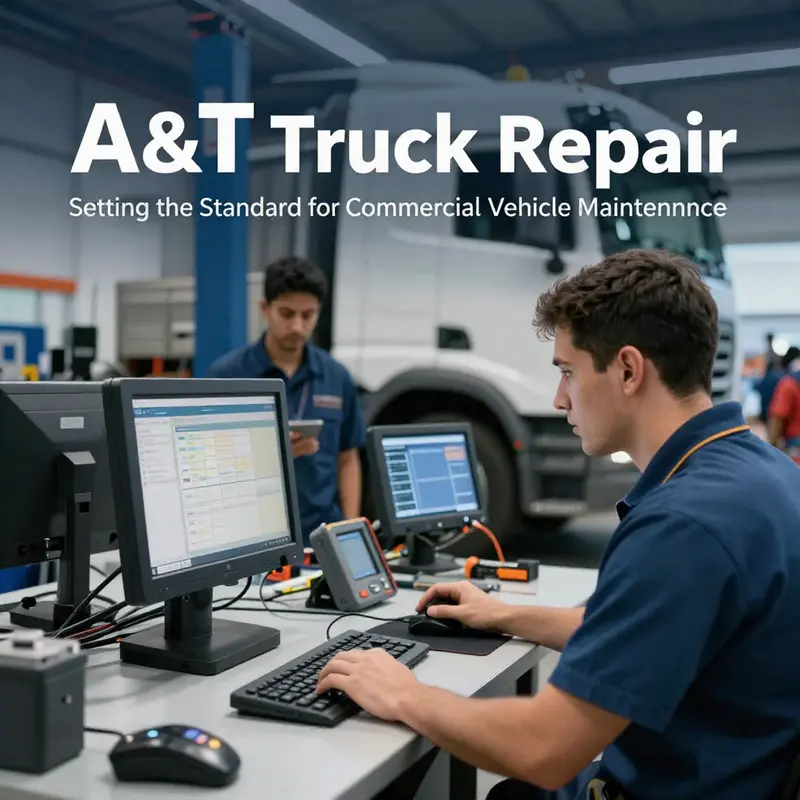
In the industrial rhythm of Broadview, Illinois, A&T Truck Repair has carved a niche that blends traditional mechanical skill with a growing appetite for technology. The shop, located at 2920 S 19th Ave, has become more than a place to mend a piston or swap a clutch. It operates as a small technology hub where data, devices, and disciplined process meet the needs of fleets that cannot afford lengthy downtime. This convergence is not incidental. It rests on a deliberate strategy that treats repair and maintenance as an integrated service—an extension of a client’s operation rather than a standalone fix. The result is a capability that speaks as much to reliability as it does to speed, with a track record that earned the respect of large fleet operators. In 2017, the shop was recognized as Hub Group’s Fleet Technology Vendor of the Year, a nod to its commitment to dependable performance and its ability to align technical work with a client’s broader logistics goals. That honor signals a partnership model where the repair shop becomes a trusted, embedded partner in managing the life cycle of commercial vehicles.
Behind this reputation lies a practical embrace of diagnostic technology. A&T Truck Repair deploys modern diagnostic tools that can pierce beneath the surface of engine trouble codes and lighting warnings to reveal root causes that are often obscured by symptom-based repairs. The devices linked to sensitive engine control modules, transmissions, and electronics provide real-time analysis. This capability matters not only for fixing the immediate issue but for mapping out a path to prevent recurrence. For fleets, this translates into fewer callbacks, more predictable maintenance windows, and lower volatility in repair-related operational disruption. When a truck returns from a field assignment with a new fault indicator, technicians don’t just patch a symptom; they interpret the data and forecast whether a preventive action—such as a software update, sensor recalibration, or a targeted component inspection—will extend the vehicle’s service life. The approach is data-driven rather than anecdotal, and it reflects a broader trend in professional repair shops where information quality directly shapes the quality of the fix.
The diagnostic mindset is complemented by a proactive maintenance ethic. By aggregating performance signals across a fleet, A&T Truck Repair can identify patterns that indicate wear or imminent failure. The emphasis shifts from reacting to breakdowns to orchestrating maintenance that minimizes downtime. This is especially important for operators running multiple vehicles with tight schedules and high throughputs. A staggered downtime event can ripple through a week’s worth of deliveries, but targeted preventive maintenance—guided by real-time data—can align with off-peak hours. In practice, this means the shop communicates based on measurable indicators rather than estimates. When the data show that a component is approaching its expected life cycle, the team can schedule service before the failure occurs, thus protecting uptime and reducing the risk of expensive, unscheduled repairs. For fleets, that predictive element is a powerful differentiator in a market where reliability is a key competitive advantage.
Digital workflows are the connective tissue that makes this model scalable. A&T Truck Repair’s operations are underpinned by a digital work order system that streamlines communication among technicians, customers, and management. The system ensures that the right information follows the vehicle from check-in to check-out. It captures the sequence of diagnostics, parts usage, labor hours, and test results in a single, accessible record. Such transparency matters to fleet operators who must coordinate maintenance with dispatch and customer obligations. It also creates accountability within the shop: technicians can see the broader service plan for each vehicle, while management can monitor throughput, identify bottlenecks, and track performance against service-level targets. The digital thread ties together on-site expertise with remote oversight, enabling a more collaborative approach to problem-solving. It also reduces the chance that critical details slip through the cracks during a hurried repair, which is a common risk in busy repair environments.
The practical effects of this integrated approach extend to the economic calculus of fleet maintenance. For many operators, downtime represents not only lost miles but also a catch-22 of labor and parts costs that escalate when repairs are rushed or misdiagnosed. A&T Truck Repair’s technology-forward stance helps mitigate these costs by shortening turnaround times and increasing first-time fix rates. When a technician uses precise diagnostics to identify the fault quickly, the likelihood of misidentifying a secondary issue declines. The charted maintenance history, visible to the fleet manager, supports smarter parts stocking and scheduling decisions. The result is a workflow where the vehicle spends less time in the shop and more time on the road. With data at the center of decisions, maintenance cycles can be optimized for each vehicle’s duty profile, whether that means frequent stop-and-go urban hauls or longer, highway-oriented runs. The effect is a lower total cost of ownership for fleets that commit to regular, data-backed care rather than episodic repairs driven by immediate symptom relief.
An essential element of A&T Truck Repair’s model is the understanding that repair excellence is most effective when it aligns with a client’s operations. The firm does not view itself as a sideline service; it positions its capabilities as an extension of the customer’s logistics function. This mindset resonates with fleets that depend on predictable vehicle availability to maintain schedules, meet customer commitments, and optimize route planning. In this sense, technology is not a flashy add-on but a practical enabler of reliability. Real-time analysis, digital work orders, and data-driven maintenance form a continuous feedback loop that informs both the shop’s work and the client’s planning. When a fleet manager hears that a vehicle has been flagged for preventive action based on engine data, the manager can slot maintenance into a consolidated downtime window, reducing disruption and conserving the full value of each vehicle’s lifecycle. This alignment embodies a modern philosophy of fleet maintenance: repair partners should function as collaborators who anticipate needs, communicate clearly, and execute with precision.
In the broader arc of the article, this chapter sits at the intersection of hands-on expertise and strategic efficiency. The story of A&T Truck Repair reflects a trend where shops leverage technology not to replace skilled labor but to amplify it. The human element remains essential—the technicians who interpret data, perform nuanced adjustments, and validate results with test drives. Yet the tools, data, and workflows surrounding those people are what turn good repair work into sustained performance. The Hub Group recognition cited earlier underscores a disciplined, outcome-focused approach to partnerships. It signals that the shop’s technology and service model have been tested in high-stakes environments and found capable of meeting exacting standards. For readers seeking to understand how a traditional repair shop can evolve without losing its core identity, A&T Truck Repair offers a compelling blueprint: invest in diagnostics, systemize the repair process through digital workflows, and anchor every decision in a clear understanding of the fleet’s operational needs.
For readers exploring how technology reshapes maintenance, this narrative also points to a practical takeaway: the best tech investments in truck repair are those that translate into tangible, day-to-day improvements on the road. Real-time engine and transmission analysis, coupled with transparent digital records, makes it possible to move from reactive fixes to proactive care. It makes sense of the complexity that large vehicles bring to maintenance and highlights the value of a service partner who can coordinate across stakeholders with the same clarity a dispatcher expects from a well-run operation. In turn, fleets gain not only reliability but a more predictable, resilient cadence of service that fits within the constraints of modern logistics.
Internal link: For readers curious about the broader implications of optimizing fleet maintenance in smaller operations, see this discussion on optimizing fleet size maintenance for small fleets. It complements the real-world experience at A&T Truck Repair by framing how disciplined maintenance planning reinforces the benefits of diagnostics and digital workflows. optimizing fleet size maintenance for small fleets
External resource: The shop’s verified customer-facing profile offers direct insight into its service focus, levels of responsiveness, and the way customers perceive the technology-enabled workflow. See the Google Business listing for A&T Truck Repair for context on operations, service quality, and customer experiences. https://www.google.com/maps/place/A%26T+Truck+Repair/@41.798746,-87.832867,15z/data=!3m1!1e3!4m6!3m5!1s0x886c3d5b5f5a5d9b:0x9b9d7b5e1f4d7c5d!2s2920+S+19th+Ave,+Broadview,+IL+60155!3m2!1d41.798746!2d-87.832867!5m1!1e4?entry=ttu
Chapter 4: Listening to the Road — Customer Voices on Reliability and Care at A&T Truck Repair
Across the spectrum of commercial trucking, uptime is more than a metric; it is a lifeline that governs schedules, fuel economy, and customer trust. A&T Truck Repair, situated at 2920 S 19th Ave in Broadview and known for its comprehensive repair and maintenance services, has built its reputation on the steady craft of keeping fleets moving. The firm’s claim to reliability rests not only on technical proficiency but on a steady, open line of communication with those who depend on it most. In an industry where minutes matter, the ability to diagnose, explain, and execute with precision translates into fewer disruptions, smaller headaches for fleet managers, and a smoother road for drivers who must deliver on tight deadlines. That combination—technical skill aligned with dependable service—creates a narrative that customers continually revisit when they share their experiences. It is a narrative that comes into sharper focus when the work of A&T is viewed not through the lens of a single repair, but through the ongoing relationship it maintains with clients who treat the shop as an extension of their own operations.
What gives customers confidence in A&T Truck Repair is not a flashy brochure or a single heroic repair but a pattern of consistency that emerges from how the shop approaches each encounter. A&T Auto Service & Towing—an identity the literature and customer feedback sometimes reflect—has consistently earned high praise for quality and reliability. In the words of a satisfied customer who has relied on these professionals across multiple trucks, the service has been superb and timely, a combination that matters as much as the diagnosis itself. Such testimonials, echoed in the broader dialogue around the shop, emphasize more than the mechanics involved; they underscore a philosophy that keeps the conversation with the customer clear and constructive from the first phone call to the moment a vehicle leaves the bay. When a fleet operator picks up a truck after a visit to A&T, they are not simply collecting a repaired device; they are reclaiming a portion of their operational rhythm, restored and safeguarded by a team that understands the business behind the vehicle.
Behind every positive review lies a common thread: transparent diagnostics paired with practical explanations about what is needed and why. Customers value being told what is happening in plain terms, with options laid out, so decisions about repairs or preventive maintenance can be made with confidence. This level of communication is not incidental; it channels the experience toward outcomes that matter most in trucking—reliability, predictability, and the ability to plan around maintenance needs rather than react to failures. The testimonials reflect more than a technician’s skill; they reveal a culture where technicians and service coordinators speak in a way that respects the customer’s time and the fleet’s operational constraints. A&T’s ability to translate complex mechanical issues into actionable insights is what turns a routine service into a trusted partnership, the kind that reduces the guesswork that often shadows the maintenance process.
The value proposition extends beyond the diagnostic room. Fleet operators who rely on A&T’s services frequently describe the shop as a reliable partner whose responsiveness translates into real uptime gains. When a truck experiences a fault or a performance anomaly, the immediate expectation is not just a fix but a plan—an approach that considers the vehicle’s role within the larger fleet and its schedule. The perception of reliability grows when the shop demonstrates that it understands the practical realities of day-to-day trucking: routes, schedules, and the necessity to keep drivers moving. In this context, A&T’s role becomes that of a careful orchestrator of downtime, a phrase that may sound bureaucratic but reflects a fundamental truth in trucking: every hour a vehicle is out of service is a cost, and every hour back on the road is a return on investment. The testimonials capture this sentiment, pointing to repairs and maintenance delivered with a blend of technical precision and professional courtesy, where the human element—the customer service, the transparency, the willingness to explain and adjust—matches the quality of the mechanical work.
From the perspective of fleet managers, the connection to Hub Group’s Fleet Technology Vendor of the Year recognition in 2017 adds another layer of credibility. That accolade signals a sustained commitment to integrating technology and service in a way that aligns with the operational needs of a modern, data-driven fleet. It marks A&T Truck Repair as more than a shop that can fix a problem; it positions the company as a strategic partner capable of supporting the client’s broader logistics ecosystem. For operators who manage high-volume or time-sensitive routes, such a partnership matters because it implies a shared dedication to reducing downtime, improving diagnostic accuracy, and delivering consistent, predictable service across multiple vehicles and maintenance cycles.
In listening to customer experiences, the narrative also highlights the practical aspects of the service. The shop handles trucks of varying sizes, a capability that matters to operators who run mixed fleets. The ability to accommodate different vehicle configurations without sacrificing speed or quality is a tangible reassurance that dealers and operators look for when choosing a repair partner. The stories told by customers emphasize that the best repair shops do more than address the mechanical issue at hand; they anticipate the constraints of the job and align their workflow to fit within those constraints. The result is a seamless experience where the customer feels heard, understood, and supported at every turn. This perception of care translates into repeat business and word-of-mouth referrals, reinforcing the idea that trust is earned in the room as well as in the service lane.
For readers exploring practical guidance on maintenance and repair decisions, the broader ecosystem surrounding A&T’s approach offers a useful blueprint. The emphasis on clear diagnostics, transparent recommendations, and a proactive stance toward preventive maintenance can help fleets at any scale plan more effectively for uptime. To dig deeper into related maintenance strategies and industry perspectives, you can explore the Master Truck Repair blog, which distills practical insights into a concise, accessible format. Master Truck Repair blog
While the personal voices of customers illuminate the relational aspects of service, the online footprint offers a corroborating mirror. Verified reviews from Google provide a window into how the broader community experiences the shop’s services over time. The feedback tends to align with the themes described above—clarity in diagnostics, responsiveness, and a reliable track record of keeping commercial vehicles on the move. Together, the firsthand accounts and the online corroboration form a picture of a shop that has earned a steady reputation for dependable, customer-centered care.
In sum, the story of customer experiences at A&T Truck Repair is not a simple ledger of repairs performed. It is a narrative about how a repair operation can become a partner in a fleet’s journey, shaping how operators approach maintenance and uptime. It is about the quiet discipline of consistent quality, the willingness to speak plainly about what is needed, and the readiness to treat each truck as a critical asset worthy of careful stewardship. It is a story that resonates with drivers who rely on their wheels to deliver, dispatchers who manage schedules, and fleet owners who measure success in uptime and reliability as much as in miles driven. The chamber of voices from customers—each one a reminder that service quality matters—collectively validates why A&T Truck Repair is viewed as a trusted extension of its clients’ operations. And as the road continues to evolve, the emphasis on trustworthy communication and dependable maintenance remains the steadfast center of gravity for a shop whose reputation rests on the consistent satisfaction of its customers.
External resource: For a broader sense of customer feedback and service quality in the field, see the Google Reviews page linked through the A&T Auto Service & Towing listing. https://www.google.com/maps/place/A%26T+Auto+Service+%26+Towing/@38.957143,-94.682248,15z/data=!3m1!4b1!4m6!3m5!1s0x87a2d1f3e2f3e2f3:0x8a5c3d5c5d6e7f8g!2sA%26T+Auto+Service+%26+Towing!3m2!1d38.957143!2d-94.682248!5m1!1e1?hl=en
Chapter 5: Recognition on the Road — How Industry Honors Shape A&T Truck Repair’s Reliability and Partnership
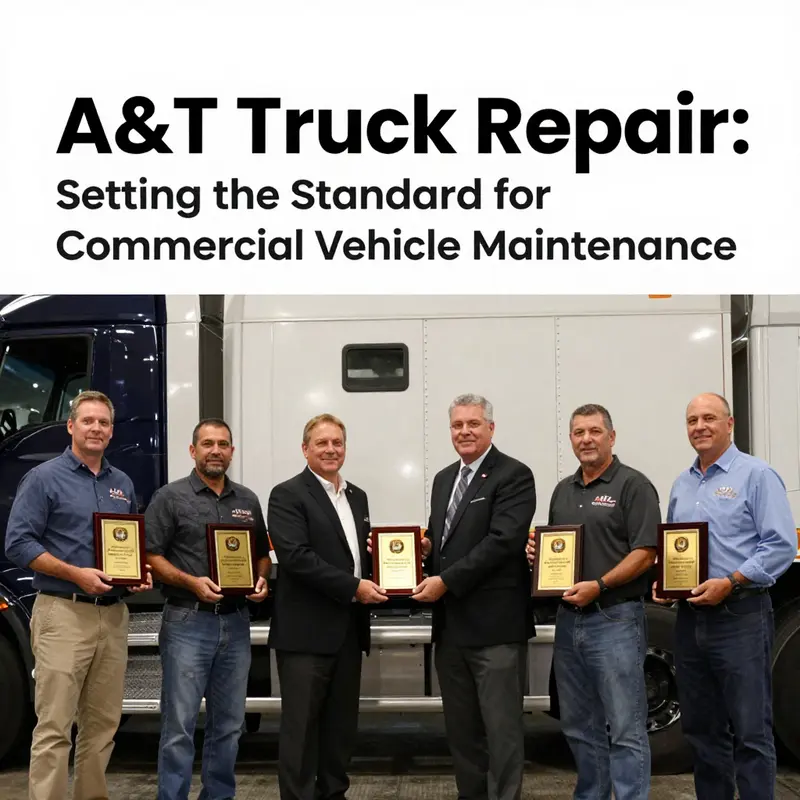
A&T Truck Repair sits in Broadview, Illinois, a straightforward shopfront that doubles as a steady heartbeat for the fleets that depend on it. The work done behind those doors is never just about fixing a broken component or swapping a worn part. It is about keeping a promise that goods move on schedule, that every mile traveled carries with it the certainty of a vehicle that has been inspected, calibrated, and prepared for the road ahead. In the trucking world, where delays ripple through supply chains and costs accumulate with each idle hour, a shop’s credibility becomes a form of quiet currency. And at A&T, credibility has long been earned not simply by the thickness of a wrench set or the speed of a turnaround, but by a consistent pattern of reliability that becomes visible to the eyes of a fleet manager who must balance dozens of moving parts each day. This is where recognition—how the industry names and honors a business—translates into tangible value for the people who rely on it: trucking managers seeking a partner they can trust, drivers who need predictable service, and operators who must keep trucks on the road, not hunting for spare parts or waiting for a late technician to arrive.
One clear measure of that credibility arrived in the form of a prestigious acknowledgment in the industry’s world of collaboration and performance. In 2017, A&T Truck Repair was highlighted within the ecosystem of fleet operations as a Fleet Technology Vendor of the Year, a distinction associated with Hub Group, a name that carries weight across the national freight landscape. That credential is not merely a trophy on the wall; it is a signal that A&T consistently aligns with partners who demand precision, transparency, and dependable execution. To fleets, such recognition suggests more than technical competence. It implies a proven capacity to integrate with the broader logistics picture — to communicate proactively when plans shift, to adapt repair cycles to the rhythm of a fleet’s deployment, and to help manage maintenance not as a series of isolated fixes but as a coordinated program that respects schedules and minimizes downtime. In practice, this translates into a maintenance partner that can be counted on when schedules tighten and every hour of downtime matters. When a fleet operator experiences a sudden equipment issue on a busy day, the confidence that a trusted shop has earned through awards becomes a practical advantage: a path to quicker triage, clearer updates, and a repair plan that fits within tight delivery windows.
Awards like the Fleet Technology Vendor of the Year are meaningful precisely because they crystallize what many fleets already sense through daily experience. They reflect a track record of consistency—the kind that smooths the rough edges of transportation: the unpredictable weather, the on-the-road emergencies, the tight turnarounds at terminals, and the high standards for safety that fleets must uphold at every mile. And they speak to the culture of a shop that treats its work as not merely mechanical labor but as a service to a larger mission. The best repair partners understand that trucks don’t stop when a gauge suggests trouble; fleets pause and recalibrate, and the repair partner must respond with clarity, speed, and a plan that preserves the overall schedule. In this sense, recognition becomes a kind of shared language between shop and fleet: it says that the repair partner speaks fluent logistics and understands the cadence of a driver’s day. It says that the shop values consistency as much as competency, and that both matter when the road calls for a quick, correct fix that won’t revisit a problem a week later.
Behind the scenes, awards also reflect the internal discipline that keeps a repair business able to scale with a fleet’s needs. They point to structured processes, robust safety practices, and ongoing investment in the team. A shop that earns such a distinction typically demonstrates steady training, clear maintenance protocols, and a commitment to transparency with customers. Clients can see this in the way they are kept informed about repair timelines, the way technicians collaborate with fleet maintenance teams, and the way documentation aligns with the fleet’s own record-keeping standards. The recognition thus reverberates beyond a single transaction; it reinforces trust across multiple touchpoints—from the initial drop-off and diagnostics to the final test drive and the moment the bill is settled. When a fleet expands or when a new driver onboarding system requires a reliable maintenance partner, the award serves as a beacon, signaling that the shop is prepared to scale in step with the client’s growth while maintaining the quality and accountability that fleets expect.
Readers who want to hear from those who live within these partnerships often consult the experiences of real customers. In the world of online feedback, Google profiles and review histories serve as a living appendix to the story of any repair shop. They offer a window into how a business handles communication, manages expectations, and resolves concerns when pressure points emerge. For A&T, such public reflections corroborate the sense that recognition is not a solitary badge but part of a feedback loop that includes customers, drivers, and dispatch teams who navigate the daily grind of road transport. The value of this reputation is not abstract. It translates into reduced friction when fleets choose between several potential partners. It is why the networking around a single award—for example, endorsement by a major logistics player—can ripple outward, helping to open conversations with other fleet operators who might be evaluating how their maintenance strategy aligns with long-term reliability and cost control. The award becomes a shorthand for a broader narrative: a shop that lives at the intersection of craftsmanship, reliability, and operational partnership.
To capture this idea in more tangible terms, consider how a maintenance partner may influence a fleet’s budgeting and planning. When a fleet knows a repair provider can deliver predictable lead times, accurate estimates, and consistent quality, it makes it easier to forecast maintenance spend with less variance. Managers can plan preventive maintenance milestones with confidence, knowing that urgent repairs will be handled with minimal disruption to service levels. This kind of predictability matters as much as any diagnostic result. It enables drivers to keep a consistent schedule, reduces the risk of cascading failures, and helps the fleet optimize asset utilization. An award, in this context, is a marker of a partner’s ability to contribute to that predictability across a broad spectrum of vehicles, routes, and operating conditions. It is a signal that the shop has earned trust from others who move goods across the country, and that trust is a practical asset every time a dispatch center places a service call or a maintenance window must be carved into a busy day.
In reading a chapter about recognition, one might expect a long list of accolades; instead, the heart of this story lies in how such honors translate into everyday reliability. It is in the quiet confidence a fleet manager feels when they know a repair partner will stand by its commitments, in the transparency of the reporting, and in the willingness of the shop to align with a client’s operational imperatives rather than enforce a one-size-fits-all fix. These are the connective tissues that bind a repair business to the fleets it serves. They are the real-world manifestations of an award’s promise: that the road ahead, even when uncertain, is navigable because a trusted partner stands ready to keep the wheels turning.
For readers exploring the broader landscape of how repair shops contribute to the resilience of freight movement, this chapter points to an essential truth. Recognition serves not as an endpoint but as a milestone in a continuous journey toward better coordination between maintenance and operations. It invites fleets to look beyond the immediate mechanics of a fix and to evaluate the longer arc—the reliability of the partner, the consistency of service, and the capacity to adapt as a fleet evolves. In that light, A&T Truck Repair’s 2017 acknowledgment becomes more than a singular honor. It marks a moment when the shop’s dedication to quality and partnership was recognized publicly, validating the effort that goes into every job and reminding the industry that the most dependable repairs are rooted in a culture that treats every vehicle as a link in a larger system.
Those seeking further perspectives on how repair shops capture and communicate their value can explore resources and insights from industry-focused writers and practitioners. For readers who want a broader view of ongoing maintenance thinking and practical guidance, the Master Truck Repair blog offers a comprehensive lens on the topic. It complements the story of A&T by situating recognition within a broader conversation about proactive maintenance, budget planning, and the daily realities of fleet operations—ideas that matter whether a shop holds a formal award or simply earns steady, repeat business through unwavering reliability.
Final thoughts
In conclusion, A&T Truck Repair stands out as a premier destination for fleet managers, truck owners, and operators in various industries seeking reliability and excellence in vehicle maintenance. The company’s commitment to high-quality service, technological innovation, and a client-focused approach strengthens their role as a trusted partner within the trucking ecosystem. By prioritizing maintenance and investing in their services, businesses can minimize downtime and enhance their operational efficiency, reinforcing the idea that a strong repair partner is vital to success on the road.