
A & W Services Inc. emerges as a frontline solution provider for mobile truck repair in the competitive Dallas-Fort Worth area. Their dedicated approach to on-site services caters directly to the unique needs of fleet managers, trucking company owners, construction enterprises, and logistics providers. This mobile repair service not only minimizes downtime but also optimizes operational efficiency across various sectors. In the forthcoming chapters, we will delve into an comprehensive overview of A & W Services and their tailored offerings, followed by an exploration of how their solutions enhance operational efficiency, and we will conclude with insights into customer experience and accessibility that set them apart as a trusted services provider.
On-Site Reliability: How A & W Services Delivers Mobile Truck Repair Across the DFW Area
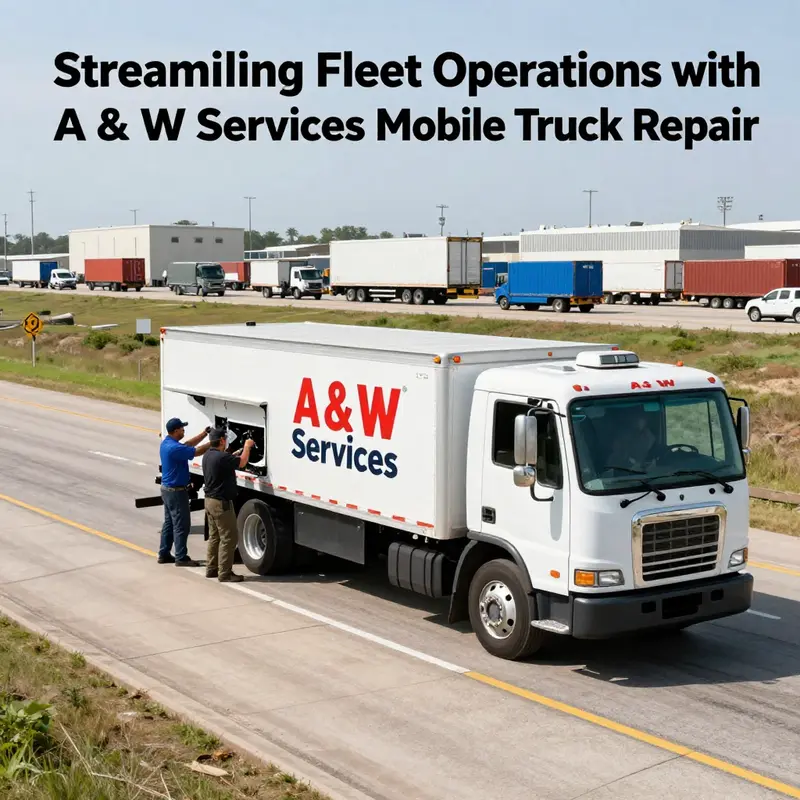
A & W Services built its reputation on practical, on-site solutions that keep trucks moving. Their model focuses on rapid response, field-capable technicians, and the tools necessary to resolve common failures where they occur. For fleet managers, independent drivers, and logistics coordinators, that combination means fewer hours lost to breakdowns, reduced tow expenses, and clearer control over repair timing.
Their technicians arrive ready to diagnose and address a wide variety of problems. They handle brake issues, electrical faults, fluid leaks, and other mechanical problems without requiring the vehicle to reach a shop. This on-site approach shortens repair cycles. It also cuts hidden costs associated with downtime, like missed deliveries and driver idle time. When a commercial vehicle stops during a run, every minute matters; A & W Services treats that urgency like a central operational priority.
A typical call begins with a rapid assessment over the phone. Dispatch gathers the vehicle location, nature of the fault, and safety concerns. Technicians then load appropriate parts and diagnostic equipment before departing. Their goal is to arrive with what they need to solve most roadside issues on first visit. If towing or specialized shop work becomes necessary, they coordinate those next steps for the customer. That coordination reduces administrative friction for fleet operators and maintains a single point of contact through the repair process.
The company’s service area spans Fort Worth and greater Dallas-Fort Worth. Their local base gives them strong familiarity with the region’s traffic patterns and common breakdown hotspots. That knowledge affects response times and route planning. It also informs the stocking of frequently used parts and consumables. Choosing locally oriented mobile repair minimizes wait times while ensuring technicians have relevant regional experience.
Technicians are trained to work safely in roadside conditions. Safety measures are non-negotiable: securing a work zone, using high-visibility signaling, and following proper lifting and jack practices. Safe procedures protect the crew, the vehicle, and other road users. They also reduce the likelihood of secondary damage during repair. Customers benefit because a safer repair environment typically translates into faster, more confident diagnostics and service completion.
Beyond immediate repairs, A & W Services offers scheduled trailer inspections. Those inspections include structural checks, lighting and brake verification, and compliance-focused reviews. Regular inspections prevent minor issues from becoming major failures on the road. They help fleet operators maintain records for audits and regulatory checks. A systematic inspection program forms the backbone of any reliable maintenance strategy.
Reefer fueling is a more specialized service the team provides. Refrigerated trailers require uninterrupted fuel supply to keep cargo at temperature. When a reefer runs low, delays can mean spoiled loads and substantial losses. A & W Services delivers dedicated fuel service to reefers at the roadside. Their crews understand the needs of temperature-sensitive freight. They plan refueling to minimize interruption and ensure regulatory and safety procedures for handling diesel and auxiliary fuel are followed.
Jump starts and battery services are another frequent on-site need. Battery failures are a common cause of roadside incidents. Technicians bring portable power solutions and battery testing equipment. They check charging systems and alternator performance, not just the battery itself. This diagnostic approach helps identify underlying electrical issues that could recur if ignored. When a battery replacement is necessary, technicians can often source compatible parts and complete the swap on the spot.
When a repair exceeds the scope of a roadside fix, towing coordination becomes crucial. A & W Services manages that transition smoothly. They dispatch tow providers or advocate for a shop appointment based on the vehicle’s condition. That coordination saves the customer time and avoids confusing handoffs between providers. It also allows fleet managers to plan reroutes or schedule job rescheduling with clear timelines.
Communication is central to their service philosophy. Technicians provide concise status updates and realistic timelines. They document work performed and recommend follow-up maintenance. Clear paperwork helps fleet record-keeping and simplifies decisions about whether to repair now or later. That transparency also supports insurance or warranty claims when they apply.
Pricing and parts management follow a pragmatic approach. Mobile repairs balance parts availability with cost control. Technicians carry a selection of commonly used items and consumables to avoid unnecessary delays. For less common parts, they provide a clear estimate and timeline for procurement. This model avoids unexpected bills and supports predictable budgeting. Fleet managers can plan maintenance budgets with confidence, knowing that on-site repairs are designed to limit surprises.
Preventive maintenance remains a strategic advantage for those who use mobile services regularly. Scheduled visits and inspections extend component life and catch wear early. For fleets, spreading planned repairs across locations removes bottlenecks at central shops. It reduces the spikes in workload that occur after failures accumulate. A & W Services helps customers design maintenance rhythms that suit operational tempo and reduce total cost of ownership.
Safety and regulatory compliance are woven into all service tasks. Trailers and trucks must meet commercial vehicle standards. Inspections verify lighting, brakes, suspension, and other critical systems. That compliance is not only legal housekeeping; it prevents roadside failures that compromise safety. A proactive inspection regime reduces the frequency of emergency calls and maintains the fleet’s reputation for reliability.
The company’s ability to serve both small operations and larger fleets rests on flexibility. A single truck operator benefits from fast roadside fixes and direct billing. Fleet operators benefit from integrated scheduling, consolidated invoicing, and predictable response windows. That flexibility makes mobile repair a viable strategy across scales.
Equipment and diagnostic tools matter. Mobile technicians carry scanners, hand tools, specialized trailers parts, and fluid-handling gear. They also have portable tire and wheel tools when necessary. These investments increase the incidence of first-visit repairs. They reduce the need to transport vehicles to a fixed location. For customers, that means downtime is minimized and productivity returns faster.
Customer preparation improves outcomes. Drivers who secure cargo, park safely, and provide clear fault descriptions help technicians diagnose problems more quickly. A quick set of pre-call details, such as engine light codes or recent part replacements, speeds diagnostics. Fleet managers who maintain basic driver training for roadside cooperation tend to see faster service and fewer follow-up repairs.
Case scenarios illustrate the value of timely on-site service. Imagine a loaded reefer losing power near a distribution hub. Traditional options include towing to a shop, coordinating fuel delivery, or risking cargo loss. With targeted mobile service, technicians can refuel the reefer, diagnose fuel system issues, and get the trailer back into temperature control within the same shift. That outcome preserves cargo integrity and avoids costly spoilage.
Another common scenario involves electrical faults that produce intermittent errors. At a shop, duplication of an intermittent fault can be difficult and time-consuming. On the road, technicians can replicate operating conditions, capture diagnostic codes, and apply targeted fixes. On-site access to real-world operating states often yields faster root-cause identification.
Choosing the right mobile partner requires evaluating response reliability and technician competence. Response reliability includes average arrival times, coverage area, and emergency availability. Competence covers training credentials and experience with commercial vehicles. A & W Services positions itself on both metrics. Their Fort Worth base gives them reliable coverage across the Dallas-Fort Worth corridor. Their technicians carry the tools and experience to address most roadside incidents.
Part of that competence is knowing when a repair is beyond mobile scope. Conserving customer resources matters far more than attempting an unsafe or short-term fix. When shop work or replacement with specialized equipment is necessary, technicians advise accordingly. That honesty builds trust and preserves safety.
For fleet operators, integrating mobile services into maintenance planning unlocks efficiencies. Mobile repair complements scheduled shop work. It can reduce the need for emergency towing and shorten turnaround for unexpected failures. A well-integrated plan uses mobile repair for quick restorations and scheduled shop visits for complex overhauls. This combination lowers operating costs and improves asset uptime.
There is also a human element. Professional technicians reduce stress for drivers during a breakdown. Clear communication, efficient repairs, and respect for on-site conditions help drivers resume their routes with confidence. For many operators, that human factor has measurable value. It improves driver retention and reduces the indirect costs of a negative roadside experience.
Record-keeping ties the entire service cycle together. A & W Services documents repairs and inspection results. Those records feed into maintenance logs and budgeting decisions. Over time, pattern recognition emerges. Fleets can detect parts that fail often and adjust inventory or service intervals accordingly. That data-driven perspective reduces repeat failures and optimizes spending.
When budgeting matters, understanding the cost-benefit of mobile repairs pays off. Mobile services reduce towing fees, reduce lost-hours costs, and often fix problems before they escalate. For guidance on building a predictable maintenance budget, fleet managers can consult resources that focus on routine maintenance planning. One helpful article on this subject is budgeting for routine truck maintenance. It offers practical methods for allocating funds and prioritizing work.
A & W Services streamlines contact and scheduling. Customers can reach them by phone to request assistance or schedule an inspection. Clear points of contact make emergency coordination simpler. For operations running on tight schedules, that simplicity is essential. Rapid dispatch and direct scheduling remove organizational friction.
In a region with heavy commercial traffic, the ability to restore a truck quickly is a competitive advantage. Mobile repair reduces delays and cuts the downstream effects of a single breakdown. For operations that rely on just-in-time delivery or temperature-controlled freight, that advantage becomes measurable in profit margins.
Ultimately, mobile truck repair aligns mechanics with the operational realities of modern fleets. It brings tools, diagnostics, and experienced technicians to the vehicle. It reduces time in transit and lowers the burden on centralized shops. For operators in Fort Worth and across the Dallas-Fort Worth area, that means repairs happen faster and with less disruption. Those outcomes—reduced downtime, preserved cargo, and clearer budgeting—are the core benefits that mobile service delivers.
For service requests and further details, customers can view ratings and reviews on Yelp or contact the team directly by phone. The company’s local address supports their regional presence and enables reliable dispatching.
External resource: https://www.yelp.com/biz/a-w-services-fort-worth
On the Move Toward Uptime: How Mobile Truck Repair Rewrites Fleet Reliability
Across the sprawling networks that connect farms, factories, and freight terminals, fleets increasingly rely on the ability to fix what fails where it fails. In the Dallas–Fort Worth region, a Fort Worth based mobile truck repair operator demonstrates what it means to shift maintenance from the workshop to the roadside and loading dock. The shift is more than a convenience. It is a strategic response to the pace of modern logistics, where every hour of downtime can ripple through schedules, customer promises, and the bottom line.
On-site repair brings the wrench to the wheel, the diagnostics to the cab, and the attention to the most time sensitive issues. When a vehicle sits idle at a loading dock or stalls along a busy corridor, the cost is not only the fuel and the driver’s time but also the opportunity cost of delaying an entire route. A mobile service crew enters the scene with the array of tools needed to evaluate and repair systems in a single encounter. There is no requirement to tow the vehicle to a fixed facility or to schedule a multi-day outage for a minor fix. Instead, work can begin in situ, with safeguards in place to protect the driver, the crew, and the vehicle.
The equipment that makes this possible has evolved substantially. Modern mobile units come with portable diagnostics capable of reading engine codes on-site, mapping circuits, and isolating faults without sending the truck far from the scene. They are equipped with high-pressure tyre repair gear that can address punctures and sidewall compromises without removing wheels or transporting assemblies. The same units include air and power supplies, portable jacks, and light-weight hydraulic tools that let a technician perform alignments, brake inspections, and air-system checks before a driver even signs for the bill. This blend of diagnostic capability and physical tools enables a comprehensive assessment in the field, turning a potentially lengthy repair into a near-turnaround service. The result is a process that respects the unit’s schedule and the fleet manager’s demand for predictable throughput.
What this means in practical terms is a measurable ascent in operational efficiency. First and most obvious is time savings. Every minute saved translates into more miles driven and more shipments fulfilled within contracted windows. Second, mobile repair supports proactive maintenance. Technicians can spot corrosion, lubrication gaps, or mounting wear during a call and suggest adjustments or replacements before they fail catastrophically, reducing the risk of a sudden roadside breakdown. Taken together, those two effects improve vehicle reliability and keep the fleet aligned with service-level commitments.
From a financial perspective, the savings extend beyond the obvious avoidance of tow trucks and workshop fees. A mobile repair model reduces fuel waste associated with detours to service centers. It also reduces wear and tear from driving out of route to get repairs completed at a fixed facility. Fleet operators increasingly view it as part of a broader cost-control discipline. When the on-site team is able to perform quality work efficiently and to a professional standard, the vehicle spends less time out of service, maintenance cycles stay on track, and the cost of downtime shrinks accordingly. The result is a lower total cost of ownership for the fleet and a more predictable budget cycle for maintenance expenditure.
Safety considerations are central to the mobile repair approach. When a vehicle presents a hazard, such as a damaged tyre or a compromised braking component, the quickest path to risk reduction is a controlled, professional response on the spot. The on-site capability means a driver doesn’t have to navigate through traffic with a vehicle that could fail again. Technician teams bring the experience to handle flare-ups, secure the vehicle, and communicate any follow-up needs clearly to the fleet manager. In many cases the attention paid to safety at the roadside or at a terminal reduces the chance of a minor fault spiraling into a more dangerous event. The emphasis on thorough inspection, proper torque specifications, and correct repairs ensures the work performed in the field stands up to the same professional standards that a fixed workshop would provide.
Flexibility is another defining trait of mobile repair in today’s logistics environment. The portable, high-performance equipment makes it possible to adapt to the varying constraints of a dynamic network. A tyre might require a patch, a valve stem replacement, or a full rebuild of a tyre assembly in some cases. Pneumatic systems, air dryers, and brake components can be inspected and tested without removing a vehicle from the road for an extended period. In remote or rural corridors, the value of a mobile team becomes even more apparent: they can deliver essential maintenance where traditional workshop access is unreliable or unavailable. This combination of reach and capability strengthens the resilience of fleets that must traverse long routes with minimal slack.
The rhythm of a typical day for a fleet operator who relies on on-site maintenance is defined by coordination as much as by torque and tension. Dispatch decisions must anticipate peak hours, weather, and the specific maintenance history of each asset. The mobile unit’s ability to respond quickly is not only about speed; it is about matching the right service to the problem in the moment. A cabin light diagnostic may reveal a shallow sensor fault that can be cleared with a minor adjustment, while a deeper engine issue may require a staged course of actions, including a battery test, electrical harness inspection, or fuel system recalibration. In either scenario, the operator’s workflow remains intact: repairs are completed, the vehicle resumes its route, and the fleet’s traceable service history is updated so future maintenance can be scheduled with greater accuracy.
Behind the technician’s skill set lies a broader culture of safety, compliance, and continuous learning. Mobile repair teams must maintain a sharp understanding of the evolving standards governing heavy vehicles and the regulatory expectations for roadside repairs. They must also stay current with the maintenance protocols essential to extending component life, from tyres and suspensions to electrical systems and airlines. The emphasis on correct procedures, the use of calibrated tools, and the verification of repairs after completion create a traceable narrative for auditors and fleet managers alike. The human element—technician judgment, careful improvisation when space is limited, and a commitment to stopping work when conditions are unsafe—forms the backbone of the service model. Acknowledging the potential for human error, mobile teams adopt redundancy checks and standardized work instructions to ensure consistency and reliability across every call.
Beyond the mechanics of repair, the mobile model integrates with broader fleet management strategies. It creates data-rich interactions between service providers and the fleet’s telematics systems, giving managers a clearer picture of maintenance cycles, parts consumption, and vehicle health trends. Electronic work orders, digital invoices, and on-site diagnostics feed into a central maintenance calendar, which in turn informs replenishment planning for spare parts and preventive tasks. The result is a more coherent and proactive approach to maintenance rather than a reactive one. When a truck returns to service after a successful on-site intervention, the fleet manager receives a concise record of the work performed, the parts used, and recommended follow-up actions. This transparency reduces administrative friction and strengthens accountability across the supply chain.
In terms of customer experience, the on-site model can minimize disruption to operations. The driver continues to perform tasks while the technician handles the repair, or alternately, the technician may take the truck briefly offline while more complex diagnostics are performed. Either way, the aim is to preserve as much of the route plan as possible and to minimize delays for customers awaiting shipments. The service model discounts downtime that would otherwise undermine schedule reliability, and it reinforces the trust between fleet operators and their clients. The operator’s reputation for dependable, on-site service grows not from loud marketing claims but from consistent delivery on time, within budget, and to a high standard of workmanship. This is the kind of reliability that fleet planners value when they must balance service quality with total cost of ownership.
For readers seeking practical, field-proven guidance on the technologies and methods behind on-site truck repair, a representative resource highlights the convergence of mobility, diagnostics, and high-performance tooling. A good starting point is to explore the stories and insights on the Master Truck Repair Blog, which hosts a breadth of experience from technicians who routinely work on the road. Master Truck Repair Blog. This repository of real-world knowledge offers ideas on preventative maintenance, emergency planning, and cost-control strategies that complement the capabilities described here.
As the logistics landscape evolves, the capability to repair on-site will become even more central to maintaining reliable operations. The experience of the Fort Worth based mobile repair operator who serves the Dallas–Fort Worth region shows how a focused combination of immediacy, technical competence, and scalable tools reshapes fleet performance. In airports, freight terminals, and rural stretches alike, the ability to address faults where they occur reduces risk and keeps cargo moving. For fleet managers, the lesson is clear: the value of maintenance cannot be measured only by the hours spent in a shop; it is the sum of uptime, cost discipline, and the confidence that a vehicle can complete its journey with the minimum disruption to service promises.
External resource: For a broader look at on-site truck repair technologies and their practical applications, see Truck Maintenance Today. https://www.truckmaintenancetoday.com/mobile-truck-repair-technologies
On the Move, On Your Clock: Redefining Customer Experience and Accessibility in Mobile Truck Repair
A mobile repair service is not merely a roadside convenience; it is a rethinking of how reliability travels with a fleet. In the Dallas–Fort Worth corridor, where freight lanes pulse with constant demand and every minute of downtime costs money, the promise of a repair shop that arrives at the vehicle embodies a practical philosophy. A & W Services Mobile Truck Repair exemplifies this approach by translating a traditional shop’s capabilities into on-site efficiency. The emphasis is not only on fixing what is broken but on preserving operational momentum and extending the life of vehicles that power supplies, distribution networks, and service economies. The result is a customer experience that feels less like a service call and more like a continuation of daily work, delivered with the kind of predictability and professionalism that fleets count on when schedules are tight and margins are thin.
At first glance, mobile truck repair may appear simple: a technician arrives, diagnoses, repairs, and leaves. Yet the depth of the experience rests on a chain of small, deliberate decisions that align with how fleets operate. The core idea is accessibility: the shop comes to you, eliminating the need to move a vehicle to a fixed location and reducing the exposure to uncertain delays that often accompany a conventional repair cycle. When a truck breaks down on a highway shoulder, in a yard, or at a loading dock, the pressure to restore service quickly builds. In this moment, accessibility translates into three core benefits: rapid response, comprehensive on-site capability, and transparent communication about the repair path and timing.
Rapid response is the most tangible virtue of mobile repair. A dispatch system, trained technicians, and a stocked van combine to compress the time between a fault being reported and the vehicle resuming operation. The driver or fleet supervisor experiences a simple chain of actions: a call or digital request, a field technician assigned with a clear diagnostic plan, and a precise ETA that is updated as the team moves toward the site. In the Dallas–Fort Worth area, where traffic patterns can be as unpredictable as the weather, the ability to mobilize quickly and locate the vehicle with minimal fuss is not a luxury. It is a critical constraint that determines whether a late-shift delivery window can be met or whether a morning departure is delayed. The service provider’s job, then, is to translate speed into certainty: a realistic promise about when the truck will be up and running, even in the most challenging conditions.
On-site capability is the second pillar that elevates the customer experience. A & W Services positions its mobile units as compact, fully equipped repair facilities. This means technicians carry a breadth of diagnostic tools and a spectrum of replacements that cover routine maintenance, common wear parts, and troubleshooting for both trucks and trailers. The advantage is not merely that a fix can be completed without towing; it is that the work can be scoped, approved, and executed with minimal disruption to daily operations. A well-stocked mobile unit can conduct preventive maintenance tasks—filter changes, lubrication, light mechanical checks, and quick inspections—that head off more costly repairs later. For fleets that operate on tight calendars, this proactive maintenance capability is essential; it helps shift the conversation from reactively addressing breakdowns to actively sustaining equipment readiness.
The third benefit, transparent communication, is the glue that holds the experience together. When a vehicle leaves a yard and enters the workday with a status unknown, the uncertainty can cascade into missed pickups, delayed deliveries, and shaken trust. A responsive mobile service rebuilds that trust by keeping stakeholders informed. A technician on-site offers a clear diagnostic path, explains the necessary steps, and presents a timeline anchored in reality rather than speculation. This transparency extends to cost expectations as well. Rather than a black box of “parts and labor,” the customer receives a structured estimate aligned with the work plan. In practice, this means the fleet supervisor can align maintenance needs with budgeting cycles, ensuring that emergency repairs do not derail planned capital expenditures or undermine cash flow planning.
The Dallas–Fort Worth environment accentuates why accessibility matters so deeply. The region’s logistics ecosystem thrives on dependable movements: long-haul lanes threading through city centers, regional hauls between distribution hubs, and last-mile deliveries that must return to service with minimal downtime. A mobile repair service that can reach a truck whether it sits at a highway exit, a warehouse lot, or a service center yard becomes less a convenience and more a strategic asset. In this setting, the technician’s arrival represents not just a fix but the restoration of a production line—the literal continuation of a business’s daily rhythm. The on-site repair model accepts that the fleet is a living system, with sensors, gauges, and wear patterns that require ongoing attention. It treats downtime as a cost to be avoided rather than an instructional moment that forces a delay. The result is an experience of reliability that customers can feel as they plan routes, allocate drivers, and forecast demand.
A key element of this experience is the discipline around collaboration. The technician is not a lone problem-solver but a field partner who coordinates with the fleet’s internal teams. The process begins long before arrival: the dispatch helps the customer articulate the symptomatic signs, the technician carries a defined diagnostic protocol, and the shop remains available to update the timeline as the job evolves. In practice, this means a driver does not have to repeat a history or re-explain a recurring issue with each new technician. The continuity of information is preserved through the field team, creating a seamless handoff between stages—from diagnosis to repair to test run. The customer benefits from this continuity in two ways: faster resolution and a more coherent understanding of the vehicle’s lifecycle. When a repair requires a specialized part that may need to be ordered, the on-site team can propose a staged approach. They can complete what is feasible in the moment and establish a forecast for the remainder, ensuring the operator’s planning remains intact.
The experience is further enhanced by the professional demeanor of the technicians. In many fleets, trust is built as much through soft skills as through technical competence. Courteous communication, careful attention to safety protocols, and a respectful approach to the vehicle and site all contribute to a positive impression. The on-site repair experience is not about turning a customer into a fan of a particular brand; it is about delivering a dependable, repeatable service at the exact moment when it is needed most. When drivers are on the road, their confidence in a mobile repair team translates into steadier schedules and lower stress. Fleet managers, in turn, gain a partner who understands the day-to-day realities of transportation logistics and who offers a predictable service pattern rather than sporadic, ad hoc interventions.
Accessibility also encompasses the geographic footprint. In expansive regions like North Texas, a dependable mobile repair service must be able to cover a broad area without sacrificing speed or quality. The service’s promise is not limited to a single city block or a handful of yards; it extends to the many miles of arterial corridors that connect warehouses, manufacturing plants, and distribution centers. The ability to reach a truck in the field reduces the risk of missed commitments and creates a more resilient operation. It also supports smaller operators who may not have the luxury of a fixed maintenance facility nearby. By meeting customers where they are, the mobile service levels the playing field, giving independent operators and small fleets the same access to professional diagnostics and repairs that larger fleets enjoy.
Beyond the mechanics of the service and the immediacy of the repair itself, the customer experience encompasses choice and control. Fleets appreciate options: on-site maintenance as a preventive program, emergency repair service for urgent disruptions, or a hybrid approach that combines on-site triage with follow-up visits to complete more complex work. This flexibility is not merely a matter of convenience; it is a strategic capability that aligns maintenance with business cycles. For instance, a preventive maintenance visit scheduled in advance can be timed to coincide with a vehicle’s next dispatch window, minimizing the chance that normal operations are interrupted. Conversely, when a breakdown occurs in a high-demand period, the ability to mobilize quickly and resolve the issue on-site can avert a cascade of delivery delays and customer dissatisfaction.
The information ecosystem surrounding mobile repair also matters. A customer-centric approach includes documenting service histories and maintaining accessible records. When a truck is serviced on-site, the technician records the work performed, the parts replaced, the wear indicators observed, and any recommended follow-up. The fleet manager can later review these notes to plan maintenance cycles, justify expenditures, and benchmark performance across vehicles. The value of such documentation shows up in budgeting discussions, insurance considerations, and compliance reviews. If a vehicle is nearing end of life or requires more extensive refurbishment, having a transparent trail of service events helps managers decide when to retire a chassis, reallocate assets, or pursue upgrades. In this way, the on-site repair experience contributes to strategic asset management rather than simply addressing immediate failures.
The customer experience is also reinforced by accessibility to support channels beyond field visits. While the technician’s presence is essential, the broader value proposition includes responsive scheduling, clear contact points, and a service culture that prioritizes uptime. Fleet operators often juggle multiple vehicles, suppliers, and service windows. A mobile repair provider that can harmonize these moving parts—offering easy scheduling, prompt responses to inquiries, and consistent follow-through—becomes a stabilizing force. In practice, this means a customer can initiate a repair, receive a realistic ETA, confirm the appointment with a quick call or message, and then track progress through the technician’s updates. Even when the job is interrupted by a supply delay or a weather event, the service pathway remains clear and controllable, reducing the sense of chaos that can accompany a breakdown.
The ecosystem surrounding mobile repairs also invites a broader conversation about maintenance culture. Proactive maintenance, flexible scheduling, and on-site diagnostics can shift the conversation from “fix it now” to “prevent it next time.” Fleet managers who adopt this mindset often report fewer roadside incidents and a smoother operational tempo. This is not merely about reducing the number of emergencies; it is about building a reliability profile that customers can depend on for planning, bidding, and long-term growth. In the Dallas–Fort Worth market, where competition among service providers is steep and customer expectations are escalating, the ability to deliver a dependable experience that travels with the vehicle becomes a differentiator. It signals to customers that the operator understands the true cost of downtime and is committed to mitigating it through accessible, capable, and respectful service.
From a knowledge-building perspective, the mobile repair model also aligns with a broader network of resources that fleets can tap into. For instance, fleets can leverage educational content about maintenance planning and emergency preparedness from industry resources and practitioner blogs. A practical touchpoint for readers who want to deepen their understanding is to explore ongoing discussions and case studies in industry forums and corporate blogs. The Master Truck Repair Blog, for example, offers a curated space where operators can find articles that connect day-to-day maintenance with strategic planning. The blog environment complements the pragmatic on-site experience by presenting long-form insights, checklists, and scenario analyses that can inform decisions about scheduling, budgeting, and asset management. To explore these resources, readers can follow the Master Truck Repair Blog for broader context and practical guidance. Master Truck Repair Blog
In summary, the customer experience delivered by on-site mobile repair services rests on three tightly woven threads: speed, capability, and transparency. When a field team can reach a vehicle quickly, diagnose effectively, perform the necessary work with a clear plan, and keep the customer informed throughout the process, the experience transcends a single service event. It becomes part of a reliably functioning operation that respects drivers’ time, fleet managers’ budgets, and the business’s broader commitments to customer service and on-time delivery. The accessibility of mobile repair—its capacity to bring the workshop to the vehicle—translates into a practical, measurable advantage: reduced downtime, lowered operating costs, and a more predictable maintenance trajectory. For operators who depend on steady movements and tight schedules, that reliability is not optional; it is a fundamental requirement for sustaining growth and resilience in a demanding market.
As fleets size up their maintenance strategies, the model demonstrated by mobile repair providers offers a compelling blueprint. It is not about replacing the traditional workshop as the sole source of repairs but about extending the workshop’s reach into the field, where the vehicle actually operates. The result is a more resilient fleet, a more transparent service experience, and a supplier relationship built on accessibility and accountability. When customers see a technician arrive with a clear plan, a well-stocked toolkit, and a commitment to keeping the vehicle on the move, they experience a service that feels less like an interruption and more like a reliable extension of their own operations. In that sense, on-site mobile repair becomes a strategic tool, a logistical partner, and a reassurance that, in the complex world of freight and logistics, the vehicle and its operational life are in capable hands.
External resources and customer feedback further illuminate how these experiences translate into tangible outcomes. For a snapshot of customer sentiment and service quality in practice, many readers turn to reputable review platforms that reflect real-world interactions. If you want to see how customers describe the experience in the field, you can consult the external reference that captures firsthand impressions and service outcomes. This external resource offers a candid lens on reliability, responsiveness, and the overall value delivered by a mobile repair provider in the trucking sector: https://www.yelp.com/biz/a-w-services-mobile-truck-repair-dallas. The balance of praise, constructive critique, and detailed anecdotes can help operators calibrate their expectations and ask the right questions when evaluating a mobile repair partner for their fleet.
In the end, accessibility is more than a physical advantage. It is a philosophy of service that recognizes that every mile a truck spends in transit between a workshop and a loading dock is a mile of potential revenue lost. By meeting trucks where they are and delivering comprehensive, on-site maintenance and repair, the mobile shop honors the realities of modern logistics. It commits to keeping the fleet not only functional but predictable, allowing managers to schedule with confidence and drivers to perform their duties without the persistent anxiety of uncertain downtime. The journey from the roadside to a fully functional vehicle is not just a repair narrative; it is a narrative about reliability, adaptability, and the enduring value of accessibility in an industry that never stops moving.
Final thoughts
A & W Services Inc. stands as an invaluable resource for fleet managers and logistics operators seeking to reduce operational costs and enhance efficiency through mobile truck repair. By providing immediate on-site assistance, they mitigate downtime and ensure that commercial operations continue to run smoothly. As industry demands evolve, the focus on accessibility and customer experience remains paramount, solidifying A & W Services’ position as a trusted partner in truck repair. Businesses looking to optimize their operational efficiency in maintenance should consider the capabilities of A & W Services as a key solution.