Fleet managers, trucking company owners, construction and mining enterprise operators, as well as logistics and freight service providers, face tremendous pressure to maintain operational efficiency. Reliable upkeep of their trucks is critical to ensuring deadlines are met and safety standards are upheld. Will Brown’s Truck Repair, Inc., located in Cambridge, Maryland, stands as a dedicated service provider specializing in comprehensive truck repair solutions. This article uncovers the wide range of services offered, the robust business operations and management style of the company, and the positive customer experiences that underscore its reputation. By highlighting these critical aspects, readers will appreciate the value that this local enterprise brings to the trucking industry, particularly for those responsible for managing large fleets and ensuring seamless operations.
On the Road to Reliability: How Will Brown’s Truck Repair Inc. Keeps Cambridge’s Fleet Rolling
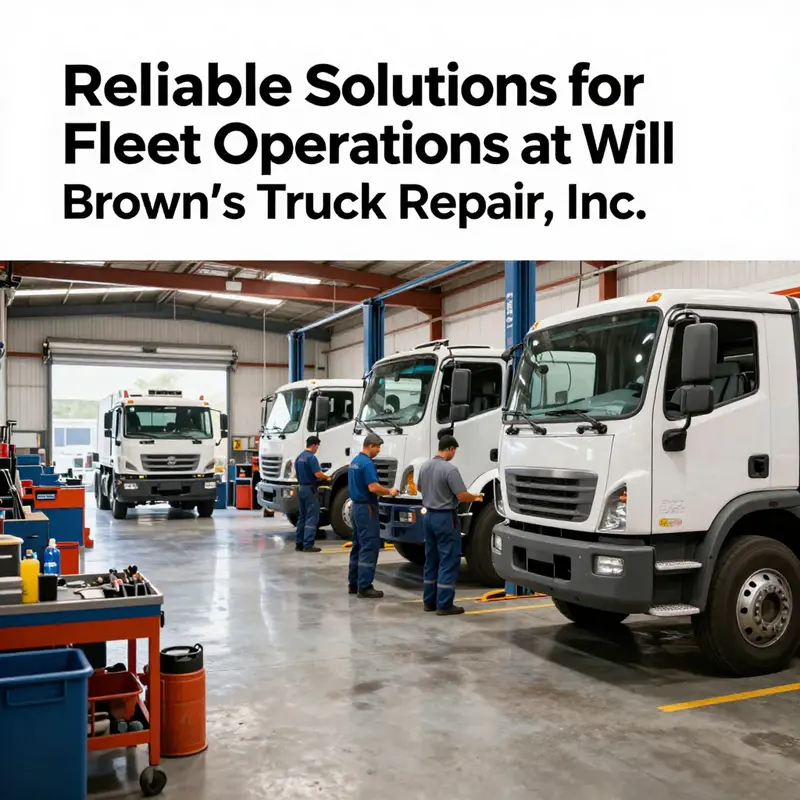
In the heart of Cambridge, Maryland, a steady rhythm of delivery trucks and service vans marks the pulse of local commerce. Will Brown’s Truck Repair Inc. sits at 25 Phillips Industrial Park Drive as a quiet, dependable partner for drivers who depend on their rigs to pay bills, serve customers, and keep supply chains moving. This chapter reveals more than a list of services; it traces the philosophy that underpins a shop known for reliability, swift problem solving, and thoughtful preventive care. The technicians who work here do more than fix parts. They diagnose, anticipate, and craft a maintenance rhythm that minimizes downtime and extends the life of each vehicle. The result is not simply a repaired truck, but a machine that runs with confidence, day after day, mile after mile.
At first glance, the service menu reads like a practical toolkit designed for commercial fleets and solo operators alike. The brake system is treated not as a single repair, but as a system wide assessment that begins with a thorough inspection and ends with a repair strategy that restores stopping power and steadiness. Brakes are witnessed by drivers in moments of sudden need—an abrupt stop in a rural stretch, a congested intersection, or a loading dock where precision matters. Will Brown’s team understands that the true value of brake service lies in preventing those moments before they arise. The technicians check pad and rotor wear, master cylinder response, line integrity, and ABS function, weaving these checks into a broader picture of vehicle safety that aligns with a driver’s daily routines and route profiles.
Engine diagnostics form the heart of the shop’s diagnostic prowess. In the era of high-tech engines, the ability to interpret a fault code is only the starting point. Experienced technicians here move beyond the code to listen for the nuanced clues a machine offers—the subtle stutter in an idle, the hint of hesitation under load, or the way a light commercial diesel breathes differently at startup in damp weather. An overhaul, when necessary, is approached not as a flashy fix but as a disciplined rebuild of performance. It involves components selected for durability, precise tolerances, and compatibility with the vehicle’s intended duty cycle. This attention to the engine’s health feeds into broader maintenance plans and reduces the risk of an unexpected breakdown on a long haul or a busy city route.
Transmission servicing in this context is about preserving momentum. Clutch wear, fluid condition, and torque delivery are monitored with a mix of traditional inspection and modern diagnostic checks. The shop’s philosophy treats transmission care as a preventive habit rather than a reactive cure. When transmission issues do emerge, they are diagnosed with an eye toward minimizing downtime. A clean, organized repair environment helps ensure that technicians can reassemble components with confidence, and the client benefits from predictable service windows and transparent timelines. The result is a transmission system that remains responsive to driver expectations, whether the truck is carrying a full load across state lines or making multiple local pickups in a tight schedule.
Suspension and steering adjustments are more than comfort features; they are safety-critical elements that influence braking distance, tire wear, and stability in dynamic driving conditions. The Will Brown’s team evaluates alignment geometry, checks for worn bushings, and assesses steering play with a methodical approach. A well-tuned suspension reduces unpredictable handling, which in turn lowers the risk of tire scrapes on curbs or uneven wear patterns that could balloon future maintenance needs. This is especially relevant for fleets operating in rough infrastructure zones or in seasonal weather where potholes and frost heaves can challenge set points and geometry. The technicians translate measurements into precise adjustments that restore the intended steering feel and road contact, ensuring the driver can navigate city streets and remote corridors with confidence.
Tire and wheel alignment rounds out the core offerings with a practical emphasis on contact patches and balance. The shop recognizes that tires are the only point where a vehicle meets the road, so every alignment is treated as a cornerstone of fuel efficiency, traction, and braking behavior. A meticulous wheel alignment process reduces irregular wear, keeps steering responsive, and supports longer tire life. For fleets, consistent alignment reduces tire costs and helps maintain predictable maintenance budgets. The service philosophy here is simple: align and balance not for a single trip, but for the long arc of a vehicle’s life on the road.
Beyond the core services, Will Brown’s Truck Repair Inc. makes preventive maintenance an accessible, customized program rather than a generic tick list. The shop understands that every vehicle type has its own cadence, and every use case tells a different story. Heavy-duty trucks on long-haul routes face different stressors than local delivery vans, school buses, or regional haulers. The preventive maintenance programs are tailored to these realities, taking into account mileage, load patterns, climate exposure, and the frequency of service. Rather than relying on one-size-fits-all intervals, the shop designs a schedule that aligns with the vehicle’s role on the road. Regular inspections, fluid analysis, filter changes, and system checks become parts of a prepared routine, not emergency improvisation. Clients gain the confidence to plan maintenance windows, budget for expected costs, and avoid the unpredictable spikes that come with breakdowns.
Quality is the throughline that connects every service and every interaction at Will Brown’s Truck Repair Inc. The emphasis on reliability is expressed through a combination of skilled hands, thoughtful processes, and quality parts. The technicians approach each job with a clear sequence: diagnose, confirm, repair, test, and verify. The test phase is not merely a post-fix check but a confirmation that the vehicle can perform across its expected duty cycle under real-world conditions. This approach minimizes the chance that a problem resurfaces after a quick fix, a risk that can otherwise erode a dispatcher’s trust or a fleet manager’s budget. The customer experience mirrors this reliability. Timelines are communicated in plain terms, expectations are aligned with the scope of work, and updates are provided as milestones are reached. It is a practical model built on transparency and accountability, qualities that matter when a truck is a business lifeline.
A crucial facet of the shop’s approach is its accessibility to a wide range of clients. Local drivers who rely on the daily return of their vehicles to the route, regional operators who co-manage multiple trucks, and owner-operators who live in the tension between cost and uptime all find a partner here. The practical language used in explanations, the willingness to discuss options, and the readiness to tailor services to a customer’s schedule help make the repair experience predictable and manageable. The technology and training behind the work are visible not only in the tools and equipment but in the way technicians listen. They listen for the driver’s concerns, the truck’s symptoms, and the fleet’s goals. That listening informs a plan that respects the customer’s constraints while delivering the safety and reliability that every journey demands.
To illustrate how a typical service engagement unfolds, consider a scenario common to many fleets: a door slams shut on a cold morning and one truck returns from a long day with a warning light and a rough idle. A driver calls the shop, and the response is calm and constructive. The service adviser gathers the vehicle’s basic data, reviews the symptoms described by the driver, and schedules a diagnostic window that minimizes downtime. In the shop, the technicians begin with a diagnostic sweep, read the codes, and then perform targeted inspections of the braking, engine, and drive systems. The goal is not to chase every possible fault but to identify the critical component that has become a risk for safety or reliability. When the source is found, the team reviews the repair options with the client, offering a clear view of timelines, costs, and potential follow-up checks. The repair itself is executed with attention to torque specs, fastener safety, and functional testing. Finally, a test drive confirms that the truck handles as expected, and the vehicle is returned to service with a concise report that documents what was done and why.
For fleet owners and operators who want to align maintenance with a broader financial plan, the chapter’s companion resource on budgeting for routine truck maintenance offers a practical bridge between technical care and fiscal discipline. It speaks to the idea that maintenance is not simply an expense, but a strategic investment in uptime, reliability, and the ability to meet customer commitments. This perspective makes preventive maintenance not a recurring burden but a sustainable practice that protects the equipment’s value over time while stabilizing service levels for clients and partners. The internal link provides a pathway to a framework that complements the shop’s hands-on expertise with a budgeting mindset, illustrating how a thoughtful maintenance plan can enhance profitability and predictability for drivers and fleets alike.
In describing the service organization, it is helpful to acknowledge the local dimension of Will Brown’s Truck Repair Inc. Cambridge is a community with shared roads, and the shop’s value lies in its familiarity with the terrain, traffic patterns, and seasonal challenges that shape how trucks perform. The technicians bring this regional understanding to each job, reading road wear signs, weather conditions, and typical route demands into their diagnostic and repair decisions. The result is a service ethos that feels both practical and precise, grounded in real-world experience rather than abstract theory. This approach resonates with drivers who need a partner that can respond quickly, communicate clearly, and stand behind the work with a straightforward guarantee of safety and reliability.
As with any service operation, the relationships built at Will Brown’s Truck Repair Inc. extend beyond the immediate fix. When a client asks about long-term care, the shop is ready with a plan that aligns maintenance intervals with vehicle usage and economic realities. A driver with a single truck may appreciate a streamlined schedule, while a small fleet may value a more structured program that coordinates service among several vehicles. In both cases, the shop’s emphasis on preventive care helps reduce the risk of delays, breakdowns, and unexpected costs. The technicians’ skill, the careful selection of replacement parts, and the emphasis on testing and verification all contribute to a maintenance culture that treats every vehicle as an extension of the customer’s business rather than as a separate, isolated asset.
For readers exploring the broader landscape of truck maintenance, the narrative here also underscores a fundamental truth: reliability is built through a sequence of intentional, well-executed steps rather than single, dramatic repairs. A well-maintained brake system, a healthy engine, a balanced drivetrain, precise suspension geometry, and accurate wheel alignment work in concert to deliver dependable performance. The Will Brown’s team understands that each element affects the others. A small improvement in one area can yield measurable gains in safety, fuel efficiency, and tire life, and that cumulative effect is what keeps a fleet rolling with minimal disruption. The shop’s approach demonstrates that maintenance is an ongoing conversation between the vehicle and the people who rely on it, and that conversation is guided by expertise, transparency, and a shared commitment to safety on every mile traveled.
As the chapter closes, the underlying message remains clear: Will Brown’s Truck Repair Inc. is more than a service center. It is a partner that translates technical know-how into practical outcomes for drivers and fleets in Cambridge and beyond. It is a place where preventive discipline, skilled workmanship, and responsive support come together to create reliable transportation, reduce downtime, and protect the bottom line. The work performed here shapes not only the health of individual vehicles but also the reliability of the broader network that keeps communities connected, commerce moving, and the roads ahead safer for everyone who depends on the trucks that traverse them. In that sense, the shop’s mission is both technical and relational—rooted in the craft of repair and sustained by a commitment to customers who rely on those repairs to deliver what they promise each day.
For readers seeking more practical perspectives on maintenance planning and cost management, the linked article on budgeting for routine maintenance offers a hands-on approach to turning maintenance into a predictable, economically sensible practice. budgeting for routine truck maintenance. And for those who want to gauge customer sentiment and see how the shop’s work translates into real-world satisfaction, the local feedback on the Cambridge business listing provides additional context about service quality and reliability. https://www.yelp.com/biz/will-browns-truck-repair-cambridge
Rough Roads, Smooth Repairs: Inside the Operational Core of Will Brown’s Truck Repair Inc.
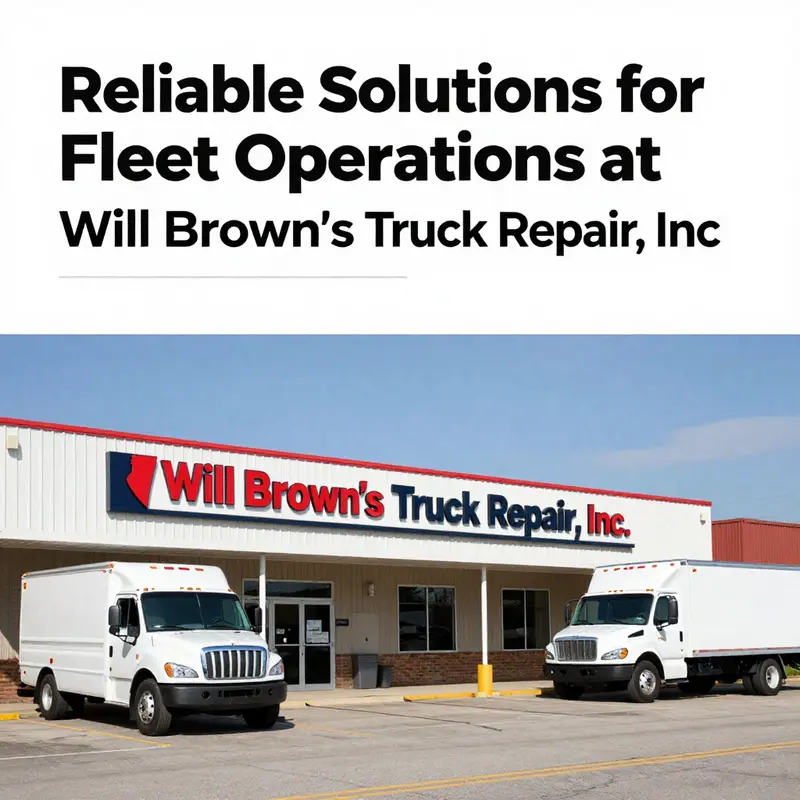
The roadway hums with the constant pressure of commerce, and in Cambridge, Maryland, a small but sturdy workshop sits at 25 Phillips Industrial Park Drive, tucked into an industrial cluster that seems built for the heavy rhythm of trucks and trailers. Will Brown’s Truck Repair Inc. is more than a repair shop; it is a local node in a broader network that keeps freight moving through southern Maryland and beyond. The shop’s location along a corridor of loading docks and service yards means it is almost always within reach of drivers who depend on prompt, reliable maintenance and repair. The landscape around the shop—steel, concrete, and the regular flutter of weatherproof banners—speaks to a world where downtime translates directly into missed freight, late deliveries, and budget overruns. In that context, the business that stands at this address has to perform not just mechanical work but a precise blend of operational discipline, customer empathy, and practical problem solving that minimizes downtime while preserving the integrity of each vehicle that enters the bay.
From outside, the building reads as a conventional repair facility: a straightforward footprint, a set of service bays, and a neat parking area where trucks come to rest for inspection, service, or the occasional unexpected breakdown. Inside, the rhythm is different. The team must balance the immediacy of urgent, on-the-spot diagnostics with the longer arc of preventative maintenance. Drivers—men and women who traverse long miles—arrive with a chorus of concerns: a jittery clutch, a steering drift, a brake warning light, a fuel-system nuisance, or a nagging vibration that promises trouble if not addressed quickly. The shop’s reputation for reliability is built on how well it translates those concerns into actionable work orders and a plan that respects the driver’s timeline. In such a setting, the ability to quickly triage a problem becomes a form of operational capital. A good diagnosis, delivered with candor and an honest schedule, saves time and money, and it builds trust—a currency that is often harder to earn than a robust warranty.
Ownership and management at Will Brown’s Truck Repair Inc. provide an undercurrent of steady navigation through the uncertain tides of the transportation industry. Reports about the business indicate that Will Brown himself leads the shop, keeping a direct line to the daily decisions that influence productivity, parts procurement, and customer communication. This arrangement—an independently run shop with a hands-on owner—often translates into a culture where experience guides decisions, and responsiveness becomes a defining feature. The association with another enterprise, W&S Resources, Inc., based in Houston, Texas, hints at a broader perspective on operations. It suggests that the owner may draw on an extended network of practices or strategic ideas from different markets. While formal organizational charts aren’t publicly documented, the practical implication is clear: the business likely blends local know-how with wider industry exposure. Such a mix can empower quick pivots in service lines, staffing approaches, and relationship-building with larger fleets that travel the mid-Atlantic corridor.
Communication stands at the core of the operation. A customer-facing phone line, the ability to point a driver to a precise location on a map, and the ease of leaving and receiving updates create a predictable experience for someone who is trying to minimize the time a truck spends out of service. The shop’s phone number—(410) 228-4385—functions not merely as a contact point but as the public interface for reliability. The physical presence of the shop, along with its digital footprints on platforms like Yelp and MapQuest, helps confirm its ongoing activity to drivers who rely on quick decisions in the field. A driver who searches for a repair partner in Cambridge needs more than a repair promise; they need a tractable plan, a realistic ETA, and a transparent sense of whether the shop can get them back on the road that day. Will Brown’s Truck Repair Inc. seems to recognize this expectation and to structure its workflow accordingly.
The service envelope covers the broad spectrum of truck maintenance and repair that a commercial operator would expect. The shop’s focus is described as maintenance and repair for trucks, which implies a repertoire that spans routine inspections, brake systems, steering and suspension checks, driveline diagnostics, cooling and heating systems, fuel and air systems, electrical concerns, tires and wheels, and the periodic service that keeps fleets in compliance with safety standards. In practice, this means the facility must balance the immediacy of emergency repairs with the reliability of scheduled maintenance. A breakdown roadside near Cambridge can be a critical event for a carrier, and the shop’s capacity to respond promptly can determine whether a driver completes a route on time. The repair bay becomes a theater where the story of a vehicle’s health unfolds. A technician’s assessment, the service writer’s scheduling, and the parts department’s readiness must align to deliver a coherent, efficient solution. The operational challenge is not simply fixing what’s broken; it is orchestrating a sequence of steps that minimizes downtime and protects the vehicle’s ongoing reliability for the miles ahead.
That orchestration rests on a practical management philosophy. A small, independent shop like this tends to rely on a few core principles: clarity of purpose, nimble decision-making, and a culture of hands-on accountability. Will Brown’s leadership appears to embody these traits by directly supervising or participating in crucial stages of the workflow. The potential connection with W&S Resources, Inc. could imply access to broader procurement channels, financial management practices, or cross-market learning that enhances the shop’s ability to forecast demand, manage cash flow, and absorb the costs that come with equipment upgrades or seasonal maintenance. The net effect is a business that can absorb volatility—fuel price fluctuations, parts shortages, or spikes in demand—without forfeiting reliability. In the transportation sector, where schedules are rarely forgiving, that steady capability translates into long-term relationships with drivers and fleets that need predictable service patterns.
The day-to-day choreography of Will Brown’s Truck Repair Inc. revolves around a disciplined intake process. A driver pulls into the facility, and the first impression is the clarity of the conversation that follows. The service writer, a liaison between the driver and the workshop, gathers essential information: the nature of the issue, any warning lights, recent maintenance history, and the driver’s delivery timetable. This intake moment matters as much as the diagnostic one that follows. It shapes the scope of work, the estimate presented, and the decision to pursue quick fixes or a more comprehensive inspection. The shop’s operational profile suggests a preference for transparency and a realistic commitment to timeframes. In an industry where a few hours of downtime can cascade into a chain of late deliveries, the ability to set and meet expectations is a practical competitive advantage.
Behind the scenes, the workshop’s internal dynamics must support a swift, repeatable process. The diagnostic phase typically relies on experienced technicians who can translate symptoms into a work plan. Diagnostics are not mere guesswork; they are an investment in the quality of the repair and the driver’s confidence. A precise diagnosis reduces the risk of misdiagnosis, which in turn prevents repeated visits or unnecessary parts orders. After diagnosing, the parts inventory becomes a critical bottleneck in the chain. With heavy-duty equipment and components, timely parts access can swing the difference between a two-hour turnaround and a full day delay. The shop’s management, therefore, must maintain a balance between having enough stock on hand and avoiding capital being tied up in obsolete or overstocked items. This is a general challenge in the industry, particularly for smaller operations that cannot rely on massive economies of scale. Yet a well-tuned parts strategy—leveraging local suppliers, predictable reorder points, and a keen eye for compatibility across different truck models—offers the potential to expedite repairs and improve throughput.
The human element is inseparable from the operational picture. A shop that earns trust over time tends to cultivate a culture of careful workmanship, clear communication, and respect for a driver’s schedule. This is especially true for a service that drivers might rely on during long hauls. The crew’s ability to explain what is happening, propose a staged plan, and offer a realistic appointment window matters as much as the technical fix itself. For Will Brown’s Truck Repair Inc., such an ethos likely manifests in the way technicians collaborate, how the foreman delegates tasks, and how the team documents the work performed. The documentation not only supports future maintenance but also creates an auditable trail that helps drivers and fleet managers track vehicle history. In practice, that history becomes a measurable asset that informs decisions about when to perform major service, when to upgrade components, and how to align preventive maintenance with the vehicle’s usage profile.
In a market where fleets compete on uptime, the shop’s customer experience is a powerful differentiator. The local operator who depends on timely repair is not merely seeking mechanical skill; they want a partner who can interpret the broader logistics realities. A driver might be carrying a high-priority load or coordinating with multiple legs of a route. In that context, the repair shop’s responsiveness, the accuracy of ETA, and the willingness to discuss tradeoffs—all contribute to the decision to return for future service. Will Brown’s Truck Repair Inc. appears positioned to deliver that kind of experience through a combination of accessible contact points, a physically accessible location, and a track record visible through public reviews and maps. The emphasis on reliability in the messaging aligns with a business model that values repeat engagement over one-off, transactional work.
To the driver, a repair shop is a place where risk is managed through skill, systems, and a touch of pragmatism. The risk in trucking is not simply breakdowns; it is the potential for cascading delays, missed windows, and the reputational cost of late deliveries. The shop’s ability to anticipate and mitigate those risks—by offering rapid assessments, practical maintenance plans, and honest scheduling—turns a potentially stressful interruption into a controlled disruption. In this light, Will Brown’s Truck Repair Inc. functions as more than a service provider; it acts as a stabilizing force within a fractious industry. Its operations are built to handle the tug-of-war between the clock and the wrench, producing outcomes where drivers return with confidence and fleets return with continuity.
What becomes especially instructive in examining this Cambridge shop is the understated sophistication of its business logic. The emphasis on service quality, the attention to the driver’s time, and the integration of local and broader networks all signal a deliberate approach to sustainability in a competitive environment. The owner’s cross-market ties, even if not fully public, point to a strategic awareness that local service excellence can be reinforced by experiences and practices drawn from a wider professional landscape. This is not a grandiose expansion plan but a practical discipline: keep the shop well-lit and well-equipped; keep the lines of communication clear; keep a roster of skilled technicians who understand the unique pressures of commercial transport; and keep a reputation that the industry—in whatever circle or rating system drivers consult—considers trustworthy. In such a setup, every repair becomes a data point—a line in the ledger of reliability that adds to the shop’s brand promise and strengthens its ability to serve as a steady hand on the wheel for drivers who depend on the road for their livelihood.
As the narrative from Cambridge suggests, the essence of Will Brown’s Truck Repair Inc. lies in a coherent, practical operational framework. It’s a framework that values straightforward access, transparent communication, and dependable execution. It recognizes the realities of the road where a single missed appointment or a delayed diagnostic can throw a route into disarray. It also acknowledges the importance of local community ties—how a repair shop can contribute to the safety and efficiency of regional freight corridors by ensuring that every job is completed with care and kept within the bounds of a driver’s schedule. In that sense, the shop’s work moves beyond the mechanics of routine maintenance to become a form of logistics elasticity: a capability to absorb shocks, respond to urgent needs, and maintain a steady cadence of service that keeps cargo moving. The quiet strength of this operation is that it doesn’t merely fix what’s broken; it builds a relationship with the fleet community that values reliability as much as the repair itself, a relationship that is earned through consistent performance, honest communication, and a presence that drivers can trust when the miles are long and the clock is unforgiving.
For readers who want to explore practical strategies that echo these themes, a resource focused on budgeting for routine truck maintenance offers a concrete framework to apply in similar settings. It helps fleet managers and shop operators think through cost planning, preventive maintenance scheduling, and the alignment of technical work with financial realities. Budgeting for Routine Truck Maintenance provides a structured approach to sustaining reliability without sacrificing fiscal discipline. In the context of Will Brown’s Truck Repair Inc., such a framework would likely reinforce the operational choices that already appear effective: keeping the right mix of skilled technicians, maintaining a sensible parts inventory, and communicating openly about timeframes and costs. The chapter thus not only captures a moment in a Cambridge repair shop’s life but also points toward actionable practices that can be adapted in similar settings across the region.
External references beyond the shop’s own public channels offer additional perspective on local reception and market dynamics. For curious readers who want to gauge how Will Brown’s Truck Repair Inc. is perceived by drivers and the broader community, public reviews can offer a window into the consistency of service and the reliability that customers value. A recent listing on a popular review platform provides a corroborating snapshot of customer experience, location convenience, and the shop’s ongoing activity in the area. These external voices balance the internal narrative with a sense of real-world impact, reminding us that the success of a repair operation is inseparable from the perception of its customers and the trust they place in it.
As the story of Will Brown’s Truck Repair Inc. continues to unfold, the thread that remains constant is a commitment to keeping heavy vehicles safe, roadworthy, and on schedule. The business embodies a pragmatic philosophy: invest in people, cultivate efficient processes, and maintain steady connections to the supply ecosystem that undergirds every turn of a wrench. In a landscape where the miles accumulate and the clock never stops, this combination of expertise, reliability, and communication becomes the durable fuel that powers not just a shop, but the broader freight economy that depends on it. The operating model here is a reminder that small, well-led businesses can exert outsized influence by delivering predictable performance, earned trust, and a stable platform from which drivers and fleets can navigate the road with confidence.
External reference for further context: Will Brown’s Truck Repair on Yelp: https://www.yelp.com/biz/will-browns-truck-repair-cambridge
null
null
Final thoughts
Will Brown’s Truck Repair, Inc. emerges as a critical ally for fleet managers and industry operators aiming to optimize their truck operations. Through their extensive range of repair services, efficient business management, and customer-centric approach, they provide solutions that go beyond mere repairs, significantly impacting downtime and operational efficiency. With a solid reputation built on trust and reliability, partnering with Will Brown’s Truck Repair can be a game-changer for any organization reliant on fleet logistics.