Repo trucks operate at the intersection of finance, law, and logistics, providing vital recovery services when vehicle owners default on their obligations. Understanding how repo trucks work is crucial for fleet managers, trucking company leaders, and logistics providers. This article examines the vehicle recovery process, the various techniques employed, the essential technology utilized, legal compliance obligations, and the economic factors that shape this industry. Each chapter provides a comprehensive exploration of these facets, equipping operators with insights to navigate the complexities of repossession with confidence.
Behind the Hook: A Practical, Integrated Look at How Repo Tow Trucks Actually Work
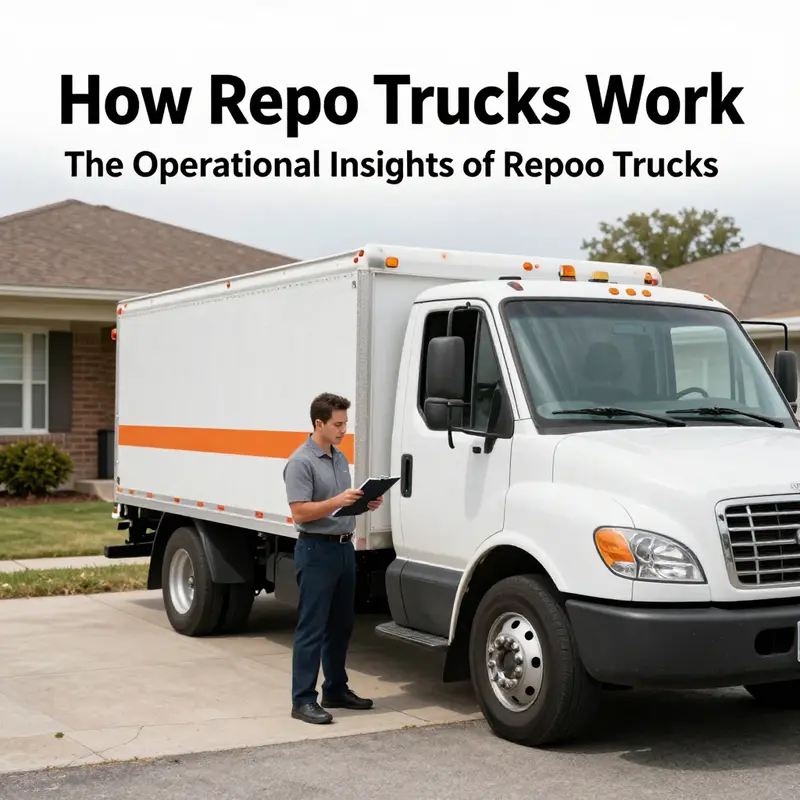
Repo tow trucks are often perceived as brute instruments of force, but the truth behind their operation rests on planning, technique, and strict adherence to legal boundaries. These vehicles exist to recover vehicles that lenders or lessors have a right to possess, turning a default into a traceable transfer of ownership from debtor to creditor or to an authorized storage or auction environment. The machinery is simple in concept—secure a vehicle, lift or pull it, and transport it to a designated location—but the execution is complex. A modern repossession operation relies on a precise sequence of steps, each chosen to maximize safety, minimize damage, and ensure a clear, defensible record of every action. The result is a process that reads more like a dispatch plan than a street confrontation. The equipment on board a repo tow truck is designed to handle a spectrum of scenarios, from a straightforward surrender at the curb to a difficult extraction from a locked driveway, a tight garage, or a hidden parking spot. In every case, the central objective remains the same: relocate the vehicle quickly, securely, and within the framework of the law, while maintaining a clean chain of custody and a verifiable audit trail that can survive scrutiny in court or in an insurance claim. The practitioner’s role blends mechanical skill with judgment, communication, and procedural discipline, and the vehicle that appears in this chapter is a microcosm of that discipline.
Identification and assessment start the moment the target is located. A repossession agent surveys not only where the vehicle sits, but how it sits. Is the car accessible from the street, or is it tucked behind a fence, under a carport, or parked in a garage with limited access? Is the owner cooperative or resistant, and what are the lighting, weather, and pedestrian dynamics in the immediate surroundings? These questions shape the recovery method and influence the choice of equipment. In a cooperative scenario, the approach may be straightforward: a formal surrender, with the vehicle ready to be rolled into a tow setup without force. In more challenging circumstances, the plan must anticipate potential obstacles—locked gates, high curb weights, narrow driveways, or uneven terrain—that demand specialized techniques and careful risk management. The assessment also considers the vehicle’s value and condition. A high-value or potentially damaged car may be placed on a flatbed to avoid additional stress on tires and suspension, or on a premium wheel-lift setup that minimizes contact with the undercarriage. Each choice has implications for damage prevention, liability, and the speed of turnover. A well-documented evaluation becomes the foundation for the entire operation, because the record that follows is as much about liability management as it is about vehicle recovery. The modern repo professional leans on technology to bolster this evaluative process. Onboard GPS and cameras can capture precise locations, angles, and the surrounding environment. Real-time communication with a central office coordinates timing, route, and custody status, while digital checklists ensure that every step—from block to curb—is logged. These tools do not replace human judgment; they augment it, providing a transparent, auditable flow that supports legal compliance and minimizes disputes after the fact. The best operators understand that the equipment’s elegance lies not only in its mechanical lifting power but in the way it respects the vehicle’s integrity and the owner’s rights while achieving the recovery objective.
The recovery method determination is where planning meets adaptability. The agent selects a strategy from a family of methods defined by the scenario’s constraints. Traditional towing remains the backbone of most recoveries and encompasses both flatbed and wheel-lift configurations. Flatbed tow trucks offer a secure, stable platform that keeps tires off the ground and protects delicate exteriors and drivetrains. They are especially favored for high-value cars or vehicles with compromised tires, severe weather exposure, or prior damage that could worsen with rolling contact. The flatbed’s philosophy is to minimize any contact beyond the wheel wells and frame, thereby reducing additional wear or injury during transport. In contrast, wheel-lift towing uses hydraulics to lift one end or both ends of the vehicle, allowing the remaining wheels to drag or roll on the ground. This method can be faster and less resource-intensive than a full flatbed setup and works well when access is reasonably straightforward and the vehicle is positioned in a way that limits the risk of undercarriage damage. However, wheel-lift demands careful alignment and secure attachment to avoid scuffs, bent rims, or unintended movement. The choice between these traditional methods hinges on accessibility, vehicle condition, and the objective of preserving value. When access is severely restricted, or when discreet, low-profile operations are necessary, specialized equipment and techniques come into play. Remote-control or low-profile tow assets may be deployed to approach a vehicle without drawing attention in dense urban areas. High-clearance recovery vehicles can navigate uneven surfaces or soft ground without sinking, enabling a controlled extraction in challenging locations. In the hands of an experienced operator, this isn’t about forcing compliance; it’s about methodically negotiating space, obstacles, and risk while maintaining a chain of custody that stands up to legal scrutiny. The process is inherently dynamic, with the plan often evolving as new information becomes available at the scene.
The common recovery methods—whether traditional or specialized—share a core set of safety principles. Securing attachment points is essential. If a frame or hitch is used, secure hooks and appropriate lashings minimize movement during transport. For wheel-lift methods, care must be taken to ensure wheel chocks and the lift arms are properly positioned to avoid tire damage or side-loading on axles. In all cases, the operator must monitor the vehicle’s stability throughout the loading sequence, using spotters when visibility is limited and communicating constantly with the dispatcher. The goal is to avoid creating new damage while preventing theft or loss during transit. The transport itself is another area where procedure matters. A repossessed vehicle travels in a controlled path, with route planning that accounts for traffic patterns, potential obstacles, and the destination’s accessibility. Special attention is given to parking at the storage facility or auction yard, where soft surfaces, incline angles, and proximity to other vehicles can introduce risk. The operational discipline extends to documentation: every attachment, every movement, and every handoff is recorded so that the vehicle’s custody is traceable and defendable, even if questioned later in court or during an insurance review. The literature and industry standards often emphasize this accountability, underscoring that the physical act of moving a vehicle is inseparable from the paperwork that proves ownership transfer and legal compliance. As readers move from the mechanics of attachment to the choreography of transport, they may see the connection to broader industry practices described in professional resources, which provide guidelines for performance metrics, safety benchmarks, and incident reporting. For those who want a deeper dive, a practical entry point is the MasterTruckRepair blog, where practitioners share insights that illuminate everyday challenges and solutions in the field. MasterTruckRepair blog.
Specialized recovery techniques are reserved for cases that fall outside the ordinary. Vehicles stuck in ditches or mud, or those situated on private property with limited access, require more than brute force. A winch may be deployed to create controlled tension, pulling from a secure anchor point while spread safely to prevent snatch loading or sudden jolts that could tear components or injure bystanders. Pulleys provide mechanical advantage, enabling the operator to maneuver a vehicle with minimal resistance against the ground and surrounding structures. High-clearance recovery vehicles add another layer of capability, enabling safe disengagement when space is constrained by overhanging obstacles or tight corners. Each of these techniques hinges on precision and experience. They demand a deep understanding of weight distribution, leverage, and the vehicle’s center of gravity, which can shift unexpectedly when it is partially off the ground or perched on irregular terrain. The operational risk is not purely mechanical; it includes the potential for property damage, injury, or escalation if a bystander misinterprets or obstructs the process. Effective training emphasizes anticipation—recognizing where the vehicle might bind, how surface conditions might change under load, and when to pause to reassess. The most successful repossession teams formalize these judgments in standard operating procedures that balance efficiency with caution, ensuring that the recovery proceeds in a controlled manner from start to finish.
Cooperative repossession offers a contrasting path. When owners consent to surrender, the recovery process tends to be smoother and faster, with fewer variables and less need for forceful interventions. In such cases, the operator may attach directly to the vehicle with either a frame-safe harness or a hitch-based method, relying on the owner’s cooperation to minimize risk. The difference here is not merely the absence of resistance but the presence of a predictable, documented sequence that can be executed with greater certainty. Even in cooperative scenarios, though, the emphasis on documentation remains. A transparent chain of custody, with timestamps, signatures, and digital records, remains essential to validate that the vehicle was lawfully repossessed and transported. The professional emphasis on compliance extends beyond the immediate recovery; it informs the ongoing relationship with lenders, insurers, and the law. A well-run operation builds trust through dependable processes, precise reporting, and the ability to demonstrate that every step complied with applicable statutes and contractual obligations.
Beyond the mechanics, the modern repo truck is a platform for accountability. The integration of GPS, cameras, and centralized dispatch not only improves efficiency but also creates a verifiable record of each recovery. This integration supports post-recovery processes, including storage, insurance documentation, and eventual disposition at auction. It also provides a framework for evaluating performance, measuring safety outcomes, and identifying opportunities for improvement. The industry’s standards and performance metrics, discussed in depth in industry literature, offer a compass for practitioners seeking to balance speed, safety, and legal compliance. The result is a disciplined craft where the vehicle is more than a tool for movement; it is a mobile unit that upholds the integrity of financial agreements and the rights of all parties involved. As this chapter closes and the larger article continues, the focus shifts from the physical act of towing to the broader ecosystem that surrounds repossession: the people who plan, execute, and document each recovery, and the regulatory and ethical frameworks that shape every decision along the way. For readers seeking additional context about how industry standards shape day-to-day practice, a comprehensive external resource provides a thorough, standards-based overview of repo towing practices. External reference: https://www.repossessiontoday.com/repo-towing-complete-analysis-of-standards-types-and-industry-performance/
On the Hook and Under Control: How Repo Trucks Work in Vehicle Recovery
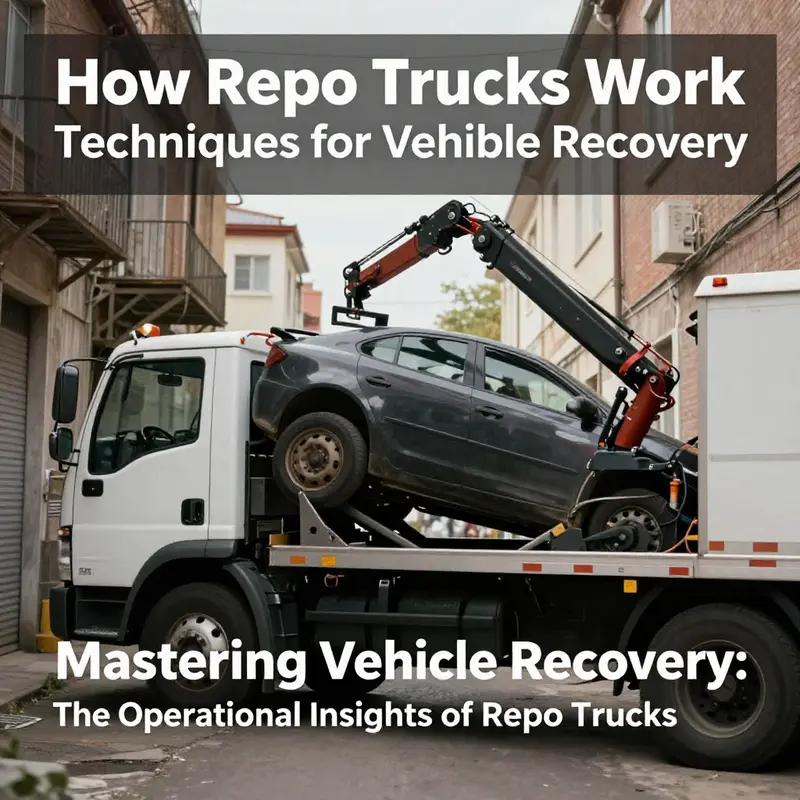
Repossession is rarely a matter of brute force. It is a carefully calibrated operation where timing, legality, and the right blend of equipment determine whether a recovery is clean, swift, and defensible in court as well as in the eyes of the vehicle owner. A repo truck is more than a moving crane; it is a mobile workflow that translates policy into practice. The vehicle to be recovered becomes a case file on wheels, and the operator becomes a conductor of an intricate sequence that blends logistics, safety protocols, and legal awareness. In this light, the contemporary repo truck is designed to minimize damage to the asset, protect the recovery team, and document every step for accountability and compliance. The human element—the repossession agent—works in close concert with technology, using it to map a path through the concrete maze of urban streets, residential driveways, and remote back lots. This combination of foresight, training, and equipment defines how repossessions unfold, from the first identification of a target to the final secure transport of the vehicle to a storage lot or auction site.
The process begins long before a tow line is attached. A repossession operation hinges on a careful assessment of the target location, the condition and accessibility of the vehicle, and the degree of owner cooperation. When an owner agrees to surrender, the recovery can proceed with a minimum of friction. In such cooperative repossessions, on-hook towing emerges as the preferred method. The tow truck is equipped with secure hooks that latch onto the vehicle’s frame or hitch, allowing a clean, controlled lift that minimizes body contact and the risk of collateral damage. This approach preserves the integrity of the vehicle and reduces confrontation, helping to keep the operation within the boundaries of both safety and legality. It is a quiet choreography: a deliberate hook, a controlled pull, a steady stream of communication between the operator and the dispatch center, and a documented chain of custody that ensures the vehicle remains in the correct legal framework from the moment it leaves the location to the moment it arrives at the storage facility.
Yet every scenario has friction points. When an owner resists returning the vehicle or when the car sits in a hard-to-reach spot—behind a locked gate, in a garage, in a ditch, or tucked into a cluttered private driveway—the recovery demands more specialized techniques. Here the fleet’s versatility becomes apparent. Wheel-lift towing, with a hydraulic arm that elevates one or more wheels off the ground, allows the vehicle to be moved without dragging or scraping the body. For higher-value or damaged vehicles, flatbed towing keeps the entire unit off the ground. A flatbed maintains a secure, level plane from cradle to cab, reducing the chance of unintended contact with air, ground, or pavement that could worsen existing damage. In difficult topographies or cramped spaces, operators deploy a toolbox of techniques—winches to pull a vehicle from mud or snow, pulleys to redirect force and relieve stress on recovery equipment, and high-clearance recovery units that can navigate uneven terrain. These methods are not flashy; they are practical, efficient, and chosen to minimize risk while maximizing the chance of a successful recovery on the first attempt.
In the most sensitive urban environments, where discretion matters and visibility can escalate tension, more discreet recovery approaches are sometimes employed. Remote-controlled or low-profile recovery equipment allows teams to engage the target with a reduced footprint, limiting the chance of drawing attention to a process that can be emotionally charged for owners and bystanders alike. Even when stealth isn’t the primary objective, the operator’s judgment remains critical. Every movement must be calibrated to avoid sudden jerks, misfires, or accidents that could lead to property damage or personal injury. The best practices in this arena are built on decades of field experience, reinforced by ongoing training and strict adherence to safety protocols. The equipment itself supports this discipline: modern repossession trucks come with a suite of safety features, including secure tie-down systems, redundant braking controls, and real-time communication channels that connect the field team with the dispatch center. This digital overlay is not cosmetic; it offers an auditable record of the recovery’s timeline, location, and handling steps, which is essential when the vehicle’s ownership status is contested or when insurance and legal claims come into play.
Technology in this space extends beyond the tow line. GPS tracking and onboard cameras provide a continuous feed of the operation, allowing supervisors to monitor progress and verify that procedures are followed precisely. Data management software helps schedule repossessions, track the location of assets, and generate digital reports that capture every phase of the process. Such documentation is more than bureaucracy; it forms the backbone of accountability, proving that a recovery was conducted within the legal framework and following the procedural safeguards designed to protect both the owner and the lender. In practice, this means a chain of evidence that can be reviewed by attorneys, regulators, and insurers in case questions arise about dates, times, or actions taken during the recovery. The integration of these tools also enhances safety. Real-time communication reduces the risk of misunderstandings during a tense moment, while cameras can deter and document aggressive behavior on both sides of the negotiation table. The point is not to vilify or sensationalize the owner but to establish a fair, transparent process that respects property rights while upholding the lender’s contractual rights.
Beyond hardware and software lies a philosophy of professional conduct. The success of a repo operation rests heavily on the training, temperament, and ethics of the repossession agent. It is easy to underestimate the importance of de-escalation skills and patience in a space where emotions can escalate quickly. The agent’s role is to manage risk, minimize damage, and secure the vehicle with the least amount of disruption to the owner’s surroundings. This requires a disciplined approach to legal boundaries and jurisdictional requirements, which vary by location but share a common core: the recovery must be authorized, documented, and executed with a focus on safety and accountability. The operator must continually update technical know-how—understanding how different vehicles behave when towed, recognizing signs of preexisting damage, and knowing when to switch tactics based on a changing assessment of the scene. The professionalism demonstrated in these moments reinforces public confidence in the process and helps maintain a constructive dynamic between lenders, owners, and the communities in which repossessions take place.
A trend worth noting is the emergence of mobile repair capabilities that accompany some repossession operations. In places where time is of the essence or where a vehicle presents multiple mechanical challenges, on-site maintenance and minor repair services can be deployed to stabilize the asset before transport. These mobile workshops, conceived as self-contained service units, enable on-site diagnosis, simple repairs, or preventive maintenance that can reduce downtime and improve the likelihood that a vehicle reaches the appropriate destination in a ready-to-sell state. By addressing issues such as flat tires, battery concerns, or minor no-start conditions on the spot, the recovery team can protect asset value and expedite the overall process. This approach emphasizes efficiency without sacrificing safety or legal compliance. It is a reflection of how the field is evolving: blending traditional towing acumen with agile, on-site capabilities to respond to a broader set of recovery scenarios.
The choreography of a repossession, then, is not simply a matter of hooking up and driving away. It is a decision tree shaped by the vehicle’s condition, the location’s constraints, and the level of owner cooperation. When cooperation exists, on-hook towing and careful attachment provide a streamlined path to the storage or auction phase. When cooperation fails or the car sits in an obstructed position, wheel-lift or flatbed configurations, reinforced by winches and pulleys, offer alternatives that preserve the asset and minimize collateral damage. In urban and sensitive landscapes, discrete operations and robust safety protocols take precedence, underscored by a technology layer that records every step for accountability. The practice is as much about ethics as it is about engineering: moving a vehicle from one legal locus to another while upholding the standards of safety, professionalism, and due process. For readers seeking a practical lens on maintenance considerations that can influence recoveries, the Master Truck Repair blog provides a broader context and useful insights into the ongoing care of heavy equipment and tow assets. Master Truck Repair blog.
For those who want a broader, technically grounded perspective on the mechanics behind tow trucks and vehicle recovery methods, an external resource offers a detailed view of the equipment and procedures that parallel the fieldwork described here. This external guide highlights how platforms, winches, hydraulic systems, and safety interlocks come together to enable reliable, repeatable recoveries. It serves as a reference point for practitioners who want to understand the underpinnings of the process beyond actionable field tips. official Bobcat resource on tow trucks
Rig and Route: How Modern Repo Trucks Merge Precision, Power, and Protocol to Reclaim Vehicles
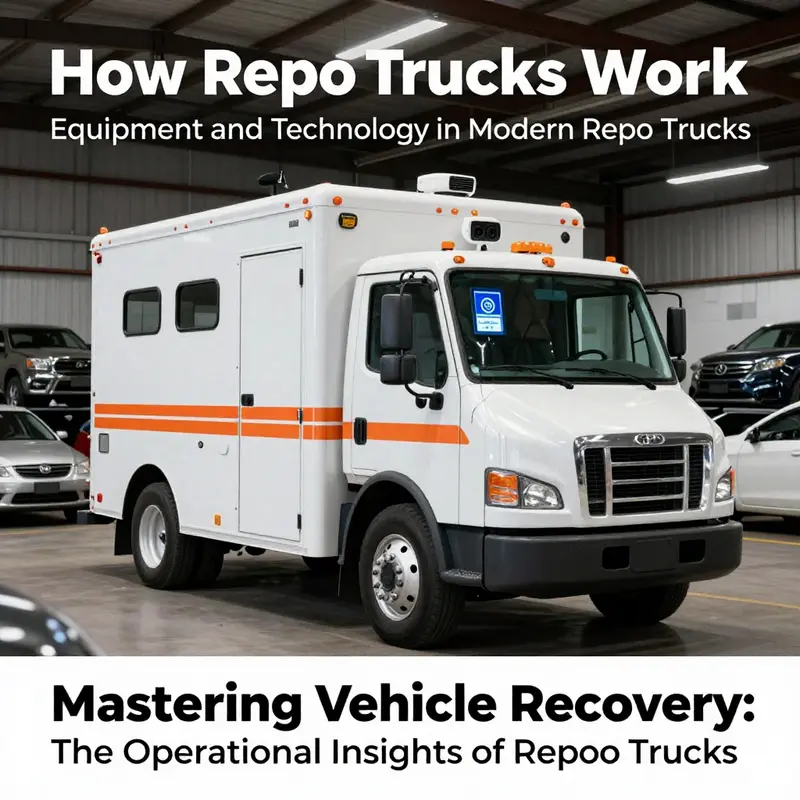
A repo truck is more than a tow rig. It is a purpose built system designed to recover vehicles with speed, safety, and legal compliance at its core. In practice, the operation threads together a careful blend of driving geometry, mechanical leverage, and digital oversight. The intent is straightforward: remove a vehicle from its place of concealment or its owner’s control, transport it to a storage facility or auction, and do so without expanding disputes or compounding liability. Yet the path from identification to rolling away is a sequence of choices, executed with a discipline that mirrors a courtroom or a service call rather than a casual roadside grab. The modern repo truck embodies this discipline through a continuum of methods, all selected by the situation, the owner’s cooperation, and the constraints of space, location, and legality. Cooperative repossessions, where owners surrender willingly, illustrate a smoother, on hook approach. Here the operator attaches to the vehicle’s frame or hitch with secure hooks, a method that minimizes collateral damage and reduces the chance of later disputes about the vehicle’s condition. It is quiet, precise, and efficient, letting the vehicle leave under a clear chain of custody and documentation. In less forgiving circumstances, when the owner is uncooperative or the car sits behind a locked gate, the equipment set expands and the tactics shift. The same fleet that handles everyday repossession must also wrestle with mud, ditch sides, steep driveways, and the curbside realities of an urban environment. This is where high clearance recovery vehicles assert their value. They are equipped with winches, pulleys, and robust hydraulic systems that can lift, stabilize, and extract a vehicle without dragging its body across rough terrain. The mechanics of such recoveries are not reckless. They are engineered to maintain controllable force, to respect the vehicle’s frame where possible, and to prevent secondary damage that could invite liability or insurance disputes. The operator’s judgment becomes as critical as the machine’s capability. In some recoveries, a flatbed remains the preferred platform. A well maintained flatbed can cradle the entire vehicle off the ground, then gently lower it into position for transport. Wheel lift tow configurations offer another option, allowing movement while preserving the vehicle’s alignment and minimizing contact with body panels. In spaces with limited access, low profile or remote controlled tow units can position themselves with surgical precision, aligning undercarriage points or frame rails without triggering a cascade of collateral damage. The key to all these choices is compatibility: the vehicle’s condition, its location, its access to the road, and the level of cooperation available. A beginning of any repossession is a careful assessment of these factors. A trained agent surveys the site, identifies potential obstacles, checks for legal encumbrances, and maps the safest course to attachment points and loading angles. If the owner is present and cooperative, the process is often straightforward. If not, the team may coordinate with security or law enforcement when required by local ordinances, bank liens, or court orders. The technology woven into modern repo trucks then becomes the invisible backbone of the operation. GPS tracking provides real time visibility of the vehicle’s location, and this is essential not only for the towing crew but also for the lender, the storage facility, and the insurer. Real time communication systems knit the crew together, ensuring that every decision is echoed across the team—who is attending to the vehicle, who has secured access, and what condition the vehicle remains in during transit. Digital documentation platforms replace paper logs with tamper resistant records that capture timestamps, photos of the vehicle’s condition before and after loading, and notes about the securing methods used. This creates a transparent, auditable narrative of the repossession that can be referenced in court, in insurance investigations, or in internal audits. The result is more than compliance; it is accountability. The ability to generate a precise, step by step report also supports the broader ecosystem around repossessions—financiers, auctions, and buyers who rely on accurate condition records to determine resale value and conduct. Beyond the capture of location and condition, technology also extends into the realm of tacit knowledge—the tacit competence of the operator translated into measurable safety and efficiency. Modern fleets commonly employ onboard cameras and telematics that monitor speed, acceleration, braking, and wheel slippage. The recordings serve dual purposes: they document best practices and provide a mechanism to review and improve procedures after each job. They also deter reckless behavior and help resolve disputes more quickly, since the footage can verify that procedures were followed and that the vehicle was handled with care. The equipment itself is part of this ecosystem. From heavy duty winches to secure tie down assemblies, the hardware is chosen for reliability and for its endurance in demanding environments. Load securing is a focal point because it sits at the intersection of safety, asset protection, and legal compliance. A vehicle that shifts on a tow bed or within a trailer can suffer cosmetic or structural damage, leading to disputes or rejection of insurance claims. Repossession teams train rigorously in the correct use of straps, chains, and anchor points; they practice the right sequence for loading and unloading, and they verify that every point of contact is chosen to minimize stress on metal frames and critical assemblies. The training philosophy rests on the idea that experience in the field should translate into repeatable, auditable outcomes. The maintenance of the truck and its tools becomes a central part of this philosophy. Reliability in the field is not a luxury; it is a prerequisite to meeting the bank’s schedules, to meeting legal deadlines, and to protecting the asset being moved. Operators who know their equipment—how to tension a winch, how to verify brake line integrity, and how to test a mounting point under load—are the ones who maximize safety and minimize risk. It is here that the concept of a mobile, or on site, service capability becomes relevant. Some operations rely on mobile workshop units that can diagnose and repair minor issues in the field, from hydraulic leaks to electrical faults, so that a vehicle can resume work without being towed to a shop. That functionality is less flashy than the spectacle of a high tension lift, but it is equally critical to a reliable, on schedule repossession program. The integration of these capabilities—mechanical, digital, and procedural—forms a system that is greater than the sum of its parts. The operator manages a choreography of movements, with the vehicle’s path, attachments, and load status as the score. The lender’s requirements for documentation, the owner’s rights, and the storage and eventual sale of the vehicle all ride on the integrity of the process. In the broader picture, repo trucks exemplify how modern fleets blend traditional towing practices with contemporary technology and disciplined process management. Even the most challenging recoveries can be executed with a respect for the vehicle and for the legal framework that governs the act. The interplay of equipment and technology is not just about speed or stealth; it is about predictable outcomes under a range of conditions. For readers interested in the operational maintenance of fleets that support these capabilities, one avenue is to explore in house truck maintenance resources that emphasize reliability and preventive care. The link below points toward detailed guidance on keeping heavy trucks in peak condition, which in turn supports safer, more compliant repossessions. For readers seeking deeper technical context on the kinds of robust, all purpose recovery platforms that enable these operations, online references to heavy duty mobile workshop units illustrate the breadth of engineering behind field service capabilities. See also the broader discussion of fleet maintenance and reliability in the linked resource. In addition, the chapter benefits from an internal perspective on routine upkeep and planning for maintenance cycles, which helps ensure that the heavy equipment remains available when needed and reduces the risk of unexpected downtime during a repossession window. For those who want to explore practical maintenance strategies closer to home, the concept of in-house truck maintenance is explored here: in-house truck maintenance. Keeping the fleet in top shape is not merely a matter of uptime; it is a risk management discipline that underpins every successful recovery.
External context can also shed light on the engineering challenges and design choices that drive modern recovery operations. A representative example of the type of heavy duty, all drive, mobile workshop capabilities used in demanding environments helps illuminate how repo fleets plan for resilience. While the exact model names and specs vary by operator, the core idea remains consistent: the vehicle must deliver traction, stability, and a portable workshop capability that supports field repairs and rapid repositioning. Such platforms embody a philosophy of versatility, enabling recovery teams to adapt quickly to the terrain and the constraints of each job. This adaptability is not about flashy hardware alone; it is about an integrated approach to safety, accountability, and efficiency that keeps repossessions compliant and defensible in the eyes of the law.
As operations continue to evolve, the boundary between recovery and logistical optimization grows clearer. A repo truck is part tow vehicle, part crane, part field workshop, and part data hub. The drivers and technicians who operate these machines become subject matter experts in a complex set of competencies: vehicle dynamics, secure loading, legal compliance, and digital record keeping. They must balance the urgency of the lender’s timelines with the owner’s rights and the safety of the public. The most successful repossession teams are those that treat every job as a well-planned operation rather than a best effort relaunch. They cultivate a culture of meticulous preparation, rigorous verification, and transparent reporting. In this way, the gear, the software, and the people work in concert to deliver outcomes that are predictable and defensible. The chapter lines out not just what repo trucks can do, but how they do it—how a fleet chooses its method, how it tracks and documents each step, and how it ensures that every recovery is performed within a framework that respects safety, legality, and the asset being recovered. This integrated view helps illuminate why these machines are valued assets to lenders, insurers, and storage facilities alike, and why the profession that operates them remains anchored in trained judgment as much as mechanical advantage. The road ahead for repo operations will continue to lean on better sensors, smarter routing, and more sophisticated secure loading techniques, all designed to minimize risk while preserving the rights and the property at stake. For practitioners and observers alike, understanding this ecosystem reveals the quiet but critical engineering that lies behind every successful repossession. External reference provides a window into the industrial scale and the rugged engineering that underpins these workhorses, and the internal resource linked above offers practical guidance on keeping fleets reliable through disciplined maintenance.
Lawful Reclaim in Brief
Repossession tow trucks operate at the intersection of contract, law, and safe transport. When a lender authorizes recovery, operators plan locations, access, and safety considerations. The goal is to move a vehicle from its current position to a storage facility or an auction site with minimal disruption and with documentation that can withstand review in a dispute. This chapter explains the core mechanics and the compliance practices that make asset recovery lawful, professional, and efficient.
From On-Hook to On the Road: The Mechanics, Safety, and Economics of Repo Tow Trucks
Repossession tow trucks occupy a narrow, highly specialized niche where mechanical capability, disciplined procedure, and legal vigilance intersect. They are not ordinary carriers; they are mobile operations designed to recover ownership rights with minimal risk to the vehicle, the public, and the people involved. At their core, repo trucks exist to move a vehicle from its current location to a storage facility or auction site, but the path between those two points is defined by choices that depend on the owner’s cooperation, the vehicle’s condition, and the environment in which the recovery takes place. The result is a disciplined blend of technique, technology, and ongoing professional development that keeps the operation efficient while staying within a framework of safety and legality. The story of how these trucks work begins with the simple distinction between cooperative and non-cooperative recoveries, then expands into the tools, tactics, and measurements that turn a potentially risky situation into a predictable workflow.
When the owner agrees to surrender the vehicle, the operation often proceeds with on-hook towing. This method attaches directly to the vehicle’s frame or hitch using secure hooks, creating a direct, non-invasive connection that preserves the car’s integrity. In a cooperative scenario, this is the most efficient path: it minimizes vehicle handling, reduces the chance of incidental damage, and typically allows for quicker processing, the kind of outcome that helps both the recovery agency and the lender adhere to timelines and compliance guidelines. Even here, the operator’s craft matters. The positioning of the tow truck, the angle of approach, and the careful management of cables and chains must be executed with precision to avoid cosmetic or structural damage, which could complicate later resale or transfer of title.
The real differentiation emerges when cooperation is lacking or when the vehicle sits in a hard-to-reach place. In such cases, the fleet must deploy a mix of techniques tailored to the specific challenge. Wheel-lift towing uses a hydraulic arm to lift one or more wheels off the ground, allowing the vehicle to be dragged or rolled onto a carrier with the body kept off the surface. This method balances the need to move a vehicle that still bears some weight while minimizing further body damage. For vehicles that are high-value, immobilized by terrain, or otherwise compromised, flatbed towing becomes the preferred option. A flatbed keeps the entire vehicle on a platform, removing ground contact entirely during transport. This is especially important for vehicles with preexisting damage, vehicles in tight urban spaces, or units where preserving a pristine resale condition matters. In those moments, the operator’s decision about whether to use a flatbed or a wheel-lift is not merely technical; it is a risk-management decision anchored in an assessment of potential liability, insurance implications, and the lender’s requirements.
To support these choices, modern repo fleets increasingly rely on a spectrum of specialized equipment that can feel almost surgical in its precision. Remote-controlled or low-profile tow units enable recoveries in crowded city blocks or driveways with limited maneuverability. These tools, paired with stealth considerations in certain environments, underscore a broader truth: efficiency in repossession is not just about speed, but about managing risk while respecting public safety and neighbor concerns. Operators are trained to balance discretion with accountability, ensuring that every move is documented and traceable. This is where technology begins to play a decisive role. A typical repo operation now relies on GPS tracking to monitor the vehicle’s location in real time, onboard cameras to record the process for evidentiary purposes, and robust communications between the tow team and dispatch. The documentation becomes part of the recovery record, a safeguard against disputes and a key element in the chain of custody that supports legal and insurance needs.
Beyond the hardware and the tactics, the human element remains central. A repo truck is as effective as the operator who drives it, and so training becomes a core cost and a core advantage. Best practices emphasize not only mechanical proficiency but also situational awareness, de-escalation skills, and compliance with local and state laws governing repossession. Proper procedures help to reduce the risk of liability and to ensure the recovery occurs within the boundaries of the law. The operator must be adept at scanning for potential hazards, anticipating a vehicle’s movement, and coordinating with a monitoring system that logs every step. In some cases, the recovery involves a cooperative party who may have left the keys in a safe location or agreed to a surrender—handling such scenarios with professionalism preserves goodwill and limits friction. In others, the operator must manage uncertainty, remain patient, and communicate clearly with the owner or occupant to minimize confrontation.
The business side of repo trucks cannot be ignored, because the economics of recovery drive equipment choices and staffing. Traditional towing, while more expensive in some situations, remains indispensable for difficult recoveries—off-road, rural, or vehicles trapped in mud, snow, or other challenging terrain. The higher costs associated with specialized equipment, trained operators, and fuel consumption must be justified by the risk profile and the potential resale value of the recovered asset. Cooperative repossessions, where consent is present, can substantially reduce both the likelihood of damage and the complexity of the operation. In these moments, the mechanics and the risk calculus align, making the recovery smoother and often more predictable for lenders, insurers, and borrowers alike. Companies must weigh the upfront investment in a modern fleet against the ongoing maintenance and depreciation that accompany heavy-duty tow trucks. In practice, the choice of equipment reflects not only current demand but also strategic planning around fleet modernization, energy efficiency, and the potential for automation in the longer term.
Technology’s role extends beyond tracking and footage. As fleets grow more sophisticated, software platforms manage the life cycle of a repossession—from scheduling to location updates to digital reporting for legal and insurance purposes. These systems help ensure that each step in the process is auditable and that the vehicle’s status is transparent to all stakeholders. The integration of telematics with fleet management tools supports better decision-making about when to tow, which equipment to deploy, and how to allocate personnel. In a landscape where policy shifts, market demand, and technology intersect, fleets must stay adaptable. A 2025 study touching on the broader trucking sector highlights potential impacts from political and regulatory changes that ripple through the demand for heavy-duty tow capacity. It points to opportunities for fleet modernization—investments in better fuel efficiency, enhanced safety features, and some level of automation—that could reshape the economics of repossession in the years ahead. While automation in this field remains incremental and tightly regulated, the trajectory is clear: operators who couple solid mechanical capability with data-driven decision-making are best positioned to thrive.
Sustainability considerations are increasingly threaded into every aspect of the operation. Even in a field governed by legal transfers and asset control, there is space for responsible practice. Policies that encourage environmental stewardship can influence lifecycle planning for vehicles, the disposal of recovered assets, and the energy efficiency of the recovery fleet itself. Studies on environmental policy and public support suggest that broader societal attitudes can shape economic planning in sectors like repossession, where long-term asset management is a constant concern. For practitioners, this means thinking about fuel consumption, maintenance schedules, and technology investments not just as costs to be managed, but as opportunities to improve reliability, safety, and community relations.
The chapter’s practical throughline is straightforward: a repo truck is a mobile tool that requires an integrated approach. It blends robust mechanical systems with disciplined operations, a legal and ethical framework, and a forward-looking eye on technology, regulation, and the market. The operator’s skill, the reliability of the equipment, and the quality of the documentation collectively determine success. In that sense, the ability to recover a vehicle efficiently without unnecessary damage reflects a mature professional practice rather than a single clever technique. It is the convergence of method, mindset, and machine that defines the modern repo truck—from the moment the decision to recover is made to the moment the vehicle leaves a lot with all proper paperwork in place.
For readers interested in how this balance translates into ongoing fleet strategy, note how the industry increasingly emphasizes the value of integrated fleet management. The practical takeaway is simple: operators and managers should consider the full lifecycle of the fleet, from initial purchase and maintenance planning to disposition and resale. This holistic view helps ensure that each recovery contributes to a lender’s confidence while preserving vehicle value and public safety. One practical pointer is to look at how fleets handle maintenance planning and budget allocation across the fleet. A linked resource outline covers relevant considerations for optimizing fleet size and maintenance for small fleets, which can inform decisions about when to invest in more capable recovery units and when simpler configurations may suffice. Optimizing fleet size and maintenance for small fleets.
As the landscape evolves, the repo tow operator must stay connected to broader industry standards and regulatory trajectories. Regular training, rigorous maintenance of equipment, and up-to-date knowledge of local laws are no longer optional but essential elements of professional practice. The interplay between the technical and the legal creates a framework in which repossession is not merely a mechanical act but a compliant, accountable process that respects property rights while prioritizing safety for all involved. This integrated approach—combining the right tool for the right job, a trained and disciplined team, and robust documentation—continues to define the standard for how repo trucks work today and how they will adapt to the changes on the horizon. For a broader perspective on standards and performance in repo towing, readers can consult an external analysis that surveys industry practices and expectations.
External resource for further reading: https://www.repotowingsolutions.com/analysis-of-repo-towing-standards-and-performance
Final thoughts
Understanding the multifaceted operations of repo trucks is essential for fleet managers, trucking company owners, and logistics providers. Each aspect—from the initial recovery process to the nuanced legal compliance requirements—plays a critical role in the success and efficiency of vehicle repossession. By implementing best practices and leveraging advanced technologies, companies can navigate the complexities of this vital industry while enhancing their bottom line and maintaining operational integrity.