
Truck repossession is a critical issue within the transportation, logistics, and construction industries. Understanding the lawful processes involved can safeguard your enterprise from legal complications and potential financial losses. This document navigates essential steps to ensure that your repossession actions are carried out legally and safely. Each chapter builds upon previous insights, from verifying rights to professional repossession services, equipping fleet managers and company owners with the necessary knowledge to approach repossession effectively and responsibly.
Making the Truck Leave: A Legal Roadmap to Repossession and Recovery
When a truck has fallen behind on its payments, the drive toward reclaiming possession must follow a careful, legally grounded path. This chapter treats repossession not as a field for improvisation, but as a procedural process shaped by contracts, statutes, and consumer protections. The aim is not to coerce a vehicle from its owner but to guide lenders, borrowers, and trustees through a lawful, safe, and accountable sequence that minimizes conflict while upholding rights on both sides of the transaction. At its core lies a simple truth: repossession is a remedy for default, not a license to breach the peace. Across jurisdictions, the rules are clear enough to protect the public and the debtor, yet flexible enough to allow sensible resolution when a borrower can reestablish the terms of repayment or voluntarily surrender the vehicle with dignity and fewer costs.
The first step in any lawful resolution is a meticulous verification of authority. Lenders arrange repossession under specific contracts and documented defaults. The Uniform Commercial Code, or UCC, provides a framework in the United States that a creditor may reclaim collateral such as a truck when a borrower fails to meet payment obligations, but this authority comes with critical limits. A repossession cannot involve force, threats, or conduct that could be described as a breach of peace. Hence the lender, or an agent acting on its behalf, must verify the right to repossess and ensure that the action aligns with state and federal regulations. To begin this process, the lender should produce or be ready to produce supporting documents: the loan agreement, proof of missed payments, and any notice of default that was issued to the borrower. For a borrower, understanding these documents is the first line of defense and the first opportunity to gauge whether the lender’s claim is grounded in the contract and the law.
From the borrower’s perspective, rights are not just a shield; they are a pathway to resolution. A central principle is the sanctity of notice. In many states, a formal notice before repossession is not only prudent but required, and failure to provide it can render the repossession illegal. If notice has not been issued or was deficient, there may be a basis to challenge the action. Even when a default is established and the vehicle is at risk of being taken, borrowers often have a window to cure the default. This cure period, which can range from ten to thirty days depending on the jurisdiction and loan terms, gives the borrower a last chance to pay the overdue amount and related charges to stop the repossession or to reclaim the truck after it has been taken. The cure is not merely a theoretical option; it is a practical strategy to restore the contractual balance and avoid the additional costs and consequences that follow a seizure.
As the clock starts to run, immediate engagement can change the arc of the process. Borrowers should reach out to the lender at the first sign of trouble to explore options that might prevent repossession altogether. Negotiation can yield solutions such as a lump-sum payment to clear the arrears, a revised repayment plan that stretches the term while reducing the immediate burden, or the voluntary surrender of the truck in exchange for waiving some fees and preserving credit status. In many cases, lenders also offer hardship programs or loan modifications designed to ease the payment schedule during a temporary setback. The through line here is communication: early, honest discussion creates room to maneuver and reduces the likelihood of costly, confrontational repossession. It is also worth noting that the lender may consider a voluntary release as a way to minimize fees and avoid a protracted retrieval process that could escalate tensions and costs.
If the truck has already been taken, the process shifts to locating the vehicle, understanding the storage arrangements, and detailing the associated charges. The lender or the repossession company should provide a transparent, itemized ledger of fees—towing, storage, administrative costs, and any other charges legally permissible in the jurisdiction. Borrowers who find their truck in a secured yard or impound lot should request a precise address, storage hours, and the name of the responsible party. The next step is to determine whether full payment of the outstanding balance, including those fees, can reclaim the vehicle. In many states, full payment still brings the truck back into the borrower’s hands, but the timing and method can vary, so it is essential to confirm the terms with the lender and, if needed, with a legal advisor.
Even as the vehicle changes hands, there is a critical line between lawful enforcement and coercive conduct. Repossession without breach of peace means avoiding confrontations, loud disturbances, or actions that could provoke violence or public disruption. Agents are expected to exercise restraint, to respect private property rights, and to avoid entering a private residence or other sensitive spaces without consent or proper legal authority. If the truck is at a private residence, for example, the lender typically cannot breach the peace to seize the vehicle, and the borrower’s home remains off-limits, barring exigent circumstances. When the vehicle is visible in a public space, certain jurisdictions allow more leeway, but even then the process must be carried out with minimal disruption and with an emphasis on safety for all involved: the borrower, the agent, and any bystanders.
Documentation becomes the quiet backbone of a lawful recovery. Before, during, and after repossession, keeping a detailed record helps protect both parties and provides a clear trail for any review or potential dispute. Time-stamped photographs or videos of the vehicle, the location, and the exact conditions at the moment of repossession, together with a ledger of who was present and what actions were taken, form a robust evidentiary foundation. These records help demonstrate that the process followed legal protocols and did not escalate into a breach of peace. They also support the lender’s ability to proceed with sale or auction in a timely and proper manner, and they assist the borrower in understanding what was done and what remains due, if anything, after the event.
After repossession, communication with the lender remains essential. The borrower should be informed about how the vehicle will be auctioned or sold and what steps must be completed to recover or forfeit ownership. The lender, in turn, must comply with any applicable state laws regarding the sale of collateral, including the timing of the sale, the manner of notification, and the handling of proceeds. The legal framework also often requires the lender to return the vehicle or to release it if the full debt, including fees, is satisfied. Borrowers who believe that the process violated the law—for example, if the notice was missing, the seizure involved force, or the breach of peace occurred—should not hesitate to pursue remedies. Filing a complaint with the appropriate consumer protection agency or attorney general can initiate a formal inquiry, and consulting with a lawyer who specializes in consumer finance can identify viable challenges to the repossession.
A practical thread runs through all these considerations: the balance between enforcing a contract and protecting consumer rights. When a borrower can demonstrate that the lender failed to meet legal requirements or that the repossession was carried out in a way that violated state law, there may be grounds to contest the action or seek alternative relief, such as restructuring the loan or stopping an imminent sale through a court process. Bankruptcy may also offer avenues to pause or restructure debts in ways that align with broader financial recovery, especially when a borrower faces a broader financial hardship. In all cases, the focus remains on lawful recourse and the avoidance of unnecessary escalation. Documentation, timely communication, and a clear understanding of rights and obligations are the three anchors that keep the process on a fair and efficient track.
To help readers anchor these concepts in practical steps, consider a proactive approach that couples legal compliance with financial resilience. A borrower can work toward preventing future repossession by keeping payments up to date, establishing automatic payments, or setting reminders for due dates. If difficulties loom, initiating a candid dialogue with the lender about hardship options, potential deferrals, or modified terms can create a bridge to stability rather than a cliff edge. Building this bridge is not simply about averting loss; it is about maintaining trust and ensuring that both sides can navigate a difficult moment with dignity and clarity. For those who want a concrete tip on planning ahead, a resource worth consulting is the idea of building an emergency repair fund. This preparation helps address sudden maintenance costs that might otherwise strain finances and complicate loan performance. Building Emergency Repair Funds for Truck Owners.
In sum, making the truck leave in a repossession context is less about drama and more about disciplined, lawful procedure. The law provides guardrails that protect the borrower and the creditor alike, offering a route that stops short of confrontation while enabling the lender to recover what is rightfully theirs. The road from default to resolution is built on verified authority, careful compliance, and documented steps that withstand scrutiny. A borrower who understands the cure options and the notice requirements may prevent entry into the repossession process, preserving both the vehicle and the borrower’s financial standing. A lender who follows the rules gains a reliable framework for recovery and sale that respects property rights and public safety. Together, they move toward a resolution that, though difficult, is orderly, predictable, and fair. If a dispute arises and the law has not been observed, there are oversight channels and remedies designed to restore balance and protect consumers through the CFPB portal and related protections. The journey is not about one party’s victory; it is about a lawful, restrained, and principled process that keeps people and property safe while resolving financial obligations.
External resource: https://www.consumerfinance.gov/complaint
Calm Exit, Safe Departure: Conducting a Non-Threatening Repossession in REPO and the Real-World Playbook

In the world of REPO: The Game, the moment you expect the truck to leave is less about an engine roaring to life and more about a quiet, controlled sequence that marks a successful, non-threatening completion. The same principle guides real-world repossession practice: achieve the objective without escalating risk, without violating the law, and with a record that stands up under scrutiny. This chapter weaves together the game’s mechanics with the practical ethic that governs lawful, non-confrontational repossessions in reality. It is a reminder that the most decisive departures—whether in a haunted facility or on a suburban street—occur when every prerequisite is met, every potential threat is defused, and the process is documented with precision.
To begin, imagine you are standing at the threshold of a facility that holds the goods you are tasked with reclaiming. The first obligation you carry, both in the game and in the real world, is to verify the right to reclaim. In the real world, this means a valid loan agreement and evidence of default; the lender’s lawful right to seize rests on contract and statute. In the game, this translates to a set of objectives you must fulfill before any motion is made toward departure: verify that all required items are accounted for, and confirm the team is ready for extraction. The echo of the real world is clear here—without a legitimate basis, the scene cannot proceed. Casting aside that bedrock makes any later action precarious and invites risk, noise, or a breach of peace, which in both contexts undermines the mission and endangers everyone involved.
The spirit of non-threat is not a denial of action but a discipline of how action unfolds. In the REPO world, the truck does not simply reverse its gears and roar out of the scene. Instead, it remains stationary until conditions are satisfied, and only then does the system cue its departure. This principle mirrors a twofold guidance in the real world: do not use force or threats, and avoid any tactic that could provoke violence or a public disturbance. The image of a quiet, orderly extraction—where the vehicle is neither an instrument of intimidation nor a symbol of conflict—resonates across both domains. The goal is not to compel but to certify that the path is clear, lawful, and safe for all participants.
With that frame, the gameplay sequence reveals the heart of a non-threatening repossession. The first concrete step is ensuring all items, or “goods,” are collected and contained within the truck’s cargo area. In the game, that means methodically moving through the facility, locating each item, and depositing it on the loading platform. The care here is not merely about inventory; it is about minimizing the chance of loss, damage, or misplacement that could derail the operation. In real life, the equivalent is meticulous documentation: verify the collateral, confirm its location, and secure it in a manner that can be audited later. The discipline of careful collection reduces the risk of disputes and preserves the lender’s interests while preserving the dignity and safety of all parties involved.
As the items accumulate, the team’s condition demands equal attention. If teammates are unconscious or incapacitated, the non-threatening approach in the game offers a corresponding procedural rule in reality: health and safety come first, even in a high-stakes procedure. The Repossession Extractor serves as a bridge between need and capability. In the game, you transport a teammate to the extractor, place the body on the platform, and use the designated input to initiate resurrection. The revival is not a dramatic flourish but a practical restoration of the team’s capacity to complete the mission. It is a reminder that the success of a repossession depends on the well-being of all participants. In real life, this translates to ensuring adequate staffing, clear communication, and a plan for medical and safety readiness in case of emergencies, while never condoning any form of coercion or harm.
The sequence now hinges on a singular, almost cinematic trigger: the extraction sequence. When all goods are secured and every teammate is restored, the system—whether a game timer or a lender’s operational protocol—takes over. The truck’s departure, in the game, is automatic. There is no need to force a drive or push the vehicle to depart. The mechanism recognizes completion of objectives, and with calm certainty, the truck begins its course to safety. This moment is the crux of a non-threatening repossession: departure emerges from compliance with the plan, not from impulse or coercion. In the real world, it mirrors the point at which documentation is complete, the vehicle is ready for auction or sale, and no outstanding issues could provoke a confrontation or a legal challenge. The principle stands: authority should be exercised through lawful channels, and departure should occur only when law, safety, and procedure align.
Yet the game does not push you toward a passive withdrawal. The chapters of the operation emphasize vigilance: avoid threats during the final phase. In REPO’s haunted facility, that means staying under the radar, not triggering alarms, and steering clear of monsters. The analog in real life is equally concrete: do not engage debtors beyond lawful limits, avoid private residence repossessions that cross the boundary of peace, and maintain professional comportment that minimizes risk to property and people. The non-threatening approach is not timid; it is strategic: a calm, measured, law-abiding plan that reduces uncertainty. The aim is not to coerce but to complete, to secure the goods, and to move forward with the lender’s interests protected and the environment kept peaceful.
This chapter does not pretend the path is without complexities. In both practice and gameplay, the moment of departure is the culmination of preparation, safety, and respect for boundaries. The truck’s stationary phase before extraction matters because it signals to observers that the operation has progressed within the agreed framework. The loading platform and cargo area are not mere props; they symbolize accountability and the ability to trace the chain of custody. In the real world, this is the moment where the lender’s rights crystallize into action: repossession is sanctioned, the vehicle is secured, and the process moves toward resolution—whether through auction, sale, or other lawful outcomes. The non-threatening frame makes this moment possible by removing ambiguity and minimizing the volatile factors that could escalate into conflict.
The blending of game mechanics with real-world law creates a practical lens through which to view repossession as a disciplined procedure rather than a confrontation. It emphasizes the importance of legal grounding, careful handling of property, and the ethical responsibility to protect all participants—debtors, agents, bystanders, and the vehicle itself. The real world is not a staged dramatic exit; it is a regulated sequence where every step, from notifying the owner to documenting the process, serves as a safeguard against missteps. In this light, the game’s extraction sequence offers a symbolic blueprint: complete the prerequisites, ensure safety, and allow the system to handle the final movement. The truck’s departure, when it comes, is not a victory shout but a quiet, compliant release that marks the successful conclusion of a lawful and safe operation.
For readers seeking a practical touchstone that links these concepts to broader knowledge, the chapter invites a look at the wider landscape of vehicle recovery practice. While the game chapters offer a fictional template, real-world repossession is anchored in legality, safety, and ethical standards. Always verify local laws, maintain open channels of communication with the lender, and document every step of the process. If a reader wants to explore broader context about vehicle maintenance and safe handling in trucking life, the following internal resource can offer useful background and continuity with the broader article’s themes: blog. blog.
In closing, the non-threatening departure—whether in a haunted facility or on a quiet street—rests on the same foundation: lawful authority, measured action, and thorough preparation. The truck’s automatic departure in the game mirrors a disciplined real-world outcome achieved not by force, but by compliance, safety, and clear documentation. The chapter’s heartbeat is simple and enduring: collect, restore, and certify, then let the system carry the vehicle to its next phase. The result is a departure that feels earned, legitimate, and stable—the kind of exit that prevents conflict, protects people, and respects the boundaries that define rightful ownership.
External resource for further exploration: For a structured look at game-driven guidance and its analogy to legal practice, see the official guide: https://www.repoproject.com/guide.
Leaving the Truck Peaceably: A Practical Guide to Cooperative Repossession

This chapter outlines a lawful, non-confrontational approach to repossessing a truck. It emphasizes legality, safety, and documentation, including verifying default, locating the vehicle, obtaining consent where possible, and working with licensed professionals. The preferred path is cooperative and non-violent, using lawful means and clear communication to minimize disruption and avoid breach of peace. Documentation, timing, and transparency help protect all parties, and negotiation remains an option to prevent repossession if possible. The overall aim is to recover the asset while reducing risk to the borrower, the public, and the repossession team.
Notice and Safety: How Notification Processes and Best Practices Steward a Lawful Truck Repossession
When a loan goes overdue and a vehicle becomes collateral, the road to repossession is less a confrontation and more a carefully choreographed sequence of compliance, communication, and controlled action. The objective is not to compel action through force but to preserve the lender’s rights while protecting the borrower, the public, and everyone involved from harm. In this light, notification processes emerge as the backbone of a lawful repossession. They set expectations, document due process, and help defuse potential conflicts before they erupt. Taken together, these notifications and the practices that accompany them shape a repo that is predictable, auditable, and, above all, lawful.
The earliest notices in a typical repossession pipeline are quiet; they are not dramatic confrontations but reminders aimed at prompting cure. The moment a payment is missed, a lender or a licensed repossession agent may initiate a contact sequence that can include a text message, an email, or a phone call. These initial reminders serve multiple purposes. They acknowledge the lapse, reaffirm the loan terms, and invite the borrower to address the default before more serious steps are taken. The tone is practical rather than punitive. It is also deliberate because the timing of these messages matters. A rapid cascade of reminders can communicate the seriousness of the situation without escalating it into a crisis. In this phase, accuracy matters as much as tone. The notices reference the contract, the outstanding balance, and the potential consequences if cure is not timely achieved. They also establish a record, a trail that later proves that the lender attempted to communicate in good faith before taking more definitive action.
If the delinquency persists, the process often escalates to a formal notice of default. This document is more specific and binding. It lays out the borrower’s status, enumerates the amount owed, and states the lender’s expectation that the default be cured within a defined period or that repossession may follow. This step is essential for due process: it alerts the borrower to the gravity of the situation and gives them an opportunity to cure the default under the terms of the contract or to negotiate alternative arrangements. The formal notice also serves as a safeguard for the lender, ensuring that the path to repossession is anchored in the contract and in applicable law rather than in impulse or surprise.
In many cases, reputable lenders supplement these formal notices with a pre-repossession warning. This is a final effort to reach common ground, to avoid repossession entirely if possible, and to lay out the practical options—such as modified payment schedules, temporary forbearance, or a lump-sum settlement—that might prevent the loss of the vehicle. The pre-repossession message may be delivered by phone or in writing, and in some jurisdictions or with certain contracts, it may include discussions about how the vehicle is being tracked or monitored and what movements might signal that repossession is imminent. Even when GPS tracking is part of the lender’s toolkit, its use is governed by law and contract. It is not a green light for aggressive action; it is a data point within the broader framework of responsible collection.
One of the most important caveats that thread through these notification stages is the principle of avoiding breach of the peace. This phrase—central to most repossession laws—means that the process should not provoke violence, intimidation, or unlawful entry. The exact boundaries vary by jurisdiction, but the core idea is universal: repossession agents must proceed with restraint, respect, and legal authorization. From this principle flows the need for coordinated access. If a truck is locked, or if it sits behind closed doors at a residence, the agent does not break in. Instead, the agent seeks lawful access, waits for the vehicle to be left unattended in a public location, or follows approved procedures that may require the presence of law enforcement or the lender’s authorization. The emphasis is on safety for the public, the borrower, and the agent alike.
Documentation sits alongside notification as the other pillar of a lawful repo. Across every stage, records matter. The process calls for photographs or video of the vehicle before and after repossession, and a detailed log of the date, time, location, and method used. These records provide an objective account that can be reviewed if questions arise later about how the vehicle was recovered. They also support the lender’s next steps—reporting the repossession to the finance company, preparing the vehicle for auction, and pursuing any delinquency recovery actions that follow. In practice, this documentation acts as both a shield and a map, protecting against missteps and guiding the subsequent stages of the recovery process.
From the borrower’s perspective, notification serves not only as a procedural gating mechanism but also as a pathway to potential resolution. When a notice of default lands in a borrower’s hands, there is an opportunity to respond. The most constructive move is immediate engagement with the lender. Honest communication about hardship and the exploration of options—such as a revised payment plan, a temporary forbearance, or a modification—can avert repossession. When borrowers act promptly, the dialogue often stays constructive, and the risk of breach of the peace decreases. The key is to document every interaction: the time, the person spoken with, and the substance of the conversation. This transparency helps ensure that both parties stay aligned on expectations and obligations.
Another practical dimension of notification relates to the broader financial and ethical ecosystem in which repossession operates. A well-structured notification schedule reduces surprise for borrowers and helps preserve credit standing where possible. It also supports lenders in managing risk and maintaining compliance with consumer protection laws. The law in many places recognizes that a responsible lender should communicate clearly and document the steps taken before recovering collateral. In turn, borrowers benefit from understanding their rights and knowing when and how a repossession can occur. This mutual clarity reduces the likelihood of unnecessary conflict and fosters a process that respects both sides’ legitimate interests.
For practitioners and policymakers, the notification sequence is not merely a checklist but a signal of professional standards. It reflects a commitment to due process, safety, and lawful conduct. As jurisdictions evolve, these practices adapt—sometimes incorporating more advanced tools for tracking, while always preserving the core principle that repossession must be pursued without breach of the peace. The response to this evolving landscape is not to abandon notification, but to refine it: to tailor the timing and method to contract specifics, borrower needs, and local legal frameworks. The aim remains constant—protecting the integrity of the process and ensuring that the vehicle returns to the lender in a manner that is defensible, traceable, and fair.
This is where borrowers can find a practical anchor. When notice arrives, it is not a verdict but a signal. It invites a response that can slow, alter, or even halt the chain of events. The right move is to treat the notice as a formal invitation to conversation rather than as a last chance to hide or to escape responsibility. Indeed, hiding or attempting to obstruct a repossession only compounds legal exposure and costs. A borrower who engages with the lender, lays out realistic financial constraints, and seeks an executable plan demonstrates a willingness to meet obligations where possible. The resulting agreements, while not always perfect, often preserve access to transportation and protect credit history to a greater extent than a default alone.
In closing, the notification process is not a peripheral element of repossession but its governing spine. It aligns legal rights with practical outcomes, reduces conflict potential, and preserves safety across the road. It also bridges the experience for both sides—from the anxiety of missable payments to the measured, documented transition of the vehicle from borrower to lender. To support this journey, consider how prudent steps ahead of default can blunt the sharp edges of repossession. For instance, a thoughtful financial safety net—one that includes an emergency repair fund for the truck—can prevent delinquencies that trigger repossession timelines. This concept is explored in depth in resources like Building Emergency Repair Fund for Truck Owners, which offers strategies to anticipate and address repair costs before they become unmanageable. The link to that resource is provided here for readers seeking practical, forward-looking guidance: Building Emergency Repair Fund for Truck Owners.
Above all, the chapter on notification practices underlines a simple truth: transparency, patience, and lawful conduct create a repo process that is as fair as it is effective. When lenders communicate clearly, when borrowers engage constructively, and when agents act within the bounds of the law, the final outcome—recovered collateral, preserved rights, and a responsible resolution—serves the larger goal of responsible lending and responsible borrowing. The road to a lawful repo is paved with careful notices, precise documentation, and a steady commitment to safety and due process.
null
null
Final thoughts
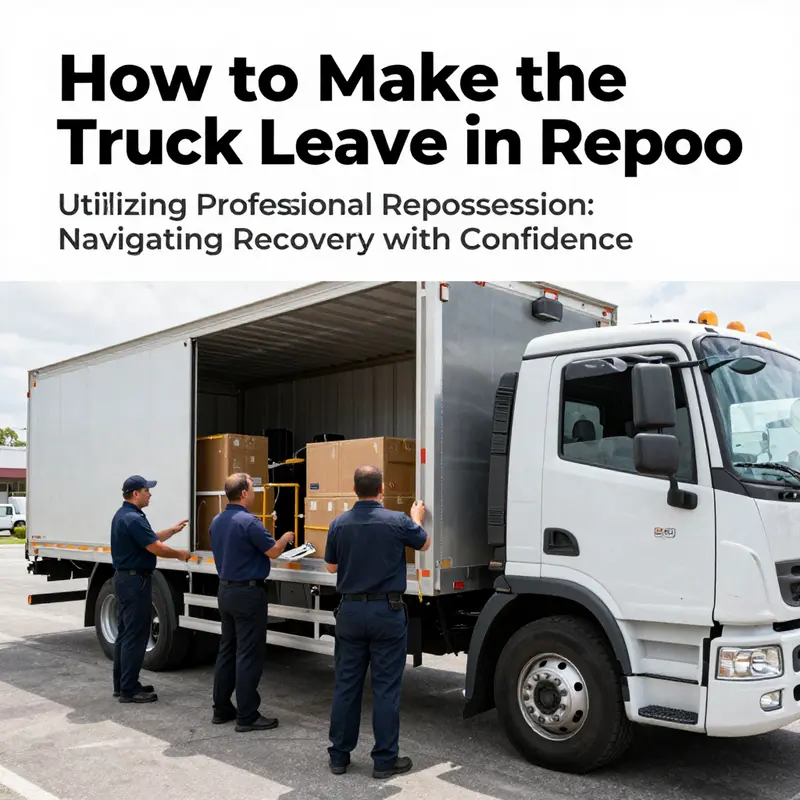
Understanding the repossession process is essential for maintaining operational efficiency within your fleet or trucking company. By following the steps outlined in this guide, you can ensure that your repossessions are handled legally and respectfully, minimizing conflict and protecting your interests. Remember that clear communication, legal compliance, and expert assistance are vital components of successful repossession strategies. Equip your enterprise with these best practices to navigate repossessions with confidence.