
The efficiency of transportation logistics heavily relies on the operational condition of semi truck trailers. Thorough maintenance and timely repairs are critical to ensure safety and compliance while minimizing downtime. This article delves into the services provided by professional semi truck trailer repair corporations, aiming to address the unique needs of fleet managers, trucking company owners, construction and mining enterprise operators, and logistics and freight service providers. Each chapter will explore essential aspects: structural and mechanical services, safety compliance and inspection services, and the role of technological advancements and future trends in the industry. Understanding these topics will equip stakeholders with the insights necessary for making informed decisions about trailer maintenance and repair.
Structure, Strength, and Service: Inside a Professional Semi-Trailer Repair Corporation
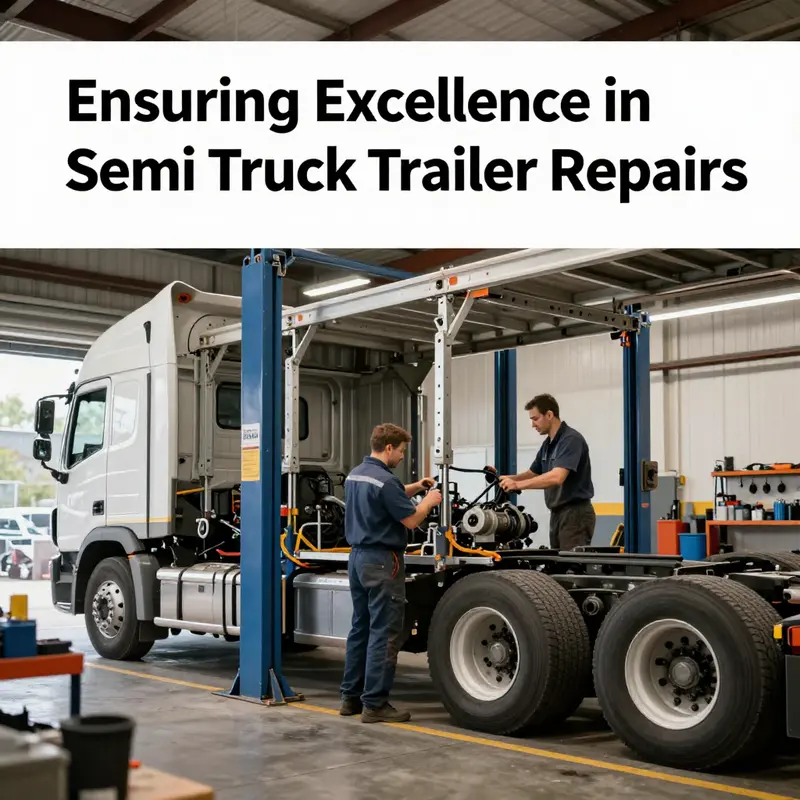
The backbone of any successful fleet rests not only on the drivers who navigate the highways but on the trailers that carry the load. In a professional semi-trailer repair corporation, structure and mechanics are not separate disciplines but a single, integrated craft. The chapter that follows surveys how a seasoned shop blends precision welding, methodical inspection, and disciplined maintenance into a seamless service that keeps fleets moving, compliant, and safe. It is a narrative of frame integrity, floor durability, brake reliability, and the tireless reliability of the systems that make a trailer perform under demanding conditions. It is also a portrait of the people who do this work, the tools they use, and the standards that guide every decision from the first diagnostic to the last test drive.\n\nStructural work sits at the core of the trailer’s lifetime. The frame is more than a skeleton; it is the load-bearing system that translates every bump, wind gust, and turn into a predictable response. In a professional shop, frame repair is conducted with care and precision that begins before any welding torch is struck. Technicians begin with a thorough assessment, using laser measurement systems to quantify misalignment with factory specifications. They know that a small deviation can cascade into tire wear, braking inefficiency, or door misalignment that complicates seal integrity. When damage is detected—whether from a collision, overloading, or metal fatigue—the team designs a repair plan that may involve straightening with a frame machine, replacing sections with OEM or equivalent components, and rechecking every datum under load. The goal is not merely to restore shape but to reaffirm the trailer’s designed strength, stiffness, and resilience given the loads it will carry across thousands of miles.\n\nSide and end-wall repairs echo the same commitment to structural fidelity. The panels must bear weather, cargo dynamic forces, and the rigors of routine maintenance. Professionals select materials that harmonize with the original design, balancing weight, corrosion resistance, and repairability. Aluminum may be favored in some configurations for its weight advantages, while steel remains the workhorse in others for reinforced stiffness. Each repair is planned with an eye toward long-term durability: fasteners chosen to resist galvanic corrosion, sealants that resist moisture ingress, and finishes that protect against road salt and humidity. The attention given to end caps and corner posts matters because these components govern how well doors seal and how the walls resist flex in crosswinds. A well-executed repair restores not just appearance but the trailer’s ability to maintain dimensional stability under real-world loading.\n\nFloor systems demand equal scrupulousness. The floor is the interface between the cargo and the vehicle, and moisture ingress, rot, or damage to decking can silently erode a trailer’s usefulness. In a professional setting, technicians inspect decking, joists, and crossmembers for signs of water damage, wood rot, or steel corrosion. They measure deflection and survey for uneven surfaces that could damage cargo or create pinch points for wheel boots and loading equipment. When decking fails, it is replaced with materials that match the trailer’s specification and anticipated service life. In the case of flatbeds, crossmember reinforcement and wear-plate upgrades may be applied to support heavy, repetitive loading. The floor crew also pays attention to the rust pattern around drain channels and sump areas to prevent future corrosion from pooling moisture. All of this flows into a broader philosophy: a floor that stays flat and square under load reduces tire wear, minimizes load shifting, and protects cargo integrity.\n\nCorner posts and support structures are the silent guardians of a trailer’s geometry. They bear substantial loads during cornering and braking, and their deformation can compromise alignment and door operation. In a professional repair environment, these elements receive careful inspection for deformation, pitting, and corrosion. Reinforcement patches, gussets, or complete replacement are chosen based on the severity of damage and the availability of OEM or equivalent parts. The objective is not to hide damage behind cosmetic fixes but to restore the true load path within the structure. When the frame and body align within its specified tolerances, the entire trailer benefits—from ride stability to braking efficiency and cargo containment.\n\nMechanical systems are the other half of this craft. Without reliable tires, brakes, suspensions, lighting, and hitching mechanisms, structural integrity remains theoretical. A professional shop treats these systems as a cohesive network, each component capable of amplifying or masking weaknesses elsewhere if neglected. Tire and wheel services extend beyond simple mounting. Professionals conduct tread depth analysis, sidewall inspection, bead seating checks, and retorque procedures to ensure even load distribution. Wheel hubs are cleaned and repacked or replaced as needed, with attention to bearing preload and seal integrity. A tire failure at speed can be catastrophic; the shop’s tire work is both preventive and reactive, anticipating wear patterns caused by misalignment, improper inflation, or worn suspension components.\n\nBrake systems receive perhaps the most meticulous attention of all mechanical subsystems. The repair facility conducts a comprehensive brake evaluation, including drum and disc brake servicing, shoe replacements, and hydraulic line inspection. In modern fleets, diagnostic tools can interface with ABS controllers to verify wheel-speed signals and sensor health. Adjustments are made to achieve consistent stopping power, smoothing out pedal travel, and ensuring even wear across all axles. The hydraulic, pneumatic, and electronic subsystems are tested in concert, because a change in one part can ripple through the entire system. In the best shops, brake work is not a one-off service but a cycle of inspection, adjustment, verification, and documentation that aligns with regulatory standards and the fleet’s operating profile.\n\nSuspension systems are the bridge between load, road, and frame. Leaf springs, air bags, shocks, U-bolts, and their mountings are evaluated for fatigue, sag, and misalignment. A professional approach blends inspection with proactive upgrades when warranted. If a vehicle routinely carries heavy payloads or operates on rough routes, technicians may recommend spring seat upgrades, anti-sway configurations, or new dampers designed to maintain ride height and maintain proper weight distribution. The aim is not simply comfort but predictable handling, reduced ballast wear, and extended service life for tires and wheels.\n\nElectrical and lighting systems deserve equal care because visibility and signaling are essential for road safety. Exterior lights must illuminate consistently across a broad spectrum of conditions, while wiring must resist exposure to heat, moisture, and vibration. Diagnostic tools help technicians trace circuit faults, test continuity, verify battery and alternator health, and ensure that sensors connected to trailer stability or safety devices remain reliable. The interior electrical network—controls for landing gear, electric brakes, and any auxiliary equipment—receives attention for proper connection integrity and safe operation. A professional shop understands that a single faulty connector can cascade into intermittent failures at the worst possible moment.\n\nHitch and coupler maintenance rounds out the structural-mechanical alliance. The fifth wheel, Kingpin, and related latching mechanisms must maintain a secure, smooth connection with the tractor. Regular lubrication, torque checks, and wear inspection prevent miscouplings and ensure consistent articulation. In the event of wear, replacements are coordinated with attention to OEM compatibility and the weight and transfer demands of the trailer’s typical cargo classes. This attention to coupling integrity is central to safety because it governs the stability of the entire combination on high-speed descents, lane changes, and emergency stops.\n\nBeyond these core services, the professional repair firm adds value that reduces downtime and extends asset life. Pre-trip and post-trip inspections are standard practice, aligning with FMCSA rules and fleet policies. These checks are not perfunctory; they are strategic stowaways against longer downtime and unexpected outages. Paint and coating services, while often seen as cosmetic, play a protective role in preserving metal surfaces against corrosion and environmental exposure, which translates into longer intervals between structural repairs. Custom modifications represent a forward-thinking capability: fleets may require additional ramps, tie-down points, or insulated compartments to match evolving cargo profiles. For some operators, significant improvements arise from lightweight, high-strength upgrades that don’t compromise payload; for others, simple but effective changes—such as improved sealants and gaskets—offer immediate protection against water intrusion and cargo contamination.\n\nA professional corporation further enhances value through digital record keeping. Detailed service reports, labeled with part numbers, serials, and maintenance history, are captured and stored in secure portals. When a truck returns for service months later, the history is at hand, enabling technicians to make informed decisions rather than second-guessing past repairs. This continuity is essential for fleets managing hundreds or thousands of trailers, where visibility into every unit’s lifecycle translates into smarter budgeting, reduced downtime, and more reliable delivery windows. The shift toward digital documentation also supports regulatory compliance. When a trailer is inspected, operators can present a transparent, auditable history that confirms adherence to FMCSA, NHTSA, and industry best practices. The professional repair organization’s approach to quality is grounded in standards, training, and a culture of safety. Technicians typically pursue certifications in welding, metal fabrication, and mechanical systems relevant to heavy trailers. The shop invests in modern equipment: frame straightening machines with laser guidance, battery of diagnostic tools for electrical systems, and high-precision torque wrenches for critical fasteners. Operators understand that the most effective repair is the one done right the first time, with verification steps that confirm alignment, load-path integrity, and functional performance. This mindset yields outcomes that fleet managers value deeply: reliability, predictable maintenance costs, and reduced life-cycle risk. The shops that succeed in this space also recognize the importance of third-party validation. Accreditation programs, safety audits, and adherence to recognized industry guidelines provide external assurance to customers and lend credibility when negotiating service-level agreements.\n\nWithin this integrated framework, the customer experience emerges as a decisive differentiator. A professional semi-trailer repair corporation does not merely fix broken components; it orchestrates a repair ecosystem that minimizes downtime, clarifies decision points, and preserves cargo integrity. On-site mobile units may be dispatched to the customer’s yard, minimizing the need to haul trailers to a shop. This capability is especially valuable for fleets with tight schedules or limited equipment availability. When on-site service is required, technicians carry a portable diagnostic suite, a compact set of replacement parts, and a protocol for safe, compliant operation in customer facilities. On-site work, followed by rapid transportation to a central facility for more extensive repairs, forms a balanced service model that keeps the fleet in motion while preserving the highest standards of workmanship.\n\nThe decision-making process behind structural and mechanical work blends data, safety, and economics. Fleet operators assess the condition of trailers using a mix of visual inspection, diagnostics, and predictive maintenance cues. The repair plan is then shaped not only by the damage observed but by the trailer’s role in the fleet’s overall operation. For instance, a trailer that routinely handles hazardous materials may demand higher standards for seals and structural reinforcement to prevent leaks or spills. A high-mileage unit with heavy utilization may justify proactive upgrades to flooring or suspension to shorten downtime during peak seasons. In this context, the repair corporation’s expertise becomes a strategic asset—a partner able to translate technical findings into actionable recommendations aligned with safety, compliance, and cost discipline.\n\nThe relationship between repair professionals and fleet operators also hinges on the transparency of the process. Customers expect clear explanations of what is damaged, what the repair entails, and how long the vehicle will be unavailable. Service reports that include diagnostic notes, photographs, and test results help bridge understanding gaps and reduce disputes. Digital records support future planning: technicians can reference prior repairs, anticipate component lifecycles, and schedule preventive replacements before a failure occurs. In this way, the structural and mechanical discipline becomes not only a way to fix trailers but a way to extend their usefulness amid evolving logistics demands.\n\nIn sum, a professional semi-trailer repair corporation treats structural and mechanical services as interdependent dimensions of a single mission: to sustain safety, efficiency, and regulatory compliance across a fleet’s entire trailer population. The work is demanding, exacting, and constantly evolving with new materials, diagnostic tools, and safety standards. Yet at its heart lies a straightforward principle: every repair should return the trailer to its design intent, protect cargo, and keep drivers on the road. When a trailer leaves a reputable shop, it does so with a restored frame, a quiet axle, a precise brake feel, and a set of operating parameters recorded for the future. It is this combination of skill, equipment, and accountability that defines professional structural and mechanical work in the modern trailer repair industry, and it is what differentiates a competent shop from a trusted partner in fleet success.\n\nFor readers seeking practical guidance on how to approach budgeting and planning for future maintenance, a related resource offers a structured framework to align maintenance activities with financial planning. A practical starting point is to consider a maintenance program that tracks miles, cycles, and component life. It also helps to conduct quarterly reviews of spend versus downtime and to model different scenarios for seasonal peaks. As fleets grow and routes multiply, the value of this integrated approach becomes even clearer: strong structure plus reliable mechanics equals safer operation, greater uptime, and lower total cost of ownership over the vehicle’s service life. To complement this guidance, operators should also consult authoritative safety guidelines from national regulatory bodies to ensure alignment with current requirements and best practices. The National Highway Traffic Safety Administration’s resources offer essential context for how structural integrity and mechanical reliability intersect with road safety and compliance. See https://www.nhtsa.gov for further details that inform both daily practice and strategic decision making in a professional trailer repair program.
Safeguarding the Road: Safety Compliance, Inspections, and the Reliability Engine of a Professional Semi-Trailer Repair Corporation
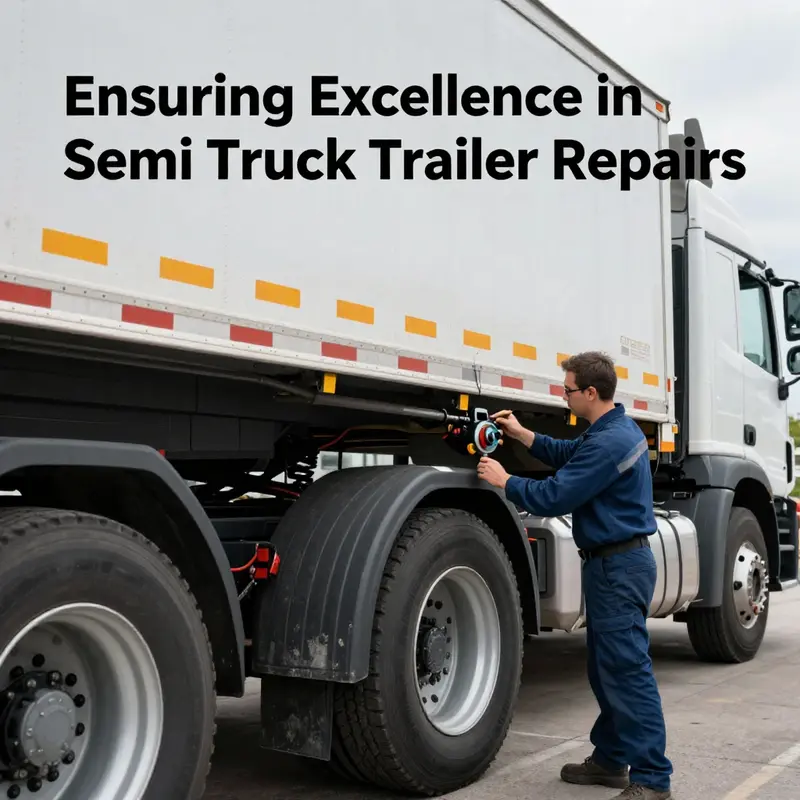
In the world of freight and logistics, a professional semi-trailer repair corporation sits at the intersection of technical precision, regulatory discipline, and operational reliability. The chapter you are about to read traces how safety compliance and meticulous inspections form the backbone of a credible, capable repair operation. It is not merely about fixing parts that break; it is about building a systematic discipline that prevents failures, safeguards lives, and keeps fleets moving with predictable performance. The central thread connecting every repair decision, every inspection, and every piece of documentation is a clear, unwavering commitment to safety standards that are codified in regulation, validated by industry practice, and reinforced by the day-to-day routines of skilled technicians and managers. This is the narrative of a professional enterprise that treats safety not as an afterthought but as the first design constraint in every service line it offers.
The core of safety compliance within a professional repair company begins with a disciplined understanding of the systems that underpin trailer operation. The air brake system—the lifeline of a semi-trailer’s stopping power—demands precise integration of components such as brake chambers, air lines, fittings, and the distributor valves that route pressurized air where it is needed. When a fleet operator entrusts a trailer to a repair shop, the expectation is not only that the brakes will function, but that they will perform under the most demanding conditions: steep grades, sudden stops in urban traffic, and long-haul runs where reliability matters as much as speed. In practice, this translates into a repair philosophy that treats every brake chamber and every air fitting as a potential point of failure that must be assessed with methodical rigor. A shop that takes safety seriously will move beyond the surface check to a holistic examination of how the air system interacts with the vehicle’s ABS logic, how fittings reinforce or restrict airflow, and how the overall hydraulic-pneumatic network maintains steady pressure without leaks or turbulence.
Within this framework, the inspection process is both art and science. At its best, it blends quantitative checks with qualitative judgment that trained technicians develop through experience and ongoing training. The inspector begins with a precise inventory of critical components—brake chambers, springs, pushrods, hoses, and fittings—then confirms the compatibility of each element with the trailer’s design and the corresponding tractor. The inspection extends beyond the immediate components to encompass the infrastructure that supports long-term safety: wiring harnesses, electrical distribution, lighting, and reflective markings that ensure visibility in all weather. A professional shop will employ standardized checklists, but it also cultivates the habit of asking probing questions: Are the brake chambers the correct size and grade for the load? Do the fittings provide a robust seal against vibration and temperature variation? Is there any sign of air leakage at joints, clamps, or ports that would pit braking performance during a critical stop?
The audit trail that accompanies every inspection is equally essential. In an era when fleet operators must demonstrate compliance in the event of an audit or an accident investigation, the ability to trace every repair decision to a clear, verifiable source matters. Documentation becomes the language by which a repair shop communicates quality to the customer, the regulator, and the next service event. A well-run shop records not just what was found and fixed, but why the fix was performed, who approved it, and what standards guided the decision. This is where safety becomes measurable. The inspector notes the serials, the test results, the torque values for clamps and fittings, the cleanliness and condition of the brake lines, and the residual life projections for major components. When maintenance history is transparent, a fleet manager can schedule preventative service with confidence, knowing that the data demonstrates a consistent pattern of reliability rather than episodic fixes that merely chase the most visible symptoms.
The role of regulatory alignment cannot be overstated. Safety compliance in this sector is not optional; it is the operating envelope within which every service line must function. In the United States, the Federal Motor Carrier Safety Administration (FMCSA) provides the regulatory skeleton that shapes inspection protocols, maintenance requirements, and the standards by which operational safety is judged. Across jurisdictions, state and municipal authorities layer additional expectations, from periodic roadworthiness tests to emissions and lighting standards. A professional trailer repair corporation does not innovate around these constraints; it builds its processes to align with them and to anticipate changes in the regulatory landscape. This means ongoing education for technicians, updates to inspection checklists, and investment in tooling and equipment that enable compliant testing under real-world conditions. To the fleet operator, this translates into a predictable service quality that minimizes the risk of regulatory penalties, roadside breakdowns, and casualty incidents.
A key area that embodies the confluence of technical precision and regulatory compliance is the assessment and refurbishment of braking systems and their ancillary connections. The ABS-enabled braking architecture has become ubiquitous in modern fleets, and its correct integration with the mechanical and pneumatic subsystems is non-negotiable. Inspections must verify that ABS logic, when present, remains synchronized with the physical brake components so that wheel slip control remains reliable under emergency braking. Yet the inspection cannot stop there. The air fittings—the straight-line and elbow variants—must be sized and installed to maintain uninterrupted airflow even when the system endures constant vibration and rapid hydraulic cycling. A small misfit or misthread can become a conduit for micro-leaks that gradually erode braking force, degrade pedal feel, and raise the risk of wheel lock or inadequate deceleration. In this environment, the repair corporation’s technicians become guardians of tolerance, monitoring fit, seal integrity, and alignment with the trailer’s structure. They look for signs of fatigue in lines and connectors, check for corrosion that could compromise metal fatigue, and test the system under load to ensure the air supply remains steady and Clean.
What makes a professional operation stand apart is not merely the capability to fix what breaks, but the procedural discipline that prevents breakdowns in the first place. This is where predictive maintenance enters the narrative as more than a buzzword. By aggregating data from every service event—inspection findings, component service life, torque histories, and vibration analyses—a repair firm can illuminate patterns that forecast impending failures. The idea is to shift the conversation from one of reactive repair to proactive stewardship: to transform maintenance from a cost center into a strategic lever for reliability. In practice, this means developing maintenance regimes tailored to fleet profiles, operating conditions, and duty cycles. A dry northbound route with many mountain passes may wear braking components differently from a coastal route with frequent corrosion risks. The repair corporation, therefore, must tailor its inspections and replacement schedules to the realities of each operator’s world while maintaining strict adherence to regulatory thresholds. That is the balancing act at the heart of professional safety compliance: meet or exceed the minimum legal requirements while pursuing a higher standard of durability and performance.
Delivering on this promise requires a blend of equipment, skill, and culture. The equipment must include test rigs capable of simulating real-world braking loads, torque wrenches that ensure accurate fastener pretensions, and diagnostic tools that can interpret ABS fault codes in the context of mechanical wear rather than mere electronic malfunctions. The skilled technician must be fluent in mechanical engineering fundamentals, yet capable of translating those fundamentals into actionable service steps on a trailer that may operate at highway speeds and in diverse weather. The culture underpins everything: a relentless attention to detail, a willingness to double-check every connection, and a readiness to escalate issues when safety implications extend beyond a single trailer. A culture of safety is reinforced through training programs that blend theoretical learning with hands-on practice. It includes routine drills in brake system inspection, air line diagnostics, and electrical system verification, all conducted with an emphasis on traceability and accountability. In such an environment, the inspection process becomes more than an obligation—it becomes a shared standard that all teams rally around, from shop floor technicians to field service personnel who diagnose issues on site.
To speak to the broader ecosystem, consider the practical realities of mobile repair units. The advantage of on-site service is clear: reduced downtime, minimized freight delays, and the ability to address issues in place before a trip—especially critical for trailers that carry hazardous materials or time-sensitive cargo. Mobile technicians must therefore be equipped not only with diagnostic capability but also the flexibility to manage safety compliance in the field. This implies portable test equipment, portable torque devices, and a compact set of spare parts that allow a field technician to restore critical systems without compromising the operator’s schedule. Even in mobile settings, the same inspection logic holds: verify air pressure integrity, confirm brake chamber function, check the ABS indicators, and document every step so that the on-site work can be audited with the same rigor as a fixed-location repair. The integration of field service into the safety compliance framework is a testament to the industry’s maturation. It signals a shift from ad hoc fixes to a service profile that sees every trailer as a moving platform requiring continuous governance of its safety posture, regardless of where it operates.
One of the enduring challenges for any professional repair operation is maintaining a dynamic alignment with evolving standards and new best practices. The FMCSA and other regulatory bodies periodically update guidelines, clarifying how inspections should be conducted, what constitutes acceptable brake performance, and how to document compliance in a way that stands up to scrutiny. A conscientious repair company treats these updates as actionable inputs rather than bureaucratic noise. It updates its inspection templates, revises training modules, and communicates changes clearly to customers so that fleet operators do not learn of new expectations only after an inspection failure. This forward-looking stance helps the company mitigate risk and reassure clients that their investment in maintenance is aligned with the highest safety standards. The result is a service ecosystem in which compliance is not a barrier to operation but a pathway to improved reliability, lower total cost of ownership, and safer roadways.
In discussing the practical outcomes of rigorous safety compliance, it is helpful to consider the end-to-end experience for a fleet operator engaging with a professional semi-trailer repair corporation. The relationship begins with an assessment of the trailer’s current safety posture, informed by a documented history of inspections and repairs. The operator receives a transparent plan that identifies critical interventions, with timelines and expected impact on performance. The repair shop communicates not just what will be done, but why it matters: how a newly configured air line network reduces leakage risk, how a properly matched brake chamber can improve stopping distance, how correct fittings prevent pressure drops that could impair ABS performance. The operator then observes the process as the team executes the plan, often in the context of a broader maintenance program that includes routine inspections, tire management, chassis lubrication, and electrical system checks. At the conclusion of service, the truck or trailer leaves the shop with a comprehensive report that records test results, component replacements, and a refreshed safety profile. This creates a closed-loop dynamic: data informs decisions, decisions improve safety, and safety, in turn, sustains operational efficiency.
The literature and practice alike point to a core insight: safety compliance and inspection services are not ancillary functions—they are the engines that power reliability in a high-stakes logistics environment. A professional semi-trailer repair corporation that embeds compliance into its technical core gains more than regulatory peace of mind. It earns the trust of fleet operators who depend on predictable uptime, and it earns the confidence of drivers who trust the equipment they rely on every day. It also helps to create a culture of continuous improvement, where every inspection yields lessons that sharpen standards, refine processes, and elevate the entire enterprise. From the shop floor to executive dashboards, the message is consistent: safety is a business capability, not a compliance checkbox.
As the chapter closes, it is worth returning to the practical implications of the FMCSA standards and their role in guiding everyday inspections and repairs. The FMCSA site offers comprehensive guidance on inspection standards, maintenance expectations, and the regulatory framework that underpins safety practices across the industry. While the specifics of each jurisdiction can vary, the underlying principle remains universal: safe operation depends on a disciplined, documented, and continuously improved maintenance practice. For readers seeking authoritative guidance, the FMCSA’s resources provide a reliable compass that aligns shop floor excellence with regulatory expectations. The result is a safe, reliable trailer fleet that can be trusted to perform, regardless of the miles ahead.
Internal link to further reading within the enterprise knowledge base can be useful here. For those who want a concise overview of industry practice and ongoing maintenance philosophy, the MasterTruckRepair hub offers accessible perspectives and practical guidance. Explore the repository here: MasterTruckRepair blog.
External resource for regulatory context and formal guidance: https://www.fmcsa.dot.gov
Further guidance can be found at the FMCSA site: https://www.fmcsa.dot.gov
Toward Smarter Wheels: How Technology Is Redefining a Professional Semi Truck Trailer Repair Corp
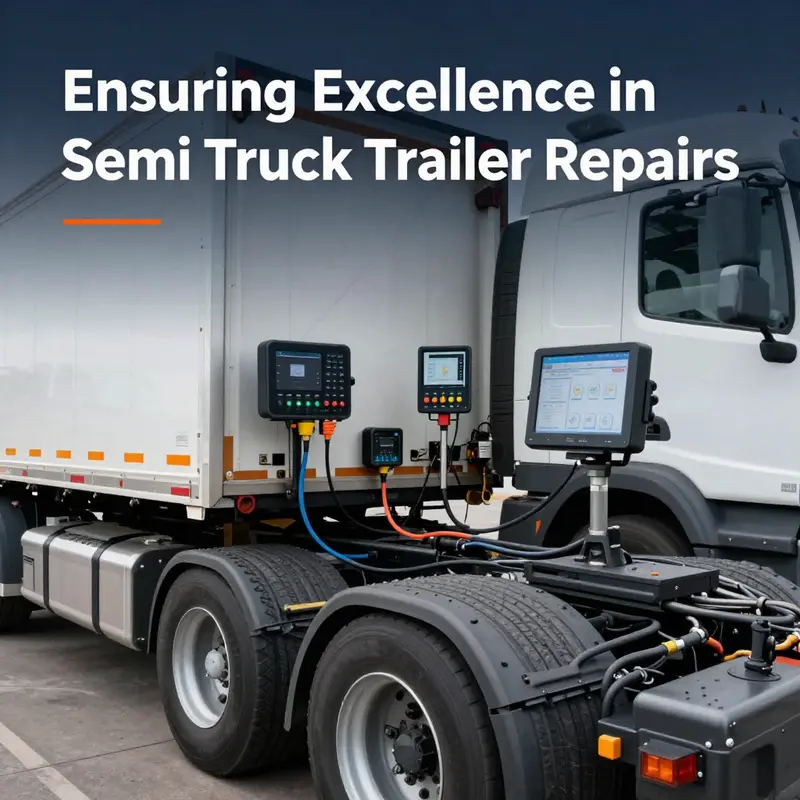
The professional semi truck trailer repair industry is undergoing a quiet revolution that blends tireless hands-on skill with the precision of data science. What began as a strictly mechanical craft—replacing axles, adjusting brakes, welding a cracked frame—has expanded into a discipline where sensors, software, and predictive thinking drive every decision. In this evolving landscape, the repair corporation is less a shop with tools and more a technology-enabled service provider that sees maintenance as a continuum rather than a series of episodic fixes. Fleet operators want uptime, safety, and predictable costs, and repair firms that meet those expectations with rigorous diagnostics and proactive interventions are moving from maintenance partners to strategic allies. The shift is not an isolated trend; it is a systemic change that touches people, processes, and the physical design of trailers themselves, especially as the industry increasingly adopts specialized low-bed models for oversized and heavy cargo. The very nature of what constitutes a reliable trailer has grown more complex, and with complexity comes the demand for more sophisticated care that is responsive, transparent, and efficient.
At the heart of this transformation lies the integration of diagnostic tools and digital intelligence into everyday repair work. Modern trailers carry a web of data points: temperature and vibration readings from wheels and suspensions, hydraulic pressures in leveling systems, brake wear indicators, and even micro-level health metrics from electrical and electronic subsystems. Intelligent maintenance begins when a repair firm can pull those signals into a coherent picture. Predictive maintenance software sifts through usage patterns, cycle counts, and historical failure data to forecast when a component will degrade enough to warrant service. Digital twin concepts—virtual representations of a trailer’s state that evolve with real-time data—enable technicians to simulate wear scenarios, test corrective strategies, and anticipate cascading failures before they happen. The practical payoff is not just fewer breakdowns; it is faster, more precise interventions that reduce the total cost of ownership for fleets and minimize the disruption to the supply chain.
For the technician on the floor, this means a new cadence of work. The shop floor has to accommodate precision tools, multi-axis alignment systems, and calibration rigs that can map a trailer’s geometry down to fractions of a millimeter. Technicians must be versed in electronics as well as mechanics, because the modern trailer blends both worlds. A hydraulic leveling system, for example, relies on sensors, control logic, and actuators, all of which must be diagnosed and calibrated in concert with the chassis and suspension. The technician who can interpret a fatigue signature from a rolling chassis while also tracing a fault in an electronic control module becomes a more valuable asset. This cross-disciplinary capability is not optional; it is essential to delivering the high-reliability service that heavy cargo operations demand.
The rise of data-driven maintenance is complemented by a new approach to service delivery. Mobile repair units, equipped with compact diagnostic rigs and the ability to perform on-site alignments and tests, are increasingly common. When a load must move on a tight schedule, authorities and operators cannot wait for a vehicle to be towed to a fixed facility. A mobile team that can diagnose, service, and test at the customer site minimizes downtime and demonstrates the repair corp’s commitment to customer-centric uptime. Moreover, this mobility is increasingly augmented by remote support networks. A technician in the shop can access streaming diagnostics from a trailer in the field, guide a remote on-site crew through a procedure, and make client-centered decisions about the best sequence of interventions. This synergy between on-site capability and remote intelligence creates a resilient service model that keeps pace with the high utilization and high stakes of heavy transport.
A notable dimension of this evolution is the growing sophistication of low-bed semi-trailers. These vehicles carry heavy and oversized loads, demanding reinforced frames, advanced suspension systems, and precision hydraulic layouts to maintain stability and safety under extreme conditions. The maintenance of such structures involves more than standard wear checks; it requires ongoing attention to load-bearing integrity, alignment accuracy, and hydraulic performance under variable terrain and weather. The repair corp must deploy specialized competencies to service heavy-duty frames and the complex ballast geometry that ensures safe operation when transporting excavators, bulldozers, or other construction equipment. In practice, this means training technicians to understand load paths, dynamic stress, and the interplay between chassis stiffness and suspension dynamics. It also means ensuring that the shop’s testing protocols capture how a trailer behaves under real-world loading scenarios, not just static measurements. The goal is to identify subtle signs of fatigue or misalignment that could compromise safety before they become costly failures on the highway.
The use of sensors on trailers—IoT-enabled devices that report continuous performance metrics—further expands the repair ecosystem. IoT integration turns a repair operation into a living system that can be monitored across time and geography. A fleet operator can push a data stream from hundreds of trailers into a central analytics platform and receive an alert when a parameter drifts beyond a safe threshold. The repair company, in turn, can offer proactive service plans that align with actual usage patterns rather than rigid calendars. This shift toward condition-based maintenance makes the service more predictable for operators and more efficient for the repair provider. Rather than stocking every conceivable spare part for every possible fault, the repair firm becomes a data-driven converter of information into actionable maintenance actions. Inventory management, therefore, also evolves. The analytics layer guides parts procurement, ensuring the right items are on the shelf at the right time, reducing waste and accelerating turnaround times.
The integration of advanced diagnostics does not happen in a vacuum. It requires a cohesive investment in people, infrastructure, and systems that reinforce each other. Technician training programs must reflect this broader skill set, coupling mechanical diagnostics with electrical troubleshooting, software interfaces, and the interpretation of live data streams. Shop infrastructure must be upgraded with precision alignment equipment, real-time data monitoring stations, and secure data pipelines that protect sensitive information while enabling rapid collaboration with customers. This is not merely a modernization of a workshop; it is the creation of a data-enabled service enterprise where continuous improvement is the operating principle.
As the industry moves toward automation and sustainability, repair corps are compelled to rethink how they approach both processes and outcomes. Automation in repair workflows—whether it appears as robotic-assisted alignment, automated hydraulic testing rigs, or digitally guided diagnostic procedures—reduces manual error and accelerates throughput. At the same time, sustainability considerations are reshaping the design and maintenance of trailers themselves. Electric and hybrid trailer systems are beginning to appear in the broader market, bringing new challenges in battery management, power distribution, and thermal control. The repair firm must develop competencies to service high-voltage systems safely, manage charging and discharging cycles, and integrate thermal management strategies that maintain performance in harsh operating environments. In parallel, regulatory pressures are tightening fuel efficiency and emissions standards, nudging fleets toward aerodynamic enhancements and lightweight materials. While the trailer’s exterior form factor has always influenced efficiency, the repair ecosystem now finds itself diagnosing and repairing energy-focused systems that affect both performance and compliance.
The convergence of artificial intelligence and big data analytics expands the repair firm’s role beyond reactive maintenance and into optimized operations management. AI-powered scheduling can balance technician availability with customer urgency, predict parts needs, and route on-site teams in the most efficient manner. Predictive models learn from each service event, improving accuracy over time and enabling personalized maintenance programs for individual fleets. In practice, this means that a repair corporation can align services with a fleet’s unique usage profile, providing tailored maintenance windows, targeted component services, and performance-based pricing structures. Such capabilities not only improve reliability but also deepen the relationship with customers by turning maintenance into a strategic asset rather than a series of transactions.
Behind these advances lies a broader narrative about collaboration and standards. The repair industry benefits when manufacturers, fleet operators, and service providers share data within secure, standardized frameworks. Shared data standards reduce friction, enable faster diagnostics, and support interoperability across equipment types and regions. The result is a repair ecosystem that can scale across geographies while preserving the accuracy and traceability of each maintenance action. In this environment, the repair corp becomes an integrator—assembling data streams, diagnostic insights, and hands-on expertise into a single, coherent service delivery model. This integrative role is crucial as fleets expand their operations into multi-modal transport networks where trailers move between depots, staging yards, and customer sites, each with its own set of performance expectations.
The practical value of these technological shifts is most visible in uptime and safety. When a trailer performs predictably, it reduces the risk of roadside breakdowns, which can disrupt entire supply chains and incur steep penalties for late deliveries. Predictive maintenance minimizes unplanned downtime by signaling issues before they cause failure. It also extends the life of high-value assets by ensuring that wear factors—such as wheel-end components, brake systems, and suspension assemblies—are managed proactively. Customers benefit from shorter repair cycles, clearer maintenance histories, and more transparent pricing. For fleets managing dozens or hundreds of trailers, the ability to forecast maintenance intervals with confidence translates into more stable operating costs and better capital planning.
This chapter’s exploration points toward a future where the repair corporation is an intelligent service platform. The platform would offer continuity between diagnostics, maintenance, and repair outcomes, leveraging data to optimize workflows, inventory, and customer communications. When a fleet reports a recurring fault pattern, the platform suggests a tailored maintenance plan, possibly bundled as a subscription service that aligns with the fleet’s revenue cycles. Service-level agreements become evidence-based commitments grounded in real usage data rather than generic estimates. In this sense, the professional semi truck trailer repair firm evolves from a traditional workshop into a tech-enabled partner that helps fleets run more efficiently and safely.
To ground these ideas in practical terms, consider how a large operator might integrate such capabilities. The operator would install IoT sensors on a broad fleet of trailers, feeding into a centralized analytics hub. The repair provider would receive alerts indicating impending issues and would proactively schedule on-site or in-shop interventions during planned downtimes. The technician would access a dynamic diagnostic interface that highlights root causes, suggested corrective actions, and the exact sequence of steps to complete a restoration. The shop would maintain a calibrated library of procedures for the most common fault modes, while also accommodating bespoke repairs for eleven- or fifty-year-old trailer models whose engineering footprints differ significantly from newer designs. In short, the repair corporation becomes a living, learning system that improves over time as more data accrue and as the collaboration with customers deepens.
Despite the promise, the journey requires disciplined change management. It demands investment in the right people—technicians who embrace continuous learning, data analysts who can translate streams into actionable insights, and service managers who can orchestrate complex, multi-site operations. It requires prudent capital allocation—choosing the right diagnostic equipment, calibrating testing rigs, and upgrading the shop floor to handle ever more precise tasks. It also calls for a culture that values safety, data integrity, and customer transparency. When executed well, these elements coalesce into a repair organization that not only fixes trailers but also guards the reliability of an essential artery in global logistics.
The broader industry context matters, too. As public and private fleets grow more data-driven, the expectations for repair partners rise accordingly. A well-informed operator measures performance in uptime, repair cycle time, and the predictability of costs. The repair firm, in turn, earns trust by delivering consistent outcomes, maintaining high safety standards, and sharing clear maintenance histories. This trust compounds, enabling longer partnerships and deeper collaboration on capacity planning, route optimization, and capital planning for equipment renewal. The result is a virtuous cycle: better diagnostics and proactive maintenance lead to more reliable trailers, which in turn enable fleets to optimize routes, reduce fuel burn, and meet regulatory objectives with greater ease. The professional semi truck trailer repair industry thus sits at an inflection point where digital intelligence amplifies traditional technical expertise, delivering value that scales with fleet size and operational complexity.
Within this evolving ecosystem, a single, practical step can anchor a broader transformation: embracing data-informed maintenance strategies that connect every trailer to a common operational narrative. The monolithic model of “fix when broken” gives way to a layered approach—continuous monitoring, scheduled preventive interventions, and targeted repairs driven by usage patterns. This layered approach is not a distant ideal; it is increasingly achievable with the right combination of technology, people, and process. It enables repair providers to deliver faster turnarounds, safer operations, and more predictable costs while supporting fleets as they scale their operations and adopt heavier or more technologically advanced trailer configurations.
For readers seeking a concrete way to connect this chapter to broader industry conversations, note how some industry leaders are exploring the strategic implications of fleet optimization in maintenance planning. The idea of optimizing fleet size and maintenance for small fleets, for instance, hints at how data-driven maintenance can be scaled down to smaller operators without sacrificing reliability. This line of thinking is compatible with a broader push toward democratizing access to advanced diagnostics and predictive analytics, ensuring that even smaller operators can reap the same reliability benefits that larger fleets enjoy. The practical takeaway is clear: as data and automation become more accessible, the economics of proactive maintenance become more favorable for a wider range of customers. This democratization is not merely a trend; it is a structural shift in how maintenance value is created and delivered.
As the industry advances, the repair corporation’s value proposition will increasingly hinge on how well it translates raw data into meaningful, actionable insight for customers. The field will demand not only technical competence but also a customer-centric lens that translates machine health into operational resilience. The best firms will combine diagnosis with empathetic communication, offering transparent service histories, clear reasoning for recommended interventions, and flexible service options that adapt to a fleet’s evolving needs. The result will be a stronger trust relationship, a higher rate of repeat business, and a reputation for reliability that is built on demonstrable performance rather than promises. In this sense, technological advancement is less about adopting the latest gadget and more about delivering consistent, measurable improvements in uptime, safety, and total cost of ownership. That is the cornerstone of a modern, professional semi truck trailer repair corporation—and the compass by which the industry will navigate the challenges and opportunities of the coming decade.
Optimizing fleet size and maintenance for small fleets is one practical lens through which to view these dynamics. While the specifics of implementation will vary by region, fleet type, and regulatory context, the underlying principle remains consistent: data-informed decisions empower better maintenance planning, which in turn sustains higher utilization of heavy assets and reduces downtime across the supply chain. This conceptual thread ties the entire discussion together, illustrating how a professional repair organization can evolve into a trusted, technology-enabled partner for fleets that depend on trailers to move goods reliably and efficiently.
External resource: https://www.fleetowner.com/truck-trailer/low-bed-semi-trailers-for-heavy-cargo
Final thoughts
The operational efficiency of semi truck trailers directly impacts the logistics and transportation industry. Professional repair corporations play a pivotal role in ensuring that fleets remain safe, compliant, and capable of meeting the demands of an ever-evolving market. By understanding the importance of structural and mechanical services, adhering to safety compliance measures, and embracing future technological advancements, stakeholders can enhance operational efficiencies while minimizing costs. Investing in professional semi truck trailer repair services is not just a necessity; it is a crucial strategy for long-term success in the industry.