
Rust is not just an aesthetic issue for trucks; it can significantly affect the operational efficiency and safety of your fleet. As a fleet manager or owner of a trucking company, understanding rust repair costs is vital for informed decision-making and budget management. From minor surface rust that can be tackled with some DIY effort to severe structural damage that may require professional intervention, each stage of rust repair carries different implications for costs and downtime. This article delves into the varying repair costs associated with rust—minor, moderate, and severe—highlighting the factors that influence these expenses. By the end, you will be equipped with the insights necessary to protect your investment and optimize your fleet’s performance.
From Surface to Steel: Navigating Minor Rust Repair Costs on a Truck
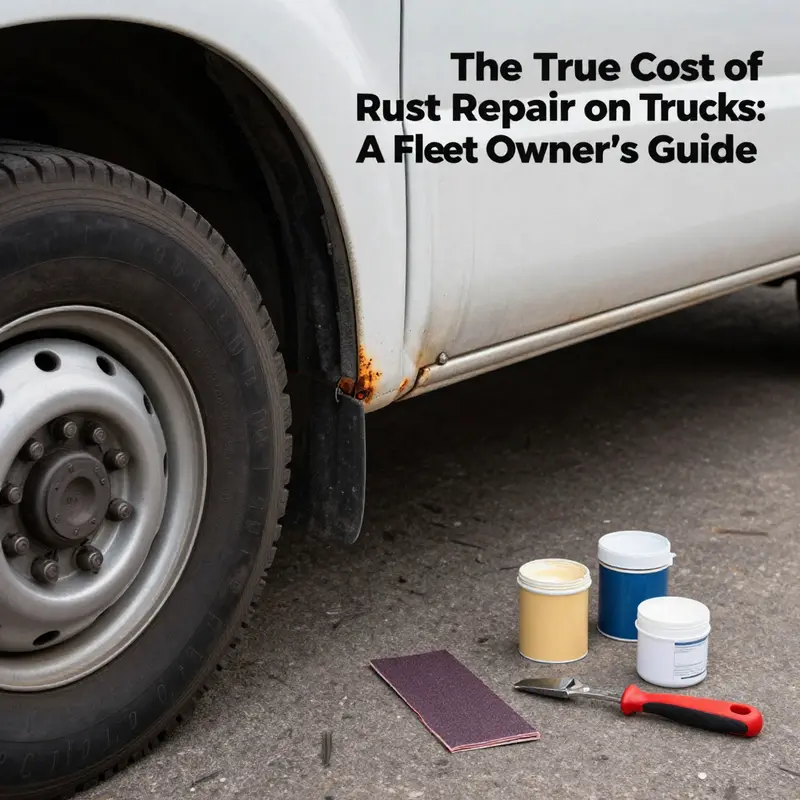
Rust is more than a blemish on the paint. It’s a conversation with the metal beneath, a signal that what begins as a small spot can, with time, spread and undermine the structure that keeps a truck sound and safe on the road. For many owners, the first question isn’t whether rust will show up, but how much it will cost to fix if it does. The answer, like rust itself, varies. Minor rust repair costs on a truck tend to sit in a relatively narrow corner of the price spectrum, but the figures still matter. They matter because they help truck owners decide how aggressively to pursue treatment, how soon to address a spot, and whether a DIY patch or a professional weld is the better path. In practical terms, surface rust that has not penetrated the metal’s core often costs far less than repairs that touch strength-critical areas. Yet even surface rust can evolve, especially on older trucks or models that live where winter roads layer them with salt and road grime. The path from a few pinpricks of rust to a paint-free, rust-free surface is paved with choices about materials, methods, and timing, each choice nudging the bill in a different direction.
When we talk about minor rust, we’re describing the most common category that a shop will typically handle with straightforward techniques. The rust in question is surface-level: tiny specks on a fender, a patch along the wheel well, or a small area on a bumper where the clearcoat has failed and moisture has found a foothold. The work is largely about removing the rust, stopping it from returning, and restoring a smooth, protective finish that seals out future moisture. The typical repair steps for this level are sanding away the loose material, cleaning the area to remove oil and debris, applying a rust converter or primer to halt any remaining oxidation, and finally applying paint or a sealant to restore the appearance and provide a new protective layer. In most cases, this sequence does not require cutting away large sections of metal nor welding in new panels. Instead, the job is about careful surface preparation and precise finishing. Price-wise, that translates into a modest range that reflects the straightforward nature of the work and the materials involved.
The price spread for minor rust is influenced by a few telltale factors. First and foremost is the labor. Even for what seems like a small fix, shops must allocate time for inspection, surface preparation, priming, and painting. In regions where labor costs run higher, the hourly rate climbs, and so does the total ticket. A general rule of thumb is that labor can be a sizable portion of the bill, sometimes matching or exceeding the cost of the consumables themselves. The second driver is materials. Sandpaper, rust preventers, primers, sealants, and touch-up paint are relatively affordable when bought in consumer quantities, but the more you demand in a professional setting—professional-grade primers, color-matched paints, topcoats, and finishes—the price rises. If the job requires more than a few panels, or if the rust has found its way into an edge or crease that is difficult to reach with standard tools, the cost can creep higher.
Within the context of minor rust, most owners who tackle the job themselves do so because the materials are accessible and the repair is contained. The DIY approach often centers on home workshop-friendly products: a bit of sanding gear, a rust converter to neutralize the problem, a primer to ensure a solid undercoat, and some matching paint or a clear sealant to finish. The material costs for a DIY minor rust patch typically range from roughly thirty to a hundred dollars, depending on the vehicle’s paint color, the scale of the area being treated, and how many coats are applied. When you factor in your time, the expense can climb, but you’ll still fall well below the professional rate. The trade-off is control. You decide exactly where the rust is treated, how aggressively you thin out the surrounding corrosion, and how many steps you take to ensure durability. For some hands-on truck owners, that sense of control is a meaningful part of the value, even if the project stretches a weekend.
Of course, the decision to DIY isn’t universal. There are scenarios where taking the vehicle to a professional is prudent even for minor rust. If the rust has begun to spread into the edge of a structural panel, or if the defect is near a seam that requires careful alignment or a seamless paint finish, a pro’s eye and steady welding hand may be worth the premium. The nuanced difference between a cosmetic repair and a fix that can keep moisture from penetrating again hinges on the area’s exposure and the risk of reoccurrence. While surface rust can be remediated with surface-level treatments, softening or deteriorating metal in a critical spot, such as a frame or a mounting point, signals a higher-stakes repair that could require panel removal, structural reinforcement, or even replacement. In those cases, the cost is less about a quick fix and more about restoring structural integrity and safety—an equation that often points toward professional service.
Pricing and timing play a delicate duet here. Minor rust repairs generally carry a price tag in the lower end of the spectrum, but even small delays can alter the economics. If a surface rust spot is left unattended, moisture will continue to penetrate the micro-scratches and pores, allowing the oxidation process to advance. What began as a $50 to $200 touch-up can easily become a small but noticeable patch that requires additional coats, deeper sanding, or a longer cure time. In some cases, what starts as surface rust ends up needing a repaint across a broader area to maintain color uniformity and to protect adjacent metal. The lesson is simple and practical: address minor rust early, and you’re likely to preserve not just the appearance but the value of the truck, and perhaps more importantly, the longevity of the body panels.
The variability in cost is not merely about the rust itself. It reflects the patchwork reality of the American auto repair ecosystem. Different regions have different labor costs. Urban markets tend to charge more per hour than rural shops, and the same rust patch can cost more or less depending on the shop’s overhead, equipment, and turnaround expectations. The availability of repair parts also matters. In models where replacement panels or patch pieces must be specially cut or sourced, the price can rise even for minor rust if a compatible part is scarce. While a minor rust repair might be straightforward on many common trucks, vintage or specialty models may present a slightly different price calculus because the parts and the process become less routine. Preventive measures can shift this dynamic in a positive direction. When a truck is routinely washed, dried, and checked for rust-prone spots, the maintenance budget can save thousands over the life of the vehicle by preventing larger, more expensive repairs later on.
A practical frame of reference helps at the planning table. For many owners, the best-fit budget for minor rust sits in the range of fifty to two hundred dollars if you handle it yourself, with the potential to edge toward two hundred or more if a careful, professional finish is sought in a shop, or if the rust is located in a more tricky area that needs additional prep or color-matching work. Those numbers are rooted in current industry norms and reflect the typical sequence of work—a light scalp of the rust, a conservative primer, and a finish that makes the area blend with the rest of the body. They are not guarantees, of course, because the actual cost is a function of your truck’s exact location, the model, and the shop you choose. The key point remains intact: minor rust does not have to be the end of a truck’s aesthetic or functional life, but it does deserve timely attention to avoid a more costly cascade of problems.
If you are building a longer-term maintenance plan, it’s useful to frame rust repair within your overall budgeting for routine truck maintenance. This framing helps you allocate funds not just for a single repair, but for ongoing protection against future corrosion. It’s a simple truth that preventive steps—regular washing, undercarriage rinses, and occasional rust-proofing undercoats—can thwart the rapid spread of corrosion and save you from bigger repair bills down the line. Consolidating rust prevention with other routine maintenance creates a coherent, predictable financial plan for keeping a work truck or a daily-driven pickup in robust condition. In this context, minor rust becomes less a one-off expense and more a scheduled maintenance milestone that can be anticipated and funded over time. To support this approach, consider integrating access to a budgeting framework that tracks costs across repairs, replacements, and preventive measures. budgeting for routine truck maintenance can serve as a practical starting point to align rust repair with broader maintenance goals.
As with any repair decision, the nuance lies in the specifics. A small spot on a wheel well or a shallow patch along a bumper may be priced into the lower end of the spectrum and can often be resolved with a few hours of labor and a couple of coats of paint. If the rust shows up at a seam or edge that is difficult to reach, or if the patch needs a color match for a perfect blend, the final bill may carry a premium. The crucial takeaway is this: minor rust repair is typically a low-to-mid-range investment that buys time and protection. The real cost emerges when rust advances, compromising structural areas or spreading to places that require more invasive work. In those moments, a careful assessment of the vehicle’s condition, the expected lifespan of the repair, and the truck owner’s plans for the vehicle becomes essential to choosing the right path.
For readers seeking a broader context outside the repair bay, there are reputable guidelines that situate rust repair costs within the larger landscape of vehicle maintenance. They underscore the principle that early intervention avoids larger, more disruptive expenses later. These sources emphasize the practical reality that proactive rust management is an investment in safety and reliability, not merely an aesthetic choice. If you want a more detailed, up-to-date breakdown that aligns with current market trends, you can consult the official rust repair cost guide maintained by a recognized automotive maintenance authority. It outlines typical scenarios, regional variations, and the impact of labor rates and material costs on final quotes, helping you calibrate your expectations as you shop around. For reference, see the rust repair costs guide provided by CarCare.org.
In practice, the best approach to minor rust is a balanced one: inspect regularly, address early, and choose the path that aligns with your budget and the truck’s intended use. If you opt for DIY, you gain control over the materials and timing, while you accept the responsibility of a meticulous finish. If you lean professional, you gain consistency, warranty protection, and a finish that can blend seamlessly with the surrounding panel work. Either way, the outcome hinges on recognizing rust early and treating it with a methodical, patient approach rather than letting it fester. The difference between a quick patch and a lasting fix often comes down to an honest assessment of the rust’s location, the structural significance of the affected area, and the owner’s willingness to invest in prevention now so that the next major repair is not forced to happen sooner than necessary.
If you are curious about how these numbers translate into real-world planning, remember that the smallest rust spot can become the most expensive problem if ignored. The “pro tip” from trusted guides is clear: tackle early, and you preserve more of the vehicle’s value and its performance. The financial impact of rust repair thus becomes a blend of timing, location, and technique, with minor rust providing a manageable opportunity to preserve the truck’s integrity without breaking the bank. For anyone facing an actual estimate, treat the number as a guide rather than a rule. It is the start of a conversation with your trusted auto body shop, not a final verdict. And if you want to anchor your approach in a broader maintenance strategy, the budgeting framework mentioned above offers a practical roadmap to balance immediate repairs with long-term protection.
External resource for further reading: https://www.carcare.org/vehicle-maintenance/rust-repair-costs
Moderate Rust Repair on Trucks: Reading the Price Tag Without Breaking the Frame
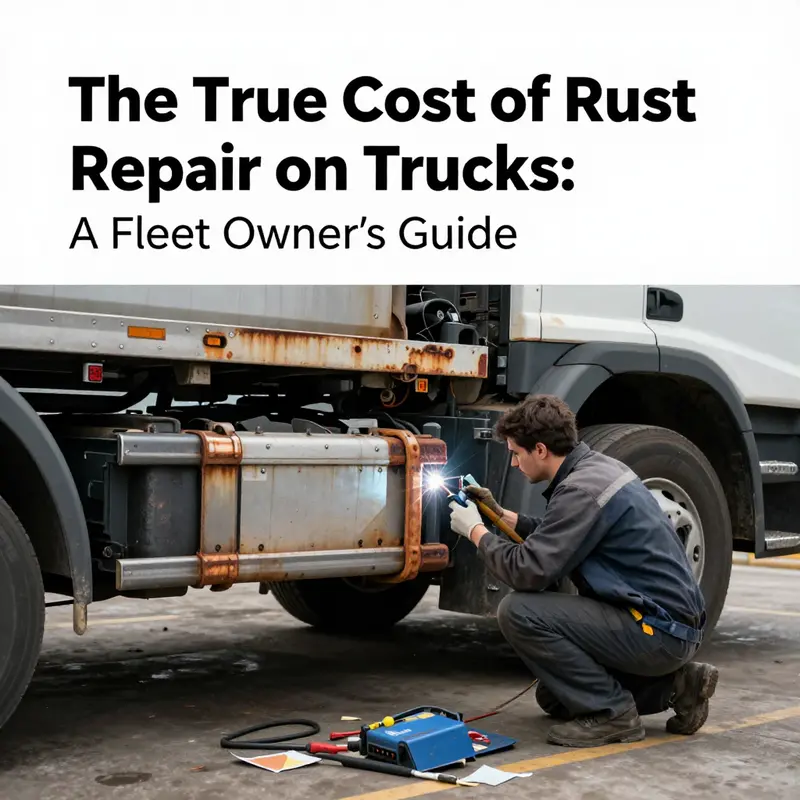
Moderate rust on a truck sits in a gray zone between cosmetic touch ups and full frame work. It requires both replacement of damaged metal and protective finishing, but it usually stops short of a full frame rebuild unless corrosion is spreading through critical structure.
Cost ranges for moderate rust repair vary by the extent and location of the damage, the panels involved, and regional labor rates. In many cases you will see prices from roughly 300 to around 1000 dollars for smaller patches or panel replacements. When rust has reached structural components such as frame members, bed rails, or floor pans, costs can climb to 1200 or more and in some projects approach 4000 dollars or higher, especially if a frame rebuild or major alignment is needed.
Key cost drivers include labor time, welding complexity, and the availability of replacement panels. High-stress areas and tricky shapes add price. Patch panels that fit well reduce time and waste, while custom fabrication adds hours and higher rates.
A practical approach is to obtain multiple quotes and ask for a detailed scope: what will be repaired, what materials will be used, how long the job will take, and what the finish will look like. In some cases, phased repairs allow spreading the budget over time while maintaining safety margins.
Beyond initial repairs, proactive rust prevention and routine maintenance can slow progression and protect value. Regular cleaning, rust-preventive coatings, and addressing small spots early help keep future costs down.
External resources can provide broader context. See the linked article on rust repair cost for additional benchmarks and techniques.
Severe Rust on Trucks: When Replacement Becomes the Practical Choice
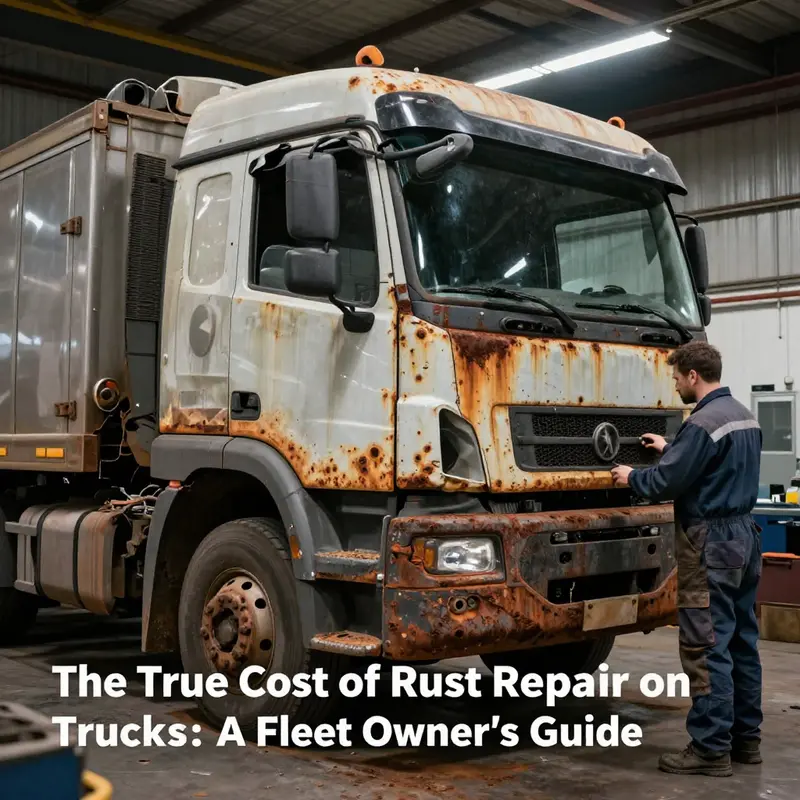
Rust is often dismissed as a nuisance—a cosmetic blemish that can be sanded, primed, and repainted away. But when rust becomes severe, it stops being a simple repair project and becomes a financial decision with real consequences for safety, reliability, and resale value. This chapter walks through the economics of severe rust on trucks, explaining why some repairs balloon into costs well beyond a few thousand dollars and why, in many cases, replacing the vehicle emerges as the prudent, even economical, alternative. The numbers loom large enough to change the calculus from “fix it” to “fix or fold,” and understanding where the line lies can save a buyer from pouring scarce dollars into a sinking investment.
Severe rust does not spare the critical structures that keep a truck safe and functional. When corrosion eats through the frame, floor pans, or chassis, the repair bill climbs quickly. Industry estimates place severe rust repair costs in a broad range, starting around two thousand dollars and stretching upward to eight thousand dollars or more, depending on the truck’s make, model, and the extent of the damage. The most serious scenarios involve frame damage that compromises stiffness, alignment, and load-bearing capacity. In cases where the frame has deteriorated to a point where straightening and plating cannot restore integrity, replacement may be the only viable option. The sheer scope of these repairs often requires specialized welding, precision alignment checks, and comprehensive refinishing—a process that intensifies labor time and increases material costs.
To put that into perspective, when rust penetrates the frame, repair bills can run roughly between twelve hundred and four thousand dollars, and sometimes far beyond that, especially on older or high-mileage trucks where corrosion has progressed in multiple areas. The variability is not merely about the metal’s condition but also about the truck’s configuration. A standard pickup with a simple frame may still require substantial labor, but a crew cab or extended cab with more complex undercarriage architecture can demand additional disassembly, more extensive rust removal, and multi-piece panel replacements. Labor rates compound the issue. Shops in urban centers or regions with higher living costs can charge higher hourly rates, often ranging from seventy-five to over a hundred twenty dollars per hour. When you factor in the need for skilled welders, frame specialists, and precise alignment checks, the cumulative cost is not surprising.
The environmental context matters just as much as the metal itself. In harsh coastal climates, like Florida’s, humidity and salt accelerate corrosion, especially on the undercarriage, frame rails, and floor pans that regularly encounter road spray and salt during winter or in coastal fog. Vehicles that spend a lot of time in salty air or on salted roads will show pitting, thinning paint, and more aggressive rust patterns in vulnerable regions. This is not merely a cosmetic issue; it affects the structural longevity of the vehicle and, by extension, its safety and carry capacity. The durability question grows more acute for extended cab pickups, which combine utility with additional metal mass in the passenger area and undercarriage. The more metal there is to protect, the more opportunities rust has to creep in from the inside out if preventive measures are not consistently applied. In other words, the longer you delay treatment on a frame or floor pan, the more likely you will face a cascade of issues that push costs higher.
A central dilemma emerges when the rust is severe: should you invest in major repairs, or is replacement the smarter option? For some trucks, especially those with sentimental value, mechanical condition, and a long-term plan for future use, a repair road map—however costly—may still be acceptable. In others, the economics simply don’t pencil out. Consider a frame that requires replacement, a floor pan that needs wholesale patching, and several undercarriage components that must be cut out and replaced. When you tally the parts costs, shop time, material fatigue from repeated welding, paint work to restore an even finish, and the risk of recurrence in the repaired areas, the numbers can surpass the perceived value of the vehicle. In such cases, replacement becomes not just a financial choice but a practical one. Owners often compare the headlined repair estimate against the current market value of the truck and its expected remaining life. If the repair cost approaches or exceeds the truck’s potential resale value or the value of a newer, more corrosion-resistant model, replacement becomes appealing—sometimes even inevitable.
This is where the broader maintenance philosophy matters. Rust, especially on a frame, does not always announce itself in a single episode; it can be a creeping issue that resumes after a patch if the underlying moisture exposure or salt exposure remains unchecked. Preventive maintenance—regular cleaning, thorough drying after exposure to moisture, and applying rust inhibitors in vulnerable areas—remains the best defense against rapid deterioration. Yet, once the corrosion crosses a threshold where structural integrity is compromised, preventive steps may no longer save the day. In such moments, a pragmatic approach is essential: a transparent assessment of the repair scope, a realistic appraisal of the truck’s remaining service life, and an honest cost comparison with the price of a replacement that delivers a safer, more reliable platform.
The decision-making process is not only about immediate repair costs. It also involves evaluating risk, safety, and the long-term value a truck provides. A frame repair that requires extensive welding and reinforcement can alter the vehicle’s geometry, potentially affecting steering geometry, suspension alignment, and load-carrying performance. Any misalignment or subpar welding could introduce safety hazards down the line, which carries its own financial and, more importantly, ethical costs. In high-stakes repairs, some owners find themselves weighing the peace of mind that comes with a new or newer used truck against the uncertainty of a repaired frame. The math is not simply about dollars and cents; it is about the reliability and predictability of the vehicle on the road, day in and day out.
In practical terms, the path you choose will depend on a tapestry of factors: the truck’s current market value, the extent of the rust, and whether that rust is isolated or part of a broader pattern across the undercarriage and body seams. It also depends on your region and access to skilled labor. The same severe rust issue might cost significantly more in one market than in another, simply because of labor rates and the availability of qualified welders. For some owners, the prudent route is to retire the old truck and move toward a vehicle with a fresh frame design or a model known for its corrosion resistance. For others, particularly those who require the truck for heavy-duty work and rely on a trusted platform, a full-frame repair may be the least disruptive path—provided the repair is executed by skilled professionals who guarantee structural integrity and finish the work with a durable, corrosion-resistant coating.
The overarching message, reflected in industry guidance, is that addressing rust early—before it spreads—offers the best odds of keeping repair costs manageable. Fixing a small rust spot now costs far less than tackling widespread corrosion later. The same principle applies to any rust-driven decision: identify the problem early, quantify the repair scope, and compare it against the vehicle’s current value and expected remaining life. This approach helps avoid the sunk-cost trap, where continued investment in an aging, rust-prone platform eventually exceeds the value of the truck itself. It also aligns with a broader maintenance philosophy that champions prevention and prudent budgeting. To keep rust at bay and to plan for the long haul, many owners build a maintenance buffer that covers routine rust-prevention measures and a contingency fund for occasional, unforeseen repairs.
For readers seeking a practical framework to manage these costs, budgeting becomes essential. Planning for the unexpected involves setting aside funds specifically for major rust-related repairs—those that threaten structural safety as well as those that will demand significant bodywork and painting. A disciplined budget helps prevent a sudden, incapacitous financial shock when a rust issue suddenly escalates from a cosmetic nuisance to a costly repair project. It also encourages owners to consider purchasing decisions with a longer horizon in mind. If the anticipated life of the truck is short and the rust problem is severe, replacing the vehicle may deliver greater value and reliability, along with reduced ongoing maintenance risk, than chasing ever-elusive perfection in a rust-riddled shell.
In terms of practical next steps, when the rust is judged severe, the prudent path is to obtain a professional assessment. A body shop or frame specialist can provide a thorough inspection, including non-destructive testing and measurements of frame straightness, to determine whether repair is feasible and under what conditions. When quotes arrive, compare not just the bottom line but the scope of work, the warranties offered on patch panels and welds, and the expected longevity of the finish. If the assessment reveals broad, deep corrosion across critical areas, or a frame that would require constant maintenance even after repair, it becomes a question of life-cycle cost: how many more years of dependable service will the vehicle provide post-repair, and how does that estimate stack up against acquiring a replacement with a clean slate and potentially lower total ownership costs over the same period? These questions are rarely answered by price alone; they demand a careful synthesis of engineering judgment, financial calculation, and a clear-eyed view of how the truck will be used in the years ahead.
In the larger scheme of truck ownership, severe rust is a clear reminder that not all repairs are equally durable or economically sensible. It is a test of judgment, a moment when repair economics intersect with safety and reliability. The decision to replace, rather than repair, is not a surrender to obsolescence but a strategic choice that recognizes the limits of what current rust remediation can deliver. When framed against the truck’s price, its expected remaining life, and the costs of ongoing maintenance, replacement can offer a smoother ownership experience, fewer risk factors, and, over time, a more predictable cost trajectory. It is also a chance to adopt a newer platform that benefits from modern corrosion protection technologies, better structural design, and a chassis built to resist the corrosion challenges that modern driving environments pose.
For readers who want a practical, ongoing way to manage rust risk without waiting for a calamity, consider integrating rust prevention into routine maintenance. Clean and dry exposed metal areas after road exposure, keep undercarriage drains clear, apply rust inhibitors to vulnerable seams, and schedule regular inspections for signs of progression. These measures won’t eliminate rust in every case, but they can slow its advance and preserve the option to repair rather than replace for longer. The ultimate takeaway is simple: severe rust on trucks is a turning point. It reframes the conversation from cosmetic touch-ups to serious financial planning, safety considerations, and the decision between repair and replacement that will shape the vehicle’s future role in your fleet or driveway.
For readers seeking a practical framework to manage these costs, budgeting becomes essential. Planning for the unexpected involves setting aside funds specifically for major rust-related repairs—those that threaten structural safety as well as those that will demand significant bodywork and painting. A disciplined budget helps prevent a sudden, incapacitous financial shock when a rust issue suddenly escalates from a cosmetic nuisance to a costly repair project. It also encourages owners to consider purchasing decisions with a longer horizon in mind. If the anticipated life of the truck is short and the rust problem is severe, replacing the vehicle may deliver greater value and reliability, along with reduced ongoing maintenance risk, than chasing ever-elusive perfection in a rust-riddled shell. To ground these concepts in a concrete path forward, consult a trusted regional shop for an independent assessment and, where appropriate, explore the preventive strategies that can keep future rust from becoming a roadblock to a productive, dependable vehicle.
For more context on how rust repair costs are estimated and how to interpret the numbers, you can explore additional guidance from industry resources. A useful external reference that consolidates these cost considerations is available online: https://www.carinterior.com/how-much-does-it-cost-to-fix-rust-on-a-car/ . This resource reinforces the view that early intervention matters, and it highlights the range of factors—from labor rates to part availability—that influence final repair bills. And within this chapter’s own framework, consider how these dynamics interact with your own situation: your truck’s value, your budget, your tolerance for risk, and your plans for future use. When taken together, they illuminate a path through the murky terrain of rust repair and toward a decision that aligns with safety, reliability, and long-term value.
If you’re building a maintenance plan that anticipates these costs, you might also find value in looking at budgeting tools and maintenance guidance that address routine upkeep and unexpected repairs. For readers who want to anchor their preparation in practical, real-world steps, a solid starting point is to consider a routine fund for major repairs and a separate reserve for preventive measures. The distinction is not merely academic; it shapes why and when you decide to repair or replace, and it can dramatically influence your total cost of ownership over the years. In the end, the rust question is not simply about metal; it is about choosing a path that keeps you safely on the road, with predictable costs and confidence in the vehicle you depend on for work, family, and daily life.
Internal link note: a practical section of the broader article suggests a disciplined approach to budgeting for routine maintenance as part of proactive vehicle ownership. See budgeting for routine truck maintenance for more details on building a financial plan that covers these kinds of future expenses. budgeting for routine truck maintenance
Decoding the Price of Rust: How Damage, Environment, and Design Shape Truck Repair Bills
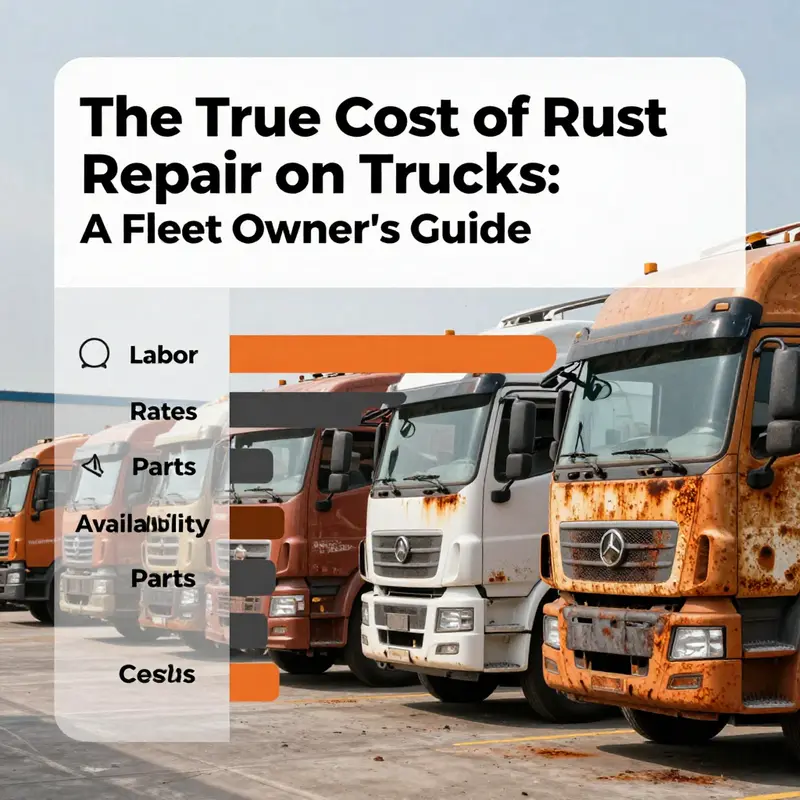
Rust is rarely just rust. It quietly rewrites a truck’s value, reliability, and safety, turning a routine roadside fix into a financial decision that echoes through months of budgeting and miles on the road. When people ask how much to repair rust on a truck, they are really asking about a spectrum of possibilities, each tied to how much metal is eaten away, where that corrosion sits, what the truck is built to endure, and how much labor those factors demand. The numbers that eventually land on a repair bill come not from a single fault line but from a network of variables that interact in real time as a shop disassembles, measures, and patches. This chapter walks through that network in a way that stays, at heart, practical. It aims to equip readers with a clear sense of why rust costs vary so widely, and how to plan for them without losing sight of what the truck does for the business, the family, or the workday.
Damage is rarely uniform. Surface rust is easier to address than corrosion that has penetrated the metal’s outer layer, and it is not the same if rust sits on a wheel arch as if it gnaws at a frame rail. The location matters as much as the extent. Rust at wheel wells or undercarriages tends to reveal itself only after moisture, road salt, or humid environments have had time to work, often presenting as pitted patches that require careful sanding and sealing. In contrast, rust that has attacked structural components—frames, chassis sections, or floor pans—demands a tougher calculation. The work becomes more invasive: removal of compromised sections, welding in new panels, realignment checks, and a more extensive refinishing process. The cost difference here is not merely a line item; it is a shift in what the job requires from the shop’s arsenal of tools and the technician’s skill set.
The extent and location of damage are the primary drumbeat behind costs. Minor surface rust might still be cosmetic in nature, with a repair that includes sanding, rust neutralizing, priming, and repainting. Such jobs can stay well within a few hundred dollars, especially when the owner handles the prep work personally. Moderate rust presents a different story. If the rust has begun to compromise thickness or is affecting a nontrivial portion of a structural surface, the repair escalates quickly. Expect more aggressive surface preparation, the removal of rusted panels, welding in patch panels, and a full repaint. Labor costs rise proportionally to the complexity. In many markets, skilled welders and body technicians charge a higher hourly rate, and the job’s duration lengthens as the metalwork is carefully done to preserve safety and alignment.
Severe rust is the kind of problem that can redefine a vehicle’s future. When corrosion has hollowed out significant portions of the frame, floor, or chassis, the option set narrows to substantial panel replacements, reinforcement work, or, in the harshest cases, a vehicle replacement. The numbers reflect that reality: the repair price can jump into the thousands, potentially surpassing the vehicle’s value. It is a stark reminder that rust is not merely an aesthetic issue but a structural one with implications for safety, insurance, and resale. Beyond the raw repair figure, there are chain reactions to consider: after replacing structural elements, professionals must verify alignment, suspension geometry, brake lines, and steering linkage to ensure the truck remains predictable and safe on the highway.
The type and age of the truck further shape the math. An older workhorse built with different alloys or with coatings that have degraded over time is more vulnerable to corrosion than a newer model that benefits from modern anti-rust treatments. The presence or absence of protective coatings, the quality of the substrate, and the overall design influence how salvageable a rusted area is and how long it will take to restore. In some cases, a particular commercial or heavy-duty configuration may require specialized parts and service networks, which can extend lead times and escalate costs. It is not just about the metal that rusted but the network of parts and expertise needed to address it. Parts availability, regional service networks, and the capacity to source precise repair panels all contribute to final pricing. A shop may discover that a patch panel is no longer readily available for an older or less common chassis, and that scarcity inflates both time and price because custom fabrication becomes necessary.
Material composition plays a nontrivial role as well. Trucks built with heavier metals or with modern galvanization and coatings resist corrosion longer, but when they do rust, the repair approach may be more involved—requiring different welding techniques, protective coatings, and primer systems. Conversely, cheaper metals or insufficient protective layers accelerate the rusting process and can complicate repair by introducing additional prep work, such as removing paint from an area that is not easy to access. The choice of repair strategy—whether to cut out a section and weld in a new panel, or to replace a broader swath—depends on how the metal responds to surface preparation and what a given repair shop can achieve with the available tooling.
Environmental conditions are not merely background scenery; they are active participants in rust’s timeline. Trucks that operate in coastal regions or in climates with high salinity experience accelerated corrosion due to salt-laden air or road treatments. Arid deserts impose their own brand of stress, where sand and dust abrasions can wear protective coatings faster and create microenvironments where moisture lingers in crevices. Seasonal cycles also matter: winter or early spring driving through salted lanes invites moisture to linger on undercarriage surfaces, facilitating ongoing rust progression even after the initial repair. The upshot is simple but powerful: the same truck, the same repair approach, will incur different costs depending on where it spends most of its life. The ocean-facing coastal city and the inland agrarian town with heavy fertilizer exposure are not equivalent in rust risk, which means a one-size-fits-all price estimate is rarely accurate.
Availability and cost of replacement parts contribute another layer to the calculation. A modern manufacturer or a well-supported model line affords a reliable supply chain, with standard replacement panels and a predictable labor flow. In contrast, rare or vintage configurations may demand custom fabrication, sourcing from specialty suppliers, or even remanufactured components. Each of these options carries a different price tag and timeline. In practical terms, this means a rust repair that begins with a straightforward patch could, in a few weeks, morph into a project that requires bespoke metalwork or a non-standard panel, pushing the bill higher because of material costs and the delays needed to design and fit such pieces.
Labor rates are the heartbeat of any repair bill. The most consequential factor here is the technician’s expertise. Assessing and removing rust, restoring structural integrity, and applying protective finishes all require skilled hands. The learning curve for welding, frame repair, and precise alignment checks cannot be shortcutted, and the regional market for welders and body technicians plays a decisive role. Where an urban shop might carry higher wage expectations, rural or subsidized markets may present lower rates, but each locale carries its own supply-and-demand dynamics. Labor intensity scales with the job’s complexity. A surface rust job that stays cosmetic can be completed quickly, but a repair involving cutting away compromised sections and welding new panels demands meticulous work and longer shop time. The hourly rate, combined with the time required, compounds the final number. In rough terms, moderate rust repairs often land in the hundreds of dollars in labor, with wide variation by region and shop specialization, while severe repairs frequently require several thousand dollars in labor alone if multiple structural components are involved.
Then there are the safety and structural integrity considerations that shadow every rust decision. If rust undermines critical components where loads, traction, and braking forces converge, the cost calculus naturally tilts toward more extensive fixes or even replacement. In other words, safety risk translates directly into priced risk. A repair path that preserves safety but requires ongoing reinforcement—such as additional rust-proofing, reinforcements, or alignment maintenance—will carry higher up-front costs but may yield longer-term reliability. Conversely, if the rust has rendered certain parts beyond practical repair, replacing those parts may be the wiser choice, especially when the repair costs approach or exceed the vehicle’s current value. In those moments, the economics of rust repair become a practical test of whether continuing to operate the truck is prudent or whether a different vehicle makes more sense for the business or the owner’s needs.
Even with a clear picture of severity, a realistic plan for paying for rust repair hinges on prudent maintenance and proactive budgeting. Routine cleaning and wax protection can slow the onset of rust by minimizing moisture retention in vulnerable areas. More importantly, addressing small rust spots early offers disproportionate savings. The difference between a small spot repaired now and a larger, more dramatic repair later can easily reach into the thousands. This is why many owners incorporate rust monitoring into their ongoing maintenance practice. A simple, regular inspection for rust spots around wheel wells, door sills, undercarriage components, and seams helps catch corrosion before it spreads. The financial logic of this approach is straightforward: invest a modest amount now to avoid a much larger bill later. For those looking to translate this into a concrete plan, a practical starting point is to build a budget that accounts for both routine maintenance and the potential variability in rust repair costs. See how a structured plan can balance recurring expenses with occasional, larger one-time costs by exploring strategies in budget-focused maintenance guides such as this resource on budgeting for routine truck maintenance, which offers actionable steps for building a safety net and aligning it with anticipated repair cycles: Budgeting for Routine Truck Maintenance.
The broader takeaway is that the price of rust repair on a truck is not a single figure but a dynamic, context-driven estimate. The cost will rise with the severity and extent of the damage, the truck’s design and material make, the environmental conditions it faces, the availability of replacement parts, and the prevailing labor market. The more a shop can quantify up front—where rust is located, how much material needs replacement, and what the expected labor hours will be—the more accurate the forecast will be. And yet, even with meticulous planning, uncertainty remains. Parts delays, unanticipated hidden corrosion, or a sudden need for frame straightening can push an estimate into a higher bracket. This is where having a prudent contingency aligns with the broader philosophy of maintenance as an investment rather than a one-off expense. The ability to absorb a spike in costs without derailing operations depends on how well the owner understands the risk, the likelihood of rust progression in the truck’s environment, and the value the vehicle still offers as a tool for work.
The decision framework, then, centers on realism and foresight. If a rust problem is still contained and the truck serves a critical function, repairing it with a clear plan and a capped budget can be the right answer. If rust has compromised a structural component to the point where repair would be impractical or unsafe, replacement might be the smarter choice, especially if the vehicle is older and the cost of continuing investment outweighs the return. In either case, the path forward should be guided by a transparent cost-benefit assessment, with a clear-eyed view of the truck’s role in daily operations and the long-term financial implications of keeping or upgrading the vehicle.
For readers seeking a broader, research-backed view on how environmental conditions and maintenance practices shape truck longevity and repair expenses, see this external study for a deeper perspective: an authoritative, peer-reviewed review.
Final thoughts
Understanding the cost implications of rust repairs on trucks is crucial for all fleet managers and trucking company owners. Whether it’s addressing minor, moderate, or severe rust issues, timely intervention can prevent escalating repairs and unsafe vehicle conditions. As we’ve explored, minor rust can be tackled affordably with DIY methods, while moderate rust requires professional help and can become quite costly. Severe rust may necessitate a painful decision concerning vehicle replacement. Ultimately, maintaining an eye on preventive measures and timely repairs not only secures the longevity of your fleet but also strategically manages your operational costs. Equip yourself with this knowledge and ensure your fleet remains in optimal condition.