For fleet managers, trucking company owners, and those operating in construction and mining, maintaining semi-trucks effectively is paramount. Specialized software that provides access to diagnostic data, repair guidelines, and wiring diagrams is indispensable for addressing the complexities of truck repairs. In this guide, we will explore key software tools that streamline semi-truck maintenance and enhance operational efficiency. Each chapter delves into a specific software tool, from E-Scan’s advanced diagnostics to mobile applications enabling remote troubleshooting—a comprehensive exploration designed to empower your repair strategies.
E-Scan for Semi Truck Repair Software
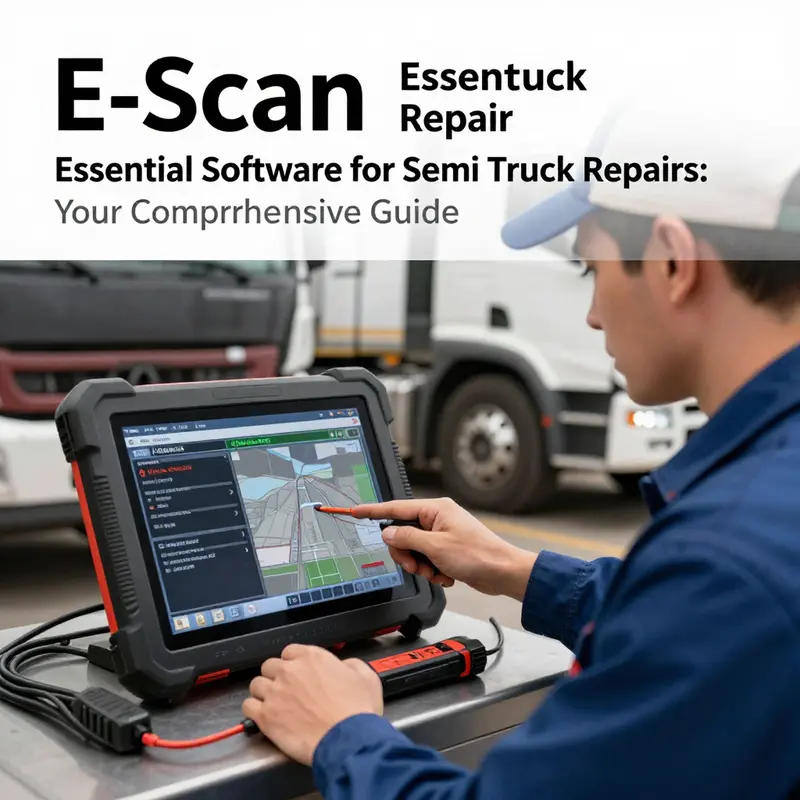
Heavy trucks rely on a growing network of electronic systems that govern engines, transmissions, braking, and safety features. To service them efficiently, technicians turn to specialized software that consolidates diagnostic data, repair procedures, wiring diagrams, and vehicle-specific information into a single, navigable interface. The right platform makes fault codes comprehensible, supports real-time data monitoring, and provides access to service bulletins and calibration guidance in one place. This integrated approach is not a luxury but a necessity for professional fleet maintenance, where downtime translates directly into cost and customer satisfaction. The best tools are designed to span a broad spectrum of makes and models while delivering depth for the idiosyncrasies of each engine family, calibration routine, and emission-control subsystem. The result is a streamlined workflow that carries a technician from fault detection to verified repair with confidence, consistency, and traceable documentation.
Real-time data access forms the backbone of effective diagnostics. When a truck is on the lift or traversing the yard, technicians watch live streams for signals such as engine rpm, fuel trims, exhaust sensor status, and transmission shift behavior. Codes point to a component, but streaming data confirms whether a fault is persistent or intermittent. A robust platform presents data in intuitive panels, with color-coded alerts and the ability to log snapshots during diagnostic runs. In addition to reading codes, many platforms permit controlled system tests—actuating valves, cycling relays, or commanding a sensor to verify its response. This capability to observe immediate effects under controlled conditions accelerates fault isolation and reduces the number of unnecessary part swaps. The outcome is a diagnostic session that is focused, repeatable, and teachable, rather than a series of disconnected steps.
The value of a diagnostic tool multiplies when it scales to fleet-wide use. A platform that supports a wide range of makes and models becomes a single reference point for a repair operation or a maintenance team. Technicians can pull up wiring diagrams for newer engines while others access calibration guides for different families without leaving the tool. The capacity to stream live data from multiple ECUs in real time is especially powerful when diagnosing complex electrical interfaces, where sensors, actuators, controllers, and CAN networks interact in nuanced ways. At the same time, the software should integrate with maintenance planning—logging service history, flagging upcoming intervals, and surfacing service bulletins relevant to a particular VIN. In this way, the software not only solves immediate problems but also informs long-term reliability planning, turning downtime into a measurable, managed cost.
A growing fleet also invites a discussion about traceability. The most effective diagnostic environments capture the full diagnostic journey—from fault code to test results, calibration changes, and post-repair verification. This history is essential for audits, warranties, and future troubleshooting. Secure, time-stamped records support technicians who must learn quickly from precedent, allowing newer staff to reproduce successful repairs on similar vehicles by following a proven sequence of steps. The consequence is a repair program that is both repeatable and auditable, reducing variation across technicians and shifts. The software thus functions as a living playbook—combining formal service materials with embedded experiential knowledge and concrete performance data.
As trucking moves toward electrification, adaptability becomes a strategic imperative. Electric powertrains introduce battery management, motor control software, and secure update processes that require new diagnostic workflows. A capable platform expands beyond traditional diesel diagnostics to include battery health checks, inverter diagnostics, and over-the-air update orchestration. Technicians must translate familiar diagnostic logic into this new data environment, but the core discipline remains intact: collect the data, verify with tests, implement the correct change, and confirm the result with another round of validation. With emissions standards tightening and fuel-economy pressures rising, the tool also helps confirm that sensors and calibrations are reporting truthfully during maintenance windows, providing objective evidence of compliance and performance. The result is not a one-off fix but a scalable process that keeps electrified fleets performing within spec year after year.
Governance and process discipline become central as software use expands. Large fleets and multi-site shops benefit from role-based permissions, audit trails, and secure data storage so continuity is preserved during staff turnover. A centralized update mechanism helps ensure every technician works from the same service information and calibration libraries. This consistency reduces miscommunications and rework, particularly when multiple technicians share a vehicle or a tight service window. Paired with disciplined hardware maintenance—ensuring the diagnostic interface and cables remain robust in a busy shop—these practices create a resilient ecosystem. The synthesis of software, hardware interface integrity, and update discipline translates into steadier uptime, clearer accountability, and more predictable maintenance costs for the operation.
Incorporating knowledge resources with the diagnostic workflow enriches problem solving. Technical manuals and OEM bulletins provide step-by-step guidance, while community forums and professional libraries offer practical insights from technicians who have faced similar symptoms. The most effective teams blend these sources with the platform’s built-in procedures, cross-checking findings against wiring diagrams and calibration notes. For ongoing learning and practical guidance, the Master Truck Repair Blog serves as a relevant touchpoint for conversational insights and repair stories that complement formal service materials. The real value is not in a single article but in the ongoing flow of practical experiences across the shop floor and the road. Master Truck Repair Blog.
On the practical side, the software gains strength when paired with reliable diagnostic hardware and testing equipment. The platform acts as the brain, while the hardware provides the hands that probe circuits, verify sensor outputs, and simulate fault conditions in a controlled environment. Technicians then perform a disciplined verification cycle: confirm the root cause, implement the repair, and re-check all relevant signals and actuators. This integrated approach yields a complete, auditable sequence from fault to fix, reduces guesswork, speeds repairs, and supports a consistent maintenance cadence across a fleet. For growing fleets, the same disciplined workflow scales across dozens or hundreds of vehicles, delivering uniform results and more predictable performance metrics.
Ultimately, choosing a diagnostic platform comes down to how well it harmonizes with a shop’s people, processes, and data practices. A system that emphasizes broad compatibility, real-time visibility, official guidance, and a structured workflow tends to deliver durable return on investment. In the semi-truck arena, where downtime reverberates through the logistics chain, the right tool is not optional but essential. It becomes the backbone around which engineers, technicians, and managers coordinate repairs, maintenance, and investment in the fleet’s future. By centering the workflow on unified fault interpretation, live data analysis, calibrations, and service bulletins, maintenance teams convert data into decisions and decisions into miles driven. The road to faster, more reliable semi-truck repair runs through a single, well-supported diagnostic platform that acts as the nervous system of the workshop.
External resource: https://www.e-scan.com
null
null
OEM Diagnostics in Action: Navigating Daimler Trucks North America’s Toolset for DTNA Vehicles
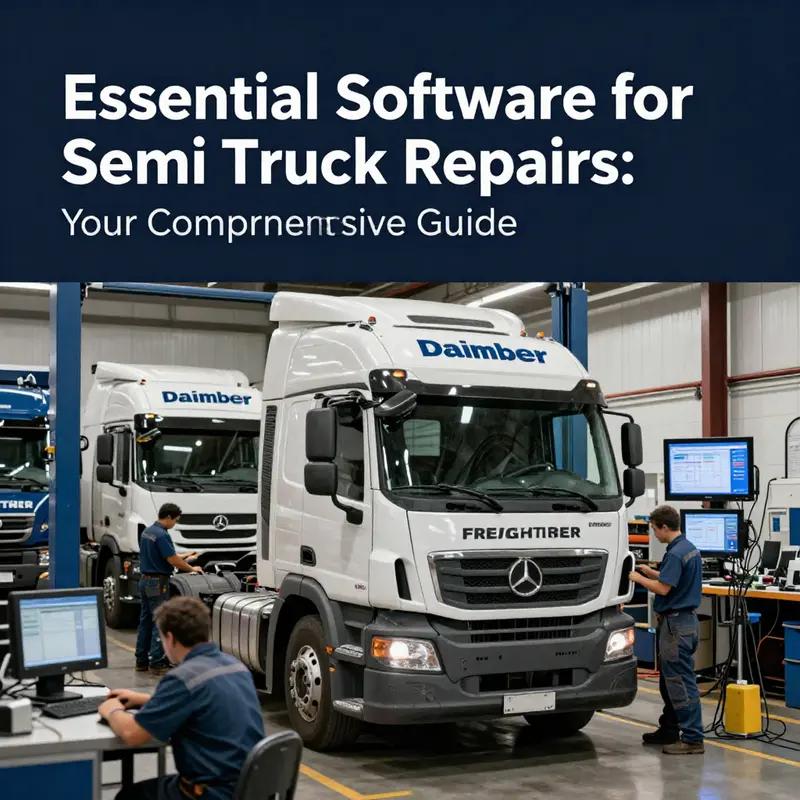
A repair shop that tackles high-mileage, workload-heavy semi trucks quickly learns that a generic scanner can only take you so far. When the vehicle in front of you is built to tight specifications, with multiple ECUs controlled by a web of software routines, you need an official diagnostic toolbox—one that is designed, maintained, and updated by the original equipment manufacturer. For Daimler DTNA-powered fleets, that toolbox exists as a cohesive, vehicle-specific diagnostic environment that provides more than fault codes. It connects you to real-time engine data, transmissions, braking systems, and the many subsystems that make a heavy truck perform under load day after day. The value of this OEM software lies not just in reading a fault light, but in understanding the language of the vehicle: the live values, the permissible ranges, the dependencies between systems, and the exact sequence of operations that a technician must perform to run checks, calibrations, and resets without compromising safety or reliability.
Real-time ECU information is the cornerstone of effective diagnosis. In modern heavy-duty trucks, the electronic control unit acts as the central brain for the engine, powertrain, and chassis systems. The OEM diagnostic environment presents live data in a structured, readable format. It shows engine RPM, boost pressure, exhaust gas temperatures, fuel trim, transmission gear position, wheel speed, and a host of sensor states as the vehicle is operating. This live data makes it possible to verify not only that a fault exists, but how it manifests under actual driving conditions. For example, a sensor that reports borderline temperatures during a high-load haul may illuminate a fault code, yet the real diagnostic insight comes from watching those values change in real time as throttle and load vary. When the data is presented with clear units and contextual notes—such as acceptable thresholds for a given engine family—the technician can separate a true fault from a transient anomaly and avoid unnecessary part replacement.
Bidirectional communication is another essential capability. The same tool that reads data can also command the vehicle’s systems to perform controlled tests. This two-way interface lets a technician initiate a targetted diagnostic sequence: forcing a sensor reading, commanding a valve or actuator to move to a known position, or validating a circuit by applying a controlled stimulus. The value of bidirectional testing becomes clear on complex fault scenarios where a passive readout isn’t enough. Instead of guessing whether an actuator is at fault or if a control module is misinterpreting sensor data, the technician can verify function by performing precise tests backed by the vehicle’s own logic. This approach helps reduce guesswork and accelerates fault isolation, which is especially important in fleet environments where downtime carries a cost.
A maintenance workflow that includes DPF regeneration support is indispensable for modern heavy trucks. The diesel particulate filter requires periodic regeneration to burn off accumulated soot and restore optimal backpressure. The OEM diagnostic suite provides direct visibility into soot load, regeneration status, and the conditions under which a regeneration should be initiated or completed. Technicians can monitor the regeneration progress, confirm that the filter performance is within specification, and verify that exhaust aftertreatment sensors are reporting correctly. This capability is not merely a convenience; it is a crucial maintenance control that protects fuel efficiency, reduces emissions, and extends the life of exhaust components. When a regeneration is interrupted by an electrical fault or a temporary sensor mismatch, the diagnostic tool guides the operator through the recommended corrective steps and confirms the successful completion of the procedure before returning the vehicle to service.
ECCU reset capability often emerges as a necessary step after repairs or component replacements. Electronic control units can hold fault codes after a problem is resolved, or they may require a reset to align with new hardware configurations. The OEM diagnostic environment gives technicians the ability to clear codes and reinitialize modules in a validated manner, ensuring that the reset does not introduce new faults or leave the system in an indeterminate state. This reset capability is paired with safeguards and verification checks; it requires the operator to document the action, confirm the correct module is targeted, and recheck live data after the reset. Such disciplined resets prevent recurring fault codes and help technicians confirm that the root cause has truly been addressed.
Access to the official diagnostic suite is typically structured through authorized dealer networks and service channels. That structure supports a learning curve, data integrity, and the alignment of repair procedures with the latest service bulletins and calibration updates. For independent shops, gaining reliable access can involve partnerships, rental arrangements, or sanctioned programs that extend OEM tooling beyond the dealer floor. The core idea remains consistent: using the manufacturer’s toolset ensures that the diagnostic paths follow the intended engineering logic, a critical factor when diagnosing complex systems that can share data across engine, transmission, brake, and body electronics. In this context, the tool isn’t just a scanner; it is a gateway to the vehicle’s knowledge base, including service histories, wiring diagrams, and component-level descriptions that support accurate diagnosis and proper calibration.
Wiring diagrams and vehicle-specific data contribute another layer of precision. The diagnostic environment gives technicians access to schematics, connector layouts, harness routes, and service procedures specific to the DTNA vehicle family. This is vital when chasing intermittent electrical faults or when replacing a module that interacts with multiple subsystems. With full wiring context, a technician can trace a circuit not only to identify a fault, but to understand how the circuit interacts with other circuits under different fault conditions. The diagrams also help when planning repairs in the field or on a remote site, where a misrouted harness or a missing ground can create symptoms that mimic more serious engine or transmission faults. In practice, the integration of live data and schematics makes it possible to correlate an observed fault with a precise hardware location and a recommended path to resolution.
Alongside the vehicle data, a robust OEM diagnostic workflow includes calibration information and service history access. Calibrations may be updated to reflect improved control strategies, reduced emissions, or enhancements in drivability. When a technician applies a calibration, the diagnostic tool typically validates the change, documents the new configuration, and checks for related fault codes that might be affected by the update. Service history access allows the technician to review prior fault codes, the timing of previous repairs, and parts that were replaced or serviced. This historical context supports more accurate decision-making and helps prevent repeating the same diagnostic chase. The interplay between live data, calibration, and service history is what elevates OEM diagnostics from a simple error code reader to a strategic maintenance platform.
The practical reality of using such a tool rests on a disciplined, repeatable workflow. A typical session begins with a secure connection to the vehicle and a high-level health check that lists active fault codes and recent warning indicators. From there, the technician navigates to real-time data streams for the engine, transmission, and exhaust aftertreatment systems. If a fault code points toward a specific subsystem, the technician uses bidirectional tests to verify sensor function, actuator response, or circuit integrity. If a performance issue emerges under heavy load, the operator can simulate operating conditions in a controlled way to observe whether the fault reproduces and to measure the system response. The regeneration module, the sensors feeding the aftertreatment system, and the ECCU states all require careful observation to distinguish a genuine issue from a transient event caused by unusual operating conditions or a temporary sensor anomaly.
Beyond the technical steps, the tool’s value lies in the confidence it provides. When technicians rely on the OEM environment, they reduce the risk that a misdiagnosis will lead to unnecessary repairs or incorrect calibrations. The wealth of data and the procedural guidance embedded in the tool support training and professional development, helping shops build a repeatable, audit-friendly process. This is particularly important for fleets with a mix of aging equipment and newer DTNA platforms, where each model can have its own diagnostic nuances and service bulletins. The official toolset helps ensure that best practices are followed consistently, which translates into higher repair quality, shorter downtime, and better vehicle uptime for the fleet.
To stay current, technicians using the OEM diagnostic environment should invest in continuing education and routine firmware or bulletin updates. Technology and software converge rapidly in heavy-duty applications, and staying current is a practical requirement rather than a luxury. The combination of real-time data, bidirectional control, DPF and ECCU capabilities, and the vehicle-specific data ecosystem creates a diagnostic loop that is both powerful and necessary for reliable repair work. For the technician, this approach means approaching repairs with a clear picture of how the truck should behave after the repair is completed, rather than only after the vehicle lights up a fault again. It also means that maintenance planning becomes a strategic activity rather than a reactive one, improving the overall lifecycle performance of a fleet.
For readers exploring the broader landscape of software tools available to repair semi trucks, consider how OEM diagnostics fit into the larger toolbox. Mobile diagnostics and third-party applications can supplement on-the-road troubleshooting, especially for quick checks or for preliminary triage before a full OEM session. However, the OEM toolset remains the most authoritative source for critical decisions, calibration accuracy, and adherence to the vehicle’s design logic. As the market continues to evolve—with new engine families, transmission configurations, and aftertreatment architectures—the value of the official diagnostic environment only increases. It is the backbone that supports reliable, safe, and efficient maintenance in a world where uptime is a competitive advantage.
Internal link note: for broader industry perspectives and practical maintenance guidance, you can visit the MasterTruckRepair blog for related topics and practical insights. Master Truck Repair blog.
External resource: the official OEM diagnostic portal provides comprehensive access to the diagnostic framework, service bulletins, and calibration data referenced in professional practice. https://www.diagnosticlink.com/
Electric Vehicle Repair Software and the Uptime Equation: Steering Semi-Truck Maintenance Into a Software-Driven Future
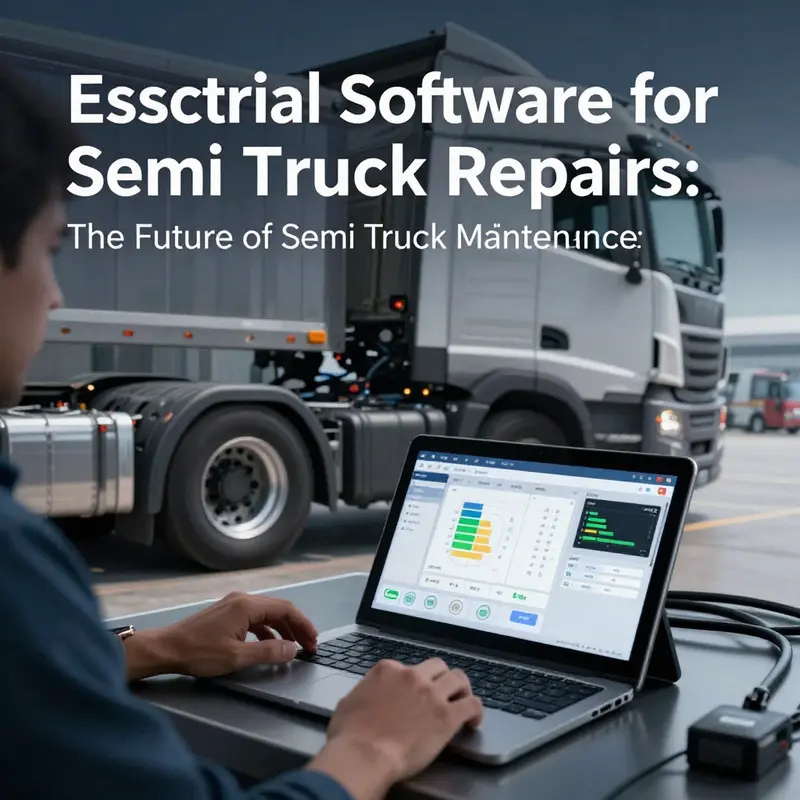
Software is no longer a helper in semi truck maintenance; it is the operating system that keeps a fleet moving. As fleets pivot toward electric and hybrid powertrains, the repair shop workflow shifts from isolated mechanical fixes to a coordinated, data driven discipline. Diagnostic interfaces, wiring diagrams, service bulletins, and vehicle configuration data are no longer scattered across manuals and field notes. They are pulled together by specialized EV repair software that presents a unified view of the vehicle. Technicians can observe real time sensor readings, fault histories, and the health indicators of each subsystem. They can place those observations in the context of the vehicle’s history and the vendor’s published specifications. The result is a repair process that is not only faster but more precise, transforming downtime into a managed risk rather than an unpredictable event. In this new environment, uptime is the currency, and software is the bank that holds it, balances it, and makes withdrawals only when a recovery plan is in place.
The shift toward electric and hybrid trucks has brought with it a new collection of data streams. Battery management systems feed voltage, current, temperature, and state of health into the diagnostic workspace. Power electronics and traction motors contribute their own fault codes, efficiency metrics, and thermal profiles. The CAN bus, once a background chorus in a mechanical repair, now plays a foreground role as multiple subsystems communicate the vehicle state in a language technicians must learn to interpret. The software not only reads those signals but correlates them with charging patterns, regenerative braking events, and operating modes. A short, abnormal tail of data can reveal a looming failure that would have gone unnoticed using only mechanical inspection. The value is not in collecting data alone, but in turning that data into actionable steps that keep the truck on the road and the fleet on schedule.
With the right software, a technician can access a centralized knowledge base that blends diagnostic trouble codes with wiring diagrams, calibration notes, and OEM service bulletins. The path from code to recalibration becomes a guided journey rather than a hunt. The platform often provides a diagnostic tree that adapts to the truck’s current configuration and to the specific electrical architecture of the powertrain. This is essential because the same fault code can originate from different subsystems in different models, and the correct remedy hinges on accurate context. The software also helps navigate the complexity of OTA updates, which can alter calibration, security settings, and even the behavior of battery management algorithms. Technicians no longer perform a one off repair; they implement a staged maintenance plan aligned with the vehicle’s software roadmap, the fleet’s utilization patterns, and the operator’s downtime windows.
In practice, the modern EV repair workflow begins with a remote or on board data pull, followed by a structured inspection that prioritizes the high impact subsystems: battery health, charging circuitry, and the electronic control units that govern energy flow. The software surfaces critical metrics such as battery impedance, cell balance, pack voltage trends, and charge acceptance under load. It also presents historical trajectories that show whether a current anomaly is a deviation from the usual behavior or part of a broader pattern. This temporal perspective is crucial when diagnosing intermittent faults that may escape a single snapshot. The ability to chart a fault against a vehicle’s operating profile—whether it is idling on a yard, delivering a long-haul leg, or maneuvering in a city corridor—helps technicians differentiate a transient event from a persistent condition that demands component replacement or firmware adjustment. In other words, software makes maintenance proactive rather than reactive, and predictive rather than purely responsive.
To be effective, these tools must translate expansive data into pragmatic repair steps. The strongest platforms do more than display numbers; they translate sensor readings into recommended actions, calibration changes, and parts replacement plans that align with OEM guidance and the shop’s capabilities. A well designed system also supports symptom based search, enabling technicians to input observed symptoms and retrieve a concise, prioritized set of potential causes and verified remedies. Repair estimating becomes a practical act rather than a best guess, linking the diagnostic narrative to labor, parts, and turnaround times. The shop owner gains visibility into the repair pipeline through dashboards that show what is scheduled, what is in progress, and what is awaiting parts. That visibility reduces bottlenecks and speeds decision making, which is essential when every hour of fleet downtime costs money.
Another hallmark of future ready software is its openness to integration. The most effective tools connect with the shop’s hardware diagnostic scanners in a way that protects data integrity while enabling deep dives into the vehicle’s software layer. They also integrate with the shop’s project management and estimating systems so that a repair plan can be transferred directly into a work order with linked service bulletins and OEM reference material. This integration lowers the risk of miscommunication between technicians and managers and creates a traceable record of what was done, why it was done, and what remains to be monitored after the repair. In an industry where technicians must juggle multiple protocols and rapidly evolving standards, a cohesive software ecosystem is not a luxury but a necessity.
The learning curve for EV repair software is real, and it extends beyond mechanical skill. The next generation of technicians must develop software literacy that lets them interpret battery management data, understand vehicle communication protocols, and navigate firmware updates with confidence. This literacy is not a substitute for hands on training; it complements it, enabling technicians to reason about electronic and software driven behavior as much as about physical components. It also means that continuous education becomes part of the job, not a one time onboarding event. A shop that fosters this blend of mechanical and software expertise will be better prepared to handle the wave of electrification sweeping through the sector, from regional fleets to long haul operators.
To keep the narrative grounded, consider the practical implications for a repair shop transitioning to EV work. The right software reduces guesswork by coupling fault codes with actionable repair paths. It aligns service procedures with the exact vehicle configuration and software level, minimizing the chance of misdiagnosis due to incorrect assumptions about a model year or a powertrain variant. It enables technicians to work with confidence, knowing that OTA updates and calibration steps are current and compatible with the vehicle being serviced. It also supports maintenance planning by forecasting the impacts of battery aging on range, charging time, and thermal management. The result is a more predictable service experience for operators, who rely on consistent performance to keep their fleets on the move.
For readers seeking ongoing guidance and practical insights, the Master Truck Repair blog provides a steady stream of updates and case studies that illustrate how shops implement software driven maintenance in real life. Master Truck Repair blog
In the broader landscape, the future of EV repair software is not a single tool but an ecosystem that blends OEM data access, service information, and diagnostic intelligence with business process tools. This ecosystem is designed to support the entire lifecycle of a vehicle, from initial commissioning through rapid troubleshooting to planned replacements and end of life. The platform can accommodate the special needs of electric and hybrid commercial vehicles, including precise battery health metrics, charging infrastructure integration, and the ability to correlate software configuration with hardware performance. In this sense, software is not just a diagnostic aid; it is the scaffolding that holds together the entire maintenance strategy. As the technology evolves, the most resilient shops will be those that embrace a platform oriented mindset, continually updating their software stack to reflect the latest safety advisories, calibration data, and repair methodologies. The promise is clear: fewer reactive failures, shorter downtimes, and a maintenance program that anticipates the vehicle’s software driven reality rather than simply reacting to its faults. This is how the industry will keep pace with the speed of electrification, delivering reliable service in a landscape where software and hardware are inseparable partners.
External resource: https://www.mitchell.com/ondemand/truckseries
Mobile Diagnostics in the Field: The Modern Fleet Toolkit
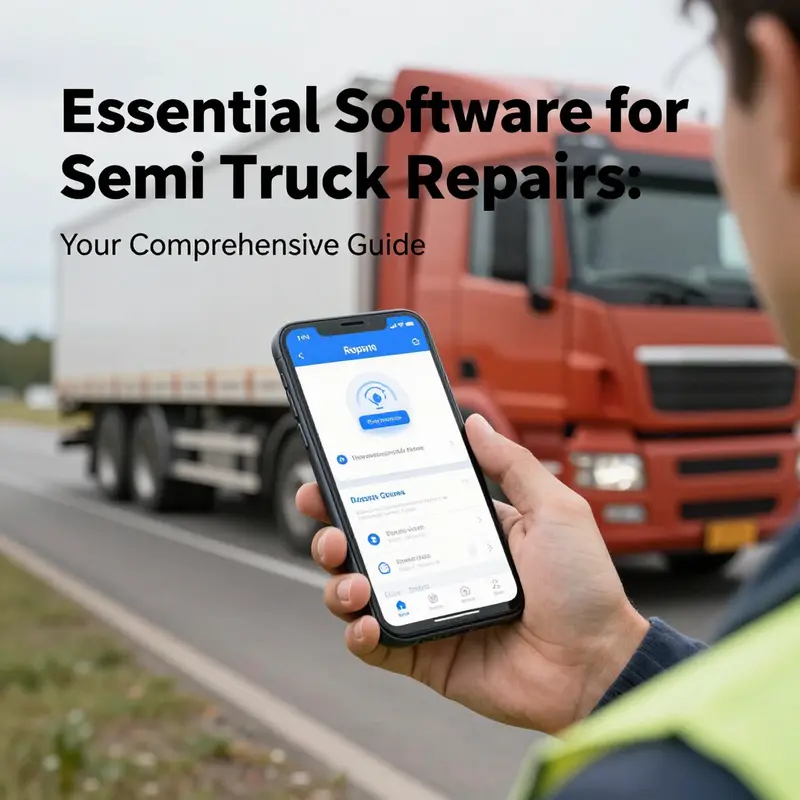
Across fleets, mobile diagnostics connect technicians with vehicle ECUs via wireless interfaces, turning a pocket device into a portable workshop. They enable fault code retrieval, live sensor monitoring, and quick health checks without hauling a bench to the roadside. This shift speeds up triage and helps teams decide when a full diagnostic is needed.
The workflow starts with a secure connection, then a consolidated view of engine, transmission, braking, and battery systems. Fault codes are translated into actionable descriptions; live data streams and trend graphs help confirm suspected issues and rule out transient glitches.
Cloud platforms add the power to analyze patterns across dozens or hundreds of vehicles, refine normal ranges with real usage, and schedule preventive maintenance. Fleet managers can spot rising fuel trims, creeping electrical resistance, or idle deviations, enabling proactive service.
Limitations remain: some deeper tests and calibrations require shop equipment. Mobile tools are best for triage, verification, and documentation, with in-depth work moved to a workshop. Usability, security, offline capability, and data governance are critical when selecting a solution.
Final thoughts
Incorporating the right software tools for semi-truck repairs is crucial for maintaining operational efficiency and ensuring vehicle reliability. From the comprehensive diagnostics provided by E-Scan to mobile applications offering remote assistance, each solution plays a pivotal role in addressing the diverse needs of the trucking industry. By leveraging these advanced technologies, fleet managers and operators can significantly reduce downtime and enhance their maintenance capabilities, ultimately contributing to the success and longevity of their operations.