
The structural integrity of a truck is paramount for ensuring operational safety and efficiency. When faced with frame damage, significant financial implications arise, impacting fleet management and operational budgets. Understanding the costs can enhance decision-making for fleet managers, logistics providers, and heavy industry operators. This article breaks down these costs into manageable insights through four detailed chapters. We begin by examining the cost factors associated with truck frame repairs, followed by a comparative analysis across different truck types. The narrative continues with an exploration of the various repair techniques available, culminating in a look at future trends and innovative cost-saving strategies in truck frame repairs.
Reading the Frame: How Costs Build as You Repair a Truck Frame
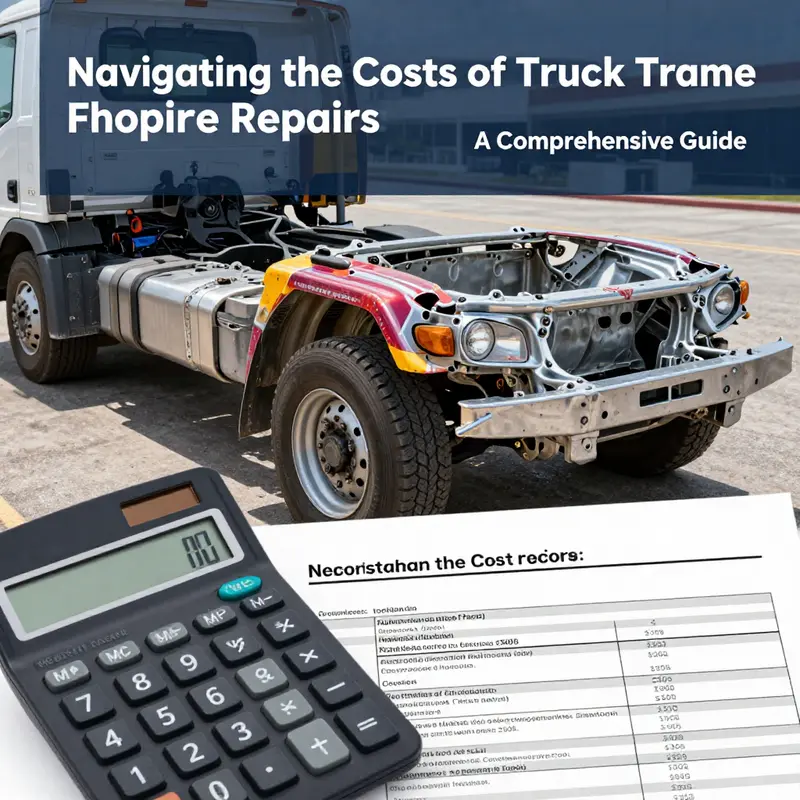
The frame of a truck is more than a metal skeleton. It is the long, straight backbone that ties every component to the road. When damage shows up there, it is not just a cosmetic issue; it is a measure of how a vehicle carries heavy loads, how it aligns with safety standards, and how long it will remain in service after the work is done. Costs, then, are less a simple sticker price and more a narrative of the damage’s reach, the chosen repair path, and the logistics of bringing a salvageable structure back to life. In that sense, understanding the cost involves reading the frame itself and listening to the signs it presents about its condition and its future reliability. The numbers you encounter in estimates are not arbitrary; they reflect the real-world demands of restoring strength, rigidity, and geometry to a part that bears the brunt of every mile traveled on the highway or across a yard of suburbia. The range of possibilities begins with the extent of the damage and expands as the work progresses toward alignment, testing, and re-certification for road use. Minor bends can be coaxed back into line with specialized hydraulic pullers and frame machines, and the repairs stay lean, focused, and quick. Yet even in these restrained scenarios, the cost is not merely the price of a fix. It includes the precision labor needed to ensure the frame is straight within tolerances that matter for steerability, suspension geometry, and axle alignment. The same logic governs more dramatic repairs, where heat is applied to release residual stresses or when partial welding becomes necessary to restore continuity across a damaged rail. Here the price tag climbs, but so does the assurance that the repair will hold under load and resist the kind of fatigue that can compromise a truck’s performance after months of service. The arithmetic behind these costs is not a monolith. It is a layered calculation that factors material type, the make and model of the truck, and the availability of skilled technicians who understand the dynamics of a rigid structure under torque, bounce, and variable temperatures. A modern heavy-duty frame often uses high-strength steel that offers excellent performance but introduces higher repair costs. The steel is more expensive to procure, and the processes to repair it require greater precision. When a frame is bent, cracked, or partially degraded, the repair demands exact alignment, meticulous welding, and careful post-repair validation. Each of these steps contributes to the final price and to the confidence that the vehicle will perform as intended on the road or in a demanding fleet schedule. The same logic applies to the selection of parts. OEM components, when available, can assure compatibility and longevity but may carry a higher price tag and longer lead times. Aftermarket options can reduce the immediate cost, but they might entail sometimes longer verification cycles and tests to confirm fit and safety. In either case, the decision is never purely about price. It is about restoring the frame’s original geometry, preserving safety margins, and reducing the risk of future warranty claims or downtime. The decision to replace a frame entirely is among the most consequential a shop faces. It signals that repairs no longer offer a viable path to reliability and that a full rail or set of rails must be swapped to restore structural integrity. In those cases, the cost can escalate substantially, reflecting the procurement of a complete frame assembly, the labor required to remove the old structure and install the new one, and the alignment and validation processes needed to certify the job for operation. Even here, the underlying message remains consistent: the frame is a critical component, and every dollar invested in its repair or replacement seeks to preserve the truck’s performance, safety, and the owner’s return on investment. The specific price ranges that describe frame work are, at their core, a map of what the job demands. Minor frame bending can often be handled with hydraulic pulling and straightening on a frame machine, with few parts replaced. The typical costs for this category tend to sit somewhere between five hundred and one thousand five hundred dollars, depending on local labor rates and the subtlety of the bend. When heat or partial welding becomes necessary to relieve stress and reestablish a uniform temper along the rails, the costs rise into the two-thousand to four-thousand-dollar range. The area and complexity of the work, plus the time spent by technicians to achieve consistent results, all factor into that spread. The most significant jumps appear with severe damage—cracks, deep dents, or structural failure that requires cutting out damaged sections and installing new frame rails. In these cases, the price can climb to five thousand to ten thousand dollars or more. The scope of work expands quickly to include compatibility checks with the suspension, drivetrain, and steering geometry, as well as the addition of welding, alignment checks, and post-repair testing to confirm that the truck will perform safely under real-world loads. When the frame is beyond repair, the avenue of total frame replacement opens, and the costs can range from ten thousand to twenty thousand dollars, particularly for heavy-duty commercial trucks or specialized vehicles. This scenario is not a rare outcome when the vehicle has endured extensive corrosion, severe impact, or cumulative fatigue that leaves a repaired frame with insufficient strength for continued reliability. Beyond the raw price, the sheet of factors that push the final number higher or lower includes the labor rate in a given market, the choice between OEM and aftermarket parts, whether the model is a standard design or a custom build with unique frame architecture, and whether ancillary repairs surface in the process—suspension work, drivetrain adjustments, or body repairs. The interplay of these elements means that two physically similar frames can carry different repair bills based on the surrounding circumstances. In practice, maintenance professionals emphasize a disciplined approach to pricing that hinges on an accurate diagnostic and a transparent quote. A professional inspection, ideally using 3D frame measurement systems, yields a precise assessment of distortion, misalignment, and residual stresses. Those measurements guide the repair plan, determine whether the frame can be straightened without compromising structural integrity, and specify the exact components and processes required to bring the frame back into spec. The field also recognizes that unit costs reflect shop overhead. Specialized equipment such as hydraulic presses, frame straightening machines, laser alignment systems, and diagnostic tools carry substantial investment. The technicians who operate them bring a level of expertise built through training, certification, and hands-on experience. Their decisions influence the cost, but more importantly, they influence safety. When a vehicle carries heavy loads and traverses uneven surfaces, even a small misalignment translates into higher tire wear, unstable handling, and the risk of component fatigue. The money spent on skilled labor and precise alignment can be seen as the premium paid for long-term reliability. As a practical matter, it’s not unusual for industry professionals to recommend that customers obtain a detailed written quote after a thorough assessment. The quote should itemize the expected labor hours, the parts list, any required rework, and the post-repair checks that will validate the job. A comprehensive estimate offers clarity and helps fleet managers plan cash flow, maintenance windows, and downtime. It also serves as a benchmark when comparing competing shops. While the numbers can seem daunting, the alternative—uncertainty about structural safety—carries a stress that is far more expensive in risk and downtime. A careful shop will also discuss the role of timing. Delays in sourcing OEM parts or long lead times for specialized rails can extend downtime and raise the total spent on the job, even if the hourly labor charges remain similar. For fleets operating under tight schedules, this factor sometimes translates into higher short-term costs but improved uptime in the long run, particularly when a high-quality repair reduces the likelihood of rework. The decision-making process also benefits from a candid discussion about regional cost variances. Urban markets, with higher living costs and more competitive labor pools, typically feature higher hourly rates. Rural or mid-sized markets may show lower labor costs but could introduce longer downtime due to parts availability. A well-informed owner or manager will weigh these dynamics when planning capital expenditure for the year, ensuring that repairs align with the fleet’s service plan and the organization’s safety commitments. As you navigate these factors, it’s helpful to tie the numbers back to real-world expectations. A diagnostic and repair estimate collected from a certified truck repair facility in the United States in early 2026 suggested that a medium-duty truck with moderate frame distortion required approximately seven thousand two hundred dollars for full correction, including alignment, welding, and post-repair validation. This figure underscores the point that even within a single category of frame damage, the price can vary with the precise needs of the job and the rigor of the validation process. The recommendation that emerges from this reality centers on choosing a licensed, certified repair shop with the right equipment and expertise. A shop that relies on laser-guided frame machines, 3D measurement, and thorough post-repair testing provides the assurance that the work will stand up to the demands of daily operation and comply with safety standards. The cost, in this light, becomes not a simple expense but an investment in safety, reliability, and uptime. For those looking to navigate the financial side of such repairs, a practical step is to plan ahead with a maintenance budget that accounts for occasional major repairs like frame work. This approach helps fleet operators and individual owners avoid cash flow shocks and keeps preventive maintenance aligned with the goal of extending the truck’s useful life. For a practical mental model that integrates ongoing maintenance into a broader financial plan, consider resources that focus on budgeting for routine truck maintenance. Budgeting for Routine Truck Maintenance. This kind of planning keeps the door open for high-quality repairs when needed, rather than forcing a quick fix that might compromise safety or long-term performance. At the same time, it is essential to consult authoritative industry benchmarks and standards, which provide a grounded perspective on expected costs across regions and vehicle types. Industry data from recognized sources help frame the range of possibilities and guide conversations with shop personnel. The National Institute for Automotive Service Excellence, for example, maintains extensive data on repair costs, labor rates, and regional variations that are useful for interpreting quotes and setting realistic expectations. For readers seeking a broader, externally validated reference, the ASE industry research and data portal offers benchmarks that can shape budgeting and decision-making in fleet operations. External resource: https://www.ase.com/industry-research-and-data
The Price of Frame Integrity: A Deep Dive into Repair Costs Across Truck Types
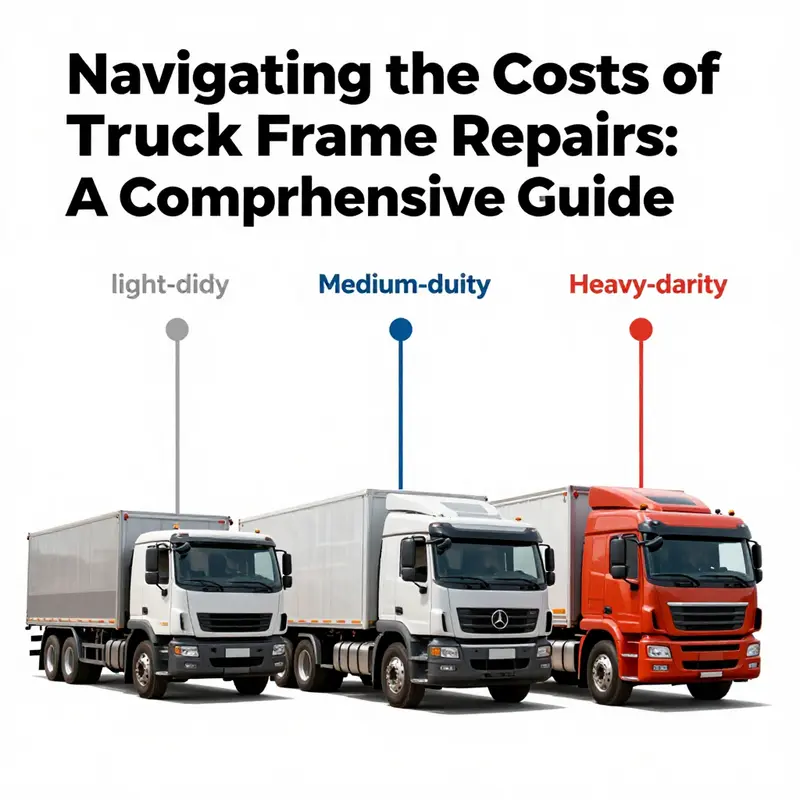
Repairing a truck frame sits at the intersection of safety, engineering, and budget. The frame is the backbone of the vehicle, carrying every load and resisting the twists of road and duty cycles. When it falters, the decision to repair, reinforce, or replace becomes a judgment about future reliability and the ongoing cost of operation. The costs are not uniform because the damage is rarely uniform, and the frames themselves vary widely in design, material, and complexity. A light deformation can be resolved with a precise pull and a recheck; a crack in a high-strength alloy may demand extensive welding, heat treatment, and post-repair validation; while a total frame replacement for a heavy-duty chassis can push repair economics into the realm of a new asset for some fleets. Understanding these layers helps avoid both underestimating the work and overcommitting to repairs that won’t deliver a safe return on investment.
In practical terms, most shops break frame repair into a spectrum tied to damage severity and the repair method. Minor frame bending, where the rails show slight misalignment, typically costs between $500 and $1,500. The approach usually involves hydraulic pulling and straightening with a frame machine. The job is often accompanied by a quick inspection of surrounding components to ensure there is no hidden stress elsewhere. Because the frame is not a consumer-level component, even these modest repairs must be executed with equipment calibrated to the vehicle’s geometry. A single misalignment can cascade into tire wear, steering instability, or improper load distribution, all of which undermine safety and durability. For that reason, reputable shops insist on meticulous alignment checks after straightening, and many use 3D frame measurement systems to confirm tolerances match factory specifications. The price, then, reflects both the tangible straightening work and the assurance that the frame remains within engineering tolerances rather than merely looking straight.
When damage goes beyond light deformation, the economics become more sensitive to the repair philosophy of the shop and the required materials. Moderate damage, such as frames that need heating to relieve stress or require partial welding, typically lands in the $2,000 to $4,000 range. Here, the fuel for the price is labor time and the consumption of consumables, plus the cost of any structural reinforcements that must be welded in to restore rigidity. The process often involves more than one heat cycle to avoid work-hardening and warping, and technicians may need to inspect for residual stresses after the welds. If the frame has developed micro-cracks or if certain sections must be reinforced with patches or gussets, the bill climbs and the time to complete expands. In this zone, the reliability of the repair and the preservation of safe load paths become the central metrics guiding the quote, not just the surface appearance of a straight line.
Severe damage takes aim at the core structural elements. Cracks that traverse critical rails, deep dents that distort the cross-section, or actual structural failure require cutting out damaged sections and replacing them with new frame rails or sections. This work often requires a combination of high-precision welding, alignment checks, and sometimes temporary disassembly of adjacent subsystems to ensure the new rails are integrated correctly. The price for this level of repair can range from $5,000 to $10,000 or more. The variance is driven by the extent of the replacement, the need for made-to-order parts for specialized vehicles, and the precision demanded by the final alignment to keep the vehicle within its load-bearing envelope. For heavy-duty work, some shops will quote toward the upper end if they must source OEM frame rails or if the machine time needed to verify geometry and stiffness is extensive.
For cases where the frame is deemed unusable, a total frame replacement can be the more economical option in the long run. Especially with modern heavy-duty commercial trucks or specialized builds, a full frame assembly replacement can cost between $10,000 and $20,000, depending on whether the truck uses standard rails or a tailored, high-strength platform. The difference between a full replacement and a comprehensive rebuild often hinges on the availability of compatible rails, the down time required to complete the swap, and the risk that nearby components may require rework once the frame is swapped. In practice, fleet managers ask hard questions about the total cost of ownership, including downtime, the risk of recurrence of frame issues, and the residual value of a repaired vehicle. The decision frequently becomes a calculation that weighs the probability of a durable fix against the upfront and ongoing costs of replacement, with reliability and safety as the ultimate arbiters.
Beyond the raw repair price, several other factors shape the final cost. Labor rates can swing significantly by region; urban areas with higher wage scales tend to push quotes upward, sometimes by as much as 30 percent compared with rural regions. The choice between OEM parts versus aftermarket components also shifts the balance. OEM rails tend to align with factory specifications and may offer better long-term compatibility, but they come at a premium. Conversely, aftermarket or remanufactured elements can reduce material costs but may require additional validation to confirm fit and performance. The job’s complexity is also tied to the truck’s baseline design. Newer models or vehicles built with high-strength steel or integrated chassis systems often demand specialized tools and certified technicians, which elevates both material and labor costs. And the presence of secondary issues, such as suspension, drivetrain misalignment, or bodywork that must be addressed concurrently, compounds the total price as parts and labor are bundled into a single repair plan.
One practical example helps illustrate how these factors coalesce in the wild. A certified truck repair facility conducted a diagnostic and repair for a medium-duty truck with moderate frame distortion. The shop documented that the full correction, including alignment, welding, and post-repair validation, came in around $7,200. This figure captures the layering of heat treatments, welds, gusset additions, frame straightening, and the post-repair checks that verify the frame’s integrity before the vehicle can return to service. It’s not unusual for quotes to begin lower and then rise as the shop uncovers latent stress, or for a similar job to come in several thousand dollars higher at a different shop, especially if the region’s labor market or the shop’s queue time affects the overall burden of downtime. This example underscores an essential reality: frame repair is not a one-size-fits-all expense but a spectrum influenced by the vehicle’s role, the damage’s depth, and the repair approach chosen by the shop.
For prospective buyers and operators, the decision to repair versus replace is often a matter of economic sense and risk management. In the context of used trucks, a damaged frame in a light-duty vehicle such as a common pickup might be considered a manageable risk if the repair costs stay on the lower end and the vehicle’s other components remain healthy. In contrast, the same damage on a heavy-duty freight or vocational truck can render repairs economically impractical when the payback period is short or downtime is costly. This is where a comprehensive evaluation becomes critical. A trusted mechanic should perform a thorough inspection, ideally with 3D frame measurement to quantify misalignment in all planes and to map the true geometric deviations that must be corrected. The result should be a detailed plan that includes the scope of the repair, the parts required, the labor hours, and the post-repair checks that will certify safe operation. This level of due diligence serves not only the safety of drivers but also the financial health of a fleet, the resale prospects of the vehicle, and the predictability of maintenance budgets over the vehicle’s remaining life.
In this decision-making frame, buyers and fleets often turn to a practical, forward-looking approach to budgeting. A structured plan that anticipates potential frame issues—including rust damage, accelerated wear in aging fleets, and the possibility of regional price variations—helps align maintenance with cash flow. For readers seeking a pragmatic path to budgeting, a commonly referenced starting point is to assess routine maintenance costs and allocate a reserve that reflects the higher end of expected frame work in the next 12 to 24 months. This approach provides a cushion against the unexpected, such as a sudden discovery of rust in critical rails or a need for full-frame reinforcement when a truck is pressed into heavy service. A more detailed budgeting framework is outlined in resources focused on routine maintenance planning, which you can explore through practical guidance on budgeting for routine truck maintenance.
For those who want to anchor their planning in real-world references, the regional reality matters. Labor rates in California or New York often outpace rates in the Midwest or Southern states, meaning the same repair can cost tens of thousands of dollars more in a given hour of labor. This geographic variation matters not only for the current repair but also for future service events. The availability of skilled technicians, the proximity of specialized shops with laser-guided frame machines, and the ease of sourcing frame rails or replacement sections all influence the final price. The interdependence of these factors means that a person evaluating a truck with frame concerns should seek multiple quotes from certified shops and compare not only the bottom line but also the proposed repair plan and the shop’s confidence in the long-term durability of the fix. The recommended path is to insist on a detailed quote that breaks out labor, parts, and post-repair validation, and to verify that the shop uses a 3D measurement system to confirm that the frame is restored to factory tolerances.
As this chapter moves toward a close, it’s important to remember that the numbers reflect not just one moment in time but a set of decisions about safety, reliability, and financial stewardship. The repair of a truck frame is a capital decision as much as a technical one. It requires an informed appraisal of the vehicle’s current condition, the likely trajectory of wear and stress, and the vehicle’s role in a broader fleet or business operation. Detailed inspections, third-party validation, and careful comparisons of quotes all contribute to a sound outcome. When done well, a frame repair leaves a truck with a restored structural backbone, a clear path to safe operation, and a maintenance plan that helps prevent future surprises.
For readers who want to deepen their understanding of budgeting and planning around these costs, a practical resource on budgeting for routine truck maintenance can be a helpful starting point: budgeting for routine truck maintenance. This linked guide provides a framework to think about ongoing costs, which complements the more issue-specific cost ranges discussed here.
External resource: https://www.autoblog.com/2026/01/21/truck-frame-repair-costs
The Structural Price Tag: Truck Frame Repair Costs Explained
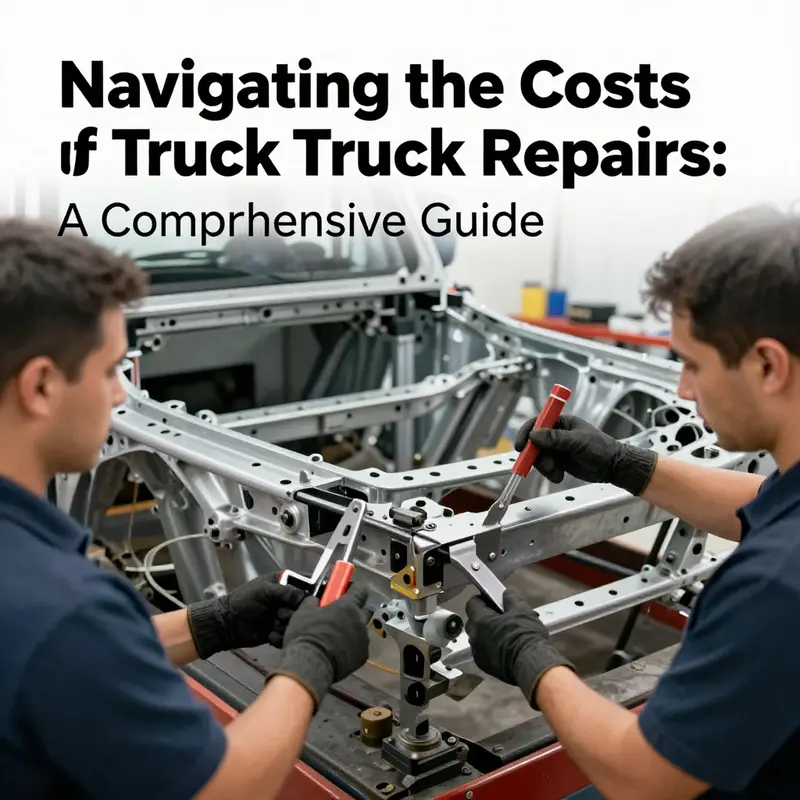
Truck frames are the backbone of the chassis, and their repair costs reflect damage severity, vehicle type, and the repair strategy chosen. Minor frame misalignment or light deformation may be corrected with frame straightening and precise measurement, often costing a few hundred to about one thousand dollars depending on labor rates and the needed alignment. Moderate distortion that requires heat treatment, welding, or extra joints increases complexity and can land in the two-to-four thousand dollar range, driven by material, labor, and post-repair validation. Cracks or bent rails that necessitate section replacement or more extensive welding push costs further into the five-thousand-to-ten-thousand-dollar territory, with heavy-duty or specialized frames potentially exceeding that range. In cases where a full frame replacement is the most economical long-term option, prices commonly range from ten thousand to twenty thousand dollars, reflecting parts, labor, and reassembly of connected subsystems. The exact price depends on components sourcing (OEM versus aftermarket), the shop’s equipment (3D frame measurement, laser alignment), downtime, and the required post-repair testing. A thorough, itemized estimate should cover diagnostic assessments, parts, labor, and verification procedures to ensure safety, structural integrity, and resale value. When budgeting, treat frame repair as a substantial potential line item, factoring in the vehicle’s age, duty cycle, and expected remaining life to gauge the appropriate level of investment.
Shaping the Price of the Frame: How Tomorrow’s Innovations Will Redefine Truck Frame Repair Costs
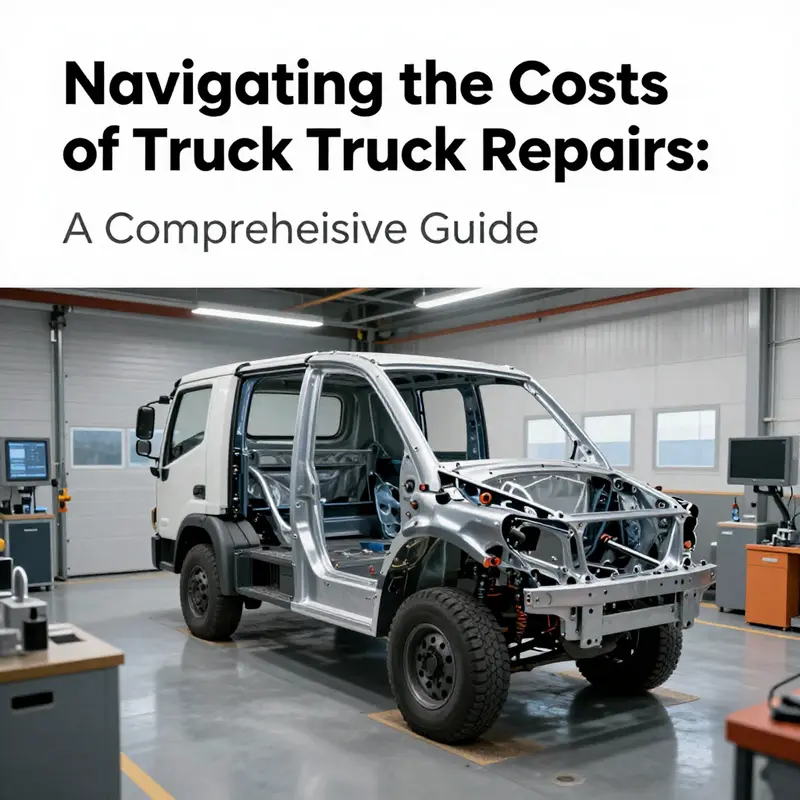
The landscape of truck frame repair costs is quietly changing, even as the core math of damage and labor remains familiar. Today, fleets and shops gauge prices by the severity of the harm—minor bends that can be coaxed back into alignment, moderate distortions that demand heating or targeted welding, and the more daunting scenarios where entire sections must be cut away and replaced. The numbers provide a useful map: hundreds for light straightening, thousands for structural work, and ten thousand or more for a full frame replacement in heavy-duty cases. Yet this map is evolving. The near future promises a cost trajectory shaped as much by technology as by the grit of metal and the muscle of mechanics. The convergence of new materials, smarter diagnostics, modular repair methods, and preventive analytics is poised to bend not only frames but the bills that accompany their repair.
Material choices sit at the heart of this shift. Modern truck frames increasingly leverage high-strength steels and, in some segments, aluminum alloys. The allure is clear: lighter frames translate into better fuel economy and improved performance, especially for fleets chasing every mile of efficiency. But lighter does not always mean cheaper when the price tag of advanced alloys and compatible fasteners climbs. The initial material costs may be higher, yet the long-run economics can tilt in favor of the operator who values lower wheel-to-wheel weight, reduced stress on suspension geometry, and longer intervals between major structural interventions. In the context of repair, the same materials demand new repair practices. A heat-treated or high-strength section behaves differently in welding, requires calibrated heat input, and calls for precise post-weld stress relief. Shops that master these nuances can deliver repairs that hold to original specifications without risking latent weaknesses. For fleets, this translates into more predictable reentry into service and potentially fewer reruns of the same job after a short service cycle. In other words, the cost equation begins to include not just the price of steel but the price of knowing the frame will survive another thousand miles under the same load profile.
If materials set the stage, diagnostic technologies compose the action plan. The chapter on the future of frame repair costs is energized by smarter, more proactive inspection regimes. AI-powered imaging and real-time monitoring tools can detect subtle deviations long before a bending grinds into a crack. The moment a frame exhibit a new hotspot under stress, a technician can intervene with a targeted repair rather than a broad, invasive intervention. Early detection reduces the need for extensive cutting, welding, and validation cycles. The potential savings are not merely monetary; they are also safety-driven. By catching issues early, operators minimize the risk of progressive damage that could lead to catastrophic failure on the road. The interplay between imaging accuracy and repair strategy matters. A more precise diagnosis lays the groundwork for sectional repair approaches that align with original manufacturer tolerances, which in turn reduces rework and the likelihood of misalignment out of tolerance after a road test.
The rise of modular repair techniques marks another pivotal trend. Instead of replacing large portions of a frame in a single, prolonged operation, technicians can isolate and repair specific segments. This modular approach hinges on innovations in alignment tooling and fastener systems that tolerate repeated disassembly and reassembly without compromising structural integrity. Laser-guided alignment systems, in particular, are transforming how closely a repaired frame can be restored to its OEM geometry. These tools shorten cycle times and increase consistency across jobs, delivering repeatable outcomes that fleets can trust. The result is a twofold benefit: shorter downtime for vehicles and more reliable performance once back in service. As modular repair becomes standard practice, the cost of a “sectional” correction can decline, even as the scope of work remains technically demanding. Industry observers anticipate a real reduction in the labor intensity of mid-range repairs, assuming the shops invest in the right equipment and the technicians receive appropriate training.
Cost pressures are not purely technical. The economics of repair also hinge on labor markets, parts availability, and regional rate structures. Urban areas tend to reflect higher labor rates, which can exaggerate small repairs in a tight market. However, as modular repair and diagnostic automation become more widespread, the efficiency gains can offset some of those premium rates. In this sense, the cost curve may flatten across regions as technology lowers the minimum viable hours required to perform a quality fix. The combination of higher upfront material costs with potentially lower labor intensity creates a nuanced picture: some repairs may become cheaper in the long run, while others could inch upward if premium alloys demand more specialized handling at every step.
The most dynamic element of cost evolution lies in the economics of repair methodologies that optimize material use and minimize waste. Modular repair and precision cutting techniques, supported by advanced measurement systems, can reduce scrap and improve yield. When a frame segment is damaged, the goal is to restore strength and geometry with the least disruption to surrounding sections. That often means careful removal of only the compromised material, followed by precise reinforcement. The sequencing matters too. A well-planned repair path avoids repeated clamping, heating, and repositioning, which not only conserves time but also reduces the risk of introducing new distortions. In such workflows, the documented cost reductions may appear modest on a single job, yet accumulate meaningfully across a fleet over months or years. The trajectory points toward a future where the average cost per sectional repair could decline by a notable margin—perhaps up to a fifth—over the next five years as these techniques become standard practice. If realized, that shift would reverberate through maintenance budgets, warranty dashboards, and total cost of ownership calculations for fleets with substantial frame exposure.
Where does preventive maintenance fit into this unfolding cost story? Telematics and fleet management platforms are increasingly capable of continuous stress monitoring. They track driving conditions, load profiles, and minor shifts in geometry that, if unchecked, may escalate into significant distortion. By streaming data from sensors and diagnostic modules, managers can schedule inspections and minor corrections before a problem becomes a repair that touches the frame’s core structure. This data-driven maintenance planning represents one of the most powerful levers for long-term cost containment. The idea is not merely to fix problems as they appear but to anticipate and prevent those problems from appearing in the first place. When fleets adopt a proactive maintenance culture, they shift from a crisis-driven repair model to a lifecycle management model. In practical terms, this means more disciplined budgeting for routine checks, less expensive early interventions, and a lower probability of costly full-frame replacements due to overlooked fatigue or misalignment.
The cost-saving potential of preventive analytics is amplified by the growing integration of real-time insights with maintenance scheduling. A well-designed program can align with driver training, route planning, and weight distribution policies to reduce frame stress. A driver who habitually carries uneven loads or consistently accelerates and brakes abruptly creates a profile that can shorten a frame’s service life. Data-driven guidance can steer operators toward smoother driving patterns that protect the frame, thereby delaying or reducing repair needs. The cumulative effect is a double dividend: improved safety and lower repair expenditures. This forward-looking approach requires an investment in sensors, data infrastructure, and people who can interpret the signals. Yet for fleets willing to commit, the payoff can be measured in weeks of uptime gained and in the avoidance of expensive repair cycles that disrupt service and erode margins.
From the shop floor to the service bay, the economics of repair are also reshaped by the evolving ecosystem of parts supply and manufacturing. OEM and aftermarket options will continue to compete for price and performance, with the balance tipping toward programs that deliver reliability, traceability, and consistent alignment outcomes. As parts availability improves, the risk of long downtimes due to delayed components decreases, supporting faster turnarounds and more predictable labor scheduling. The interplay of materials, diagnostics, modular repair methods, and maintenance analytics creates a virtuous loop: better diagnostics enable more precise repairs; precise repairs enable longer service life; longer service life reduces the frequency of expensive overhauls. In this loop, the long-run costs are more dependent on the efficiency of the entire repair and maintenance system than on any single technique alone.
The question fleets will always ask remains: how much will repairing a truck frame cost in a given year and for a given job? The answer in the coming era is nuanced. There will be lower price elasticities for routine, well-supported repairs, thanks to modular methods and precision tooling. There will be higher upfront costs for advanced materials and the instrumentation required to harness the benefits of real-time diagnostics. Yet the overall trend should be toward greater predictability and more stable budgeting, even as the absolute figures for specific jobs rise or fall with material choices and the exacting demands of a particular repair. The best way to plan remains multi-faceted: benchmark against regional labor rates, anticipate the mix of repairs in your fleet, and invest in diagnostic and alignment capabilities that ensure repairs meet or exceed OEM tolerances. This approach makes the future cost landscape less of a gamble and more of a carefully calibrated forecast.
In practice, operators who want to prepare for these shifts should consider a few concrete steps. First, invest in a maintenance plan that blends preventive telematics with regular frame inspections. Second, develop a standard operating procedure for modular repairs that emphasizes precision alignment and minimal material waste. Third, cultivate a close relationship with a certified repair facility that emphasizes 3D frame measurement and documented validation processes. This partnership can translate into timely quotes that reflect the latest practices rather than yesterday’s norms. It also helps fleets track the evolving cost curve more accurately and adapt budgets as new technologies mature. To keep pace with the changing economics, fleets can adopt a more formal budgeting framework that accounts for potential price swings in materials, labor, and parts availability while maintaining a steady emphasis on safety and reliability.
As readers consider the broader arc of this chapter, it’s worth returning to the practical implications of cost trends. The cited range for sectional repairs today—roughly $300 to $1,500—serves as a baseline. If modular repair and precision diagnostics yield a 20 percent cost reduction in those scenarios over the next five years, the lower end could approach $240 and the upper end around $1,200. That would not erase the realities of more extreme repairs or full-frame replacements, which will still command substantial sums. But for fleets that can consistently apply the right technology, the savings from leaner workflows, less material waste, and better planning could become a meaningful part of the cost of ownership. In addition, the shift toward diagnostic-driven interventions can help ensure that any repair, even when expensive, delivers a longer service life and a safer vehicle, ultimately delivering value beyond the immediate invoice.
Integrating these developments into a coherent maintenance strategy requires attention to both the technical and the organizational dimensions of repair work. Technical excellence—mastery of laser-guided alignment, 3D measurement, and high-strength materials—must be matched by process discipline. That means standardized inspection intervals, clear criteria for when to apply partial replacements versus full-frame work, and transparent communication with drivers about the implications of frame wear and stress. It also means a commitment to training and equipment reliability. The returns on that investment accrue not only in reduced repair cycles but also in higher uptime, improved vehicle performance, and safer operations on the road. In an industry where every mile counts, the capacity to anticipate, plan, and execute repairs with precision becomes a competitive advantage. The chapter’s overarching message is not one of gloom about costs but one of opportunity: technology and smart management can bend the cost curve in ways that make frame repairs more predictable, safer, and affordable over the life of a fleet.
For readers seeking a practical touchpoint in this evolving landscape, consider how budgeting practices adapt in light of these trends. A structured approach to forecasting the financial impact of frame repairs—one that blends historical repair data with forward-looking projections from modular repair workflows and diagnostic advancements—will serve fleets well. It can help optimize allocation of capital toward diagnostic equipment, training, and better data integration while preserving the essential objective: keeping trucks safe and on the road. The transition will not happen overnight, but the direction is clear. As repair methods become more modular, as materials evolve, and as analytics sharpen, the cost of keeping a truck frame in robust, roadworthy condition will increasingly reflect a balance of upfront investment and long-term reliability rather than a simple, reactive price tag attached to a single incident.
To connect these themes to ongoing practices and resources, readers can explore practical budgeting guidance that aligns with the shifting cost landscape. For a focused discussion on budgeting strategies for routine maintenance within a modern fleet framework, see this detailed guide: Budgeting for Routine Truck Maintenance. This resource offers a structured approach to planning, prioritizing, and funding the kind of preventive work that underpins frame longevity and reduces the likelihood of large, unexpected repairs. It is a useful companion to the broader trends outlined here and can help operators translate forward-looking science into actionable financial plans. https://mastertruckrepairllc.com/budgeting-for-routine-truck-maintenance/
As the industry absorbs these innovations, the road ahead for truck frame repair costs will still be measured in repair bills and shop hours. Yet the underlying dynamics will shift toward smarter, faster, and more reliable interventions. The promise of lighter, stronger frames, smarter diagnostics, and modular workflows points toward a future where the cost of return-to-service is more predictable and, in many cases, lower than today’s headline figures. The science of frame repair is becoming a blend of material science, precision engineering, and data-driven maintenance. For operators, that blend means a more resilient and economical fleet, capable of withstanding heavier loads and longer duty cycles without paying a premium price in every repair cycle. The bottom line is that the next era of frame repair costs will be defined not only by the severity of damage but by the degree to which technology and disciplined maintenance work together to extend life, ensure safety, and optimize total cost of ownership.
External resource: For a broader industry perspective on evolving repair costs and trends, see Fleet Owner’s Truck Repair Costs Trends 2024. https://www.fleetowner.com/truck-repair-costs-trends-2024
Final thoughts
As the trucking industry continues to evolve, understanding the financial implications of truck frame repairs becomes increasingly crucial. By recognizing the various cost factors, recognizing differences across truck types, and exploring innovative repair techniques, fleet managers and operators can make informed decisions that optimize both repair budgets and operational efficacy. Investing in proper repair solutions and keeping abreast of industry innovations will ensure your fleet remains both competitive and compliant.