
Understanding which vehicle type incurs higher repair costs is crucial for fleet managers, trucking company owners, and operators in industries such as construction and logistics. This comprehensive analysis elucidates the disparities between cars and trucks, emphasizing the implications of higher repair costs on operational budgets. Each chapter delves into critical factors influencing repair expenses, compares typical repair scenarios, and explores the broader economic implications, thus equipping industry leaders with valuable insights for informed decision-making.
The Ledger of Labor and Lug: Why Trucks Carry Higher Repair Costs Than Cars
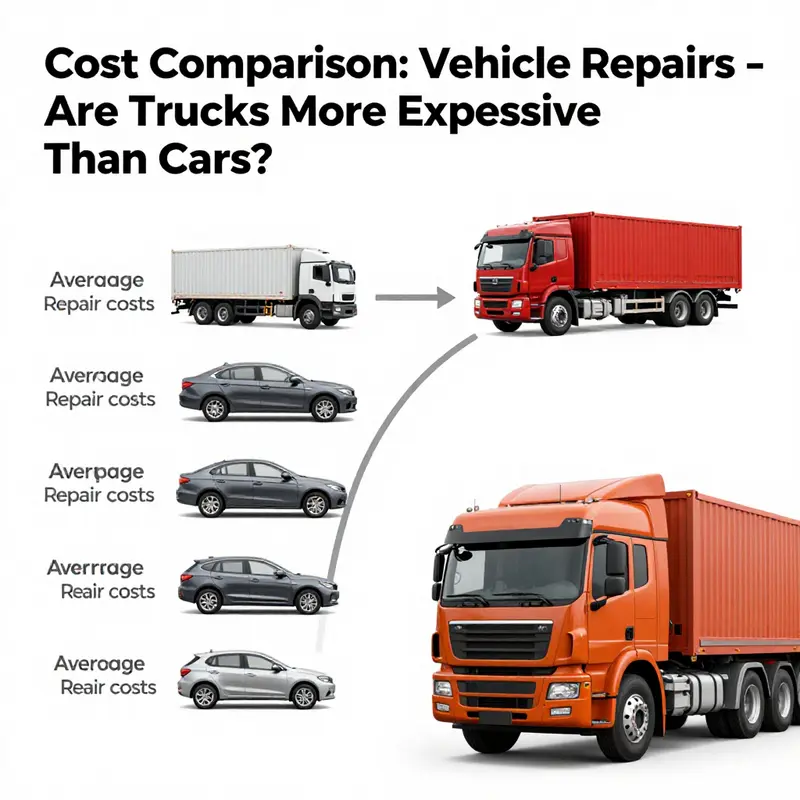
When people ask which vehicle type carries higher repair costs, the answer often leans toward trucks, and for good reason. Across the marketplace, trucks routinely end up with bigger bills than cars, especially when repairs move from routine service to major overhauls. The logic behind that pattern lies not in a single factor but in a bundle of design choices that push both parts and labor up the price ladder. Trucks are built to haul weights, endure tough conditions, and perform under stress that a typical car was never meant to sustain. That means more robust frames, heavier suspensions, larger engines, and drivetrains designed for torque rather than efficiency. Each of these elements carries higher price tags, and when you combine them, the total repair cost tends to climb quickly.
Part of the unequal calculus is size itself. A heavy-duty vehicle needs bigger parts to accomplish the same job a smaller car performs with lighter components. A motor that can pull a trailer or negotiate rough terrain requires larger bearings, sturdier housings, stronger cooling systems, and a transmission built for sustained load. The consequences show up in labor as well. The technician must disassemble more mass, handle heavier components, and often work with specialized equipment to align, balance, or recalibrate a drivetrain that dwarfs the complexity of a standard passenger car. Consider the concrete example of labor tied to a basic but telling repair: a universal joint on a truck. Even though it may be categorized as a routine drive-line service, the labor can range from seventy to one hundred seventy dollars. Compared with passenger cars, where similar parts exist but in far smaller scales and with less torque, the same task encumbers more time and often more precision work on trucks. Those modest hourly differences accumulate fast when the repair is just one line item in a longer project.
Then there are the heavy-hitting costs tied to major repairs. An engine overhaul for a truck tends to land in the range of eight thousand to twelve thousand dollars at a large, well-equipped shop. When a more complex job is needed, such as replacing a transmission in a large truck, the price can surpass ten thousand dollars. By contrast, the same category of repairs, when performed on a standard passenger car, rarely reaches those heights, even at a dealership. The gap widens further when the repair involves the drivetrain, differentials in trucks are not simply smaller versions of car differentials; they are built to cope with higher torque and heavier duty cycles, and that pushes both parts pricing and labor time upward. A straightforward brake job, which is a common maintenance task, also illustrates the disparity: trucks can require two thousand to four thousand dollars at a dealership, while a similar job on many cars hovers closer to one thousand to two thousand. The savings are real, but so is the reality that the scale of truck systems makes a larger, more expensive repair baseline.
Within this framework, it is important to recognize the role of maintenance philosophy in the cost equation. Trucks are designed to perform in conditions that accelerate wear, such as heavy towing, off-road use, and long duty cycles. Even routine maintenance becomes more costly because the parts are more robust and the service intervals reflect heavier workloads. The consequence is a cycle: more expensive components, longer labor times, and a maintenance workflow that often requires specialized technicians with experience in heavy-duty systems. Because trucks operate in demanding contexts, technicians must be prepared to diagnose and fix issues that can complicate simple repairs, such as frame or axle deformation after a serious impact. In such scenarios, the cost multiplier is not just the price of a single part but the cascade of related services that must accompany the repair to restore the vehicle to safe, roadworthy condition.
In a broader market context, the price dynamics for trucks also reflect the economics of parts supply and manufacturing. Parts for commercial or heavy-duty trucks are often priced higher due to the scale and the materials used in construction, as well as the comparatively smaller production volumes for certain heavy-duty components. Labor hours extend because the scale increases the complexity of removing and replacing those parts without compromising alignment, balance, or safety. And since many repairs involve engines, transmissions, or differentials that are sized for torque and load rather than speed, those assemblies command premium labor rates and longer service times. The practical upshot is that while a luxury car may boast high repair costs in rare cases, driven by premium materials and intricate electronics, the average repair bill for a large truck tends to be higher on the whole due to the intrinsic demands of the platform.
The contrast with passenger cars reveals a nuanced landscape. While many standard cars are designed for efficient operation and lower weight, they still face costly repairs when parts fail or when electronics mandate extensive diagnostics. Luxury cars can push up maintenance costs with high-end electronics, specialized sensors, and expensive materials, which sometimes yield zero-to-percent ratios that reflect long-term ownership costs. A notable study introduced the concept of the zero-integer ratio, the comparison of aftermarket parts price to new vehicle price. Average ratios across one hundred models sit well above three hundred percent, with luxury lines frequently exceeding five hundred percent. Yet in practical terms, even these high figures struggle to outrun the major mechanical repairs common to trucks. The scale and severity of truck failures, engine overhauls, transmission replacements, and substantial drivetrain work, often outpace the cost of even the most expensive luxury-car repairs. This macro view helps investors and owners understand why the total cost of ownership for trucks can tilt upward over time, particularly for fleets that log heavy mileage and endure frequent service.
Insurance economics provide another lens on this difference. In some jurisdictions, risk-based pricing includes factors tied to repair costs, with higher potential repair bills translating into higher premiums. Germany’s approach illustrates how a carrier assesses risk: the baseline costs of repair feed into premium calculations, and since trucks carry inherently higher repair costs, they often impact insurance stripes more than passenger cars. The practical implication is that owning or operating trucks does not only entail higher repair bills but can also lead to higher ownership costs when insurance is layered on top of mechanical expenses. This interconnected web of parts, labor, maintenance practices, and risk pricing foregrounds the bigger picture: trucks, by design and function, carry repair costs that are typically higher than those of cars, especially when repairs involve major components or are driven by demanding use.
The broader message, however, remains situational and vocationally specific. It is accurate to acknowledge that some car segments, especially high-end or technologically dense models, can exhibit elevated repair costs in certain categories, but even in those cases, the magnitude and scope of truck repairs, owing to size, strength requirements, and duty cycles, generally place trucks at a higher repair-cost tier. For practitioners, fleet managers, and vehicle owners, the takeaway is pragmatic: anticipate greater expense with trucks over the life of ownership, particularly if the vehicle is used for heavy-duty tasks, long hauls, or frequent towing. The economics of repair and maintenance therefore tends to mirror the engineering targets set for each class. Cars prioritize lightness and efficiency, and while repairs can be pricey at the high end, they usually do not reach the scale of major overhauls that large trucks require after years of heavy service. Trucks, conversely, emphasize durability and torque, and that emphasis translates into larger, more expensive repair bills when breakdowns strike.
For readers seeking a practical anchor in planning and budgeting, a useful, real-world touchstone is available in resources that discuss routine maintenance budgeting and cost planning for truck fleets. A single, accessible guide on budgeting for routine truck maintenance can help owners allocate funds in advance, smoothing the inevitable spikes in repair costs that come with heavy use. As you consider long-term maintenance, this kind of resource becomes a valuable companion to the broader cost narrative, offering a way to weather the higher bill that trucks often present without compromising safety or reliability. See budgeting for routine truck maintenance for a practical framework that complements the deeper technical context above.
For those seeking a more rigorous, data-driven baseline, a SAE International Technical Paper provides a comprehensive comparative analysis of maintenance and repair costs across vehicle classes, including the part pricing, labor hours, and failure rates that shape these dynamics. This external reference grounds the industry-wide patterns described here in measurable metrics and professional standards: https://www.sae.org/publications/technical-papers/content/2020-01-0082/. In sum, while there are exceptions in both directions, the weight of evidence supports a consistent conclusion: trucks, especially heavy-duty models, carry higher repair costs on average, driven by mechanical complexity, larger parts, and harsher operating demands that push both parts and labor beyond the typical car repair bill. A clear takeaway for owners, operators, and researchers is that the economics of repair aligns with the engineering realities of the vehicle classes, shaping decisions from maintenance strategies to fleet composition and budgeting choices.
Heavy Drives, Higher Bills: An Integrated Look at Why Trucks Cost More to Repair Than Cars
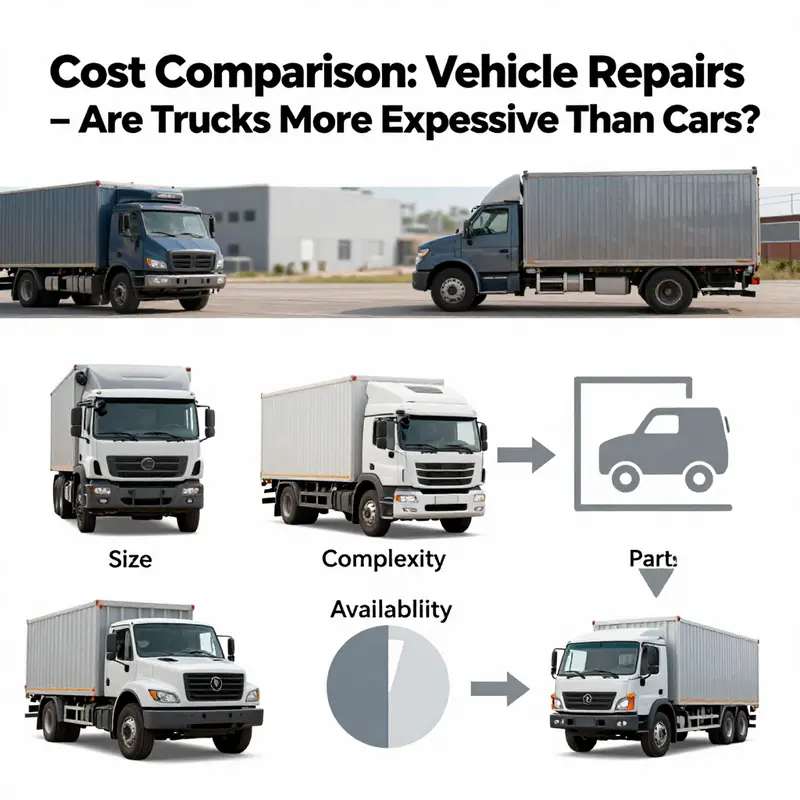
Repair costs tend to rise when a vehicle is asked to do more, work harder, and endure harsher conditions. In the ongoing comparison of which vehicles have higher repair costs, trucks consistently tilt the balance toward higher outlays compared with cars. The logic behind this pattern rests on several intertwined factors: the sheer scale of parts, the complexity of labor, and the demanding usage patterns that trucks routinely shoulder. Where a passenger car settles into a lighter footprint and a more contained mechanical suite, a truck operates as a workspace on wheels. Its components are larger, more durable, and designed to withstand heavier loads, off-road or poor-road surfaces, and longer duty cycles. Each of these dimensions feeds into expenses in predictable, if sometimes surprising, ways. Engine displacement, for instance, is not a mere number on a spec sheet. Larger-displacement engines carry more intricate systems, more potential failure points, and parts that are either physically bigger or require more specialized tools to service. That combination translates into higher labor time and, sometimes, higher parts costs. In many shops, a routine repair that would involve a handful of hours on a compact car evolves into a longer schedule for a truck, not only because the engine bay itself is larger but also because the technician must work around heavy-duty components that demand additional safety precautions and more robust diagnostic processes. A straightforward illustration is the repair of a universal joint on a truck. The labor cost alone for such a repair can range from roughly $70 to $170, a price tag that sits on the higher end for many passenger-car repairs where similar joints appear in smaller, less costly configurations. This is not merely a matter of scale; it reflects the specialized skills and the equipment often required to handle heavy-duty drivetrains and their tolerances. The ripple effect of these realities becomes most evident when larger repairs loom on the horizon. Major engine overhauls for trucks commonly fall in the range of $8,000 to $12,000 at larger shops, reflecting the complexity of heavy-duty engines and the systems that support them, from high-capacity fuel delivery to cooling and turbocharger configurations. Replacing a transmission on a sizable truck can exceed $10,000, while even substantial repairs on smaller trucks tend to occupy the $2,000–$10,000 spectrum. These figures are not mere anecdotes; they reflect the structural and operational demands placed on trucks by their typical duties. Beyond outright repairs, routine maintenance itself reveals cost differentials that accumulate over time. Brake services, for example, illustrate the divergence between dealership pricing and independent shop pricing in the truck domain. A dealership brake job for a truck may run between $2,000 and $4,000, a premium that captures the cost of heavy-duty rotors, advanced hydraulic systems, and the labor intensity required to handle larger wheels and brake assemblies. By contrast, smaller shops offering service for passenger cars frequently quote lower ranges, often in the $1,000–$2,000 territory for comparable brake work. The underlying reasons are straightforward: the components are bigger and the systems more complex in trucks, and the labor hours necessary to disassemble and reassemble them grow accordingly. These patterns—greater part costs, longer labor times, and more specialized maintenance needs—do not exist in a vacuum. They tie directly to the usage patterns that trucks endure. Payload capacity, off-road exposure, and the demanding cycles typical of commercial or heavy-duty applications all contribute to a reality in which wear and tear accumulate more quickly, and with more severity, than in most passenger cars. The structural robustness that makes a truck reliable under heavy loads also invites higher maintenance and repair bills. The same characteristics that enable a truck to haul, tow, or navigate rough terrain simultaneously increase the likelihood of demanding repairs when parts wear or fail. The greater stress placed on four-wheel-drive systems, heavy-duty axles, and towing equipment amplifies both the probability of component failure and the price of corrective work. It is not solely about the parts; it is about the system-level resilience that trucks demand. The consequence is a cycle in which more robust components wear out under heavier use, and the repair path requires not only more expensive parts but more specialized knowledge and equipment. The result is that routine maintenance, when viewed over the lifetime of a truck, compounds into higher ownership costs than similarly aged cars. Yet even among cars, the repair landscape can be steep at dealerships where labor costs are high and parts for newer or luxury models can be expensive. The divergence between cars and trucks becomes most meaningful when one considers age and mileage together. As vehicles age, component failure becomes more probable, and the likelihood of needing parts that are less common or harder to source grows. Older trucks not only require replacement of worn components but may also demand more specialized diagnostics and more exacting alignment and calibration work. Mileage compounds the tension: vehicles that log higher miles accumulate wear across engines, transmissions, suspensions, and steering systems. The cumulative effect is a greater probability of needing costly repairs as engines accumulate miles and transmissions age, with each repair potentially requiring more time and more specialized service than a similar repair on a lighter automobile. The utilization profile of trucks also matters in ways that are not always obvious. Payload capacity and daily work routines elevate the frequency of repairs, even when not catastrophic in nature. Routine maintenance—like brake jobs, belt changes, and cooling system service—occurs more often in trucks when used in commercial contexts, and the costs for these routine services reflect the same scale-driven realities that accompany major repairs. An important nuance is the role of specialized components. Trucks incorporate heavy-duty axles, four-wheel-drive systems, and towing accessories that have fewer direct equivalents in standard passenger cars. When problems arise in these subsystems, the required parts are often larger, more robust, and correspondingly more expensive. The labor to diagnose and fix issues in these areas is not merely a matter of extra time; it is a matter of specialized training and tools that can push labor rates higher. The net effect of all these factors is a repair-cost landscape in which trucks tend to incur higher bills than cars, even when the frequency of certain repairs might appear similar at first glance. It is a pattern driven by scale, capability, and the realities of real-world use—conditions that shape the entire ecosystem of maintenance and repair. For readers who want a practical sense of budgeting and proactive planning, the difference becomes especially relevant. Understanding that trucks carry heavier maintenance weight and more expensive failures can encourage wiser purchase decisions, more accurate ownership cost estimates, and better allocation of maintenance reserves. For a practical approach to planning, consider exploring budgeting strategies specifically tailored to routine truck maintenance. A widely used framework encourages setting aside predictable funds for brake service, tires, and major service intervals, while also maintaining a contingency reserve for less frequent but high-cost repairs such as engine or transmission work. See Budgeting for routine truck maintenance for a structured way to prepare for these expenses and to keep repair costs from catching fleets and individual owners off guard. This planning mindset aligns with the broader data that points to trucks’ higher repair costs over time, a pattern reinforced by engine displacement, age, mileage, payload demands, and the specialized components that define heavy-duty service. All of these dynamics underscore a practical truth: the cost delta between cars and trucks is not merely the sum of sticker prices or part prices; it reflects a broader ecosystem of use, wear, and professional service requirements that tilt the scale toward trucks when maintenance bills arrive. Readers seeking broader, data-driven corroboration can consult the U.S. Department of Energy’s Alternative Fuels Data Center, which provides detailed analyses on vehicle maintenance costs across different vehicle classes and usage patterns. External reference: https://afdc.energy.gov/
Maintenance as the Gatekeeper: How Routine Care Shapes Repair Costs for Cars and Trucks
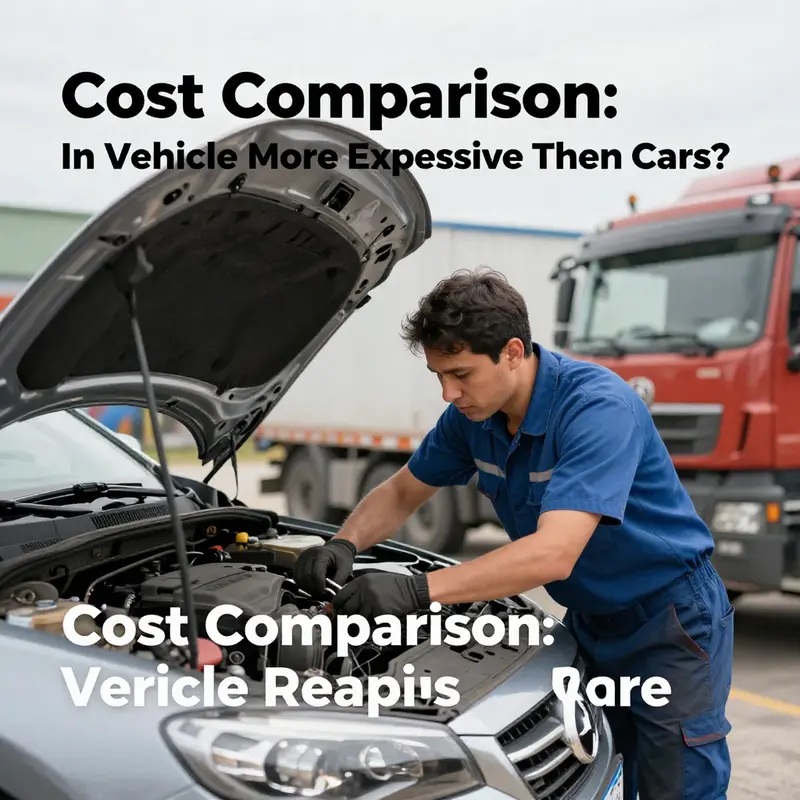
Maintenance acts as the quiet steward of repair costs. When a vehicle is kept on a disciplined schedule, the tiny, almost invisible wear that accumulates day by day rarely blooms into a crisis. In the ongoing debate about whether cars or trucks cost more to repair, maintenance often becomes the deciding factor that narrows the gap. Regular oil changes, air and fuel filters, belt inspections, and fluid level checks are not glamorous tasks, but they are the frontline defense against escalating failures. For trucks, the stakes are higher because the machines are bigger, carry heavier loads, and operate under harsher conditions. Yet maintenance can still make the difference between a routine service and a costly overhaul. The same routines that preserve fuel economy and safety also protect the resale value by staving off rust and hidden frame fatigue that tend to accumulate in long-haul or work-site use. The cost difference between cars and trucks in repair work often hinges on the magnitude of the components involved. A routine service for a car, while essential, is generally simpler and faster, and the parts are typically less expensive. For a truck, the parts are larger, more robust, and labor tends to be longer due to more complex systems like heavy-duty drivetrains or hydraulic braking schemes. All of this matters, but maintenance programs can mute many of these differences if kept faithfully. A concrete reminder of how maintenance can shape costs is the variety of smaller, seemingly minor tasks whose cumulative effect is substantial. For example, a routine inspection can catch issues with universal joints before they fail. Even a simple repair like a universal joint labor charge can run from about $70 to $170 on a typical truck service, and catching such issues early can avoid more invasive, higher-cost repairs later. This pattern holds across both vehicle classes: proactive care reduces the probability that a problem will grow into a major repair, even when the underlying design and usage differences tilt the odds toward higher expenses for trucks. The discipline of maintenance thus reframes the question from which vehicle costs more to how well owners manage upkeep to keep those costs predictable and lower over time.
Regular maintenance is also a safety imperative, and safety is deeply intertwined with cost. Vehicles that are well-maintained tend to have better braking performance, stable steering, and reliable electrical systems. In trucks, where brakes and suspension endure heavier loads and more demanding duty cycles, the cost of neglect can manifest in longer stopping distances, uneven tire wear, and, in the worst cases, component failures that require expensive replacements. Yet the same maintenance schedule that preserves safety also sustains performance, ensuring that a vehicle remains efficient and capable of meeting its intended purpose. When a truck operates under the canopy of a job site, the margin between cost and value narrows if maintenance lapses. It is not just about avoiding breakdowns; it is about maintaining the predictable performance that professionals rely on every day.
The importance of routine maintenance expands beyond the mechanical. Proper care protects against rust and undercarriage damage, especially in climates where road salt, humidity, or heavy-duty use take a toll. A well-kept exterior and underbody reduce the likelihood of rust that can crescendo into structural concerns and expensive repairs. The long-term financial implication is clear: rust and corrosion can significantly erode resale value, and the costs to remedy structural degradation can eclipse the savings gained from delaying maintenance. In this sense, maintenance becomes an investment in the vehicle’s lifecycle, preserving not only function but also value. This broader view helps explain why some owners who diligently follow maintenance plans still perceive trucks as having higher overall repair costs. The reason is not simply the greater expense of individual repairs but the cumulative effect of frequent, heavy-duty wear that testing schedules must anticipate. If a maintenance plan is overly optimistic or poorly followed, a truck’s larger components and more demanding operating conditions collide with neglect, and the bill grows quickly.
Neglect, however, is precisely what maintenance aims to counter. The financial implications of skipping routine upkeep are well documented in practical terms: a small issue left unattended can cascade into a series of failures, demanding parts replacement or system overhauls that dwarf the routine service costs. The risk is not that maintenance saves only a fixed amount, but that it can prevent the escalation of cost exposure over the vehicle’s life. When a brake job typically costs between roughly $2,000 and $4,000 at a dealership for trucks, versus about $1,000 to $2,000 for cars, the price of delayed maintenance becomes especially stark. Similarly, engine or transmission work for large trucks can skyrocket past the $8,000 to $12,000 range for major overhauls, with transmission replacements sometimes exceeding $10,000. In contrast, smaller cars tend to stay within more modest repair bands, even when major overhauls are required. These figures are not just numbers; they illustrate how maintenance acts as a buffer against the disproportionate costs that can arise from neglect, particularly for vehicles designed for heavy loads and long hours of operation.
Beyond the direct repair costs, the broader benefits of maintenance touch several facets of ownership. Regular upkeep enhances longevity and performance, ensuring that the vehicle remains safe and dependable. It improves fuel economy and reduces emissions, which in turn lowers operating costs and supports environmental considerations. Even when a vehicle is not used for professional work, routine maintenance preserves its value as an asset, reducing the probability that it will become a burdensome item on a depreciating balance sheet. For owners who rely on their vehicles for work, maintenance can also simplify tax planning. Detailed maintenance records are often helpful for substantiating deductions related to work-related vehicle use under IRS guidelines. Keeping a well-documented maintenance log can support claims and make expense tracking smoother. The practical takeaway is clear: consistent maintenance does not just protect against big-ticket repairs; it underpins a more predictable, sustainable cost structure for both passenger cars and heavy-duty trucks. This perspective reframes maintenance as an essential financial practice as well as a safety and reliability discipline.
The path from routine care to lower repair costs is not automatic, though. It requires a conscious plan, regular monitoring, and disciplined adherence. For readers managing fleets or personal assets, building a maintenance calendar that aligns with manufacturer recommendations and reality of use is crucial. Such calendars should account for A) the cumulative wear from load and duty cycles, B) climate and road conditions, and C) the propensity for rust and component fatigue in specific environments. When these factors are integrated, the maintenance schedule evolves from a vague aspiration into a concrete, financially meaningful routine. In practice, this means prioritizing inspections that address the components most prone to failure in a given vehicle class and use pattern. It also means budget discipline, which brings us to practical tools for cost control. For fleet managers and individual owners alike, allocating funds for routine maintenance reduces the likelihood of sudden, large expenditures and helps stabilize total ownership costs over the vehicle’s life. A proactive mindset toward maintenance does not erase the realities of higher baseline repair costs for trucks; rather, it shifts the emphasis toward cost containment, reliability, and value retention over time. To explore practical budgeting strategies in this area, many readers find value in a structured approach like budgeting for routine maintenance, which emphasizes predictable spending and preventive care. Budgeting for Routine Truck Maintenance
In sum, maintenance is the gatekeeper of repair expenses. It does not erase the inherent cost gaps between cars and trucks, but it can reshape how those costs unfold. Car owners and truck operators alike benefit from a disciplined maintenance habit that prioritizes early detection, rust prevention, and component longevity. This approach yields a more predictable financial trajectory, preserves safety and performance, and ensures that the vehicle remains a reliable instrument rather than a costly disruptor. As the chapter closes on maintenance’s role, the connection to the broader article becomes clear: the highest, most persistent driver of repair costs is not the vehicle category alone but how well owners maintain what they have. The road to affordability runs through regular care, thoughtful planning, and the steady discipline of keeping up with a maintenance schedule that respects both the scale of trucks and the steadiness of cars.
External reference for further reading: IRS Guidelines on Vehicle Expenses can provide guidance on documenting maintenance and other vehicle-related deductions when used for work purposes. https://www.irs.gov/pub/irs-pdf/i4562.pdf
Size, Strain, and the Price Tag: Case Studies That Show Why Trucks Cost More to Repair Than Cars
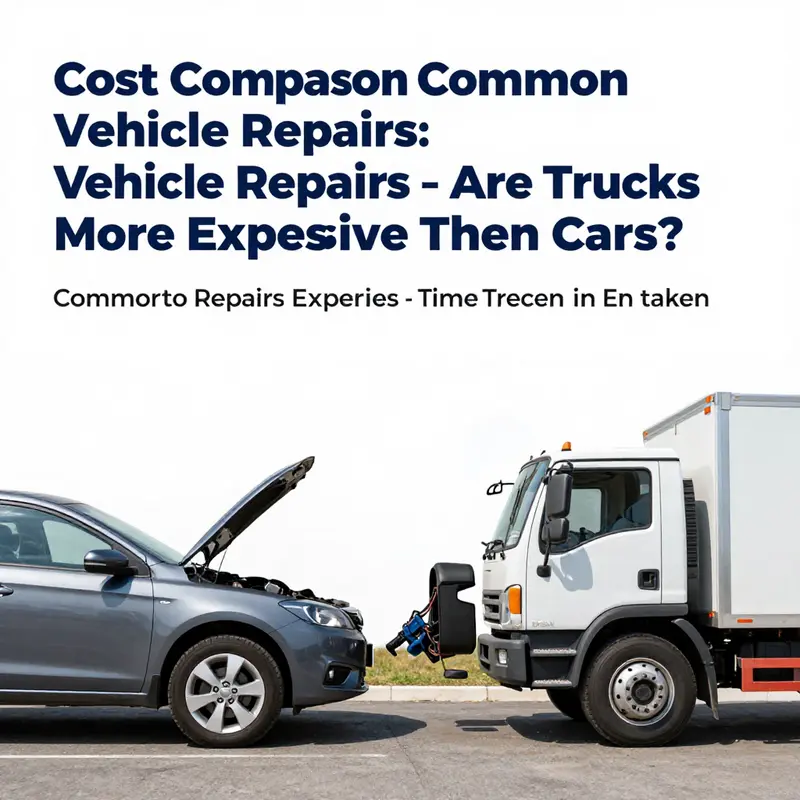
The question of whether cars or trucks carry higher repair costs becomes clearer when we move from general assumptions to real-world scenarios. In broad terms, the heavier, more robustly engineered vehicles that haul loads and endure tougher conditions accumulate repair bills faster for two reasons: the parts themselves are larger and more complex, and the labor to service them is proportionally longer. Across several diagnostic cases, we see how this logic plays out in practice. These case studies do not merely illustrate isolated incidents; they reveal the structural dynamics that push truck repair costs higher, even when the breakdowns resemble ones that could occur in a typical car. What follows is a tight weave of specific repairs that highlight the key cost drivers—material magnitude, labor intensity, and the specialized nature of heavy‑duty components—without losing sight of the human element: the technicians, the equipment, and the schedules that all conspire to stretch the bill. For readers who want a practical lens on budgeting and maintenance, a quick note on how to prepare financially is tucked at the end of the discussion, along with a pointer to both internal and external resources that expand on these themes. Building a plan that anticipates the common patterns described here can make the difference between a manageable repair and an overwhelming expense. And for those who want to go deeper into ongoing maintenance planning, there is a resource that focuses on creating an emergency repair fund specifically for truck ownership, linked here for convenience. Building an Emergency Repair Fund for Truck Owners.
Repair Cost Realities on the Road: Navigating the Complex Economics of Cars and Trucks
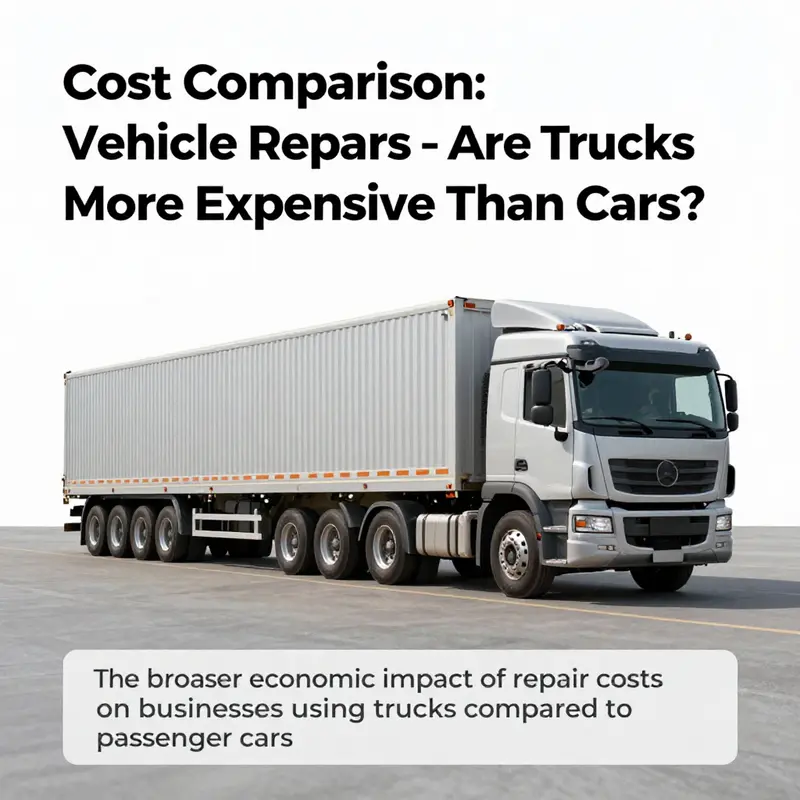
Repair costs are not merely numbers on a bill; they are indicators of a vehicle’s lifelong economics. As vehicles grow more sophisticated, the financial implications of keeping wheels turning shift in subtle yet meaningful ways. The question of whether cars or trucks carry a heavier repair burden does not admit a single answer. It depends on the kind of repair, the tooling and expertise required, and the broader context of maintenance, safety regulations, and insurance. What emerges from the literature is a nuanced picture: modern cars, with their dense networks of electronics and sensors, push repair costs upward in ways that can dwarf traditional mechanical expenses. Trucks, while built for durability and heavy use, accumulate costs through high labor time, spare parts for heavy-duty systems, and occasional but devastating repairs that involve the frame, driveline, or major powertrain components. Understanding these dynamics requires more than tallying price tags; it requires tracing how technology, usage patterns, and service ecosystems shape every repair decision.
At the heart of today’s repair economics lies technological complexity. Cars increasingly integrate advanced driver-assistance systems, cameras, radar, and sensors that are embedded in critical components such as windshields and bumpers. A seemingly minor event—like a small windshield chip or a dent—can trigger a cascade of steps: disassembly, recalibration, software updates, and alignment checks. The recalibration step is not merely a diagnostic check; it is a precise adjustment process that ensures the safety features function correctly after any impact. The cost of this recalibration is not trivial. For a luxury or electric vehicle with “smart glass” and multiple ADAS sensors, windshield replacement plus recalibration can surpass eight hundred dollars. In contrast, a standard sedan may incur only two to four hundred dollars for a similar windshield job. These figures illustrate how the economic risk profile for cars has shifted in recent years, with ADAS-driven repairs taking up a larger share of the total bill and also influencing insurance pricing. Insurance providers must anticipate higher payout costs when ADAS recalibration becomes routine, which helps explain why car insurance premiums have risen even as other costs drift upward.
What this means for consumers is that the risk calculus has changed. When evaluating potential ownership costs, buyers must weigh not just sticker price or fuel efficiency but the likelihood of expensive reinstalls, recalibrations, and software-guided repairs. The cost pressure from ADAS and related electronics tends to spread across the repair ecosystem: OEM-certified centers, independent shops, and insurers all adjust behaviors to accommodate the new normal. The net effect is a broader market with higher average repair costs for cars than in the past, particularly for more technologically advanced segments and for repairs that require precise recalibration or specialized diagnostic equipment. Even when the underlying mechanical systems prove robust, the electronics layer adds a persistent premium that can tilt the long-term cost of ownership upward.
Trucks enter this conversation with a different economic profile. They are generally built for durability, with heavy-duty components designed to withstand tough duty cycles. The parts may be physically larger and require more materials and labor; however, they often lack the dense, high-bandwidth electronics found in many modern passenger cars. This difference means that, on average, truck repairs can be less dependent on the expensive recalibration workflows that dominate car repair costs after an impact or sensor replacement. But the absence of ubiquitous recalibration does not translate into a cheaper repair regime. Major truck repairs—especially those involving the engine, the transmission, or the driveline—can be strikingly expensive. A major engine overhaul for a large truck can run into the high thousands, and a transmission replacement for a sizable truck can exceed ten thousand dollars. Even routine but critical maintenance like brakes can be costly when performed at a dealership or by a specialist that understands the load-bearing requirements of heavy-duty systems. The numbers matter, and they are increasing as trucks incorporate more sophisticated features, yet the overall pattern tends to reflect a higher baseline of durability with occasional, outsized repair events that carry their own price tag.
In that sense, the literature depicts a nuanced hierarchy. For many standard repairs, trucks may appear to carry lower ongoing maintenance costs because their electronics are less intricate and their mechanicals are built to tolerate heavy use. This helps to explain lower insurance rates in some cases for trucks, especially where drivers rely on predictable, lower-frequency electronics-related failures. Yet when a truck’s systems fail in ways that involve ADAS, premium infotainment, or advanced safety sensors, the repair costs can rise sharply. The contrast is particularly stark for high-end trucks that blend luxury features with rugged capability. In such cases, the line between “truck durability” and “car-level repair cost” becomes blurred, because the vehicle can simultaneously press into the high-cost territory of both categories.
Another dimension shaping repair economics is the broader repair ecosystem and consumer behavior. The same data that highlight rising repair costs for cars also emphasize a practical managerial response: obtain multiple repair estimates and consider independent shops in addition to dealership-certified centers. The goal is not to undermine quality but to align service choices with price realities. Independent shops often offer competitive pricing while maintaining quality, especially for non-warranty work. Consumers who understand the type and extent of damage—distinguishing between minor chips and larger cracks in windshields, for example—can avoid needless costs by choosing repair paths appropriate to the damage. A small chip may be repairable for a modest sum, while a larger crack or edge damage triggers full replacement with far higher costs. These distinctions matter for both cars and trucks, but they are especially salient for vehicles whose electronics intensify the price sensitivity of the overall repair decision.
The practical takeaway for vehicle owners is that cost awareness must accompany risk awareness. For cars, the main cost drivers are ADAS recalibration, sensor replacements, and the premium that comes with high-tech components. For trucks, the primary drivers are the sheer scale of parts and labor, plus the occasional high-cost engine or transmission repair. Yet the decision calculus is not just about the raw price tag; it also involves coverage considerations, the availability of qualified technicians, and the expected frequency of specific failures. A driver who uses a truck for heavy hauling may encounter higher cumulative maintenance costs, but may also enjoy lower insurance rates in certain scenarios because of the vehicle’s design and reliability record. Conversely, a car owner facing frequent ADAS-related repairs may see higher out-of-pocket expenses and higher premiums, even if the car’s baseline repair costs are lower per incident.
This complex picture invites a more deliberate budgeting mindset. For readers seeking actionable strategies, the path forward lies in forecasting expenditures with attention to the likely maintenance profile of each vehicle class. A practical approach involves a two-pronged plan: anticipate high-cost but low-frequency events, and reduce exposure to recurring, lower-cost events through proactive maintenance and smart repair choices. When it comes to forecasting, one productive tactic is to set aside a dedicated fund for non-warranty repairs and to refresh estimates periodically as new vehicle technologies emerge. It is also prudent to compare repair estimates across providers and to verify whether the shop can handle ADAS recalibration or heavy-duty diagnostics. When possible, owners should choose repair paths that balance cost with quality, particularly in contexts where minor issues could escalate into costly recalibrations if left unaddressed.
For readers who want a concrete starting point, a practical resource helps translate this theory into a plan: budgeting for routine truck maintenance. It offers a framework for calculating predictable expenses while leaving room in the budget for occasional, larger-scale repairs. See the article titled Budgeting for Routine Truck Maintenance for guidance on building a resilient maintenance envelope that can absorb spikes in repair costs without compromising safety or reliability. This kind of planning is especially valuable for fleet owners and individual buyers alike, because it reframes maintenance as an investment rather than an afterthought. The disciplined budgeting mindset reduces the shock of unexpected bills and supports steadier ownership costs over the life of the vehicle.
In closing, the economic implications of repair costs reflect a shifting landscape where technology, usage, and service ecosystems intersect. Cars face rising, often abrupt, costs associated with ADAS recalibration and high-tech components. Trucks bring a different spectrum of cost pressures—lower frequency but potentially dramatic expenditures on major mechanical components, with some high-end models adding comparable electronic repair costs to the mix. The critical insight for buyers, owners, and insurers is that neither category is uniformly cheaper or more expensive; rather, the cost trajectory depends on the specific vehicle, its technology stack, its duty cycle, and the repair decision pathways available in the local market. By embracing a cost-aware mindset, consumers can navigate these dynamics with wiser choices, informed estimates, and a longer, steadier view of ownership beyond the initial purchase price.
External reference for broader context: Why Is Car Insurance So Expensive Right Now? Rising Repair Costs Explained. https://www.insurance.com/car-insurance/why-is-car-insurance-so-expensive/
Final thoughts
In conclusion, the analysis reveals that trucks typically incur higher repair costs than cars due to various factors such as size, maintenance requirements, and complexity of repairs. These insights are crucial for fleet managers and industry operators as they navigate budget allocations and operational strategies. Understanding these differences can aid in making informed decisions regarding fleet management, allowing businesses to optimize their repair and maintenance processes for improved efficiency and cost-effectiveness.