
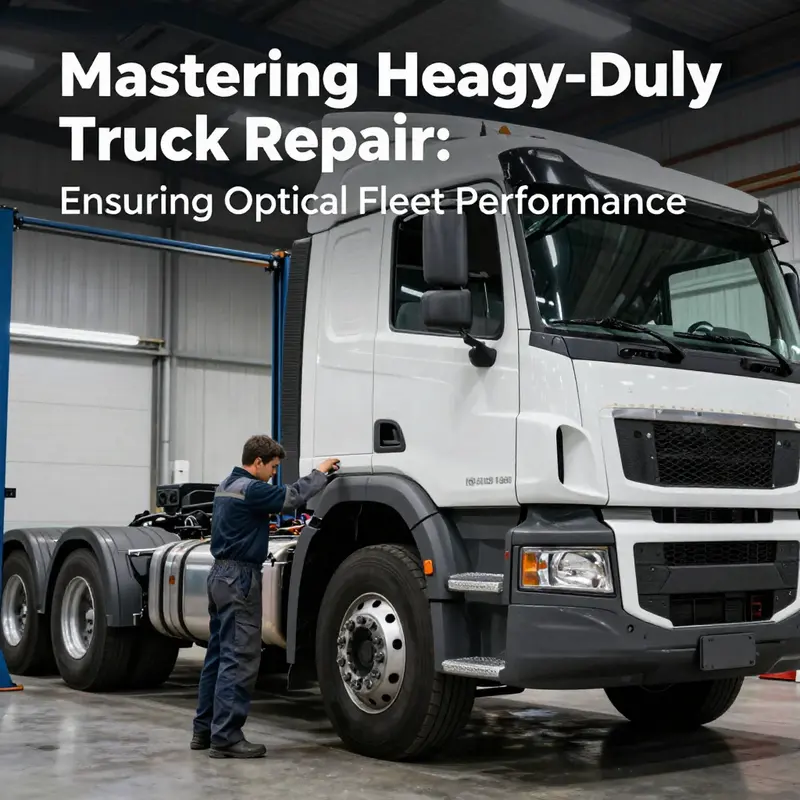
Effective heavy-duty truck repair and maintenance are paramount for fleet managers, construction operators, and logistics service providers aiming to enhance operational efficiency and ensure safety. Regular upkeep not only prevents unexpected breakdowns but also extends the lifespan of trucks and maintains compliance with industry regulations. In the upcoming chapters, we will discuss essential maintenance practices that form the backbone of effective heavy-duty truck repair, explore the economic impacts these practices have on fleet operations, and delve into technological innovations that enhance maintenance strategies in the trucking industry.
null
null
The Economic Weight of Keeping Wheels Turning: How Heavy-Duty Truck Repair Reshapes Fleet Economics
Every fleet manager knows that the heart of a successful operation is not only the ability to move goods efficiently but also the discipline to keep those assets healthy over time. In the world of heavy-duty trucking, repair and maintenance are not merely cost centers; they are strategic levers that shape reliability, uptime, and the bottom line. The economic impact of keeping a fleet on the road extends far beyond the obvious line items for parts and labor. It threads through the very structure of planning, budgeting, and service commitments, influencing how often a vehicle is dispatched, how quickly it can return to service after a fault, and how resources are allocated across a diversified mix of powertrains and routes. In this chapter, we explore how heavy-duty truck repair reverberates through fleet economics, connecting the immediate realities of downtime and repair bills to the longer arc of total cost of ownership, service quality, and competitive strength.
Direct costs form the most visible strand of this economic fabric. When a truck breaks down, the most immediate consequence is downtime—an interruption that translates to missed deliveries, delayed schedules, and in many cases, penalties or dissatisfied customers. Unplanned maintenance disrupts the careful choreography of a fleet’s daily operations. Each hour a vehicle sits idle is not simply a lost hour; it is a cascading effect across the chain of deliveries, load planners, drivers, and customer commitments. In markets where service level agreements are strict, even a single breakdown can trigger penalties or loss of business opportunities that compound the financial hit. The direct costs of repair extend beyond the immediate bill for parts and labor. Modern heavy-duty trucks carry advanced diagnostic systems and sophisticated powertrains. A repair job can involve high-cost components—the engine, the transmission, or the electronic control modules—that require specialized technicians and expensive tooling. The price tag of these components, combined with skilled labor, often pushes a single incident into a multi-thousand-dollar event. When viewed through the lens of total cost of ownership (TCO), maintenance expenses accumulate not as a one-time expense but as a stream that shapes the asset’s replacement cycle, resale value, and depreciation. The TCO framework makes it clear that the timing and quality of maintenance decisions matter as much as the magnitude of the costs themselves.
But the financial calculus does not stop with immediate repair invoices. The broader economic picture hinges on how maintenance activities affect reliability and utilization. A fleet that prioritizes preventive care and systematic inspections tends to experience fewer catastrophic failures and smoother operation. Regular oil changes, clean air intake systems, and properly maintained cooling and braking systems reduce the probability of sudden breakdowns that derail schedules and force expensive emergency interventions. When downtime is minimized, the opportunity costs drop. Fewer disruptions mean more consistent utilization of assets, more predictable maintenance windows, and more dependable service for customers. This, in turn, stabilizes revenue streams and helps secure longer-term contracts that reward reliability with favorable terms. The cost savings from improved uptime accumulate over months and years, often dwarfing the upfront investment in preventive maintenance programs. In short, preventive care is not a luxury; it is an economically rational strategy for protecting throughput and customer trust.
Operational efficiency sits at the core of how repairs shape fleet economics. Downtime is not merely a loss of vehicle availability; it is a constraint on a fleet’s capacity to meet demand, a constraint that can force suboptimal route choices, increased use of already stretched assets, or overloading of remaining equipment. When maintenance is well managed, the fleet benefits from smoother transitions between service cycles, reduced idle time, and more predictable hours-of-operation for drivers. A well-tuned braking system, properly inflated tires, and clean fuel and air pathways translate into better fuel economy and lower emissions. These operational gains do not just improve environmental metrics; they tighten the cost-per-mile line item that logistics managers scrutinize when balancing capacity against demand. Fuel economy, in particular, is a stubborn variable whose sensitivity to maintenance practices can be substantial. Small improvements in engine efficiency, achieved through disciplined maintenance and timely part replacements, multiply through the miles driven over a fleet’s life, compounding into meaningful reductions in total fuel cost.
Predictive maintenance, powered by data analytics and telematics, reframes maintenance from a reactive necessity into a proactive discipline. When fleets collect real-time and historical data on engine temperatures, oil quality, vibration patterns, brake wear, and transmission behavior, they can forecast failures before they occur. This predictive approach shifts expenditures from abrupt, high-cost repairs to scheduled interventions purchased within planned maintenance windows. The economic payoff is twofold. First, it minimizes costly downtime by aligning repair work with the most convenient times and locations, reducing the disruption to service levels. Second, it extends vehicle lifespans by preventing severe damage that shortens the asset’s usable life. The math is straightforward: the cost of a well-timed maintenance event is typically far lower than the combined costs of emergency repairs, missed deliveries, and accelerated depreciation from a damaged asset. Predictive maintenance is not a silver bullet, but it is a powerful mechanism to improve asset utilization, raise service reliability, and lower long-run costs.
The composition of a fleet adds another layer of economic complexity. Different powertrains—battery-electric, hybrid, and diesel—bring distinct maintenance profiles, service intervals, and parts ecosystems. A battery-electric truck reduces some kinds of mechanical wear but introduces new considerations around battery health, thermal management, and electric propulsion systems. Hybrids blend maintenance regimes from two worlds, often requiring specialists who can navigate both components with equal fluency. Diesel trucks, with their legacy systems, still demand heavy attention to engines, transmissions, exhaust aftertreatment, and fuel injection. Each powertrain type carries its own cost curve, risk profile, and demand for skilled technicians. This diversity complicates budgeting and planning but also offers opportunities. By aligning maintenance strategies with the specific life cycles and failure modes of each powertrain, fleets can optimize spare parts inventory, technician training, and downtime risk across the portfolio. The economic impact, therefore, is not uniform; it reflects the strategic mix of assets, route patterns, and expected life cycles within a given fleet. A well-balanced fleet can exploit the strengths of each technology, while avoiding the mitigated risks that come from over-reliance on a single technology path.
To translate these dynamics into actionable plans, fleets must implement structured preventive inspections that are aligned with OEM guidelines and service intervals. A disciplined inspection regime acts as the anchor for economic efficiency. When fleets perform comprehensive checks at least once a year—and more frequently as mileage dictates—they catch small issues before they become costly failures. The value of a checklist-driven approach lies not only in preventing downtime but in providing data points for strategic decisions. The information gathered from routine inspections informs maintenance budgets, spares planning, and training needs. It creates a feedback loop that improves accuracy in forecasting, pricing, and capacity planning. The key is to treat preventive inspections as a deliberate investment rather than a compliance exercise. In practice, this means dedicating time, space, and trained personnel to a predictable routine, and ensuring that data from each inspection feeds into the next cycle of planning. When this cadence is in place, the fleet gains a level of operational maturity that translates into steadier cash flows, fewer surprises, and stronger negotiation power with suppliers and service providers.
A practical anchor for this planning is budgeting for routine truck maintenance. This focal point fosters clarity about expected costs, but it also serves as a catalyst for broader organizational discipline. When maintenance budgets are set with clear targets—spares inventories tuned to the vehicle mix, labor rates aligned with local wage scales, and anticipated costs for diagnostics and training—the organization can allocate resources with confidence. The budgeting process, in turn, drives better decisions about outsourcing versus in-house maintenance, capital expenditure on diagnostic tools, and the timing of vehicle replacements. It also supports the strategic goal of maintaining a fleet that operates at the intersection of reliability and cost efficiency. The goal is not to minimize maintenance expenditure at the expense of performance but to optimize it so that every dollar spent yields a predictable return in uptime, throughput, and customer satisfaction. For readers looking to anchor their own planning in practical terms, a close reading of budgeting for routine truck maintenance offers a blueprint for translating the theory of maintenance economics into executable actions.
The broader financial planning of a fleet must also account for the capital expenditures that accompany maintenance decisions. Vehicle replacement strategies, for instance, are inseparable from repair costs. The decision to retire an aging asset is often driven by a blend of maintenance costs, expected reliability, and residual value. When repair bills begin to exceed the economic value of continuing service, it is not simply a question of maintaining the old workhorse but of reallocating capital toward machines with lower operating costs and longer projected uptime. Conversely, a newer asset introduced into the fleet can reduce maintenance costs for several years, albeit with higher upfront capital outlays. The challenge for managers is to optimize the timing of replacements so that the fleet remains lean in maintenance risk while maintaining service commitments. In this balancing act, predictive insights about remaining useful life become critical. They provide a probabilistic forecast of when a component, a system, or an entire powertrain is likely to require significant intervention. By aligning replacement cycles with these forecasts, fleets can minimize the probability of disruptive failures and smooth the depreciation curve in line with budget expectations.
Beyond the mechanics of cost and risk, the economic impact of heavy-duty truck repair touches the quality of service in tangible ways. Reliability is not an abstract virtue; it is a competitive differentiator in markets where customers rely on predictable delivery windows. When fleets keep maintenance under a disciplined regime, they reinforce the perceived reliability of service, which translates into better contractual opportunities and more favorable pricing terms. Customers value consistency; fleets that can reliably meet delivery commitments incur less penalty risk and can command steadier revenue streams. The linkage between maintenance discipline and customer satisfaction creates a virtuous cycle: improved reliability supports higher utilization, which improves revenue stability, which funds further maintenance investments. In turn, this reinforces the fleet’s market position, allowing it to weather fluctuations in demand and input costs with greater resilience.
The discussion would be incomplete without addressing the human and organizational dimensions that underlie the economic story. Skilled technicians, data analysts, and maintenance planners are the catalysts for translating maintenance philosophy into financial performance. Their work—often conducted behind the scenes—shapes how quickly a fault is diagnosed, how accurately a part is sourced, and how smoothly the repair process unfolds. Investments in training and digital tools pay off as reduced diagnostic times, more precise repairs, and lower repeat failure rates. The value of this human capital is reflected in shorter downtimes, higher first-time fix rates, and more predictable maintenance cycles. An informed workforce becomes a strategic asset, enabling a fleet to maintain higher utilization without compromising safety or compliance. In this sense, the economics of repair and maintenance are as much about people and processes as about parts and machines.
An additional layer of complexity arises from the regulatory environment that governs heavy-duty trucking. Compliance requirements compel fleets to maintain certain standards of safety, emissions, and roadworthiness. Maintenance quality is foundational to meeting these obligations. When fleets invest in preventive maintenance and robust inspection protocols, they not only reduce the risk of regulatory penalties but also position themselves to anticipate and adapt to evolving standards. Compliance-driven maintenance often dovetails with cost efficiency, as predictable maintenance schedules align with predictable cash flows and capital planning. In a field where policy changes can alter the cost calculus overnight, maintaining a disciplined maintenance program provides a practical shield against uncertainty while enabling a more stable growth trajectory.
The economic arc of heavy-duty truck repair is not isolated from broader industry dynamics. Market conditions shape parts pricing, labor availability, and the speed with which fleets can source specialized services. During periods of supply constraint or wage inflation, the cost side of the maintenance equation can tighten quickly. Conversely, when diagnostics capabilities expand and training pipelines fill, fleets can achieve more efficient maintenance operations and improved uptime even in adverse economic climates. In such times, the strategic value of a well-integrated maintenance program becomes even more pronounced. It is not merely about surviving price swings; it is about building resilience through proactive, data-informed planning that protects service levels and competitiveness.
Finally, the external literature on heavy-truck maintenance reinforces the practical implications of these observations. Research into fleet maintenance practices emphasizes the intertwined nature of direct costs, reliability, and long-term financial planning. The study points to the importance of embracing predictive maintenance, optimized spare-part strategies, and a diversified fleet that matches powertrain technology to route requirements. While the exact figures will vary across fleets and markets, the overarching message is consistent: disciplined repair and maintenance practices deliver measurable economic gains through reduced downtime, improved fuel efficiency, and smarter capital allocation. For those seeking a deeper empirical foundation, this body of work provides a rigorous context for the financial logic described here. External readers may consult the following detailed analysis for further insight: https://www.sciencedirect.com/science/article/pii/S096585642300182X.
In sum, the economic weight of keeping heavy-duty trucks in service is a function of how well a fleet translates maintenance into uptime, reliability, and sustainable capital management. Direct costs matter, but their impact is moderated by the efficiency with which downtime is minimized, the effectiveness of preventive maintenance, and the strategic use of data to forecast needs. The combination of disciplined inspections, predictive analytics, and thoughtful capital planning creates a robust economic engine that can power a fleet through cycles of demand and disruption. By viewing repair not as a cost to be controlled in isolation but as an integrated component of service quality, asset longevity, and strategic planning, fleet operators unlock a pathway to stronger financial performance, improved customer satisfaction, and sustained competitive advantage. The journey from reactive repairs to proactive maintenance is not merely a tactical upgrade; it is a fundamental shift in how a fleet earns its keep in a demanding transportation landscape.
Smart Systems, Steady Rigs: Redefining Heavy-Duty Truck Repair
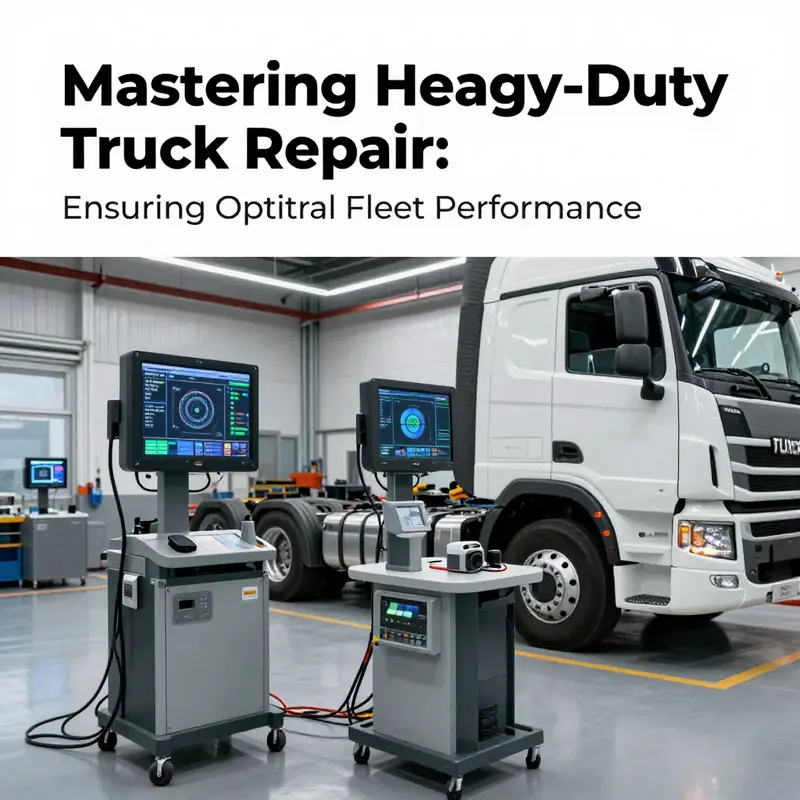
The repair landscape for heavy-duty fleets is undergoing a quiet revolution, driven by intelligent systems that transform how maintenance is planned, diagnosed, and executed. Historically, repairs swung between reactive fixes and routine calendar-driven service. Today, fleets rely on predictive insights, real-time connectivity, and immersive repair aids to move from firefighting to foresight. As trucks carry more sensors and data flows swell with every mile, the repair function becomes less about chasing failures and more about preventing them.
Predictive maintenance sits at the heart of this transformation. AI-powered analytics sift through readings from engine, transmission, brakes, tires, and cooling systems to spot patterns that precede faults. Subtle changes in vibration, temperature gradients, or hydraulic pressure can signal wear in advance of a breakdown, enabling scheduled interventions during planned maintenance windows rather than emergency downtime. For operators, the payoff is reduced downtime, lower repair costs, and safer operations on the road. The long arc is clear: predict, not chase, problems to preserve uptime and extend component life.
The model’s effectiveness hinges on data quality and governance. Real-time sensor feeds must be trustworthy and consistently captured across vehicles in the same family. When data is clean, AI can distinguish normal variance from incipient issues. A slight uptick in brake temperature under heavy load might be routine or an early sign of wear, and only careful analysis can tell the difference. A governance framework that defines data access, storage, privacy, and security is essential for a multiyear fleet lifecycle. Predictive maintenance is as much about process design as algorithms.
IoT connectivity accelerates diagnosis and repair. Vehicles, repair centers, and diagnostic tools exchange information, with diagnostic trouble codes and operational data flowing to a central platform or the technician’s device. A digital twin can simulate repair scenarios before any wrench touches metal, allowing teams to compare pathways in a risk-free environment and speed up decision-making without sacrificing quality.
Augmented reality adds a human-centered layer to data-driven repair. AR guides technicians with step-by-step instructions overlaid onto components, reducing misassembly and speeding up complex procedures. It also serves as a powerful training tool, helping new mechanics learn procedures by observing expert-guided demonstrations in context. AR thus augments tacit knowledge with explicit, codified steps.
The combination of predictive analytics, IoT, and AR creates a feedback loop that continually elevates repair quality. Completed repairs feed back into the predictive model and training programs, supporting continuous improvement. This evolution doesn’t replace technicians; it extends their capabilities, shortening cycles and bringing consistency across diverse trucks and operating conditions.
Final thoughts
In conclusion, the importance of heavy-duty truck repair and maintenance cannot be overstated. Implementing essential practices, understanding the economic impacts of maintenance strategies, and leveraging technological innovations are vital steps for fleet managers, operators, and logistics providers aiming to enhance performance and reliability. By prioritizing these aspects, vehicle longevity is achieved, operational efficiency is maximized, and compliance with industry standards is ensured. Embracing a proactive approach to truck repair will ultimately drive success in a competitive market.