
In today’s competitive logistics landscape, the role of truck repair cannot be overstated. Fleet managers and operators face significant challenges, including unpredictable breakdowns, rising maintenance costs, and the ever-looming threat of regulatory compliance issues. Keeping trucks in top condition is not just about immediate repairs; it’s a proactive approach that facilitates safety, efficiency, and reliability. Without routine inspection and timely maintenance procedures, the risk of costly delays and logistical nightmares increases dramatically. Moreover, with the complexity of modern truck systems, understanding how to efficiently manage repairs while minimizing downtime is crucial for maintaining operational efficiency. Learning how to budget for routine maintenance and utilizing effective maintenance strategies can greatly contribute to a fleet’s overall performance. By recognizing the significance of ongoing truck repair, fleet managers can ensure their operations remain on the road to success. Learn more about budgeting for routine truck maintenance and optimizing your fleet’s size for peak efficiency.
Common Truck Repair Issues Faced by Fleet Managers
Fleet managers and operators often encounter various truck repair issues that can significantly affect efficiency and operational costs. Understanding these common problems is essential for effective fleet maintenance. Here are some of the most frequent truck repair challenges:
- Engine Overheating: This issue accounts for approximately 18% of repairs. Causes can include low coolant levels, thermostat failure, or faulty radiators.
- Brake System Failures: The most critical issue facing fleets, with failure rates around 24%. Regular inspections and timely replacements of brake pads and components are vital for safety.
- Electrical System Malfunctions: About 15% of repair issues stem from electrical problems, including battery failures and wiring faults. Ensuring proper battery maintenance can prevent unexpected breakdowns.
- Transmission Problems: These are reported in 22% of truck failures. Regular fluid checks and proper maintenance significantly help in preventing major transmission issues.
- Suspension/Steering Defects: Making up about 16% of reported problems, these issues can lead to unsafe driving conditions. Regular inspections can ensure optimal performance.
Understanding and addressing these common issues is crucial for maintaining a reliable fleet and reducing unexpected repair costs. For more insights on maintaining fleet efficiency, check out our guide on budgeting for routine truck maintenance.
The Impact of Proper Truck Maintenance
Proper truck maintenance is critical for fleet managers and operators in the trucking and logistics industries. It significantly affects operational costs, efficiency, and safety. According to the American Trucking Associations (ATA), vehicles that undergo regular maintenance can be up to 30% more fuel-efficient due to optimized engine performance and tire pressure. Additionally, trucks with scheduled maintenance are up to 45% less likely to be involved in accidents related to mechanical failures. This highlights the truck maintenance benefits not only in reducing costs but also in enhancing safety across fleets.
Regular maintenance, which typically costs between $3,000 to $8,000 annually depending on the vehicle type, can save fleets approximately $1,800 per truck annually by avoiding major repairs and downtime. This maintenance can lead to an average fuel economy improvement of 10-15%, directly translating to significant cost savings over time. The U.S. Department of Energy emphasizes that timely interventions like oil changes and tire checks can lower operational costs by 25%, further supporting the necessity of proactive maintenance strategies.
With the implementation of structured maintenance schedules, fleets can reduce unplanned breakdowns by up to 60%, thereby enhancing overall operational efficiency. For fleet managers looking to optimize their strategies, understanding and utilizing these maintenance practices is paramount for long-term success.
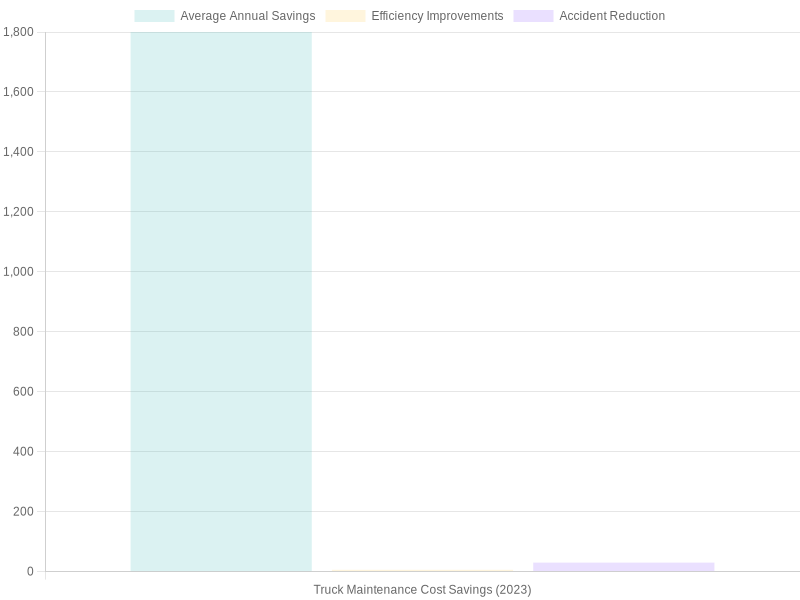
This chart illustrates the average annual savings and efficiency improvements associated with regular truck maintenance.
For further insights on budgeting for routine truck maintenance, check out our resource on budgeting for routine truck maintenance.
Case Study: Transforming Maintenance Operations at ABC Logistics
In the competitive landscape of trucking, operational efficiency often hinges on effectively managing maintenance and repairs. ABC Logistics, a mid-sized trucking company, faced significant challenges, particularly with unscheduled downtimes due to repair issues. This case study explores how the implementation of lean methodologies led to dramatic improvements in their truck repair strategies.
The Challenge
ABC Logistics was struggling with frequent breakdowns, which not only caused delays but also hampered customer satisfaction. The repair times for their fleet were averaging over four days, which severely impacted delivery timelines. Recognizing these challenges, the management decided to adopt lean principles to streamline their truck maintenance processes.
The Approach
Utilizing a data-driven approach, ABC Logistics began by identifying the most common faults across their 16 trucks. They used root-cause analysis to understand the reasons behind these failures and devised 23 corrective actions aimed at mitigating these issues. The company implemented tools such as Gantt charts and activity planning schedules to monitor progress effectively and ensure adherence to maintenance routines.
One particularly effective strategy was the introduction of Value Stream Mapping to pinpoint waste within the repair process. They also established a 5S system for organizing tools and workspace, which enhanced efficiency and reduced repair cycles. Continuous improvement sessions (Kaizen) were held regularly for the team to refine these processes.
The Results
The implementation of these strategies resulted in a remarkable outcome; the average repair time was reduced from four days to just two days. Vehicle availability increased by 20%, leading to enhanced customer satisfaction as deliveries became more reliable. Moreover, repair costs were reduced by 30%, allowing ABC Logistics to allocate resources to other critical areas of their operations.
This success story demonstrates that strategic truck repair management through lean methodology not only resolves immediate maintenance challenges but also fosters a culture of continuous improvement that can position a company for long-term success. For fleet managers looking to enhance their operational efficiency, adopting similar practices can yield significant rewards. Learn more about budgeting for routine truck maintenance and optimizing fleet size for maintenance.
Comparison of Top Truck Repair Service Providers
When fleet managers and trucking company owners are in need of reliable truck repair services, it’s crucial to compare options based on cost, turnaround time, and reputation. The table below provides insights into some of the top truck repair service providers in 2023 to assist in making informed decisions.
| Service Provider | Average Cost | Turnaround Time | Reputation (out of 5) |
|---|---|---|---|
| Schneider National | $1,200 | 2.5 days | 4.9 |
| UPS Freight Maintenance | $950 | 4.0 days | 4.6 |
| Fast Lane Truck Care | $1,500 | 2.8 days | 4.7 |
| Mid-Atlantic Diesel Center | $1,100 | 3.1 days | 4.8 |
| West Coast Precision | $2,100 | 6.2 days | 4.3 |
| National Truck Repair Services | $1,700 | 4.5 days | 4.5 |
Key Insights:
- Cost: While costs vary, providers like UPS Freight Maintenance and Mid-Atlantic Diesel Center offer competitive prices without compromising on service quality.
- Turnaround Time: Fast Lane Truck Care leads in turnaround time, making it a suitable option for urgent repairs.
- Reputation: Schneider National stands out with the highest reputation, indicating a strong correlation with service quality and customer satisfaction.
For fleet managers looking to budget for routine truck maintenance, understanding these metrics is essential to enhancing fleet efficiency.
Moreover, consider the potential benefits of developing in-house maintenance strategies, as discussed in our article on optimizing fleet size and maintenance for small fleets.
Illustrating Truck Repairs
Truck repairs are an essential aspect of maintaining the fleet’s reliability and performance. The truck repair process often involves skilled mechanics who utilize various tools and equipment to diagnose and fix issues that arise from heavy use. Fleet managers and trucking company owners understand that regular maintenance not only extends the life of the vehicles but also enhances operational efficiency.
Visualizing truck repairs encapsulates the dynamic environment of a repair shop. A mechanic diligently working on a project can symbolize the commitment to ensuring that the trucks are in peak condition. Tools like wrenches, oil cans, and diagnostic machines are integral to the repairs, representing the blend of human expertise and technological support.
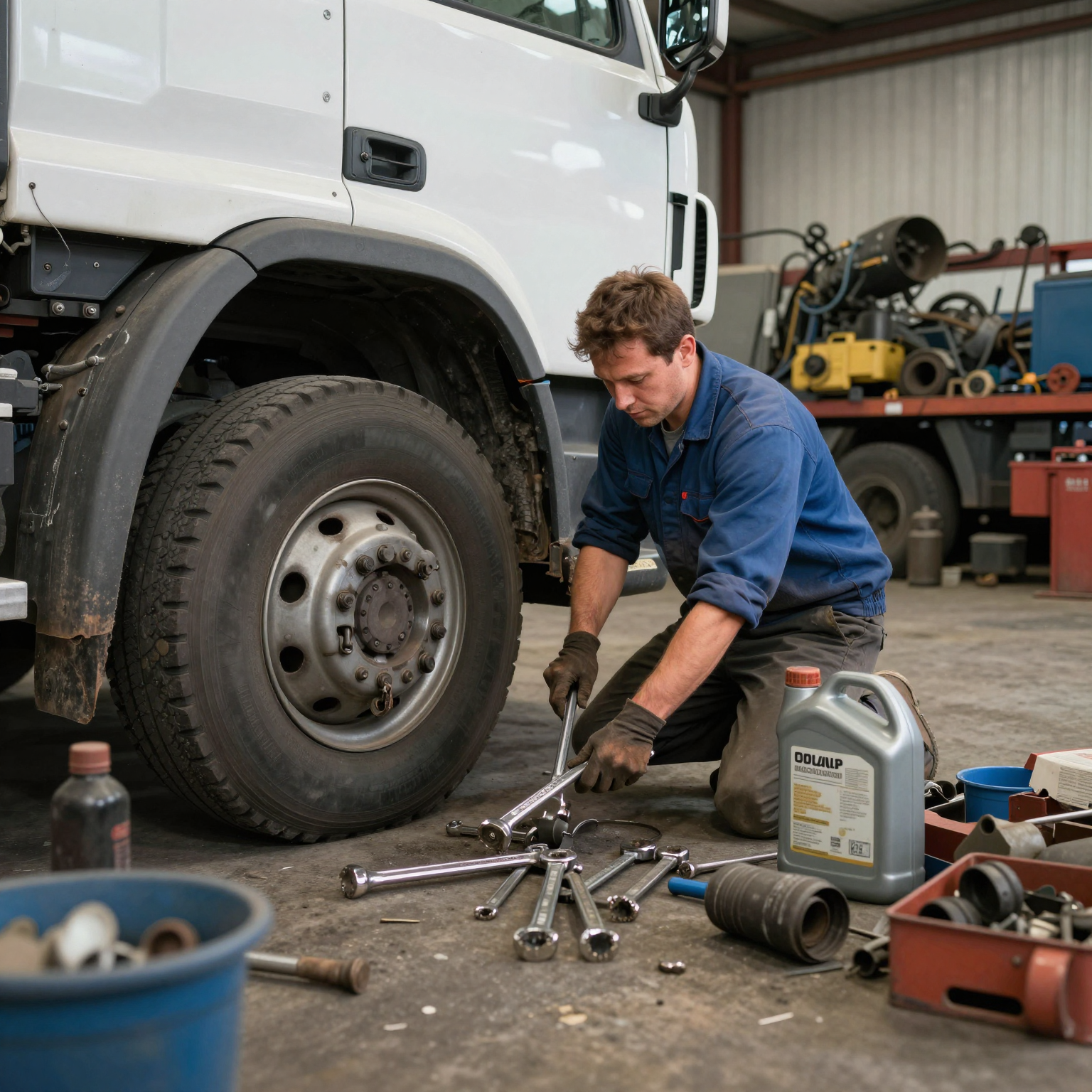
Image illustrating a mechanic working on a truck, highlighting the essential tools used for truck repairs.
Engaging in proactive maintenance strategies can also lead to significant cost savings in the long run. For more insights on the financial aspects of routine maintenance, you can learn more about budgeting for routine truck maintenance. Moreover, understanding how to optimize fleet size and maintenance can further improve efficiency; discover more by visiting optimizing fleet size maintenance for small fleets.
Advanced Technologies in Truck Repair
The trucking industry is undergoing significant transformation with the integration of advanced truck repair technology. Key innovations like telematics, predictive maintenance, and diagnostic software are revolutionizing how fleet management operates.
Telematics and Predictive Maintenance
Telematics systems continuously monitor vehicle performance data, including engine diagnostics, fuel consumption, and driver behavior. This real-time data empowers fleet managers to proactively address potential issues before they result in costly breakdowns. According to United Fleet Management, implementing predictive maintenance can reduce unplanned downtime significantly, thus saving on repair costs and extending vehicle lifespan.
Fleet managers utilizing predictive maintenance technology can optimize repair schedules to coincide with planned maintenance windows, minimizing disruptions to operations. By integrating AI with telematics data, advanced diagnostic software can identify subtle anomalies in vehicle components, predicting failures with remarkable accuracy. This technology leads to quicker diagnostics and repairs, as highlighted in FleetTech Insights.
Enhanced Efficiency and Safety
The benefits of these technologies extend beyond cost savings; they also enhance safety on the roads. By preventing unexpected breakdowns, fleets can maintain a higher level of operational efficiency, ultimately leading to better service delivery in logistics and freight operations. Embracing these advancements ensures that fleets not only reduce costs but also stay competitive in a demanding market.
Regular maintenance and repair are crucial aspects of fleet management that directly impact operational efficiency and safety. As fleet managers and trucking company owners are aware, neglecting these responsibilities can lead to severe consequences, including operational downtime, increased costs, and even regulatory issues. A recent article in Forbes notes, “Regular truck maintenance is essential for ensuring safety, compliance with federal regulations, and operational efficiency. Preventive maintenance can reduce breakdowns by up to 50%, significantly lower repair costs, and extend vehicle lifespan.” This underscores the importance of a solid maintenance strategy.
Incorporating preventive measures-such as routine inspections, timely repairs, and investments in modern diagnostic technology-can result in a substantial reduction in unscheduled repairs. According to TruckingInfo, fleets that adopt structured maintenance programs experience 30% fewer unscheduled repairs. Moreover, the reliance on telematics and fleet management software is streamlining the process even further, enabling real-time monitoring and allowing for predictive maintenance to avoid potential issues before they arise.
Thus, investing in a proactive maintenance approach not only enhances operational performance but also builds trust and reliability with clients-all essential for sustaining competitive advantage in the trucking industry. For further insights, learn about budgeting for routine truck maintenance.
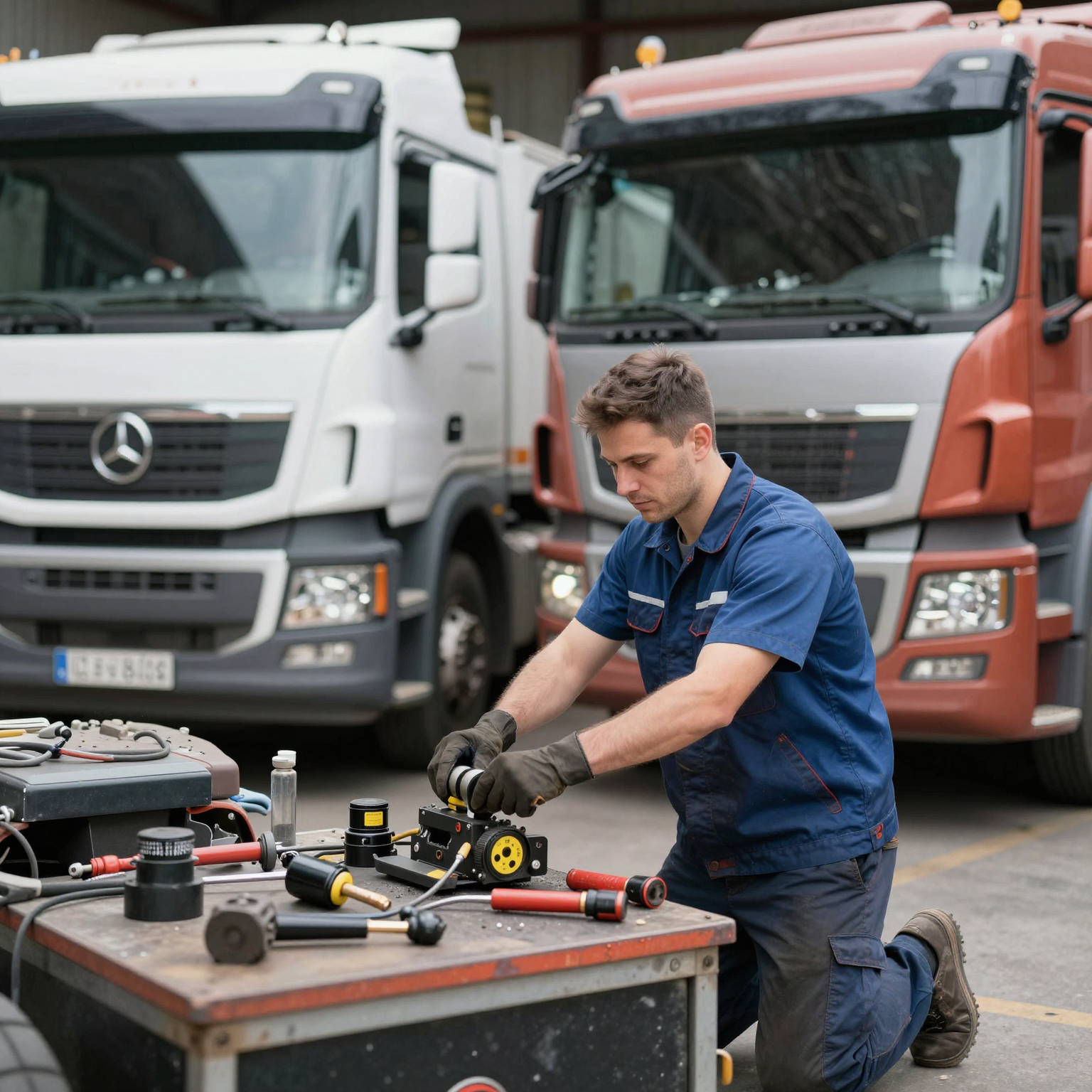
A professional fleet maintenance workshop showing mechanics inspecting and repairing trucks.
Solutions-Focused Conclusion
Effective truck repairs are vital for ensuring the smooth operations of any fleet. For fleet managers and trucking company owners, understanding the importance of regular maintenance and timely repairs can drastically reduce costly downtime, enhance safety, and prolong the life of their vehicles. Proactive maintenance not only keeps trucks running efficiently but also helps in compliance with various regulatory standards.
To enhance your operations, fleet managers can leverage the insights provided in this article, including best practices for preventive maintenance and the integration of telematics for real-time monitoring. This allows for better decision-making regarding truck repairs and reduces the risk of unexpected breakdowns. A recent article from McKinsey & Company suggests that utilizing predictive repair systems can lower unplanned breakdowns by up to 30% and reduce overall maintenance costs by 20%.
At Master Truck Repair, we specialize in providing tailored services to ensure your fleet remains in peak condition. From routine inspections to emergency repairs, our experienced technicians are dedicated to supporting your fleet’s needs. Learn more about how our services can keep your trucks road-ready. Together, we can drive efficiency and performance in your operations.
Trends in Truck Repair Statistics
In the realm of truck maintenance and repair, understanding trends over the years is critical for fleet managers and trucking company owners. Recent statistics reveal significant insights that underline the importance of routine truck repairs. From 2020 to 2026, the truck repair market is projected to grow significantly, driven by various factors including advancements in technology and increased vehicle complexity.
Key Findings:
- Average Labor Cost Increase: From 2020 to 2026, average labor costs in the truck repair industry are expected to rise by 18%. This increase is predominantly attributed to the incorporation of advanced electronic systems in trucks, leading to more complex and costly repairs.
- Market Growth: The market size of truck repair services is also witnessing robust growth, projected to reach approximately $980 billion by 2026, a notable increase from $770 billion in 2020. This trend highlights the escalating demand for professional repair services.
- Technological Integration: A shift towards preventive maintenance and data-driven repair services is evident, with more integrated sensors and remote diagnostics being utilized. This enhances the efficiency and effectiveness of maintenance strategies.
As demonstrated in the chart below, these trends illustrate the critical nature of regular maintenance and timely repairs. It’s imperative for fleet managers to budget accordingly and stay abreast of these evolving statistics to optimize operations and minimize unexpected downtimes.
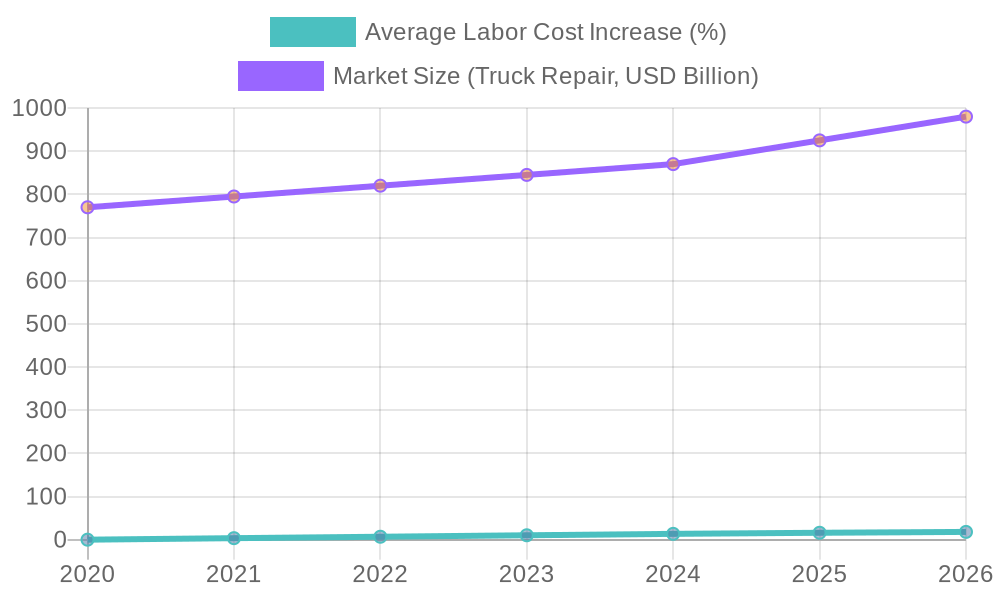
| Year | Average Labor Cost Increase (%) | Market Size (Truck Repair, USD Billion) |
|---|---|---|
| 2020 | 0 | 770 |
| 2021 | 3.5 | 795 |
| 2022 | 6.8 | 820 |
| 2023 | 10.2 | 845 |
| 2024 | 13.5 | 870 |
| 2025 | 16.0 | 925 |
| 2026 | 18.0 | 980 |
These figures reinforce the need for investment in routine truck maintenance to ensure longevity, reliability, and efficiency in fleet operations. For more insights on budgeting for routine truck maintenance, check out our resource here.