Maintaining a fleet of trucks is crucial for any trucking company, construction, or mining enterprise. One of the often-overlooked aspects of vehicle upkeep is the repair of pits in truck bodies. These imperfections may seem minor, but neglecting them can lead to far-reaching consequences. Fleet managers and trucking company owners must prioritize the regular maintenance of their vehicles to ensure safety and efficiency on the road.
Pits in truck bodies can harbor rust, compromise structural integrity, and affect aerodynamics, all of which negatively impact fuel efficiency and increase repair costs over time. Moreover, failing to address these issues can lead to potentially hazardous driving conditions, placing both drivers and the general public at risk. Maintenance is not merely an operational task; it is a critical investment into the longevity and performance of a fleet.
For fleet managers looking to optimize their maintenance strategies, understanding the significance of addressing these repairs is essential. This article will explore effective methods for repairing pits in truck bodies and highlight the benefits of proactive maintenance practices. To enhance your repair strategies, you can also learn more about budgeting for routine truck maintenance and explore fleet maintenance tips that can improve safety and efficiency.
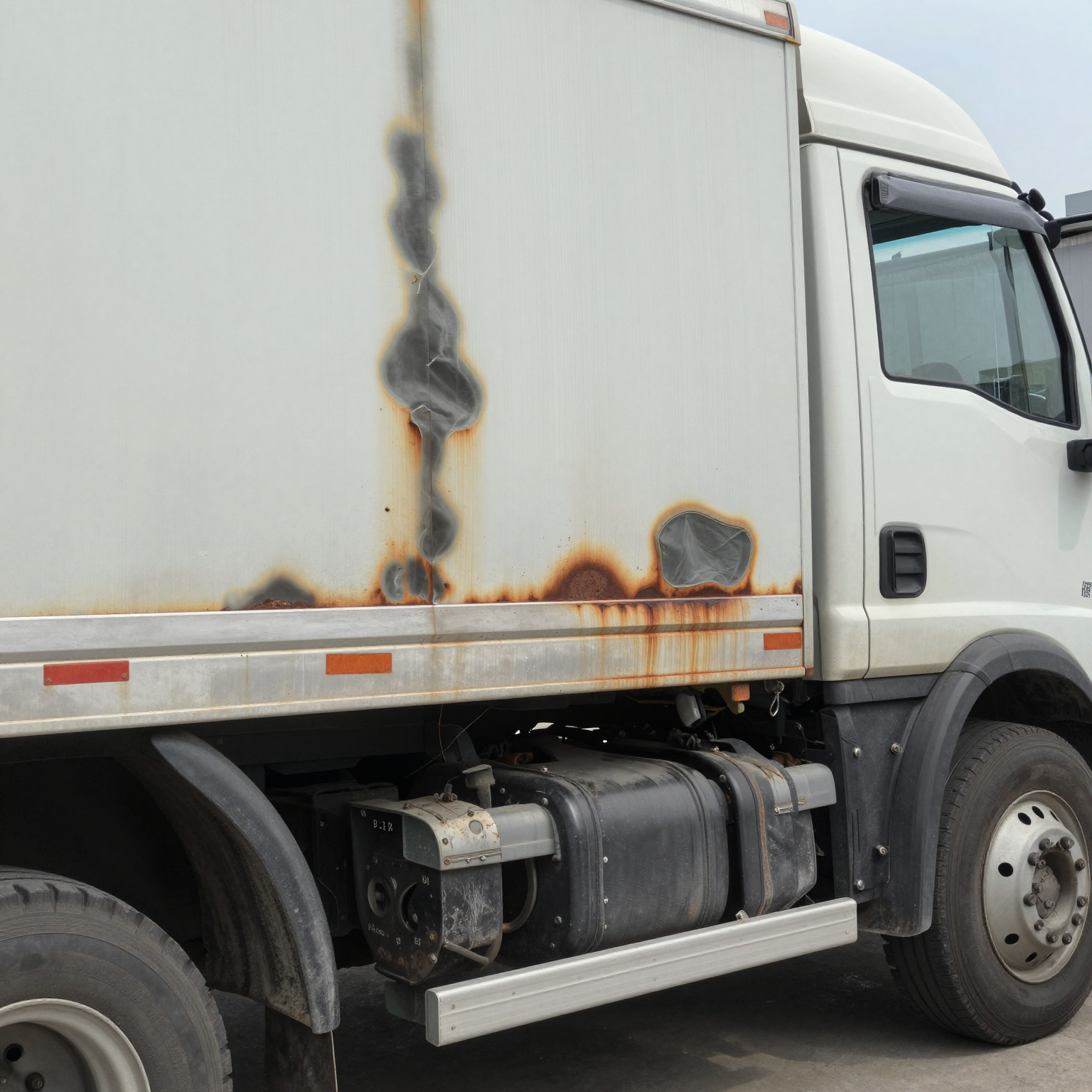
Common Causes of Pits in Truck Bodies
Pits in truck bodies can significantly affect the vehicle’s durability and overall operational efficiency. Understanding the common causes of these imperfections is crucial for effective maintenance and prevention. Here are the typical reasons why pits develop in truck bodies:
1. Rust Formation
Rust is one of the leading causes of pitting in truck bodies. It primarily results from exposure to moisture, particularly in areas affected by road salts during winter conditions. When minor scratches or damage occur on protective coatings, they allow moisture to pool in localized areas, promoting accelerated corrosion. According to a study by the American Iron & Steel Institute, this electrochemical process weakens the metal structure over time, leading to deep pits that can compromise safety and structural integrity. Regular inspections and timely repairs of surface damages are essential to mitigate rust-related issues.
2. Impacts and Physical Damage
Minor impacts from road debris, cargo handling, or loading/unloading processes can create small dents or scratches on the truck body. These imperfections serve as initiation points for rust, especially in metal surfaces that have been compromised. As noted in reports from the National Transportation Safety Board, continuous friction and vibration contribute to surface degradation, leading to pits over time. Regular monitoring of truck bodies for signs of impact and immediate repairs can help prevent further damage.
3. Wear and Tear
Over time, trucks experience a variety of mechanical stresses due to continuous operation. The wear and tear from cargo friction, vibrations, and even environmental conditions contribute to the physical degradation of the truck body. The FleetOwner emphasizes that untreated wear can lead to significant corrosion problems, requiring frequent and costly maintenance interventions. If left unattended, these minor issues can escalate, leading to major structural failures and safety hazards.
Implications for Maintenance
Understanding these causes enables fleet managers and trucking company owners to implement proactive maintenance strategies. Regular checks, proper cleaning of the truck body, and applying protective coatings are vital to prevent rusting and pit formation. The costs associated with repairing pitted areas can drastically increase if they go unattended. Planning a budget for routine maintenance can save significant future costs and enhance the vehicle’s lifespan. Learn more about budgeting for routine truck maintenance and optimizing fleet management practices to reduce the risk of damage.
Safety Implications of Untreated Body Pits in Trucks
Ignoring body pits in trucks poses significant safety risks that fleet managers and operators must take seriously. Body pits, often created from structural damage or corrosion, can lead to various hazards that compromise vehicle integrity and driver safety. Here are some critical safety implications that arise from untreated body pits:
1. Structural Weakness
Body pits can severely weaken the structural integrity of the truck. This weakness increases the likelihood of mechanical failures, especially in situations where the truck carries heavy loads or is subject to harsh conditions. A truck with compromised structural integrity is more likely to experience adverse incidents, such as rollovers or failures at crucial points, leading to potential accidents.
2. Increased Accident Risk
With poor structural integrity comes an increased risk of accidents. Trucks with untreated body pits may be less stable and harder to control, especially during sudden maneuvers. According to statistics, vehicles that suffer mechanical failures contribute to a significant number of road traffic incidents. Learn more about how proper truck maintenance can prevent accidents.
3. Safety of Drivers and Cargo
Untreated body pits increase the risk of injuries to drivers and the loss of cargo safety. A compromised truck is unstable and poses threats not only to the life of the driver but also to other road users. Additionally, cargo can shift due to structural failure, leading to accidents and possible damage claims against the operator.
4. Legal and Financial Liabilities
Failing to maintain trucks can lead to severe legal repercussions and financial liabilities. If a truck with untreated body pits is involved in an accident, the fleet manager may face lawsuits from injured parties. The costs associated with potential lawsuits, fines, or increased insurance premiums can heavily burden trucking businesses. Investigate more on the cost implications of truck maintenance.
5. Regulatory Compliance
Fleet operators are often subject to rigorous safety inspections mandated by transportation authorities. Trucks with untreated body pits are unlikely to pass these inspections, leading to operational delays, fines, and potential suspensions. Compliance with safety regulations is crucial for the successful operation of trucking services, and regular maintenance is a proactive way to ensure compliance.
6. Long-Term Repair Costs
Ignoring the need to repair body pits can lead to more extensive damage that is costlier to repair in the long run. A small pit can quickly escalate into a larger issue if not addressed promptly. Fleet managers should prioritize timely repairs not only for safety concerns but also for financial prudence.
Conclusion
Given the significant safety risks associated with untreated body pits, it is imperative for fleet managers to take a proactive approach to vehicle maintenance. Prioritizing these repairs safeguards the lives of drivers, reduces liability, and enhances operational efficiency. Failing to address body pits can create situations where both human lives and costly resources are at stake, making timely repairs an absolute necessity in fleet management.
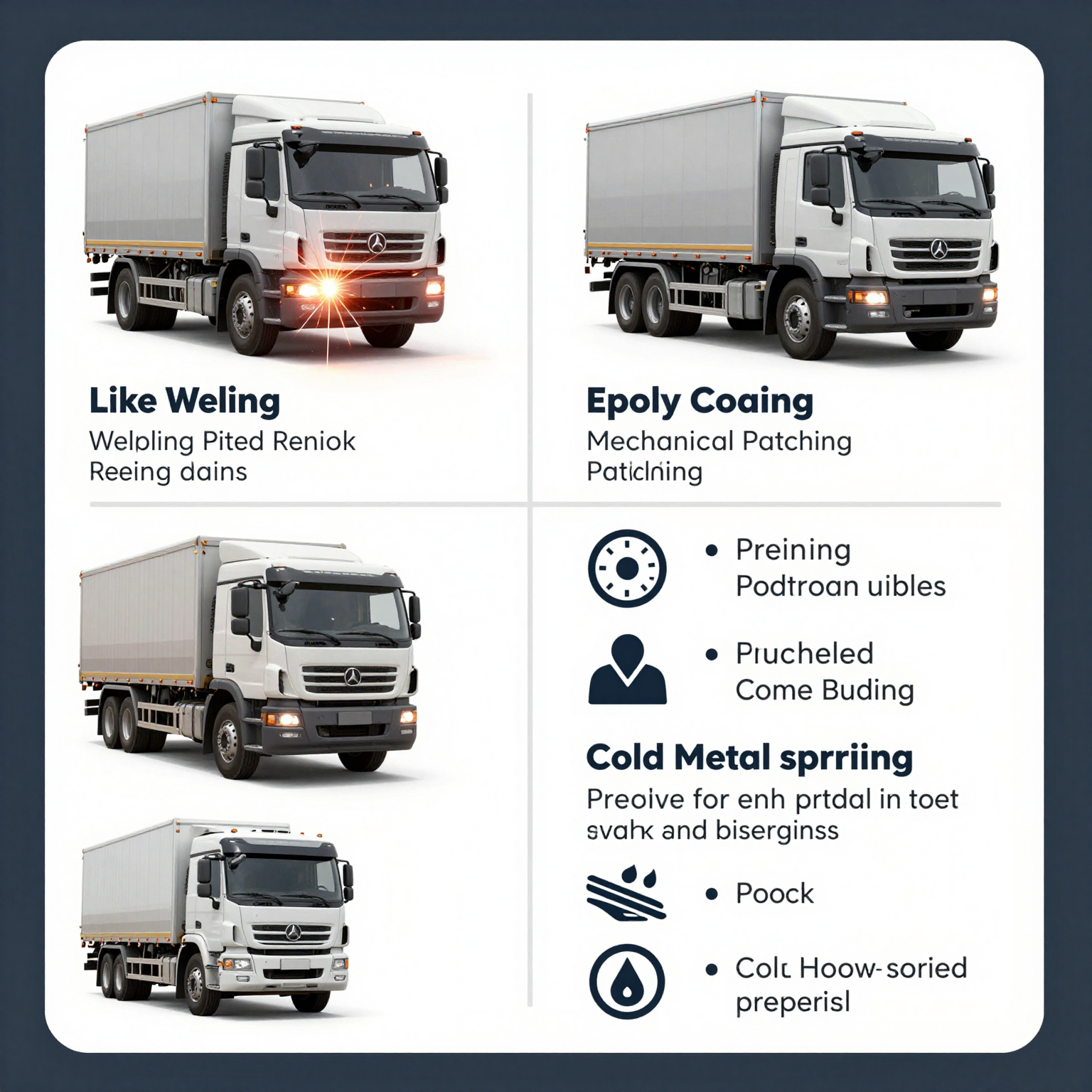
| Repair Method | Pros | Cons |
|---|---|---|
| Welding | – High durability – Strong structural integrity |
– Requires skilled labor – Thermal distortion risks |
| Epoxy Coatings | – Easy application – Good corrosion resistance |
– Lesser impact resistance – Can degrade over time |
| Mechanical Patching | – Quick to apply – Cost-effective |
– Less durable – Can require frequent replacement |
| Cold Metal Spraying | – Excellent adhesion – Minimal heat input |
– Requires precise surface prep – Skilled technicians necessary |
Conclusion
Choosing the right repair method for truck body pits depends upon specific needs including budget, severity of damage, and required durability. For more guidance on routine maintenance and budgeting, consider checking out budgeting for routine truck maintenance and optimizing fleet size.
Materials Needed for Repairing Truck Body Pits
Repairing pits in truck bodies requires a variety of materials that ensure durability and suitability for different types of repairs. As a fleet manager, understanding these materials is crucial to maintaining the integrity of your vehicles and minimizing downtime. Below is a detailed list of essential materials needed for effective truck body repair:
| Material/Tool | Durability (Rating) | Suitability | Applications | Source |
|---|---|---|---|---|
| Epoxy Resin | High | Ideal for structural repairs on metal or composite truck bodies; suitable for heavy-duty and long-term use | Repairing deep pits, cracks, and reinforcing damaged areas; provides strong adhesion and durability under harsh conditions | Alibaba.com |
| Body Filler | Medium to High | Suitable for surface-level pit repairs; best used after proper surface preparation | Filling minor to moderate dents and pits on metal truck body panels; commonly used before sanding and painting | Auto Body Repair Guide – Scribd PDF |
| Primer | Medium | Essential for all metal repairs; improves paint adhesion and prevents corrosion | Applied before painting to prepare the repaired surface; critical for longevity in humid or corrosive environments | Automotive Body Repair Technology – Book Reference |
| Paint | Medium | Used for final finish; must match original color and be compatible with substrate | Final coating for repaired truck body sections; ensures appearance and protection from weather and abrasion | Automotive Body Repair Technology – Book Reference |
| Sandpaper | Low | Required for surface preparation, smoothing filler, and creating adhesion surface | Used to clean, deburr, and smooth surfaces before and after applying filler or paint | Vehicle Body Materials and Repair Techniques – Scribd PDF |
| Grinders | High | Used for removing old paint, rust, and shaping metal surfaces | Essential for preparing large repair areas; also used to shape and smooth filler | Automotive Body Repair Technology – Book Reference |
| Welding Equipment | High | Required for structural repairs involving metal frames or load-bearing components | Repairing cracked or broken structural parts such as chassis, cross-members, or frame rails | Automotive Body Welding Technology (2nd Edition) |
Additionally, each material serves a specific purpose, which ensures that repairs not only restore the truck’s appearance but also its structural integrity. Choosing the right materials can prevent premature repairs and enhance fleet longevity, ultimately saving costs over time.
For further insights on vehicle maintenance, check out our budgeting for routine truck maintenance article.
Step-by-Step Guide to Repairing Pits in Truck Bodies
Truck bodies frequently encounter damage, including pits caused by road debris, chemical exposure, or structural impacts. Addressing these issues promptly not only prolongs the vehicle’s life but also maintains its aesthetics and resale value. This guide provides a detailed, systematic approach to repairing pits in truck bodies with industry best practices in mind.
Tools and Materials Needed
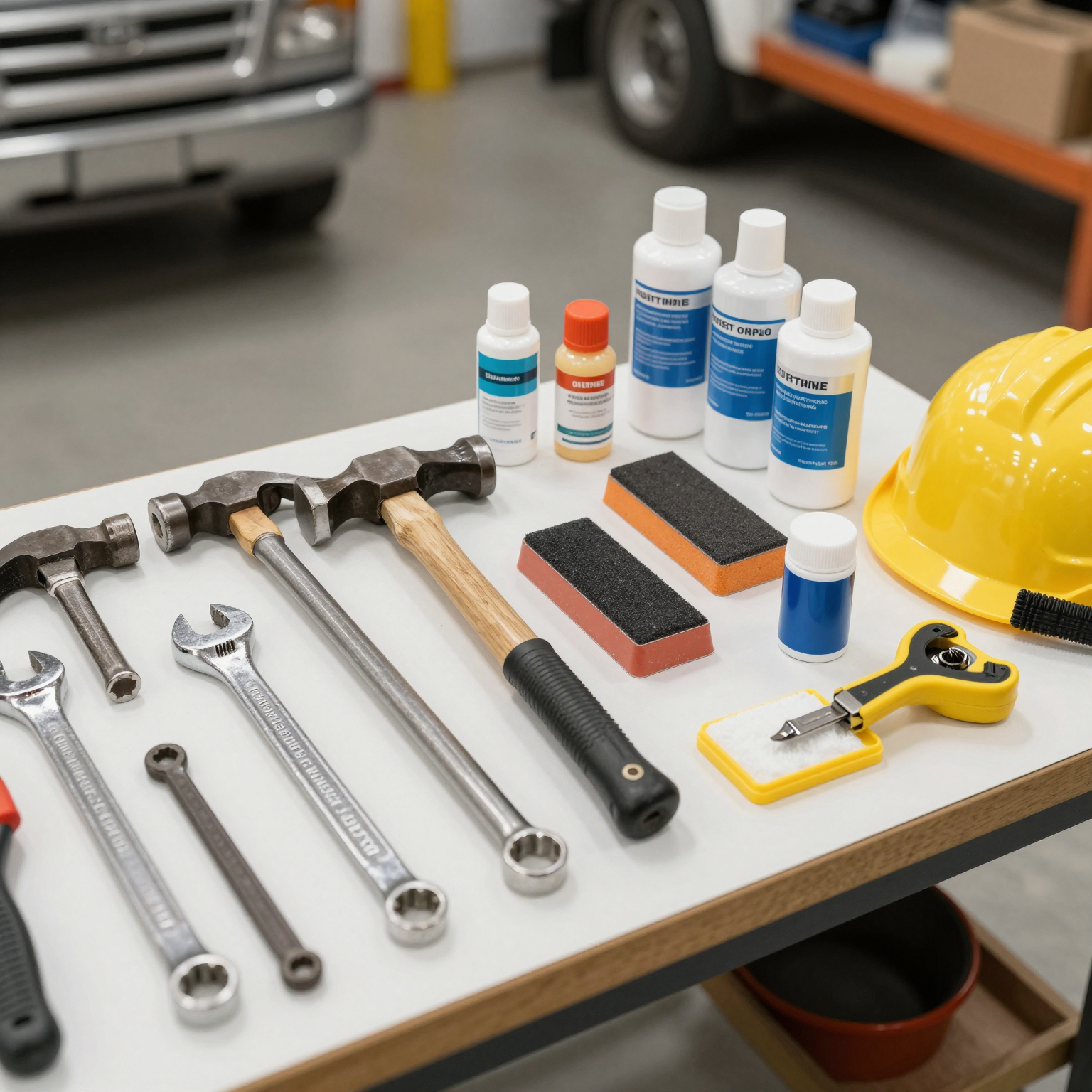
Before beginning the repair, gather the following tools and materials:
- Safety Gear: Gloves, goggles, and a dust mask
- Cleaning Supplies: Degreaser, cloths, and water
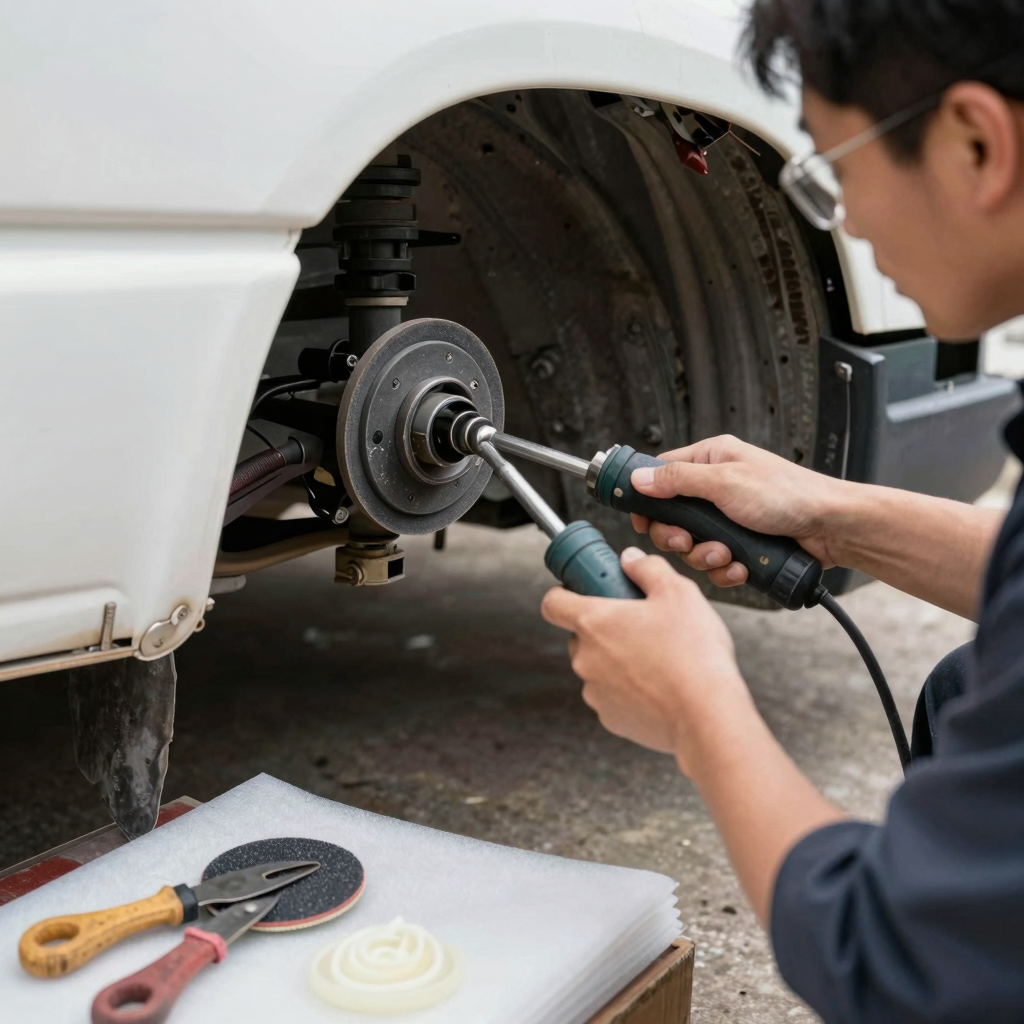
- Repair Tools: Dent puller kit, adhesive, sandpaper, or grinding wheel
- Filler Materials: Automotive filler, fiberglass sheets, resin
- Finish Supplies: Primer, paint, clear coat
Step 1: Assess the Damage
Evaluate the extent of the pits or dents. For minor surface-level pits:
- Check if the paint is intact. If the metal is not severely deformed and paint is not cracking, you can proceed with a DIY repair.
- If the pits are larger or deeper, consider seeking professional assistance to avoid compromising the truck’s structural integrity.
For more on understanding repair costs related to maintenance, visit Budgeting for Routine Truck Maintenance.
Step 2: Clean the Area
- Use a degreaser to thoroughly clean the damaged area, removing any dirt, oil, or rust.
- Dry the surface completely before proceeding to the next step.
Step 3: Prepare the Surface
- Depending on the depth of the pit, you may need to sand the area around the repair site to ensure proper adhesion of the filler material.
- Use sandpaper (120-grit) or a grinding wheel, being careful not to create additional damage.
Step 4: Repair the Pit
For Small and Shallow Pits:
- Use a Dent Puller:
- Apply adhesive to the suction cup of the dent puller.
- Press it firmly onto the pit and allow it to set as per the manufacturer’s instructions.
- Use the pulling mechanism to slowly lift the metal back into place.
For Larger or Deeper Pits:
- Filler Method:
- Mix appropriate automotive filler according to the product specifications.
- Apply the filler to the pit using a putty knife, ensuring it fills the cavity completely.
- Proper Techniques for Repairing Fiberglass Truck Bodies suggests layering for maximum strength around high-impact areas.
Step 5: Smoothing and Finishing
- Once the filler has cured, sand the area smooth with a finer grit sandpaper (around 400-grit).
- Ensure the surface is flush with the surrounding metal.
Step 6: Prime and Paint
- Apply a primer coat to seal the filler.
- Once dry, paint over the repaired area using the original body color.
- Apply a clear coat for added protection and shine.
Best Practices for Successful Repairs
- Choose Quality Materials: Always opt for high-quality fillers and paints that are compatible with your truck’s material.
- Consider Professional Help: If the repair site is near critical structural points or if you’re uncertain about any aspect of the repair, consulting with professionals is advisable.
- Maintain Your Truck: Regular inspections and maintenance can prevent further damage and extend the life of your truck body.
For expert insights into fleet maintenance, check Optimizing Fleet Size & Maintenance for Small Fleets.
In conclusion, repairing pits in truck bodies requires a systematic approach, the right tools, and materials, and adherence to best practices to ensure durability and efficiency. By following these steps, you can maintain the aesthetic and functional integrity of your fleet vehicles.
Cost Implications of Repairs
Repairing body pits in trucks is a critical component of maintaining fleet integrity and preventing costly long-term damage. The financial implications of these repairs can significantly impact a company’s operating budget.
Cost of Repairs vs. Replacement
Based on the 2023 analysis from the U.S. Department of Transportation & NHTSA, the cost of repairing truck body damage ranges between $800 and $4,500, depending on the severity of the damage. In contrast, replacing a damaged section can escalate costs anywhere from $6,000 to $15,000 and sometimes more for commercial trucks using specialized materials. Minor to moderate damage typically allows for repairs, as this can save owners 40-60% compared to full replacements.
The 2023 Fleet Maintenance Benchmark Study by the American Trucking Associations reported an average repair cost of $2,100 for heavy-duty truck body issues, whereas full body replacements averaged $11,800.
Preventative Measures and Long-Term Savings
Investing in preventive maintenance is another critical aspect of cost management in truck body repairs. According to the American Transportation Research Institute, every dollar invested in preventive measures can yield a return of up to $3.20 through reduced downtime and lower repair bills. Fleets that embrace preventive measures can reduce average repair costs by up to 40%. Furthermore, implementing drive coaching and advanced collision avoidance technologies can significantly cut down incidents that cause body damage by 50%.
Conclusion
In summary, while immediate repairs may seem costly, they can provide substantial savings and enhanced vehicle longevity compared to replacements. For fleet managers and trucking company owners, prioritizing both repairs and preventive strategies is essential for optimizing overall fleet health and operational costs.
Conclusion and Call to Action
Maintaining the integrity and aesthetics of truck bodies is vital in the logistics and trucking industries. Fleet managers and operators must be proactive in addressing pits and damages to ensure optimal performance and safety. This not only extends the lifespan of the vehicle but also increases its resale value, as a truck in good condition can command up to 20% more in the market. Additionally, customizing truck bodies can enhance functionality and branding, allowing for more efficient operations that align with specific business goals.
The process of repairing and customizing truck bodies can seem daunting, but with the right approach and the help of professionals, it becomes manageable. It’s crucial to leverage quality materials and expert services that guarantee longevity and reliability. If you’re in need of solutions to repair and customize your fleet’s trucks to meet specific operational demands, consider our comprehensive truck repair services. Our experienced team is ready to assist you in making informed decisions that enhance your fleet’s performance and safety. Don’t hesitate to reach out today to learn more about tailoring your trucks to fit your unique operational needs!