In an industry where the strength and reliability of vehicles correlate directly with operational efficiency and profitability, maintaining a truck’s frame is paramount for fleet managers, trucking company owners, and logistics providers. A truck’s frame acts as the backbone, providing structural integrity and support to the entire vehicle. However, neglecting routine inspections and repairs can lead to severe rust damage, undermining this crucial component. Rust not only weakens the structural integrity of the truck frame, increasing the risk of accidents and costly repairs, but it can also compromise safety standards and lead to regulatory penalties. Fleet managers must understand that addressing rust issues proactively can save thousands in repair costs, minimize downtime, and extend the lifespan of their vehicles. Ignoring these problems could result in catastrophic failures, endangering drivers and cargo alike, and negatively impacting the bottom line. As we dive into the specifics of repairing rust holes in truck frames, we will explore effective techniques and solutions that can ensure the longevity and safety of your fleet. For detailed insights on budget management for maintenance needs, check out our budgeting for routine truck maintenance article. By understanding the impacts of neglect and embracing proactive maintenance strategies, trucking professionals can safeguard their investments and reduce the risk of unforeseen expenses.
| Type of Rust | Characteristics | Causes | Implications |
|---|---|---|---|
| Surface Rust | Mild oxidation on the surface, appears as a reddish-brown flaky layer. | Exposure to moisture, lack of protective coating, road salt. | Generally cosmetic. Requires simple cleaning or touch-up. |
| Scale Rust | Thicker and more advanced than surface rust, can cause pitting. | Accumulation of untreated surface rust; prolonged moisture exposure. | Can lead to structural weakness; requires more extensive repair. |
| Penetrating Rust | Severe rust that creates holes in the metal structure. | Ignoring previous rust types, prolonged exposure to moisture. | Major structural failure may occur; often requires part replacement. |
For further details on truck maintenance, check out budgeting for routine truck maintenance and optimizing fleet size maintenance for small fleets.
Identifying Rust Holes in Truck Frames
Inspecting and diagnosing rust holes in a truck frame is crucial for maintaining the structural integrity and safety of heavy-duty vehicles. Here are key steps and considerations for effective assessment.
Visual Indicators
When inspecting a truck frame for rust damage, look out for the following visual indicators:
- Surface Cracks: Visible cracks in the paint or metal can suggest that rust is forming underneath.
- Flaking Paint: Areas where the paint is scaling or peeling off may indicate moisture retention, which can foster rust development.
- Rust Coloration: Rust itself appears as reddish-brown patches on the metal surface.
Tools Needed
To properly assess rust holes, the following tools are essential:
- Flashlight: To illuminate dark areas during inspection.
- Screwdriver: Useful for prying at the metal to check structural integrity.
- Wire Brush: For cleaning off rust and debris for a clearer inspection.
Tips for Inspection
- Conduct a Thorough Walk-around: Start your inspection with a visual check around the truck. Use a flashlight to peer into tight spaces that sunlight cannot reach, especially around joints and welds.
- Use a Screwdriver to Test Frame Integrity: Gently pry at suspected rust areas. If the metal crumbles easily, this suggests significant rust damage.
- Regular Check-ups: Routine inspections, especially in regions prone to moisture, can help you catch rust before it escalates. Fleet managers should implement a plan for periodic maintenance checks to ensure early detection of rust damage, enhancing vehicle reliability (learn more about routine maintenance).
Conclusion
Identifying rust holes is a preventative task that can save trucking businesses significant costs on repairs. Early detection of these issues will enhance the lifespan of the vehicle and maintain operational efficiency. Regular check-ups not only preserve your fleet’s integrity but also contribute to overall safety and performance.

Essential Tools and Materials for Repairing a Rust Hole in a Truck Frame
Repairing a rust hole in a truck frame is crucial for maintaining the vehicle’s integrity and safety. Below is an outline of essential tools and materials you will need for this process:
1. Welding Equipment
- MIG Welder: Ideal for truck frame repairs due to its ease of use on thin metals.
- Stick Welder: Suitable for heavy-duty welding tasks.
- Welding Electrodes: Essential for creating strong bonds during the welding process.
- Welding Helmet: Protects your eyes and face from sparks and UV radiation while welding.
- Welding Gloves: Keeps your hands safe from heat and sharp metal.
2. Metal Patches
- Steel or Aluminum Patches: Used to cover the rusted areas, providing support and strength.
- Rust-Resistant Metal Sheets: Helps in preventing future rusting and ensures longevity.
3. Surface Preparation Tools
- Angle Grinder: For removing rust and smoothing out surfaces prior to patching.
- Metal Grinder: Used for finer finish work and preparing surfaces for welding.
- Wire Brush: Helps in cleaning the rust and debris from the frame.
4. Safety Gear
- Safety Glasses: Protects your eyes from flying particles.
- Face Shield: Offers additional protection during grinding and welding.
- Protective Clothing: Wear durable clothing to shield yourself from sparks and cuts.
- Respirator: Protects from harmful dust and fumes produced during the repair.
5. Additional Resources
For more insights on truck maintenance and budgeting for repairs, consider visiting our articles on Budgeting for Routine Truck Maintenance and Impact of Tariff on Heavy Trucks.
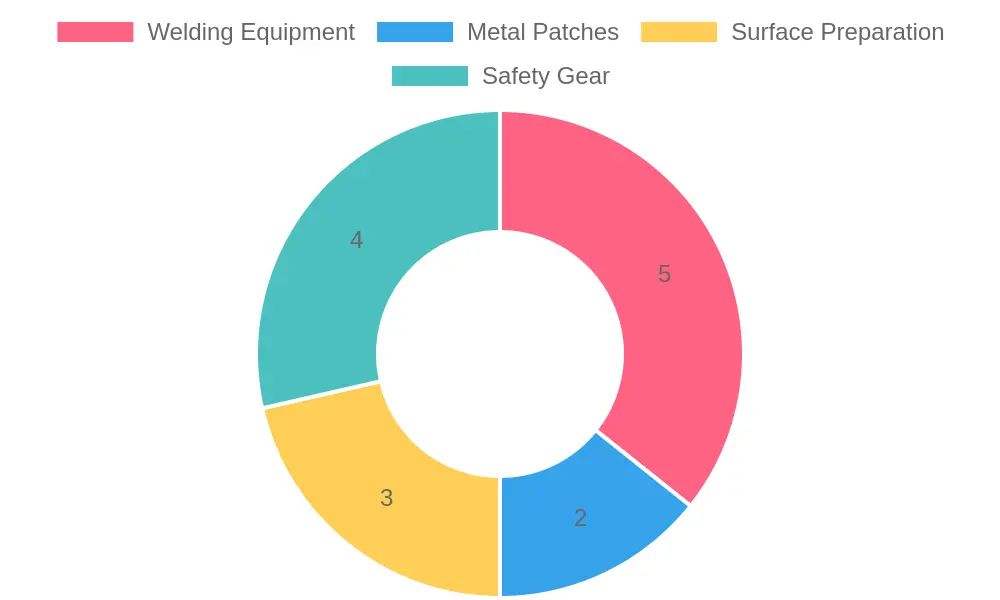
This chart illustrates the proportion of various tools and materials needed for effective frame repair, emphasizing the need for a well-equipped workshop.
Step-by-Step Guide to Repairing a Rust Hole in a Truck Frame
Repairing rust holes in truck frames is an essential maintenance task that can prolong the life of your vehicles and ensure their safety. Here’s a comprehensive step-by-step guide to help fleet managers and truck owners effectively tackle this issue.
Preparation
- Assess the Damage:
- Inspect the affected area thoroughly to understand the extent of the rust.
- Determine if the damage is superficial or if there are larger structural issues.
- Refer to articles like How to Fix a Rusted Truck Frame for insights on assessing frames.
- Gather Tools and Materials:
- Get the necessary tools: wire brush, angle grinder, metal-cutting saw, metal patches, welding equipment (if applicable), grinder, sandpaper, primer, and paint.
- Consider using professional repair kits like those suggested in the Rust Buster Frame Repair Kits article for a comprehensive solution.
- Safety Precautions:
- Wear safety goggles, gloves, and a dust mask to protect against debris and fumes.
- Make sure you have a well-ventilated workspace.
Cutting Out the Damaged Area
- Clean the Area:
- Use a wire brush or grinder to remove loose rust, paint, and debris around the rust hole.
- Ensure the surrounding area is free from contaminants that may affect the repair.
- Mark the Cut:
- Mark a rectangle around the rust hole. The guidelines here should be free of rust, typically 1-2 inches from the rusted area.
- Cut Out the Rusted Section:
- Carefully cut out the damaged section using a metal-cutting saw or grinder.
- Ensure the edges are clean and smooth to allow for better adhesion of the patch.
Applying Metal Patches
- Select the Right Patch:
- Choose a metal patch that is made from a similar material as the truck frame for compatibility.
- The patch should be slightly larger than the hole you’re repairing.
- Fit the Patch:
- Place the patch over the hole to ensure it fits correctly. Trim if necessary for a perfect fit.
- Attach the Patch:
- Welding can be utilized if the patch is thick enough for it. For thinner patches, consider using high-strength adhesive or riveting.
- Ensure the patch is securely attached at all edges to avoid future rust build-up underneath.
- Sealing the Edges:
- Apply a rust-inhibiting primer around the edges of the patch to prevent rust from forming again.
- Follow the instructions on the primer for correct application.
Finishing
- Sanding:
- Once the primer has dried, use sandpaper to smooth the surface of the patch and surrounding area. This step helps in obtaining an even final finish without rough edges.
- Painting:
- Apply a top coat of paint that matches your truck’s frame. This not only enhances aesthetics but also provides an extra layer of protection against rust.
- Refer to Tips On Repairing A Rusted Auto Frame for paint selection advice.
- Final Inspection:
- Inspect the area once the paint dries to ensure a uniform finish and proper adhesion of the patch.
- Monitor the repair periodically to address any signs of new rust. Early intervention is crucial to maintaining the vehicle’s structural integrity.
Conclusion
Maintaining the health of your truck’s frame is vital for both safety and longevity. By following this step-by-step guide, you can effectively repair rust holes and prevent future damage, ultimately saving costs on extensive repairs. For more insights on truck maintenance budgeting, explore Budgeting for Routine Truck Maintenance.
Comparing Rust Hole Repair Methods
When it comes to repairing rust holes in a truck frame, several methods are available, each with its unique advantages and disadvantages. To help you choose the best option, we have created a chart comparing three common repair methods: welding, epoxy, and patching.
Comparison Chart

Method Breakdown
- Welding:
- Cost: High
- Durability: Very Durable
- Ease of Use: Difficult
Welding is the most durable option but requires specialized skills and equipment, making it the most expensive solution.
- Epoxy:
- Cost: Medium
- Durability: Durable
- Ease of Use: Easy
Epoxy offers a good balance of cost and durability; it is user-friendly and widely used for both minor and moderate repairs.
- Patching:
- Cost: Low
- Durability: Less Durable
- Ease of Use: Easy
This method is the most cost-effective and easy to implement, but its durability may not match that of epoxy or welding.
For more information on maintaining your fleet, consider checking our article on budgeting for routine truck maintenance to better plan for repairs.
Best Practices for Preventing Rust Issues in Truck Frames
Maintaining the integrity of truck frames is critical for fleet managers and operators, especially in construction and logistics. Rust can severely weaken a truck’s frame, impacting safety and performance. Here are some effective practices to prevent future rust issues:
1. Regular Inspections
- Schedule Frequent Checkups: Conduct routine inspections to identify rust early. Focus on areas prone to moisture accumulation, such as joints and underbody components.
- Use Professional Services: Engage professional inspectors who specialize in vehicle maintenance and rust assessment to ensure thorough evaluations.
2. Proper Cleaning
- Wash the Undercarriage: After exposure to road salt, mud, or moisture, it’s essential to clean the truck’s undercarriage to remove corrosive elements. This can help prevent rust formation.
- Use Rust Inhibiting Cleaners: Incorporate cleaning products that can help inhibit rust development during wash cycles.
3. Protective Coatings
- Apply Rust-Resistant Coatings: Utilize rubberized or wax-based coatings on the undercarriage and frame. These protect against moisture and salt, significantly reducing rust risk (source).
- Consider DIY Treatments: Owners can also apply rust-proof sprays to hard-to-reach areas by removing rubber body plugs to enhance protection (source).
4. Proactive Maintenance
- Address Issues Early: Regular checks ensure that minor rust spots are treated before they expand. Proactive maintenance not only saves costs in the long run but also ensures operational efficiency (source).
- Document Maintenance Procedures: Keep a comprehensive log of inspections and maintenance actions to track recurring issues and measure the effectiveness of preventive measures.
5. Environmental Considerations
- Store Properly: Keep trucks in dry, cool environments when not in use to prevent moisture-related rust development. Indoor storage can prolong the lifespan of truck frames significantly.
- Monitor Weather Conditions: Be extra cautious during and after harsh weather, performing inspections and maintenance as required.
Conclusion
Implementing these best practices can dramatically enhance the longevity of truck frames and reduce rust-related expenses. A commitment to proactive maintenance ensures not only the safety of the vehicles but also the reliability and efficiency of operations. For more insights on routine truck maintenance, check out this guide on budgeting for upkeep.
By prioritizing regular inspections and preventive treatments, fleet managers can secure their investments and maintain a high level of performance in their operations.
The Importance of Addressing Rust in Your Truck Frame
Rust is not merely a cosmetic issue; it directly affects the structural integrity of your truck. Experts agree that this problem must be addressed promptly to extend the life of the vehicle. Here’s a relevant quote from an industry expert:
“Rust in critical areas can compromise a vehicle’s safety and integrity. Immediate action is vital to prevent severe damage.” – Fairway Collision Center
Knowing how to repair rust holes effectively can save fleet managers and trucking company owners significant costs in the long run. Preventive measures, including regular inspections and timely repairs, can help maintain the vehicle’s health and longevity. For more insights on maintaining your fleet, consider reading our article on budgeting for routine truck maintenance.
Regular maintenance and a proactive approach to repairs can keep your trucks running efficiently and safely for years to come.
Conclusion
In summary, repairing a rust hole in a truck frame is not just a maintenance task; it is a critical measure in ensuring the safety, efficiency, and longevity of your fleet. The steps outlined-from assessing the damage and gathering the necessary tools to executing the repair with precision-are essential for maintaining the structural integrity of your trucks. Ignoring frame issues can lead to serious safety hazards and costly repairs. Statistics show that 70% of fleet managers recognize the safety hazards associated with frame damage, and regular maintenance can decrease downtime by 60% and yield up to 50% cost savings on repairs.
Regular inspections and prompt repairs are crucial elements of effective fleet management. As a fleet manager or company owner, prioritizing the integrity of your truck frames will significantly enhance safety, operational efficiency, and long-term vehicle health-increasing vehicle lifespan by 40%. For more detailed insights on optimizing fleet maintenance, consider reviewing our article on budgeting for routine truck maintenance.
To further support your maintenance efforts, consider partnering with Summit Fairings. With their expertise in truck fairing solutions, they provide tailored services that enhance both performance and aesthetics. Their aerodynamically designed fairings can promote better fuel efficiency and ultimately save on operational costs, making your fleet not only more effective but also more economical. Ensure your trucks are running at their best by exploring the benefits of Summit Fairings. Don’t overlook the significance of maintaining your truck frames-your fleet’s safety and efficiency depend on it!