For fleet managers, trucking company owners, and enterprise operators, understanding the repossession of a truck with a trailer is paramount. This scenario can pose various challenges and implications that extend beyond mere logistics. Each phase of the repossession process— from legal considerations to actionable strategies—must be navigated with precision to safeguard financial and operational interests. This article delves into the complexities surrounding the repossession of trucks and trailers, offering insights into each critical aspect: the repossession process, legal frameworks, practical challenges, and consumer rights. Through this deep dive, industry stakeholders will gain valuable knowledge to navigate repossession situations effectively.
Reclaiming the Road: The Legal Terrain of Repossessing a Truck With a Trailer in Tow
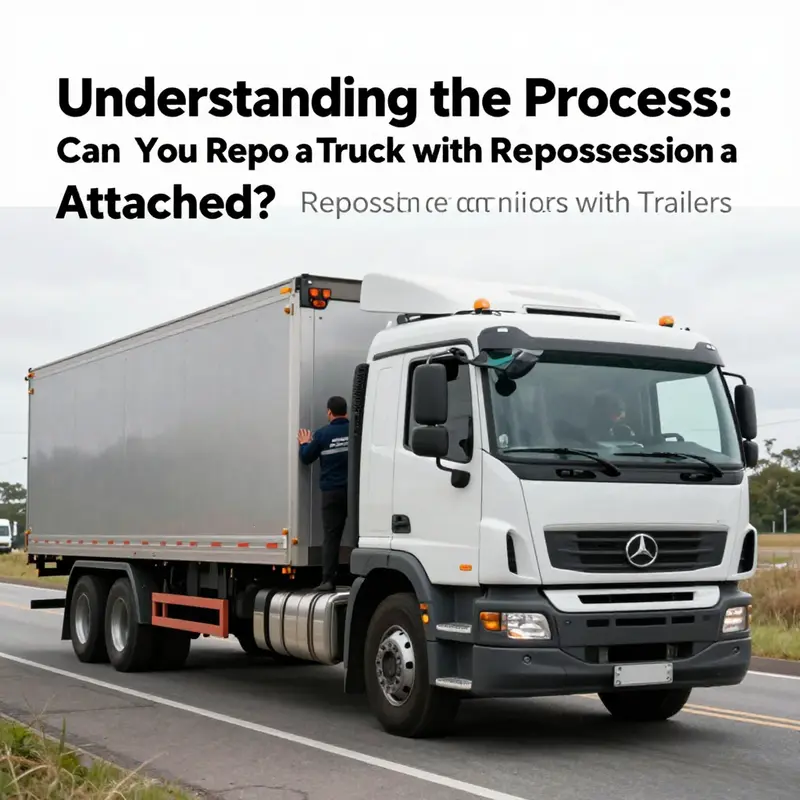
When a lender contemplates repossessing a commercial truck, the task is already a balance of timing, law, and logistics. Add a trailer attached behind the tractor, and the operation becomes something closer to a high-stakes puzzle. The mechanics of repossession hinge on what a borrower pledged as collateral and how that collateral is legally described in the financing agreement. The rules are not guesswork; they are written into liens, titles, and state statutes, and they shape every move a repossession team makes. To understand the process, it helps to picture the truck and trailer as a single economic instrument only if the financing is structured that way. If the loan or lease covers the entire combination, the repossession company can pursue both the tractor and the trailer together. If the trailer sits outside the same secured claim, it may stay with the debtor even as the truck is reclaimed. This distinction is not a minor technicality; it determines whether the trailer lands back in the lender’s yard or remains in the debtor’s possession, unscathed by the repossession action. The practical reality is that a big, dual-axle unit requires careful planning, specialized equipment, and trained personnel who can navigate the unique challenges of towing a tractor-trailer rig. The legal framework is the backbone; the physical execution is the muscle. The law does not bless a repossession team to bypass the safeguards that exist in every jurisdiction. Repossession still takes place within a lattice of rules designed to protect both creditors and borrowers, and those rules apply with particular gravity when a trailer is part of the equation. If the trailer is titled and registered separately, or if it is owned outright by the debtor, that trailer may not be subject to the same claim. The agreement might describe the “collateral” in sweeping terms, or it might spell out each asset by name. In many commercial finance arrangements, the trailer is explicitly included as part of the secured property. In others, the tractor and trailer may each bear their own lien, or the trailer may be financed by a different lender altogether. The implications are straightforward: if the trailer does not fall under the same lien as the truck, repossessing the truck alone may be the only lawful route. If both assets are bound to the same agreement, the lender has a door to reclaim the entire setup. The difference changes land, not just law; it changes the route a repo professional takes, the equipment required to execute the plan, and the risk profile of the operation. These outcomes hinge on the exact language of the contract. A robust agreement will specify what constitutes the collateral in clear terms. It may say that the “truck and trailer” are one unit, or it may carve out the trailer as a separate asset with its own lien. Debtors must know where their obligations stand because a vague description invites disputes and delays. The contract becomes the compass that guides the repossession team’s route, the tow truck’s configuration, and the timing of any recovery. The phrase “proper notice and lawful process” is not rhetorical filler in this context. It is a shield against unlawful seizure and a roadmap for creditors to act within the law. Most jurisdictions require a lawful basis to repossess, typically grounded in the contract and the debtor’s default. The notice of default, the cure period if one exists, and the steps to repossess are all anchored in statutes and case law. In the best-run operations, a repossession follows a careful sequence: confirm the underlying lien, verify the exact assets covered, ensure there is a rightful basis to reclaim, and then mobilize equipment capable of handling a tractor-trailer combination with minimal disruption and risk. The equipment is not cosmetic gear but a functional system built for heavy loads and long, continuous runs. A routine car tow becomes a complex operation when the object of recovery weighs tens of thousands of pounds and spans a long wheelbase. The risk of damage to the trailer, the truck, or nearby property rises with the vehicle’s mass and length. The professional in charge must consider traffic patterns, urban constraints, and the potential for injury to bystanders. This is more than a mechanical challenge; it is a movement in a densely regulated space where a single miscalculation can trigger liability, insurance questions, or enforcement action. A crisp understanding of ownership and title plays a pivotal role in planning. If the trailer is owned by a third party or if its title sits in another jurisdiction, retrieving it may trigger additional steps, approvals, or even separate legal actions. The title status of both the truck and the trailer determines whether the repossession company can detach the trailer and remove it without exposing itself to claims of wrongful interference. In practice, this means that a repossession company has to marshal documents, verify titles, and confirm that the exact equipment at the address matches the collateral described in the contract. The process might require coordinating with authorities or custodians of the property where the truck and trailer are located, especially when the unit is in a busy urban setting or at a facility with limited access. The debtor’s rights are not mere formalities here; they are a real consideration that can influence the pace and outcome of the repossession. Debtors may have the right to contest the repossession, to seek restoration of the vehicle through restitution or cure of the default, or to negotiate a repayment plan that could avert reclamation. The rights can vary by state and by the precise terms of the financing agreement, but the overarching principle remains constant: the repossession process should adhere to the contract and to the applicable law. In this light, the importance of proactive financial management becomes evident. It is not only a hedge against repossession; it is a way to stay in control of a business asset that is central to day-to-day operations. Financial discipline—timely payments, clear documentation, and transparent communication with lenders—can reduce the likelihood of such drastic steps. It can also provide a smoother path if default is ever unavoidable. Practical measures, such as maintaining a robust fleet-wide budgeting framework and building an emergency repair fund, help ensure that a carrier can weather temporary cash flow disruptions without triggering default. The value of prudent planning reveals itself in small decisions that compound into resilience. For example, annual maintenance planning, preventive inspections, and timely repairs can extend the life of both the tractor and the trailer, preserving value and reducing the odds that a lender will pursue a repossession. A chain of stewardship can make the difference between a hard, disruptive seizure and a managed transition that preserves the business’s working assets. Toward the end of the decision tree, the legal context remains the anchor. State laws shape the mechanics of repossession, dictate permissible methods, and prescribe the steps lenders must follow to avoid unlawful entry, coercion, or self-help seizure that runs afoul of civil rights and consumer protections. The U.S. Consumer Financial Protection Bureau offers a comprehensive overview of consumer rights during vehicle repossession, including scenarios involving trucks and trailers. This resource is a valuable reference for both lenders and debtors seeking clarity on the boundaries of lawful action. If you want a structured explanation from a regulator’s perspective, you can review the official guidance at the CFPB’s vehicle repossession page. While the specifics can vary, the core idea is consistent: repossession is a legal remedy that operates within defined limits, and those limits are designed to minimize unnecessary disruption while recovering the collateral that secures the loan. In thinking about the broader implications, consider how a business owner can reduce exposure to repossession risk without compromising operations. Financial literacy and proactive planning are central. A disciplined approach to budgeting for routine maintenance, for instance, can lower the probability of default by extending asset life and improving reliability. It can also create a clearer picture of the fleet’s economic value, helping lenders assess risk more accurately and negotiate more favorable terms when adjustments are necessary. To explore practical strategies for keeping a fleet healthy and resilient, you can read about budgeting for routine truck maintenance. This resource-oriented approach is less about evading responsibility and more about maintaining operational continuity in the face of financial stress. For more on how to structure maintenance funds and plan for contingencies, see Budgeting for Routine Truck Maintenance, which offers a straightforward framework that fleet managers can adapt to their own circumstances. Of course, the dynamics of a repossession scenario can still unfold in unpredictable ways. When a trailer is involved, the stakes rise because the combined unit represents a higher aggregate value and a more complex set of legal and logistical considerations. The lesson, however, remains consistent: the path from default to recovery is navigated through clear contractual language, rigorous adherence to the law, and a disciplined approach to fleet management. By reading the landscape with both a legal eye and a operational sensibility, a fleet owner can better anticipate potential trouble spots and work toward solutions that maintain service capability while honoring obligations. In the end, the question is not merely whether a truck with a trailer attached can be repossessed; the central concern is whether the collateral is properly secured and whether the process respects the boundaries that law and contract impose. When those elements align, the repossession becomes a lawful, efficient operation that serves the interests of creditors and, ideally, preserves the continuity of the debtor’s business, allowing a fresh start once the financial arrangements have been realigned. For readers seeking a regulator-guided understanding of rights in such cases, the CFPB resource linked above provides a reliable starting point for further exploration. Budgeting for Routine Truck Maintenance can be a part of that broader risk-management approach, helping fleet managers stay ahead of default scenarios and keep critical assets in service rather than in limbo in a lender’s yard.
Legal Roadmap for Repossession: Reclaiming a Truck with a Trailer Attached
In the trucking industry, repossession of a truck with a trailer attached is a complex process that hinges on how the collateral is secured and how title and notices are handled. When a loan or lease covers both the truck and the trailer under the same security agreement, a single repossession may be permissible and practical, provided it complies with applicable law and the terms of the contract. If the trailer is secured separately, the lender risks being charged with conversion or wrongful possession if it attempts to seize the trailer without a properly encumbered interest in that specific asset.
Ownership, title, and the chain of security interests matter. If the trailer has a separate title or lien, the creditor must ensure those records align with the debt being recovered. Where the trailer is co-encumbered with the truck, the repossession can proceed as a unit, subject to breach of peace rules and the relevant state procedures.
Jurisdictional variability means that breach of the peace and notice requirements can differ widely. Some states permit self-help repossession so long as it is peaceful; others require notice, court involvement, or even specific procedures before removing a vehicle from a facility or lot. The risk to lenders includes potential liability, delays, and disputes over whether the seizure was lawful or properly notified.
Practical considerations follow from the legal framework. A tow plan should match the combined weight and dimensions of the truck and trailer, with attention to safety, road restrictions, and the potential for damage to the assets or property. Documentation matters: the security agreement should clearly describe the collateral, include both truck and trailer where appropriate, and set out permissible actions in the event of default. Debtors benefit from understanding whether the trailer is part of the secured debt and what notices are required.
In sum, you can repossess a truck with a trailer attached when the trailer is part of the secured collateral and the action adheres to contract terms and local law. If the trailer is not properly encumbered by the same debt, or if title and lien positions are unclear, attempting a single, unified recovery may expose the creditor to liability. The best practice is careful due diligence at the outset, clear documentation, and a lawful, measured approach that minimizes disruption to the business and preserves the value of the assets for disposition. It is also prudent to consult counsel and reference official guidance on vehicle repossession to ensure compliance with state law and any relevant consumer protection considerations.
Reclaiming the Road: The Realities of Repossessing a Truck When a Trailer Stays Hitched
Repossession is a process that sits at the crossroads of finance, law, and the everyday realities of anyone running a commercial fleet. When a lender or lessor moves to reclaim a vehicle, the situation becomes more complex if a trailer is involved and still physically attached to the truck. The heart of the question—can you repo a truck with a trailer attached—depends on how the loan or lease is written, how the collateral is described, and what state laws say about lien priority and the rights of the secured party. In practice, the answer is usually yes, but only if the trailer is part of the same secured transaction or if a lien exists that explicitly covers both items. The nuance matters because, for many trucking operations, the truck and the trailer are financed together as a single bundle of collateral. When that is the case, the repossession agent can pursue both vehicles in tandem. If they are financed or owned separately, the situation becomes more intricate, and the rights to reclaim the trailer may rest on separate lien documents or on whether the trailer is titled in a way that makes it subject to the same remedy as the truck.
The legal framework that governs repossession hinges on the concept of secured transactions. A lender places a lien on the collateral—often the vehicle itself and any attached equipment—that secures the loan. When the borrower breaches the agreement, such as by missing payments, the contract typically allows for acceleration and eventual repossession. The process must adhere to the law, and any misstep can expose the repossession firm to liability, including claims of trespass or unlawful entry. This is not about a power move; it is about applying a legal remedy to recover what is owed while balancing consumer protections. In most cases, a repo professional will proceed with a plan that minimizes risk to people and property and preserves the value of the collateral for auction or resale.
One of the pivotal questions a fleet manager or owner must ask early is whether the trailer is legally bound to the same lien as the truck. If both are described in a single security agreement and the lien extends to both units, the repossession agency can take the tractor and trailer together. If the trailer carries its own title or is leased under a separate agreement, repossession rights may be constrained by those separate instruments. The practical effect is that a trailer with its own lien or independent financing might require multiple steps, or at least separate identification in order to lawfully seize both items. The ownership and title status of the trailer matters as much as the dollop of paperwork that describes the lien. If the trailer sits in a yard, on a lot, or at a customer site, the agent must also respect the property rights and the potential presence of private security. Importantly, the process is designed to minimize disputes, not to create new ones for the repossession company.
From a practical standpoint, the moment a default is detected, the lender may issue notice and begin a process that could culminate in repossession. The agent is tasked with locating the collateral, assessing the safety of the operation, and executing the recovery in a manner consistent with state law. Repossessing a truck alone is a demanding task; pulling in a trailer adds another layer of complexity. The trailer increases the weight, length, and turning radius the driver must manage, especially when the vehicle is located in tight spaces or urban environments. A skilled repossession team needs equipment such as heavy-duty tow rigs, winches, and equipment to secure and transport the combined unit without causing damage to the tractor, the trailer, or surrounding property. They must also map routes that consider the length of a combination unit, roadway restrictions, and potential hazards in an area that is not designed for oversized loads. The goal is to secure the collateral quickly and safely, not to turn a routine recovery into an accident or a prolonged incident that escalates costs.
Ownership and title status are a recurring theme in these cases. If the trailer is titled separately, the lien on the truck might not automatically extend to the trailer. However, when the financing structure ties the two together as a unified asset, the trailer can be treated as an extension of the tractor’s security. In some circumstances, lenders will require that both the truck and trailer be repossessed as a unit to preserve value and reduce the risk of partial recovery that could complicate resale. The exact mechanics—the steps taken, the order of removal, and whether the trailer is detached or towed as a single rig—will depend on the wording of the loan agreement and the applicable state regulations. If a trailer is leased independently, it may be subject to a separate process or require the lessor’s cooperation for recovery, adding layers of coordination and potential delay.
The legal process itself is designed to be predictable and enforceable. Repossession in most jurisdictions cannot involve breaking into property, locking doors, or using force beyond what is necessary to secure the vehicle. A breach of peace doctrine exists in some states, which limits how a repossession can be conducted if it would cause a confrontation or damage to property. The best practice for a repossession firm is to secure all necessary court-ordered authority, coordinate with the lender, and proceed with a plan that ensures the trailer, if attached, remains connected to the tractor during removal or is properly separated in a legally authorized manner. This could involve a controlled disconnect at a designated location if the lien specifically permits it, or simply towing the unit as a whole if the carrier and trailer are inseparable under the loan terms. Either way, the process must be transparent, legally grounded, and conducted with respect for public safety and property rights.
For borrowers and fleet owners, understanding the protections available is essential. The U.S. Consumer Financial Protection Bureau (CFPB) offers guidance that helps clarify what is permissible and what rights consumers retain during repossession. The bureau emphasizes that repossession can proceed when a vehicle and its attached equipment are part of the same secured transaction, and that the lien must extend to both items for the creditor to reclaim them together. The guidance also underscores that repossession must be conducted legally, with attention to avoiding unlawful entry, damage, or coercive tactics. It is not just a best practice to be mindful of; it is a legal boundary that protects both sides and helps prevent costly disputes later on. While the specifics can vary by state and by the precise language of the loan or lease, the core principle remains clear: a trailer can be seized in tandem with the truck when it is clearly part of the secured collateral.
To those facing the possibility of repossession, there are constructive avenues to consider. First, always review the financing documents before any action occurs. Look at the lien language, the description of collateral, and any clauses that address how the unit is treated if components are separated or replaced. If you anticipate a risk of default, communicate with the lender early. In some cases, lenders will offer cure options, restructuring, or temporary forbearance that could preserve both the truck and the trailer as a single asset. Second, seek legal counsel familiar with secured transactions and commercial repossession. A lawyer can interpret the lien and advise on how the trailer fits into the security arrangement, what notices are required, and what remedies might be available to you. Third, consider alternative strategies that protect your operation’s continuity. Some fleets negotiate storage arrangements or alternate payment schedules that minimize disruption and keep the fleet functional while addressing the underlying financial stress. The aim is not merely to avert loss but to manage risk in a way that keeps essential transportation capacity on the road whenever feasible.
The repossession landscape is also shaped by practical realities that rarely appear in the abstract. A trailer adds length to the vehicle profile, which translates into longer stopping distances, different turning radii, and special considerations for roadside access. When a trailer is attached during recovery, the operator must account for legal limits on the towing setup, ensure the tow vehicle has sufficient braking power, and plan for safe detachment if needed under the terms of the agreement. The process becomes a careful balance of speed, safety, and compliance. If the trailer is in active use at a customer site, the recovery plan may require notification to the customer or a staged approach to minimize disruption and liability. In some cases, the recovery may involve securing the trailer and the cargo on a lot owned by the lender or a storage facility, until the units can be sold or reallocated. Each scenario carries its own cost structure, which is factored into the overall value of the collateral and the net balance owed by the borrower.
In the broader context of fleet management, this discussion touches on a core tension: the need to protect business cash flow while preserving the value of assets that keep supply chains moving. The decision to allow a trailer to stay attached during repossession is not merely a technical detail; it can influence the future resale value of the equipment, the costs of recovery, and the ability to redeploy or reissue the assets once the default is resolved. Carriers and owners who plan ahead—by ensuring clear titles, maintaining accurate lien documentation, and keeping the trailer and tractor aligned in financing terms—are better positioned to minimize surprises and maintain continuity, even when a repossession becomes a possibility.
For those who want to explore the topic further or situate their understanding within a bigger picture of vehicle ownership, there are practical resources that address the mechanics of risk, ownership, and recovery in a consumer-friendly way. The CFPB’s guidance on vehicle repossession and related topics provides a foundational reference for what is permissible and what protections exist for consumers under a secured transaction. While the focus of consumer guidance is often on personal vehicles, the principles extend to commercial contexts where similar lien structures apply. The key takeaway is that the right to repossess, while powerful, sits inside a framework that emphasizes legality, proportionality, and the avoidance of unlawful conduct. If you find yourself navigating a potential repossession, this is a good moment to pause and review the legal architecture that surrounds your specific loan or lease agreement, including how the trailer is described and whether it forms part of the same collateral as the truck.
For readers who want a broader view on keeping heavy equipment reliable and resilient, the experience of recovery often intersects with day-to-day maintenance and risk management. The practical lessons from repossession stories—about documentation, title clarity, and proactive communication—are the same lessons that inform better fleet operations. If you want a broader perspective on keeping trucks and trailers on the road and reducing the chances of financial distress, consider resources that cover routine maintenance, emergency repair planning, and budgeting for unexpected events. And if you’re looking for context on maintenance philosophies and the realities of heavy-duty work, the Master Truck Repair blog offers a broad range of practical insights that can be relevant to managers and technicians alike. Master Truck Repair blog
In sum, a trailer attached to a truck can be repossessed when the lien covers both items and the collateral is described together in the financing agreement. The process must follow state law, avoid unlawful means, and respect the rights of the debtor while protecting the lender’s interests. The practical implications depend on the title and lien structure, the execution capabilities of the repossession team, and the broader legal framework that governs secured transactions. The CFPB provides a clear compass for understanding consumer protections and the legitimate boundaries of repossession, while fleet owners can take concrete steps to minimize risk by ensuring clear documentation, exploring cure opportunities, and maintaining open lines of communication with lenders. As the road ahead for any fleet manager includes risk, the best approach is to plan for it, document precisely, and treat the trailer as part of a shared asset that deserves equal consideration in both financial strategy and daily operation.
External resource: https://www.consumerfinance.gov/owning-a-home/foreclosure-and-repossession/
null
null
Final thoughts
Successfully navigating the repossession of a truck with a trailer requires a comprehensive understanding of the associated processes, legal frameworks, practical challenges, and consumer rights. Fleet managers and trucking company owners must be proactive to mitigate risks and protect their operational integrity. Armed with this wide-ranging knowledge, stakeholders are better prepared to face repossession scenarios with confidence and strategic insight. Ultimately, awareness and preparation can dictate the outcome of repossession situations, ensuring resilience within the complex landscape of the trucking industry.