
For fleet managers and trucking company owners, understanding the financial implications of truck brake repairs is crucial in maintaining operational efficiency and safety standards. The brake system, a vital component in the vehicle’s safety, often requires various repairs and maintenance, which can significantly impact budgets. This article delves into a detailed breakdown of repair costs across different brake types and maintenance needs. Each chapter examines a specific area of brake repairs—ranging from basic maintenance to major component replacements—empowering decision-makers with the knowledge to make informed choices about service providers and budget allocations. As you navigate the costs, you’ll gain insights that could help enhance your fleet’s reliability and reduce downtime.
The Baseline of Truck Brake Care: Understanding Basic Maintenance Costs and What They Signal for Repair Budgets
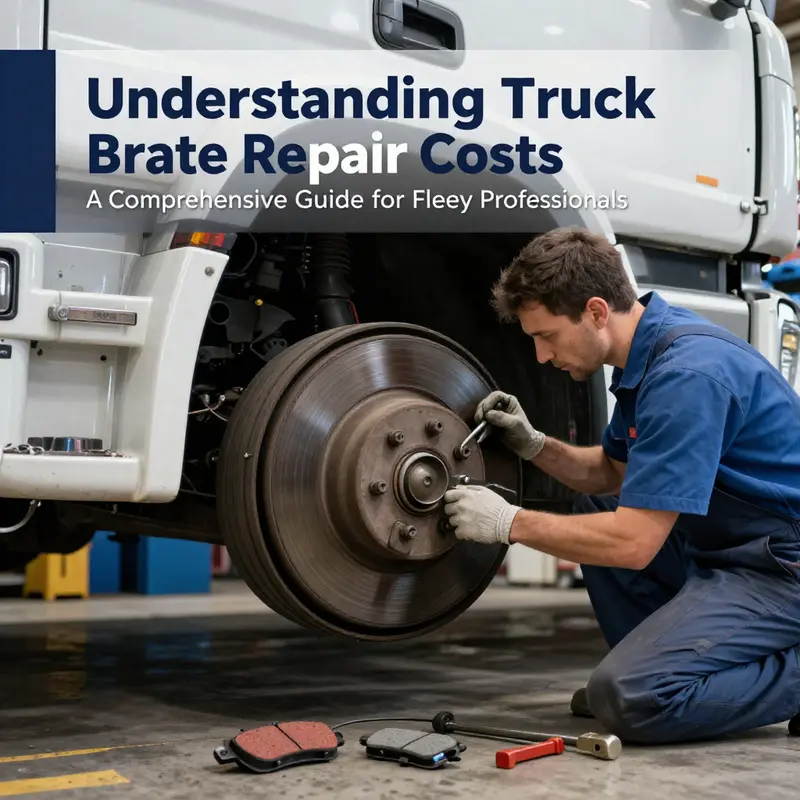
Brakes are the single most important safety feature on a workhorse like a truck, yet the price of keeping them reliable can feel vague to operators who budget by the mile and the load. When people ask how much basic brake maintenance costs, they are really asking for a practical baseline—a number that helps plan for routine care and prevents surprise repairs on the road. In broad terms, basic brake maintenance for trucks falls within a nationwide band of roughly 150 to 400 dollars per service, a range that reflects not only the shop hourly rate but the specific parts involved and the overall complexity of the braking system on the vehicle. That spectrum is a useful compass for budgeting, but it is not a fixed price tag. It acknowledges that a simple pad or shoe replacement is often the most affordable path, while adjacent tasks such as rotor resurfacing, caliper servicing, or fluid system checks can push the total upward. It also accommodates the possibility of a diagnostic fee, a common step to determine whether a straightforward wear item will suffice or a deeper repair is required. Diagnostic charges typically run from 80 to 150 dollars, and in some cases they may be waived if the repair proceeds under the same shop. In practice, a routine brake service might stay near the lower end of the range, yet the moment a caliper sticks, rotors warp, or a line leaks, the bill climbs quickly. Those fluctuations underscore an important principle: brake maintenance should be viewed as preventive care. Regular attention to wear and system health tends to preserve stopping power and reduces the odds of a major breakdown that could disrupt a fleet’s schedule and inflate costs through downtime and emergency fixes. Keeping a modest but regular maintenance habit is not merely about avoiding danger; it is a strategic choice that aligns safety with predictable spend and improved uptime.
Influencing costs in this space are a handful of straightforward realities. The type of truck matters a great deal. Heavier, high-stress vehicles with multiple braking circuits, air-assisted systems, and longer service lives generally demand more labor hours and higher-quality parts than lighter, less demanding models. A heavy-duty highway tractor may require more meticulous inspection and potentially more expensive rotor and caliper work, while a lighter medium-duty chassis could stay within a more modest price corridor. The brake system configuration also matters. Many modern trucks use discs on at least one axle, sometimes paired with drums on another, and some fleets retain drum brakes in certain duty cycles or commercial applications. Each configuration carries its own cost curve for parts and labor, and the decision between drum and disc or between single- versus multi-axle arrangements can swing the final bill. Part quality is another decisive factor. OEM parts are typically priced at a premium, but they can deliver tighter tolerances and longer service life under demanding conditions. For fleets operating extended duty cycles or severe environments, the upfront premium can translate to lower total cost of ownership over time through less frequent replacements and more consistent performance. Labor rates are inherently local. City and highway hubs tend to command higher hourly wages than rural shops, and there is also a variance between dealership service bays and independent shops. In addition, the timing of service can alter the effective price. Peak-season demand, shop capacity, and weekend or after-hours scheduling can all nudge the total upward, even for the same work. Finally, the overall condition at the point of service plays a practical role. If wear is light, a simple pad or shoe replacement can be the entire scope of work, keeping costs at or near the lower end. If more extensive disassembly, rotor replacement, or line service is necessary, the price can rise. When fleets maintain a proactive calendar of brake inspections, they improve their ability to forecast costs with more confidence, smoothing out the lumps that come from reactive repairs.
Early detection of brake issues is a cornerstone of both safety and cost control. The signs that a system is deteriorating include grinding noises that indicate pad wear or metal-to-metal contact, a soft or spongy brake pedal that travels farther than normal, and a tendency for the vehicle to pull to one side when braking. Each signal merits a diagnostic check before it becomes a broader failure. Visible wear on pads or shoes, scoring on rotors or drums, and leaks in hydraulic lines or hoses are also clear indicators that maintenance is overdue. Dashboard warning lights, including ABS or general brake system indicators, should never be ignored; even a fleeting warning can mask an underlying problem that, if left untreated, escalates into a costly, dangerous repair in tense traffic or on a grade. The emphasis on early detection is not merely about avoiding a big bill; it is about preserving stopping power, shortening stopping distances, and protecting the cargo and the driver.
From a planning perspective, regular brake inspections should be integrated into a broader preventive maintenance program. During these inspections, technicians measure pad and shoe thickness, assess rotor or drum wear, verify caliper function, inspect hydraulic lines for leaks, and evaluate the overall integrity of the braking system. For air brake configurations, a careful check of the air lines, governor, and compressor is essential, as leaks or pressure loss can degrade braking performance just as surely as friction material wear. A basic maintenance visit may involve only a pad or shoe replacement if wear is within limits, but technicians should be prepared to expand the scope if measurements reveal deeper issues. The objective is to maintain a state of good repair and to implement timely interventions that prevent unplanned downtime, especially for fleets that rely on consistent route times and predictable service intervals. In this context, the choice of parts—whether to opt for OEM components or more economical alternatives—depends on the expected service life and the fleet’s risk tolerance. For many operators, choosing mid-range parts can balance initial expenditure with durability, though the ultimate decision must reflect the truck’s duty cycle and the environment in which it operates. The maintenance calendar should be aligned with procurement cycles and shop capacity to avoid bottlenecks and reduced utilization.
To translate these considerations into practical budgeting, many operators adopt straightforward, rule-of-thumb approaches that still leave room for exceptions. A simple framework is to earmark a fixed amount per month or per mile for brake maintenance, tuned to the vehicle’s value and expected usage. Some fleets implement a two-tier strategy: a conservative baseline for routine pad or shoe replacements and a separate reserve for rotor work, caliper servicing, or air-brake components that could require attention in the event of heavier service demands. The exact numbers will differ by fleet, but the principle is universal: systematic, predictable maintenance reduces the risk of expensive, unscheduled downtime and emergency repairs that can ripple through operations. When discussing maintenance with shops, owners and fleet managers should request detailed estimates that itemize labor hours, parts costs, and any diagnostic fees. A written quote helps in comparing proposals and evaluating the value offered by different providers. If you are looking to connect budgeting concepts to practical day-to-day decisions, you can consult resources that discuss budgeting for routine truck maintenance, including guides and case studies linked to industry best practices. For budgeting considerations, see Budgeting for Routine Truck Maintenance.
For more detailed information on truck brake maintenance costs and safety guidelines, you can refer to official resources from transportation safety organizations, such as the Federal Highway Administration (FHWA) at https://www.fhwa.dot.gov/.
The True Price of Stopping: Disc Brake Repair Costs for Trucks
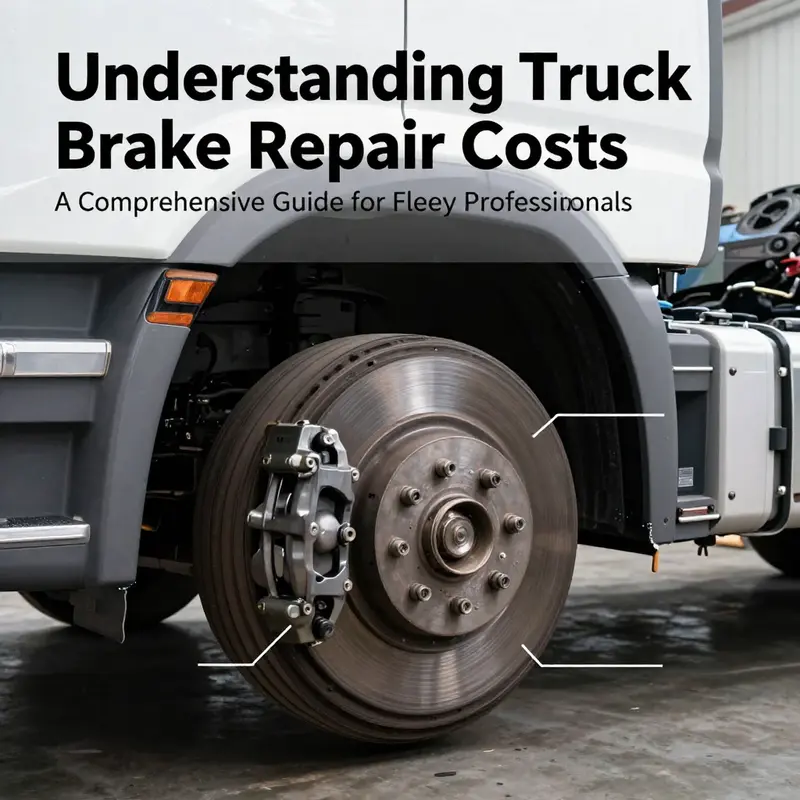
Brake systems do more than stop a truck; they protect cargo, protect drivers, and shape the economics of a fleet. When a technician diagnoses a problem in a disc brake setup, the first question isn’t only “What failed?” but also “What will this repair cost, and how will it affect uptime and long-term value?” The cost of repairing disc brakes on a truck can look straightforward at first glance—pads wear out, rotors wear unevenly, calipers leak or seize, and labor hours tick by. But the true price is a sum of parts, labor, downtime, and the cascading effects of imperfect brakes on fuel efficiency, tire wear, and overall safety. In practical terms, the numbers are not flat; they bend with the kind of truck, the severity of the problem, and the quality of the components chosen. A cost-conscious shop will walk a fleet manager through a careful, itemized path that helps balance safety with budget realities, and that is precisely where the art of brake budgeting begins.
To understand the potential costs, it helps to parse the disc brake repair into the core components most commonly involved. At the most fundamental level, brake pads are the first line of wear. A set of pads that fits an axle typically runs in a modest range, roughly from thirty to one hundred fifty dollars, depending on brand, composition, and the intended duty cycle. The rotors, or discs, are the next major factor. Replacing a rotor tends to fall in the eighty to two hundred-dollar range per rotor, with the total for a pair commonly landing in the two- to four-hundred-dollar zone for a complete rotor overhaul on one axle. If a caliper is found to be defective—perhaps leaking, sticking, or failing to release—the cost can rise to a hundred to three hundred dollars per caliper, again contingent on whether the parts are aftermarket or OEM and the specific truck model. Add labor, and the totals climb quickly. Labor is frequently the largest component of the bill. Across many shops, hourly rates sit in a broad corridor—from roughly seventy-five to one hundred fifty dollars per hour, depending on region and the shop’s positioning. A comprehensive brake job that asks for pads, rotors, and calipers on one or more wheels often spans about two to four hours; in practical terms, that translates to roughly one hundred fifty to six hundred dollars in labor by the time the work is done. Some jobs can be completed more rapidly when the truck is in a well-equipped shop with experienced technicians, yet other jobs demand more time due to the need for careful caliper rebuilding, rotor resurfacing, or replacing multiple components on the same axle.
The numbers above are averages that reflect a landscape of variability. For medium-duty trucks, a full disc brake overhaul—covering pads, rotors, and possibly calipers—often lands in a range of five hundred to one thousand two hundred dollars. Heavy-duty vehicles, with larger rotors, more robust calipers, and the possibility of more complex brake hardware, can push totals higher, especially if more than one axle requires attention. In any case, many shops will charge a diagnostic fee if the problem is not immediately evident, typically around eighty to one hundred fifty dollars, to cover the technician’s initial evaluation. The diagnostic process itself matters. Some shops roll the diagnostic fee into the repair if the customer authorizes the work, but others itemize it as a separate charge. Either way, the upfront diagnostic step can influence the overall budgeting, especially for fleets that operate multiple vehicles across varying duty cycles.
One important distinction in these discussions is the type of brakes on the truck. Disc brakes are common on the front axle of many modern trucks, and some heavy-duty configurations incorporate disc brakes on multiple wheels, while others may still rely on drum brakes for certain axles. The decision to replace rotors or calipers is often driven by the observed wear pattern, heat distress, or structural damage. Warped rotors or glazed pads, for instance, can cause vibration and poor stopping performance, signaling that a rotor resurfacing or replacement is warranted. A stuck or leaking caliper may require complete replacement rather than a rebuild. In all those cases, the shop’s assessment shapes not only the immediate repair cost but also the long-term reliability and the likelihood of repeating the issue in the near term if root causes—such as persistent heat buildup, contaminated brake fluid, or improper torque on mounting hardware—are not addressed.
Another layer of complexity lies in choosing parts quality. OEM components tend to carry a premium on price but are generally aligned with the original performance and longevity expectations of the vehicle. Aftermarket parts can offer substantial savings and, for many fleets, an excellent balance of performance and cost. The decision is rarely about one part in isolation. It is about the combined effect of pads, rotors, and calipers on braking performance, heat dissipation, and wear. If a rotor’s coating or a pad’s compound is well-suited to the truck’s operating environment—heavy urban routes with frequent stops, or long highway legs with sustained high speeds—the costs of future brake work can be managed more predictably. In practice, a fleet that emphasizes preventive maintenance and uses higher-quality pads with properly matched rotors tends to experience fewer surprise repairs, even though the upfront price tag may be higher. The trade-off often favors reduced downtime and longer intervals between major overhauls, a nuance that matters when budgeting for a quarter or a year of operations.
What these variations mean for budgeting is simple in perspective but complex in application. The price tag for disc brake repairs is not static; it shifts with the truck’s design, the parts chosen, and the labor market in which the shop operates. A fleet manager who wants to forecast expenses accurately should consider several layers: the typical age and wear state of the fleet, the expected number of brake maintenance events per year, and the maintenance philosophy that governs when to repair or replace. If a plan calls for a proactive, scheduled approach—replacing pads or rotors at the first signs of wear rather than waiting for a squeal or a seizure—the annual cost may be higher in a single year but smoother across the life of the equipment. Conversely, a reactive approach, driven by sudden brake issues, can yield lower short-term costs but carries a higher risk of expensive emergency repairs and unexpected downtime, which can be far more disruptive to an operation’s bottom line.
To translate these principles into a practical budgeting workflow, many operators combine a few core practices. First, they maintain an up-to-date inventory of parts and a clear record of each axle’s repair history. With discs and pads, the replacement intervals often correlate with mileage and driving conditions, such as heavy braking demand in urban routes or high-temperature exposure in desert climates. Second, they seek multiple quotes for significant work. While the numbers can vary, obtaining at least two or three estimates helps identify price outliers and ensures the chosen option aligns with a vehicle’s service history and the fleet’s safety standards. Third, they consider the total cost of ownership, not just the sticker price. This broader view includes the cost of diagnostic time, the potential for rescheduling downtime, and the downstream impact of brake reliability on fuel efficiency and tire wear. In practice, you might see a single axle’s disc brake overhaul priced roughly in the five hundred to twelve hundred dollar range, but the real value emerges when you pair that momentary outlay with the expected maintenance cycle and the cost of avoided failures.
With these considerations in mind, it is valuable to weave a concrete example into the discussion. Suppose a medium-duty truck in a fleet requires a full disc brake service on the front axle. The pads are worn, rotors show signs of heat distress, and one caliper begins to leak slightly. A typical, itemized repair could include replacement of both front rotors at about eighty to two hundred dollars each, a set of front pads at thirty to one hundred fifty dollars, and a front caliper replacement in the hundred-dollar to three-hundred-dollar range. Labor could account for roughly two to four hours at seventy-five to one hundred fifty dollars per hour, depending on local rates and the shop’s efficiency. The total could settle in the five hundred to twelve hundred dollar band, assuming no complications. If the truck has high-mileage wear or if a rotor has to be resurfaced rather than replaced, the total could drift upward. If a caliper requires rebuilding or if multiple components are failing on the same axle, the price can climb more quickly. In practice, a fleet’s experiences with these repairs will begin to reveal a pattern: some years may feature modest pad changes and rotor refreshes, while other years may demand more extensive caliper work or rotor replacements across one or both axles.
In the broader picture, the driver of a cost-conscious fleet should also consider the quiet savings that come from doing the work promptly and using a robust maintenance schedule. A small investment in timely pad replacement, rotor inspection, and caliper checks can prevent more expensive repairs that would otherwise arise from heat buildup, fluid leaks, or corrosion. The trade-off between preventive maintenance and emergency repair is not merely an accounting decision; it is a safety choice and a reliability choice that ultimately affects delivery times, customer trust, and resale value. When planning ahead, it makes sense to incorporate a predictable annual brake budget per axle, recognizing that the exact figure will differ with usage patterns, operating environments, and part quality decisions. For example, a mid-sized fleet might budget a few hundred dollars per axle per year for routine disc brake maintenance, with a buffer for replacement events that follow mechanical indicators or inspection findings. And because the cost landscape includes diagnostic fees and potential improvements to brake hardware, the budget should remain flexible enough to accommodate an inevitable, albeit manageable, degree of variance.
As a practical step, many operators find it useful to align brake budgeting with broader maintenance dialog. A single, itemized maintenance quote that lays out parts and labor separately helps fleet managers identify where money is going and to compare the efficiency and safety benefits of different parts options. This approach also supports vendor negotiation, enabling a fleet to discuss the balance between price and performance with service providers who understand the vehicle’s role, duty cycle, and safety requirements. In the end, the numbers are a guide, but the real objective is to preserve stopping power and uptime. By planning for disc brake repair costs with an eye toward reliability, you protect not just the vehicle but the whole operation that depends on it. If you want to explore more about budgeting for routine truck maintenance as a broader framework, you can consult resources that translate maintenance reality into actionable numbers, for instance through practical budgeting guides that address the cadence of routine replacements and the allocation of funds across the year. Budgeting for Routine Truck Maintenance.
Beyond the numbers on a page, the decision-making process hinges on a clear view of the truck’s operating context. Heavy-haul or urban delivery profiles, climate, road conditions, and average speeds all shape the wear rate of disc brakes. Harsh operating environments accelerate rotor wear, and frequent heavy braking increases caliper stress and pad consumption. The nature of the braking system—whether it includes anti-lock features, electronic braking control, or regenerative elements in certain systems—can also influence how a failure manifests and what parts are drawn into the repair. This interdependence among components underlines an essential truth: while pad or rotor replacement is a relatively repeatable task, the surrounding system’s health dictates the true cost and the optimal maintenance strategy. A thorough inspection should always accompany the quoted parts list, with attention paid to fluid condition, line integrity, and mounting hardware. If a technician recommends replacing multiple components in a single service window, it is worth evaluating whether doing so now would minimize future visits and reduce downtime, even if it raises the near-term price. The result is a smoother operation in the long run and a more predictable maintenance cash flow for the business.
In closing, the chapter on disc brake repair expenses for trucks is really a chapter about planning with purpose. The costs involved—pads, rotors, calipers, labor, and occasional diagnostic fees—are predictable within ranges, but the total is shaped by the truck’s role, the quality of parts chosen, and the speed with which maintenance is pursued. The most effective budgeting approach blends a disciplined maintenance schedule with careful, transparent quotes that separate parts from labor. It also recognizes the value of preventive care: addressing issues early preserves safety, reduces downtime, and minimizes the risk of cascading failures that carry higher repair bills. For fleet managers and owner-operators alike, the message is straightforward. Expect variability, plan for it, and align purchases with a strategy that favors reliability over the low upfront cost when safety and uptime are on the line. In doing so, you not only protect the truck you’re repairing but you also safeguard the effectiveness of the entire operation built around it. External resources, such as broad brake safety guides, can complement this approach by offering additional context on how braking systems fit into overall vehicle safety and performance, helping to inform decisions as a part of a larger maintenance program.
Counting the Cost: Understanding Air Brake System Repairs in Trucks
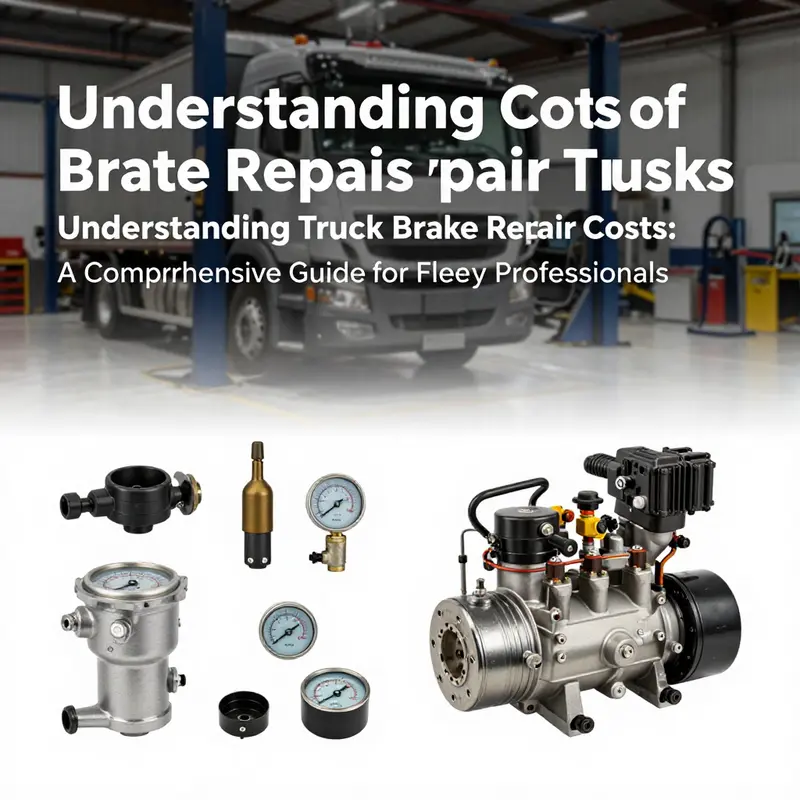
When a truck’s brake system shows any sign of trouble, the question isn’t just whether it can be fixed, but how much that fix will cost, and how soon it needs to be done. The air brake system is a network of increasingly complex components that work together to convert compressed air into reliable stopping power. Because of that complexity, the price tag on repairs can swing widely. The exact amount depends on what parts are failing, the make and size of the truck, labor rates in your region, and whether you’re using original equipment manufacturer (OEM) parts or aftermarket equivalents. Across the board, the goal is safety first, but operators who plan ahead will find that a proactive approach to maintenance usually yields lower and more predictable costs than chasing after recurring problems after they appear.
One of the clearest starting points in estimating repair costs is to identify the common failure points within an air brake setup. A straightforward air line repair, such as fixing a damaged flexible hose or a corroded connection, is typically the least expensive fix you’ll encounter. In many cases, you can expect to pay roughly $50 to $200 for parts and labor to restore a compromised line or connector. This range reflects variations in line length, accessibility, and the labor rate charged by the shop. It also underscores the fact that not all air line problems are equal; a leak at a valve, a cracked hose, or a damaged fitting can each require different levels of disassembly and time. For fleets watching the pennies, a quick air line repair is often the most cost-effective way to preserve brake performance and avoid more expensive downstream failures.
Beyond lines, the air dryer valve sits higher on the cost scale because its function is critical to maintaining clean, dry air that protects the system from moisture-related failures. A failed or sticking air dryer valve can compromise the entire braking performance by allowing moisture and contaminants into the reservoir and lines. Replacing an air dryer valve typically falls in the $300 to $800 range, depending on whether the part is an OEM specification and the complexity of the unit. In more sophisticated cooling and compression systems, the valve integrates with other controls, making a straight replacement more involved and driving labor time higher. In cold weather regions, the dryer’s role in preventing ice formation becomes even more crucial, adding both a safety imperative and a potential cost premium for correct installation and calibration.
Repair kits offer another path to managing costs, especially for preventive maintenance and preventive care. Kits that bundle multiple seals, gaskets, and small components can be an economical way to refresh a system without a full component replacement. While the specific kit referenced in some sources is marketed for particular vehicle lines, the underlying principle remains universal: bulk purchases of repair kit components can reduce the per-piece cost significantly. In general terms, expect a repair kit or its individual pieces to run in the realm of $8 to $10 per piece when bought in bulk. This pricing makes sense only when you can apply the kit to a documented issue rather than replacing parts blindly. The real value of a kit is in enabling precise, targeted maintenance—replacing worn seals, rebuilding a costly subset, and avoiding a more expensive, time-consuming overhaul later on. What matters most is compatibility and safety: certified kits that match the air brake architecture of your truck help ensure that preventive maintenance doesn’t become a regulatory headache or a safety risk.
Labor costs account for a large portion of any air brake repair bill. In most markets, skilled brake technicians bill for time spent diagnosing and repairing. The typical labor rate falls in the range of $100 to $250 per hour, depending on the shop, region, and whether the work is performed by dealership technicians or independent service centers. The difference between minor maintenance and major overhauls can be stark. A full brake chamber overhaul, a complete system bleed, or a multi-component replacement can push the total beyond $1,500 when you include both parts and labor. Diagnostic fees, often charged to identify the exact problem, commonly range from $80 to $150. These fees are a reminder that some issues are not immediately obvious and require careful system-wide testing, including listening for leaks, verifying line pressure, and examining the drying and moisture-management loop.
The variability in these numbers is a practical consequence of the many moving parts that make up an air brake system. The same truck model can encounter different costs depending on its state of wear, the presence of any pre-existing corrosion, and the vehicle’s operating environment. More importantly, the decision between OEM parts and aftermarket equivalents can swing a repair bill by hundreds or even thousands of dollars. OEM parts typically guarantee exact form, fit, and performance, but they come at a premium. Aftermarket parts can deliver substantial savings, but the risk is that not all aftermarket components will match the long-term reliability and regulatory compliance that a fleet must meet. For a business, the choice is often a balancing act: the lowest initial cost versus the long-term cost of downtime, warranty coverage, and the potential impact on fleet reliability. When a shop frames a quote, these tradeoffs should be explicit, with an itemized breakdown that clarifies parts, labor, and any diagnostic or disposal fees.
Because air brake systems are central to safe vehicle operation, many operators adopt a conservative budgeting posture. Preventive maintenance is widely recognized as the most cost-effective strategy for controlling total cost of ownership. Regular checks for leaks, moisture in lines, and proper drainage of the reservoir, along with routine bleed and test procedures, help identify issues before they escalate into expensive repairs. This approach is not merely about avoiding downtime; it also reduces the risk of regulatory penalties that can accompany out-of-service violations. It is worth noting that the value of preventive maintenance extends beyond safety. It translates into more predictable maintenance cycles, easier budgeting, and fewer surprises when a fleet schedules service during a busy season. In practice, setting aside funds for routine service and potential minor repairs ensures that a vehicle remains on the road when it matters most and that unexpected failures do not trigger cascading maintenance costs later in the quarter.
When operators plan next steps, obtaining multiple quotes remains a prudent discipline. A good quote should provide an itemized view of the parts and labor required, the expected scope of work, and the anticipated completion time. In some cases, the diagnostic fee may be applied toward the repair if the work proceeds, but that policy varies by shop. The practice of seeking several estimates is not simply about chasing the lowest price; it is also about preserving the safety and reliability of the brake system. A well-constructed quote helps fleet managers weigh tradeoffs between immediate repair cost and the longer vector of expenses associated with ongoing wear, recurring leaks, or repeated preventive maintenance visits.
For fleet operators who want to connect this topic to broader budgeting practices, it can be valuable to view air brake repairs within the larger framework of routine truck maintenance. A practical approach is to allocate a predictable annual maintenance budget that covers both anticipated repairs and a reserve for unforeseen issues. This strategy aligns with industry guidance that emphasizes disciplined cost management and proactive upkeep. To explore this approach in more depth, consider reviewing resources on budgeting for routine truck maintenance, which provide a practical framework for forecasting and managing expenses across a fleet. Budgeting for routine truck maintenance.
The route to accurate costing also benefits from a clear understanding of the parts landscape. OEM parts tend to be more expensive but can offer a match in fit and performance. Aftermarket parts can deliver substantial savings, but operators must weigh the potential impact on warranty terms and long-term reliability. In the air brake domain, where moisture control and airtight seals are non-negotiable for performance and safety, the consequence of a mismatched part can extend downtime and create regulatory concerns. The safest course is to work with a reputable shop that will help determine whether an OEM or aftermarket part aligns with the truck’s duty cycle, the operator’s tolerance for risk, and the fleet’s safety requirements.
A closer look at the numbers highlights that nearly all repairs begin with a diagnosis. The diagnostic phase is a gatekeeper, signaling whether a leak is a simple fix or the beginning of a larger repair. Even if the primary issue is a leaky line, the technician may uncover related faults—such as compromised seals, corroded fittings, or a sluggish dryer valve—that will influence the final bill. Because diagnostic work itself incurs a cost, the value of a thorough check is not just the immediate fix but the avoidance of early failures that could result in higher expenses later. This is a practical reminder that cost management in brake systems is not only about choosing between parts but also about investing in diagnostic accuracy and timely maintenance.
In the wider ecosystem of truck maintenance, this cost discourse has practical implications for fleet performance. A well-managed air brake repair program reduces the need for emergency repairs in the field, minimizes downtime, and preserves fuel efficiency by maintaining consistent brake performance. When a driver leaves the yard with a reliable braking system, the risk of accidents and unscheduled maintenance drops, and the fleet’s overall reliability improves. This is why many operators treat air brake maintenance not as a cost center but as a strategic investment in safety, uptime, and predictable operations. The costs discussed here should be weighed not only against the immediate price tag but also against the cost of downtime, missed deliveries, and tenant penalties that can accompany late or failed braking systems.
As you plan the next maintenance cycle, remember that the numbers above are baselines and that the actual bill will reflect your truck’s condition, your shop’s location, and the parts you select. If you’re building a cost model for a mixed fleet, factor in a contingency for occasional major repairs, especially when considering older vehicles that have accrued thousands of miles. You may also find that investing in high-quality preventive items or a robust maintenance contract with a trusted shop yields better value than paying for piecemeal repairs after a leak or failed valve erodes performance. The bottom line remains straightforward: air brake repairs vary widely, but with careful planning, preventive care, and transparent quoting, you can manage the total cost and keep your fleet on the road.
In closing this chapter, the message for operators is clear. Understand the components, anticipate the common failure points, and approach repairs with a structured cost framework. The most expensive repairs tend to be those that come as a surprise, when downtime compounds the price of parts and labor. By treating preventive maintenance as an investment and by seeking multiple, transparent quotes, you can anchor repair costs in reality rather than fear. If you’re looking for a practical resource that ties the cost discussion to budgeting and routine maintenance, explore the linked guide on budgeting for routine truck maintenance. It offers a concrete plan to allocate funds, schedule interventions, and weather the financial impact of brake system upkeep over the life of your fleet. External reference for further detail on air brake repair kits and their availability can be found at a widely used supplier catalog: https://www.alibaba.com/product-detail/JL-PARTEXP-AIR-BRAKE-REPAIR-KIT-MITSUBISHI_1600787557632.html
Major Brake Component Replacements: Reading the Price Tag on Truck Repairs
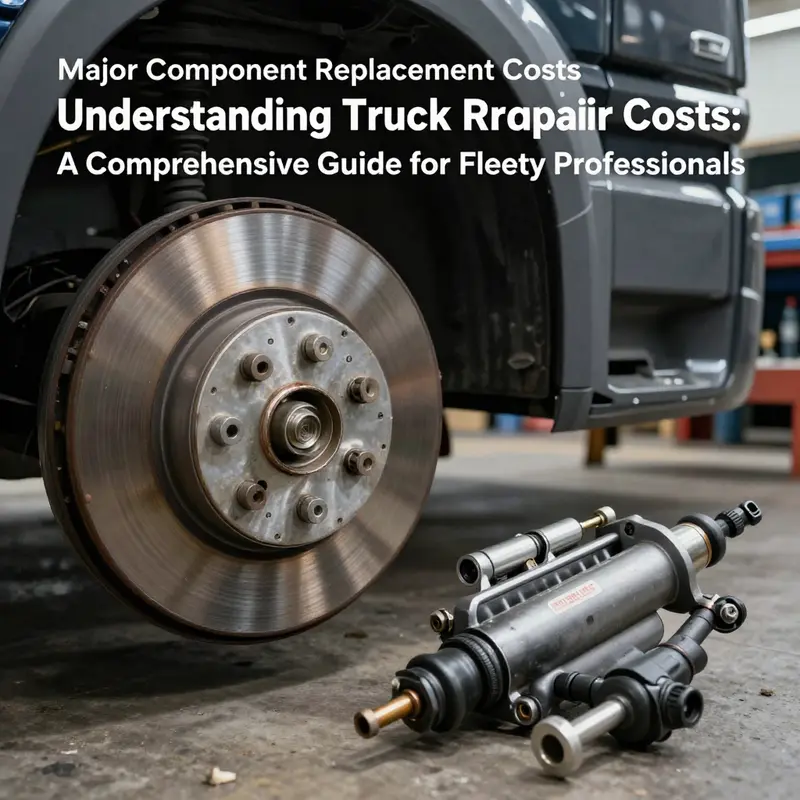
When a truck’s braking system requires attention, the tab for major component replacement can look intimidating. Yet understanding the rough price range for each key part helps fleets, owner-operators, and maintenance managers plan ahead rather than panic at the shop counter. Major component replacements are not a single price; they reflect the type of truck, the specific brakes it uses, the exact parts that fail, and the labor required to install them correctly. In many trucks, the decision to replace a major component is driven by wear, performance decline, and the need to maintain predictable stopping power under heavy loads. What follows is a practical, clock-by-clock walk through the main components that most commonly trigger a major repair, the typical costs you’ll encounter, and the factors that push those costs higher or lower across regions and job sites. The goal is to equip you with a realistic budgeting framework so you don’t underestimate the price tag when a technician says a replacement is necessary.
To start, it helps to map out the components that most commonly carry the cost burden in a brake overhaul. The drum and rotor surfaces, the calipers that squeeze them, and the lines or hoses that deliver the hydraulic or pneumatic pressure all participate in every stop. Drums and rotors are the wear surfaces that convert the kinetic energy of a loaded truck into heat, and when they wear too thin or become warped, the entire braking geometry can be compromised. A typical price range for replacing a brake drum sits around $150 to $300 per drum, depending on the material and the drum size required by the axle. If rotors are involved, the cost for a set of front rotors generally runs about $200 to $400. These numbers reflect only parts; labor and any alignment or resurfacing work add to the total. Calipers, those critical clamp devices that apply pressure to the discs or drums, run roughly $100 to $250 apiece, with the total depending on the number of calipers per axle and whether the design is one-piston or two-piston. Lines or hoses, which must withstand pressure and temperature cycles, typically come in at $75 to $200 for a quality line kit.
Labor mirrors the complexity of the job. Replacing these components is not simply a matter of swapping parts; it requires careful bleeding, pressure testing, and often a re-cycling of the hydraulic or pneumatic logic that governs the system. Labor costs tend to fall in the range of $150 to $300 per axle, influenced by the shop’s regional wage structure, the accessibility of the components, and the need to remove other parts to reach the brakes. In a two-axle scenario, with front and rear brakes both needing attention, the labor charge can double, but the per-axle rate helps the math remain straightforward. When you combine parts and labor, you can see that a complete overhaul on both front and rear axles often exceeds $1,000, particularly on newer trucks with more sophisticated braking systems such as air discs or electronically controlled brakes.
It’s also important to acknowledge that not all trucks rely solely on mechanical or hydraulic brakes. Many heavy-duty applications use air brake systems, and those systems introduce additional layers of cost and complexity. A leak in the air lines or a failed air governor is a repair that sits at the lower end of the spectrum—roughly $100 to $300 for parts and labor. But replacing an entire air compressor can push the total well into the mid-range or higher, often $500 to $1,000 or more, and that price carries a premium for the specialized tools and expertise required to service air-driven braking networks. In practice, a fleet that runs air brakes may see more frequent opportunities for major component replacements in the form of compressors, lines, or isotropic control valves, each with its own price trajectory. For major hydraulic or mechanical components such as the master cylinder and the brake booster, you’ll see substantial costs as well. A master cylinder replacement typically ranges from $200 to $500, while a brake booster can cost $300 to $700, exclusive of labor. These parts are critical to maintaining the pedal feel and hydraulic or pneumatic pressure needed for reliable stopping, and their failure often triggers a broader inspection to determine whether other components have been compromised by lack of proper system pressure.
Another practical factor shaping the price tag is the diagnostic step that precedes any replacement. Shops commonly charge a diagnostic fee to identify the exact problem, with typical costs around $80 to $150. Diagnostic work is particularly important in brake scenarios because some symptoms—such as a soft pedal, a dragging brake, or unusual noises—can point to multiple possible culprits. A precise diagnosis helps prevent unnecessary replacements and keeps the total outlay reasonable. It also means that a customer can compare apples to apples when soliciting quotes: one shop’s estimate should reflect the same diagnostic process and the same component list as another’s.
The variability in price is not purely about the parts or the labor rates themselves. It also reflects the truck’s type and configuration. Heavy-duty machines, especially those used in long-haul or high-speed operations, are more likely to have higher-cost drum or rotor assemblies and more complex caliper geometries. When a truck operates in regions with higher labor costs, the same replacement job can come in at a noticeably higher price. In contrast, a fleet operating in a region with lower wage scales may see correspondingly lower labor charges, even for similarly complex work. The difference is not merely academic: for a multi-axle, high-demand application, these regional variations can accumulate into a few hundred dollars in the final bill.
If you step through a concrete example, you’ll begin to see how the numbers interact. Suppose you’re replacing a front rotor and a rear drum set along with calipers on two front wheels. You might be looking at $200 to $400 for rotors, $150 to $300 per drum for two drums in the rear, and $100 to $250 per caliper for front wheels. Add the labor: $150 to $300 per axle for disassembly, inspection, and reassembly, plus the costs for bleeding and testing. When you sum these, the total per axle can reach into the mid-hundreds, and the entire job across front and rear can cross the $1,000 threshold, especially if the brakes in play include a mix of disc and drum configurations or if the front axle uses multiple calipers. If the truck has a fully disc-brake setup on both axles and an air brake compressor replacement becomes necessary, the price range shifts upward, and the potential for a five-figure bill, though unlikely in most routine repairs, becomes more plausible in cases of severe wear or component damage that affects the brake system’s overall integrity.
One of the most important realities in this space is that these are estimates rather than fixed quotes. The actual cost you encounter will depend on the precise make and model, the age of the truck, the specific parts required, and the shop’s standard labor rates. It’s common practice to obtain multiple quotes from reputable mechanics or dealerships before committing to repairs. This practice helps ensure that you’re not overpaying for parts that could be substituted with equivalent, compatible alternatives or that you haven’t misread the scope of work. For readers who are budgeting for ongoing maintenance, a practical approach is to separate the costs into two buckets: predictable wear parts (like pads, shoes, seals, and lines) and major overhauls (like rotors, drums, calipers, and masters). The first bucket can be planned with annual or semi-annual maintenance in mind, while the second bucket should be reserved for the years when a larger-scale repair becomes unavoidable.
To connect this discussion to budgeting, consider the value of building a contingency line for major brake work into your maintenance plan. Even when you drive carefully and invest in preventive maintenance, the possibility of a major component needing replacement remains real. A cautious budgeting approach would factor in the potential for a complete brake overhaul on multiple axles, a scenario that could exceed the $1,000 mark and rise further when air-brake systems or multi-axle combinations are involved. In the end, the price tag for major brake component replacements is a function of parts, labor, system complexity, and regional economics, with safety and reliability as the constant priorities that justify the expenditure.
For readers who want a real-world anchor, the numbers cited here align with widely reported ranges used by maintenance professionals across the industry. While the exact figures vary by vehicle type and supplier, the overarching pattern remains clear: replacing brakes at the major component level is not a one-and-done cost, but rather a sequence of decisions tied to wear patterns, system design, and the inevitability of age in demanding trucking environments. If your goal is to minimize the chance of surprise bills, the best defense is proactive maintenance, timely inspections, and honest conversations with technicians about the tradeoffs between repair quality, component life, and upfront costs. Keeping a log of part replacements, monitoring brake performance indicators, and planning ahead for possible overhauls can transform an unpredictable expense into a manageable, predictable budget line that protects both safety and bottom-line performance.
If you’re looking to place these numbers within a broader budgeting framework, a practical step is to view major brake component replacements as part of a comprehensive maintenance strategy rather than a stand-alone event. For a structured approach to planning, consider reviewing resources focused on budgeting for routine truck maintenance and long-term repair costs. This kind of planning helps ensure you have enough liquidity to cover unexpected brake work without forcing last-minute operational halts. Budgeting for Routine Truck Maintenance
In closing, the price tag attached to major brake component replacements is an unavoidable reality for anyone operating or maintaining commercial trucks. The ranges outlined here provide a practical frame, but the actual bill will always reflect the specific brake architecture, the parts used, and the labor environment. By staying informed, seeking multiple quotes, and maintaining regular brake inspections, you can navigate these costs with confidence and keep your fleet on the road with safety and dependability as the guiding priorities. For those who want a deeper dive into industry pricing and regional variations, a detailed external resource can offer broader benchmarks and case studies that complement the numbers shared here. External resource: https://www.truckequipment.com/brake-repair-costs
Final thoughts
In conclusion, comprehending the costs associated with repairing and maintaining truck brakes is essential for fleet managers and company operators. By accurately assessing repair needs—from basic maintenance and disc brake repairs to understanding the complexities of air brake systems and major component replacements—decision-makers can optimize their budgets and ensure their vehicles operate safely and efficiently. Regular inspection and proactive maintenance can mitigate emergencies and reduce overall repair costs while enhancing the longevity of the truck fleet. Investing in knowledge about brake repair costs ultimately translates to more informed decisions that support fleet performance and safety.