Assessing the capabilities of repair shop employees in the trucking industry is vital for fleet managers, trucking company owners, and logistics service providers. As the backbone of operational efficiency, the proficiency of these technicians significantly impacts vehicle longevity and reliability. This article delves into essential methods for evaluating the technical expertise, professionalism, certifications, and overall reputation of repair shop employees. Each chapter will build upon the preceding one, ensuring a comprehensive understanding of how to ensure skilled, reliable service in the trucking sector.
Reading the Gauge: A Comprehensive Assessment of Repair Shop Talent in the Trucking Industry
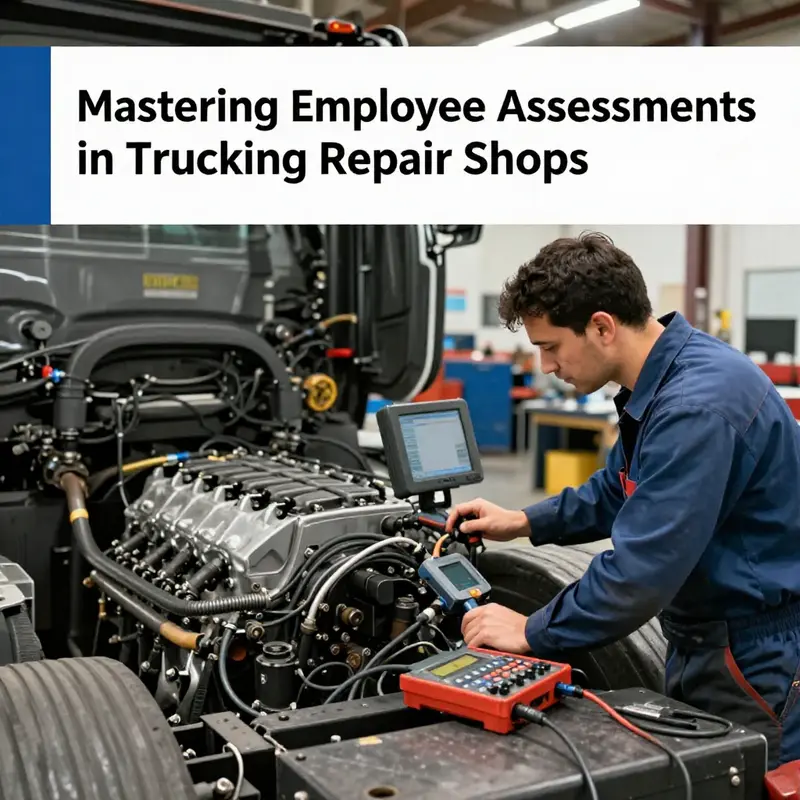
In the trucking world, the repair shop’s success hinges on the people who touch the vehicles long before a fleet manager sees the final bill. A single misdiagnosis can cascade into downtime, costly warranties, and frustrated drivers who rely on timely service to keep their routes moving. So evaluating repair shop employees requires more than a checklist of tasks performed. It demands a cohesive portrait of capability that weaves together formal credentials, diagnostic acuity, hands-on precision, and how professionals carry themselves in a live shop environment.
The aim is to glimpse not just what a technician knows, but how that knowledge is applied when the clock is ticking, when a fault code lights up a dashboard, or when a stubborn vibration returns after a supposed fix. This is especially true in an industry where heavy-duty engines, turbocharged powertrains, complex electrical circuits, and advanced braking systems demand both depth and discipline.
The evaluation framework must be multi-layered and integrated, blending evidence that can be observed in real time with verifiable qualifications and trackable outcomes. A reliable benchmark comes from recognized certifications, but the true measure of competence lies in a technician’s ability to diagnose correctly, repair durably, and communicate clearly with customers and fleet managers.
When these elements align, downtime drops, repeat failures decline, and a shop earns a reputation for reliability that can withstand the pressure of tight schedules and high-value equipment.
Certification, especially ASE CV, signals technical capability across core domains such as diesel engines, heavy-duty brakes, electrical systems, drivetrain components, and suspension systems. Certification confirms foundational knowledge and the ability to apply it under exam conditions.
In practice, the technician must interpret fault codes in the context of vehicle history and operate diagnostic tools to validate hypotheses with controlled tests. A data-driven approach reduces guesswork and supports durable repairs.
Beyond credentials, hands-on performance matters: correct torque, proper sealant application, clean wiring, and meticulous test procedures. A disciplined shop uses standardized procedures, checklists, and calibrated tools to ensure consistent quality.
Professionalism includes appearance and demeanor, but also teamwork, safety, and clear communication with drivers and fleet managers.
Finally, evidence such as repair history and customer feedback help fleet managers assess capabilities beyond a single repair. A culture of continuous learning and data-driven improvement strengthens reliability over time.
For readers seeking deeper context, official ASE resources define the scope of the CV certification, and industry discussions can illuminate practical implications for talent development and uptime.
This chapter offers a framework that fleets can adapt to balance credential verification with observed performance, ensuring repairs endure and drivers stay informed about the work done.
Beyond Fixes: How Professionalism and Work Ethic Drive Reliability in Trucking Repair Shops
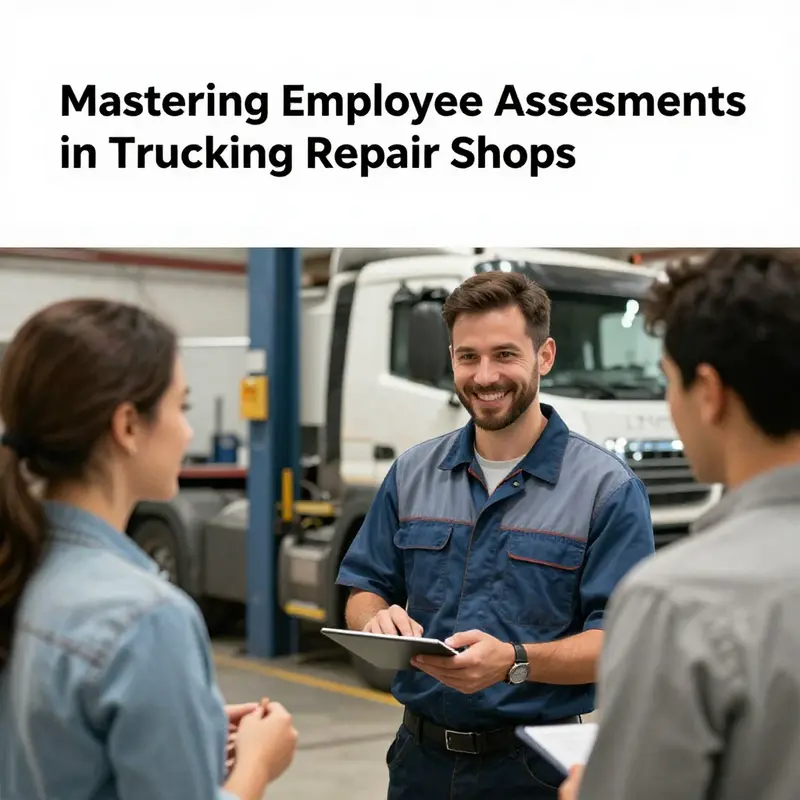
In the demanding world of commercial trucking, a repair shop is more than a place where parts are replaced and engines are tuned. It is a frontline for safety, uptime, and operational reliability. The people who work there—technicians, advisors, and shop leaders alike—shape every repair’s outcome through their professional demeanor and their everyday work habits. When evaluating repair shop employees, it is essential to look beyond technical know-how and gauges to the human dimensions that determine how well a shop functions under pressure. A project can be technically perfect yet fail in the field if the people responsible for execution do not carry themselves with a consistent standard of professionalism or a robust work ethic. Conversely, a team that blends solid technical skills with reliable professionalism and a strong work ethic tends to produce repairs that endure, drivers stay on schedule, and fleets realize predictable performance. This chapter weaves those threads together, offering a cohesive lens through which to assess the people who keep the wheels turning in the trucking industry.
Professionalism in a repair shop emerges as a pattern of observable behaviors that signal respect for the job, for colleagues, and for the people who depend on the shop’s work. Punctuality is not simply arriving on time; it is a signal of reliability and respect for the dispatch cycles that truckers follow. When a technician consistently arrives ready to work, it reduces idle time for the crew and minimize gaps in diagnostic or repair work. It also communicates to drivers and fleet managers that the shop values a driver’s time and the consistency of the maintenance schedule. A professional technician will also adhere to safety protocols with unwavering consistency. The trucking environment multiplies risk because vehicles are large, moving parts and systems interact in complex ways, and a small lapse can cascade into a serious incident. A professional technician demonstrates this awareness in every action: selecting appropriate personal protective equipment, following established lockout-tagout practices, and maintaining a clean, organized workspace so hazards are minimized for everyone in the shop and for those who will operate the vehicle after repair. The impact of safety discipline extends beyond the shop floor. It protects the driver who climbs into the cab, the dispatcher who depends on timely repair completion, and the company that must meet safety standards for regulatory compliance.
Clear communication stands beside punctuality and safety as a core element of professionalism. In the trucking repair context, communication is a two-way exchange, not a one-way instruction. A professional technician asks clarifying questions when a symptom is ambiguous, documents findings succinctly, and translates technical details into language a driver or manager can understand. This approach reduces misinterpretations, speeds up decision-making, and elevates trust. In practice, that means reporting not just what was found but how it was analyzed, what tests were run, and what steps remain if the issue recurs. Communication also extends to colleagues within the shop. A professional demeanor includes sharing insights, offering to help a teammate who is stuck, and documenting lessons learned so the whole team grows. It is this culture of open, constructive dialogue that transforms individual competence into collective capability.
Commitment to high-quality workmanship is the visible downstream result of professionalism. It shows up in how a repair is executed, how carefully parts are fitted, and whether the final test confirms success under real operating conditions. High-quality workmanship is easier to recognize in the finished product than to define in abstract terms because it manifests as durability, predictable performance, and a reduction in recurring faults. Technicians who take pride in their workmanship do not rush critical steps. They verify torque specifications with calibrated tools, apply gaskets and seals with proper lubrication, and confirm that systems such as electrical circuits or engine management interfaces respond correctly after a repair. This careful approach reduces the likelihood of leaks, misdiagnoses, or new fault codes after a test drive. It also reinforces a broader hard-won discipline within the shop: quality is not the cost of today’s expediency but the investment in tomorrow’s reliability.
If professionalism can be seen in the shop’s conduct, work ethic is felt in the drive and discipline technicians bring to their tasks. A strong work ethic begins with initiative—an instinct to anticipate issues before they escalate. In a heavy-vehicle maintenance setting, an initiative-minded technician may notice a subtle anomaly during a routine inspection and pursue a prudent line of inquiry rather than waiting for a problem to present itself. This proactive stance often prevents breakdowns en route, which is not only valuable for uptime but also safer for drivers who rely on dependable maintenance. Attention to detail is the other side of initiative. It means methodical checks, thorough documentation, and a preference for double-checking critical steps. The detours that curiosity can lead a technician down—such as revisiting a marginal sensor reading or re-verifying a fault code interpretation—are rarely wasted if they avert a larger failure later.
Accountability is the glue that binds initiative and attention to detail into reliable performance. A technician who accepts responsibility for a repair’s outcomes demonstrates ownership that extends beyond the moment of fixing a problem. If a test reveals a lingering concern, accountability pushes a team member to escalate appropriately, revisit the root cause, and communicate clearly with the driver and the fleet manager about what remains and when it will be resolved. A strong work ethic also embodies a willingness to go beyond basic requirements. It may involve cross-training with a neighboring specialty, volunteering to mentor newer staff, or stepping in during peak periods to ensure a repair queue does not backlog. Such willingness to stretch beyond the bare minimum signals a mature professional culture where excellence is expected and valued, not occasionally achieved in lucky moments.
To translate these traits into a robust evaluation, shops benefit from a structured, ongoing approach rather than episodic assessments or rote checklists. Regular feedback sessions create a cadence that makes expectations explicit and keeps improvement focused. During these conversations, managers should balance acknowledgment of what is being done well with clear, specific guidance on where performance can improve. Feedback that is actionable—identifying a particular step in a diagnostic process that could be tightened, or a safety protocol that could be reinforced in a given scenario—has a higher likelihood of translating into improved practice.
Peer reviews offer another lens for assessing professionalism and work ethic. Colleagues observe and comment on everyday behaviors that formal assessments might miss: how teammates handle stressful repairs, how they communicate with drivers during delays, or how they document changes in a way that others can reproduce. Peer feedback should be structured and confidential, emphasizing constructive comments that focus on observable actions rather than personality judgments. When team members understand that their colleagues’ opinions matter and that feedback is part of a shared commitment to excellence, the shop culture long-term strengthens. Real-time observation—watching technicians during routine maintenance and during unexpected repairs—provides invaluable context. A single late moment does not define someone, but a pattern of missed steps or unsafe shortcuts over time does. Observations should be recorded with consistency and tied to concrete standards so the collected data informs coaching, training, and recognition.
The cultivation of professionalism and work ethic is rarely a one-person job. Leadership sets the tone, models ethical behavior, and builds the structural supports that sustain a high standard. Managers who demonstrate fairness, transparency, and accountability in their decisions create an environment where staff feel empowered to uphold professional norms even when no one is watching. This leadership approach includes investing in the right tools and processes that support professionals. When a shop adopts digital workflows, it makes information more accessible, reduces miscommunication, and speeds up the resolution path for drivers and fleet managers. Yet technology alone cannot create culture. It must be paired with deliberate actions and consistent expectations. As a result, the most successful shops weave together leadership, structured evaluation, and opportunities for growth into a living code of conduct that is visible, teachable, and reinforced every day.
In framing these ideas within the broader evaluation framework for repair shop personnel, it is useful to view professionalism and work ethic as the connective tissue between technical capability and the outcomes fleets need. A technician may be proficient with diagnostic software and skilled in component repair, but without reliable professionalism, the repair’s delivery can become inconsistent, and the trust that drivers and dispatchers place in the shop erodes. Conversely, a technician who blends solid diagnostics with impeccable communication, disciplined safety practices, and a proactive, accountable approach creates a multiplier effect: better repair outcomes, smoother handoffs to drivers, and a more predictable maintenance cycle. These effects accumulate across the shop, influencing key performance indicators such as on-time completion of repairs, adherence to safety protocols, and the frequency of repeat issues.
To support the pursuit of higher professionalism, shops should model ethical behavior as a core management practice. Leaders who accept ongoing learning as a strategic obligation—investing in training, refreshing competencies, and updating workflows in response to industry developments—foster a culture where professionalism is not optional but expected. John DeGroot emphasizes in his 2025 article, “Reviving Professionalism in Commercial Trucking,” that true professionalism goes beyond internal training. It requires alignment with external industry standards and a shared sense of responsibility across the broader ecosystem. When repair shop employees internalize these principles, their work ethic becomes self-sustaining and integral to the organization’s success. This external perspective complements internal efforts by keeping the shop accountable to evolving safety norms, technological advances, and regulatory expectations. As a practical matter, organizations should couple internal assessments with occasional external benchmarks to ensure that professional standards remain current and relevant.
For shops seeking practical avenues to cultivate and measure professionalism, a structured approach to evaluation is essential. Regular feedback sessions should be scheduled at meaningful intervals and anchored in specific performance criteria. Peer reviews can be rotated to prevent cliques and maintain broad visibility into behavior across the team. Direct observation should be documented in a consistent format, with a focus on behaviors that drivers and fleet managers can observe or experience directly, such as punctuality, clarity of explanations, and the thoroughness of the final test drive. These practices, when embedded in a broader performance-management framework, discourage complacency and reward consistent behavior, not just episodic success.
Integrating internal resources with external reading and community benchmarks strengthens the evaluation process. For example, the industry conversation about professionalism in trucking as a whole can enrich internal policies and training materials. The field benefits from a shared language around what constitutes professional conduct, the expectations for handoffs between technicians and drivers, and the importance of safety and quality in repairs. By anchoring internal programs to both practical shop realities and broader industry discourse, repair operations become more resilient and more trustworthy.
In this light, the recommended approach to assessing professionalism and work ethic is neither purely qualitative nor entirely quantitative. It blends measured observations—such as adherence to safety protocols and the accuracy of diagnostic documentation—with qualitative judgments about communication style, accountability, and willingness to support teammates. The most effective evaluations are ongoing, transparent, and constructive, enabling technicians to grow while ensuring that fleet performance remains reliable. The aim is not to penalize but to guide development and to recognize excellence when it emerges. A robust program rewards consistent professionalism as a fundamental asset, one that underpins every other capability in the shop—from diagnosing the most complex electrical issues to delivering a repair that endures across multiple miles and months of operation.
To ground this discussion in a practical path forward, consider weaving the following cues into your next performance review or daily coaching session. Acknowledge punctuality as a baseline expectation, but also celebrate proactive safety compliance when a technician identifies a potential risk and takes steps to mitigate it. Highlight instances where clear, driver-friendly explanations prevented confusion and reduced unnecessary conversations or callbacks. Recognize thorough, repeatable workmanship that leaves a repair with verifiable test results and a documented trail for future reference. And, most importantly, encourage a habit of accountability—where a technician openly discusses lessons learned from a repair that didn’t go perfectly and outlines concrete steps to improve future performance. When these threads are woven together, professionalism and work ethic become the steady, reliable fabric of the shop’s identity, shaping how repairs are delivered and how fleets and drivers perceive the value of the service.
For readers seeking further guidance on building a professional culture within trucking repair operations, see the blog hub maintained by industry peers, which offers accessible reflections and practical strategies: mastertruckrepairllc.com/blog/.
As the chapter closes on this thread, it is important to connect these insights back to the larger evaluation framework that includes technical proficiency, certifications, and demonstrable competence. Professionalism and work ethic do not replace technical skill; they enhance it. When a technician brings both a high level of diagnostic acumen and a steady, trustworthy approach to repair work, the result is a vehicle fleet that stays on the road longer, a driver group that experiences fewer delays, and a shop that earns ongoing confidence from customers and partners. The interplay between skill and behavior becomes a compelling case for a holistic assessment strategy—one that values people as much as parts and processes. The next chapter will explore how formal credentials and track records—certifications, years of experience, and documented case histories—fit within this integrated view of repair shop performance, illustrating how evidence of competence complements the judgments of professionalism and work ethic described here.
External resource: https://www.truckinginfo.com/reviving-professionalism-in-commercial-trucking
Certifications as a Compass: Reading the Credentials of Truck Repair Technicians to Evaluate Quality and Safety
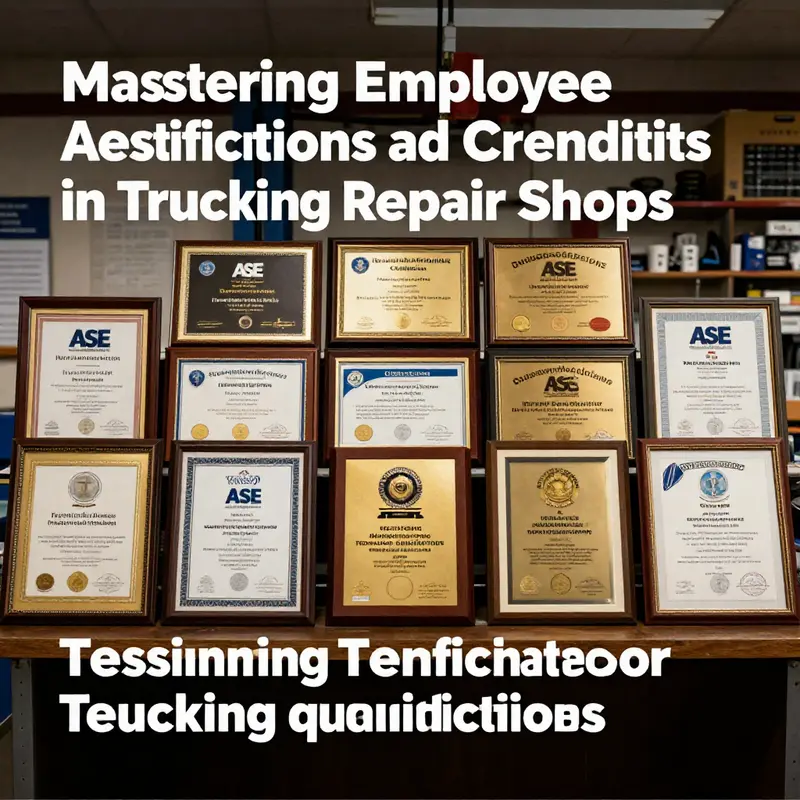
In the demanding world of heavy duty trucking, certifications and credentials are more than badges; they are calibrated compasses that point toward competence, safety, and professional rigor. For fleets and repair shops alike, understanding what these qualifications signify and how they translate into day to day performance provides a clearer road map for evaluating the people who keep a fleet on the road. A credentialed technician brings a structured body of knowledge to the shop, including engine performance, braking systems, electrical networks, driveline dynamics, the ability to interpret fault codes and real time data, and the discipline to apply procedures with precision. Yet credentials alone do not guarantee success. The strongest evaluation blends formal proof of training with observable skill, consistent workmanship, and a demonstrable record of reliability. In practice, that means assessing breadth and currency of certifications alongside real world evidence that a technician can translate knowledge into durable, safe repairs. Beyond national programs, there is a tiered ecosystem of credentials that strengthens a technician’s profile: manufacturer specific credentials embody focused expertise with proprietary equipment and diagnostic workflows; they open doors to warranty work and signal that the technician can work within a vendor’s service standards; they also reflect updates tied to new equipment generations and evolving service protocols. The practical impact for evaluators is straightforward: a technician who holds current, manufacturer specific credentials is more likely to diagnose and repair the latest systems while minimizing warranty disputes or callbacks due to improper procedures. The landscape extends to regulatory expectations that vary across countries and regions. In some jurisdictions, formal qualifications for automotive repair are codified into regulation, creating a baseline standard that operators must meet to legally perform tasks. The trend is clear: formal education and credential verification underpin safer road transport and more predictable repair outcomes, and a shop strategy built around credentialing becomes part of risk management and market positioning. From an evaluator perspective, the practical question is how to interpret a candidate’s certificate portfolio in the context of a specific repair scenario. A robust evaluation starts with ensuring credentials are current and relevant; an expired warranty would be less concerning if the certification covers the relevant subsystem and is up to date. It is essential to examine not only the existence of credentials but also their scope; the most valuable indicators are diverse and recent credentials combined with documented hands on success. Case studies and repair histories provide a narrative of applied knowledge, and a portfolio that includes complex outcomes where diagnostic reasoning, precise component replacement, and verification tests yielded durable repairs speaks louder than a static list of names. But credentials function best when reinforced by a culture of continual learning and quality assurance within the shop: the cleanliness of the workspace, the organization of tools, the availability of up to date diagnostic equipment, and the presence of standard operating procedures all signal how seriously credentialing is treated. A shop that prioritizes ongoing training, regular technical updates, and competency tracking is more likely to turn credentials into reliable repair outcomes. This alignment between formal qualifications and day to day practice becomes a telling sign for evaluators and helps to observe how technicians communicate during repairs, how they verify system status after service, and whether they adhere to manufacturer service procedures. When the shop demonstrates disciplined workflows, clear handoffs, and rigorous quality checks, credentialing becomes a concrete asset rather than a wall ornament. The marketing and customer trust implications are substantial as well: a shop that openly communicates its credential mix and its training commitments signals confidence in its capability. In trucking, customers measure value not just by price or speed but by predictability and safety; certifications contribute to this value proposition by reducing information asymmetry between fleets and service providers. If the technician CV or the shop’s wall of certifications is paired with verifiable evidence of outcomes such as low return rates, long lasting fixes, and high customer satisfaction, fleets will see the shop as a safer choice for complex repairs. This reinforces the importance of documenting credential validity in accessible terms for prospective clients. For evaluators, the task is to translate certification into everyday reliability by asking about credential maintenance, recertification cycles, and how the shop ensures knowledge translates into correct practice in the bay. It also means validating alignment between credentialing and the shop’s service portfolio, noting that a facility with emphasis on heavy duty electrical diagnostics, engine management, and brake systems will rely on the most relevant credentials. A highly specialized shop may still excel if its credentials reflect required depth for that niche; consistency and a coherent story linking qualifications to competence remain key. Finally, operators can adopt a simple, disciplined checklist: verify current credentials and scope, gather repair histories and references, observe shop culture and process documentation, and synthesize these elements with the fleet type and risk tolerance. A well balanced evaluation yields a verdict that recognizes credential strength and real world realities. In sum, certifications do not replace hands on skill but complement it by signaling readiness and professional discipline; when paired with performance evidence and a culture of learning, credentials help shops meet safety, reliability, and efficiency standards in modern trucking. For further perspective, readers can consult industry resources and certification program publishers to understand benchmark knowledge and ongoing professional development for heavy duty technicians. A durable credentialing program supports safer roads and more productive fleets.
Decoding Competence and Reputation: How Fleet Operators Evaluate Repair Shop Employees in the Trucking Industry
Evaluating the competence and reputation of repair shop employees in the trucking industry requires seeing beyond a single technician’s ability to fix a leak or swap a part. It demands a holistic portrait of how a shop functions as a system: the depth of its technical bench, the rigor of its diagnostic process, the discipline of its workflow, and the trust it builds with fleets, drivers, and managers. In practice, this means looking at multiple, interlocking indicators that together predict uptime, safety, and steady performance over time. A fleet operator who wants to protect assets and minimize downtime will seek evidence that a shop’s people are not just capable of repair, but consistently trustworthy in how they diagnose, execute, document, and learn from every job. This approach aligns with industry norms that recognize competence as multi-dimensional and reputation as earned through repeatable results and transparent practice. The result is a gauge that can distinguish a shop that merely responds to service requests from one that sustains fleet performance through careful, methodical maintenance and repair work.
The foundation of a competent repair team lies in technical proficiency and diagnostic expertise. A technician who can navigate the intricate web of modern heavy‑duty truck systems must master core domains such as engine operation under turbocharged and-aftertreatment regimes, transmission behavior across different gearings and control strategies, and braking systems that blend air dynamics with hydraulics. But knowledge alone does not suffice. The diagnostic acumen to translate vague symptoms into precise fault identification differentiates frontline problem solving from guesswork. In practice, this means employing specialized diagnostic tools and software with fluency: interpreting fault codes with an eye for root cause rather than symptom masking, correlating live data streams with mechanical or electrical realities, and testing system responses through controlled, diagnostic procedures. The technician who excels reads wiring diagrams with the same ease as a map for a long highway route, quickly tracing circuits to identify shorts, opens, or degraded connections. A well‑trained professional will also demonstrate hands‑on precision: using torque wrenches to spec, applying sealants correctly to avert leaks, and following exact procedures during key tasks such as OBD scans and relay checks. The proof is not only in the completion of a repair but in the ability to verify performance after work, ensuring that the fix holds under real‑world loads and conditions.
This diagnostic discipline must be supported by a culture of professionalism and work ethic that mirrors the seriousness of the job. A repair shop that presents itself with clean uniforms and proper personal hygiene communicates respect for the work, the fleet, and the driver who depends on reliable transport. A well‑organized, clean, well‑lit shop is more than aesthetics; it is a tangible signal of discipline, attention to detail, and a culture of accountability. When tools are neatly stored, parts are traceable, and diagnostic equipment is calibrated and maintained, technicians can perform their duties with confidence and traceability. The presence of basic comforts like climate control and adequate workspace contributes to safety and focus, which translates into fewer mistakes and safer repairs. The human element—how technicians interact with customers, especially fleet managers and drivers—also matters. A technician who communicates clearly, listens actively to concerns, and documents issues and fixes with transparency fosters trust. Collaboration on the shop floor is equally telling. Teams that demonstrate seamless communication, shared problem‑solving, and peer review during repairs reveal a culture that invests in collective competence rather than isolated brilliance. This is not about a single star performer; it is about a reliable network of skilled individuals whose combined performance can be sustained over time.
Certifications and credentials form a critical pillar of evaluating competence and reputation. In trucking, recognized certifications—especially ASE credentials—offer independent benchmarks of knowledge and testing rigor. A Master Truck Technician credential, for example, signals mastery across a comprehensive set of competencies, while specialized certifications from OEMs attest to familiarity with manufacturer‑specific platforms and software. Certification is most valuable when paired with ongoing training. The industry increasingly demands continuous education as technology evolves: OEM training programs, manufacturer‑provided modules, and updated diagnostic software reflect the ongoing learning necessary to stay current with new engines, transmissions, and electronic control systems. A shop that maintains up‑to‑date certification records demonstrates its commitment to investing in human capital and ensuring its staff can safely and effectively handle contemporary vehicles. Experience with particular makes and models complements formal credentials, expanding a technician’s repertoire of problem‑solving strategies and enabling quicker, more confident decisions when confronted with less common failures.
Evidence of competence and reputation extends beyond the door of the bay. A shop’s track record—its portfolio of repair histories and case studies—offers hard evidence of its capabilities. Fleet operators benefit from seeing examples of complex repairs and high‑value components being handled with skill and care. In parallel, customer feedback and external reputation speak volumes. Genuine testimonials from fleet managers and drivers, consistency in positive outcomes, and a track record of reliable turnarounds contribute to a broader sense of reliability. A low rate of rework and minimal warranty claims often point to thorough planning, precise execution, and quality control that catches issues before they escalate. Management practices matter as well. A shop that prioritizes continuous learning, adopts modern digital workflows, and invests in new tools signals a forward‑looking culture that sustains high standards. In short, competence is demonstrated not only by what technicians can do on a given day but by how a shop organizes and sustains its practice over months and years.
The environment in which repairs occur serves as both a cause and an indicator of competence. An orderly shop floor, with clear work zones, documented procedures, and calibrated measurement tools, reduces the risk of errors and rework. The use of traceable parts—ideally OEM or certified aftermarket equivalents—ensures that repairs align with established specifications and performance expectations. Inventory practices, parts labeling, and a reliable supply chain become extensions of technical competence. The way a shop manages its workflow—from job intake to final testing—becomes a living demonstration of its discipline. Evidence‑based practices, including post‑repair verification and performance testing, are essential. A competent shop does not finish a task and walk away; it closes the loop with a verification phase that confirms the repair’s effectiveness under the truck’s actual operating conditions. This may involve road tests, dynamic diagnostics, or staged trials that reproduce typical loads. When these tests are documented, they create a lasting audit trail that managers can review to ensure continued reliability.
An integrated evaluation also considers how a shop structures its repair process, because process integrity underpins every other dimension. A consistently executed procedure—from fault identification to parts selection, torque spec adherence, sealant application, and leak testing—reduces variability and accelerates learning. Documented steps, checklists, and recorded results offer a form of institutional knowledge that can be reused for future work. The most resilient shops maintain a learning loop: if a fault recurs or a diagnosis proves mistaken, the team analyzes the failure, updates procedures, and shares lessons across the workforce. This commitment to continuous improvement is a powerful, often overlooked signal of long‑term competence. It speaks to leadership’s willingness to invest in staff development and to the shop’s resilience in the face of new technologies, regulatory demands, and fleet expectations.
Ultimately, reputation is the currency by which competence is measured in the trucking maintenance ecosystem. A shop’s reputation rests on the consistency of its outcomes, the clarity of its communication, and the transparency of its processes. Fleet operators assess how well a shop balances speed with accuracy, how it manages parts and warranties, and how it handles warranty claims or rework. Reputation is reinforced by credible, quantifiable indicators: a strong repair history portfolio, favorable customer feedback, low rework rates, and a demonstrated culture of safety and compliance. It is reinforced by management that respects ongoing learning and embraces digital tools to capture data about every repair—from the initial diagnosis to the final test drive. The convergence of these signals—technical mastery, formal credentials, disciplined environments, robust processes, and credible reputations—creates a reliable forecast: a shop that can be trusted to keep a fleet moving with minimum downtime and maximum safety.
For fleet operators seeking a practical framework, the path is not about chasing a single metric but about collecting converging evidence. Begin with the basics: request current ASE certifications and OEM training records, and ask for examples of recent work that demonstrate diagnostic reasoning and post‑repair verification. Observe the shop floor during a typical repair: how do technicians approach a complex fault, how are tools handled, and how is information shared among the team? Review the repair history and case studies the shop can present, looking for patterns of successful outcomes and the kinds of problems the shop has solved in the past. Listen to customer feedback, including drivers’ reports of vehicle performance after service. A culture that emphasizes continuous learning, clear documentation, and transparent communication is as important as technical prowess. When evaluating a shop, fleet operators should also consider how the shop’s management fosters an environment where staff stay current with evolving technology, how digital workflows are implemented to standardize procedures, and how data is used to drive improvements across the entire operation.
A well‑assembled picture emerges when you connect these threads: the technician’s technical depth, the diagnostic discipline, formal qualifications, the work environment, the repair process integrity, and the shop’s public reputation. It is only at the intersection of these elements that you gain confidence in a repair partner’s ability to deliver first‑time fixes, minimize downtime, and support safe, reliable operation of a fleet. This synthesis—technical skill married to professional standards and verifiable outcomes—provides a robust basis for decisions about where to send vehicles, how to structure maintenance plans, and how to negotiate service levels that align with fleet goals. For additional context on ongoing professional development and industry standards, readers can explore broader conversations tied to professional competencies and shop culture in industry resources and discussions such as those featured in the Master Truck Repair blog.
To ground these perspectives in established benchmarks, it helps to align with recognized standards and reference points in the field. The National Institute for Automotive Service Excellence (ASE) serves as a primary benchmark for certification and ongoing skills development. ASE emphasizes that technicians who achieve certification demonstrate superior problem‑solving abilities and a commitment to quality, which correlates with fewer misdiagnoses, quicker repairs, and more reliable service outcomes. The ASE framework suggests that evaluating a shop’s personnel should include verification of formal credentials, evidence of ongoing training, and a demonstrable record of competent service across a range of diagnostic scenarios and repair tasks. When fleets compare shops, they benefit from looking at how they document and track this information, how they verify skill with real‑world results, and how they audit outcomes to ensure sustained performance over time. This is not about chasing perfection but about establishing a disciplined approach that reduces risk, increases uptime, and supports consistent service quality across the fleet. See more in the official ASE resources for certification details, industry standards, and performance research.
In sum, evaluating repair shop employees in the trucking industry is a nuanced, ongoing process. It requires a balanced appraisal of hands‑on skill and diagnostic judgment, validated by certifications and sustained by a culture of professionalism, rigorous work practices, and transparent customer relationships. It is a process that recognizes competence as a living capability, reinforced by evidence from repair histories, management practices, and the ongoing education of the workforce. When fleets adopt this integrated lens, they gain not only confidence in the repairs performed but also a clearer, more predictable path to uptime, safety, and operational efficiency. For readers seeking a concise overview of related concepts and ongoing industry conversations, the linked resource provides additional context and practical guidance on developing and sustaining repair‑shop excellence: Master Truck Repair blog. External standards and certification benchmarks are summarized by the National Institute for Automotive Service Excellence, which remains a cornerstone for evaluating technician qualification and performance across the industry: https://www.ase.com/.
Final thoughts
Evaluating repair shop employees in the trucking industry is essential for ensuring your fleet’s efficiency and reliability. By focusing on comprehensive assessments of technical expertise, professionalism, certifications, and reputation, fleet managers and business owners can make informed decisions that lead to positive operational outcomes. Investing in reliable repair staff ultimately translates to greater vehicle performance and lower long-term costs, reinforcing the importance of strategic personnel evaluation.