The efficacy of trailer maintenance directly impacts operational efficiency and safety across the trucking and logistics industries. Among these concerns, the reliability of horse trailers, particularly their axles, is paramount for businesses that transport livestock. This article delves into whether Grantsville Trucking provides services for repairing horse trailer axles, while examining the technical limitations of such services, comparing them to specialized repair shops, and analyzing the economic implications for fleet managers and logistics operators. Each chapter systematically unfolds the relevant information, equipping decision-makers with the knowledge necessary to safeguard their investments in trailer equipment.
Grantsville Trucking: Horse Trailer Axle Repair Capabilities Explained
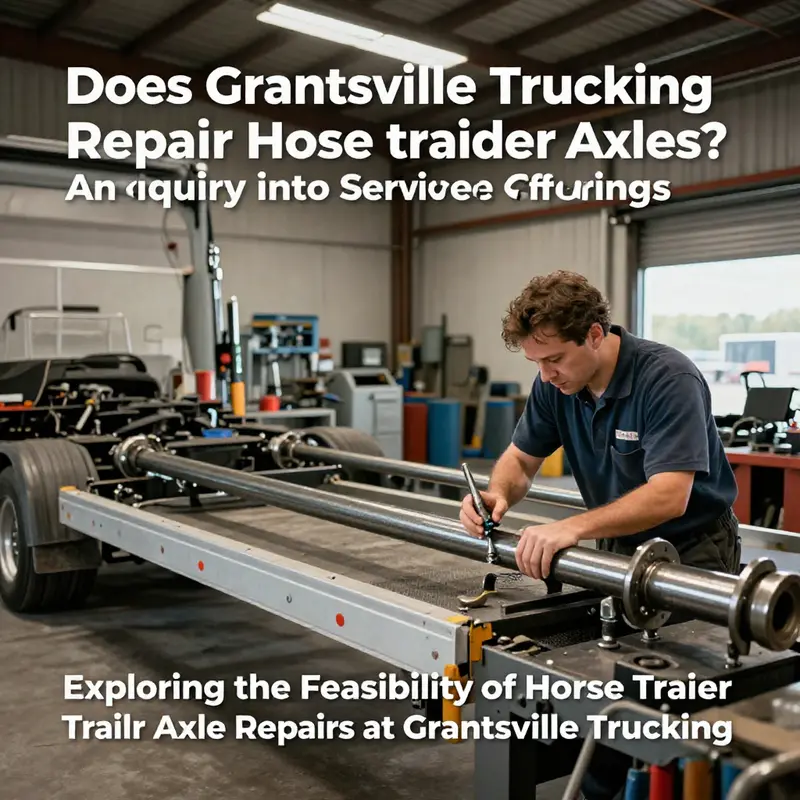
When owners of horse trailers ask whether a trucking company can repair their trailer axles, the answer hinges on the shop’s declared service scope and its experience with heavy‑load trailer systems. Grantsville Trucking describes itself as offering full‑service truck and trailer maintenance, which includes axle alignment, bearing replacement, and structural axle repairs for horse trailers. This indicates a capability that treats the trailer as an integral part of the transport chain rather than an afterthought.
Why Axle Work Matters for Horse Trailers
- Load Dynamics: Horses shift weight, brake suddenly, and travel over uneven surfaces, placing higher dynamic loads on the axle, bearings, and suspension.
- Safety: Misaligned or worn axles can cause tire wear, unstable steering, and even wheel separation—risks that are unacceptable when live animals are aboard.
- Comfort: Proper axle geometry reduces vibration and harsh motions, keeping horses calm and drivers confident.
Grantsville’s Service Offering
- Axle Alignment – Technicians measure toe, camber, and caster to ensure the axle sits within manufacturer tolerances. Misalignment is corrected using precision equipment, preventing uneven tire wear and unstable handling.
- Bearing Replacement – Bearings are inspected for wear, heat damage, or play. When needed, they are cleaned, repacked, or replaced with new units, restoring smooth rotation and preventing heat buildup.
- Structural Repairs – Bent, cracked, or corroded axle sections are welded, reinforced, or replaced. The repair plan considers material integrity, load capacity, and the impact on ground clearance and wheel track.
Diagnostic Process
A typical visit begins with a visual inspection, measurement of alignment references, run‑out testing for wobble, and a check of hub seals and bearing wear. Technicians may disassemble components to inspect for micro‑cracks or corrosion before deciding on the repair path.
Post‑Repair Practices
Grantsville documents pre‑repair conditions, outlines the work performed, and provides a maintenance schedule that includes:
- Regular lubrication intervals for bearings and seals.
- Torque checks on axle fasteners after the first few hundred miles.
- Periodic re‑inspection of alignment and tire wear.
Bottom Line
Grantsville Trucking’s ability to perform axle alignment, bearing service, and structural axle repairs demonstrates a comprehensive capability suited to the demanding environment of horse trailer transport. Owners can expect a thorough diagnostic approach, transparent communication, and a clear post‑repair maintenance plan that together ensure safe, reliable hauling of live‑load cargo.
For further guidance on budgeting and planning routine maintenance—including axle work—see the resource: Budgeting for Routine Truck Maintenance.
Beyond Heavy-Duty Tractors: Assessing Whether Grantsville Trucking Handles Horse Trailer Axle Repairs
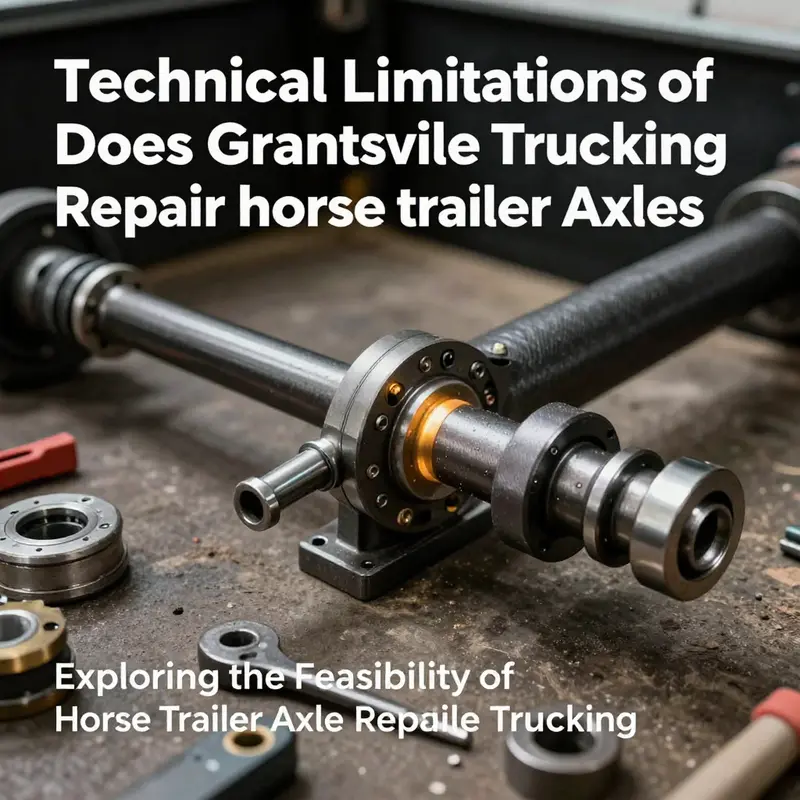
When a fleet manager or a horse owner asks whether a trucking company can repair horse trailer axles, the question sits at the intersection of trucking operations, trailer maintenance, and the specialized world of equine transport safety. It is a query that invites careful navigation, because the way a company maintains and repairs its own tractors and trailers can differ markedly from the expertise required to service horse trailers. The available data, at least in the public record, does not provide a simple yes or no about Grantsville Trucking repairing horse trailer axles. What it does reveal is a focus on heavy-duty dump truck trailers and multi-axle configurations that are built to move enormous loads, often in inland freight scenarios. Those details paint a picture of a fleet designed for power, durability, and long hauls, not necessarily for the delicate balance required when transporting animals. In practical terms, a company that runs 18 wheelers and heavy trailers does not automatically translate that capability into the nuanced axle work that horse trailers sometimes demand. The lack of explicit confirmation is not a verdict on capability but a reminder that service scope can be highly specific, and it is reasonable to seek direct confirmation from the company or from specialists who routinely handle equine transport equipment.
The absence of a direct reference to horse trailer axle work should not be read as evidence that the service is impossible to obtain. It simply highlights a truth about the maintenance ecosystem: the lion’s share of heavy trucking operations centers on powertrain reliability, brake systems for large commercial equipment, and the predictable wear patterns of steel-dominated highway trailers. Horse trailers, by contrast, introduce a unique set of considerations. They carry living cargo, require precise weight distribution, and demand careful attention to the alignment of axles, the integrity of bearings, and the reliability of braking systems under variable loads and temperatures. The axle on a horse trailer is not a bone-daredevil component that can be swapped with a generic substitute; it is part of a system that includes the frame geometry, suspension points, hub assemblies, and sometimes electric or hydraulic braking systems designed to respond in a constrained, mobile environment. Those interdependencies mean that even a well-equipped trucking outfit may choose to partner with or refer to a shop that specializes in trailers and horse transport rather than attempting a repair outside its core expertise.
In evaluating whether Grantsville Trucking or any similar operation can service horse trailer axles, the most practical approach is directly to verify scope and capabilities. This means reaching out with a clear set of questions, not assumptions. Ask about whether the service catalog includes trailer axle inspection, bearing repacking, seals replacement, spindle inspection, and hub or drum/disc brake servicing. Find out if the shop is equipped to diagnose axle misalignment and to perform corrective alignment with the necessary precision tools. In addition, inquire about the ability to handle axle replacement when a bent or cracked axle is discovered, and whether they stock the specific axle profiles relevant to horse trailers, including the correct bolt patterns, brake assemblies, and any adapters required for your particular model. It is not uncommon for a trucking operation to have robust maintenance infrastructure for its own fleet but to redirect specialized trailer work to a partner shop that emphasizes trailer carpentry, gooseneck or kingpin alignment, and the subtler aspects of trailer geometry that influence tire wear and stability on the road.
At the heart of this discussion lies the question of risk and safety. Horse trailers are designed to cradle valuable, sensitive cargo. Any repair misstep can translate into unpredictable sway, tire friction, or failure of braking systems at critical moments. A misalignment or improper bearing preload can contribute to uneven tire wear, heat buildup, and, in worst-case scenarios, trailer wobble that jeopardizes animal welfare and driver safety alike. Because of these stakes, a prudent decision often favors providers who combine mechanical aptitude with a focus on trailer-specific safety standards. Those standards, while not always codified in the same way across jurisdictions, converge on reliable wheel bearings, precise axle alignment, secure hub assemblies, and a braking system that remains predictable under varying loads. A provider with a robust trailer maintenance ethos is more likely to appreciate the nuance of horse trailer dynamics and to implement checks that go beyond the routine service call.
One practical reality that often guides decision making is the difference between repair and replacement. Axles, especially on smaller to mid-size horse trailers, can be reconditioned when feasible, but there are limits. A shop might be able to straighten a bent axle, replace worn or damaged spindles, or rework bearing surfaces, but if the axle wall has matured into a metal fatigue state, or if mounting points have lost their alignment due to prior impacts, replacement may be the safer and more economical option in the long run. Costs can accumulate quickly when the repair process involves sourcing a compatible axle length, matching hub assemblies, ensuring the correct brake configuration, and reestablishing the correct wheelbase and alignment. This is why a transparent conversation about the likely costs, the expected downtime, and the warranty terms on any repair or replacement becomes essential. A reliable service provider will walk a client through a diagnostic plan that includes a road test after the repair, measurement of runout, verification of brake response at different speeds, and a check of tire load distribution so that the trailer remains stable under load. The goal is not merely to fix a component but to restore the entire system to a state that supports safe, humane, and dependable transport of horses.
In the absence of clear evidence that Grantsville Trucking offers horse trailer axle repairs, it is reasonable to view their service envelope as potentially aligned with broader fleet maintenance tasks rather than as a specialized trailer repair operation. The prudent path is to contact the company and request a documented service overview. A few practical prompts can yield a compact, honest picture: Do they maintain an inventory of trailer bearings, seals, and common hub components? Do they employ technicians who have exposure to trailer axles and to the specific tolerances associated with horse trailers? Can they perform on-site diagnostics and propose a plan that minimizes downtime, or do they require off-site repair with a verified partner? Do they offer a warranty on repaired components and labor? The answers to these questions help separate the signal from the noise and guide a decision that prioritizes safety and reliability over convenience alone.
Beyond the direct inquiry, it is worth considering the broader maintenance ecosystem that supports horse trailer reliability. Even when a trucking company does not perform horse trailer axle repairs in-house, it often maintains a robust referral network of specialized trailer shops and mobile repair units. These partners bring the particular expertise needed to assess wear patterns on axles that routinely endure adaptive loading when horses shift their weight during turns, accelerations, or braking events. They also know how to manage the corrosion risks that arise in trailers exposed to varying weather and road conditions. In many cases, an experienced horse trailer technician will run a comprehensive inspection that covers not only the axle and bearings but also the suspensions, frame wear at mounting points, and the integrity of electrical circuits that feed brake lights and turn signals. The aim is to deliver a service that leaves a trailer ready for safe operation across the geography it will cover, with an emphasis on minimizing the chance of a roadside incident that could disrupt horse welfare or require emergency interventions.
For anyone weighing the decision about whether to engage a trucking operation for horse trailer axle work, it is helpful to anchor expectations in maintenance planning. A well-structured maintenance program reduces the likelihood of surprise failures and extends the life of critical components. It also supports budgeting and resource planning, which becomes especially important when a trailer serves a small fleet or a single operation with tight timelines for horse transport. The content of a maintenance program typically includes regular inspections of wheel bearings and seals, alignment checks after any significant impact or after a set number of miles, and a scheduled review of brake systems. Even when a dealership or trailer-specialist handles the actual axle work, the maintenance plan creates a framework that ensures the work is done in a timely, repeatable, and verifiable manner. In this vein, the chapter on maintenance budgeting can be a valuable companion for readers who want to optimize expenses while preserving safety and reliability. For example, you can explore practical approaches to allocating funds for routine maintenance, contingency repairs, and future axle replacements, and you can find guidance on how to balance cost with risk in a way that aligns with the demands of transporting horses. See comprehensive guidance on budgeting for routine truck maintenance in the dedicated resource Budgeting for Routine Truck Maintenance.
As this landscape unfolds, one thread remains constant: the need for clear communication and documented capability. If Grantsville Trucking or any similar operator cannot articulate a precise scope that includes trailer axle work for horse trailers, and if the client cannot obtain a written service description or a transparent pricing range, then an alternative path becomes advisable. A dedicated trailer repair shop with a proven track record in equine transport ensures that the work is performed by craftsmen who understand the choreography of a safe horse ride. Working with such a shop reduces the risk of misinterpretation, prevents unnecessary downtime, and grants peace of mind to the people responsible for moving horses from one arena to another, from a stall to a stall, or from a vendor show to a competition ring. The practical advantage is straightforward: when the axle system is treated with the same respect as the animal cargo it supports, reliability follows, and the journey becomes a little more predictable.
In sum, the question of whether Grantsville Trucking repairs horse trailer axles does not yield a simple affirmative or negative answer in the absence of direct, explicit service details. What it does yield is a clear path for due diligence: verify the service scope, ask about the specific tasks involved in axle repair or replacement, assess the technician’s experience with trailer systems, and compare the value of on-site versus off-site options. It is a process built on safety first, technical accuracy, and a recognition that the art of horse transport depends on an integrated system where axles, brakes, wheels, and suspension work in harmony. Whether the ultimate choice is to entrust a trucking company with this work or to lean on a horse-trailer specialist, the guiding principle remains the same: a repaired axle is not just a mechanical fix but a guarantee of safer journeys for the animals at the heart of the mission. In that light, readers are encouraged to approach axle repairs with a blend of industry knowledge, due diligence, and an unwavering focus on animal welfare, a combination that turns a necessary repair into a reliable safeguard for every mile traveled.
Between Fleets and Specialists: Assessing Whether Grantsville Trucking Repairs Horse Trailer Axles
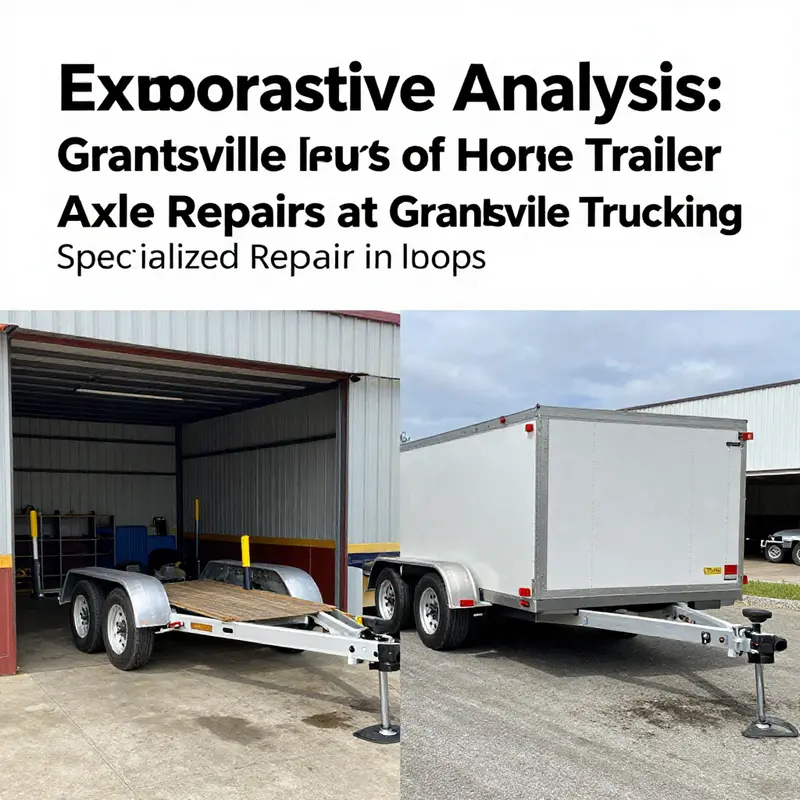
The core question—whether Grantsville Trucking repairs horse trailer axles—exists in a space where fleet management, specialized trailer work, and animal welfare intersect. The available research materials present a clear starting point: there is no direct evidence that Grantsville Trucking offers horse trailer axle repair. What is documented points to heavy-duty dump-truck semi trailers, 3/4 axles capable of carrying substantial loads, with price ranges that reflect a market for large, rugged equipment. That data informs us about the scale and scope of some aspects of the company’s operation, but it does not confirm any service that would restore or modify horse trailer axles. It would be imprudent to conclude capability from scale alone, yet it is equally unwise to assume a lack of capability without direct confirmation. The prudent path is direct inquiry, guided by an understanding of horse trailer axle needs and the realities of how fleets typically manage trailer maintenance. In the meantime, readers should be aware that horse trailer axles represent a specialized domain, where the intersection of live-animal transport, road safety, and precise mechanical standards creates a demand for targeted expertise, not merely general trucking know-how.
To grasp the practical implications, it helps to sketch what horse trailer axle work often involves. Horse trailers routinely use leaf-spring or torsion axle configurations, with wheel-end assemblies that include hubs, bearings, seals, and brake systems. Safety hinges on the reliability of those components, because a faulty axle or compromised bearing can escalate into a roadside emergency that risks animals, drivers, and other road users. Routine maintenance includes bearing repacks and seal replacements, checks for play in the wheel end, lubrication, torque checks on mounting bolts, and inspection of the braking system. More complex issues may involve axle alignment, wheel runout, and, in some cases, axle replacement or welding repairs if the frame or spindle is bent or corroded. The differences from heavy load truck axles matter because the trailer side of the equation responds to a different usage pattern. Trailers, especially those used for livestock, encounter a different mix of road conditions, weight distribution, and refresh cycles than a typical tractor-trailer setup. The maintenance philosophy and the parts supply chain for horse trailers often emphasize compatibility with specific trailer configurations and the realities of frequent animal transport, where downtime is costly and animal welfare is non-negotiable.
With that context, the absence of a stated horse trailer axle capability from Grantsville Trucking becomes a focal point of decision-making for readers who must plan maintenance pathways. The available data show a track record connected to heavy-haul trailer configurations, which does not automatically translate to or preclude expertise in horse trailer axles. Those evaluating service partners should approach the subject with precise questions and a well-structured information request. Confirming whether a company can service horse trailer axles is not merely a technical query; it is a question about the breadth of their diagnostic approach, the range of parts they stock, and the speed with which they can return a trailer to service. If the company does not advertise this capability, it does not close the door to providing the service; it merely signals that the question must be resolved directly through inquiry, with attention paid to the specificity of the trailer configuration, including whether the trailer is bumper-pull or gooseneck, the axle count, and the preferred brake system. The careful reader will recognize that the presence or absence of such a capability is a signal about how the fleet supplier views risk, uptime, and the welfare implications of downtime when live animals are moved.
This topic naturally leads to a broader discussion about how fleets structure maintenance differently for trucks and trailers. A common arrangement is for operators to maintain a core trucking maintenance capability in-house while relying on specialist trailer shops for axle and braking work. Doing so can dramatically reduce downtime when trailer components fail mid-route, since trailer repair specialists are often closer geographically and more attuned to the nuances of trailer-specific parts and configurations. Conversely, some fleets centralize maintenance entirely in-house, building a robust inventory of wheel-end parts and standardizing service processes to keep downtime low. Either model has clear merits, but the horse trailer niche tends to reward shops that have specialized knowledge about trailer configurations, weight distribution, and animal transport considerations. The difference may be more about the ecosystem around the axle than about the axle itself—the right shop will have experience with the diagnostic workflow, part compatibility checks, and post-repair testing that validate performance under real-world conditions.
In thinking through a potential partnership with Grantsville Trucking, it is prudent to transpose the question from a binary yes/no into a spectrum of service capabilities. A hypothetical approach would involve a targeted inquiry into four categories: scope, expertise, turnaround, and accountability. Scope covers whether Grantsville handles trailer axles for horse trailers and whether their coverage includes both leaf-spring and torsion axles, chauffeurs’ brake systems, wheel bearings, and alignment. Expertise tests for a shop can be addressed by asking about the technicians’ certifications, whether they routinely work on horse trailers, and whether they understand live-animal transport safety standards. Turnaround is crucial because a trailer out of service disrupts schedules and can cause cascading delays in an entire operation. The reader should ask for typical repair times, whether parts are stocked in-house or sourced, and whether they offer expedited service or loaner equipment when appropriate. Accountability means requesting warranty terms, post-repair testing procedures, and documentation that confirms repair details, parts used, and the exact fixes performed. This framework does not presume anything about Grantsville, but it provides a reliable method to determine whether a supplier can meet the specific needs of horse trailer maintenance.
If a fleet decides to pursue a standardized approach to routine trailer care, it can look to established practice patterns described in related industry discussions. Some operators align with in-house maintenance for trailers as a way to monitor wear, schedule timely interventions, and maintain an auditable service history. Others prefer a hybrid approach, combining in-house capabilities with select specialist shops for more advanced axle issues or for rapid turnaround during peak seasons. The choice is rarely about one solution; it’s about matching the solution to the operational tempo, the risk appetite, and the availability of skilled technicians who understand horse trailers specifically. The central thread is that the best decision-makers recognize the difference between a general repair capacity and a targeted capability for horse trailer axles. The latter requires knowledge of trailer-end configurations, hub assemblies, and the behavioral patterns of live animals on the road, all of which influence the repair strategy and the sequence of testing after work is completed.
In this light, an important practical step for readers is to translate the abstract framework into a concrete inquiry. When engaging with Grantsville Trucking, a prospective client should ask for a brief written scope that clarifies whether horse trailer axles fall within the service domain. If the answer is yes, request a rough timeline for diagnosis, parts sourcing, and a return-to-service plan. If the answer is no or uncertain, it becomes valuable to ask for a recommended alternative—potentially a local trailer repair specialist with a proven track record in horse trailers. These steps ensure that the operation can continue with minimal downtime and with the confidence that any axle work preserves the safety of the animals and the roadworthiness of the trailer.
To connect this discussion with practical examples from the field, consider the notion of internal maintenance culture in other fleets. Some operators cultivate an approach in which routine trailer issues are handled internally, while more complex axle work is outsourced to specialists who can provide rapid diagnostics and a deep parts bench. The core lessons from that approach are clear: align maintenance capacity with the specific demands of the fleet’s trailer types, maintain good diagnostic records, and ensure that the repair path is chosen with a clear understanding of risk and downtime. A useful way to anchor this concept in real-world practice is to explore the idea of in-house maintenance as a strategic asset—the way a fleet maintains a core technical competency for vehicles while supplementing this with targeted trailer repair partnerships when needed. See for instance discussions around in-house maintenance models and their implications for repair turnaround times in related content, which provides practical insights into how fleets balance speed, cost, and quality.
A sentence here to anchor the practical sourcing and relationship-building dimension would be helpful: some fleets lean on partners who have recurring experience with trailer issues, including those involving horse trailers, to handle routine matters efficiently. For example, Turnage-Sons in-house truck maintenance can illustrate a model in which the fleet leverages internal expertise for specific vehicle systems while remaining open to specialized trailer shops for axle and brake work when needed. This example is not a universal standard, but it demonstrates how a structured maintenance ecosystem can reduce downtime and keep operations aligned with animal transport needs. The broader point is that, regardless of the specific provider, the underlying goals are consistent: maintain safety, minimize downtime, and ensure reliability across both trucks and trailers.
From a budgeting perspective, the decision to use a specialized trailer shop versus an in-house program has cost implications that extend beyond a single repair bill. The labor rate, the speed of turnaround, the availability of loaner equipment, and the ability to source correct parts quickly all feed into total ownership costs. A shop that specializes in horse trailers often keeps a ready catalog of the components that differentiate these trailers from heavy-haul truck equipment. That readiness translates into faster repairs and less time spent chasing the right parts, which can be worth a premium when time is critical. In the absence of direct evidence about Grantsville Trucking’s horse trailer axle capabilities, readers should treat cost considerations as part of a broader evaluation in which the reliability of the chosen path—whether in-house or outsourced—meets the operational tempo and safety requirements demanded by livestock transport.
The broader conclusion is neither celebratory nor condemnatory toward Grantsville Trucking. It is a practical orientation toward evidence-based decision-making in fleet maintenance. The available data do not confirm horse trailer axle repair capability, but they emphasize the importance of direct confirmation for any operator seeking such services. This approach yields tangible benefits: a clear understanding of whether a given partner has the right expertise, a precise diagnosis workflow, and an actionable plan to return a trailer to service quickly and safely. For readers who need a broader industry framework, consult general regulatory and safety resources that summarize standards for trailer maintenance and axle safety. External resource: https://www.transportation.gov/
In sum, evaluating whether a trucking operator like Grantsville Trucking repairs horse trailer axles requires more than reading scale or price data. It demands direct confirmation about capability, a rigorous inquiry into the types of axles serviced, and a transparent discussion of turnaround times and warranties. It also invites a broader reflection on how fleets structure maintenance to balance uptime with animal welfare. The most responsible course is to pursue precise information, identify the right specialists when needed, and maintain an ongoing commitment to safety and reliability in every transport operation. This approach aligns with the best practices observed across the industry and supports a decision-making process that respects both operational realities and the well-being of the animals whose transport is at the heart of horse trailer use.
Rolling Costs and Safe Freight: The Economic and Operational Stakes of Horse Trailer Axle Maintenance for Grantsville Trucking
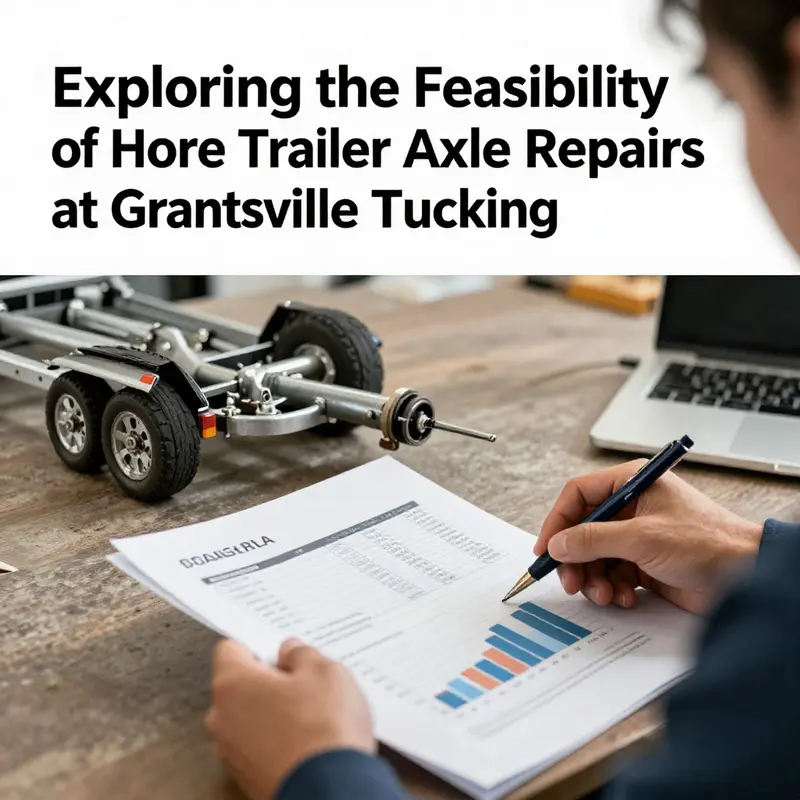
The transport of horses on long hauls is a discipline built on precision, patience, and a chain of small, reliable decisions that keep both people and livestock safe. A horse trailer is a mobile corral, a temporary home, and a working stall all in one, and its axle system anchors the entire journey. When everything is in alignment, the trip proceeds with the quiet efficiency of a well-tuned engine; when even a single axle shows signs of wear or misalignment, the ripple effects can cascade through safety, schedule, and cost. The spine of any horse-moving operation is not a flashy piece of equipment but a sturdy axle assembly that translates power into controlled motion while carrying precious livestock. In that sense, any discussion about whether a carrier like Grantsville Trucking repairs horse trailer axles is more than a technical footnote. It sits at the crossroads of risk management, insurance economics, and the practical realities of operating a fleet that must deliver live animals with minimal disruption and maximum care.
The reality of axle maintenance unfolds in two broad dimensions: the physical integrity of the trailer’s rolling mechanism and the organizational discipline that surrounds maintenance planning. On the hardware side, horse trailers face unique demands. They haul living cargo, sometimes over uneven roads or through seasonal weather that places extra stresses on suspension components, hubs, bearings, and braking systems. Axles do not exist in a vacuum; they are supported by tires, springs, and mounting hardware that all respond to load distribution, weight balance, and road conditions. Subtle signs—excessive play in a wheel, unusual vibrations, a faint grinding during braking, or a drift to one side while towing—can signal issues that worsen with each mile traveled. For operators, the prudent move is to recognize these signals as early warnings, not as mere inconveniences to be tolerated until a scheduled downtime window opens. The cost of postponing a repair in such a fleet, especially when animals are involved, can accumulate quickly and invisibly until a breakdown or an insurance claim reveals the true price tag.
From an economic perspective, the decision to repair or defer repair is a calculus that weighs the probability and consequence of failure against the immediate outlay for maintenance. The data landscape around Grantsville Trucking and its exact axle-repair capabilities for horse trailers is not explicit in the available materials. The current information caveat states that there is no direct evidence confirming that Grantsville Trucking specifically repairs horse trailer axles. That uncertainty, however, does not erase the broader pattern many fleet operators face: the risk that unrepaired axle issues can trigger a sudden mechanical failure while transporting horses. The resulting incidents threaten livestock safety, human safety, and the financial health of the operation. The latent costs can be substantial. A breakdown on the road may require emergency response, specialized towing, temporary shelter for animals, and expedited rebooking—each layer adding cost and downtime. In some cases, the liability for transporting livestock under compromised mechanical conditions can expose a carrier to insurance implications, regulatory scrutiny, and potential litigation that dwarfs routine maintenance expenses.
To understand the economic edge of proactive axle maintenance, it helps to anchor the discussion in a broader maintenance economics frame. When an axle is misaligned or its bearings are worn, fuel efficiency tends to drop because rolling resistance increases and the drivetrain works harder to share the load evenly. Even small deviations can cascade into higher fuel consumption over thousands of miles. Over time, misalignment can cause uneven tire wear, leading to more frequent tire replacements and the risk of a blowout at critical moments. For operators who run tight schedules and depend on predictable arrival times, the cost of downtime—whether for a breakdown, a service call, or a preventive maintenance window—becomes a line item that interacts with revenue in a direct, visible way. Livestock transport compounds these effects because missed deliveries can trigger cascading penalties: rescheduled departures, altered feed and care plans for the animals, and additional labor required to coordinate new haul plans. The math is rarely dramatic in a single mile, but across a fleet across a week or a month, it becomes material.
The value of a proactive approach is reinforced by the logic of risk pooling. When a company commits to regular inspection, bearing checks, lubrication, and axle alignment, it shortens the horizon of catastrophic failure. It also yields operational stability that improves planning accuracy. A well-maintained trailer is easier to schedule for maintenance windows, easier to insure, and simpler to assign to experienced drivers who know the subtle cues of a trailer that is aging gracefully. The question, then, becomes how to navigate a landscape where information about specific repair capabilities is not crystal clear. The initial research summary acknowledges the absence of direct evidence that Grantsville Trucking offers horse-trailer axle repairs. Yet this does not leave carriers without guidance. Rather, it invites a strategic approach: assess the maintenance ecosystem that surrounds the operation, seek specialized expertise when needed, and build a maintenance protocol that minimizes surprises on the road.
One way to translate this into practice is to think in terms of a maintenance ecosystem rather than a single service event. In the ecosystem model, a carrier has three overlapping needs: preventive maintenance to catch wear before it becomes a problem, diagnostic repair when symptoms arise, and contingency planning for scenarios that involve live animals and time-critical transport. Preventive maintenance includes regular lubrication of bearings, inspection of brake assemblies, checks for endplay and lateral movement in axles, and alignment verification. Diagnostic repair is triggered by clear signals—noise, heat, vibration, or a shift in handling characteristics. Contingency planning encompasses backup trailers, rapid-onset repair capabilities, and transparent communication with clients about scheduling constraints when a repair is necessary. In practice, a carrier may rely on in-house maintenance teams for routine tasks while engaging specialized trailer repair shops for more complex axle work or alignment adjustments that require precise equipment and certification.
The question of whether Grantsville Trucking specifically repairs horse trailer axles invites a practical counter-question: if a carrier’s core business is to move loads reliably and safely, what expectations should customers reasonably hold for axle-related maintenance? The answer, in a mature fleet operation, is that customers look for reliability and predictability. They want to know that any maintenance partner—whether the carrier’s own shop or an external provider—follows a disciplined upkeep schedule, documents work performed, and can demonstrate a track record of safe, punctual deliveries. In the absence of explicit information about Grantsville Trucking’s horse-trailer axle repair capability, customers should evaluate the broader maintenance posture the carrier maintains. Are there documented preventive maintenance intervals for trailers? Are inspections performed by qualified technicians with the right certifications? Is there a clear escalation path for axle-related issues that could impact live animals? These questions help translate the theory of maintenance risk into observable, testable practices.
An important dimension of this evaluation is the cost structure of maintenance investment. The reference data set about heavy-duty trailer components shows that axle-related work can be priced in the thousands for larger equipment. While horse trailers are not identical to 3/4-ton or heavy dump-trailer configurations, the principle remains: axle work is a high-stakes investment. The fixed costs of inspection equipment, the labor hours required for precise alignment, and the potential downtime when a trailer is out of service all feed into the total cost of ownership. Operators can speed up decision-making by adopting a standardized maintenance protocol that includes a clearly defined threshold for proactive repair—what level of wear or deviation triggers service—alongside a transparent cost estimate framework. When maintenance decisions are anchored in data rather than ad hoc judgment, the probability of unplanned downtime declines, and the reliability of horse transport improves.
Crucially, the literature and real-world practice both emphasize the human and organizational factors that influence whether an axle issue becomes a crisis or a routine fix. Communication with clients about maintenance actions is not a cosmetic add-on; it shapes trust and reduces the risk of misaligned expectations. If a carrier has a policy of performing axle-related work exclusively at sanctioned facilities or by authorized technicians, that policy should be clearly communicated and integrated into the service agreement. If, alternatively, the carrier relies on a network of partner shops—some of which specialize in horse trailers—the customer should know which shops are involved, the scope of repairs those shops can perform, and the turnaround times the operator can anticipate. In both scenarios, the underlying premise is that maintenance is not an afterthought but a routine, documented process that safeguards safety and minimizes disruption.
From a strategic standpoint, the absence of a public, explicit claim about horse-trailer axle repair capabilities should not be treated as a fatal gap. It becomes a cue for due diligence. For shippers who require or prefer the security of one-stop maintenance, the prudent move is to verify whether Grantsville Trucking has the depth to handle axle issues promptly, whether through internal expertise or a reliable external network. The emphasis should be on the outcome: can the operator guarantee safe, timely movement of horses, with a maintenance history that is accessible and credible? Does the carrier offer contingency options when an axle issue arises that could affect live livestock during a critical leg of a journey? These questions shift the focus from a single service label to a broader capability story about reliability, risk management, and operational resilience.
In this context, many readers may find it useful to consider the learning from broader maintenance literature that transcends any one company. A pattern emerges: successful fleets invest in preventive maintenance, cultivate a network of trusted repair partners, and build transparent communication channels with clients. The most resilient operators do not hinge on the luck of finding a single shop that can handle every problem; they build redundancy through relationships, checklists, and data-driven decision-making. For horse trailers, where the margin for error is especially thin, the payoff from such a disciplined approach is measured not only in dollars saved or downtime avoided but in the assurance that each voyage respects the welfare of the animals and the people responsible for them.
For readers seeking practical steps to apply these ideas, consider the following path. Start with a simple maintenance cadence that includes a quarterly inspection of trailer axles, bearings, and wheel hubs, plus a visual check for alignment and tire wear. Record the results, and track any deviations over time. If an issue is detected, initiate a diagnostic process with a trusted technician who understands horse trailers specifically, not just general trailer systems. Ask potential service providers about their scope for axle work, their certification standards, and their ability to provide a written maintenance history. If the carrier operates with an external network, request a list of preferred shops, the typical turnaround times, and the kinds of guarantees offered on repairs. This approach creates a transparent ecosystem around maintenance and reduces the likelihood that a critical axle problem will turn into a schedule-killer event on a horse-haul.
For those who plan ahead, it is wise to integrate maintenance costs into budget planning. A practical lever is to view maintenance as a form of risk-mitigated expenditure rather than a discretionary line item. The accountability that comes with a maintenance budget helps align expectations across drivers, dispatch, and the client. It also supports the safety case for transporting horses, which—beyond the economics of fuel and downtime—rests on the ethical and regulatory obligation to protect the welfare of animals in transit. The inflection point often arrives when a carrier can demonstrate that routine axle care translates into fewer unscheduled repairs, more predictable schedule adherence, and a track record of safe, humane transport under demanding conditions. That is the standard that policymakers, insurers, and clients increasingly demand from operators in horse transport.
As you explore the viability of a maintenance partner for axle work, remember that the broader objective is not to minimize maintenance costs at the expense of safety, but to maximize reliability and animal welfare within a sustainable economic framework. The question of whether a particular carrier—Grantsville Trucking or another—actively repairs horse trailer axles is a content detail that should be answered by direct inquiry and evidenced by a transparent service history. In the absence of a definitive public statement, customers should rely on the principles outlined here: a proactive maintenance regime, clear lines of communication, a robust network of qualified technicians, and a cost structure that reflects the true value of preventing catastrophic failure on the road. The chapter thus points toward a pragmatic stance: optimize the maintenance ecosystem, verify capability where it matters most, and embed reliability at the heart of every horse-haul operation.
To support ongoing planning, readers might consult resources that focus on the budgeting and maintenance practices that sustain trucking operations over time. For instance, consider reading about budgeting for routine truck maintenance to ground decisions in a disciplined financial framework. This approach helps translate the theoretical benefits of axle upkeep into concrete savings and safer operations. Budgeting for Routine Truck Maintenance. The goal is not merely to fix a part but to cultivate a maintenance culture that protects people, animals, and profits alike.
In sum, the economic implications of axle maintenance in horse-trailer transport extend far beyond the price tag of a repair. They touch on safety, reliability, and the reputational capital of a carrier. Even when explicit service lines are not clearly advertised by a given company, the strategic takeaway remains consistent: build a maintenance framework that emphasizes early detection, credible repair pathways, and transparent communication. When these elements are in place, the bottom line benefits in parallel with the welfare of the horses in transit, and the journey—from loading to unloading—becomes a smoother, safer, and more predictable enterprise.
External resource: https://www.grantsvilletrucking.com/services/trailer-repair-and-maintenance
Final thoughts
The investigation into Grantsville Trucking’s capacity to repair horse trailer axles reveals that although direct services are not confirmed, the need for reliable axle maintenance is clear. Fleet managers and trucking company owners must weigh their options carefully, considering both expertise and cost-effectiveness in repairs. Specialized repair shops may offer the targeted services necessary for optimal axle function; however, it is crucial to validate each potential service provider’s capabilities. Ultimately, prioritizing axle repairs not only ensures safety and compliance but can also lead to significant economic benefits in operations.