Heat Warping at Exhaust Cutouts: Why Fairing Material Matters on Track Bikes
Heat warping at an exhaust cutout is permanent deformation: the panel is held above its thermal limit long enough that it softens, sags, curls, or cracks around the opening, and the shape rarely comes back. Riders who spend a day running sustained high-rpm sessions see it often.
The cutout sits inches from the header pipe and silencer, where radiant and convective heat peak and low-speed airflow is poor. Edge temperatures there climb past what most bodywork is built to take, so it is usually the first place damage shows and the hardest place to defend.
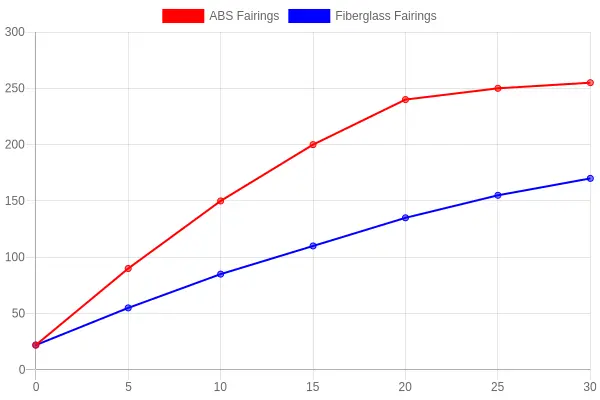
Material choice decides how that zone holds up. Below is a comparison of ABS and fiberglass fairings for track bikes: how each responds to heat, resists warping, and keeps its shape through repeated heat cycles, plus the damage signs to watch and the practical steps for repairing composite bodywork that can save a panel from replacement.
How Heat Warping Actually Happens
Idling in pit lane or launching off the line, a track bike can push exhaust gas past 600°C (1,100°F) within centimeters of the header outlet. The plume does not spread evenly. It forms a narrow, turbulent column that washes straight over the cutout, and within seconds the local surface temperature is far above ambient, leaving a steep gradient across a panel that was never built for it.
How the panel responds comes down to chemistry. Thermoplastics such as ABS soften as they near their glass transition temperature and deform long before they melt, so the panel sags, curls, or droops. Thermosets such as fiberglass-reinforced polyester cure into a rigid cross-linked network, similar in principle to the carbon-fiber matrices in these composite matrix repair notes. They hold out longer against softening, but once the temperature passes the resin’s decomposition threshold it can char, crack, or delaminate.
Repeat cycles add to the damage. Each heat-up and cool-down expands and contracts the panel against its fasteners and brackets. Across dozens of sessions that strain accumulates into permanent distortion, ripples, or sagging at the cutout edge. Heat resistance is not cosmetic: it decides whether a fairing keeps its shape lap after lap or deforms for good, forcing an early replacement and, worse, unstable aerodynamics at speed.
How ABS Motorcycle Fairings React to Exhaust Heat at Cutouts
ABS (acrylonitrile butadiene styrene) is a thermoplastic. It softens gradually as temperature climbs rather than charring the way a thermoset resin does, and that is what governs its behavior near a cutout.
Radiant and convective heat from the headers and mufflers pushes surface temperatures well above ambient. Most ABS grades start to soften around 88 to 105 degrees Celsius (190 to 221 degrees Fahrenheit), and sustained exposure above roughly 100 degrees Celsius often ends in heat warping: edges sag, openings distort, mounting holes drift out of alignment.
It rarely happens at once. A brief burst of heat may only flex the panel, but repeated track sessions or an unshielded exhaust can pile up enough thermal load to deform it for good.
The same thermoplastic behavior also helps. ABS bends before it cracks, shrugs off minor impacts, costs less than fiberglass or carbon, and can often be reshaped or repaired with local heat. Knowing how the panel reacts to heat, much as carbon fiber wheel repair depends on knowing the material, makes damage easier to manage.
The 2D schematic below shows the principle. The panel is a plain outlined rectangle, the cutout a bold circular opening. Concentric heat-gradient rings radiate from the cutout edge, reds and oranges at the center for the hottest zone, fading through yellow to cool tones at the outer reaches. The tighter and more intense the bands near the hole, the steeper the gradient the surrounding material has to take. That concentration of heat, rather than even warming across the panel, is what eventually distorts ABS and fiberglass alike.
How Fiberglass Fairings Handle Exhaust Heat at Cutouts
Fiberglass fairings are thermoset composites: glass fibers in a resin matrix that cures into a rigid, cross-linked network. Unlike ABS, which softens and re-flows as a thermoplastic, a cured thermoset does not melt progressively. That is the basis of its heat resistance at exhaust cutouts. Where an ABS panel may sag or warp once it nears its glass-transition range, a fiberglass fairing holds its shape longer, and the damage tends to appear as localized charring or resin breakdown rather than wholesale deformation.
The resin system sets the ceiling. Polyester is inexpensive but softens sooner; vinyl ester and, especially, high-temperature epoxy raise the deflection point and resist blistering. Fiber content, layup thickness, and any heat-reflective barrier around the cutout count as much as the base material.
The trade-offs are real. Fiberglass is denser than ABS, so a fairing carries a weight penalty, and it is more brittle, able to crack or shatter on impact. Repairs mean glass and resin work rather than a simple plastic weld. Anyone who has tackled composite repair techniques on similar parts knows the extra effort involved.
ABS vs Fiberglass Fairings: Heat Warping at Exhaust Cutouts
How the two stack up on the track when exhaust heat starts to bite, and what a damaged panel needs in the way of composite repair to get back out.
| Material | Softening / Heat Tolerance | Weight | Flexibility | Repair Ease | Cost | Warping Risk at Cutouts |
|---|---|---|---|---|---|---|
| ABS fairings | Thermoplastic; softens ~80-105 °C (176-221 °F) and sags under sustained exhaust heat | Moderate; lighter than fiberglass for the same panel | High; flexes on impact and springs back into shape | Moderate; plastic-weld or ABS-slurry patches work, but cracks can return | Lower; cheap, mass-produced thermoformed panels | High; cutout edges creep, sag, and distort near hot exhaust |
| Fiberglass fairings | Thermoset resin; no true softening point, degrades/char at roughly 120-150 °C+ | Heavier; denser laminate adds weight, but the better strength-to-weight of the two | Low; rigid, cracks rather than flexing under load | Moderate-high; re-lay with resin and glass cloth, then sand and refinish | Higher; labor-intensive layup, especially custom shapes | Low; holds its shape and resists heat warping, though it may discolor |
Bottom line: if exhaust heat keeps deforming your cutouts, fiberglass fairings resist heat warping far better, while ABS fairings win on cost and impact flexibility.
Warning Signs a Fairing Cutout Is Warping
Warping rarely shows up overnight. Catching exhaust cutout distortion early saves a fairing and a race weekend. Watch for these around the exhaust opening:
- Deformation near the cutout edge – the trim line no longer sits flat, and the opening looks slightly oval or wavy instead of symmetrical.
- Discoloration or a scorched halo – amber, brown, or chalky white patches spreading from the edge signal sustained heat exposure.
- Bubbling, blistering, or delamination – the surface lifts or peels, often exposing separate material layers underneath.
- Misaligned bolt holes – fasteners that once threaded easily now need force, because the panel has drifted or twisted out of position.
- Contact between the fairing and exhaust pipe – a shrinking gap, fresh rub marks, or a telltale rattle means the panel has crept toward the hot pipe.
- Cracking or crazing around the opening – hairline fractures radiating from the cutout edge are a late-stage failure warning.
- A soft, gummy, or brittle feel – press lightly near the edge; a spongy or flaking texture means the material is breaking down.
If two or more of these show up together, the cutout has likely passed the point of simple trimming and needs inspection before your next track session.
Mitigation Strategies to Reduce Heat Warping at Cutouts
The simplest way to cut heat warping is to keep exhaust heat off the fairing. Start with the cutout: a slightly wider opening gives the pipe clearance, so radiant heat dissipates instead of baking into a tight edge.
Then add a barrier. Heat-reflective shielding or a thermal wrap around the exhaust lowers the surface temperature that reaches the panel. On the panel side, higher-temperature resin or heat-resistant inserts resist softening better than a standard layup.
Airflow counts too. Reroute the exhaust where you can so hot gases exit cleanly, and vent the fairing so trapped heat escapes instead of pooling at the cutout. A few well-placed vents are enough to set up a chimney effect.
Composite repair follows the same logic: reinforcing stressed, heat-affected areas with the right materials pays off. Riders can review composite repair principles for guidance on bonding and resin selection. Put clearance, shielding, airflow, and better materials together, and heat warping drops for good.
Choosing and Setting Up Track Bike Fairings for Heat Management
Match the material to your riding intensity first. On casual track days, quality ABS is usually enough: it flexes instead of cracking and handles light heat. At race pace, with a high-mount exhaust, or in hot climates, step up to fiberglass or composite heat-resistant fairings, which tolerate sustained exhaust temperatures far longer before warping. If you favor lightweight composites, keep in mind that materials like carbon fiber need attentive care, and these carbon fiber repair insights explain how.
Exhaust cutouts deserve careful attention. Cut each opening slightly larger than the pipe’s outer diameter, then position it so the hottest section never rests against the panel. A few millimeters of clearance plus a well-placed heat shield prevent the direct contact behind most warping.
Inspect every three to five sessions, and again before every race weekend. Look for softening, discoloration, and curled edges around the cutouts.
Weigh cost against durability. Cheaper ABS makes sense for occasional use, but repeatedly replacing warped panels quickly costs more than buying stout fiberglass once.
Shoppers comparing track bike fairings can browse over 3,000 fairing styles at summitfairings.com, where prices run 10-40% lower than other sites and support replies arrive within six hours.
Frequently Asked Questions
Does ABS always warp at exhaust cutouts?
No. ABS fairings only warp when the material near the cutout is held above roughly 80-100°C (176-212°F) for a sustained period. A cutout with adequate clearance and good airflow often survives track sessions without deformation, but repeated heat cycling right beside the exhaust outlet makes warping far more likely.
How hot can fiberglass get before it deforms?
Standard polyester fiberglass begins to break down around 120-150°C (248-302°F), while epoxy laminates hold their shape well past 150°C. Fiberglass fairings tolerate exhaust cutout heat better than ABS, but resin type, cure quality, and laminate thickness all shift the real-world limit.
Can a warped cutout be repaired, or must the fairing be replaced?
Minor warping can sometimes be reshaped with gentle, even heat and light pressure. Fiberglass can be rebuilt with fresh cloth and resin, following the same logic used when repairing carbon fiber components. Severe distortion, cracked resin, or delamination usually makes replacement the cheaper and safer choice.
Does an aftermarket exhaust change warping risk?
Yes. Larger-diameter pipes, shorty mufflers, and higher exhaust flow all raise surface temperatures and push heat closer to the bodywork. Aftermarket systems frequently sit nearer the fairing, so existing clearances may need to be enlarged to keep temperatures in check.
How much clearance should a cutout have?
Aim for at least 10-15 mm (0.4-0.6 in) of air gap between the exhaust and the cutout edge. Add heat-reflective tape or a metal heat shield where clearance is tight, and recheck the gap after fitting any new exhaust.
Conclusion and Key Takeaways
The choice between ABS versus fiberglass fairings on track bikes comes down to one engineering reality: heat. At the exhaust cutout, where temperatures spike and stay high, ABS reaches its softening point well before fiberglass, which makes heat warping a genuine risk for riders who push their machines lap after lap. Fiberglass tolerates that heat longer and holds its shape where ABS tends to sag, blister, or curl.
None of that makes ABS the villain. It offers real advantages: flexible enough to absorb impacts without cracking, cheaper to buy, and easier to replace after a lowside. Fiberglass wins on thermal endurance; ABS wins on cost and give.
Riders and mechanics can keep three rules in mind:
- Inspect cutout edges after every track day for softening, discoloration, or warping.
- Add heat-reflective tape or shielding at the exhaust exit to extend any fairing’s life.
- Match the material to the demand – fiberglass for sustained high heat, ABS for budget builds and impact-prone setups.
When worn panels need replacing, sourcing quality composite components matters, and options like carbon fiber component repair and upgrades show how far material knowledge goes. For riders ready to upgrade, summitfairings.com is a dependable place to source durable fairings built to survive the heat.