Introduction to Rust on Truck Doors
Rust formation on truck doors poses a significant concern for fleet managers and trucking company owners. The primary culprits behind this unwanted corrosion include prolonged exposure to moisture, road salt used in winter, and inadequate paint or sealant protection. When left unaddressed, rust not only compromises the aesthetics of the trucks but also weakens the structural integrity of the doors, leading to more severe issues over time.
For those managing fleets, the implications of ignoring rust cannot be overstated. First, rust can increase maintenance costs significantly as more extensive repairs might be needed if the issue worsens. Second, a truck’s lifespan can be notably reduced due to rust damage, which ultimately affects fleet turnover rates and operational efficiency. As such, addressing rust on truck doors is not merely a cosmetic concern but rather a critical maintenance aspect that can influence overall vehicle longevity and costs. Fleet managers need to prioritize rust repair strategies to safeguard their investments and maintain optimal performance levels. For insights into effective budgeting for routine truck maintenance, learn more here, and explore how optimizing fleet size can also enhance maintenance practices by clicking here.
Common Signs of Rust on Truck Doors
Rust can be a significant problem for truck owners, especially fleet managers and operators in harsh environments. Identifying rust early can help save on costly repairs and prolong the lifespan of the vehicle. Here are some common signs to look for:
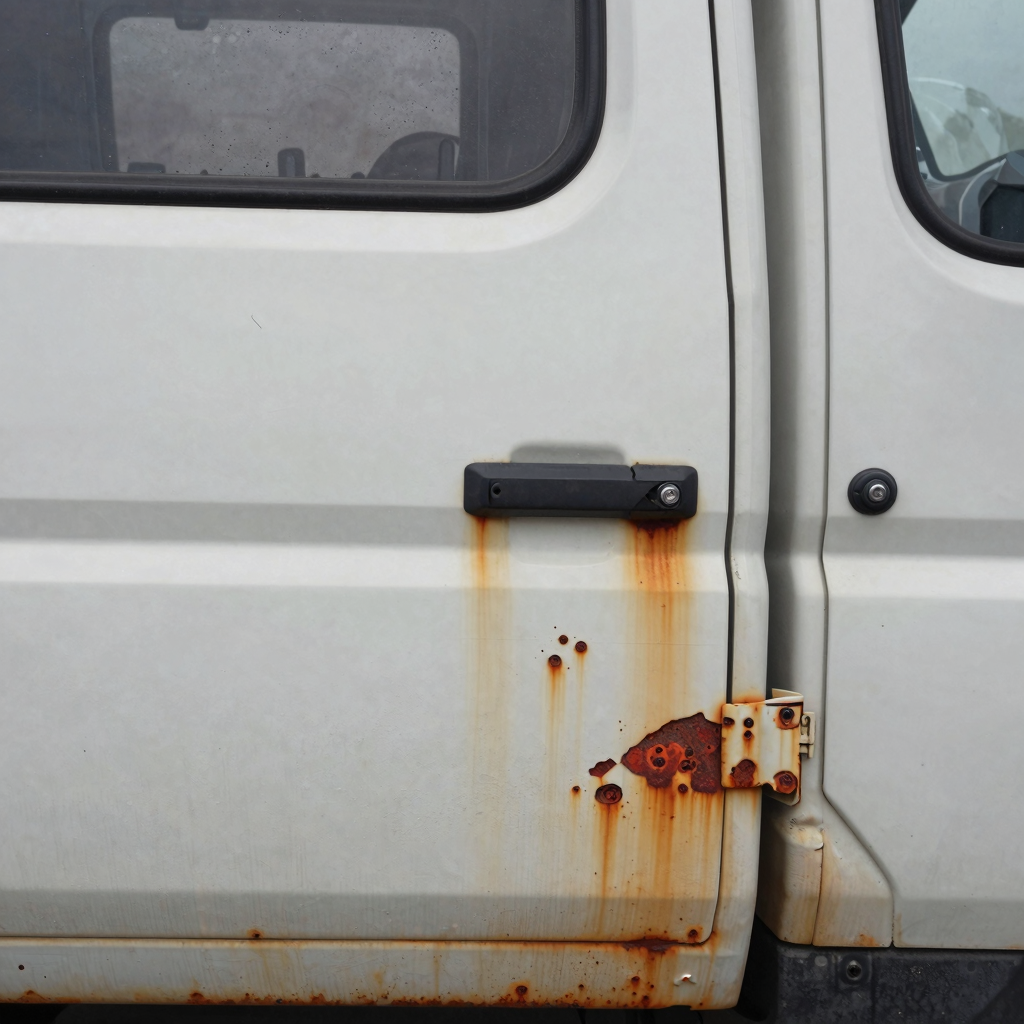
- Small, Reddish-Brown Spots: Initially, rust appears as tiny reddish-brown spots, often starting at the base of the door where moisture accumulates.
- Bubbling or Blistering Paint: Look for paint that is bubbling up or blistering, which indicates that rust is forming beneath the paint surface.
- Flaking or Peeling Coatings: Damaged or peeling paint can expose the underlying metal, making it prone to rust.
- Rough Texture: A rough surface texture is a sign that rust is developing under the paint.
- Dark Spots: Over time, these rust spots can grow darker and spread, indicating deeper corrosion.
- Visible Holes: In advanced stages, rust can lead to holes in the metal, compromising the integrity of the door.
- Warping of the Metal: If the door seems misshaped or difficult to close, the metal could be weakened by rust damage.
- Squeaky or Stiff Hinges: Rust can cause door hinges to become squeaky or stiff, suggesting that moisture has built up around these areas.
Regular inspections and timely maintenance are crucial for preventing rust from spreading. For more information on maintenance budgeting, check out budgeting for routine truck maintenance.
Tools and Materials Needed for Rust Repair on Truck Doors
Repairing rust on truck doors requires a well-equipped toolkit and the right materials to ensure high-quality and long-lasting results. Whether you are a DIY enthusiast or a professional, having the essential tools and materials at hand can make the process efficient and effective.
Essential Tools
- Angle Grinder or Sander: This is necessary for removing rust and old paint. A grinder with the appropriate sanding discs (80 to 320 grit) can efficiently smooth the affected area.
- Wire Brush and Scraper: These hand tools are invaluable for scraping off surface rust and debris from the edges and corners where machines can’t reach.
- Safety Equipment: Always wear safety glasses and gloves to protect yourself from dust and sharp metal fragments. Additional respiratory protection is recommended when grinding or sanding.
- Sandpaper: Various grits (starting from 80 for rough grinding to 400 for fine finishing) are important for creating a proper surface for painting.
- Body Filler: For any deep pitting caused by rust, a high-quality body filler helps in smoothing out imperfections before painting.
- Rust Converter: This material chemically converts rust into a stable form, preventing further deterioration and providing a solid base for painting.
- Primer and Paint: An etching primer is essential for ensuring paint adhesion and durability. After priming, a matching topcoat can be applied for aesthetics.
- Paint Roller or Sprayer: For a more precise finish, especially if painting large sections, a sprayer will ensure an even coat.
Suggested Materials
- Rags and Cleaning Solutions: To clean the surfaces before and after the grinding process to ensure optimal adherence of primers and paints.
- Masking Tape: Useful for protecting adjacent areas from paint overspray during the finishing stage.
These tools and materials create a comprehensive kit for anyone tackling rust repair on truck doors, ensuring that both DIY enthusiasts and professionals can achieve satisfactory results. Proper preparation and the right equipment can significantly enhance the repair quality and longevity of the restoration efforts.
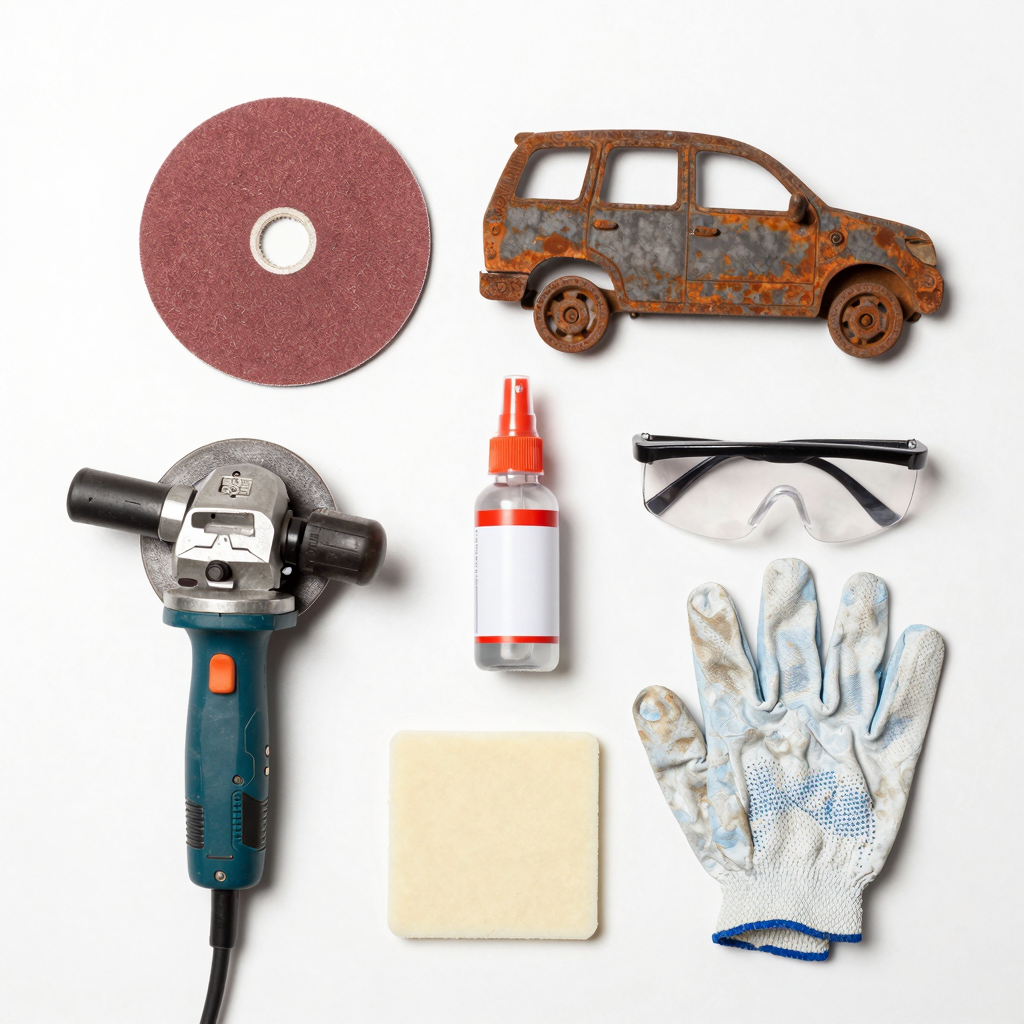
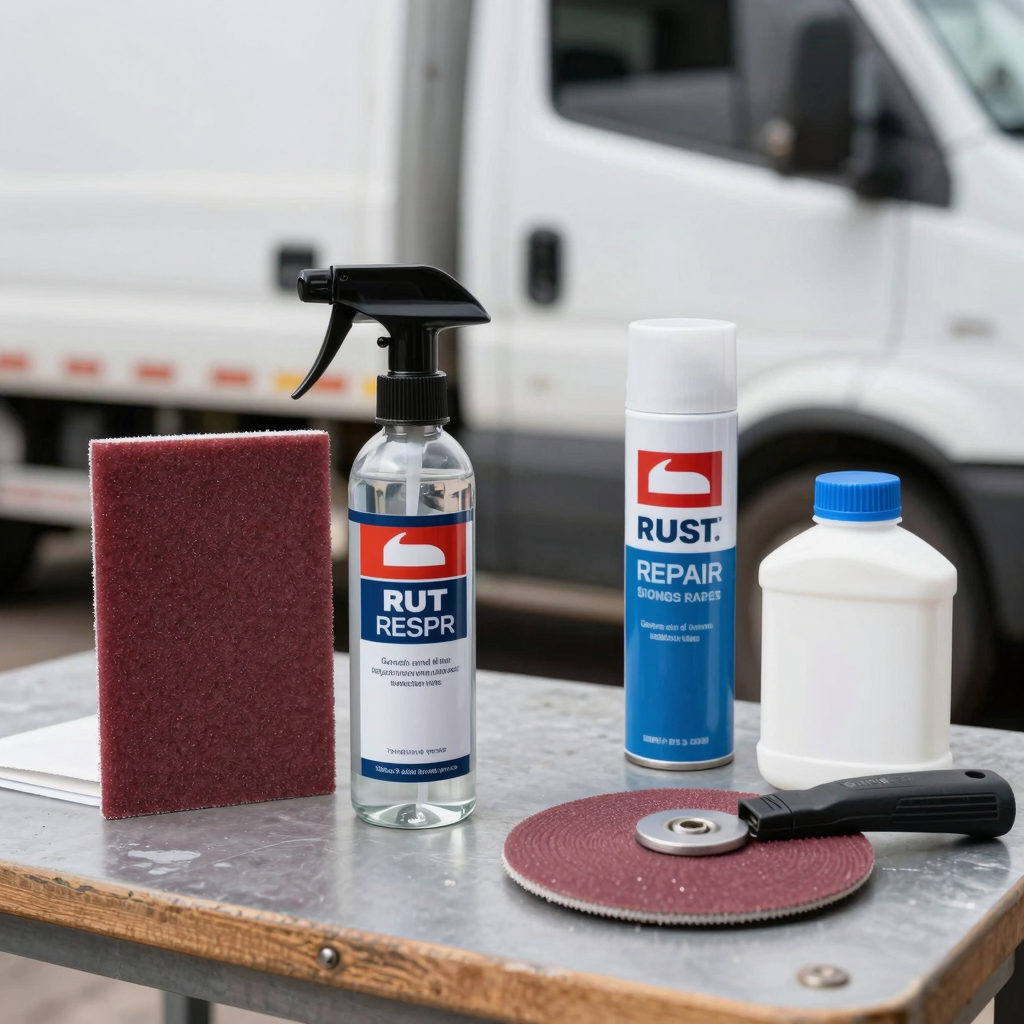
An assortment of tools and materials used for rust repair on truck doors.
For more tips on effective maintenance, check out our article on budgeting for routine truck maintenance and optimizing fleet size for small fleets.
Comparison of Rust Repair Methods
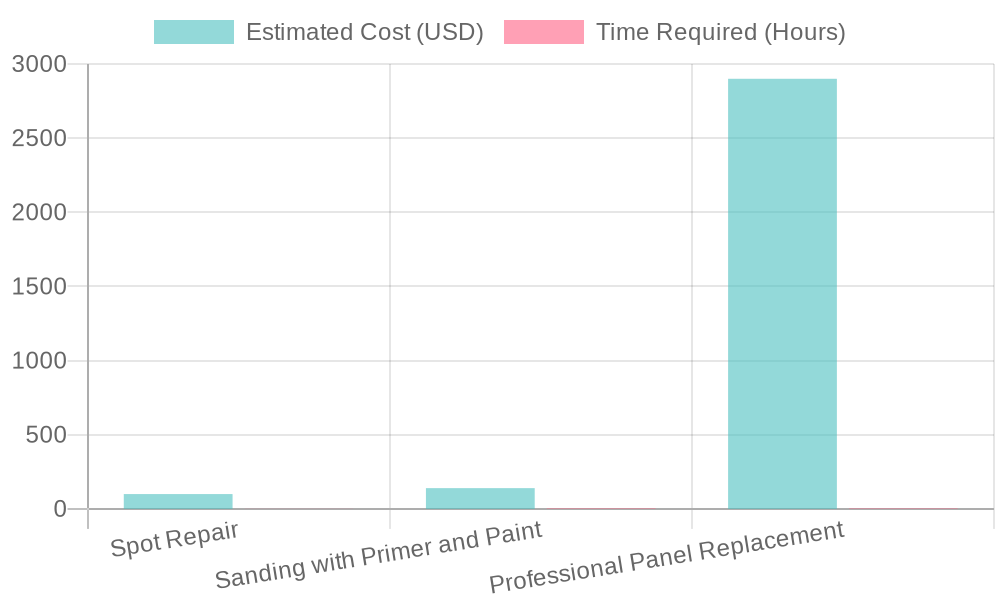
To effectively address rust issues on the bottom of truck doors, various repair methods are available, each with its advantages and disadvantages. Here’s a table that summarizes the key points:
| Repair Method | Pros | Cons | Estimated Cost (USD) | Time Required |
|---|---|---|---|---|
| Spot Repair | Simple and quick; low cost; effective for minor surface rust. | May not address deep or structural rust; limited durability if not properly done. | $50-150 | 30-90 minutes |
| Sanding with Primer and Paint | Restores appearance; provides good protection against further rust; relatively affordable. | Requires careful preparation; risk of improper adhesion or bubbling if done poorly; may need multiple coats. | $80-200 | 3-5 hours |
| Professional Panel Replacement | Fully restores structural integrity and appearance; long-term solution; ideal for severe rust damage. | High cost; time-consuming; requires skilled labor and specialized equipment; potential for fitment issues if not done correctly. | $1,800-4,000+ | 2-5 days |
For further insights, you can also check out this guide on rust repair methods and understand the costs associated with rust repair.
Step-by-Step Guide to Repair Rust on the Bottom of Truck Doors
Repairing rust on the bottom of truck doors is a critical maintenance task that helps prolong the life of the vehicle and maintain safety standards. Here, we outline a comprehensive guide on how to effectively repair rust, providing detailed steps from preparation to application and finishing touches.
| Step | Instructions | Tools/Materials Suggestions |
|---|---|---|
| 1. Safety Preparation | Wear protective gear (safety glasses, gloves, mask), and ensure you work in a well-ventilated area. Park the vehicle in a shaded space to prevent quick drying of paint. | Safety gear, work light, tarp |
| 2. Surface Cleaning | Clean the door surface thoroughly with warm soapy water to remove dirt and grease. Rinse with clean water and let dry completely. | Soapy water, soft brush, clean rags |
| 3. Remove Loose Rust and Old Paint | Use a scraper or wire brush to eliminate all loose rust and flaking paint. For stubborn rust, an angle grinder can be used with coarse sanding discs (80-120 grit). | Scraper, wire brush, angle grinder, sandpaper |
| 4. Sand the Rusted Areas | Employ an angle grinder or hand sander to smoothen the rusted area and at least an additional 5 cm around it until shiny metal is exposed. | Angle grinder, sanding discs (120-150 grit) |
| 5. Remove Dust and Grease | Use compressed air to blow off all dust from sanding, followed by wiping down the surface with alcohol or a specialized cleaner to ensure it is completely dry and grease-free. | Compressed air, alcohol, lint-free cloth |
| 6. Apply Rust-Inhibiting Primer | Spray a coat of high-quality rust-inhibiting primer on the cleaned and dried metal surface. Follow the instructions on the product for best results. | Rust-inhibiting epoxy primer, spray gun or spray can |
| 7. Fill Dents and Holes | For rust holes or dents, apply body filler (often called “bondo”). Mix it as per instructions and push it into the hole or dent, then smooth it out. Allow it to cure fully (usually 24 hours). | Body filler, auto body knife, mixing board |
| 8. Sanding the Filled Area | Once the filler is cured, sand it down starting with 80-grit sandpaper and transitioning to finer grits (180, then 800) for a smooth finish. | 80, 180, and 800 grit sandpaper |
| 9. Final Cleaning | Blow off any dust again, and wipe down the repaired area with alcohol before painting to remove any oils or residues. | Compressed air, alcohol, lint-free cloth |
| 10. Apply Base Coat (Optional) | For better adhesion of the paint, an intermediary coat can be sprayed. Once it has dried, lightly sand the surface with 800-grit sandpaper. | Intermediary coat, spray gun |
| 11. Apply Top Coat | Use automotive paint that matches your truck’s color, applying in thin layers while allowing some drying time between layers until coverage is satisfactory. | Automotive spray paint, spray gun/spray can, masking tape |
| 12. Clear Coat Application | After the top coat has fully dried (typically has to wait 24 hours for drying), add a clear coat for protection against scratches and environmental factors, using the same thin layer application technique. | Clear coat, spray gun |
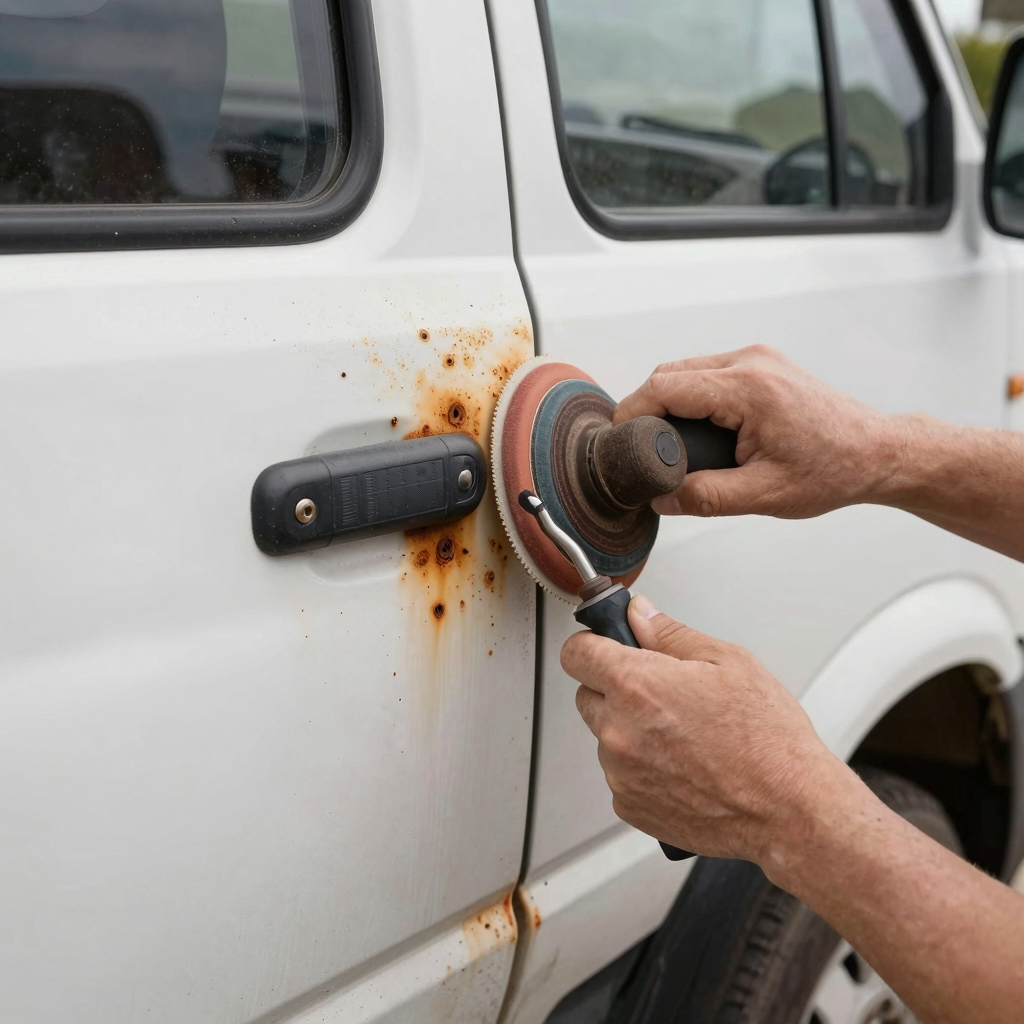
| 13. Final Touches and Polishing | Once the clear coat is cured (generally 72 hours), use a polishing compound and a buffer to refine the area, blending the repair with the surrounding paint. | Polishing machine, polishing compound, microfiber cloth |
Repairing rust not only improves the appearance of your truck but also maintains its structural integrity. Regular inspection and timely repairs can save your fleet money in the long run. For insights on how to budget for routine truck maintenance, check out this resource. If you’re managing a small fleet, consider these strategies for optimizing fleet size and maintenance.
Conclusion
In conclusion, rust repair requires careful preparation and attention to detail. By following these steps and using quality materials, you can effectively repair rust on your truck doors and preserve your vehicle for safer operations in the long run.
Preventative Measures for Keeping Truck Doors Rust-Free
For fleet managers and logistics providers, maintaining the integrity of truck doors is crucial not only for aesthetics but also for safety and longevity of the vehicles. Here are essential strategies tailored specifically for rust prevention in truck doors that you can implement immediately:
1. Routine Inspections
Regular inspections should focus on the door seals and drainage systems. Make sure the rubber door seals are intact and lubricated with a silicone-based conditioner to prevent water intrusion. Checking these components routinely can help mitigate potential rust.
2. Clean Drain Holes
Clogged drain holes are a common culprit behind rust formation. Schedule monthly checks to clear these holes using a simple tool like a metal or bamboo skewer to remove any dirt or debris that may block water drainage. This simple task can significantly reduce the chance of moisture buildup, which leads to corrosion.
3. Apply Rust Inhibitors
Utilize rust inhibitors or undercoating on the interior of door panels, especially in high-moisture environments. By doing this during routine maintenance cycles, you can establish a protective barrier against moisture. If your truck is frequently exposed to harsh weather conditions, consider additional rust-proofing treatments.
4. Immediate Repairs
Promptly addressing any scratches or chips in the paint can prevent rust from forming underneath. Maintaining the paint job on your trucks helps ensure that the protective barriers are intact. Always carry out paint repairs as soon as damage occurs to avoid further issues in the future.
5. Ventilation Strategy
When parking the trucks, keep the doors slightly open to allow air circulation inside, especially after driving in wet conditions. This habit helps dry out any trapped moisture that could contribute to rust production.
6. Damp Area Awareness
Avoid parking trucks in perpetually damp areas, such as under trees or near stagnant water. Instead, choose dry, well-ventilated spaces to minimize exposure to moisture accumulation.
Implementing these preventative measures can significantly prolong the life of your truck doors and reduce maintenance costs. For more detailed strategies, consider reading about budgeting for routine truck maintenance and optimizing your fleet size (small fleets).
By investing time and effort into rust prevention, fleet managers can ensure their assets remain in top condition, benefiting the overall efficiency and reliability of their operations.
 \
\
\
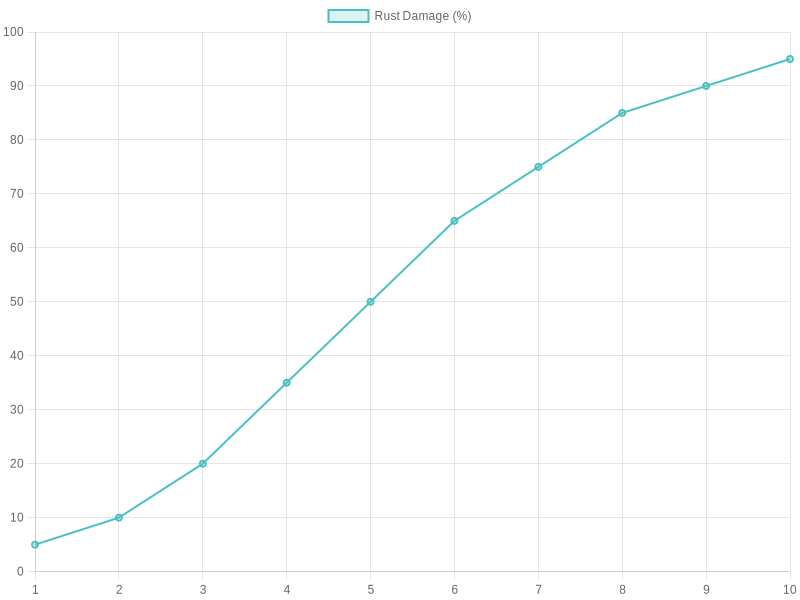
Rust Damage Progression Over Time\
\
| Year | Rust Damage (%) | \ |
|---|---|---|
| 1 | 5 | \ |
| 2 | 10 | \ |
| 3 | 20 | \ |
| 4 | 35 | \ |
| 5 | 50 | \ |
| 6 | 65 | \ |
| 7 | 75 | \ |
| 8 | 85 | \ |
| 9 | 90 | \ |
| 10 | 95 | \ |
| \ | ||
| Note: This data is illustrative and highlights the need for timely repairs to prevent extensive rust damage. |
Conclusion
In conclusion, addressing rust on the bottom of truck doors is essential not only for the aesthetics of your fleet but also for maintaining the overall integrity and safety of your vehicles. The key steps involve assessing the extent of the rust damage, safely removing rusted areas, and applying protective coatings. Regular inspections will help you catch potential issues early, significantly reducing costly repairs and ensuring compliance with safety standards.
Preventative measures, such as frequent washing and using rust inhibitors, play a crucial role in prolonging the lifespan of your trucks. Research from the U.S. Department of Transportation emphasizes that fleets adhering to rigorous maintenance schedules experience fewer roadside breakdowns and enhanced safety performance. Learn more about budgeting for routine truck maintenance to implement these best practices effectively.
The importance of maintaining truck integrity cannot be understated. It affects fleet reliability, driver safety, and ultimately, your company’s bottom line. For those looking to enhance their vehicle’s performance further, consider upgrading your current systems with diesel upgrades for improved efficiency. Summit Fairings offers a range of products that can help you elevate your fleet’s capabilities. Don’t wait until it’s too late-ensure your trucks are prepared for the road ahead!
“如果已出现锈蚀的部位,应彻底清除锈迹,使用防锈剂处理,并补涂清漆或进行喷漆修复。” – 车辆维护专家分析
这句引述强调了及时处理锈蚀问题的重要性。忽视锈蚀可能导致更大问题和修复成本。因此,作为卡车车队的管理者,确保适当的维护和处理措施是关键。要了解更多关于常规维护的预算,请参阅我们的预算规划指南。