
For fleet managers, trucking company owners, and operators in construction and logistics, maintaining vehicles is critical for operational efficiency. Truck door issues, whether they manifest as dents, misalignments, or window regulator failures, can lead to significant downtime and repair costs. This guide outlines essential strategies for assessing damage, equipping your toolkit, executing repairs, and ensuring your trucks remain in top condition. By embracing these do-it-yourself techniques, you empower yourself and your team to handle common truck door repairs effectively, minimizing reliance on professional services while saving both time and money.
Examining the Clues: A Thorough Guide to Assessing Damage for DIY Truck Door Repair
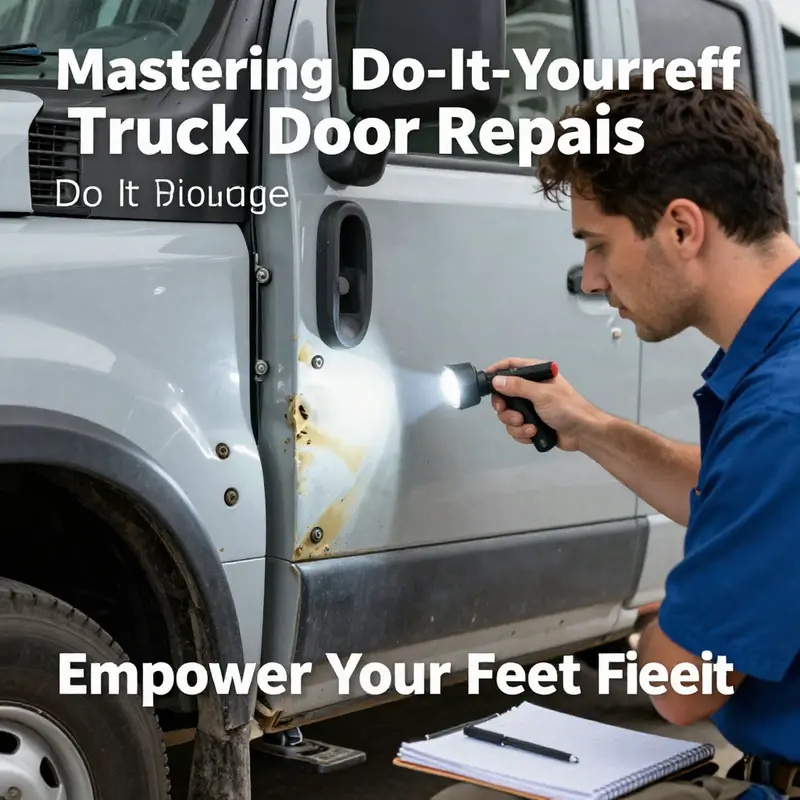
When you decide to undertake the repair of your truck door yourself, the first step is to examine every detail of the damage carefully. It is essential to approach this process with diligence and attention, as a close inspection can save you time, money, and frustration later on. A well-assessed door damage investigation forms the foundation of every successful DIY truck door repair project. In this chapter, we explore every aspect of assessing damage, from a visual overview to deep structural checks, so that you can begin your repair journey well-informed and ready for the task ahead.
The initial phase is all about observation. Start by looking over the entire door as if you were a detective gathering clues at a crime scene. A meticulous visual examination can reveal dents, scratches, and other marks of impact scattered across the surface. Place your focus on any irregularities on the metal, any chipped paint, or areas where the door surface may appear uneven. Look especially for signs that the door might have undergone stress from repeated impacts or weather exposure. As you inspect, allow your eyes to roam over every visible detail, taking note of even the most minuscule imperfections. An unblemished surface is rare in everyday truck use; even minor dents can be early signals of larger underlying issues that could affect the door’s structural integrity.
Once you complete the initial sweep of the surface, transition into a more detailed component check. It is important not to overlook elements such as hinges, latches, weatherstripping, and the door frame. Each component plays a role in the overall functionality and appearance of the door. The hinges, for example, are critical. Scrutinize them for signs of wear, rust, misalignment, or looseness. If you find that the door sags or does not close flush with the truck body, the hinges may be worn out or need realignment. Do not forget to test the door latch and locking mechanism. A door that does not meet the frame correctly may result in a faulty latch engagement, and a careful physical check will often reveal if the latch is misaligned. Similarly, inspect the weatherstripping around the door. Small cracks or missing sections in the weatherstripping may lead to water damage or increased wind noise, which could become more pronounced over time as the door continues to age.
A detailed examination extends to all aspects of the door’s structure beyond the obvious cosmetic damages. Use a straight edge or level to determine if the door panel or its frame shows signs of warping or misalignment. This tool can help you identify areas where the door may have been stressed beyond its capacity, causing subtle distortions in the panel. Such distortions can sometimes be deceptive; what appears to be a light surface dent could have progressed into a weakened metal structure. Watching for this, it becomes clear that not all damage is immediately evident to the naked eye, and sometimes further disassembly is required to inspect hidden areas behind the trim or inner panels. Gaps seen near the top or bottom of the door are clues that the alignment might have shifted, signaling that the damage might extend beyond superficial blemishes.
Assessing damage is not a matter of relying solely on visual checks. Often, hidden issues like rust or corrosion lurk behind layers of paint or beneath body trim. The effects of moisture can be detrimental, especially if water has seeped into joints or along seams over time. Corrosion can start in small, seemingly insignificant spots and eventually compromise the overall structural integrity of the door. As you run your hands along the edges and corners of the door, pay attention to any roughness or stickiness that might indicate early rust formation. If you notice any signs of rust, it is important to address them promptly, as these spots could expand and create more significant issues if left untreated.
For many truck owners, the realization that the door does not close properly is the most apparent indication of underlying problems. When a door fails to operate smoothly, the root cause might be a misalignment of the door itself. This misalignment can occur from a variety of reasons ranging from an impact with an object to the slow degradation of the door hinges over time. An effective assessment in these cases calls for careful observation during the door’s open and close cycles. Watch the movement carefully, and store mental notes of when and where the misalignment seems most prominent. Observing these details under different conditions, such as in daylight and artificial light, can help reveal minor imperfections that might not be obvious at first glance.
At this juncture, it is wise to integrate a systematic approach with your assessment. Just as a professional mechanic might create a checklist after inspecting a vehicle, you too can compile your observations into a list. Start with a few key questions: Are there any deep dents or only surface-level deformations? Is the door warping along its horizontal or vertical axis? Do the hinges appear fully secure or are they loose enough to introduce dangerous lurches in the door’s movement? This list will serve as a blueprint for your repair project, highlighting the areas that need more effort. The clearer the list, the easier it is to decide which components require replacement, which need realignment, and which might only need a bit of cosmetic work.
Additionally, the role of tactile inspection cannot be overemphasized. Gently running your hand over the door’s surface can reveal textures that your eyes might have missed. For instance, slight bumps or indentations in the metal may become more evident through touch. This technique also allows you to check whether there are any loose parts or fragments from broken components. A subtle vibration when you tap on the door might indicate that a part is not securely attached or that there is an internal misalignment. Here, your physical sense of touch complements your visual scrutiny, combining to form a well-rounded picture of the door’s current state.
Being methodical in your inspection often uncovers that not all issues are immediately visible. Sometimes, a seemingly smooth and undamaged section of the door hides internal stress caused by past impacts. In such cases, using tools like a rubber mallet or a soft tapping tool can help you detect changes in sound or firmness when you strike different sections. A dull thud compared to a sharper ring may hint at a compromised area where the metal has been fatigue damaged or where the repair might not hold up over time. Listening carefully as you gently strike the door can provide valuable insight into the door’s structural soundness and help you decide if more aggressive repair methods are needed.
In addition to checking the main body of the door, another key component requiring assessment is the mechanism that controls the window. Many truck owners face issues where the window does not roll up or down smoothly. This problem often arises from damaged or misaligned window regulators or faulty tracks. By removing the door panel carefully, you gain access to the inner workings of the window mechanism. As you inspect the cables and gears, look for any signs of wear such as frayed wires or stripped gears. Problems here can cause the window to move unevenly, indicating that the regulator may need replacement. Applying a small amount of silicone spray or lithium grease to the moving parts during your inspection can not only smooth operation but also give you an indication of how much wear the components have experienced over time.
Equally important is the measurement of the door’s overall alignment in relation to the truck’s body. Misalignment often causes the door to rub against the frame during operation, and even small deviations can lead to improper sealing that might allow water or wind noise to infiltrate the cabin. By visualizing the door’s natural resting position when fully closed, you can better pinpoint where adjustments are necessary. In some cases, shimming between the hinge and the door frame offers a practical solution for minor alignment issues. This approach requires patience and precision as you gradually insert small spacers until the door aligns perfectly. It is a process that calls for trial and error but ultimately reinforces the importance of a thorough initial assessment.
Once every visual and tactile check is complete, it is time to synthesize your findings. Creating an organized report of your observations, even if it is simply a mental note, helps you prioritize the repairs that need immediate attention. A door that is significantly misaligned should be addressed before tackling smaller cosmetic issues such as dents or scratches. Moreover, if you discover that components like the hinges or window regulators show signs of advanced wear or internal damage, these issues must be fixed first to ensure the door’s operation is restored fully. Detailed documentation of these observations allows you to reference the specific issues as you gather tools and parts for the next phase of the repair process.
Throughout your assessment, remain mindful of safety and your own limitations. While most visible damage can be diagnosed with simple tools and a careful eye, some conditions may warrant the expertise of a professional, particularly if the structural integrity of the door is in question. An honest assessment involves recognizing when a repair might exceed your skill level or require tools beyond your current inventory. However, even in these situations, a thorough assessment equips you with the necessary information to discuss the issue intelligently with a professional mechanic should you decide that professional intervention is needed.
One of the benefits of taking a comprehensive approach to assessing damage is that it prepares you for a more efficient repair process. With a clear idea of what needs fixing, you can focus on gathering only the necessary tools and parts rather than purchasing a kit full of superfluous items. An accurate diagnosis directly influences your budgeting and time management, ensuring that you are not only effective in your repair work but also cost-efficient. For many truck enthusiasts, the process of diagnosing door damage becomes a learning experience. Every measured dent, every loose hinge, and every misaligned component tells the story of how your truck has been used and abused over time. In learning this story, you gain valuable mechanical insight that could prove useful in future repairs or even routine maintenance tasks.
Moreover, the process of assessing damage is not a one-time event restricted solely to repairing the door at hand. This practice can evolve into a routine maintenance check that helps preempt major repair issues in the future. The skills you develop through a careful, systematic examination can be applied to other parts of your truck, leading to a more comprehensive approach to vehicle maintenance. You might start noticing subtle hints of wear in areas that previously escaped your attention. In doing so, you build a preventative maintenance routine, thus extending the longevity and performance of your truck. Incorporating regular assessments into your maintenance schedule can prevent minor issues from escalating into costly repairs and reduce the need for emergency services.
A further point of emphasis is the hidden damage that may not be immediately obvious. It is easy to overlook internal issues that, if left unchecked, could compromise the door’s performance over time. For example, a layer of rust developing on the inner panel or around the mounting points of the hinges is not always visible from the outside. These indicators of internal decay deserve as much attention as the more obvious dents and scratches. When you suspect that such hidden damage exists, consider using a flashlight to peer into cracks and crevices. This extra step can confirm whether the surface damage is merely cosmetic or if it is symptomatic of deeper, more unsafe structural issues. In some cases, taking a brief moment to remove the door panel might be warranted to inspect the internal framework directly. This diligence is a small price to pay for the assurance that the door repair will be both effective and lasting.
The detailed examination process also suggests that a methodical approach is the best way to prepare for the actual repair. A structured and complete assessment supports a confident, step-by-step repair procedure later on. Rather than diving into complex repair techniques blindly, you now have a road map of every issue that needs to be addressed. With this blueprint in hand, you can systematically approach each problem, whether it is a replaceable vehicle hinge, a misaligned boarding sequence, or a stubborn window regulator. The clarity achieved through this diagnostic phase greatly increases the likelihood that your repair will be efficient and successful. Bringing this approach into your DIY truck door repair routine not only saves money but offers a learning experience that adds to your confidence as a capable, independent mechanic.
For additional insights into vehicle damage evaluation, you might find it useful to review a comprehensive discussion on similar assessment techniques in a related article, such as the in-depth analysis provided on DIY windshield repair for truck owners. By comparing methodologies and observing parallels between different types of repair, you can further enhance your troubleshooting skills and gain more confidence in executing repairs independently.
In the end, the process of assessing damage for a truck door repair project is both an art and a science. It combines a careful look at visible issues with the intuition and experience gained through repeated maintenance tasks. Every dent, scratch, or misalignment is a clue that, when pieced together, tells the full story of the door’s condition. A thoughtful, well-documented assessment provides the assurance you need to move forward with repair work. With this clear map of the damage, you can approach the repair process methodically, ensuring that every component is addressed and that the restored door will serve reliably for years to come.
For those looking to deepen their understanding of damage assessment, further guidance can be found on the National Institute for Automotive Service Excellence website. Their Vehicle Body Damage Assessment Guide offers a wealth of detailed strategies and tips that complement the steps outlined in this chapter. Armed with these insights, you are well-prepared to transform a challenging repair into a rewarding personal project that not only repairs your truck door but also enhances your overall maintenance skills.
Mastering the Essential Toolbox: Key Equipment for DIY Truck Door Repairs
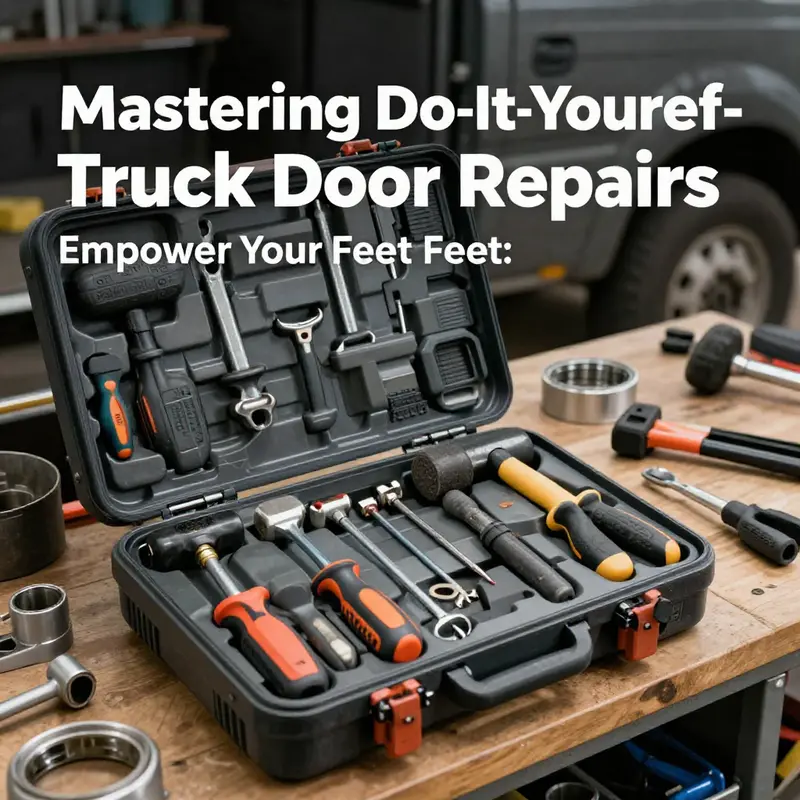
When it comes to repairing your truck door yourself, having the right tools is as important as having the right attitude. Investing in quality equipment not only makes the repair process smoother but also builds confidence to tackle multiple issues, from minor dents and misalignments to more complex tasks such as fixing malfunctioning window regulators and worn hinge mechanisms. In this chapter, we explore a comprehensive range of essential tools that every DIY enthusiast should have in their arsenal. Whether you are standing in your garage with your trusty wrench or working casual hours in your makeshift workspace, these tools will become indispensable allies in your journey to master your truck door repairs.
Starting with the most common repairs, the manual dent repair tools play a pivotal role in addressing the surface imperfections on your truck door. Small dents, often the result of minor impacts or incidental bumps, require hands-on manipulation of the door’s panel. A solid body hammer, paired with a set of dollies, becomes crucial when you need to reshape the metal back to its original form. These tools rely on a skilled touch—hitting the metal in the correct sequence and with balanced force to avoid further deformation. The dollies are used as a counterforce; placing them behind the dent distributes the impact evenly, ensuring that you can work on the affected area without compromising the paint quality. Many DIY mechanics have found these tools to be the heart of their repair kit because they allow for immediate intervention without the need for expensive professional services.
In situations where the dent is too delicate or situated in an area where force might cause irreversible damage, glue pullers offer a precise, non-invasive solution. The glue puller technique involves using specially formulated hot-melt adhesives that bond to the metal surface, and by attaching a pulling tab, the dent is gradually regained to its original curvature without the need for heavy mechanical force. This method stands out for its ability to preserve the integrity of the truck’s finish, reducing the risk of scratches and additional imperfections. For those who choose this route, having a reliable glue gun, a set of pulling tabs, and an appropriate pulling tool is essential. The controlled extraction process makes glue pullers a favorite among DIYers who value a pain-free, detail-oriented method that promotes long-term durability and aesthetics. The principle behind this tool lies in its gentle approach; rather than relying on brute force, it uses calculated pressure that encourages the metal to relax back into shape. For additional insight into non-invasive repair techniques, you might find this external resource on paintless dent repair techniques both useful and informative [https://en.wikipedia.org/wiki/Paintlessdentrepair].
Beyond the primary tools needed for dent repair, the importance of compact and durable repair tools cannot be overstated. Trucks, especially those used for daily transport or off-road work, require a repair kit that is both robust and portable. In these cases, having a dedicated, durable truck door repair tool, ideally crafted from high-grade metal, can be a game changer. Designed for on-the-go repairs and emergency situations, these compact tools are engineered to withstand harsh environments and rough usage. They prove invaluable during unexpected breakdowns or when working outside the comfort of a traditional workshop. The convenience of a portable kit that can be stored in your truck’s toolbox means that no repair is too far away. The durability of these compact tools makes them a staple in the toolkit of anyone serious about maintaining their vehicle independently, ensuring that even in adverse conditions, you have the necessary equipment at hand to perform efficient repairs.
Moreover, while the majority of DIY truck door repairs involve more common issues like dents and misalignments, there are instances when specialized tool kits become critical. Truck door repairs sometimes require handling components such as door cables and locks that need precision and care. For example, if you have a vehicle model prone to issues with its door cables, investing in a specialized door cable repair kit can save both time and money in the long run. These kits usually come with a set of tools specifically designed for the unique configurations found on various truck models, such as those used in trucks like the Ford F150, F250, and F350. The advantage of these specialized kits lies in their tailored approach to repair—each tool is designed with a specific problem in mind, minimizing the guesswork during repair procedures. Such kits allow you to disassemble and reassemble components with confidence, knowing that each tool has been engineered to meet the rigorous demands of truck door maintenance.
One of the more nuanced aspects of DIY truck door repair is ensuring that every adjustment or replacement is performed with the correct tool and with precision. For instance, when dealing with misaligned doors, the process may initially seem straightforward: you simply need to realign the door by loosening hinge bolts, repositioning, and retightening. However, persistent issues like an uneven seal or a door that continues to rub against its frame may signal that additional measures such as using shims are necessary. Shims act as small spacers that help fine-tune the alignment once the basic adjustment has been made. The process of adding shims may not require elaborate tools, but it does demand an understanding of spatial tolerance and the subtleties of door mechanics. Each shim inserted can dramatically improve the fit of the door, ensuring not only a better seal against weather elements but also ensuring that the door operates smoothly over time.
In preparing to embark on any DIY repair project, it is crucial to gather and organize all the necessary tools before beginning the task. A well-prepared workstation can be the difference between a successful repair and an extended project fraught with avoidable frustrations. As you assemble your toolkit, consider the multi-functionality of each piece of equipment and its ease of use in various repair scenarios. For example, a socket wrench set is not only necessary for loosening and tightening bolts but also for adjusting components like hinges and pins. Similarly, a good-quality pry bar is indispensable when you are carefully removing the door panel. The lubricant, whether it is silicone spray or lithium grease, is vital in ensuring that moving parts such as old hinge pins operate without unnecessary friction. Each tool and material, from the more robust compact repair tools to the delicate glue pullers, plays a distinct role in the overall process. This thorough preparation ensures that when the time comes to fix a dent or realign a door, every movement is deliberate and measured, leading to a more reliable and enjoyable repair experience.
For many truck owners, the journey into DIY repairs is not just about saving money but about cultivating a deep understanding of how their vehicles function. As you work with each tool, you gradually build up a unique expertise that extends far beyond the immediate repair at hand. The tactile feedback you receive from a body hammer striking metal or the precise adjustment required when aligning door hinges can be both fulfilling and educational. These experiences transform routine maintenance into opportunities for learning and mastery over your own vehicle. Many DIY enthusiasts find that as they become more proficient with various tools, the fear of mechanical failure diminishes, replaced by a sense of empowerment and independence. A well-maintained truck not only performs better but also reflects a deeper connection between the owner and the machine. The knowledge gained during each repair enriches your overall vehicle maintenance practices, reminding you that every tool has a purpose and every repair, no matter how minor, is a step toward enhanced operational efficiency.
The durability of your essential tool kit is another factor that can significantly impact your DIY truck door repairs. Over time, repeated use and challenging working conditions can wear down even the most reliable tools if they are not constructed from high-quality materials. Investing in durable tools means that you are better prepared for long-term maintenance, reducing the likelihood of needing frequent replacements. Tools that are engineered for longevity do more than just aid in repairs; they become a testament to your commitment to responsible truck upkeep. A sturdy, reliable tool kit not only improves the repair process but also ensures that you are never left without the right equipment when a problem arises on the road. An organized and robust collection of tools can provide peace of mind, knowing that whether you are faced with a minor dent on a rainy day or a more significant issue during a long haul, you have the necessary instruments to manage the situation effectively.
Beyond the practical aspects of tool selection and usage, there is also a psychological element involved in mastering DIY repairs. For many, working on their truck becomes a meditative practice that instills patience and persistence. With each repair, you learn more about the intricacies of your vehicle, and this knowledge gradually translates into a greater appreciation for the engineering behind it. The process of troubleshooting, followed by careful measurements and adjustments, demands close attention and a creative problem-solving approach. This artisanal aspect of maintaining your truck door repair kit echoes the spirit of many garage craftsmen who find solace in meticulous work and tangible outcomes. It is not uncommon for DIY repair enthusiasts to share their experiences and techniques on online forums, often drawing connections between traditional craft and modern technology. These communal experiences foster a sense of unity and shared knowledge where every tool has a story and every repair session enriches your mechanical literacy.
If you are looking to reduce the overall maintenance costs and streamline your routine vehicle upkeep, budgeting for routine truck maintenance is a crucial step. By having a reliable set of essential tools at your disposal, you minimize the need for expensive professional services, which often charge premium rates. This approach not only cuts costs but also allows you to fully understand the mechanics of your truck, ensuring that you are prepared for any eventuality on the road. For those interested in exploring ways to optimize their maintenance strategy while keeping expenses in check, you might consider reading more on budgeting for routine truck maintenance, which offers valuable insights into cost-effective practices and smart investments in repair tools.
Understanding the role of each tool within your repair kit is fundamental to effective troubleshooting and problem resolution. A body hammer, for example, is engineered for precision impacting where delicate adjustments require a consistent yet gentle force to shape the metal. Meanwhile, dollies help prevent further damage by providing a counterforce to balance the hammer strikes. Similarly, glue pullers combine the benefits of adhesive technology with the precision of manual control, allowing you to manage even the smallest dents with careful adjustments. When you meticulously plan every aspect of the repair—from which tool to use at each step to how best to apply force—you create a process that is not only effective but also repeatable, making future repairs faster and more predictable.
In summary, mastering the essential toolbox for DIY truck door repair means understanding both the capabilities of each tool and the techniques that best suit your repair needs. Every item, from manual dent repair tools and glue pullers to compact portable instruments and specialized tool kits, plays a crucial role in ensuring that your truck door operates as efficiently and reliably as possible. With careful attention to detail and a commitment to maintaining high standards, you transform the repair process into a practical education in mechanics and craftsmanship.
Ultimately, the art of DIY truck door repair is about more than just fixing a dent or realigning a misbehaving door—it’s about empowering yourself to maintain your vehicle independently and confidently. With the right set of high-quality tools, you are well-equipped to handle a wide range of repair challenges. Each successful repair not only saves money but also builds long-term skills that are applicable to a broad spectrum of maintenance tasks. The satisfaction derived from knowing you have taken charge of your truck’s upkeep is unparalleled, and the knowledge you gain along the way serves you for years to come.
For truck owners who value independence and smart spending, developing a robust tool kit for truck door repairs is an investment in self-reliance. As you continue to explore new fixes and refine your techniques, the tools you choose will become essential parts of your personal maintenance strategy, helping you to navigate any repair challenge that arises. The journey of DIY truck door repair is a rewarding mix of practical application, creative problem solving, and ongoing learning—a journey that starts with the simple step of choosing the right equipment for the task at hand.
Reshaping Your Truck’s Dented Door: Mastering DIY Techniques for a Smooth Finish
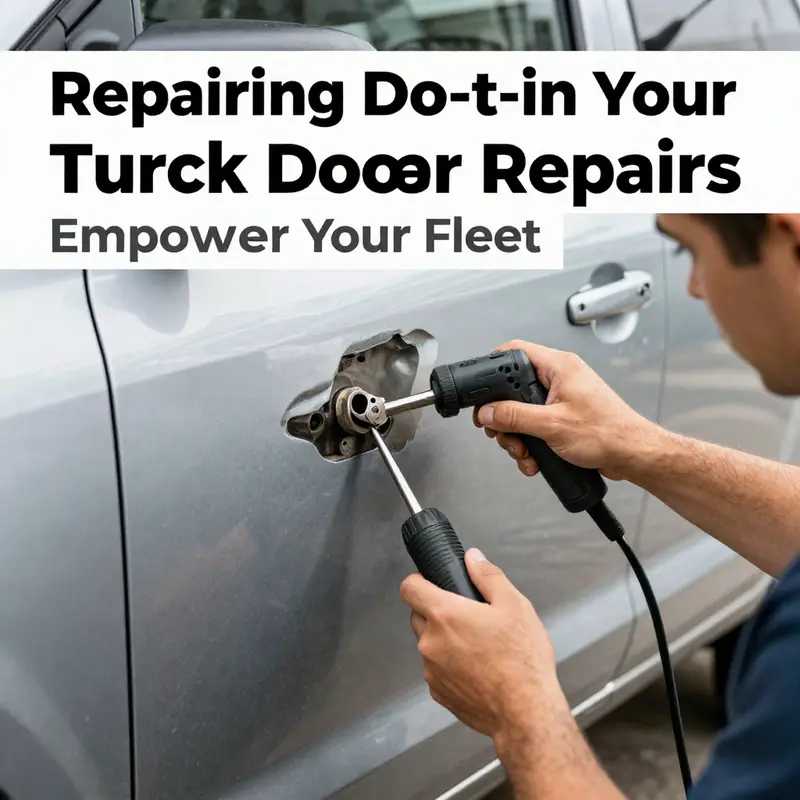
When you stand before your truck door and notice a dent, it might seem like an insurmountable challenge. Yet with a set of basic tools, a few household items, and a bit of patience, you can restore the door’s smooth finish right in your own garage. This chapter delves into several techniques that allow you to gradually coax those unsightly dents out of shape, turning what might appear to be a permanent blemish into a minor inconvenience. The process not only rejuvenates the look of your truck but also saves you considerable money compared to taking it to a professional body shop.
At the heart of these DIY techniques is the concept of manipulating metal through careful application of temperature and pressure. The principle is straightforward: by encouraging the metal to expand, contract, or flex using controlled forces, you can make a dent gradually disappear. Although the methods described below might vary in their approach—ranging from thermal tactics with hot water or dry ice to the use of suction cups and adhesive pads—all are anchored in the same idea of restoring the natural shape of the metal. Many enthusiasts swear by these approaches, not only because they work but also because they grant you a direct engagement with the mechanics of your truck.
One of the first techniques that many DIY mechanics explore is the heat and cold method. The idea here is to harness the natural tendencies of metal when exposed to temperature extremes. In practice, this means using dry ice to freeze a small area and then allowing the warmer surrounding metal to encourage a rebound effect on the dent. If you have dry ice at your disposal, place it carefully on the dented area while wearing heavy gloves to protect your hands from the severe cold. Keep the dry ice on the dent for around 30 to 40 seconds, allowing the cold to cause a sharp contraction of the metal. Once the dry ice is removed, the heat from the ambient conditions and the natural warmth of the metal will cause it to expand slightly, thereby nudging the dent back toward its original profile. This method works best for small, shallow dents commonly found on truck doors where the metal is thinner and has more flexibility.
Alternatively, a contrasting temperature method involves the use of hot water combined with a cold compress. Start by pouring hot water—carefully heated to around 70 to 80°C—over the dent, ensuring that the heat permeates the metal in that precise area. After a couple of minutes, immediately cover the hot spot with a cold, damp cloth. The rapid change in temperature causes a sudden contraction of the metal, which can provide a surprising amount of force to push the dent outward. Always remember to test this approach on an inconspicuous area first. The technique is especially useful when the dent is quite superficial and when the surrounding metal is able to respond to these stresses without warping or cracking.
Beyond temperature-based methods, another popular approach to repair minor dents is the use of suction. The simple concept behind a suction cup or a specialized rubber puller is to re-establish the door’s original curvature with steady and even force. Start by cleaning the area of the dent thoroughly with soapy water, then dry it completely. A clean surface is imperative for the suction cup to form a tight seal. Once the area is dry, firmly press the suction cup onto the center of the dent. The aim is to create a vacuum that allows you to gently pull the metal back into shape. With a consistent, slow pull on the handle, the dent may start to recede. This method is particularly useful for dents that are slight and do not affect the paint or the overall structure of the panel. The beauty of this technique lies in its simplicity and the minimal tools required—it only needs a sturdy suction cup and a bit of persistence.
In some cases, especially when the dent proves stubborn, a more refined method may be necessary—one that involves a heat gun or even a hairdryer in combination with a plastic adhesive pad. The process begins by applying moderate heat around the dent, just enough to soften the metal and increase its malleability without compromising the integrity of the finish. Once the metal is sufficiently warmed, a specially designed plastic adhesive pad is pressed onto the center of the dent after a small dab of adhesive is applied. The adhesion between the pad and the metal, combined with the cooling effect that follows once the pad is in place, can provide a gradual pulling force on the metal. After allowing the adhesive and metal to cool and bond, using a blunt, flat tool such as a plastic putty knife to gently pry the pad away can further assist in drawing the dent out. This method, while slightly more advanced, offers a controlled and measured way to deal with dents that resist other, less intensive methods.
It is essential to understand that not all dents should be approached with these methods. Deep dents, or those accompanied by creases and paint damage, might require a professional’s touch. The techniques described in this chapter are best suited for minor, surface-level imperfections. Truck doors are constructed to endure minor impacts, but when a dent is too severe, attempts at DIY repair can lead to further damage to the panel or even affect the alignment of the door. In such cases, seeking professional assistance is advisable, as professionals can offer treatments that are outside the scope of common DIY methods.
The satisfaction that comes from tackling a repair job successfully is immense. When you notice your truck door beginning to resemble its former self, the reward is not just cosmetic—it also builds confidence in your growing mechanical skills. Each successful repair serves as a reminder that careful application of techniques, coupled with attention to detail, can yield impressive results. While it might seem intimidating at first, the process is often a matter of trial and error. With each attempt, you gain a better understanding of your vehicle’s material properties and how they respond to different forces. Over time, you begin to pick up subtle cues—a slight change in sound, a minute shift in shape—that help you gauge the effectiveness of your chosen method.
Moreover, these techniques are not just limited to truck door repairs. They are part of a broader philosophy of vehicle maintenance and repair that emphasizes self-reliance and resourcefulness. Becoming proficient in techniques such as using temperature variations, suction devices, and adhesive pads can inspire confidence to tackle other minor repairs around your vehicle. For example, if you ever need to work on other parts of the truck that have suffered similar minor impacts, you already know that the principles remain the same: assess the damage, choose the appropriate method, apply consistent force, and be patient as the metal returns to its original form.
It is also important to observe safety precautions when engaging in these techniques. When handling dry ice, always wear protective gloves and work in a well-ventilated area to avoid any risk of frostbite or respiratory issues from the sublimation of carbon dioxide. When working with hot water or a heat gun, take care not to burn yourself or damage nearby parts of the vehicle. The risks are minimal if you adhere to recommended safety measures, but a moment’s carelessness can lead to injury or inadvertent damage to your truck. Ensuring that you have the right protective gear and maintaining a clear workspace are small investments that can make a significant difference in the overall outcome of your repair work.
In addition to safety, it is wise to keep an organized toolkit that is dedicated to these types of repairs. A well-stocked toolkit might include items that are specifically chosen for truck maintenance, such as socket wrenches, various screwdrivers, a reliable heat gun, suction cups, a plastic adhesiveness kit, and protective gear. While some of these tools might already be in your collection, investing in a few specialized items can streamline the repair process. In the world of DIY truck maintenance, preparation is as important as execution. A comprehensive set of tools not only speeds up the repair process but also reduces the risk of further damaging the vehicle during the repair. For those who are passionate about maintaining their vehicles, reading more about at-home repairs can offer valuable insights. For example, you might find detailed discussions on proper maintenance techniques in articles like the one available through this insightful guide on in-house truck maintenance practices here.
Once you have chosen and implemented the appropriate technique for the dent at hand, the final phase of the process becomes a careful assessment of the results. Turn your attention to every aspect of the door, examining not only the visual repair of the dent but also ensuring that the door’s overall functionality has not been compromised. The metal may appear to have returned to its smooth form, but a comprehensive check for any potential irregularities—such as misalignment with the door frame or unusual gaps—is essential. The final test comes with repeated use: opening and closing the door several times, listening for any unexpected creaks or resistance, ensures that the repair is both aesthetically pleasing and functionally sound. Only when both criteria are met should you consider the repair complete.
Every repair of this nature is a learning experience. There will be times when the method you choose does not produce the desired result, and the dent remains stubbornly intact. However, this is not a failure; it is an opportunity to reassess and experiment. Perhaps a slight modification in the duration of heat application or an adjustment in the force used with the suction cup might yield a better outcome. The process is iterative, and with each attempt, you come closer to mastering the art of DIY truck repairs. The key is to avoid rushing. Allocate enough time so that you can work slowly and precisely, checking your progress frequently. A hurried attempt could not only result in sub-par repair but might also risk damaging the truck door further. For many truck owners, the journey to mastering these repairs is both practical and deeply satisfying.
In this journey of self-reliance, the role of research cannot be overstated. Sifting through various techniques, reading accounts of others who have faced similar challenges, and internalizing a host of precautions builds both knowledge and confidence. Detailed instructions, like those included in professional guides and reputable online articles, serve as roadmaps. They remind you that the process has been honed through years of experience and that each method has its place depending on the nature of the damage. For those seeking further understanding of the nuances involved in paintless dent removal, the explanation available on Wikipedia provides a comprehensive background on the subject Paintless Dent Repair on Wikipedia.
Maintaining a spirit of perseverance and adaptability is crucial. There are days when even after applying all known methods, the dent may persist. It is in these moments that revisiting the fundamentals can be most effective. Re-examine the area to ensure that it is completely clean and dry, and adjust your application of heat or pressure accordingly. Sometimes, the slightest overlooked detail—a small bit of residual moisture or a minor contaminant on the metal—can impede progress. Remember, the success of a repair is often hidden in these tiny details.
In summary, repairing dents in your truck door yourself is not simply about restoring appearances; it is also about empowering yourself with the skills and confidence to manage your vehicle’s upkeep. Through methods involving thermal expansion and contraction, the application of steady suction, and innovative adhesive techniques, you can tackle a range of minor dents. Each method, when executed with care and precision, will polish the surface of your truck door and enhance your understanding of automotive repair. Over time, what once seemed like an intimidating task becomes a satisfying exercise in personal maintenance and self-improvement.
Approaching each dent with a well-conceived plan, the right set of tools, and a focus on safety will always yield positive results. The transformation from a dented, unappealing truck door to one that looks nearly original is not merely cosmetic—it is a testament to your diligence and respect for your vehicle. With every repair, you accumulate experience that makes future challenges easier to manage, tightening the bond between you and your truck as you undertake regular maintenance with a clear mind and resolute determination. The journey in mastering these techniques is continuous, but every small victory along the way contributes significantly to your overall skill set.
Embrace the imperfections as opportunities to learn and improve, and when doubt creeps in, remember that sometimes even the best techniques require a little adjustment. With each careful step—from selecting the right method to applying it with steady hands—you transform not only the metal of your truck door but also your perspective on auto maintenance. By trusting the process, studying the effects of different methods, and staying patient, your DIY repairs will continue to yield results that are both visually pleasing and functionally sound.
Ultimately, every dent you repair is a chapter in your ongoing education as a DIY truck owner. The skills you develop today may one day transfer to other areas of the vehicle, or even inspire you to explore more advanced repair techniques. The satisfaction of watching a dent vanish under your own hands is unparalleled, cementing your status as not just a truck owner, but a hands-on, knowledgeable craftsman committed to excellence in maintenance. In this respect, every truck door dent becomes a stepping stone on your road to mastery, empowering you to take on the challenges of truck ownership with confidence and skill.
Precision and Patience: Mastering the Art of Realigning and Repairing Misaligned Truck Doors
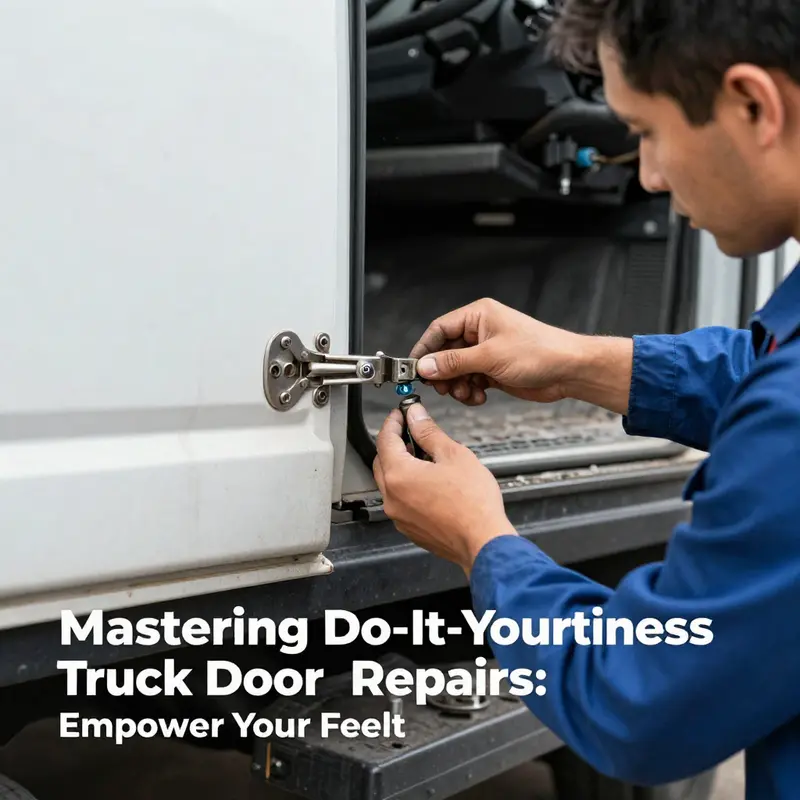
Repairing a misaligned truck door can be as rewarding as it is economical, offering you the opportunity to save money while gaining the satisfaction of doing the job yourself. This chapter delves into the comprehensive process of diagnosing, adjusting, and perfecting the alignment of a truck door, ensuring that every hinge, gap, and latch functions seamlessly. The journey begins with a thoughtful, careful evaluation of the door’s condition, followed by measured adjustments that reflect both precision and patience. In essence, this detailed guide empowers you to transform a troublesome door into a properly aligned and fully operational part of your truck.
Before you ever pick up a tool, it is vital to create the ideal working environment and gather all necessary equipment. Start by parking your truck on a level surface to ensure that gravity does not alter the door’s natural position during adjustments. A stable base is the first step to avoiding complications later in the process. Once your truck is secure, carefully assemble your toolkit. Essential items include a socket wrench set, a variety of screwdrivers (both Phillips and flathead types), a rubber mallet, a torque wrench for precise tightening, and for extra support a jack with a protective pad such as a folded towel. Each tool plays a critical role in preventing further damage and in achieving the subtle corrections your truck door requires.
Having prepared your workspace, the next step is a meticulous inspection of the door. A well-aligned door is characterized by uniform gaps along its edges, smooth operation when opening and closing, and a door latch that engages securely. Begin by examining all components of the door. Check the hinges to determine if they exhibit signs of looseness, wear, or corrosion. Inspect the door seal carefully for any tears, cracks, or areas of hardening. A compromised seal not only affects the appearance but can also lead to issues with weatherproofing and noise. Once the external aspects are scrutinized, observe the movement of the door. Open and close it slowly, listening for any unusual creaking or binding sounds that may indicate worn or damaged parts. A detailed review such as this sets the stage for an informed and confident repair session.
A common complaint among truck owners is uneven or misaligned door gaps. Typically, these issues stem from worn hinges or from the bolts gradually loosening over time. The first corrective measures involve addressing the hinge attachments, which serve as the fulcrum for the entire door assembly. Most trucks are equipped with three hinge bolts per side of the door—usually positioned at the top, middle, and bottom. If you observe that the door appears too high at one edge or too low at the other, begin by slightly loosening the bolts on the body-side hinge. It is critical not to remove them entirely; a gentle looseness is all that is required to allow for adjustment. Slowly manipulate the door: if it appears too high, carefully lower the door by applying downward pressure while supporting it from underneath. Conversely, if the door sits too low, gently lift it until the gap between the door and the truck’s frame is even and uniform. Always make adjustments in small increments to avoid overcompensation or creating a new misalignment.
Not all misalignments occur along the vertical plane. In some cases, you may find that the door does not engage the latch properly because the front or rear of the door sits too far from the body. When facing this type of issue, the approach is similar. Begin by loosening the hinge bolts and then manually push or pull the door so that both the front and rear gaps become consistent. In this process, using a ruler or a feeler gauge can help measure the slight differences in gap width. This tool allows for precision—ensuring that the gap is even across all contact points. Patience here is paramount; each slight movement can result in significant improvements when the door is allowed to close and settle into its new position. As you continue to adjust, frequently test the door’s movement to ensure that the misalignment is resolving and that there is not any new interference between the door and the truck’s body.
Occasionally, you might uncover that the door itself appears tilted, meaning that one side is higher or lower than the opposite side. Such a tilt often indicates an issue with the bottom hinge on the body side. In these scenarios, focus your efforts on the lower hinge first. Loosen its bolts carefully and then reposition the hinge slightly by nudging it forward or backward. This subtle correction can eliminate the tilt and bring the door into a harmonious balance with the rest of the truck’s structure. It is essential, however, to ensure that after each small adjustment the bolts are retightened gradually and securely in a crisscross pattern. This not only stabilizes the door in its new alignment but also avoids introducing undue stress that could warp or bend the door over time.
Beyond adjustability, another common area of concern is the door latch mechanism, particularly the position of the striker plate on the truck’s frame. An improperly aligned striker plate can lead to a door that does not close correctly, resulting in issues ranging from wind noise to security vulnerabilities. To address this, begin by opening the door and carefully identifying the exact area where the latch fails to make contact. With a screwdriver in hand, ease the striker plate loose and gently reposition it, typically moving it toward the door by a small margin—often just 1 to 2 millimeters is sufficient. This minor adjustment can have a significant impact on how snugly the door closes. After setting the new position, tighten the screws and test the door’s engagement several times. Should the door still require excessive force to latch, further minute adjustments may be necessary until the alignment is perfect.
It is during this phase of adjustments that it proves beneficial to revisit your overall maintenance mindset. For those interested in integrating more extensive in-house maintenance techniques, the insights shared in our article on comprehensive truck upkeep can offer additional tips and tricks. By building a habit of regular upkeep and minor repairs, you are not only extending the service life of your truck but also reducing the likelihood of facing larger, more expensive issues in the future. Such proactive care aligns closely with the philosophy of do-it-yourself truck repair, where every bit of knowledge contributes to a more self-reliant and efficient maintenance routine. For more details on these practices, consider exploring some in-house truck maintenance tips which can further refine your approach.
Another critical step in the process is the application of the proper lubrication to all moving parts. After the hinge adjustments and striker plate repositioning, it is advisable to apply a silicone-based lubricant or a product such as WD-40 to all pivot points, hinge pins, and the latch mechanism. Silicone lubricants are preferred over oil-based alternatives because they minimize the attraction of dust and debris, ensuring that the movement remains smooth over time. Work the lubricant into every small crevice by opening and closing the door multiple times; this not only ensures comprehensive coverage but also helps you detect any residual irregularities in the door’s operation. A well-lubricated door is less likely to produce annoying squeaks or develop binding issues, making your repair longer-lasting and more effective.
As you near the end of your adjustment process, it is crucial to perform a series of detailed tests. Each adjustment, no matter how minor, should be verified by opening and closing the truck door several times to ensure that the motion is consistent and that the door’s seal against the frame is secure. During these tests, pay close attention to any signs of persistent misalignment such as uneven gaps or recurring friction. The goal is to reach a state where the door operates with both ease and confidence—moving smoothly without any undue resistance or noticeable gaps along its edges. Only when you are satisfied with the performance should you conclude your adjustments. This careful verification is integral to the success of the entire repair and is a testament to the precision required for such a task.
Despite the many opportunities for a successful DIY repair, there are instances when the door’s condition might exceed the typical wear-and-tear that can be remedied through careful adjustments alone. If you discover that the door itself is dented, the frame is bent from an impact, or that the hinge components are cracked or severely worn out, these signs should not be ignored. In such cases, it is advisable to seek the expertise of a professional mechanic. A misaligned door due to structural issues may involve more than just loose bolts or shifting hinges, and professional intervention might be required to restore both the functionality and aesthetics of your truck door safely.
Furthermore, if the door’s alignment issues are the result of a previous accident or collision, the underlying damage might have compromised the entire door structure. In these circumstances, even the most meticulous adjustments may only provide a temporary fix. Safety should always be the guiding principle, and if any doubt remains regarding the integrity of the repair, consulting a professional is the wisest course of action. After all, the door is not merely a cosmetic feature but an essential component that contributes to the overall safety and integrity of your truck’s design.
In addition to mechanical adjustments, maintaining a regular routine of inspection and maintenance is crucial to ensuring that your truck door remains in optimal condition long after the repair is completed. Over time, environmental factors such as humidity, road debris, and even temperature fluctuations can contribute to the gradual deterioration of door components. By incorporating periodic checks of the hinges, seals, and alignment, you can prevent small issues from evolving into larger, more complicated problems. This preventative approach is one of the many advantages of taking the DIY route; it encourages a deeper understanding and continual care that professional servicing may not always emphasize.
The process of aligning and repairing a misaligned truck door hinges on a combination of methodical precision and the willingness to invest time in careful adjustments. Each step—from the initial inspection to the final lubrication—requires a deliberate and measured approach, reflective of the hands-on troubleshooting that comes with do-it-yourself repairs. The satisfaction derived from knowing that you have successfully restored a critical component of your vehicle is immense. It reduces reliance on costly professional repairs while enhancing your skills as a truck owner. Moreover, the confidence gained through such experiences often leads to a broader commitment to regular vehicle maintenance, which in turn helps maintain the overall performance and longevity of your truck.
In conclusion, repairing a misaligned truck door yourself is a task that combines practical skill, attention to detail, and a commitment to safety. With the right tools, a systematic approach, and a willingness to make incremental adjustments, you can achieve a door alignment that not only restores proper function but also improves the aesthetics and performance of your truck. Remember that the key is to make methodical, small adjustments and to constantly test and verify the door’s performance. Should any complications arise or should the damage exceed what can be safely fixed at home, do not hesitate to seek professional assistance. For those interested in further developing their maintenance expertise, additional insights can be found in various maintenance resources, such as the comprehensive overview available through in-house truck maintenance tips. For an in-depth discussion on door adjustments and additional technical guidance, please refer to the article on how to adjust car doors from Pacific Automotive (https://www.pcauto.com.cn/tech/adjust-door-positions.html).
By embracing the challenge of realigning your truck door, you not only address a specific mechanical issue but also empower yourself with the knowledge and skills that are essential for vehicle upkeep. Whether it is correcting a slight misalignment, adjusting a stubborn latch, or ensuring that every moving part is perfectly lubricated, every step contributes to a more reliable, functional, and attractive truck. This process showcases the true spirit of DIY repairs—where patience, precision, and perseverance come together to yield results that are both practically and personally rewarding.
Mastering the Replacement of Truck Door Window Regulators: A Comprehensive DIY Guide
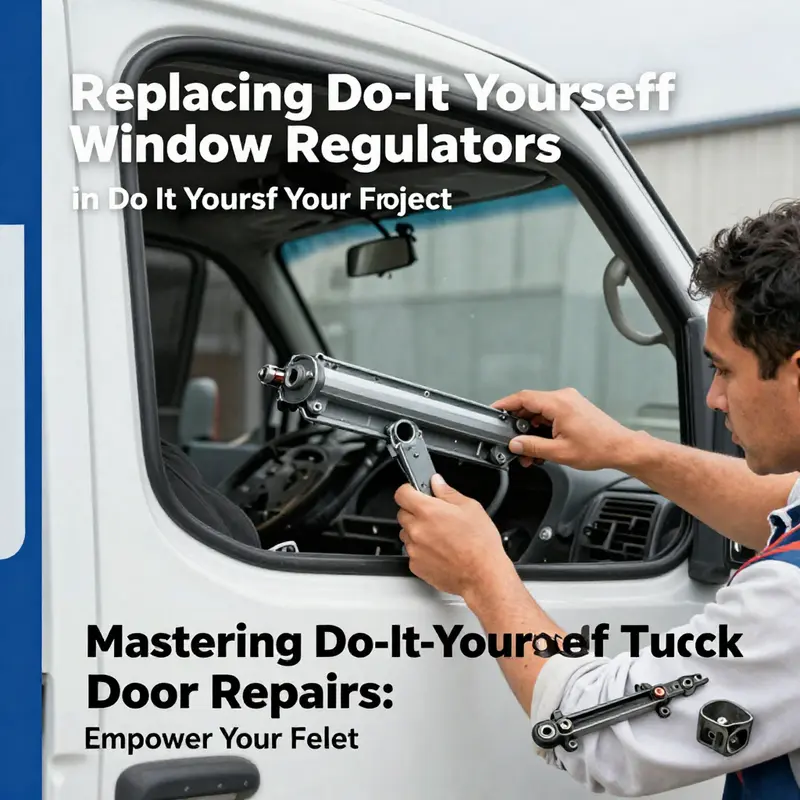
Replacing a Truck Door Window Regulator: A Journey of Mechanical Mastery
Embarking on the task of replacing a truck door window regulator is not merely about swapping out components; it is a journey that deepens your understanding of truck mechanics, empowers your self-sufficiency, and instills an enduring sense of accomplishment. This project demands attention to detail, a steady hand, and a willingness to embrace each step from preparation to final testing. In a world where time and money are both valuable resources, taking on such a project can significantly reduce repair costs and enhance your mechanical confidence.
Before diving into the process, it is essential to identify the signs that indicate your truck door window regulator may be failing. The window might roll up or down unevenly, stall midway, or produce unusual sounds when operated. These symptoms often point to internal issues such as worn cables, stripped gears, or impaired track alignment. Being observant in diagnosing these issues not only saves unnecessary expense but also aids in addressing the root problem effectively. With this mindset, you can gather your necessary tools and approach the repair methodically.
The first stage of the replacement process is thorough preparation. Ensure your work area is clean and well-lit to avoid misplacing small parts or tools. You should have a complete set of essential tools, including a variety of screwdrivers (both flathead and Phillips), a socket or adjustable wrench, pliers, and most importantly, a trim removal tool to prevent damage to the plastic clips that secure the door panel. In addition, it is wise to have a torque wrench available if your regulator’s mounting hardware specifies a particular torque setting. A careful review of your truck model’s specifications is paramount, since even slight differences in design may necessitate a regulator that is uniquely tailored to the vehicle. Taking a few moments to double-check the model and year of your truck against the replacement part ensures you are working with a compatible piece of equipment.
Once you have the right tools and the correct regulator on hand, the repair process begins with removing the truck door panel. This step is delicate because the panel is held in place by a series of clips and fasteners that can easily break if forced. Using your trim removal tool, start at one edge of the panel and apply gentle, consistent pressure. Slowly work your way around the perimeter of the door, paying close attention to any hidden screws or fasteners behind covers such as the armrest or decorative trim. A patient, methodical approach is essential here, as haste can lead to damaged clips or breakage. As you pry away the panel, take care not to dislodge or damage any wiring connected to the window control switch, interior lights, or locks. Removing the panel unveils the underlying mechanisms, including the aging regulator that is to be replaced.
With the door panel safely set aside, you now have full access to the internal components of the door. The next step in the process involves locating the malfunctioning window regulator and preparing for its removal. This component is typically connected to both an electrical connector and a series of bolts or screws that secure it to the door frame. Begin by disconnecting the electrical connector attached to the motor. It is sometimes helpful to mark or take a quick photograph of the wiring arrangement to ensure that reattaching the connector is straightforward during reassembly. Once the electrical connection is severed, systematically remove the bolts or screws securing the regulator. Depending on the design of your truck’s door, you might also encounter rivets or fasteners that are uniquely designed for this application, so having the proper tools on hand is crucial. As the old regulator is carefully detached, observe its orientation and relationship with surrounding components such as the glass guide tracks, which supports the proper alignment of the window glass when it moves. This careful observation ensures that the new regulator is installed in precisely the same configuration.
When extracting the old regulator, do not rush this step. It is useful to keep the screws or bolts organized and even label them if needed. A clean, organized workspace will prevent the loss of small parts that are crucial for reassembly. Once the old regulator is completely free, you are ready to begin the installation of the new regulator. The new component should be laid out in the work area along with the fasteners, ensuring that any manufacturer instructions that come with the part are readily available for consultation.
Installing the new regulator is an exercise in precision and alignment. Insert the new regulator into the door cavity, aligning it carefully with the pre-existing mounting holes and ensuring that it slots seamlessly into the glass guide tracks. Any misalignment at this stage could result in improper window movement or even damage to the new mechanism. As you begin to secure the new regulator, tighten the fasteners gradually, ensuring that each bolt or screw holds the component securely without distorting its positioning. For many models, a gentle but firm tightening is critical, and the use of a torque wrench is advised to meet the manufacturer’s specified torque settings. During this phase, it is also a good idea to apply a silicone-based lubricant to the regulator’s roller mechanism or cable system. This lubricant reduces friction, promotes smooth operation, and extends the lifespan of the new part.
Once the new regulator is physically in place and secured, reattach the electrical connector. A complete and firm connection is essential, as a loose connection might result in intermittent operation or even complete failure of the window function. At this juncture, careful attention to detail cannot be overstated. Every component should be double-checked: are the fasteners adequately tightened? Is the alignment of the regulator consistent with that of the original unit? Have you ensured that the glass will seat properly in the regulator’s clamps? Making these checks now can prevent complications later during the final testing stage.
After verifying that the replacement has been installed correctly, it is time for a crucial phase of the project: testing and reassembly. Before the door panel is reattached, operating the window mechanism is essential. Engage the window switch and observe how the window moves along its track. It should move smoothly, with no unexpected sounds such as squeaks or clanks, and should fully reach both the closed and open positions without hesitation. Should the window exhibit any irregularities, such as lagging movements or resistance during operation, pause and re-examine the installation. Often, slight adjustments in alignment or additional lubrication can resolve these issues.
When testing, remember the value of patience. A well-executed test not only confirms that the repair has been successful but also builds confidence in your DIY skills. This testing stage provides the opportunity to fine-tune the installation before reassembling the door panel. In some cases, a minor readjustment of the regulator’s position may be necessary if the window does not sit perfectly within its track or if there is any indication that the mounting bolts were not tightened sufficiently. Taking the time to ensure flawless operation now will save considerable time and money in the future.
With satisfactory test results, you can now set about reattaching the door panel. Reverse the removal process carefully. Begin by reattaching any wiring harnesses that were previously disconnected from the interior switches and lights. Gradually align the door panel with the door frame, ensuring that all plastic clips and fasteners find their proper seating points. Applying gentle pressure along the perimeter, press the panel back into place, confirming that every clip snaps securely. Avoid rushing this process, as forcing the panel into position can lead to broken clips or misaligned components, detracting from the high quality of your work.
Alongside reassembly, it is advisable to perform a final inspection of the entire repair site. Use a clean cloth to remove any residual grease, dust, or fingerprints left during the installation process. At this stage, a rust inhibitor may be applied to vulnerable areas within the door cavity to protect against future corrosion, particularly in climates where moisture poses a persistent threat. The end result should be a fully integrated door system that not only operates smoothly but also exhibits improved longevity and performance.
This DIY project underscores the timeless satisfaction derived from hands-on maintenance and repair projects. Not only does it empower truck owners to tackle routine upkeep without the overhead cost of professional services, but it also instills valuable mechanical skills that can be applied to other vehicle maintenance challenges. The process of replacing a truck door window regulator is a testament to the notion that with careful planning, proper tools, and a methodical approach, even complex repairs can be demystified and accomplished by an individual with determination and a willingness to learn.
In addition to the technical expertise gained, such projects contribute to a deeper appreciation for the intricacies of truck design and functionality. Every step, from the cautious removal of the door panel to the precise installation of the new regulator, reinforces the importance of understanding your vehicle. The benefits extend beyond the repair itself, offering improved safety and reliability as the window mechanism functions at peak performance. Moreover, the confidence acquired during this process encourages further exploration into DIY maintenance solutions, transforming what might have been seen as a daunting challenge into a rewarding journey.
For those interested in exploring further practical guidance in maintenance, additional insights can be found in resources dedicated to in-house truck upkeep. For example, detailed insights on truck maintenance projects cover a range of common repair scenarios that underline the value of DIY repairs in larger fleet management or personal vehicle care settings. This approach fosters a community of self-reliant truck owners who, empowered by practical knowledge, remain in the driver’s seat when it comes to vehicle performance and longevity.
One aspect that is particularly rewarding in this type of project is the tangible link between careful preparation and successful outcome. The clear benefit of studying the manufacturer’s guidelines, systematically organizing your workspace, and patiently following each procedure cannot be overstated. As you observe the smooth, consistent operation of your newly installed window regulator, there is a palpable sense of achievement that underlines the importance of self-reliant maintenance. This process not only restores functionality but also enriches your understanding of mechanical systems and bolsters your readiness to tackle other repair projects in the future.
It is important to stress that while many truck door repairs can be handled independently by enthusiasts, some situations might require professional intervention. Should you encounter complications such as unusual noises, persistent misalignment despite adjustments, or if the vehicle’s design incorporates more complex electrical systems, it may be wise to consult a professional mechanic. However, for many truck owners, performing this replacement repair is a practical and enriching experience that demonstrates how readily accessible advanced repairs can be when approached methodically.
Even after reassembly, the overarching anti-corrosion and maintenance measures should remain a focus to secure the longevity of both the regulator and the door structure. Given that trucks frequently operate in harsh environments with unpredictable weather conditions, a final touch of protective measures, such as a light application of rust inhibitor and a thorough cleaning of the work area, ensures that your repair stands resilient in the long term.
In conclusion, replacing your truck door window regulator not only resolves the immediate issue of impaired window function but also serves as a robust exercise in mechanical literacy and self-maintenance. The careful process—from the initial detailed inspection, precise removal of the door panel, systematic disconnection of electrical components, to the deliberate and thoughtful installation of the new regulator—embodies a practical approach to vehicle upkeep that yields considerable benefits in safety, functionality, and cost savings. For those who embrace the challenges of do-it-yourself truck repair projects, this undertaking is both a practical solution and a testament to the empowerment found in troubleshooting and resolving issues on your own.
For additional detailed, model-specific guidance on similar maintenance projects, consult the comprehensive repair guides available at AutoZone’s Repair Guides. This external resource provides further step-by-step instructions and tips that can enhance your confidence and ensure that your DIY projects continue to meet professional standards. Whether you are a seasoned DIY enthusiast or approaching truck repairs for the first time, the journey to mastering these techniques is both highly rewarding and fundamentally empowering.
Final thoughts
In conclusion, mastering the art of do-it-yourself truck door repairs not only enhances operational efficiency but also empowers you to maintain control over your fleet’s upkeep. By accurately assessing damage, utilizing essential tools, and taking on repairs like dent removal and window regulator replacement, your organization can reduce costs and minimize vehicle downtime. Equip your team with these skills, fostering a proactive culture of maintenance that will ensure your fleet remains road-ready, enhancing overall productivity and service delivery.